
Andalusia’s strong cultural identity emerged from a long history of multicultural interaction—Roman, Visigothic, Jewish, Islamic, and Christian elements blending over centuries. This fusion is most visibly preserved in its Hispano-Moorish architecture.
Flamenco dancing is another powerful expression of Andalusia’s multi-layered heritage. While internationally perceived as quintessentially Spanish, it is deeply rooted in Andalusia. Its rhythms and forms evolved through the contributions of Gypsy communities, Andalusians of Christian, Muslim and. Hebrew backgrounds, and musical traditions shaped by the region’s unique historical crossroads. The result is an art form that is unmistakably Andalusian in spirit—raw, expressive, and born from cultural fusion.
My photographic work explores flamenco dance in Seville and Granada across a range of settings—public squares, caves, and music halls. I embraced the challenge of interpreting the movement and music of flamenco through still photography rather than videography. A few words and audio pieces prepare and sustain the visual messages. Ultimately, your imagination is invited to participate, completing the experience beyond what the photographs and sounds explicitly show.
Street flamenco
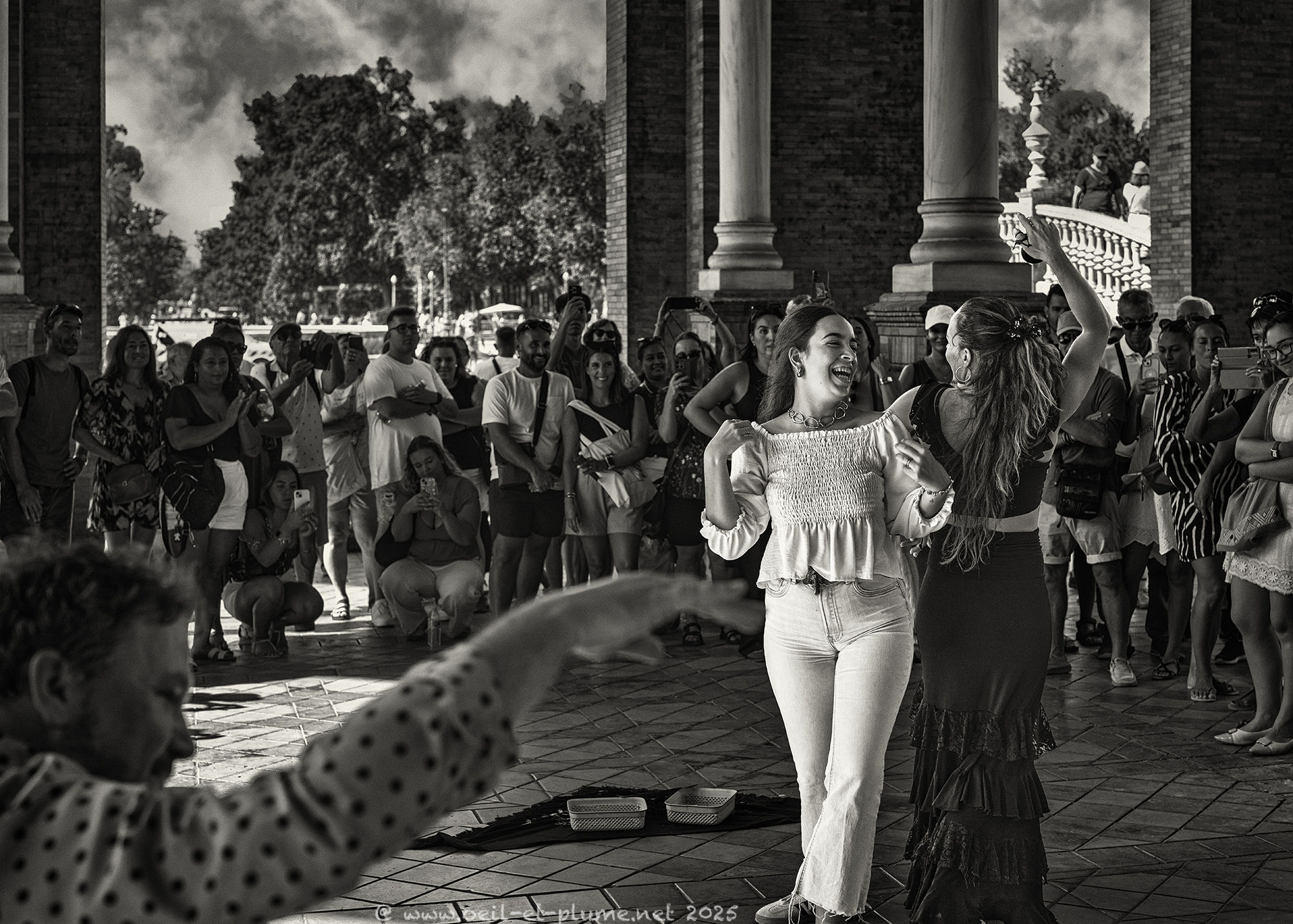
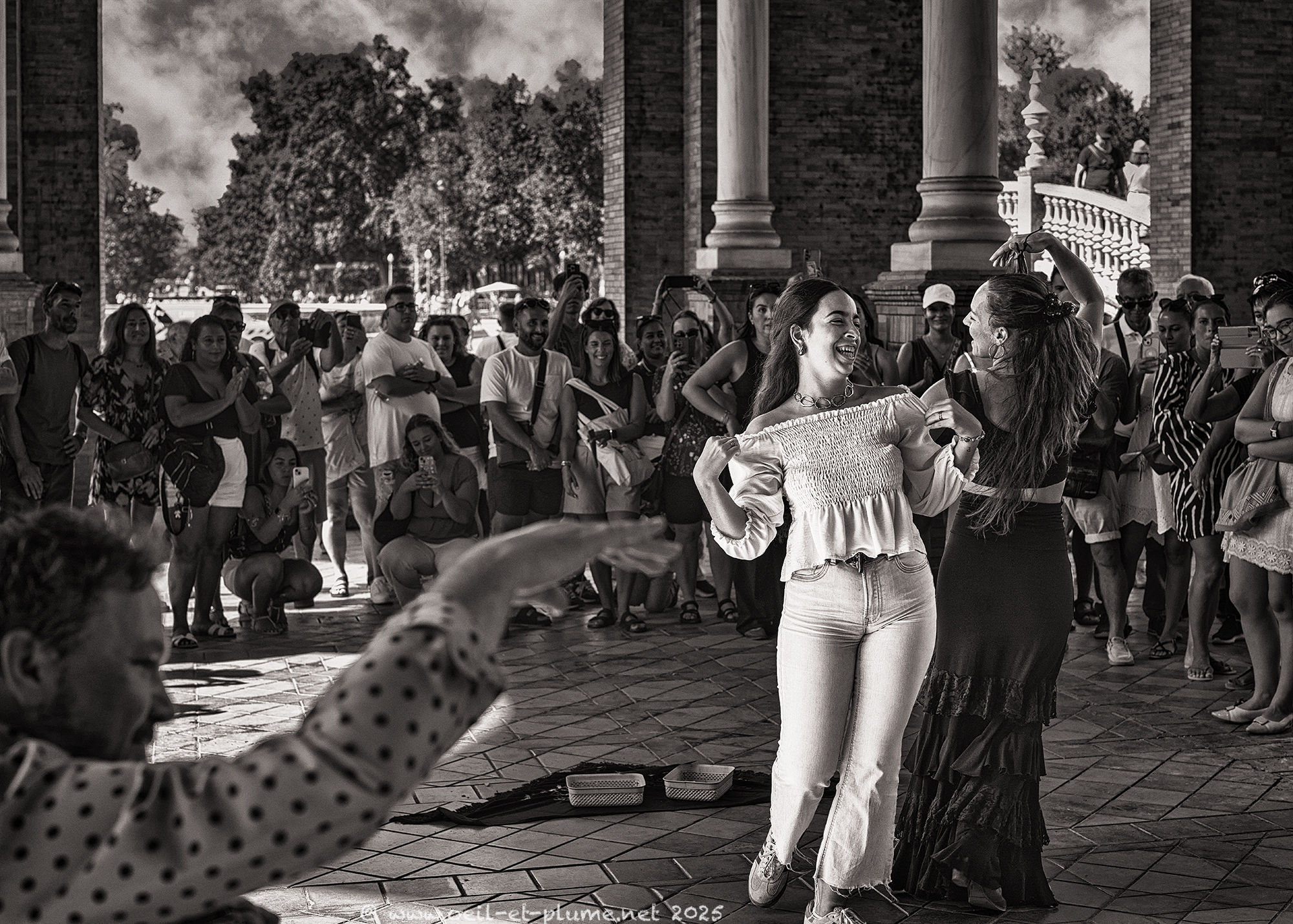
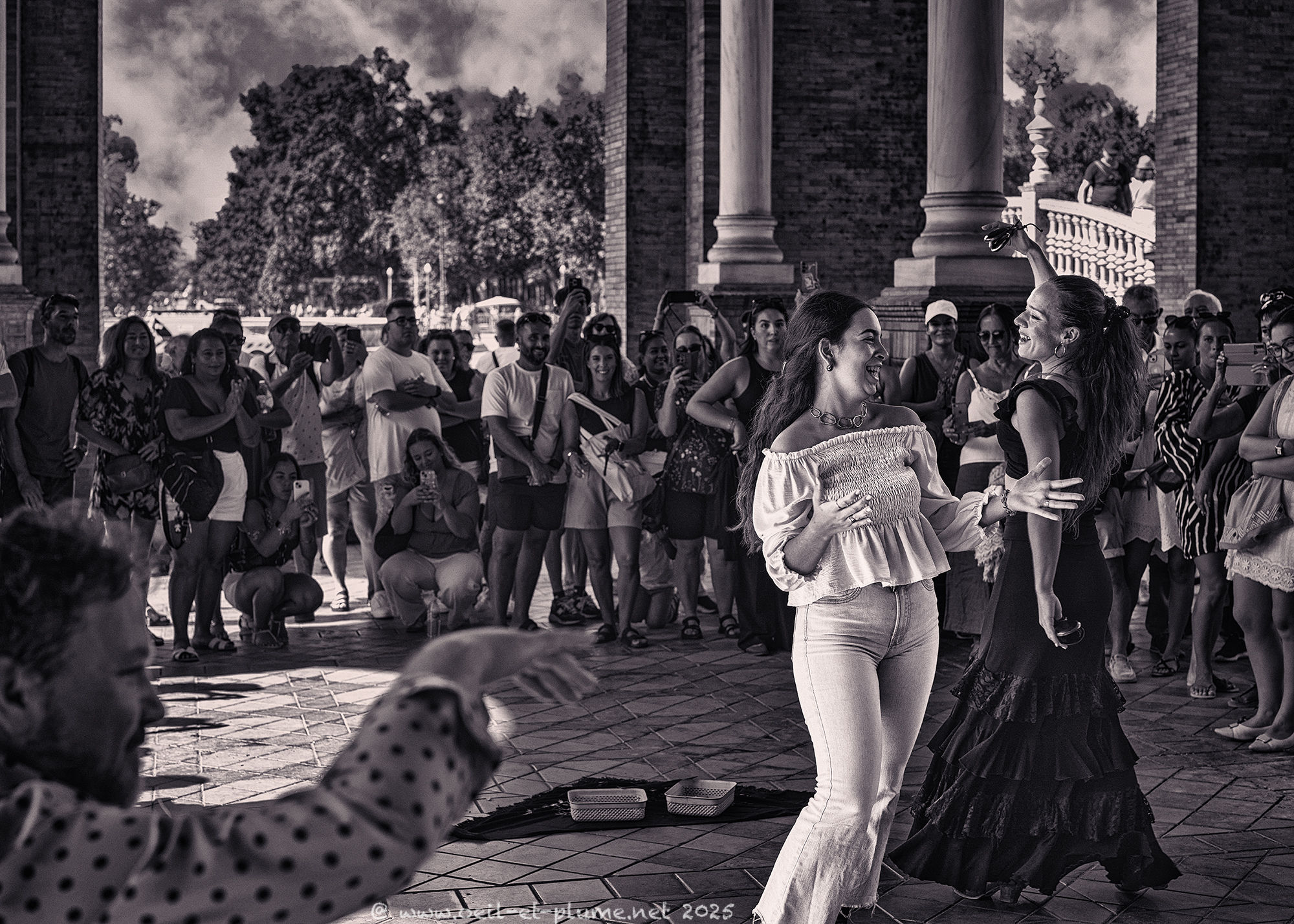
Plaza de España in Seville. A female flamenco dancer and a few musicians perform in a public space, attracting a growing crowd. The dancer’s heels strikes the tiles with crisp precision while her body undulates on the musical waves. Her choreography unfolds with effortless grace, each gesture charged with the passion of Andalusia.
The audience quickly falls under her spell. From the circle of onlookers, a young Andalusian woman suddenly steps forward. Drawn by the rhythm, she joins the female dancer without hesitation. The two women tune to each other instantly, their movements weaving into an improvised duet full of fire, joy, and deep emotion. Their energy radiates outward—sparking wide smiles, quickened heartbeats, and rising applause from everyone watching.
Cave flamenco
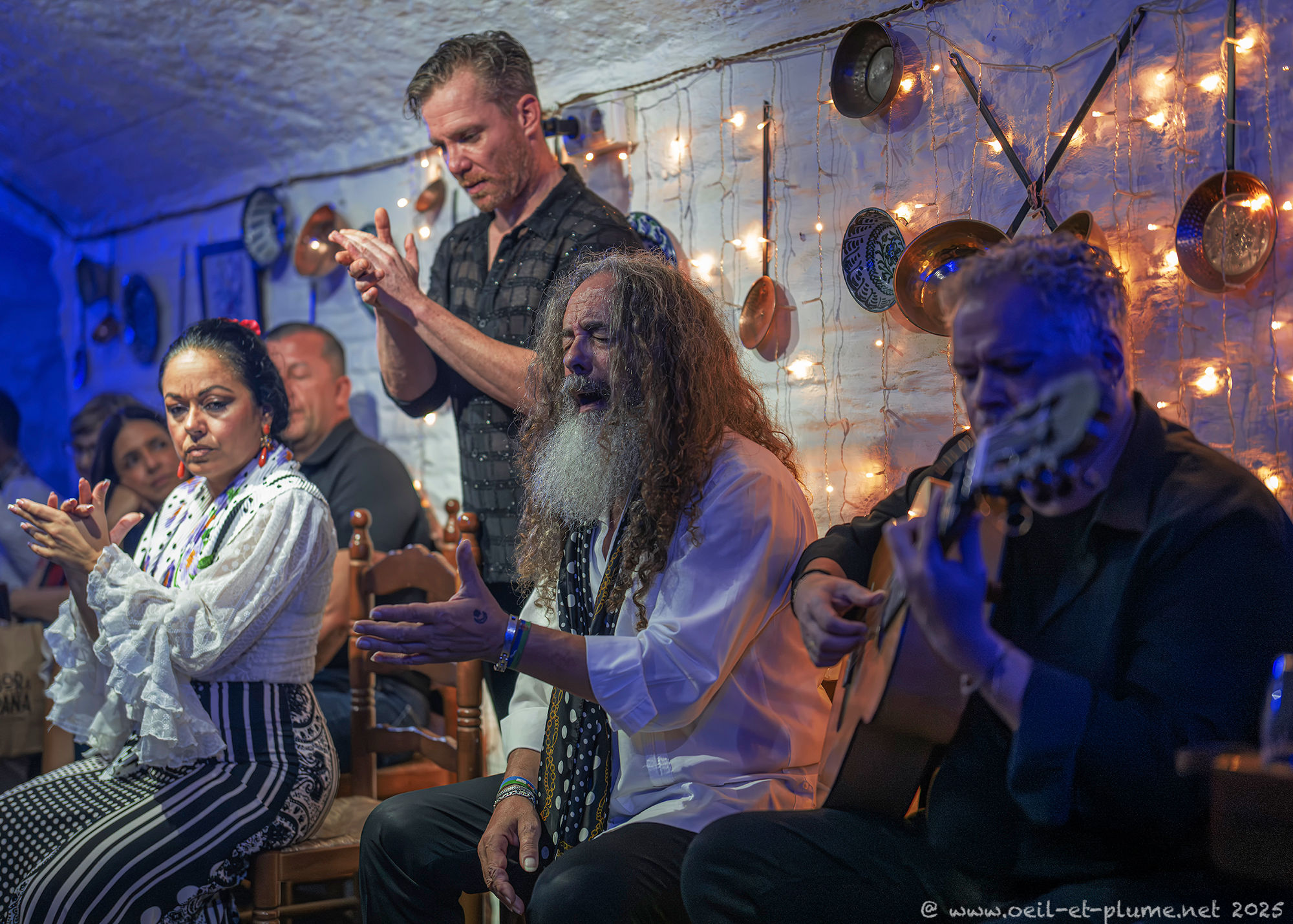
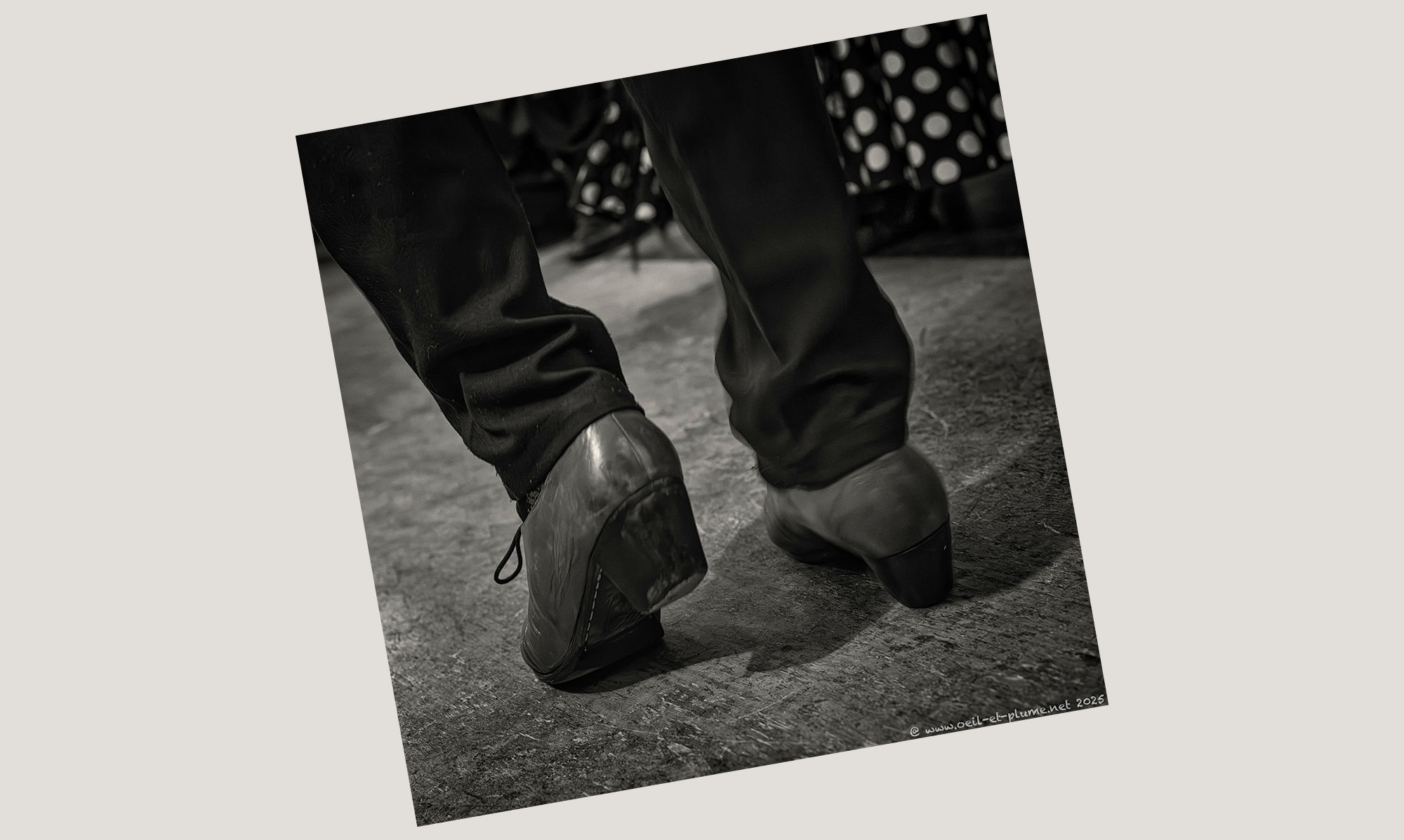
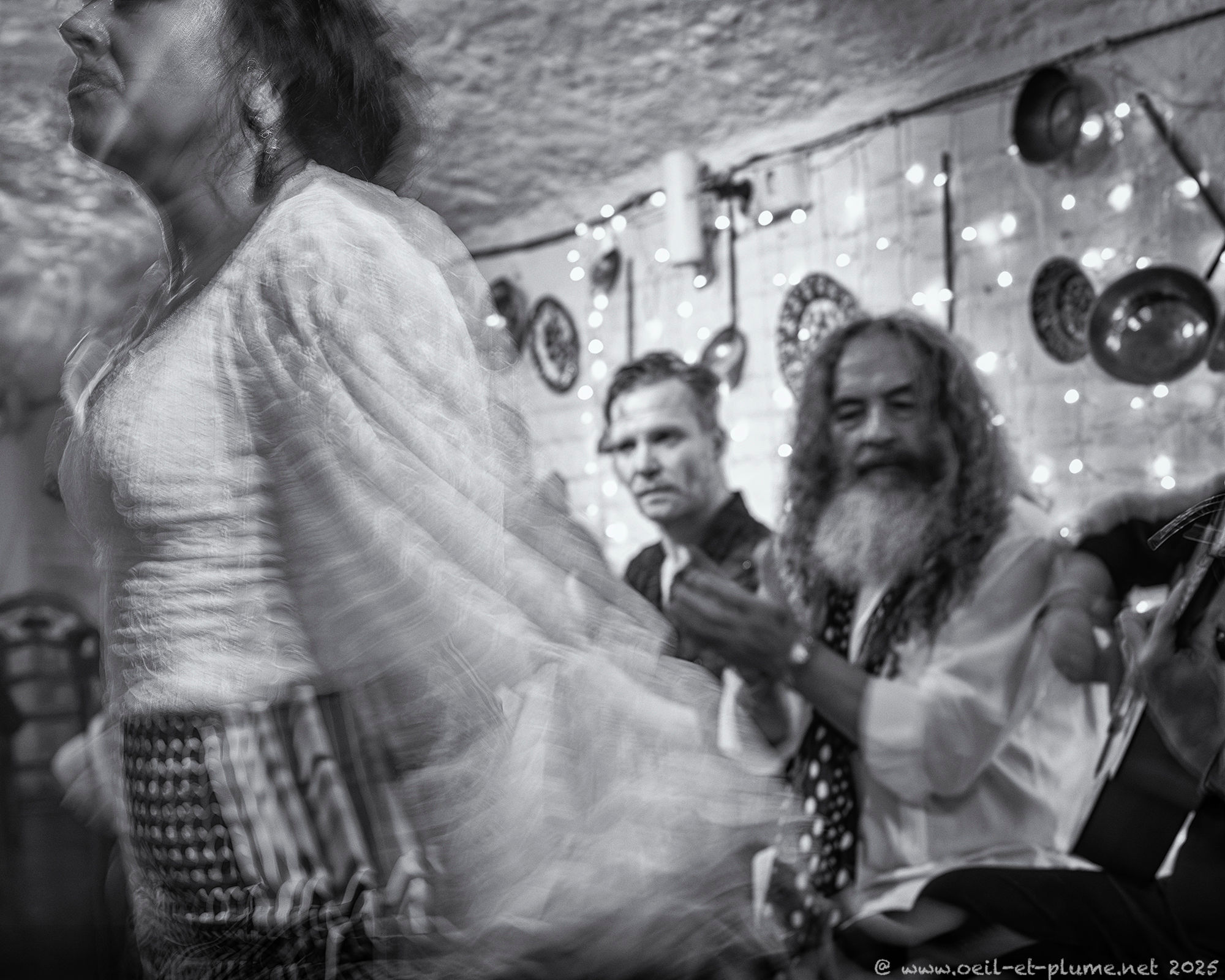
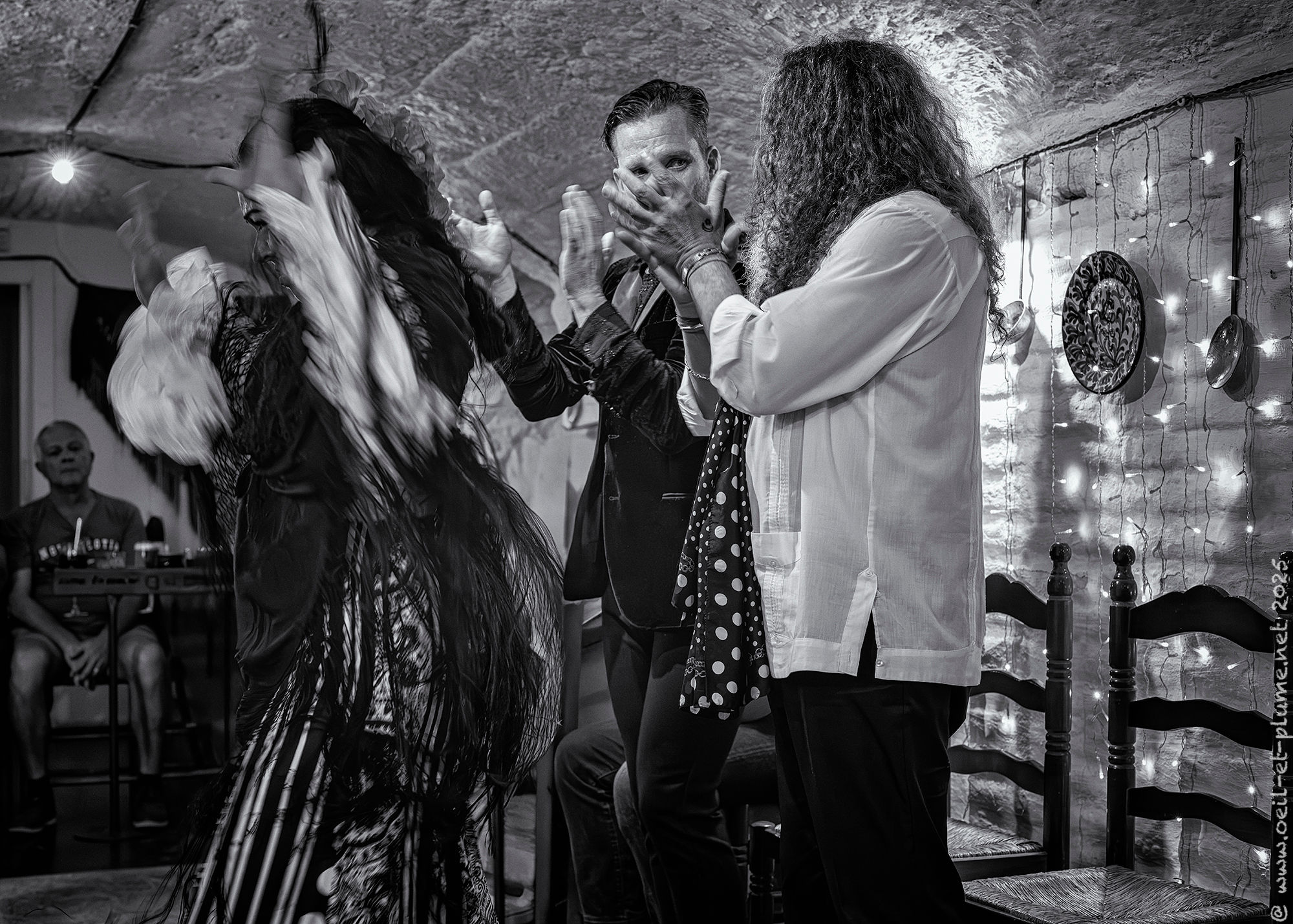
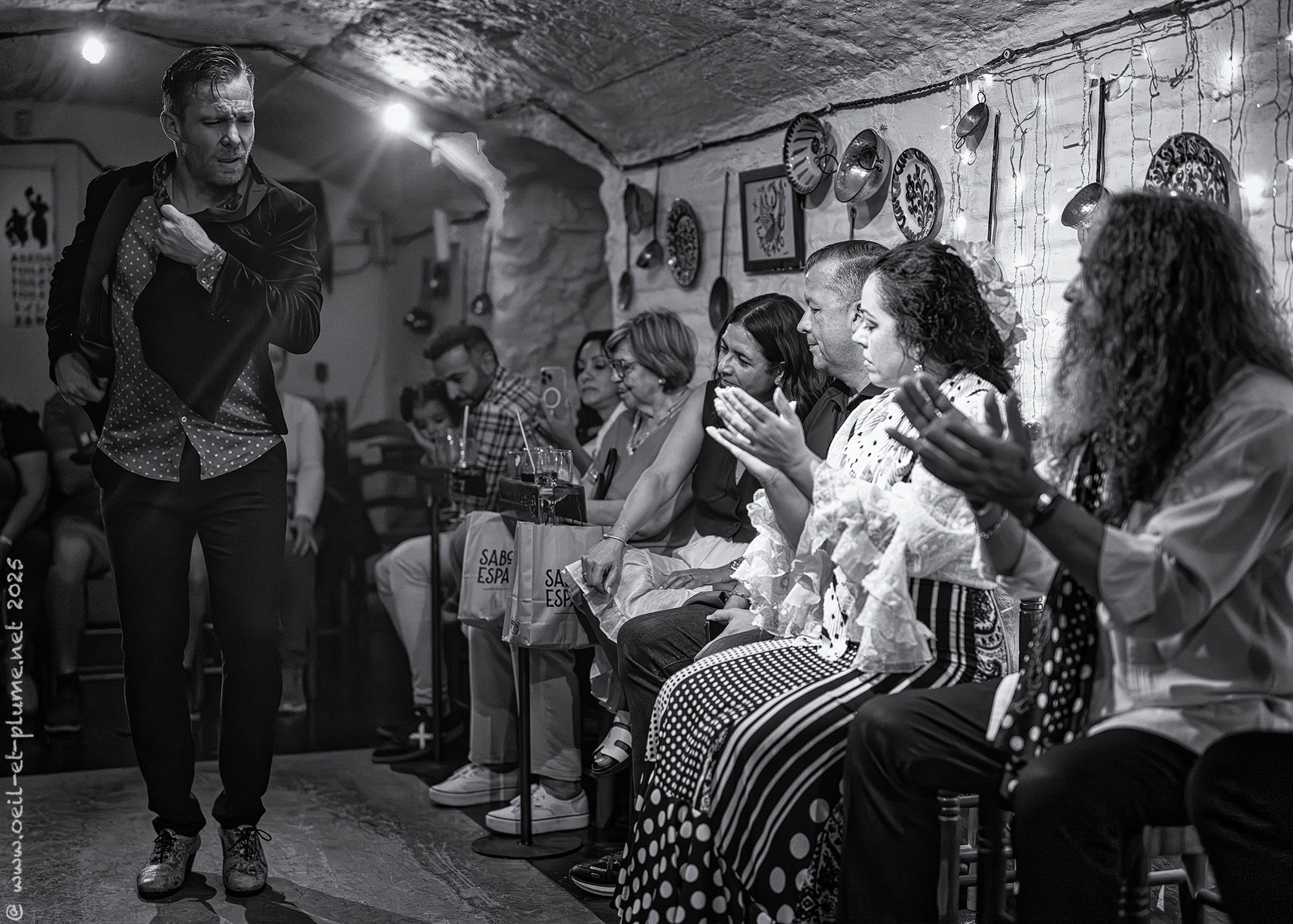
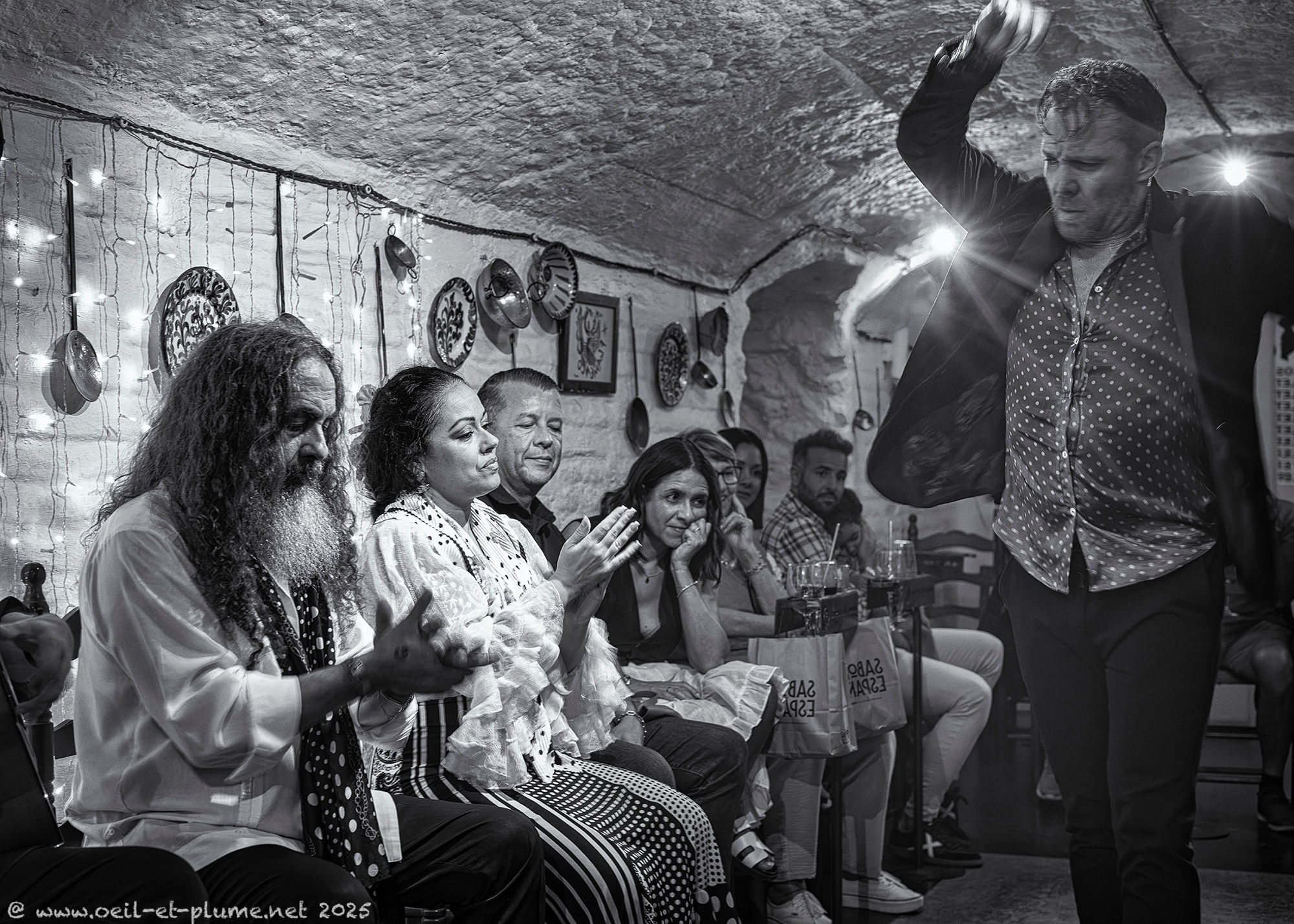
We are now in a narrow underground cave of the Albaicín historical neighborhood in Granada. Flamenco is deeply expressive, carrying emotional weight and a profound sense of passion and history. The tunnel-shaped rustic room adds to the dramatic character of the artistic performance.







Stage flamenco
We moved to a music hall in the same Albaicín neighborhood in the old Granada. After the very passionate and somehow languishing style of the cave flamenco above, the stage flamenco below is flamboyant, both visually and musically.


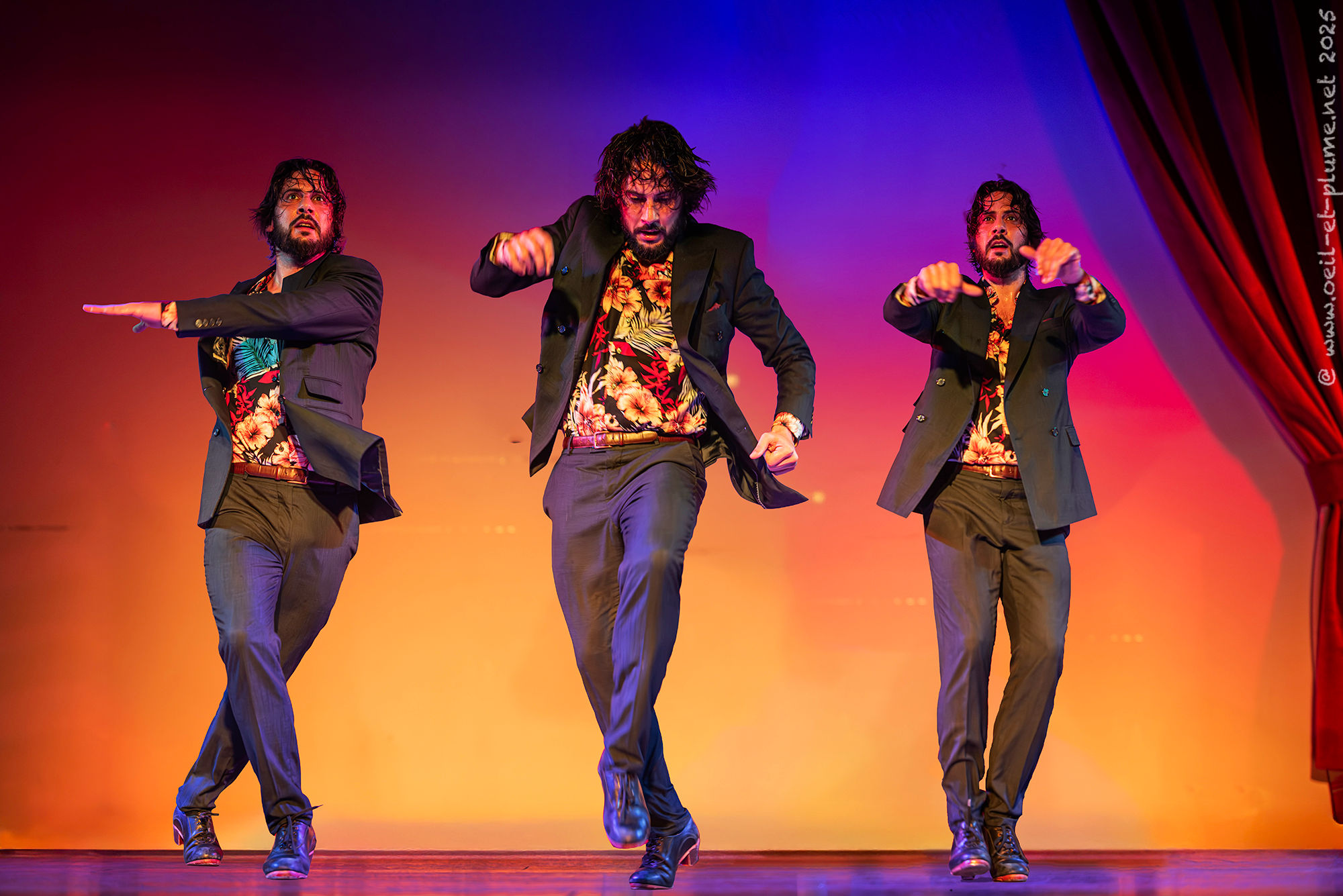

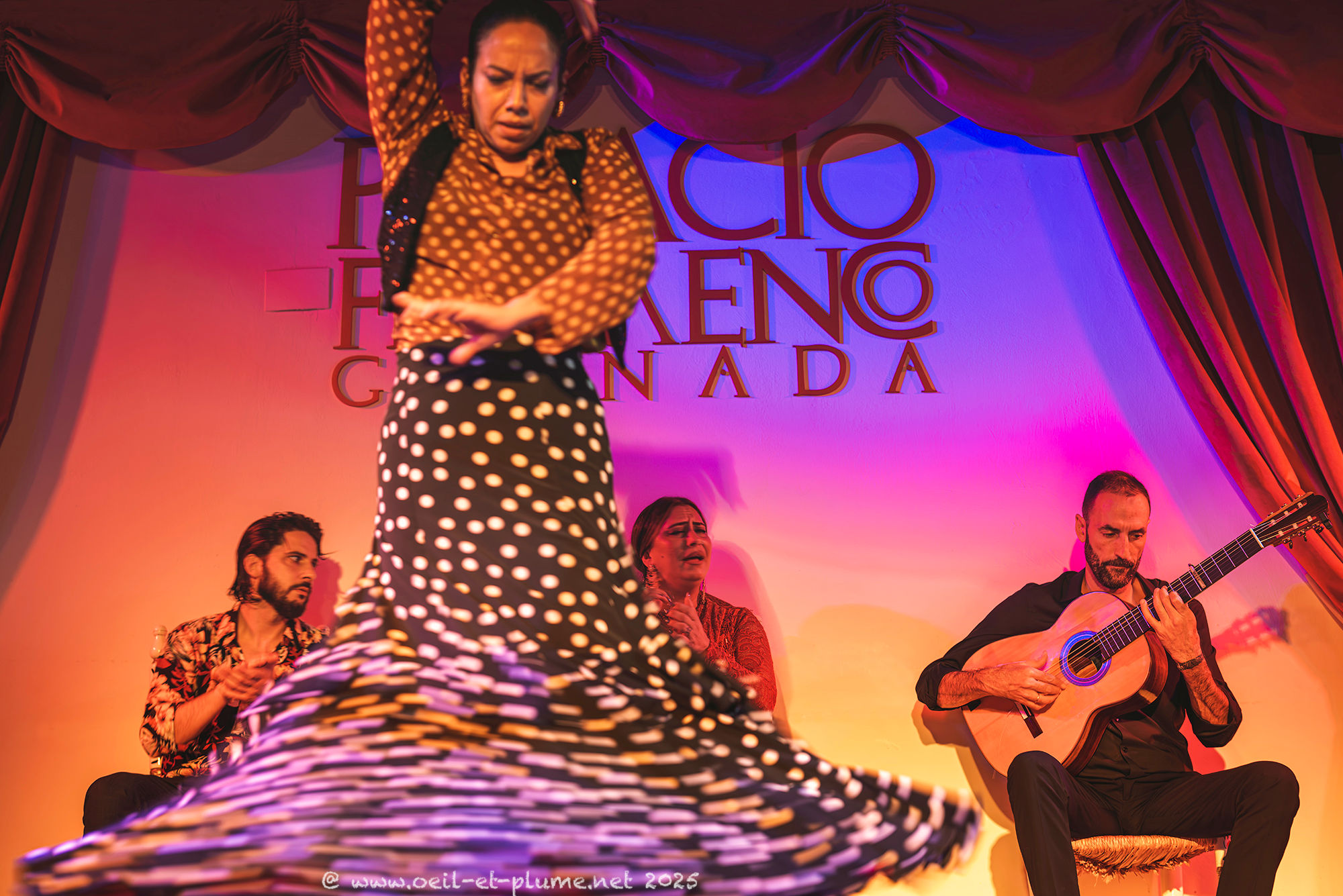
Flamenco is such a powerful emotional experience that it refuses to let its audience remain mere spectators; it draws them into the performance, demanding that they feel, respond, and partake. I witnessed a man moved to tears, overwhelmed by the joy to connect with the artists. To photograph flamenco while simultaneously being swept up emotionally requires a balancing act of participation, perception, and self-control. I was keen to experiment and translate this tension through my artwork.
As illustrated by flamenco dancing, Andalusian culture is not merely inherited; it is lived. It is practised, celebrated, sung, danced, tasted—and, above all, felt deep in the soul. It is a heartbeat carrying centuries of memory into the present. Flamenco reminds us of a wider truth: strong cultures are not built in isolation, but through constant interaction with the world.
Cheers,
