
Holiest city in Hinduism, Vanarasi is believed to be the earthly abode of Lord Shiva and the ultimate site for achieving liberation (moksha) from the cycle of rebirth. Situated on the banks of the sacred Ganges, Vanarasi is considered the cosmic center where Shiva and Parvati began time, offering immediate salvation to those who die there.
The Ganges River (Ganga) holds supreme religious significance in Hinduism as a living goddess, purifier of sins, and bestower of liberation. Often called “Mother Ganga”, it bridges between Heaven and Earth.
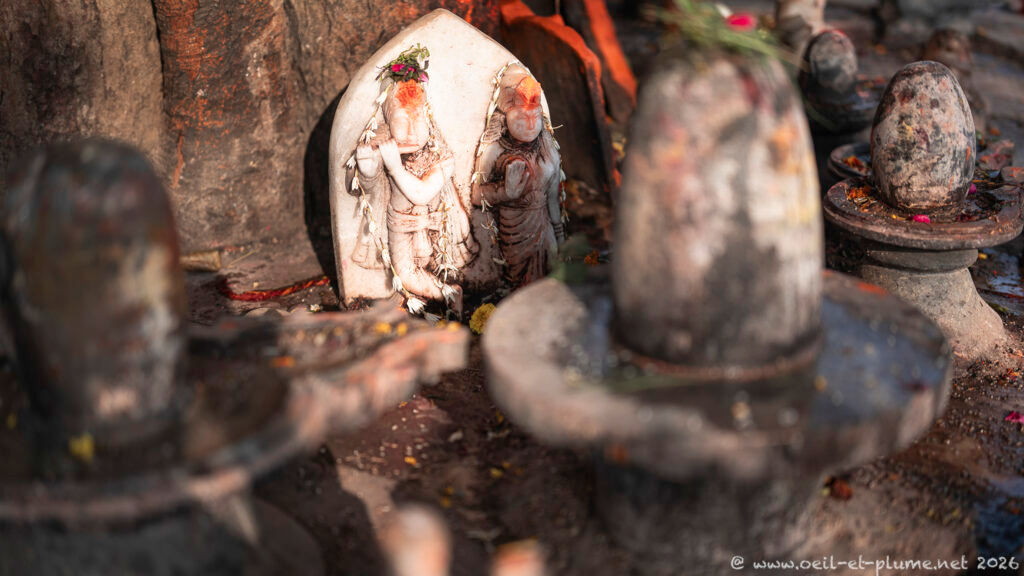
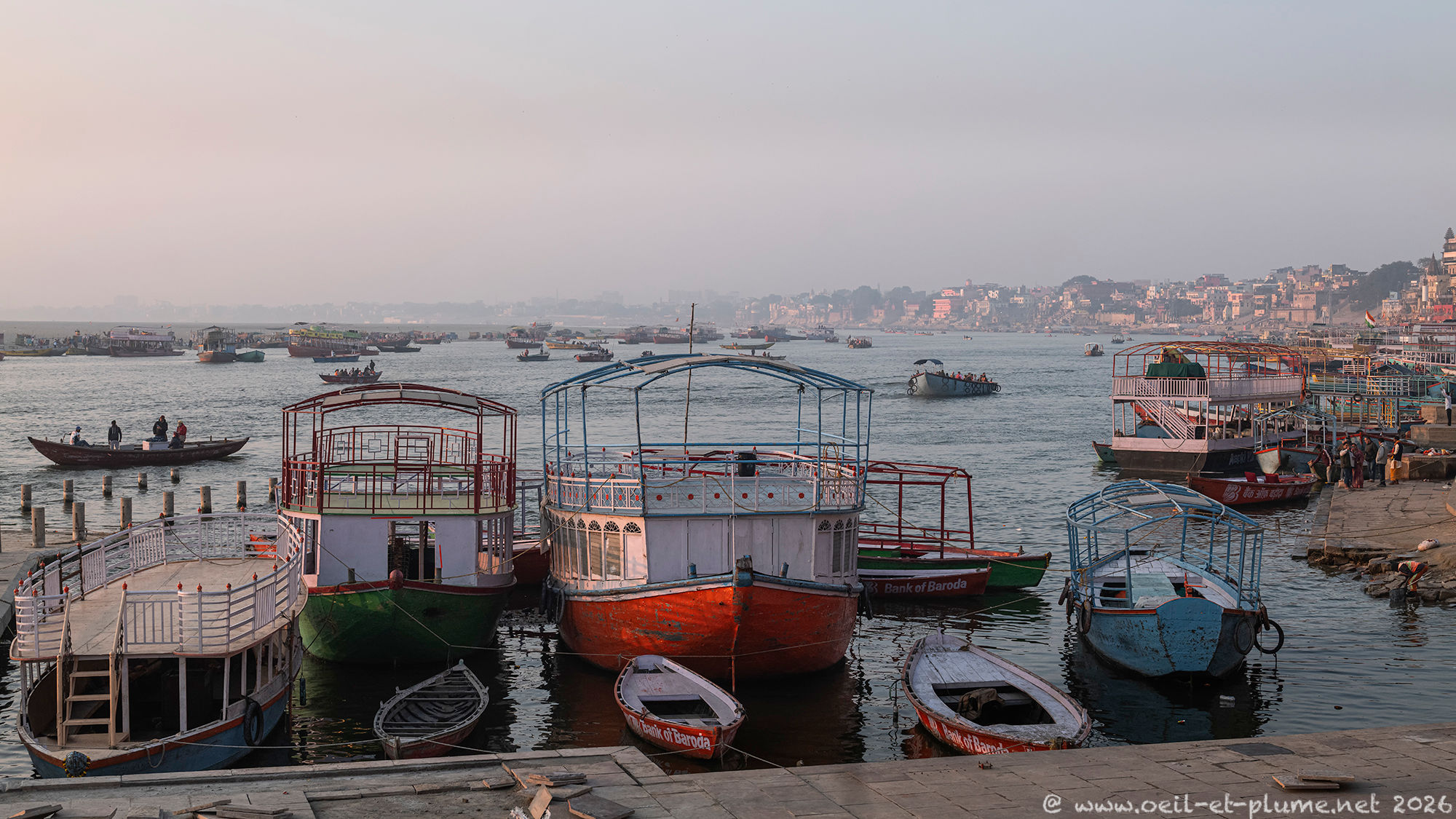
I missed visiting Vanarasi since decades. I recently did so, focussing on its religious significance in Hinduism and Jainism faiths. This proved to be a very strong and rewarding experience.
I devoted abundant time to explore this unique social and geographical environment, to define my subjects and my perspectives, to forge my feelings and to convey them through my photography below. I approached and engaged, openly and tactfully, with people, to gain vivid accounts of their religious practices.
What follow is a photography essay on contemporary practices with no make-up nor complaisance – a visual exploration of the Hindi soul and religious culture. In many instances, the pictures express an exceptional raw beauty. As a matter of fact, the nature of some images, such as those on body cremation, might hurt sensitivities. Simply skip reading that section in that case.
Ritual bath
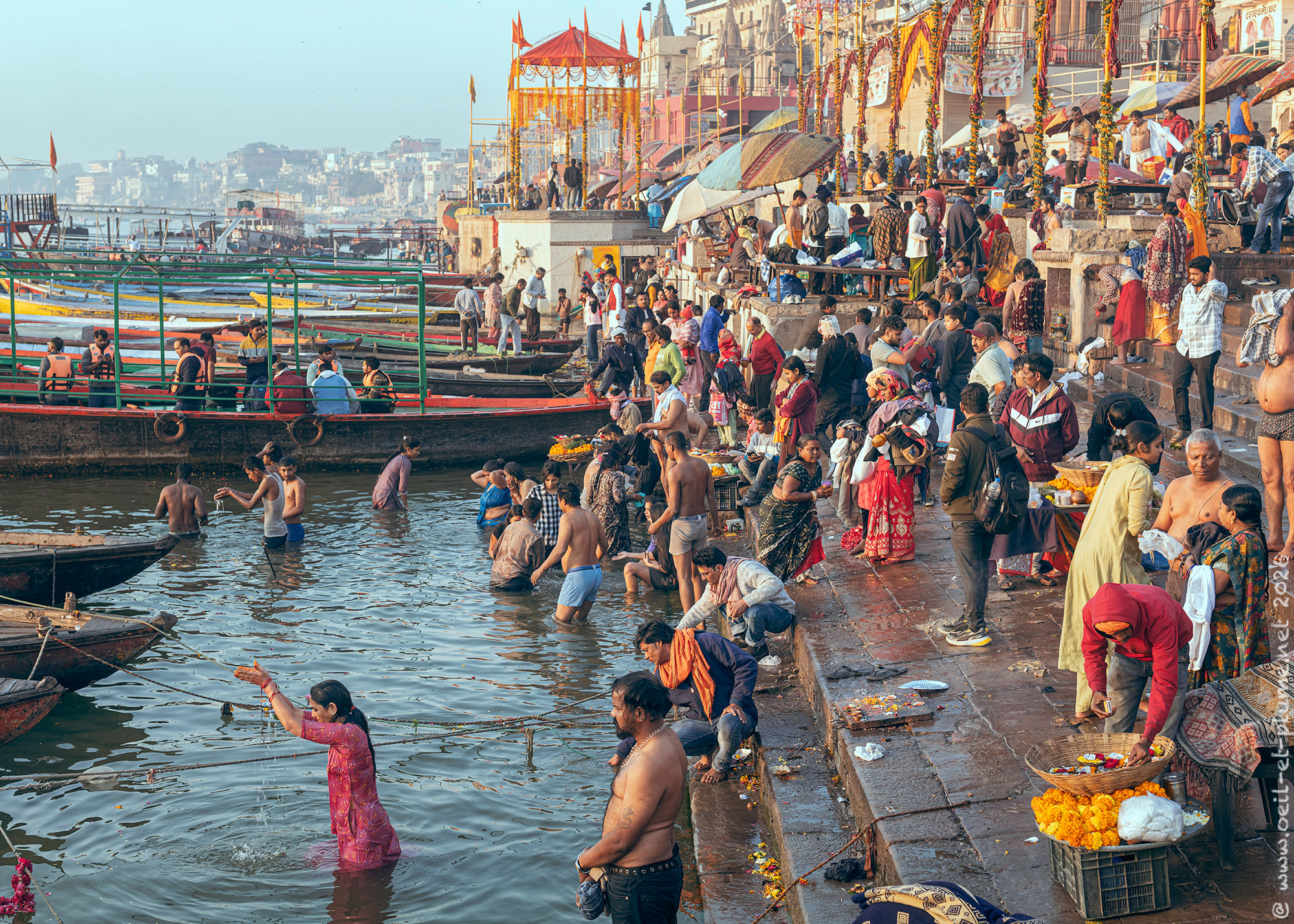
Thousands of believers gather in Vanarasi’s river steps (gaths) daily to bath in Mother Ganga’s water, seeking purification, blessing and final liberation. After their bath, pilgrims float flowers and candlelight (diyas) in the water as an act of devotion, gratitude, and prayer to Goddess Ganga.
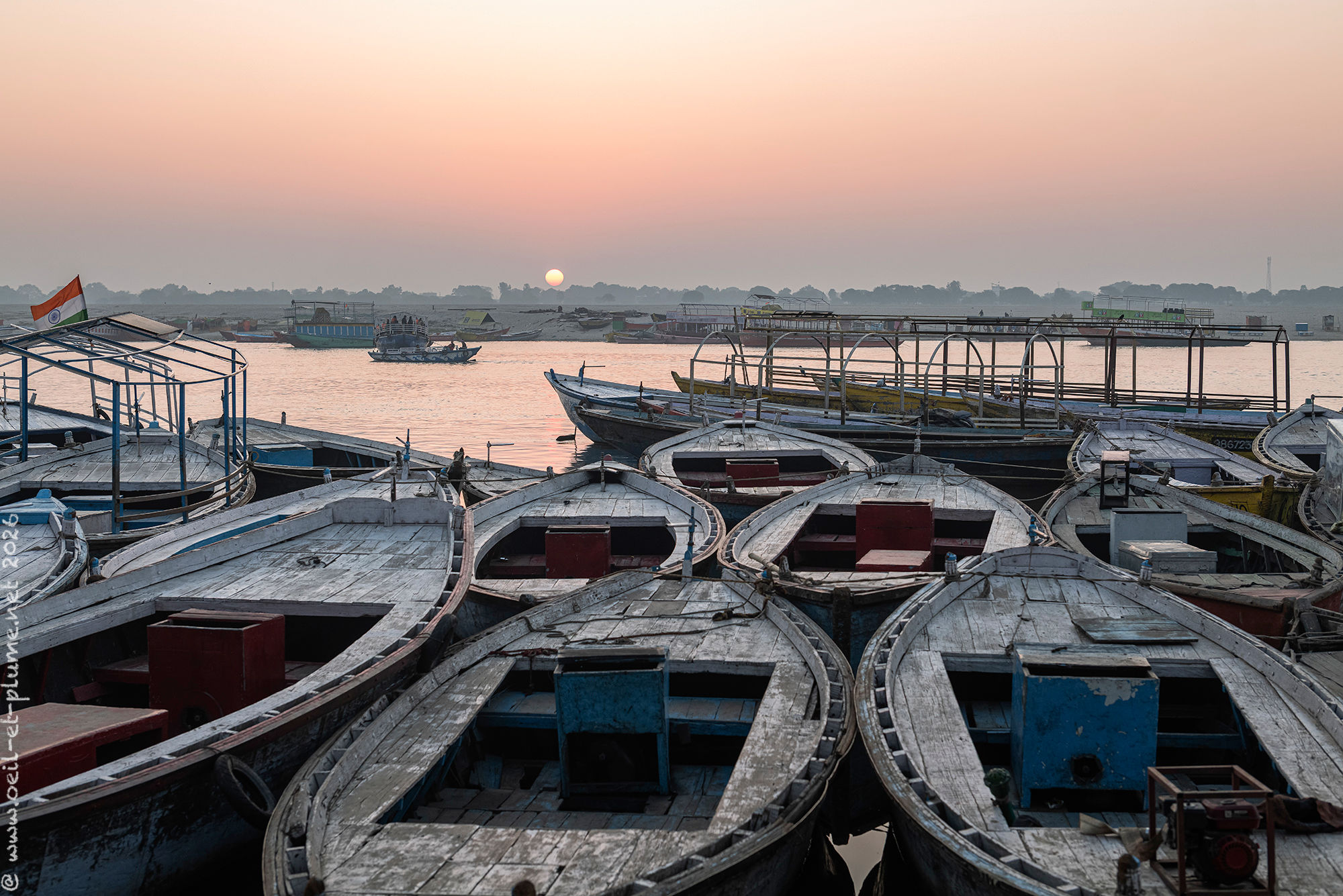
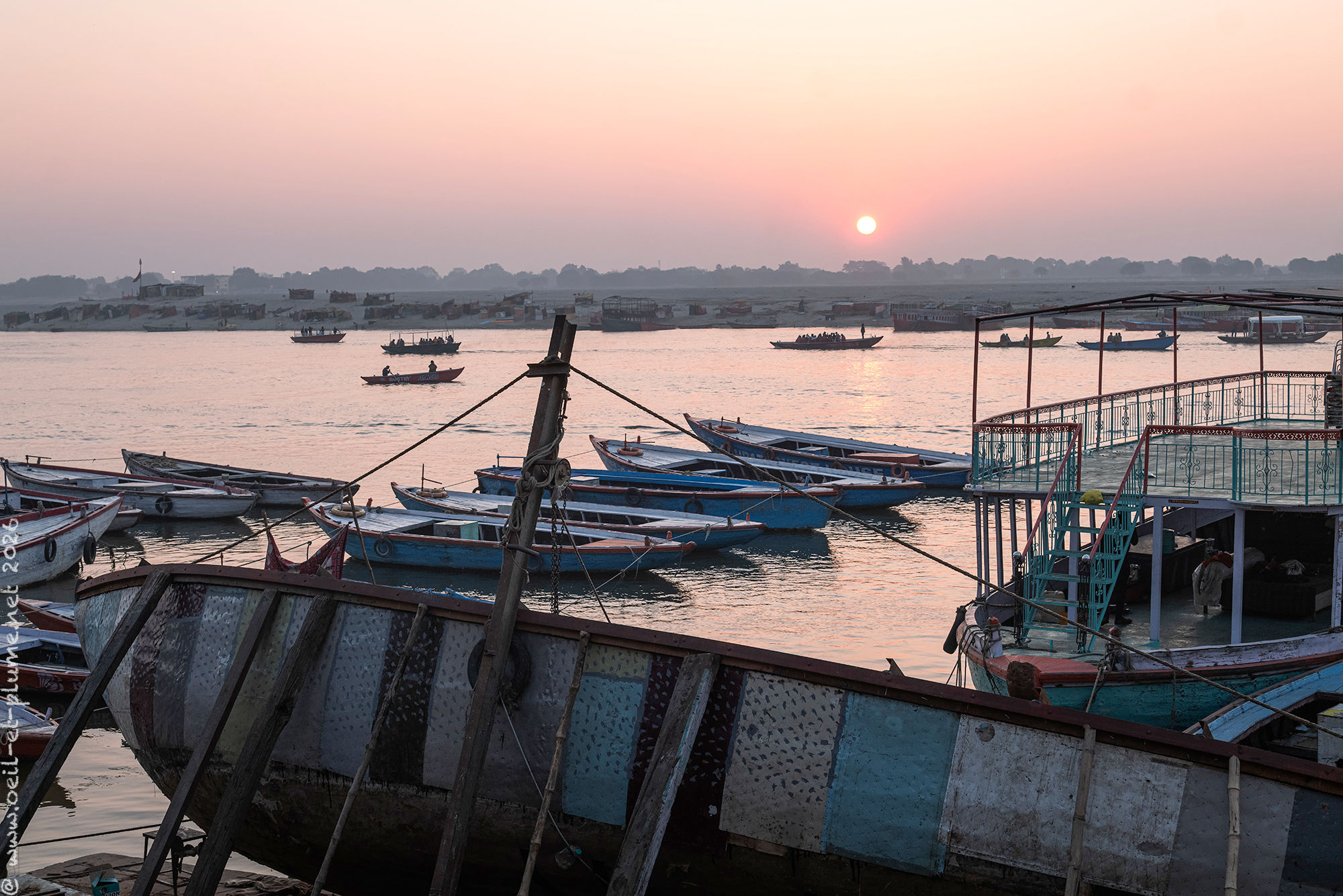
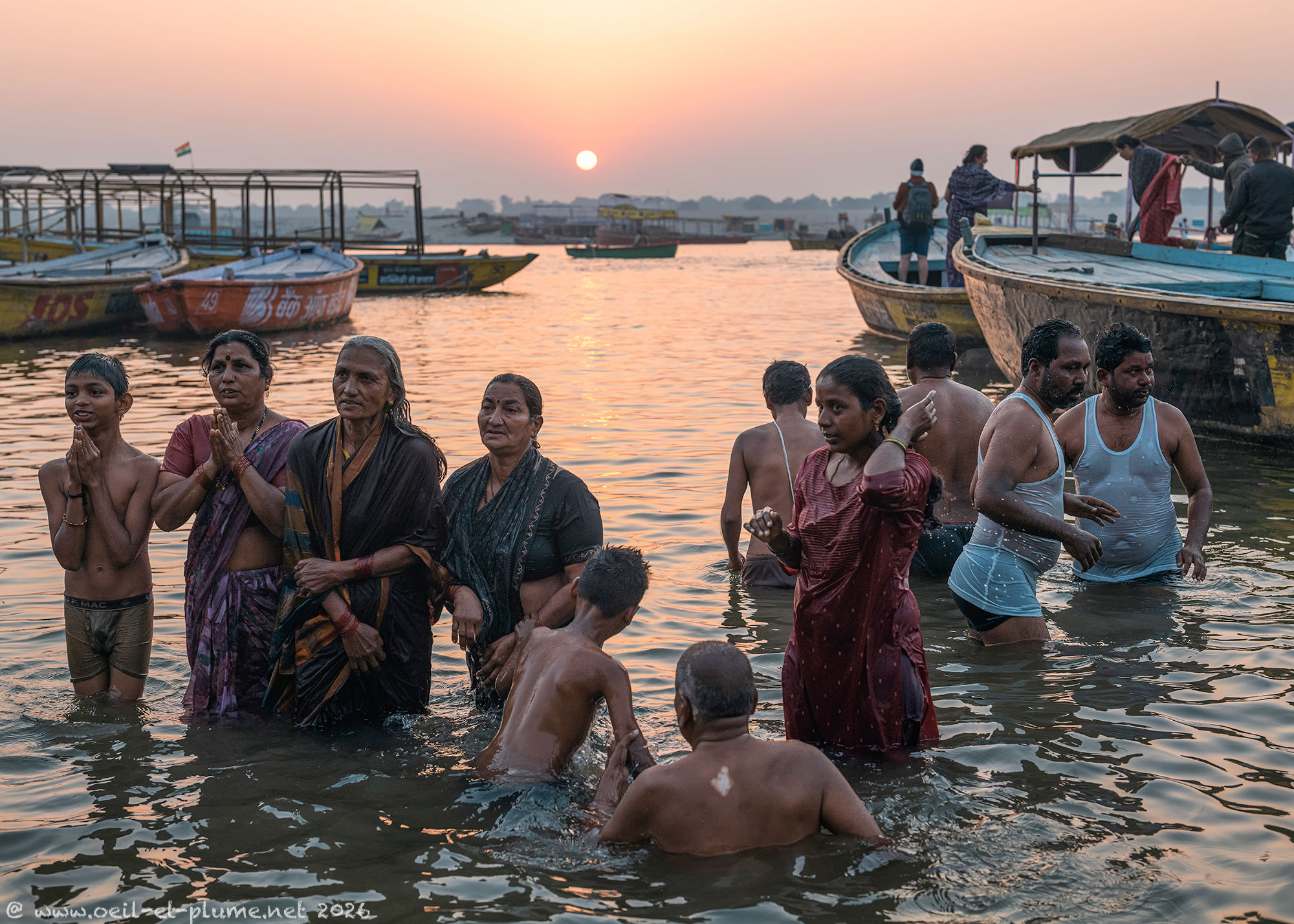
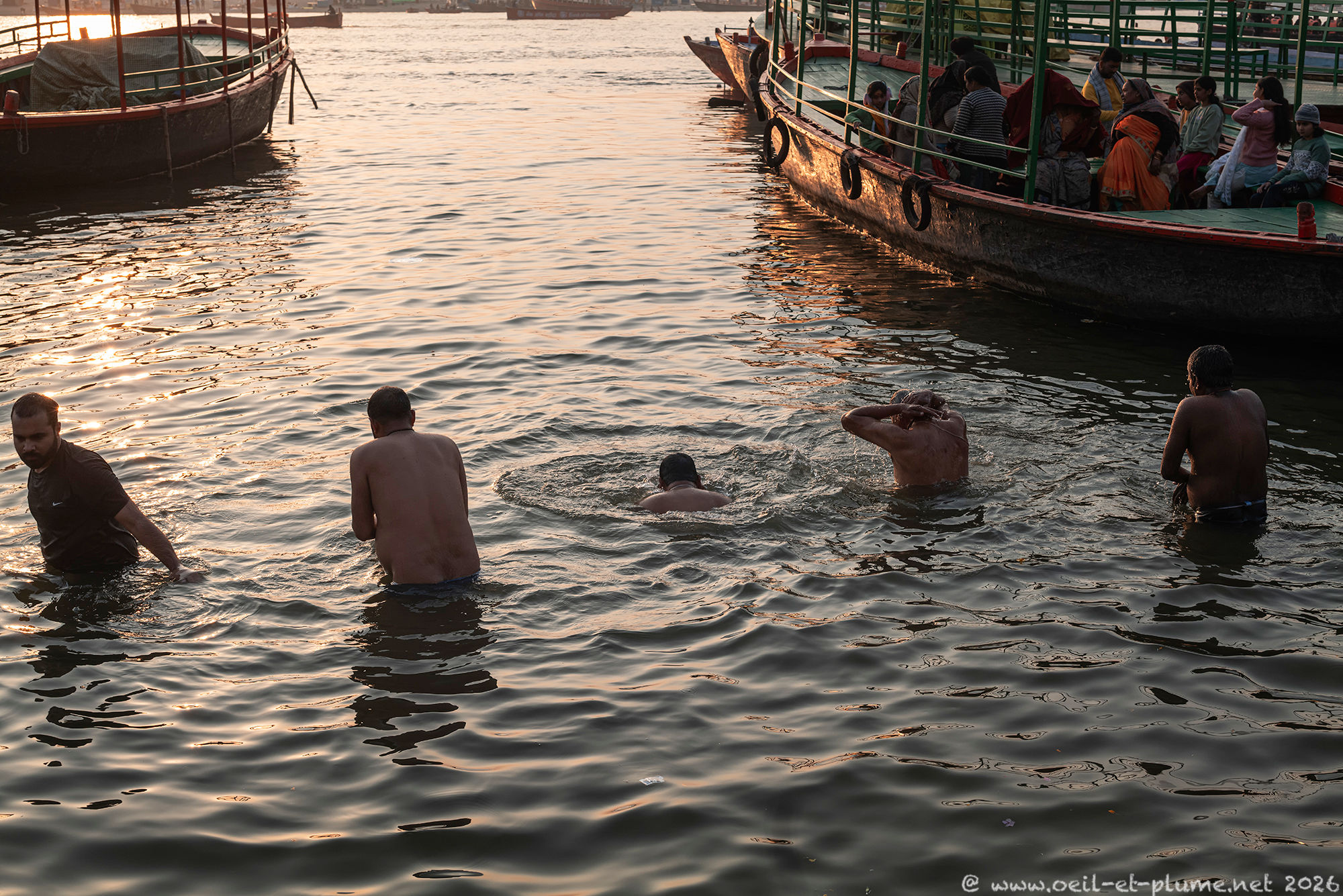
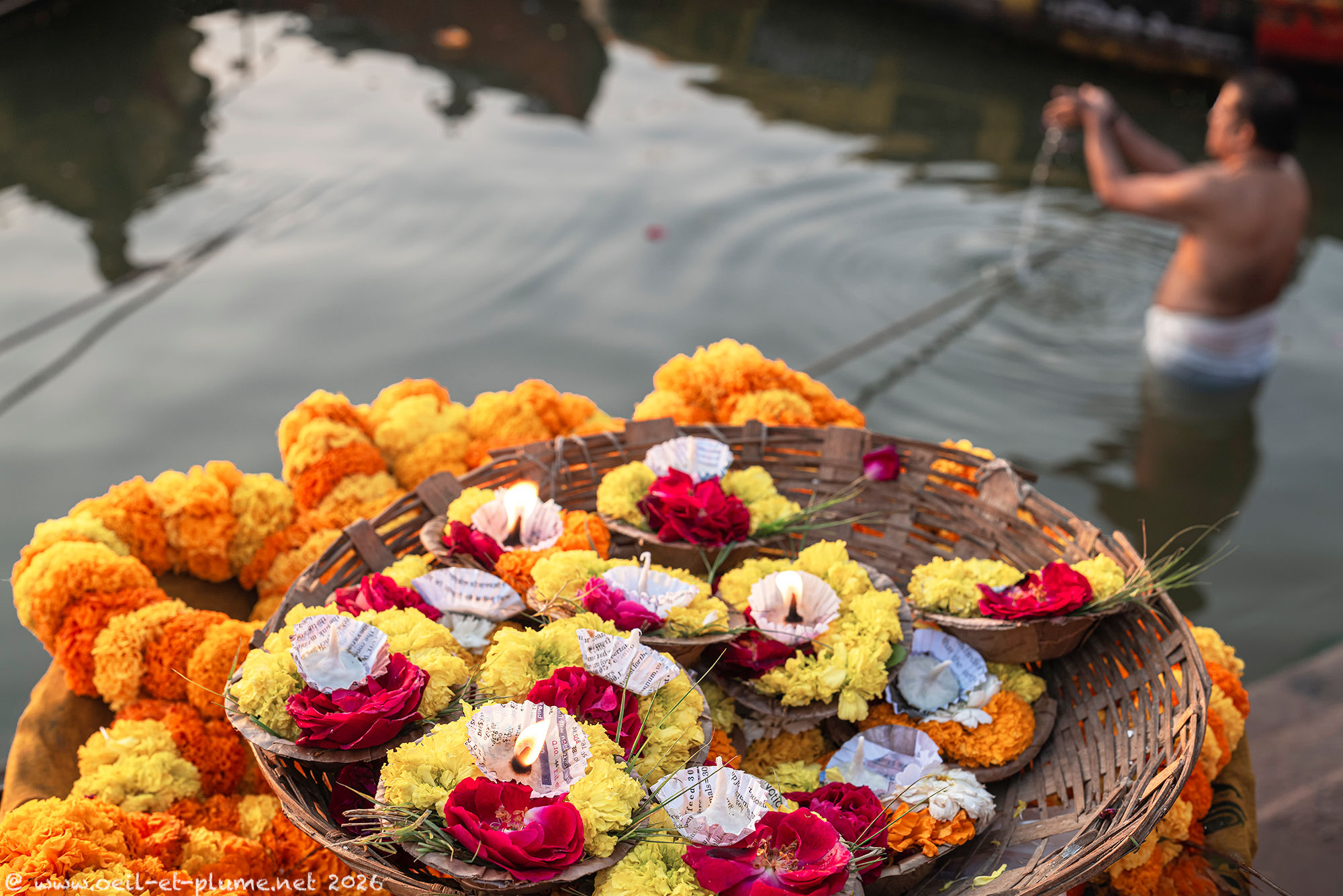
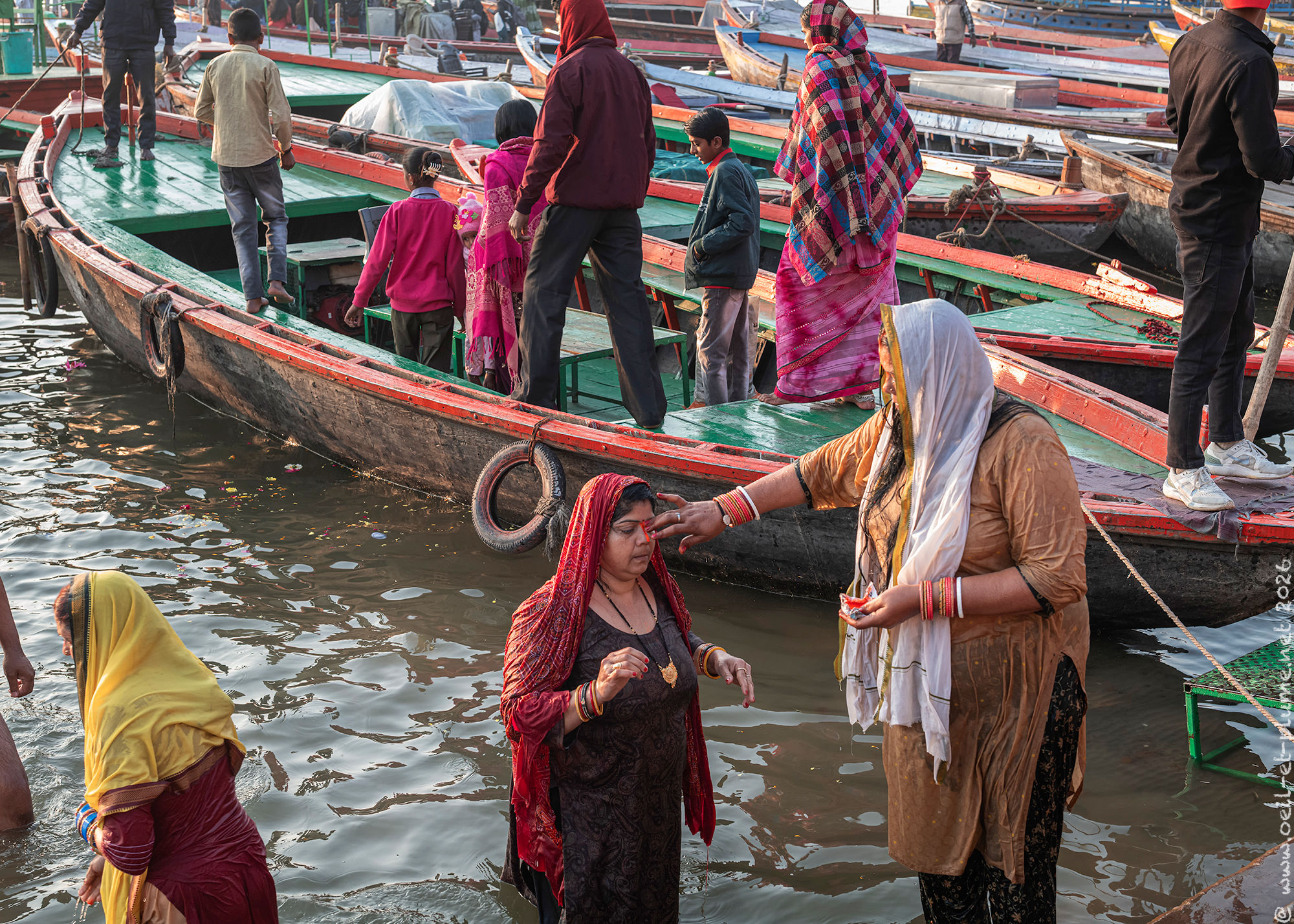
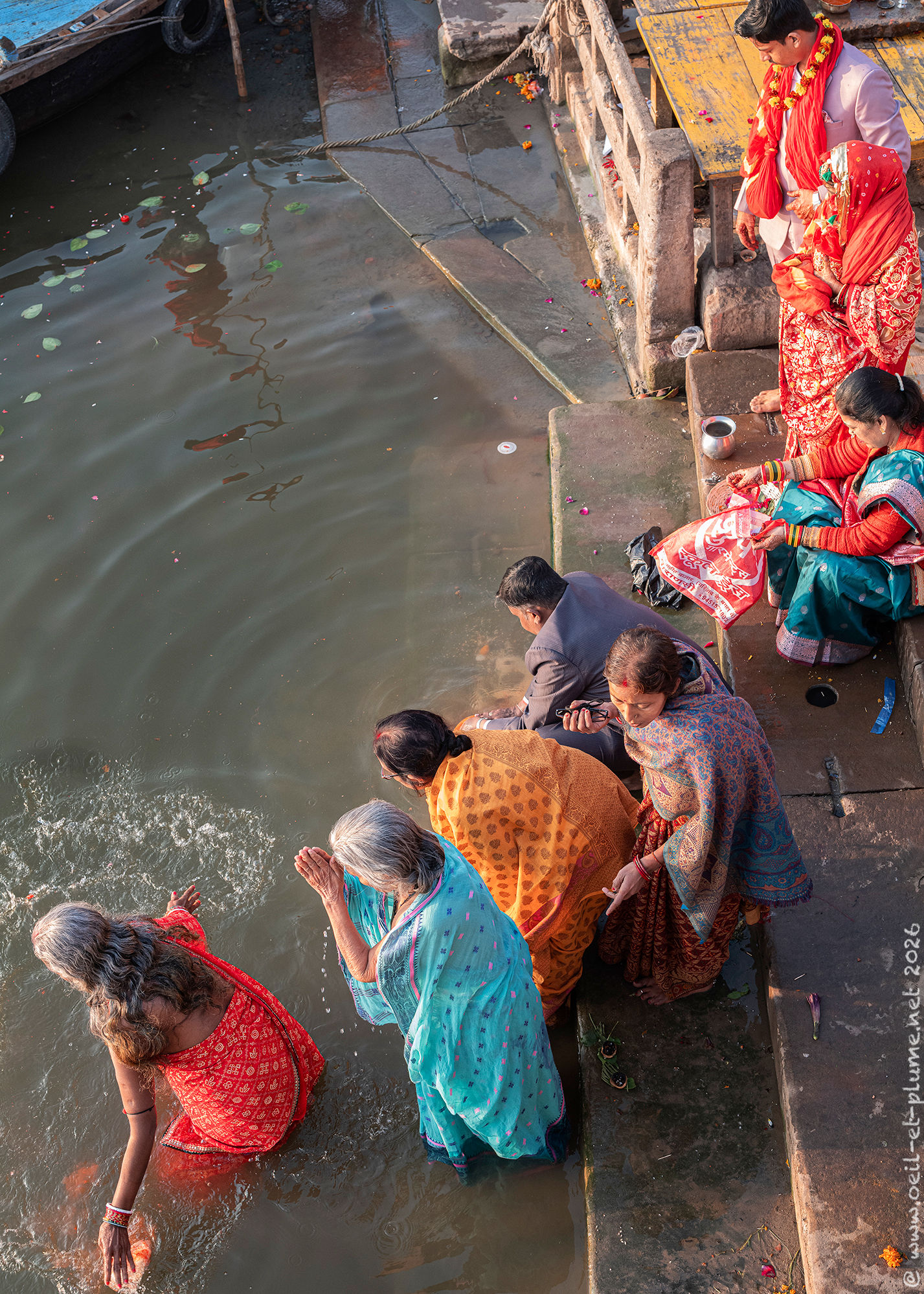
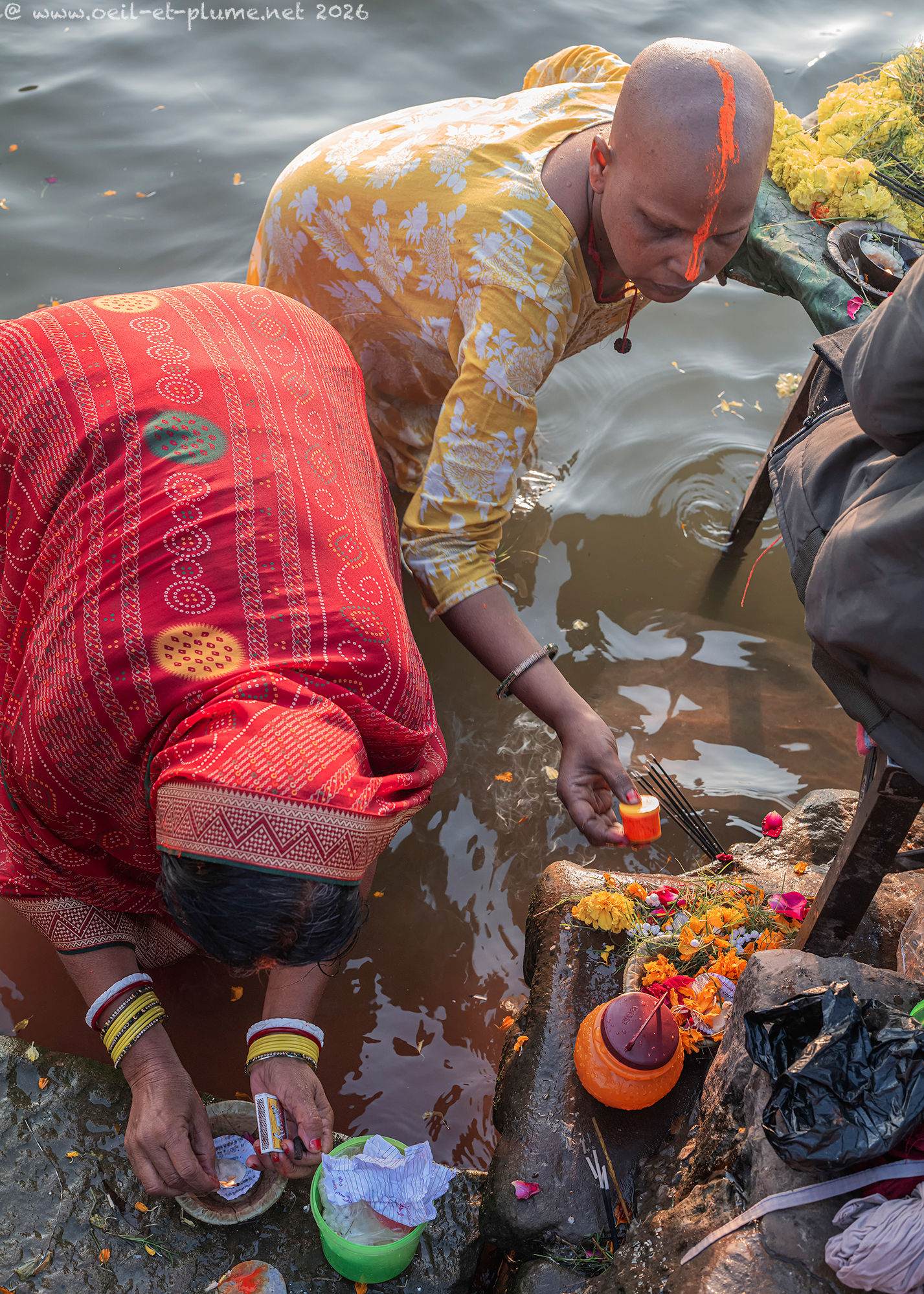
The ritual is a way to thank the River Goddess, who is believed to have descended to Earth, for purifying sins. The diyas represent the “inner light” or hope, with the flickering flame carrying prayers and gratitude across the water. Floating diyas is a common way to pay respect to ancestors and loved ones who have passed away.
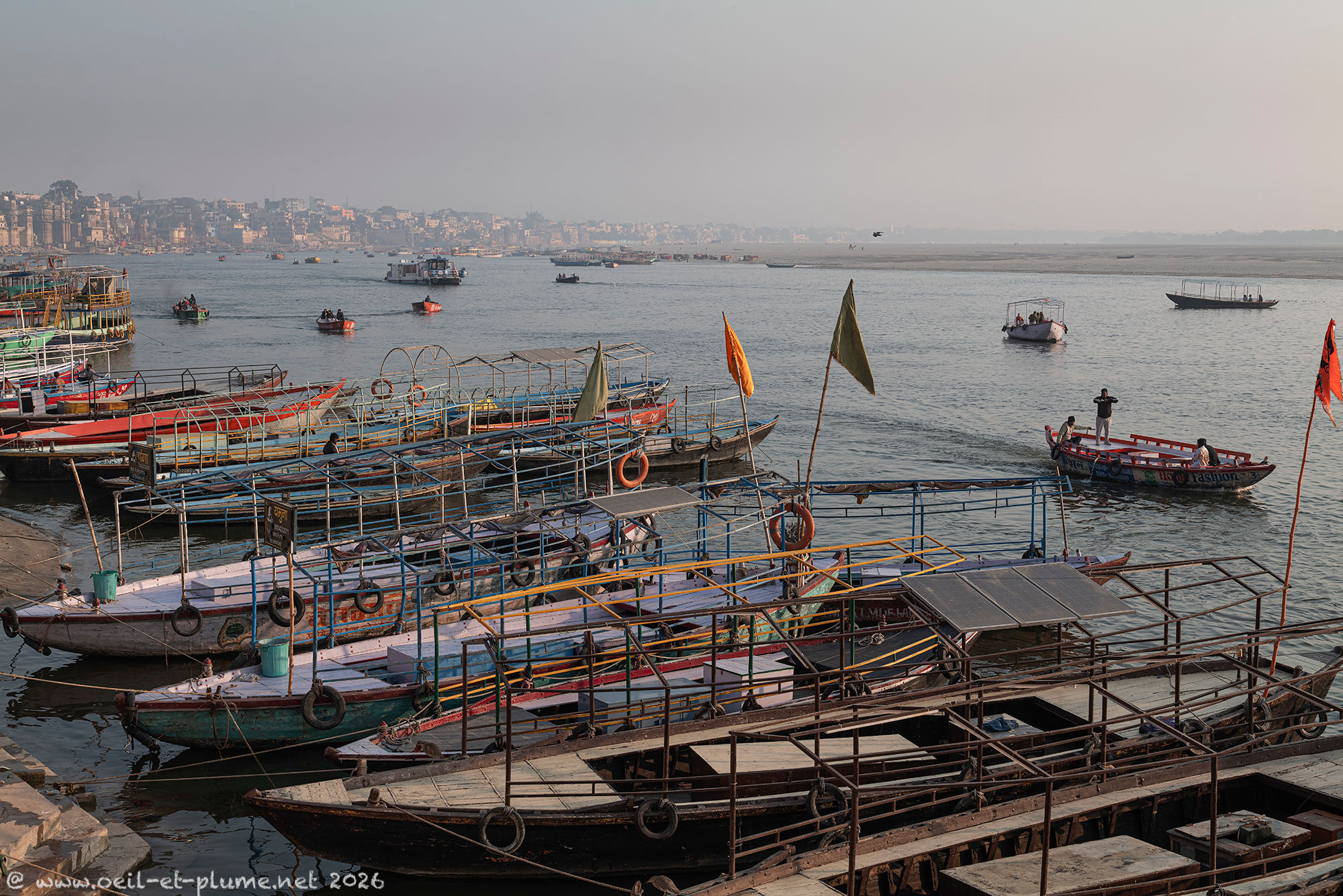
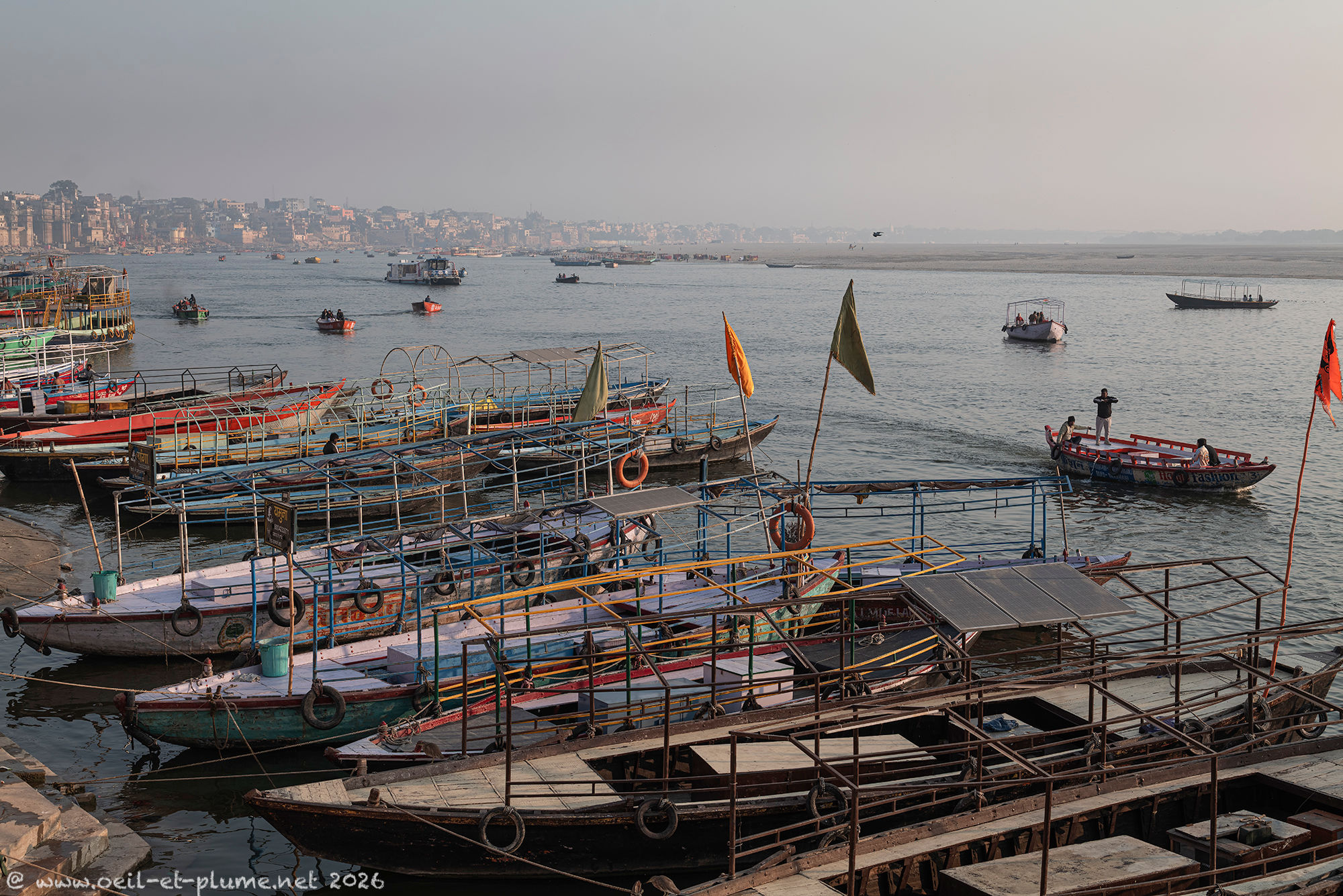
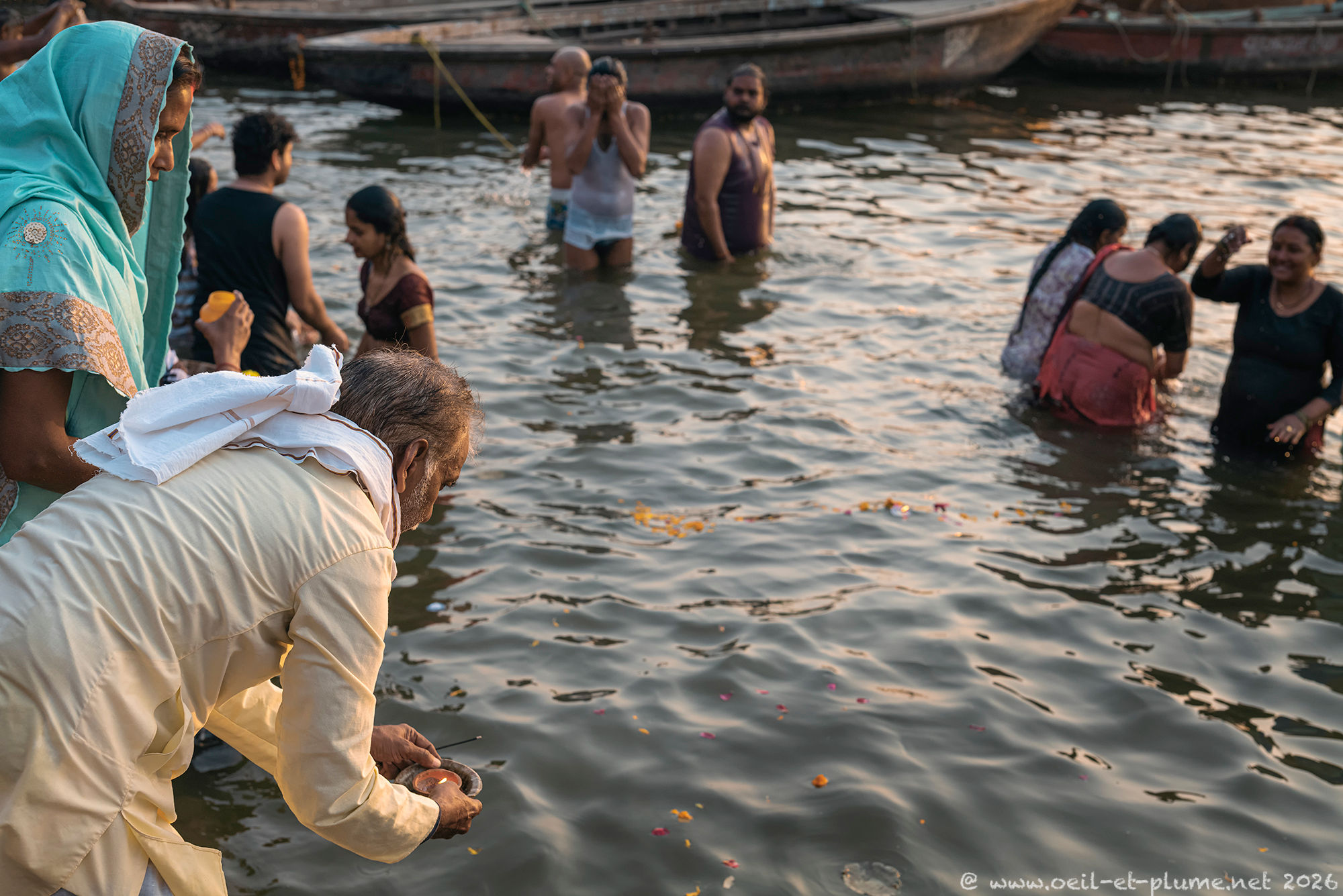
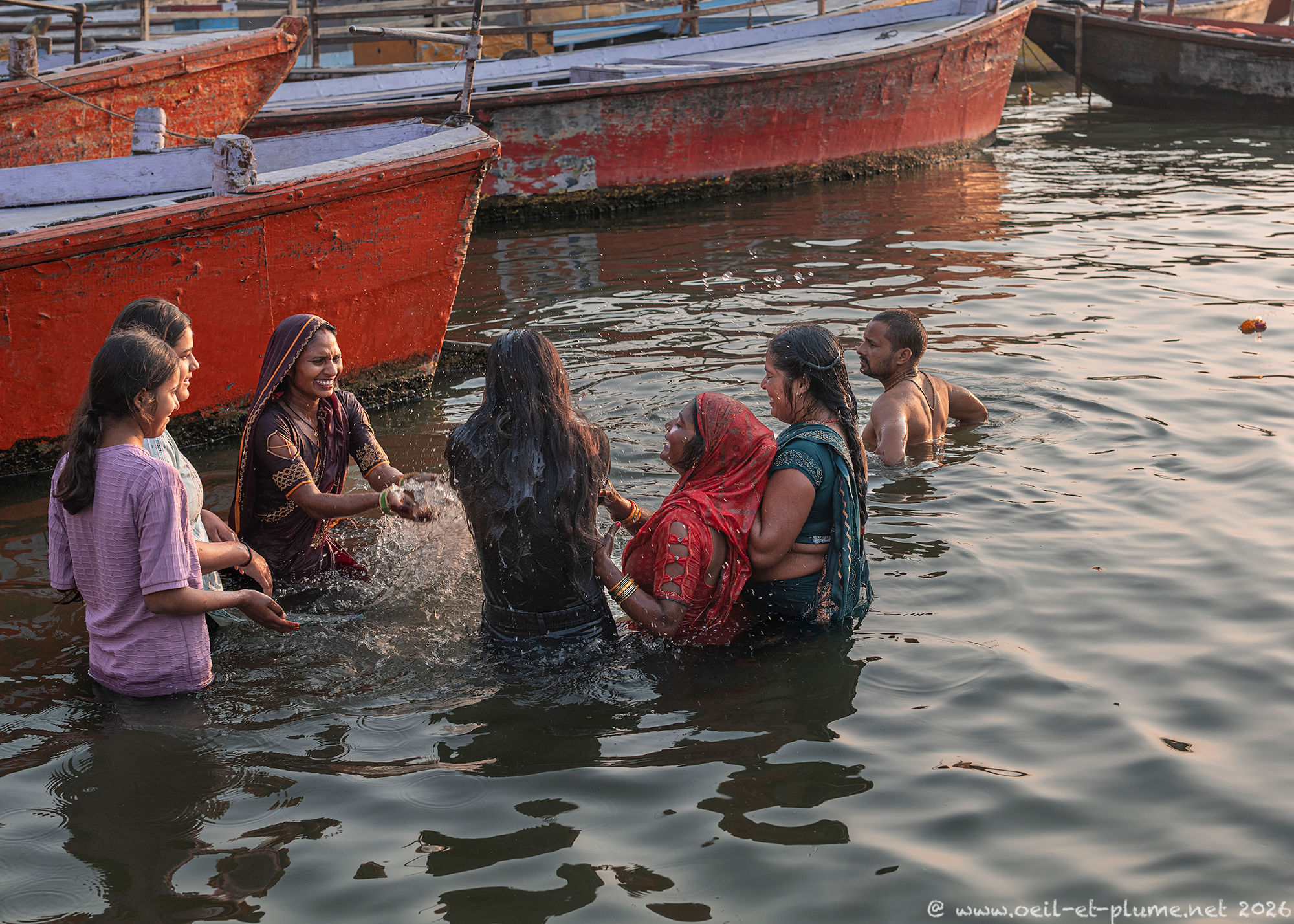
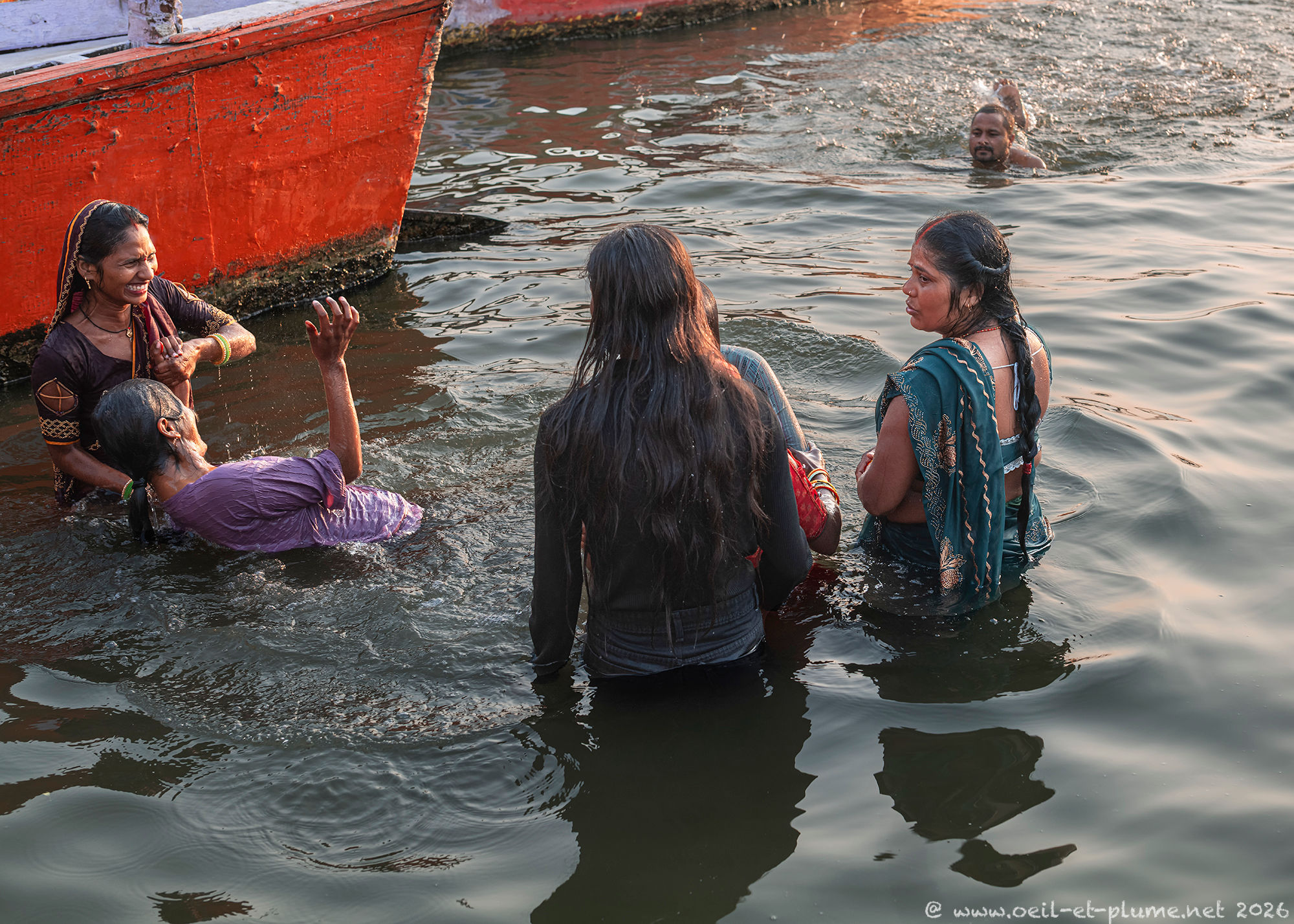
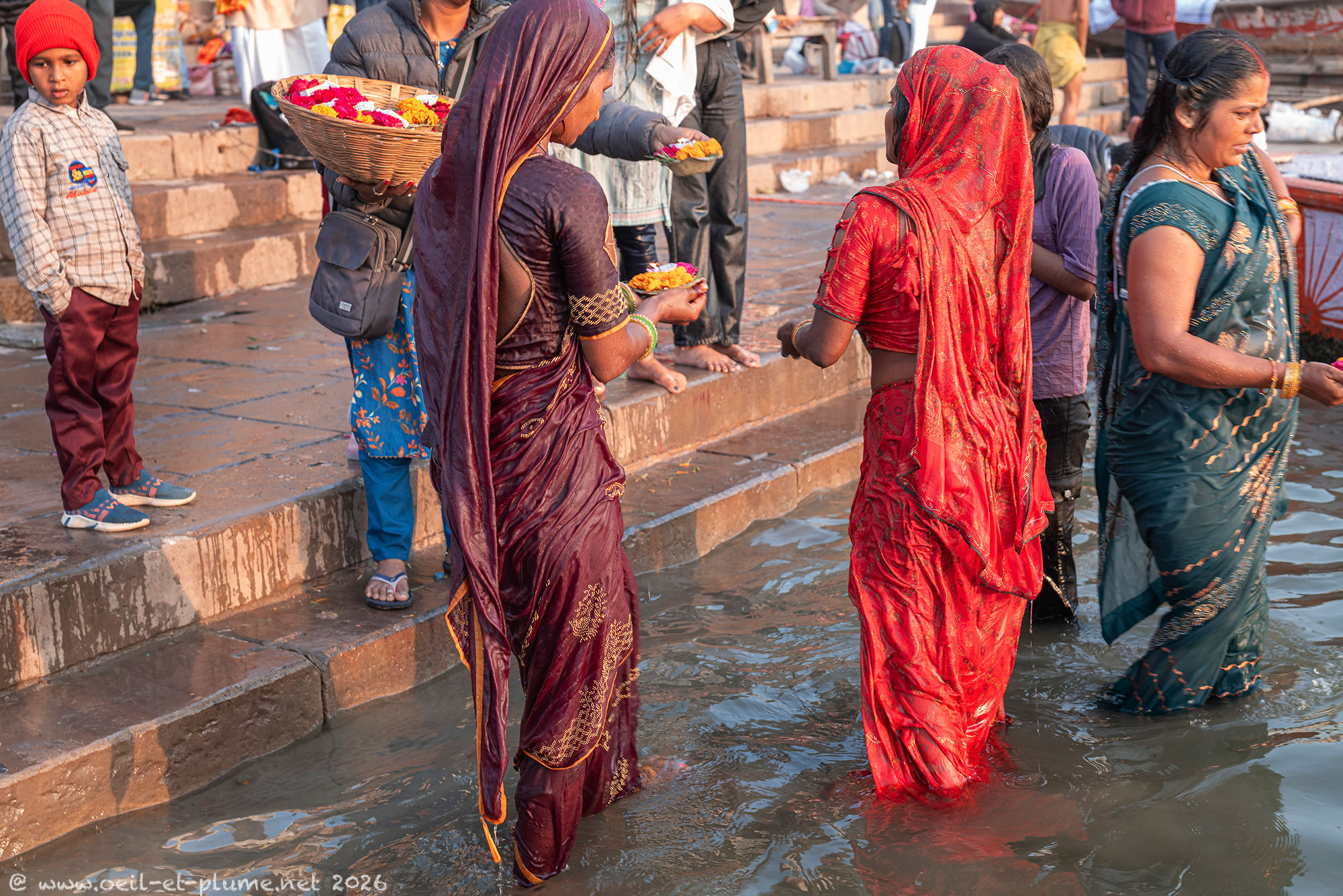
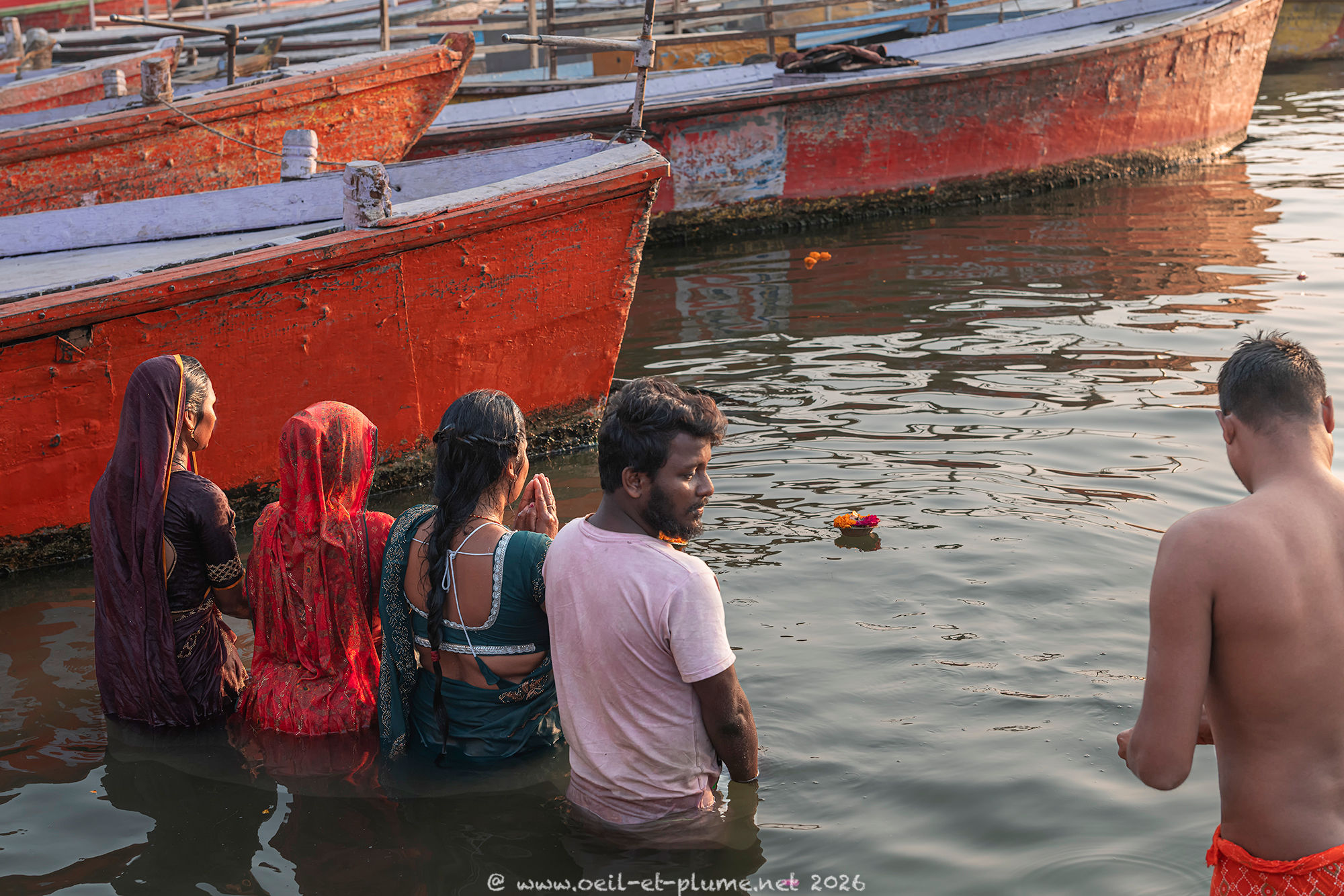
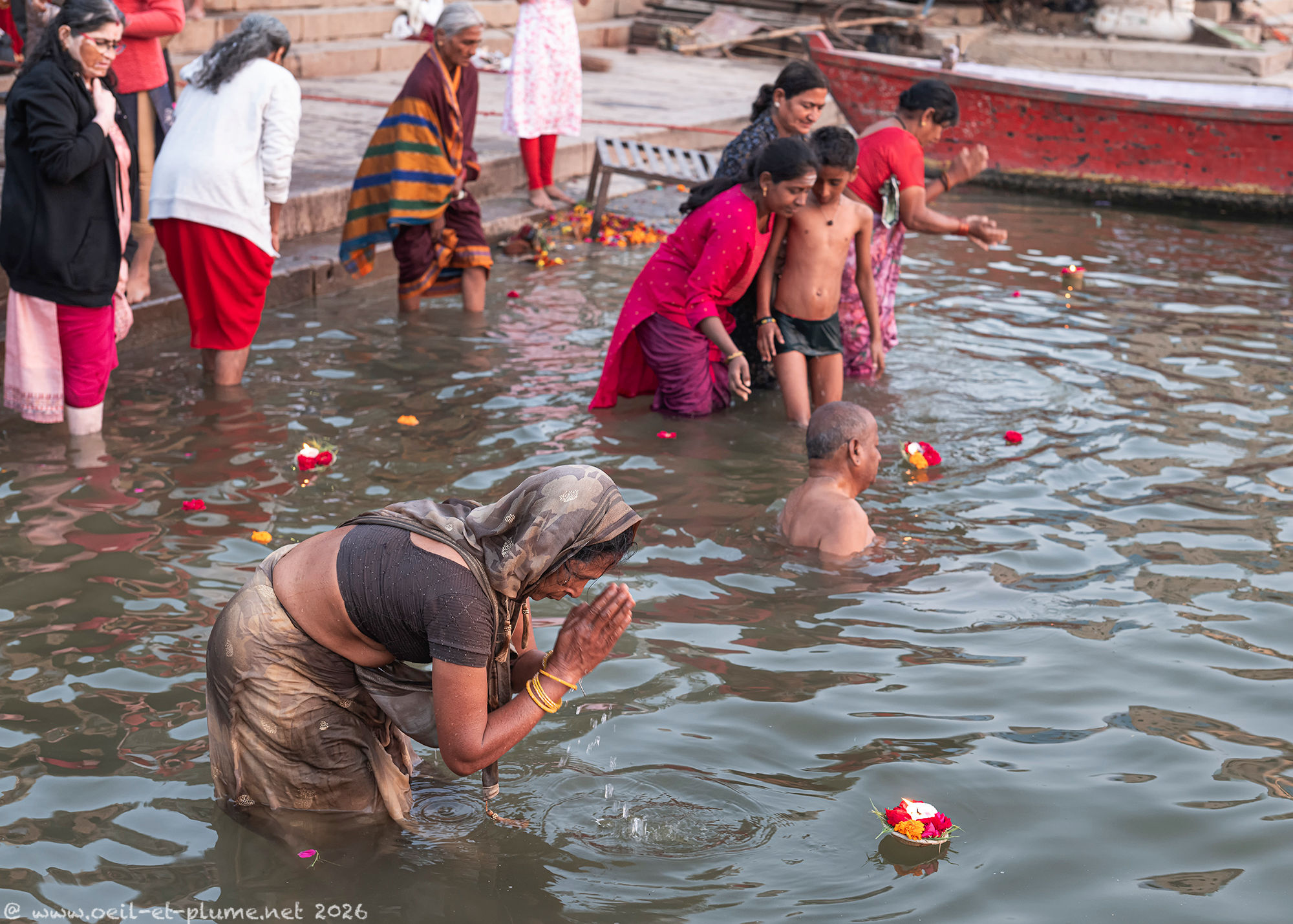
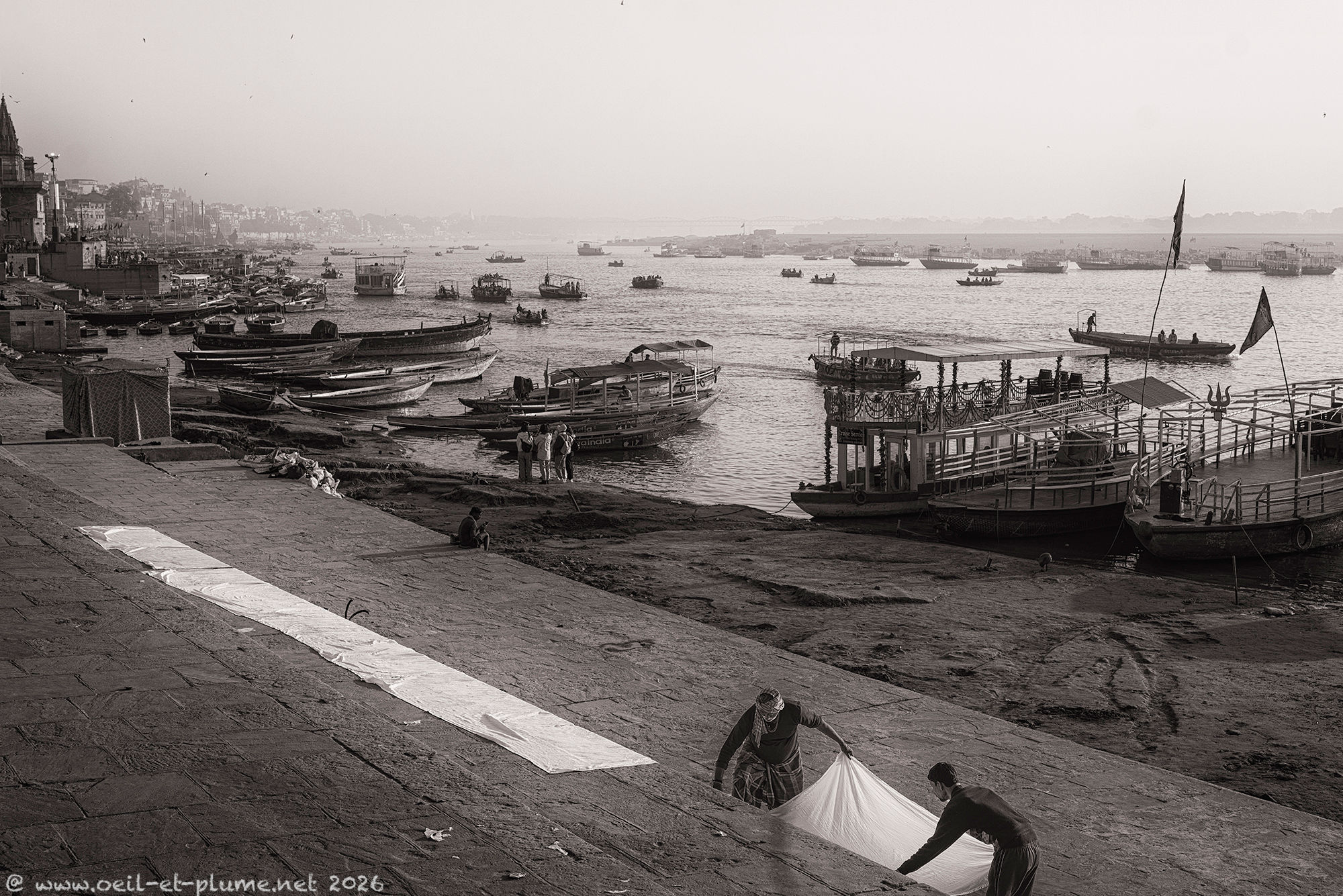
While ritual baths take place all day long, the first hour after dawn is particularly strong spiritually and visually. Later in the day, the atmosphere in the main gaths is less intimate and much busier, albeit still so characteristic of Vanarasi. Fortunately, less crowded ghats propose other photographic opportunities.
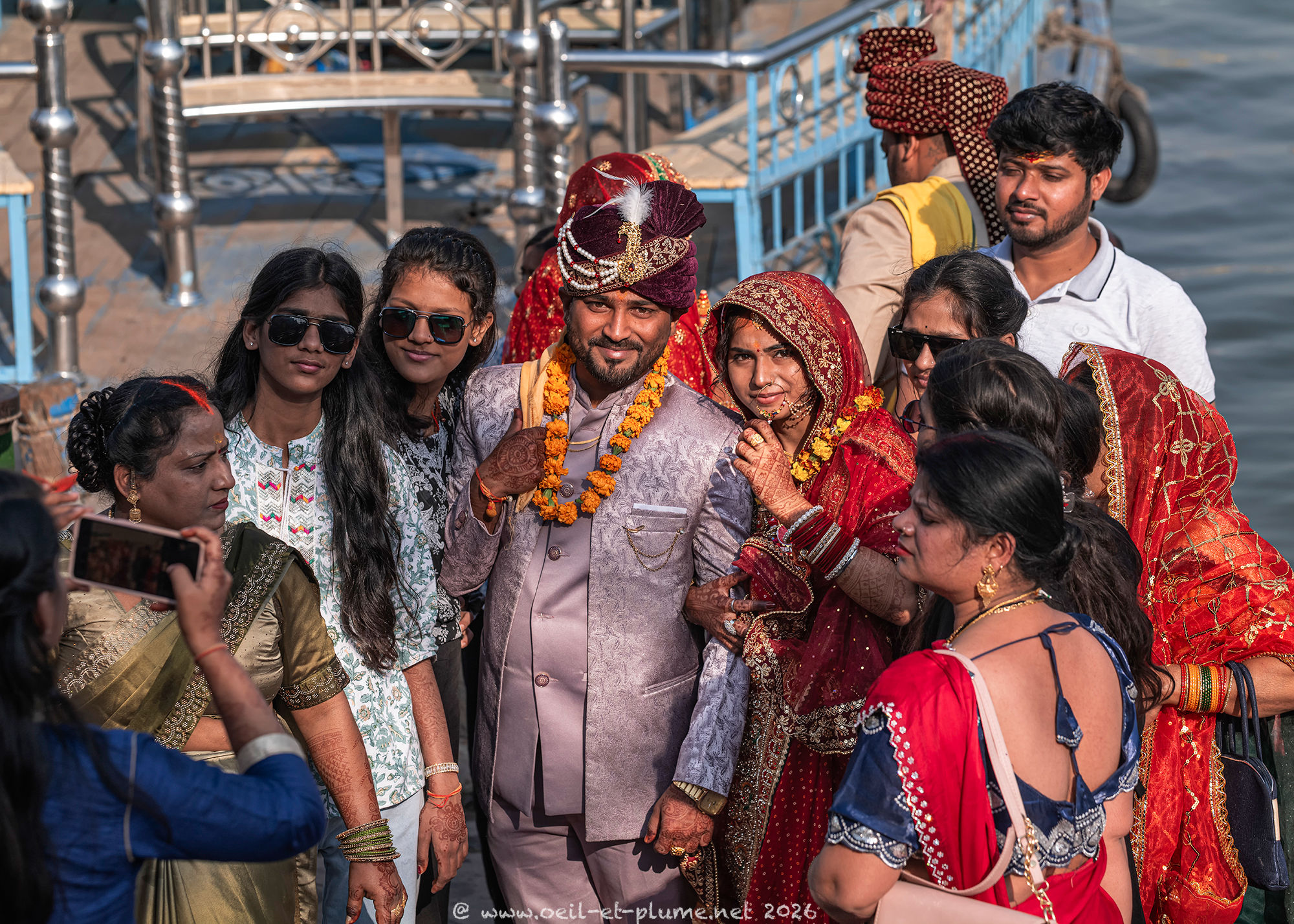
Newlyweds’ blessings
Mother Ganga is worshipped with daily offerings, and rituals involving the river are performed for fertility, marriage, and prosperity. Everyday, dozens of newly wedded couple pay a visit to temples located on the ghats and perform rituals for blessing.
Holy men
Vanarasi’s ghats host a wide variety of folks of different brands of faith and different levels of seniority in their religious practice – from novice to master. Such social kaleidoscope is fascinating to observe and interpret.
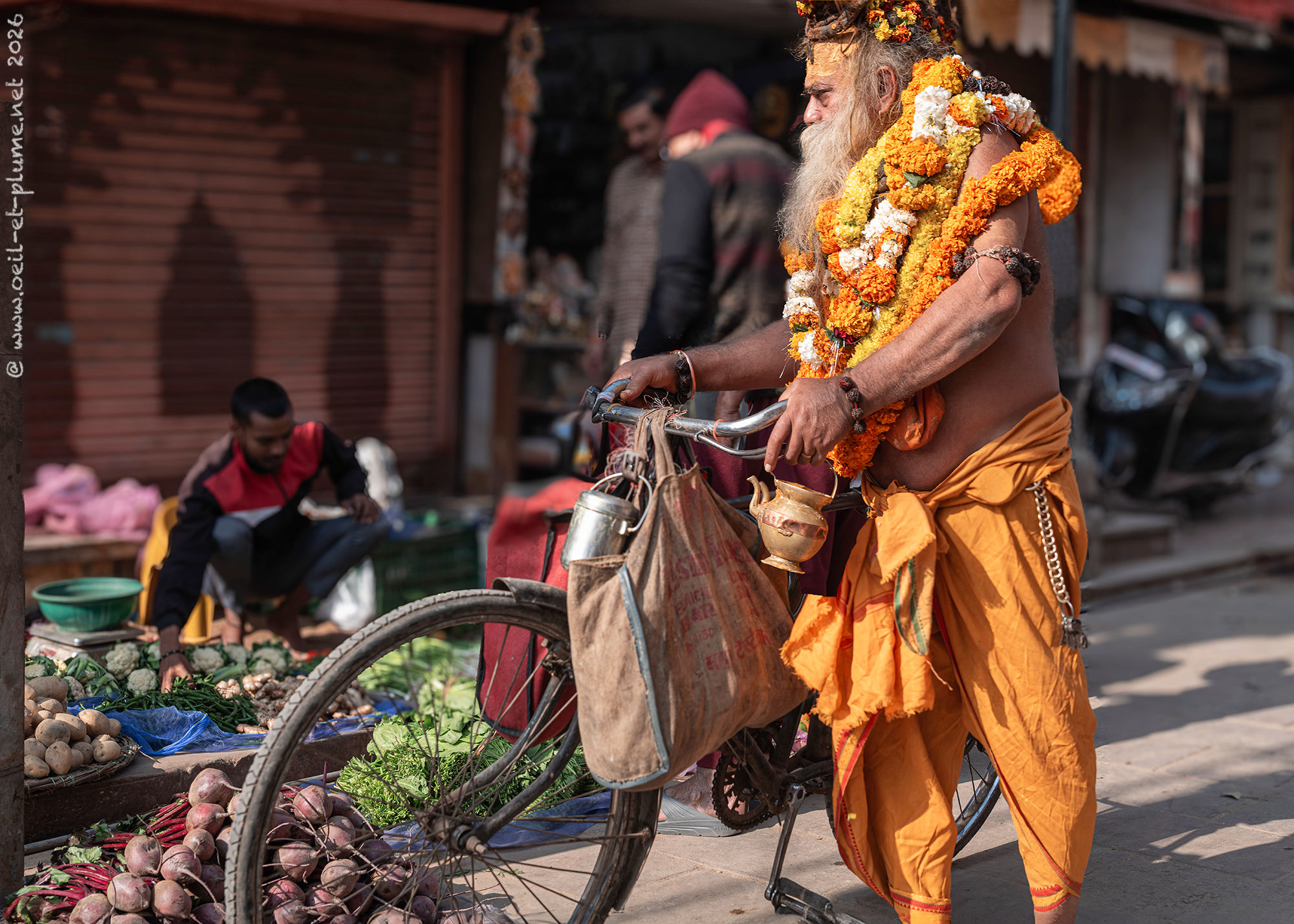
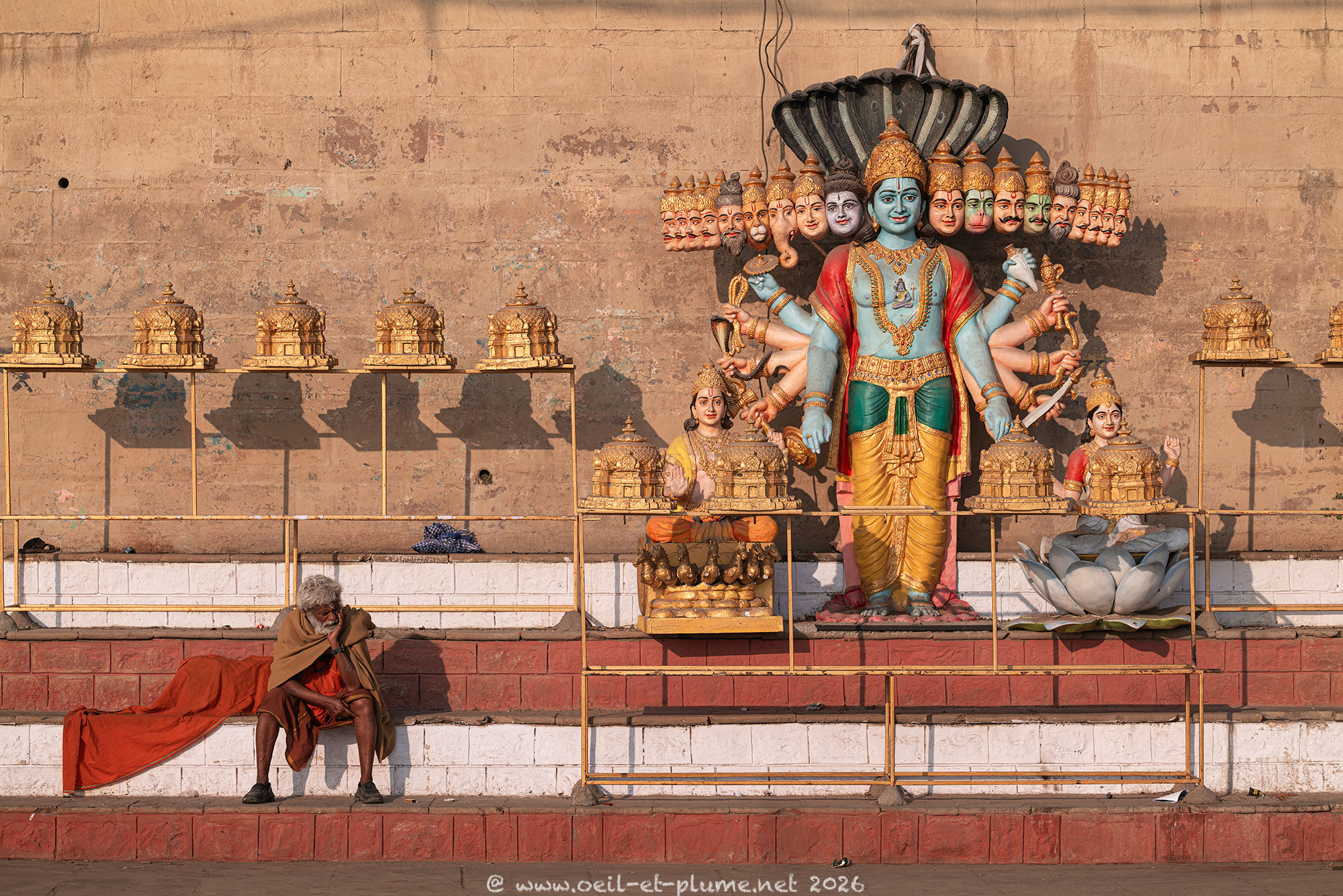
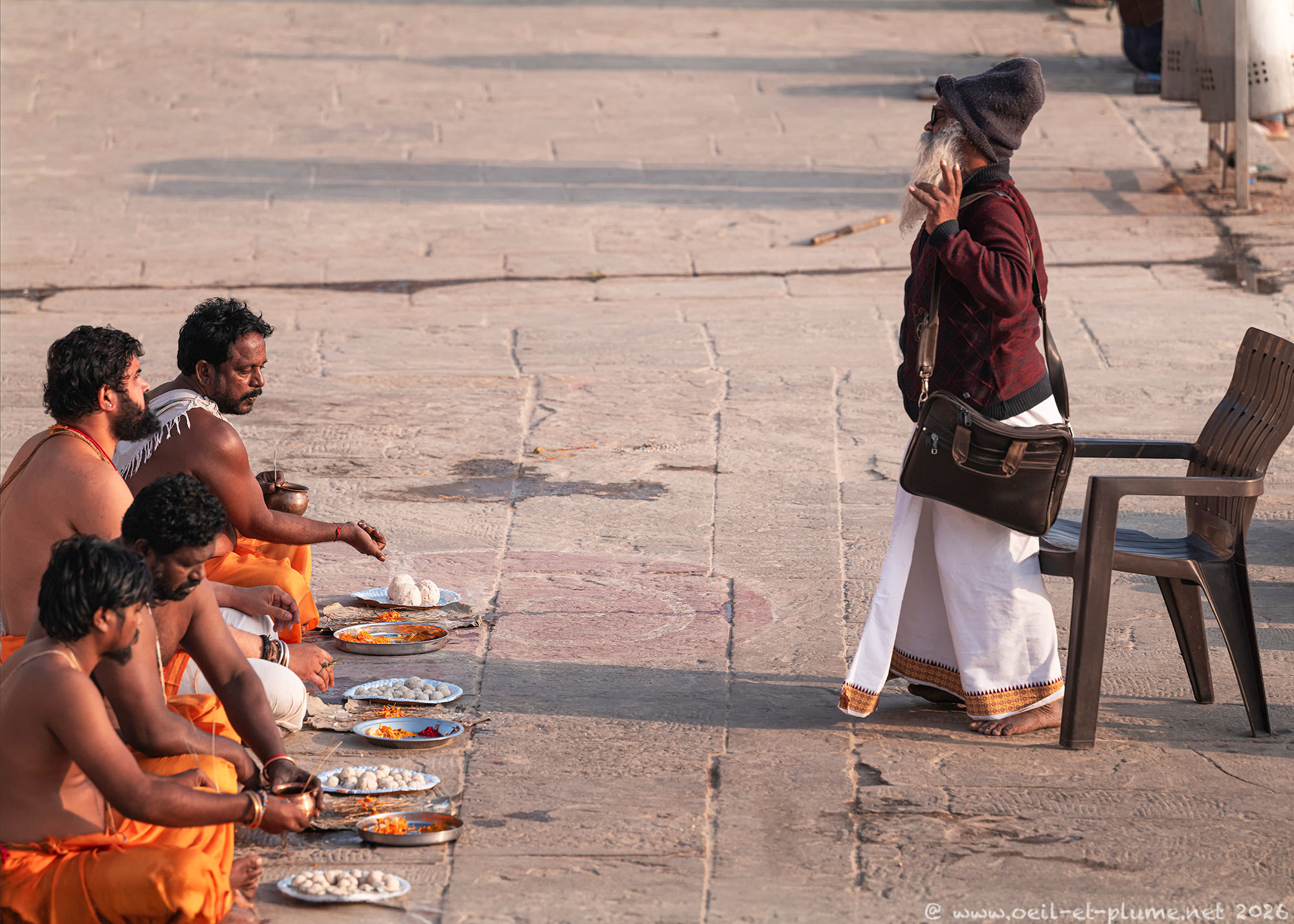
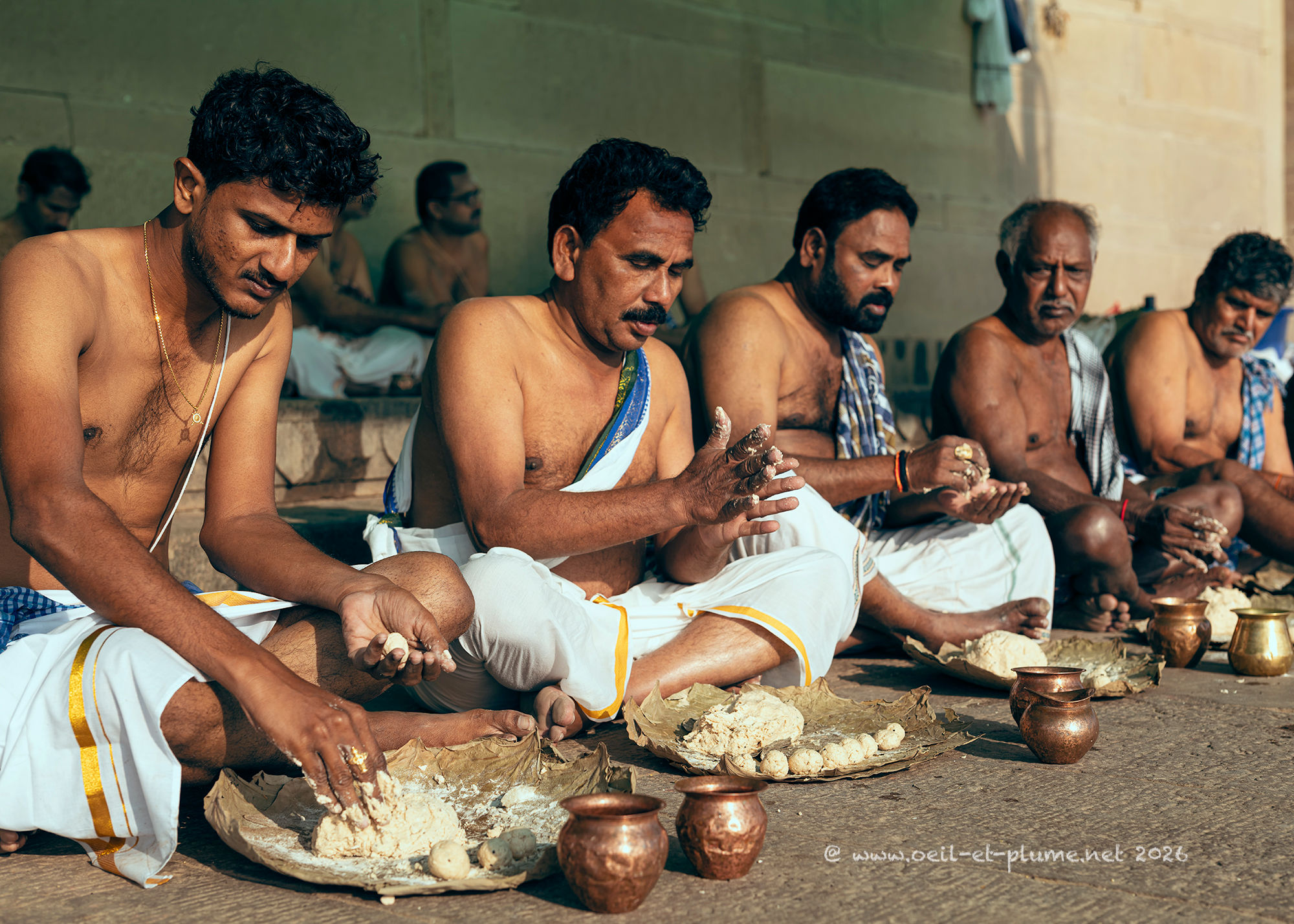
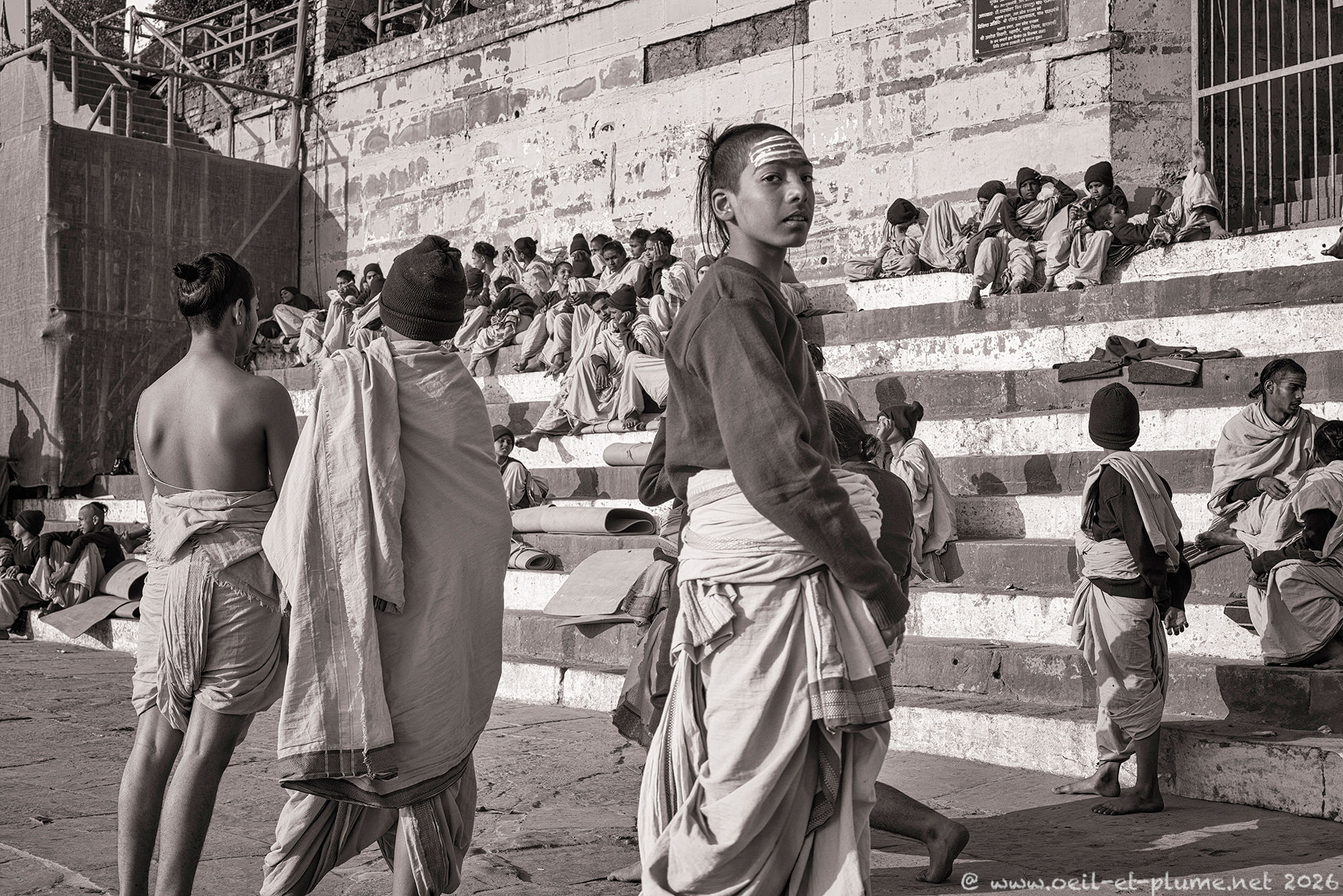
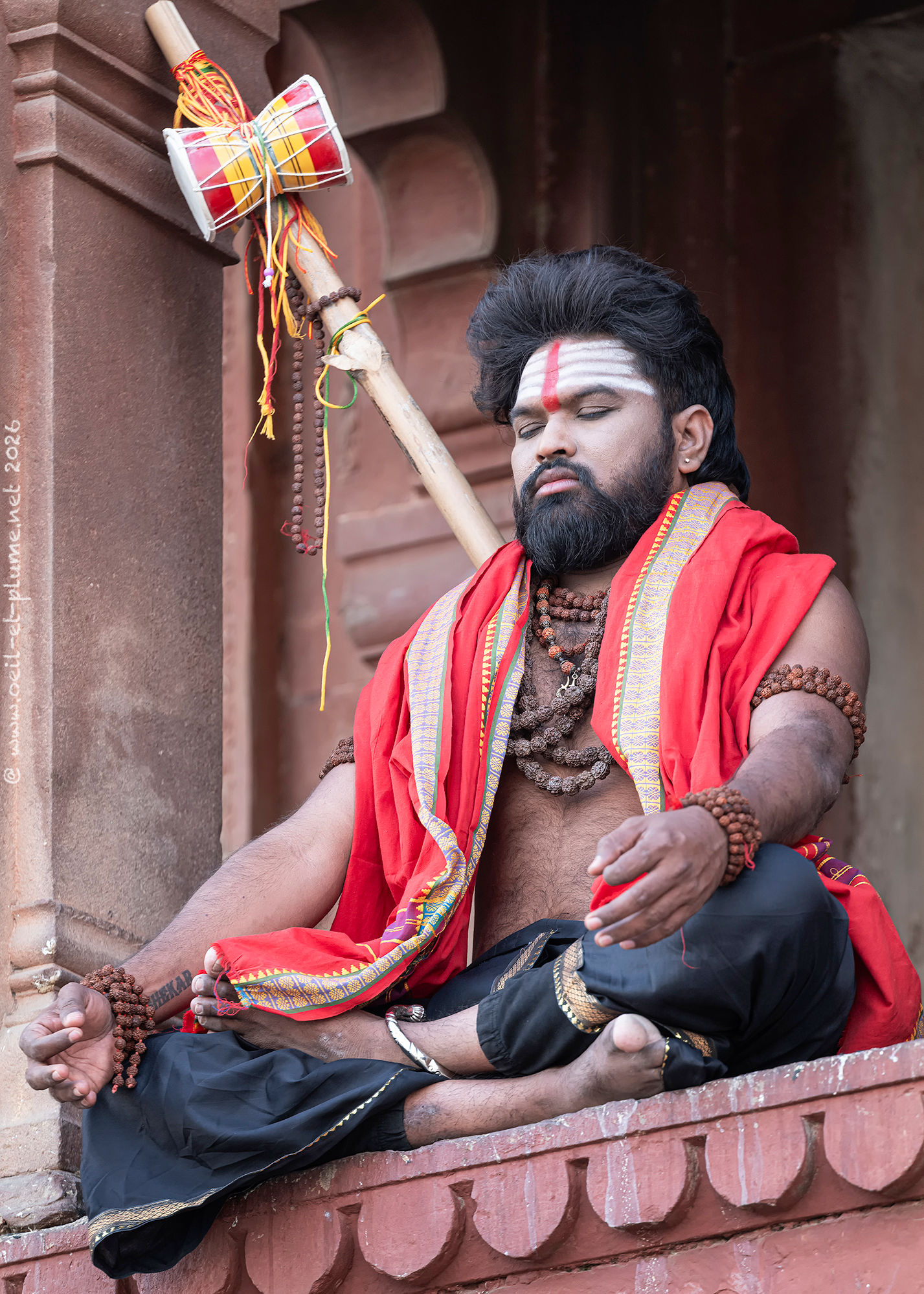
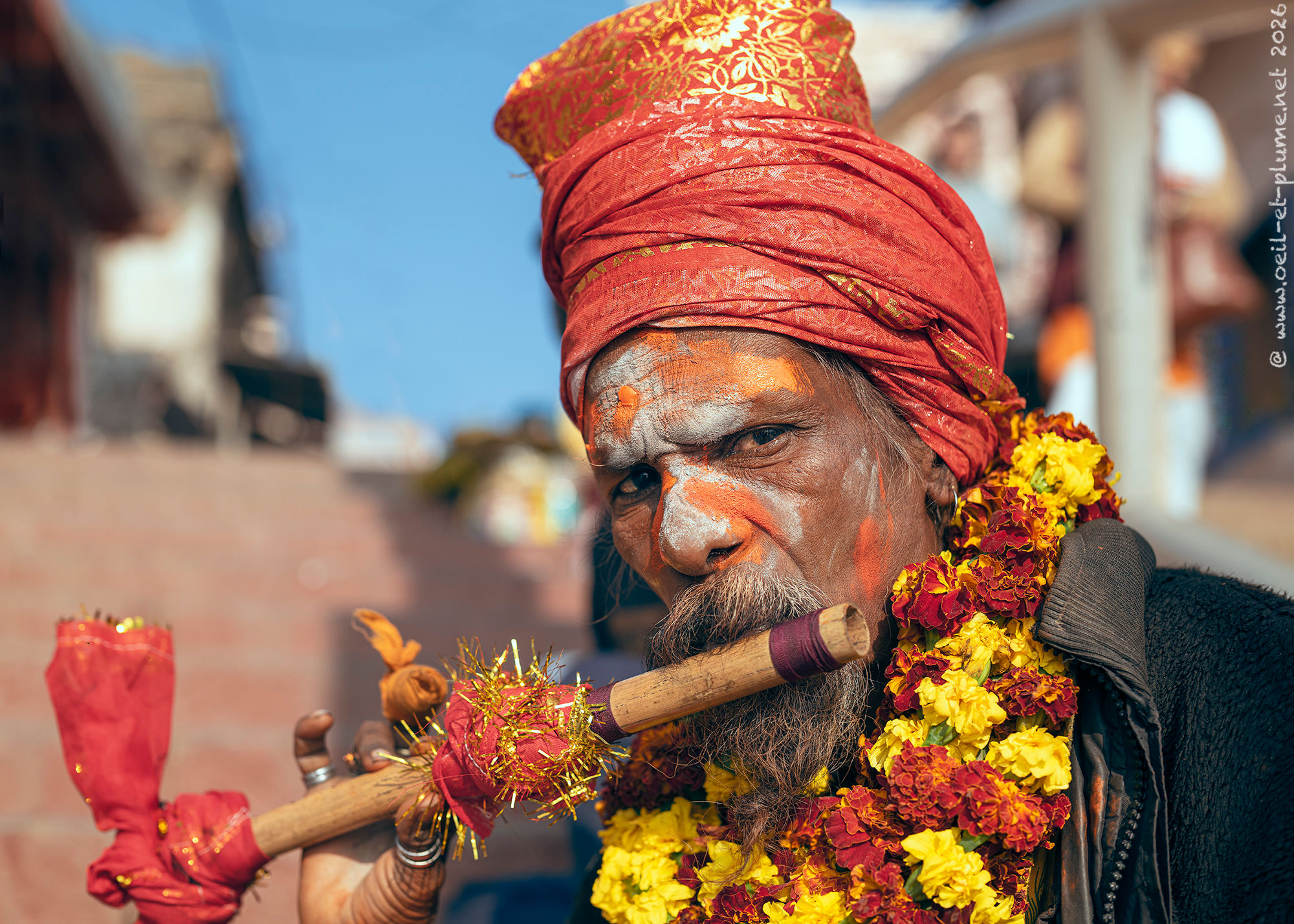
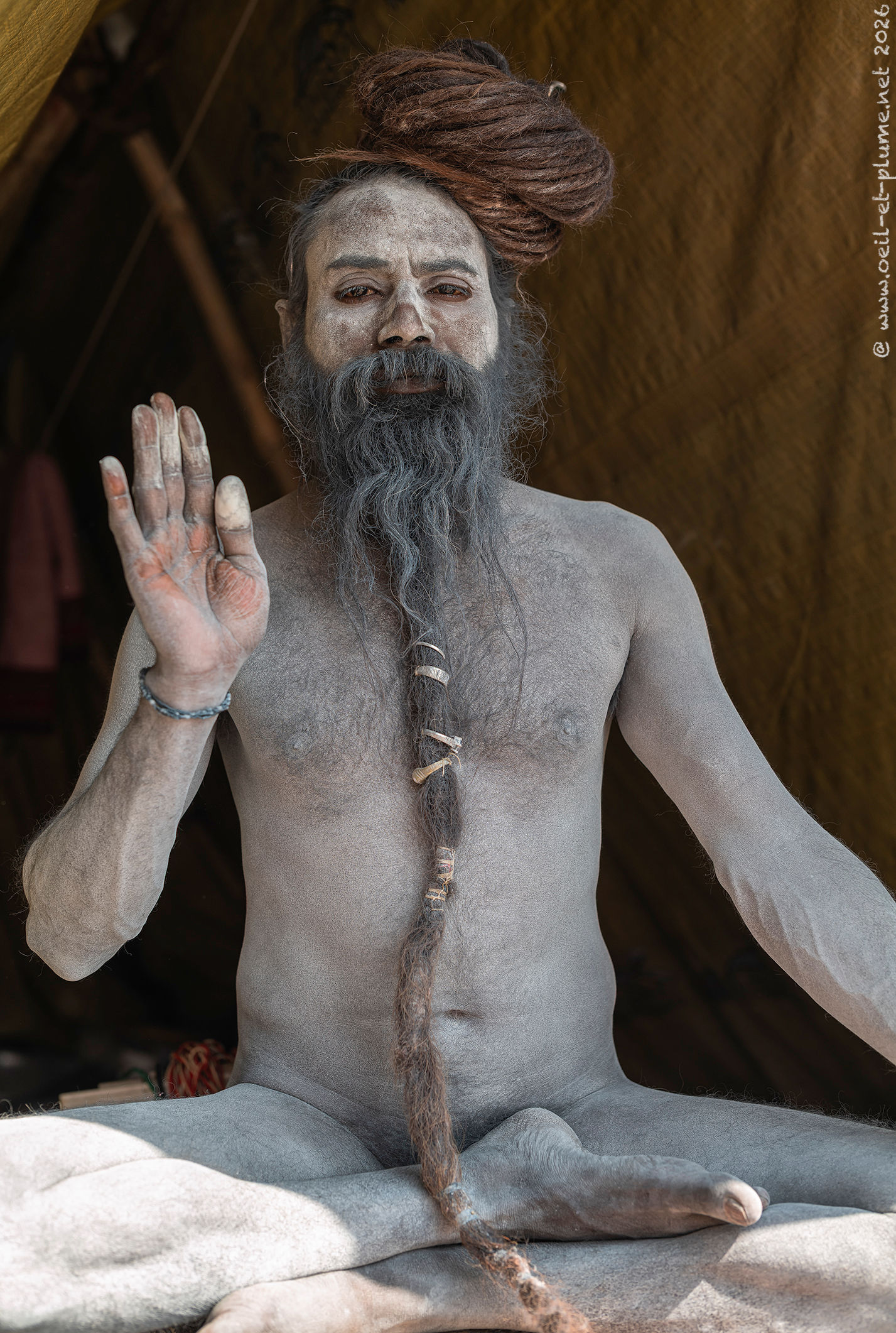
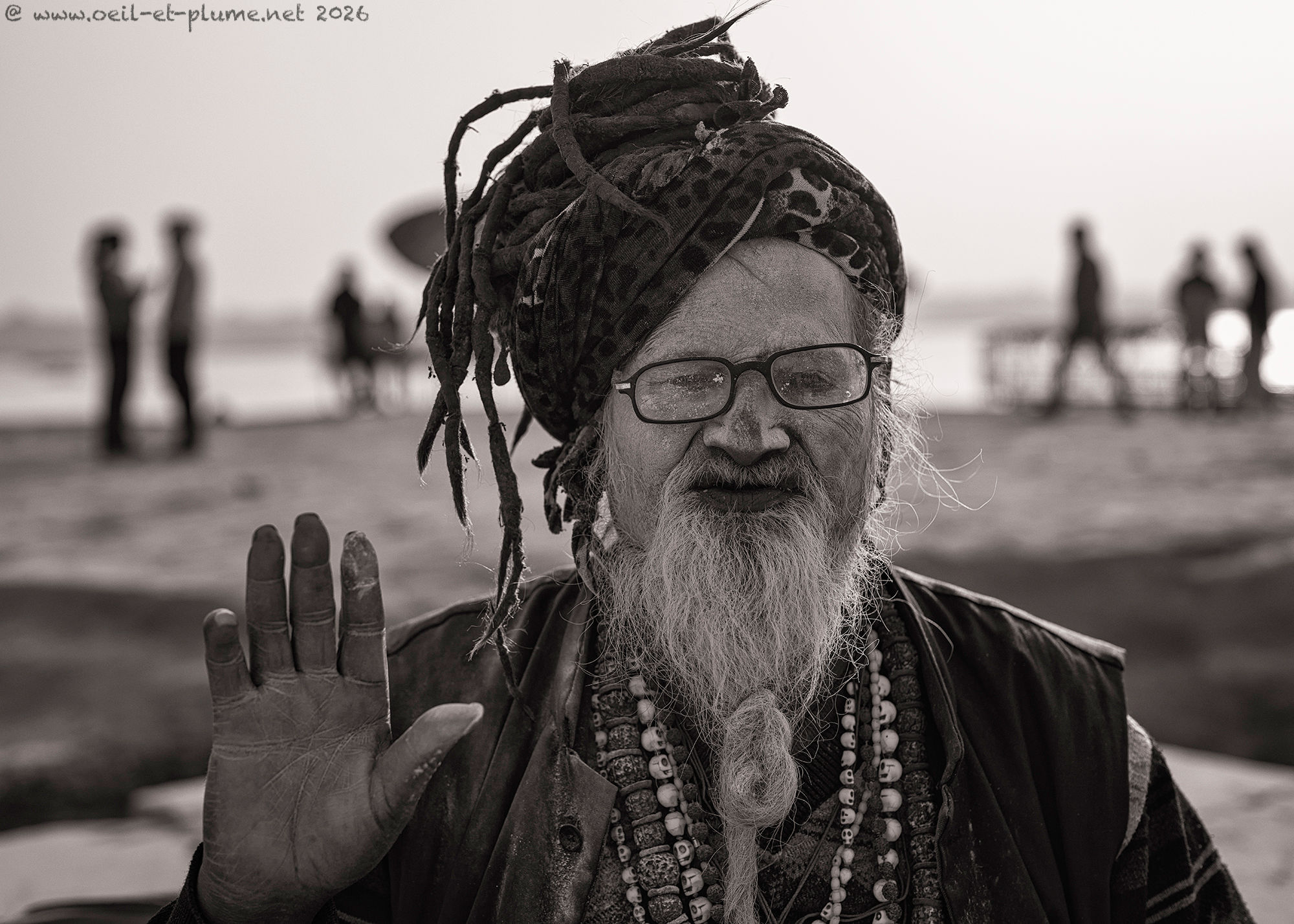
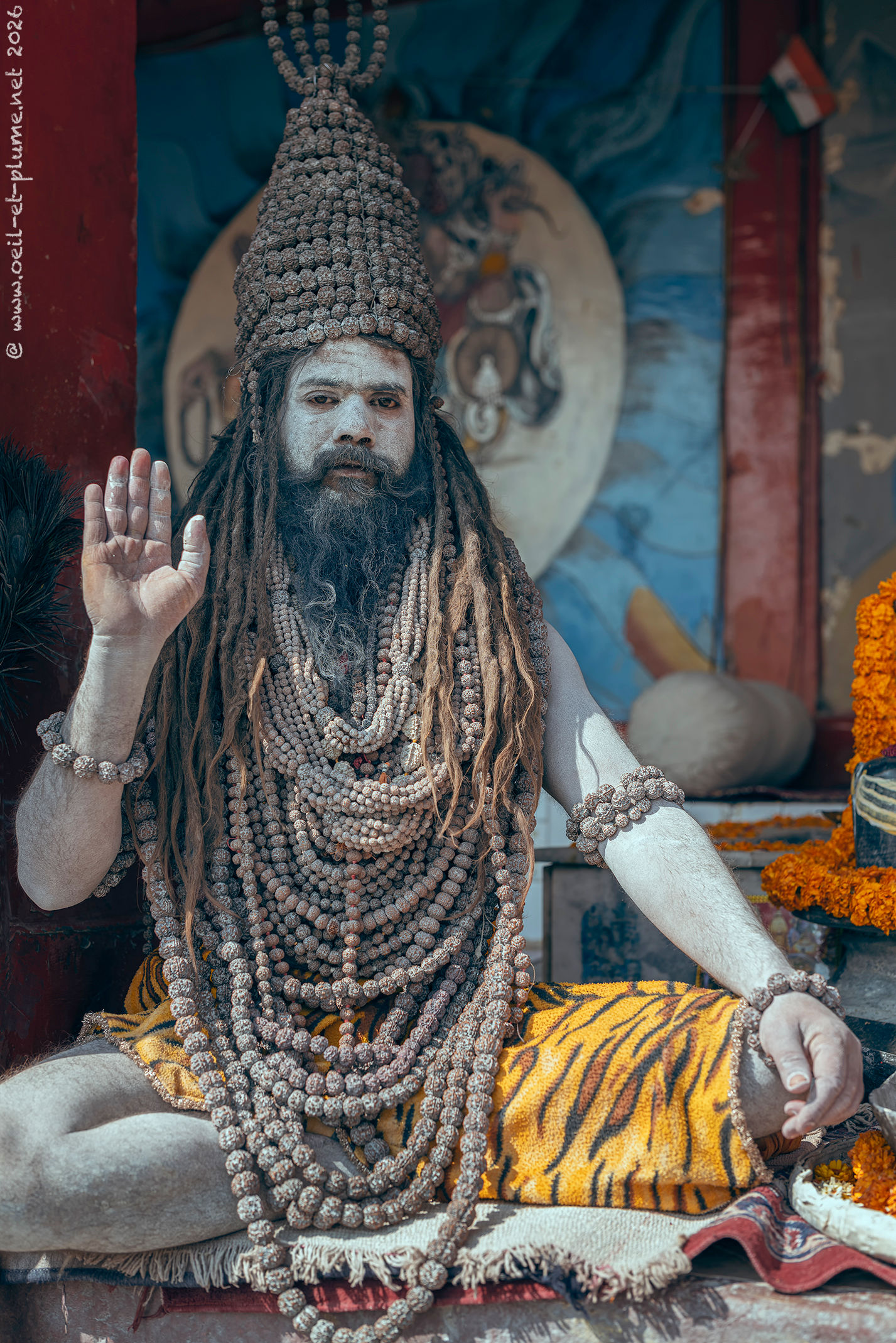
Herewith a few lecture keys of my portrait pictures:
- In Hinduism, the orange color—often referred to as saffron (bhagwa)—is considered a deeply sacred, auspicious color symbolizing renunciation, spirituality, and purity.
- Some Indian sadhus wear clothing with tiger skin designs to emulate Lord Shiva, symbolizing mastery over primal instincts, desire, and ego. This attire represents fearlessness, victory over nature, and detachment from worldly comforts.
- Sadhus wear often many necklaces and bracelets made of holy basil (tulsi) wood and seeds. The plant is regarded as an earthly manifestation of the goddess Lakshmi and a beloved devotee of Lord Vishnu.
- Some sadhus, appear naked with white ash smeared over their bodies to symbolize extreme renunciation of worldly life, detachment from ego and material possessions, and ultimate devotion to Lord Shiva. The ash represents the transitory nature of life and spiritual purification.
- The overwhelming majority of sadhus is male; I met only one female sadhu in Vanarasi. Beyond their spiritual quest, sadhus might also have escaped the cast system, a difficult family situation or economic hardship.
- Not all sadhu-looking people are real Hindu holy men. Some visibly make simply their living out of their religious look and their blessings. Others are contemporary Indian singers or actors recording their performance in Vanarasi ghats with their crew for future broadcasting.
Death and afterlife
The Ganges is considered a path to the ancestors. Many Hindus wish to end their life on its banks, particularly in Varanasi, and have their ashes immersed in the river to achieve liberation from the cycle of life and death.
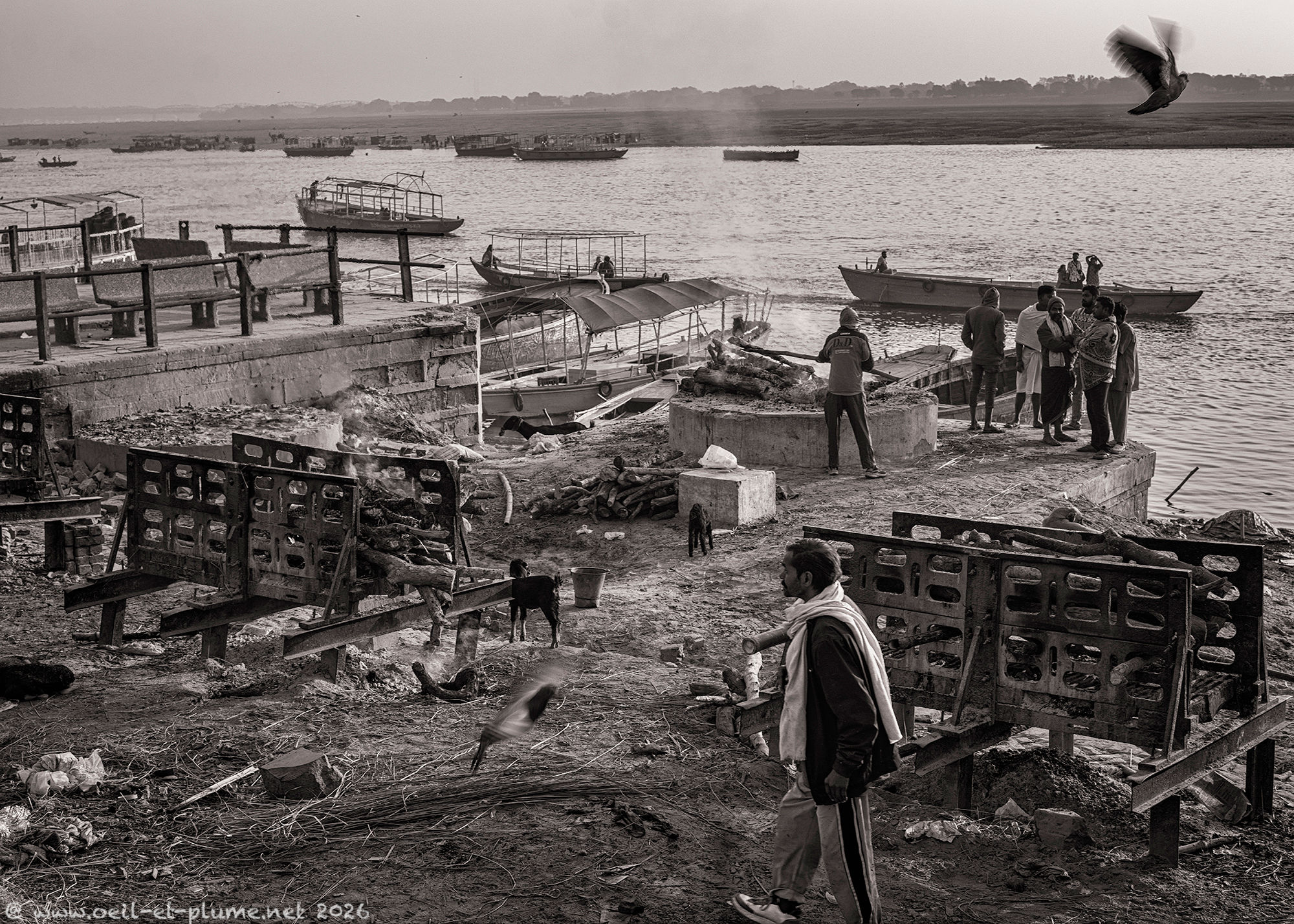
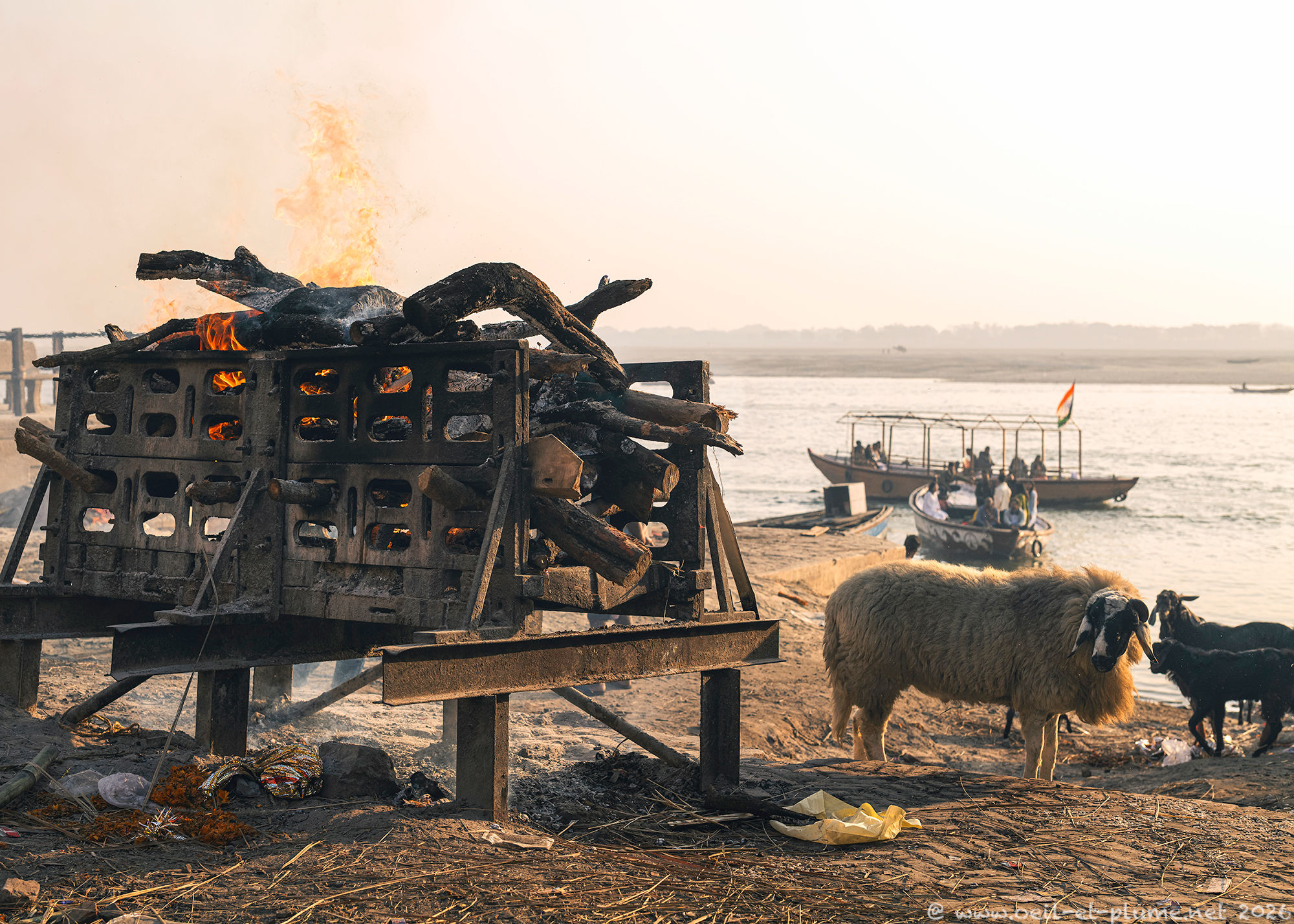
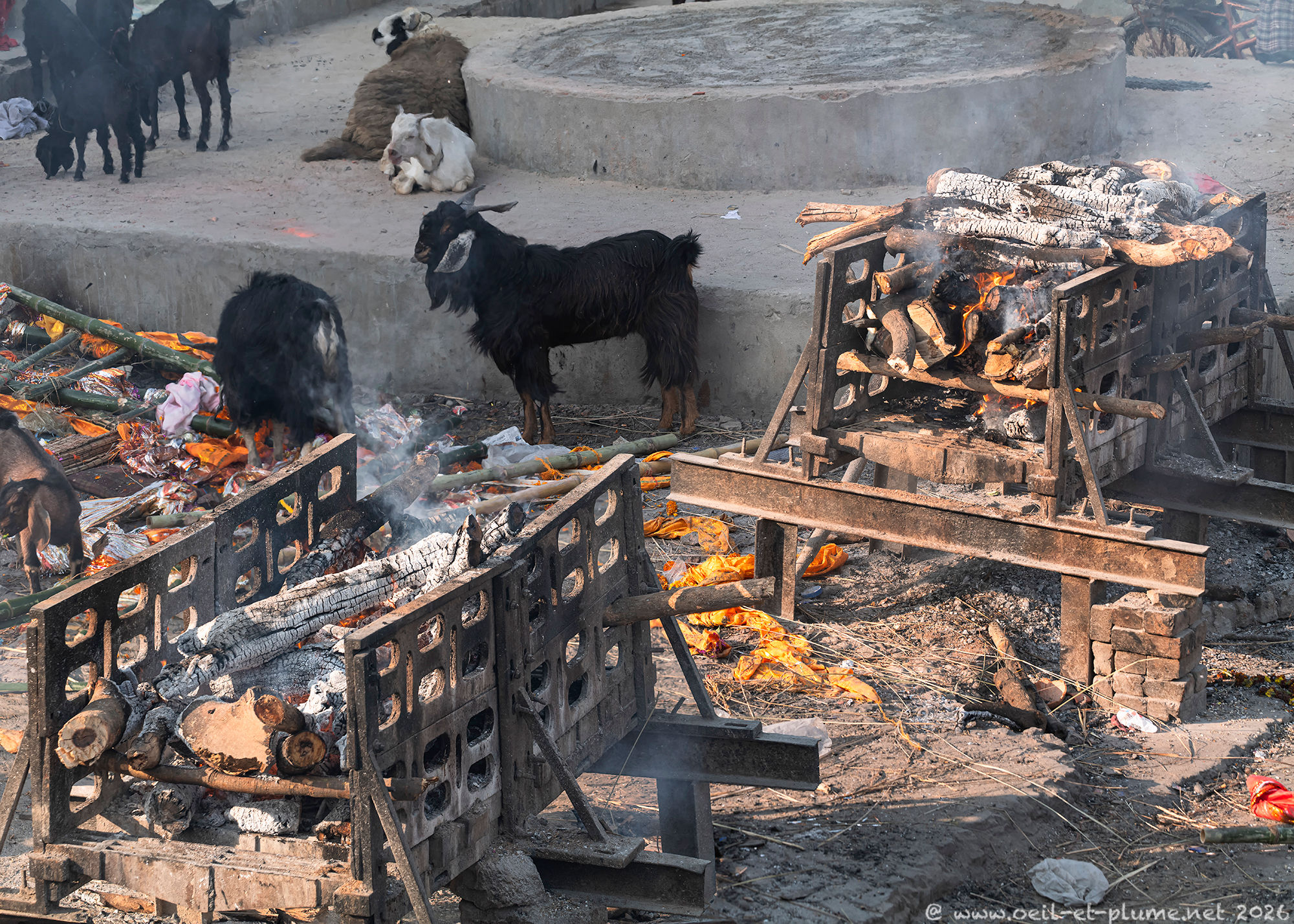
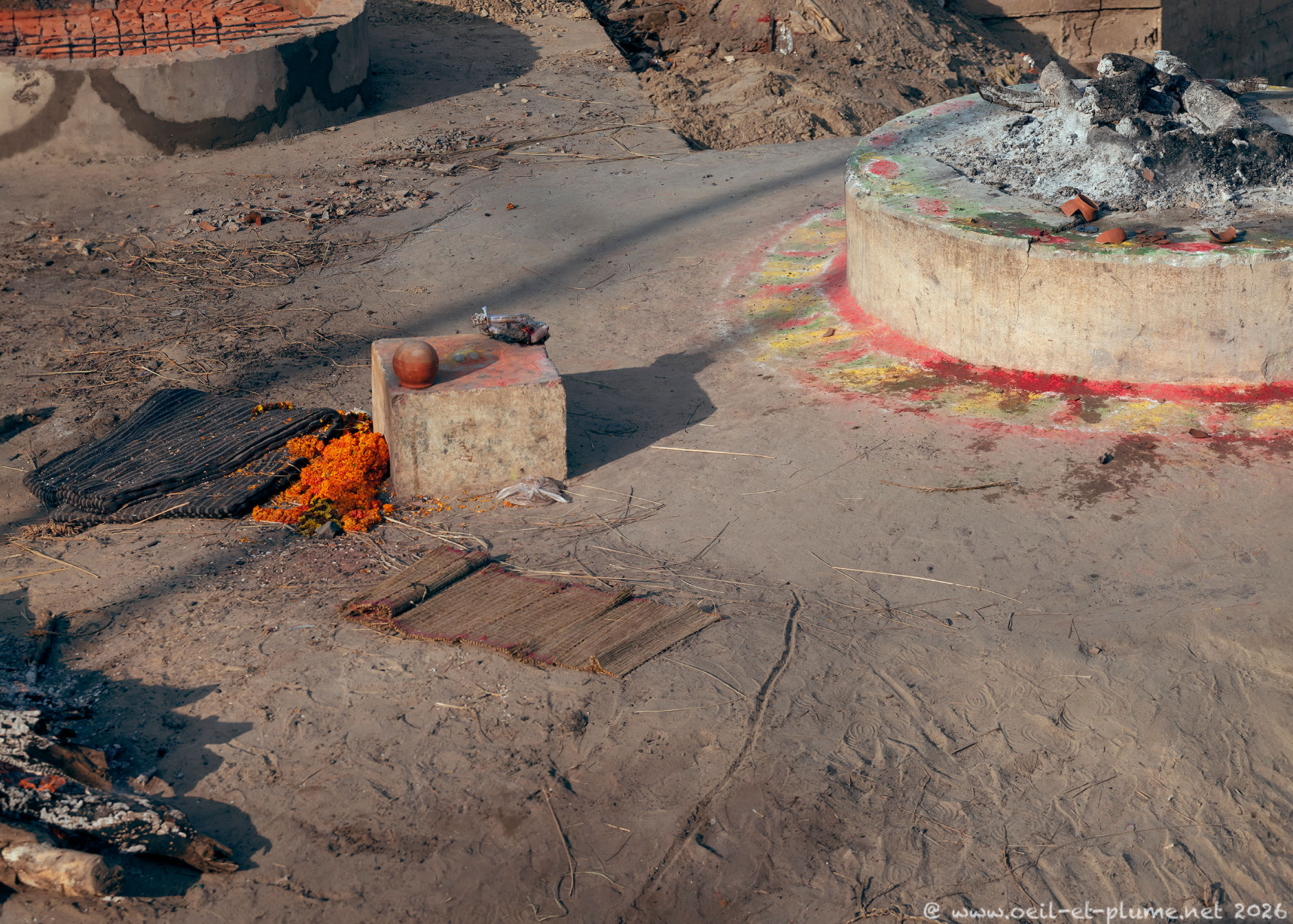
I spent some time in a small cremation site, much more accessible than the main one in Vanarasi. The mortal remains are first washed in the Ganga River before its preparation for cremation. Butter and other substances are added to the fire to facilitate the burning and neutralise smell. Cast system and economic capacity define the exact modalities of cremation:
- The poorest people rely on modern incineration techniques, and dispose the ashes into the Gangus.
- People with some financial capacity purchase a certain amount of wood, which they complement with dried cow poo.
- Middle class people use only wood and burn the body in a different location.
- Upper class people use wood, including tulsi twigs and sometime including rare and expensive one such as sandal, and perform the burning in a round-shaped altar.
Ganga Aarti
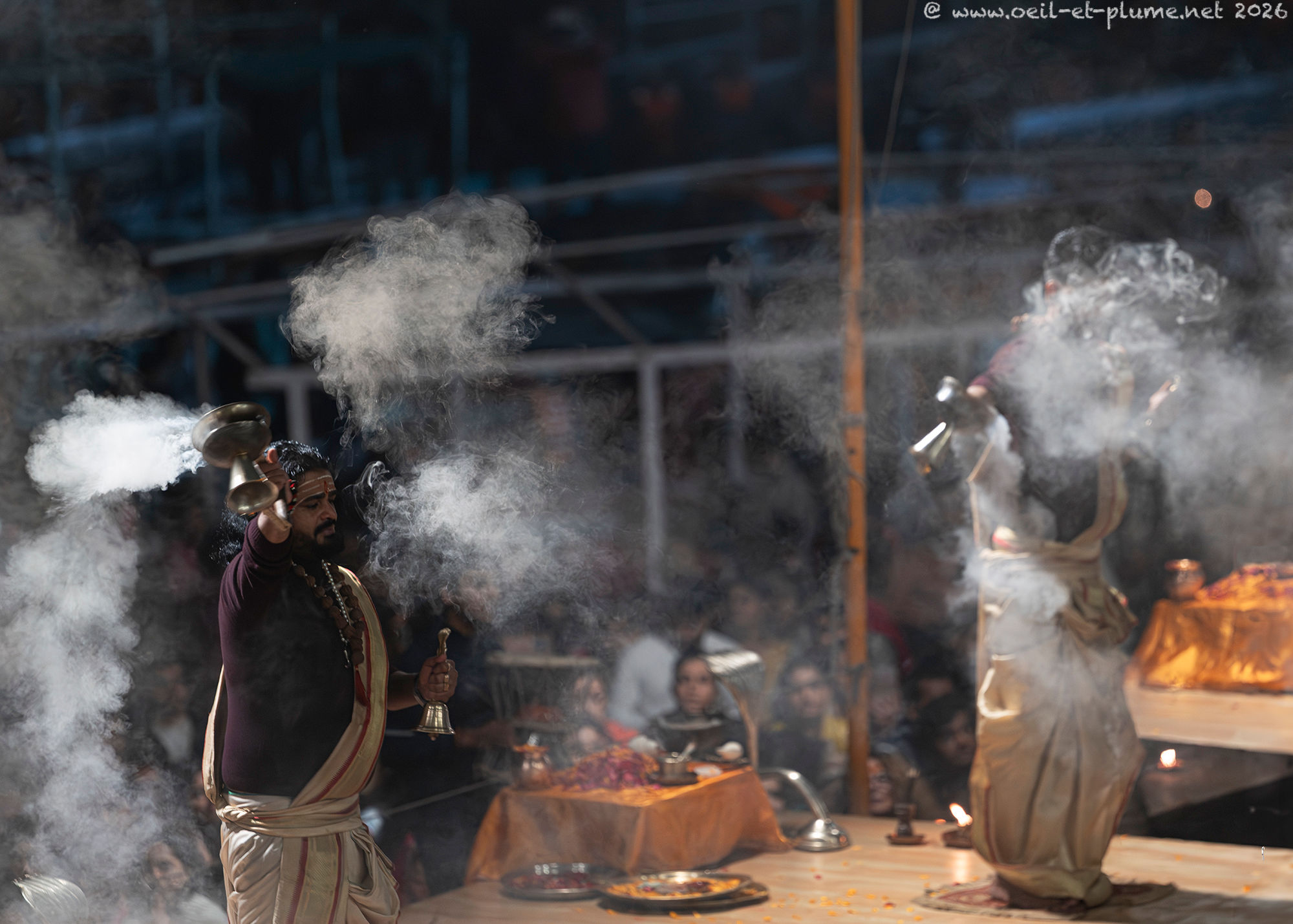
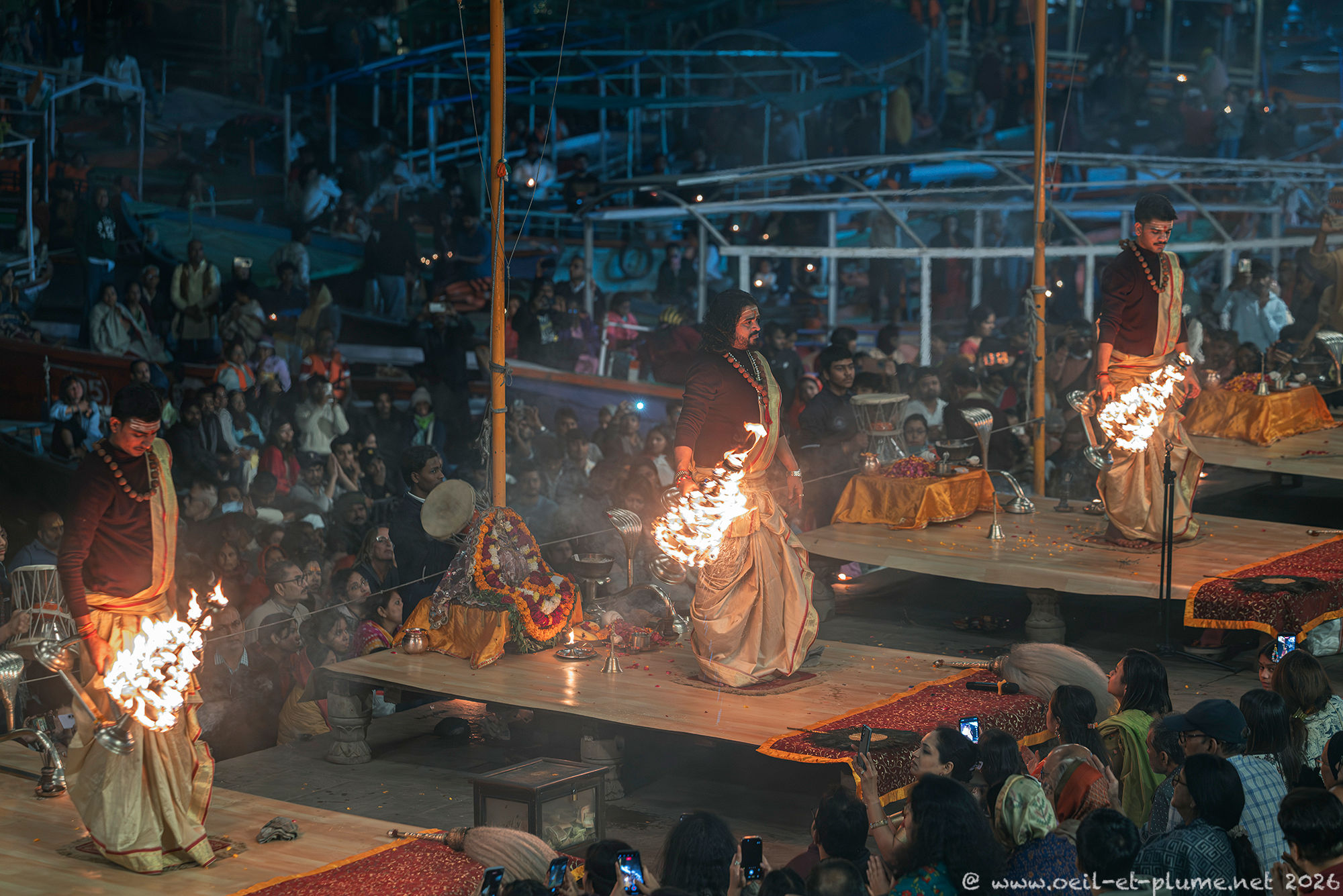
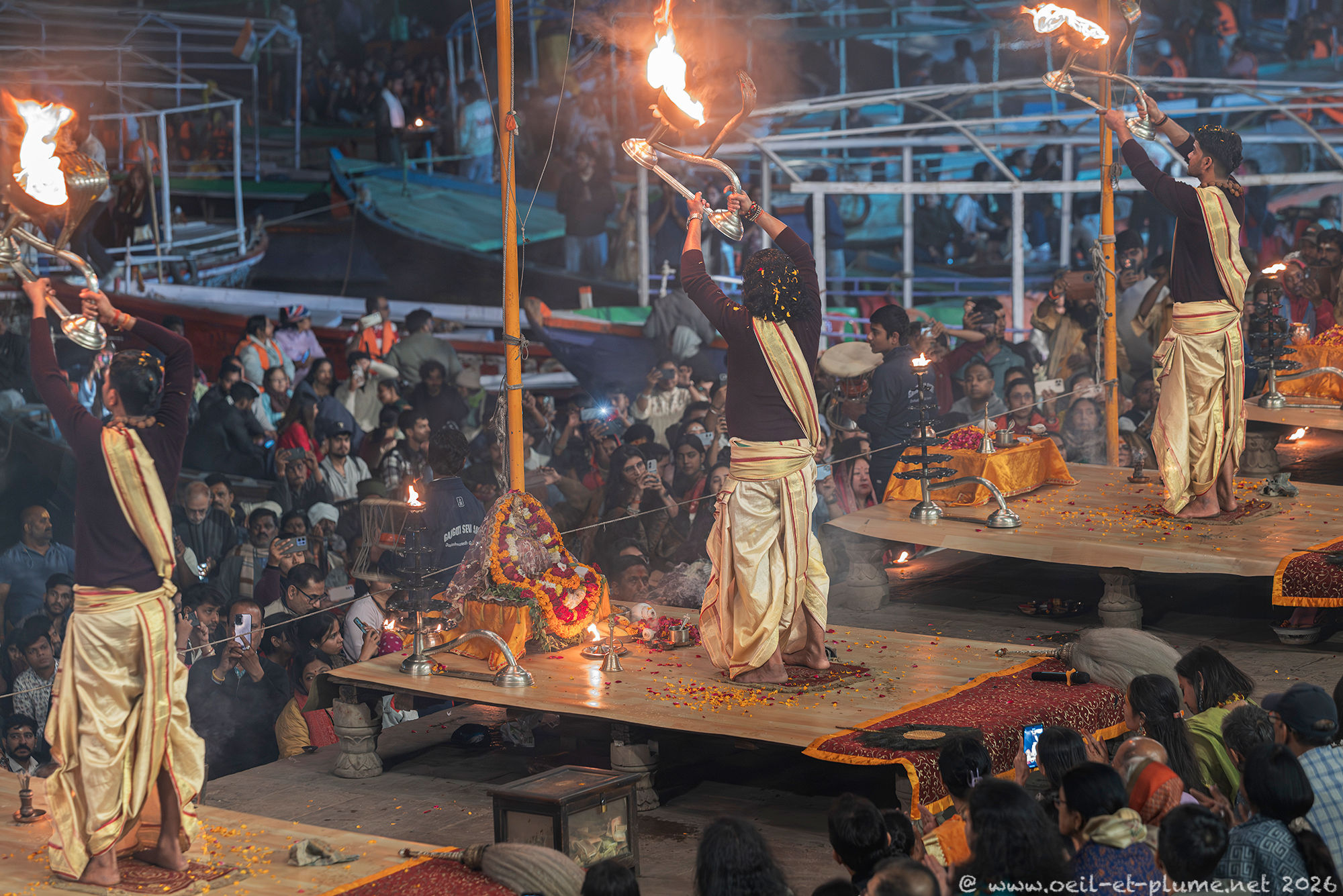
When the day draws to its end, life along the Ganges slows down, except in a few locations where Ganga Aarti celebrations are looming.
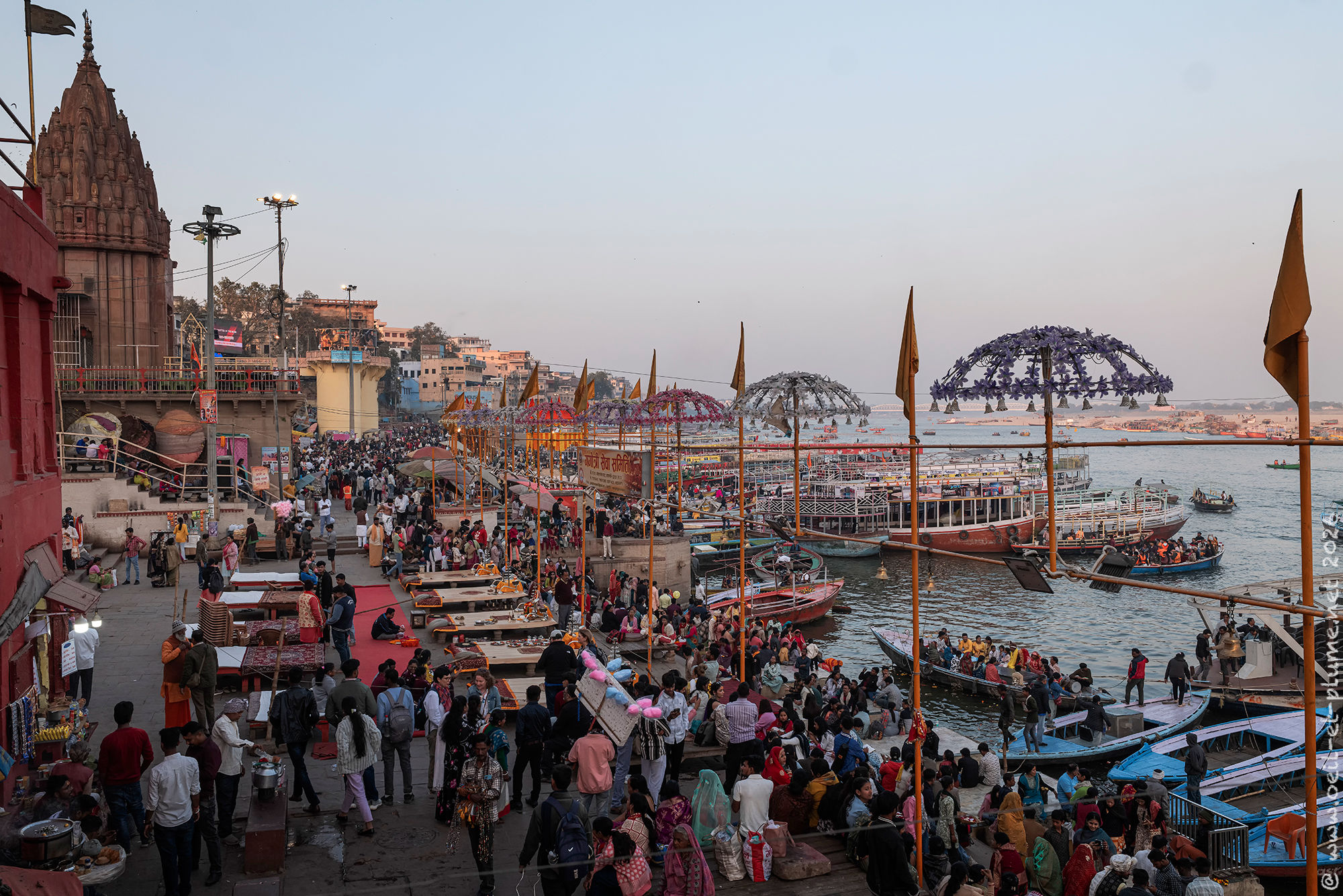
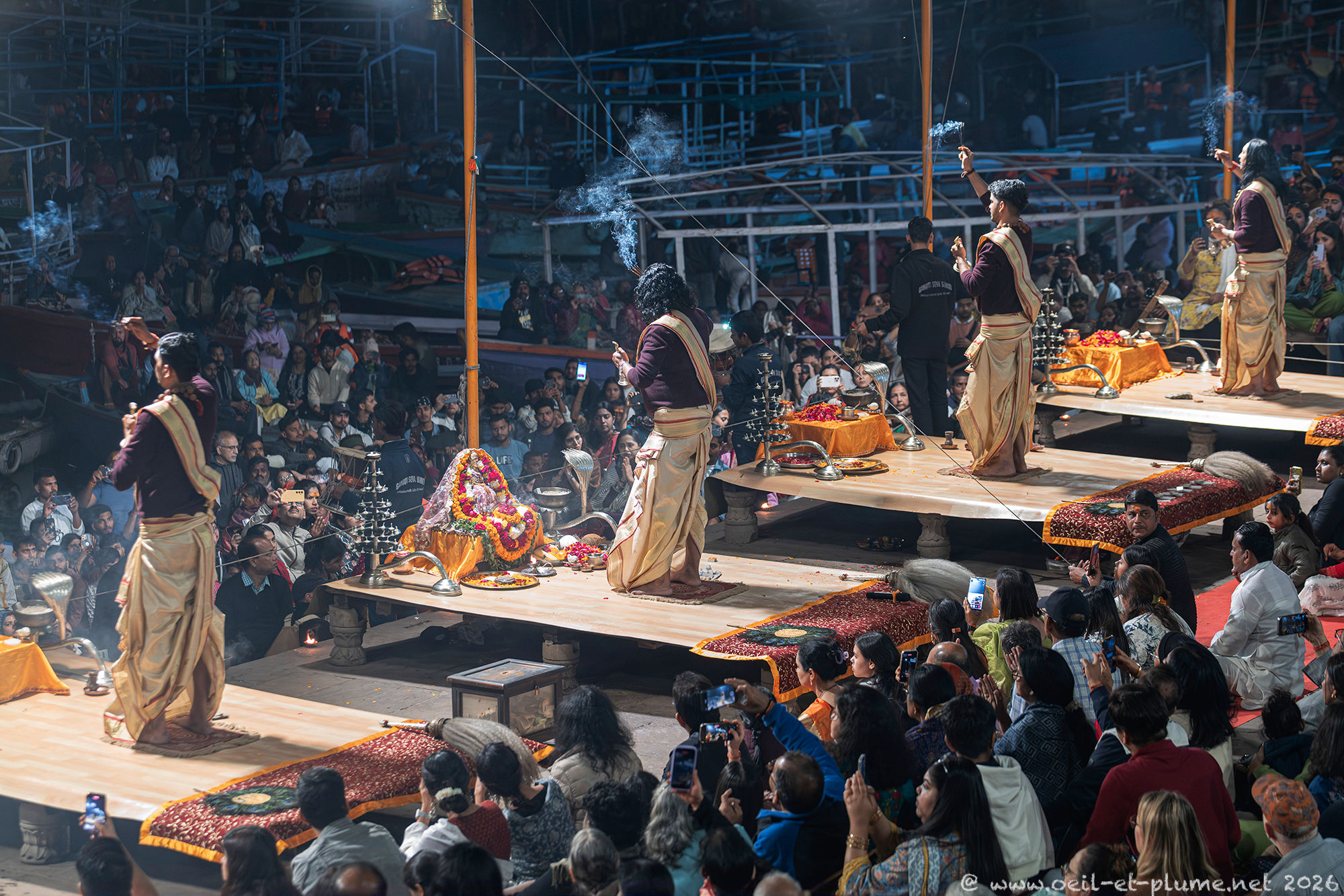
Dating back centuries, the Ganga Aarti is a profound, daily Hindu ritual performed at sunset on the banks of the Ganges River to honor Goddess Ganga who is believed to have descended from the heavens to purify the earth and its inhabitants. Using fire, lamps, chants, and bells, priests offer reverence, gratitude, and devotion, symbolizing the purification of the soul. The visually captivating ceremony attracts thousands to the ghats.
Environmental challenges
Beyond its religious significance, Mother Ganga faces major environmental challenges.
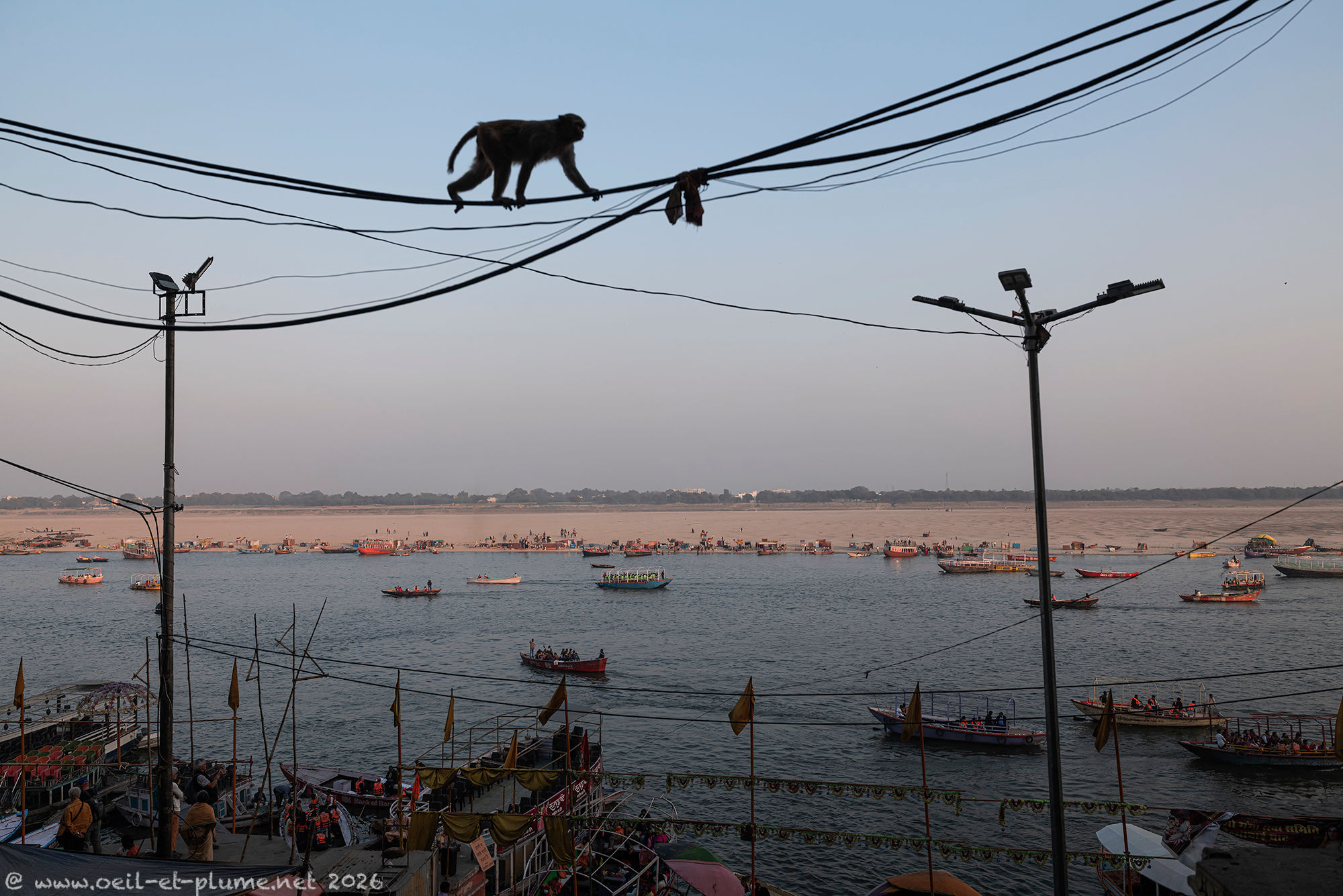
The Ganga River is experiencing its most severe decline in flow volume in over 1,300 years. Since the early 1990’s, it faces an unprecedented, sharp, and sustained decrease due to climate change and human intervention. Seasonal variations of water volume have always existed as the Ganges River is fed largely by monsoon rainfalls (June–Sept.). I visited Vanarasi during the lean season (Dec. to May). Only one third of the riverbed width was under water. However, the downward overall trend remains.
The decline in water volume is attributed to erratic monsoon patterns caused by climate change, along with increased consumption from dams, barrages, and increased groundwater withdrawal. With a booming population of 1.4 billion people, India is more populous than ever.
Various initiatives have been initiated to address these issues, with little or no impact so far. To continue playing its essential religious and other roles, Mother Ganga needs more care.
Cheers,
