
Indian gate to the Thar desert, Jaisalmer blossomed in medieval times from a modest commercial outpost on the Silk Road to a major trade hub and prosperous city. The historic capital of the kingdom of Jaisalmer was founded in 1156 by Rawal Jaisal of the Bhati clan of Rajputs.
Originally, the Bhati kingdom stretched across parts of present-day Afghanistan and Pakistan. Over time, repeated invasions from Central Asia forced the kingdom southward, until it ultimately anchored in Jaisalmer in India’s Rajasthan by the late 12th century.
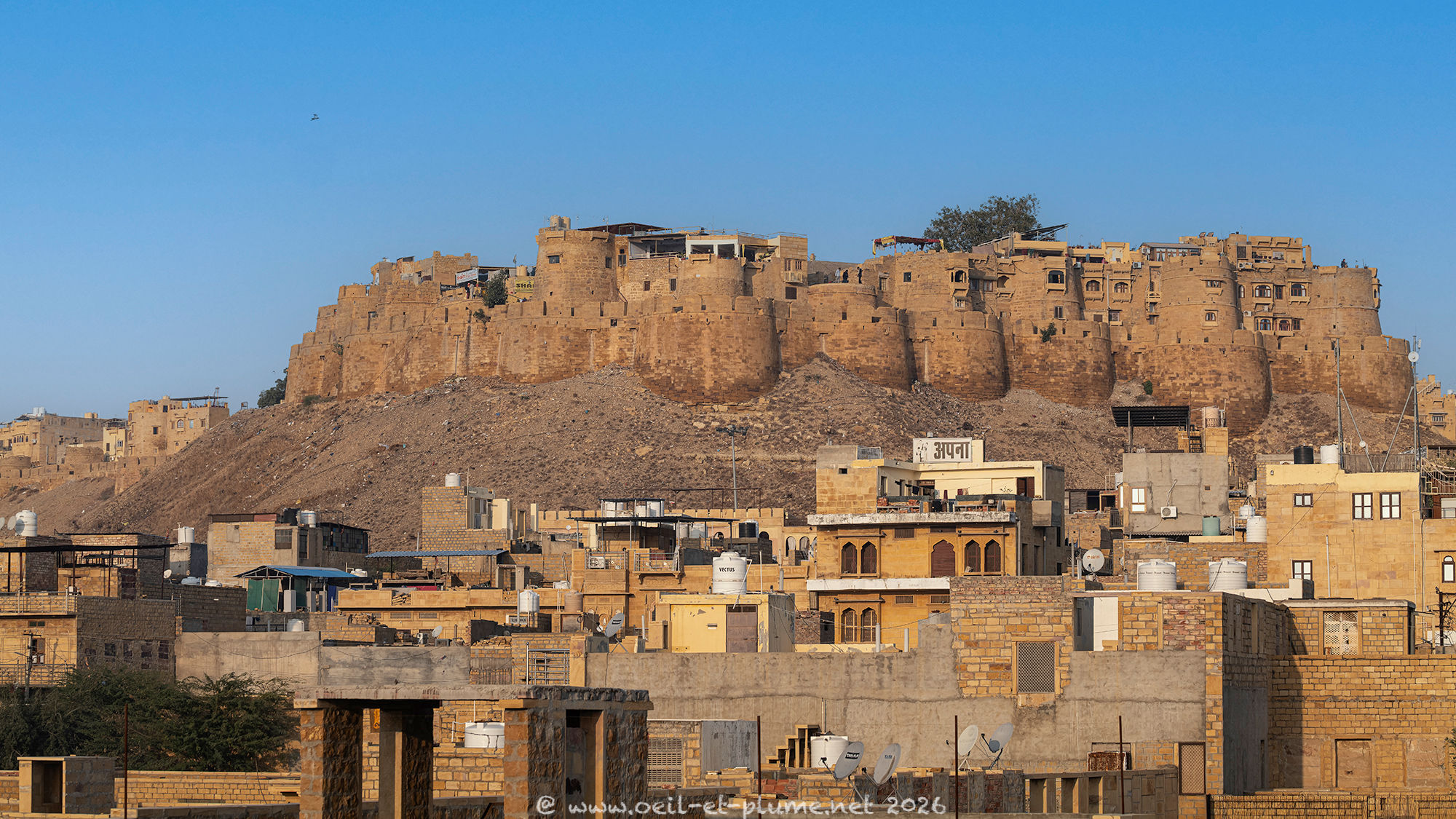
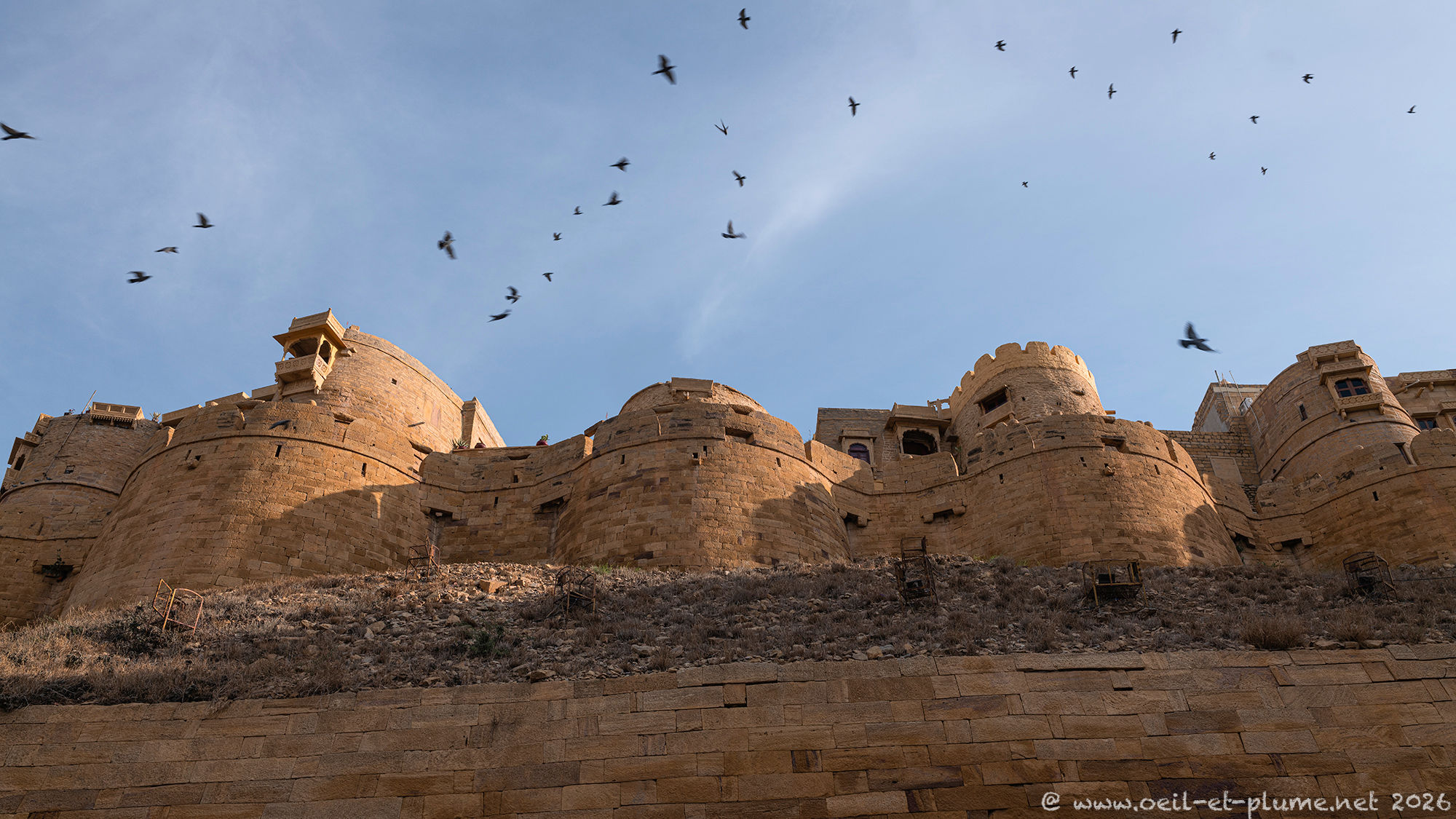
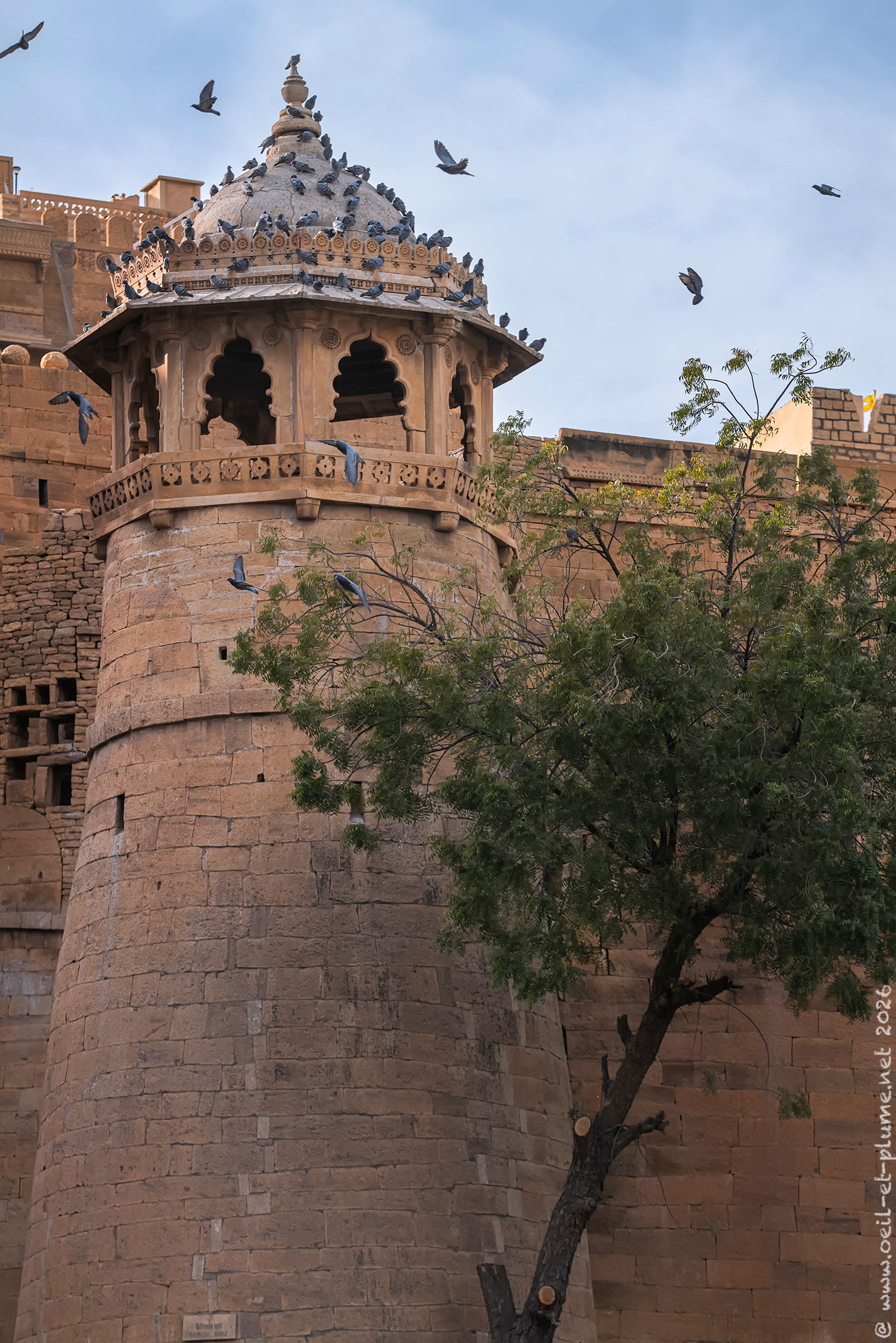
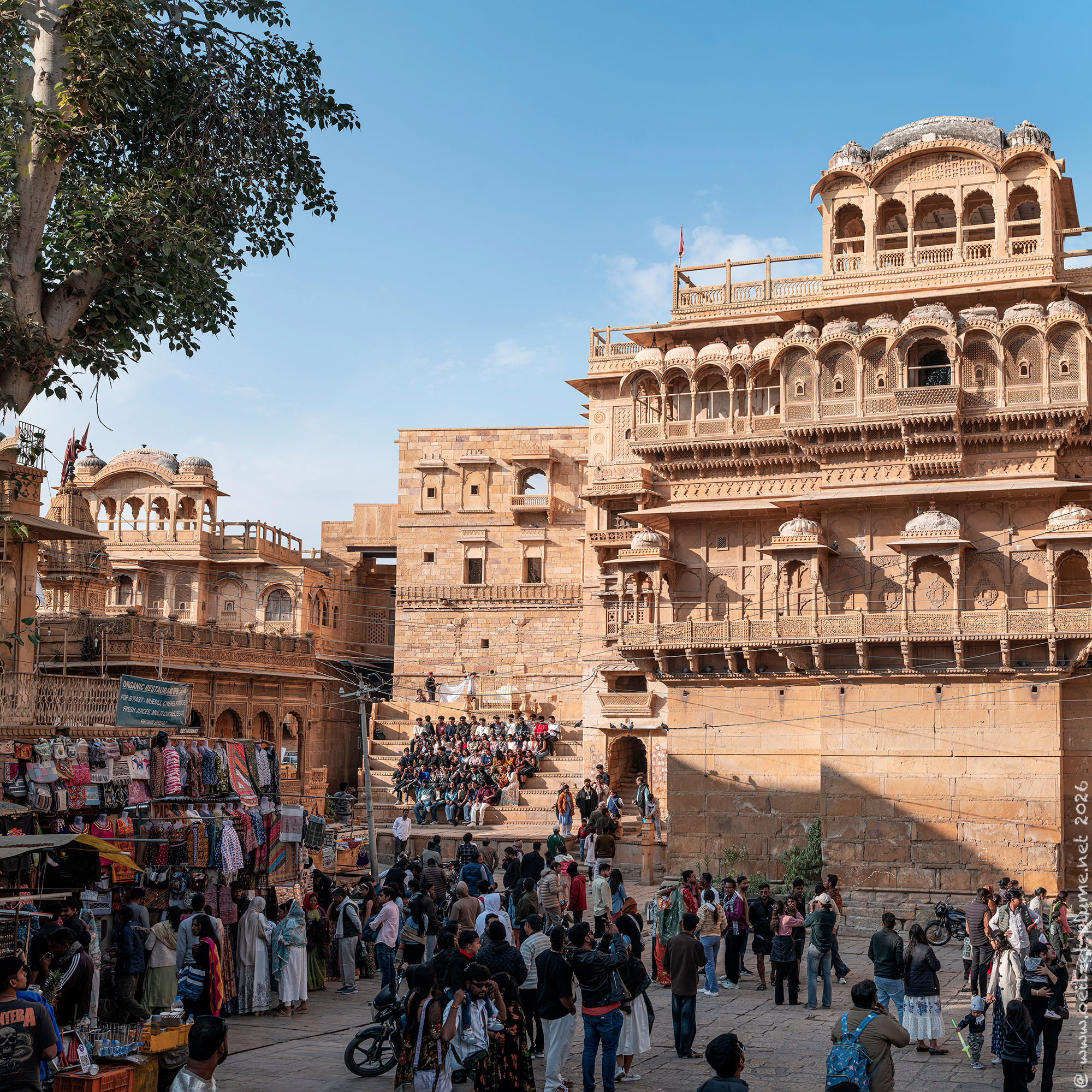
Crowned by the majestic Jaisalmer’s Fort, Jaisalmer rises from the desert like a mirage in gold. The sprawling hilltop citadel is reinforced by 99 rounded bastions, forming a powerful defensive ring around the historic heart of the city.
Within its fortified walls stand a royal palace, beautifully carved Jain temples, and clusters of private homes that still shelter nearly one quarter of Jaisalmer’s population — making it one of the world’s rare “living forts.”
Most of these structures are crafted from finely sculpted yellow sandstone, a versatile and fine-grained material that is easy to shape and carve. Composed of more than 50% quartz, the stone glows brilliantly under the desert sun and reveals a smooth, buttery texture when polished. It is this radiant quality that gives Jaisalmer its enduring nickname: the “Golden City.”
Jain prosperity under Rajput rule
While Jaisalmer Fort is well-known and much visited, I felt attracted and even fascinated by the seven Jain temples located nearby in the citadel.
From the 8th century onward, Jainism emerged as a strong cultural force in northern India under the patronage of Rajput rulers. In Jaisalmer, the Bhati dynasty fostered a remarkable flourishing of Jainism between the 12th and 15th centuries.
During the Middle Ages, Jain merchants in Jaisalmer amassed immense wealth as the city developed into a major regional trading hub. Strategically located along routes linked to the Silk Road, they controlled the transit of goods across the Thar Desert, facilitating commerce between India, Central Asia, and beyond.
These merchants also maintained strong commercial ties with other trading communities across present-day Pakistan and Afghanistan, creating an extensive network that reinforced Jaisalmer’s prosperity and strengthened Jainism’s cultural and architectural legacy in the city.
Jain havelis
Backed by their Rajput kings, the leading Jain merchants of Jaisalmer constructed grand and opulent mansions known as havelis. These residences were designed not only for luxurious living but also to publicly display their immense prosperity and social status.
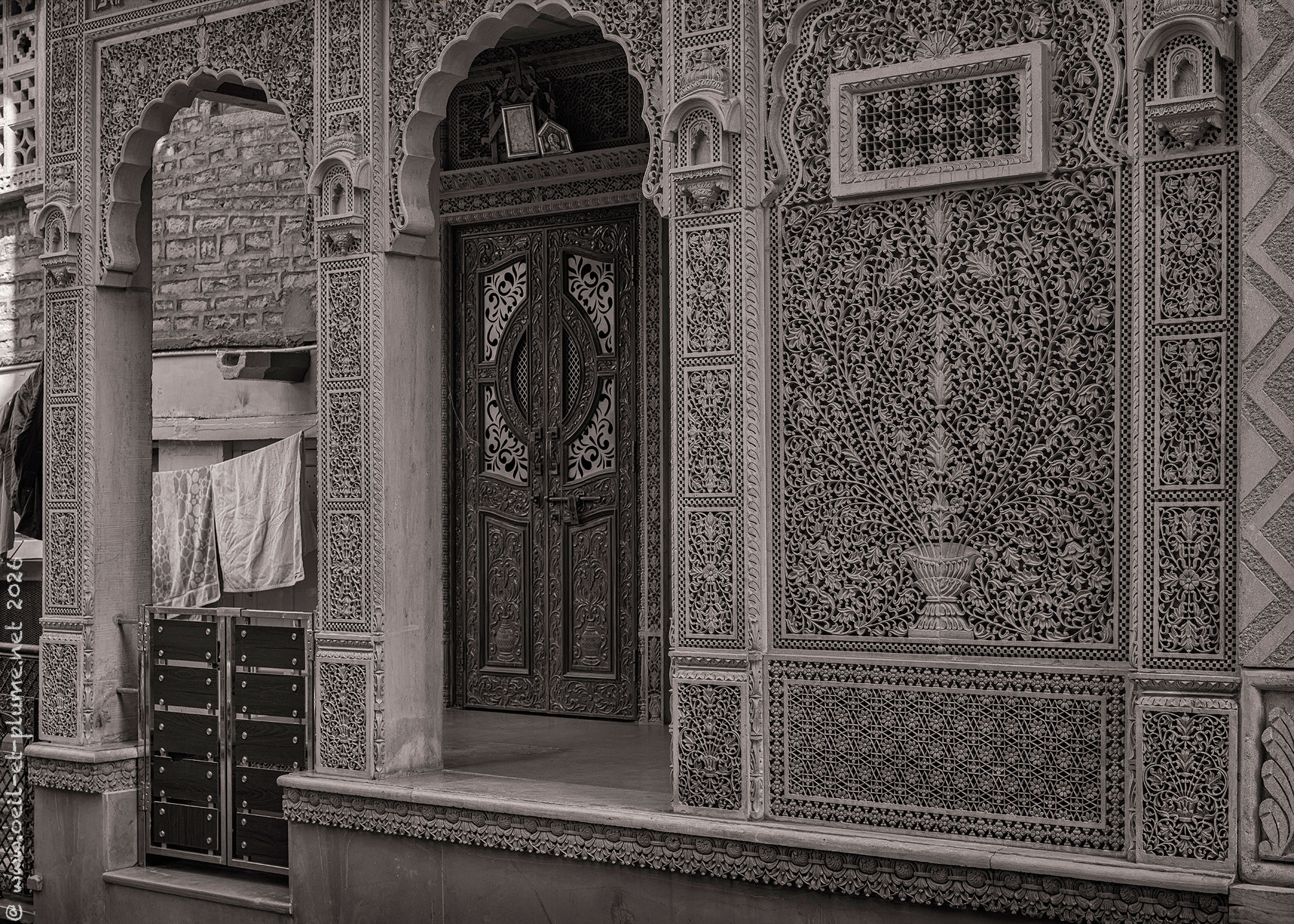
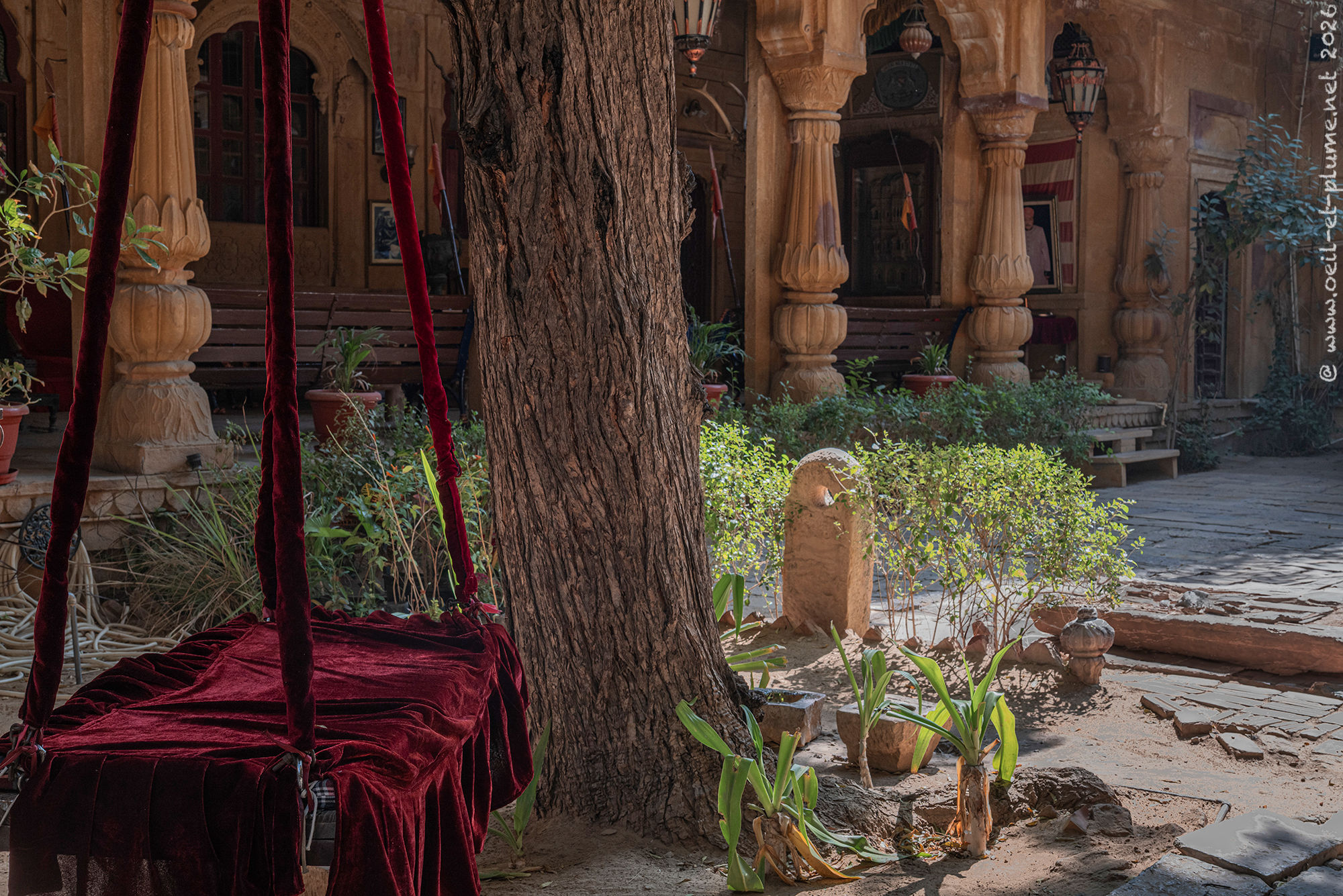
Built primarily from the region’s golden sandstone, the havelis were richly adorned with intricate carvings, latticed windows, ornate balconies, and elaborated façades. Jain traders’ deep devotion led them also to commission exquisite Jain temples in the Jaisalmer Fort.
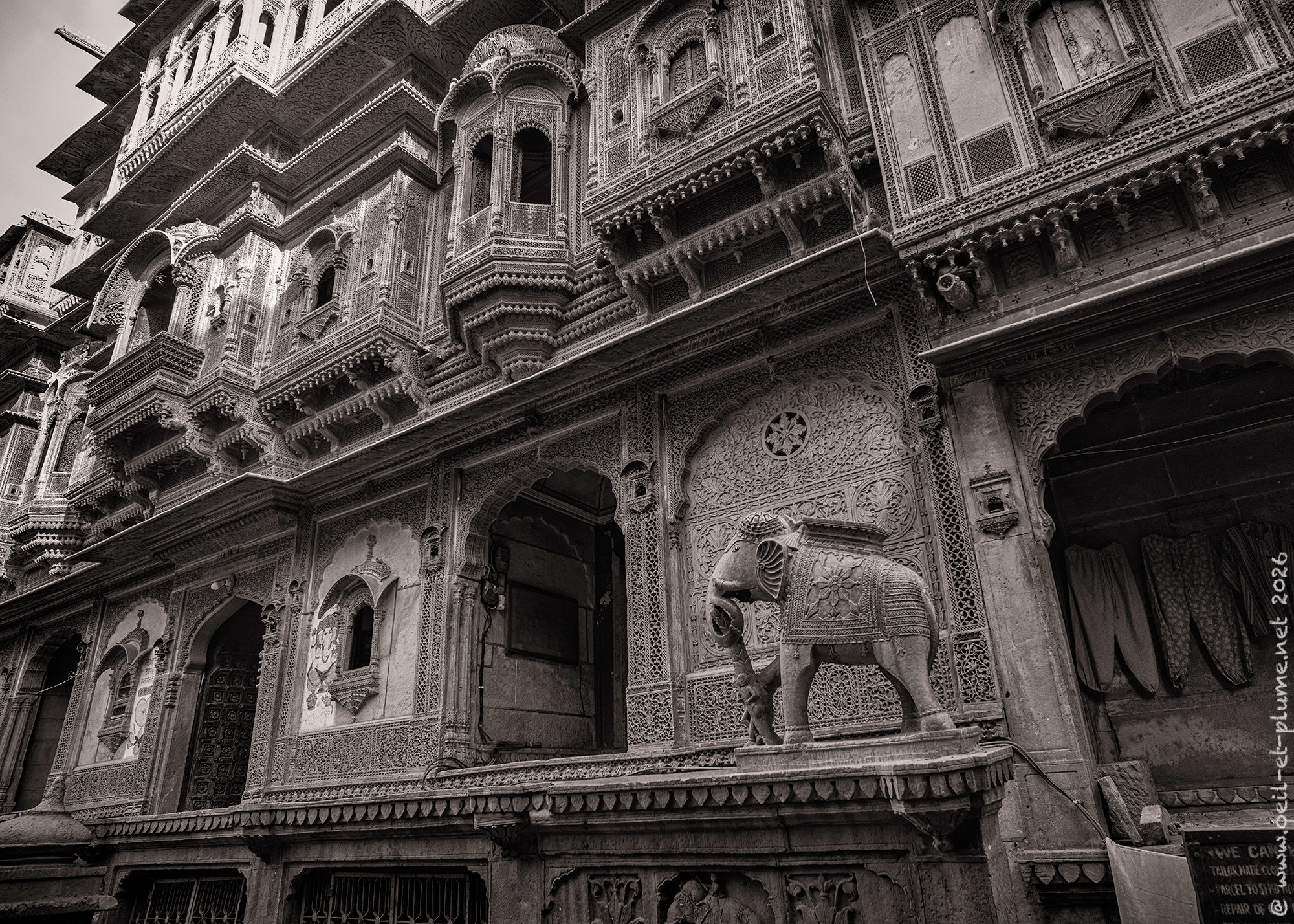
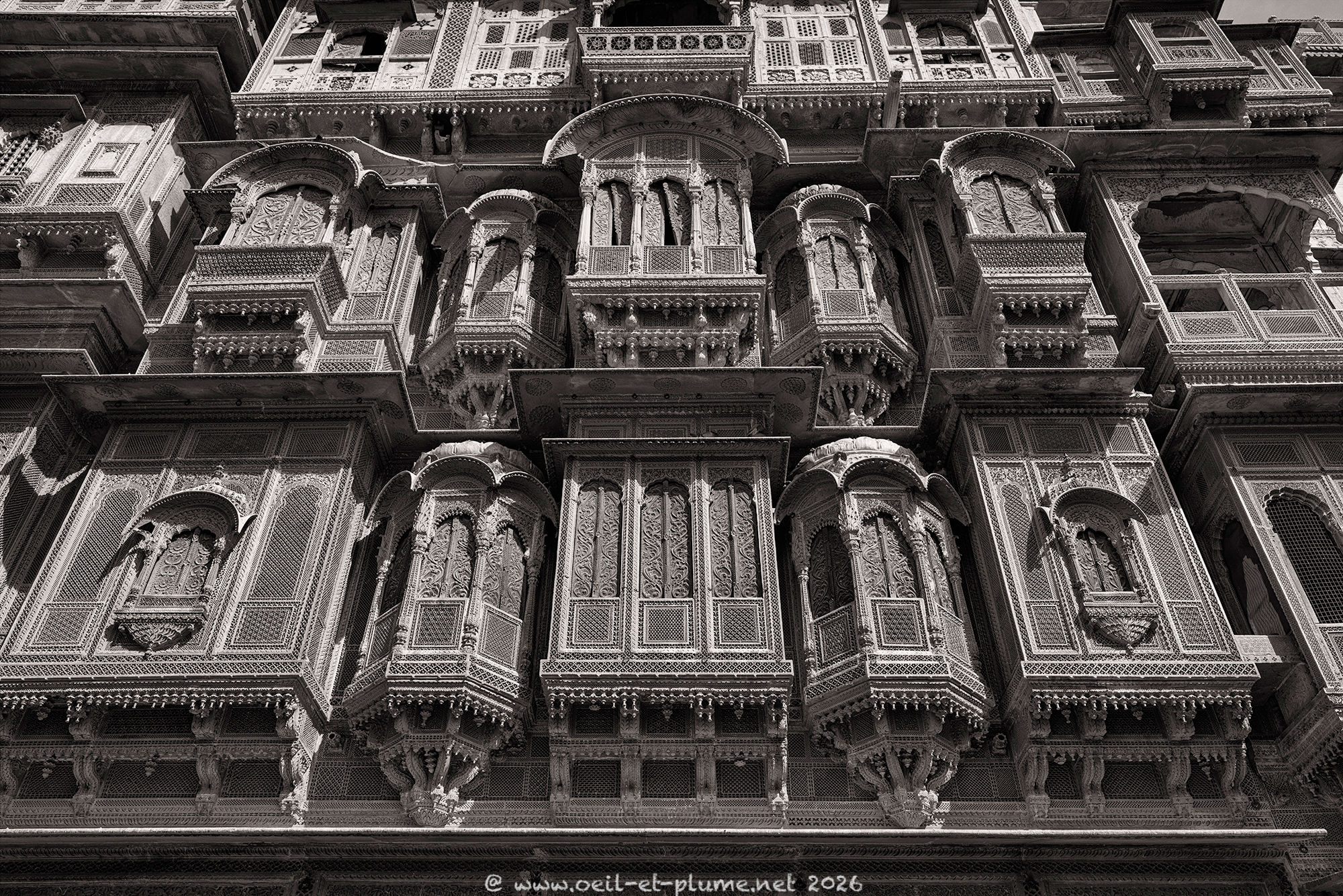
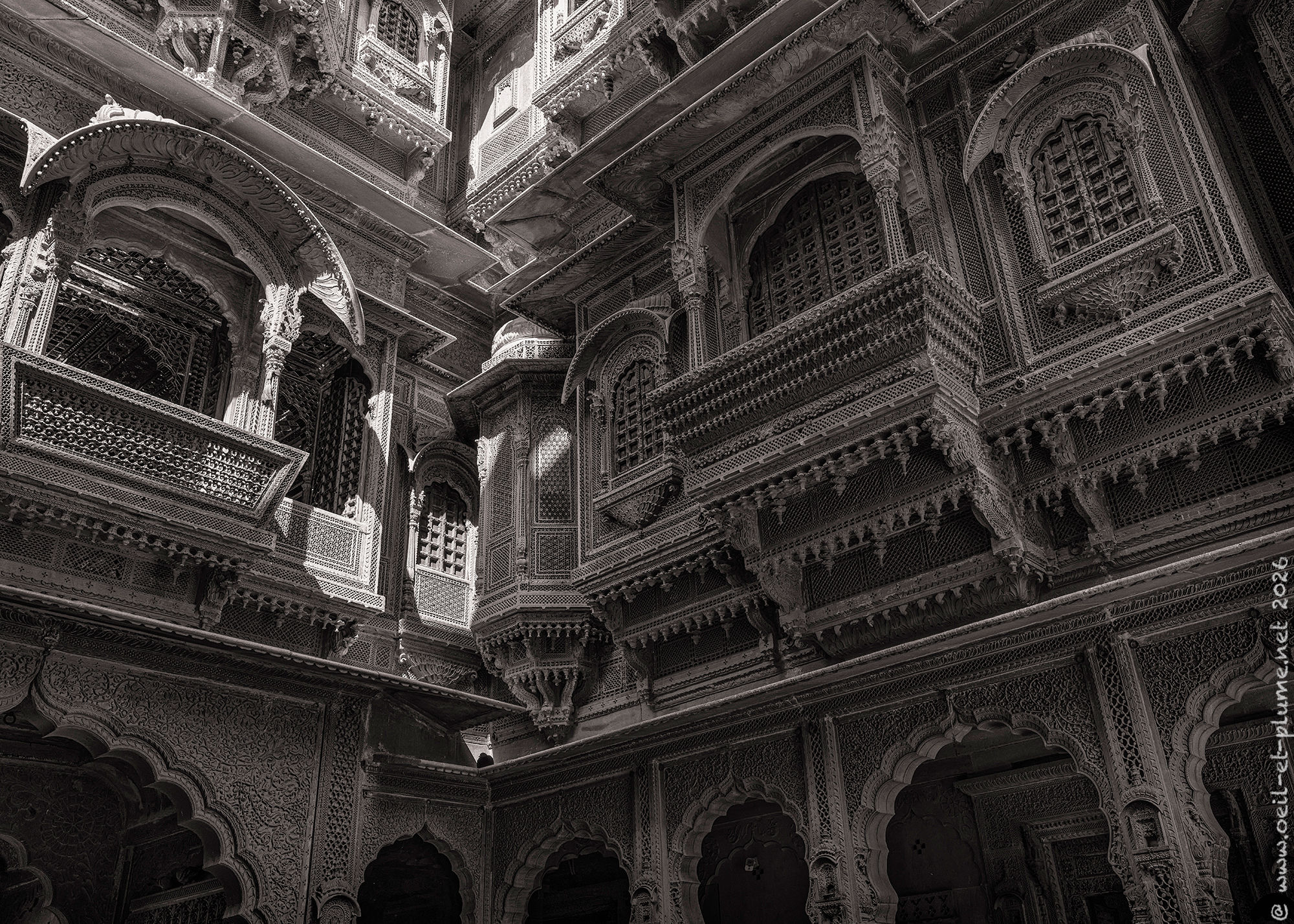
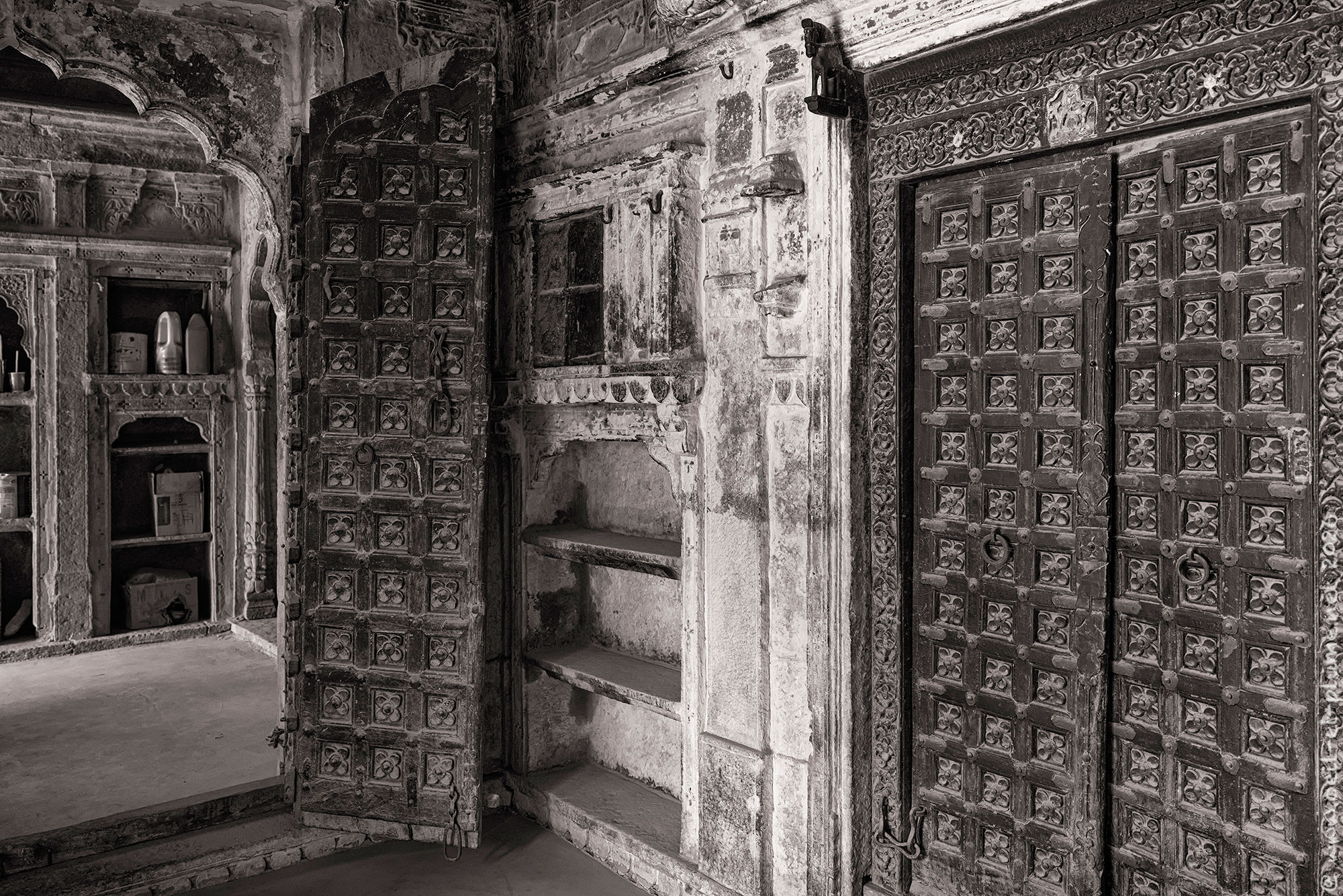
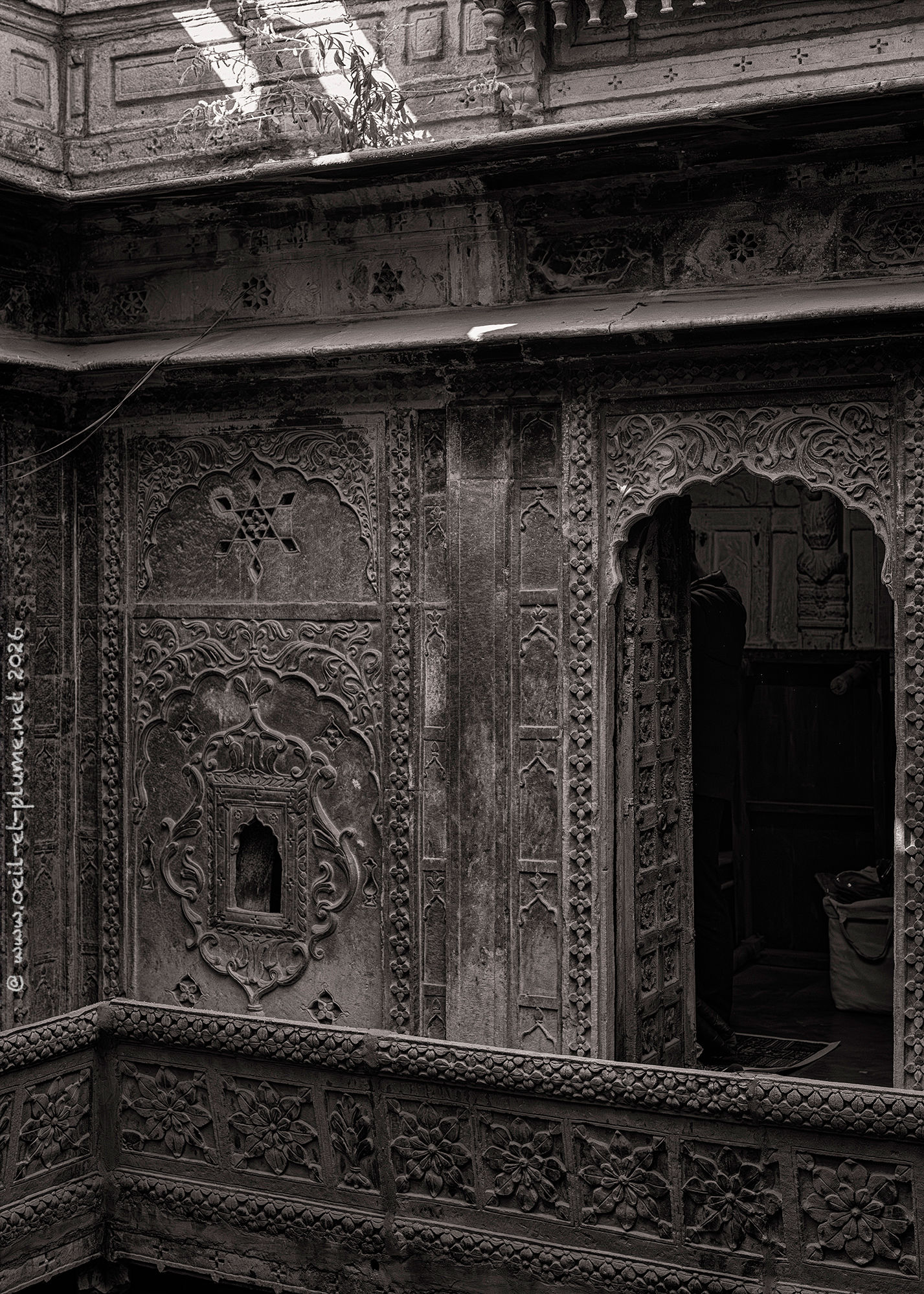
Through these architectural achievements, Jain merchants left a lasting imprint on Jaisalmer’s urban landscape, blending commerce, faith, and artistry into the city’s distinctive golden heritage. While the local Jain community has massively shrunk in numerical terms since the Middle Ages, it remains very important in cultural terms today.
Contemporary architecture in Jaisalmer remains very much influenced by the prosperous medieval period. The use of yellow sandstone is still compulsory for cladding external walls, ensuring that new constructions blend harmoniously with the historic urban landscape. Delicate stone carving, once a hallmark of wealthy merchants’ mansions, is still appreciated today. This continuity preserves the city’s distinctive golden hue and architectural coherence.
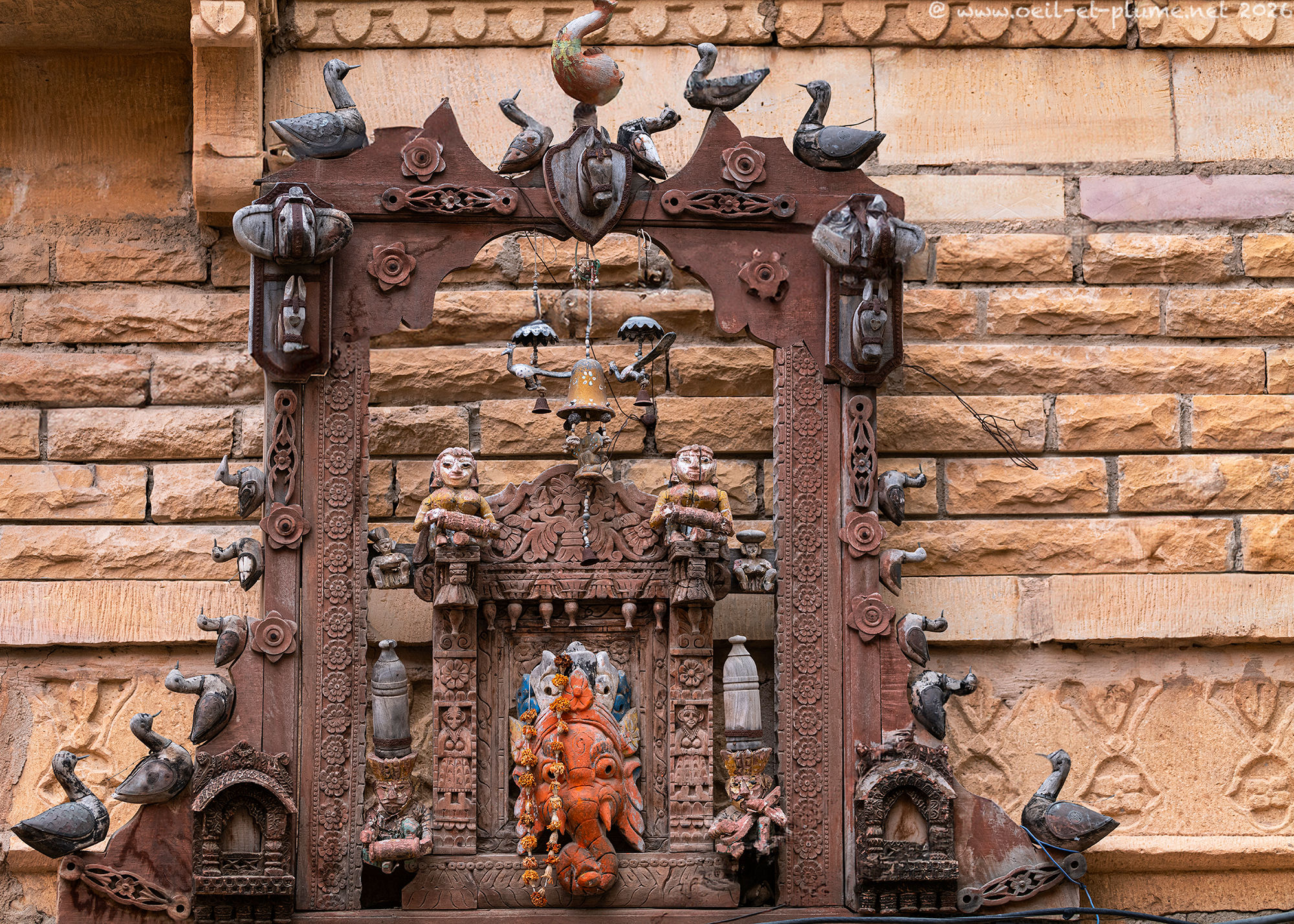
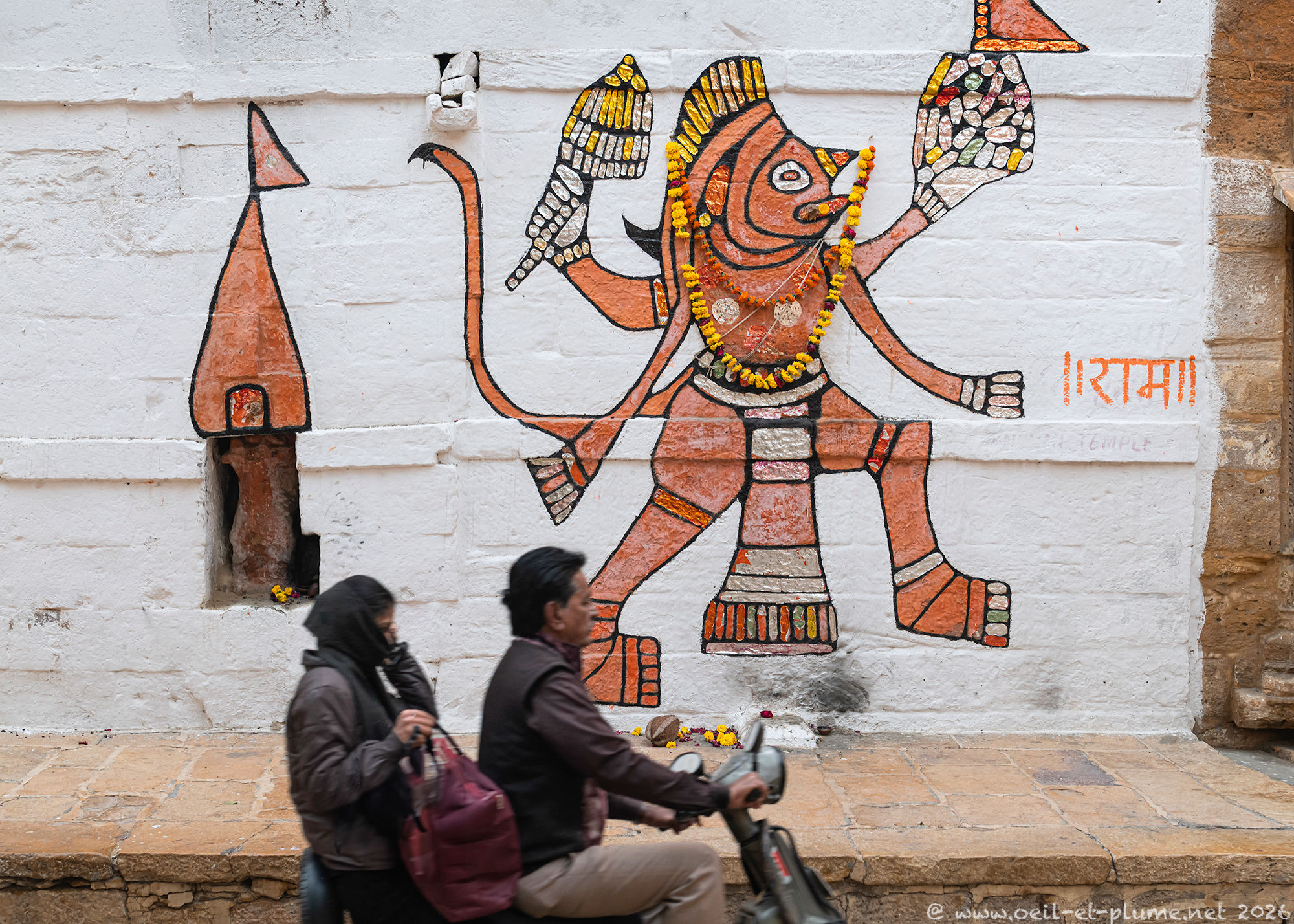
Jain temples
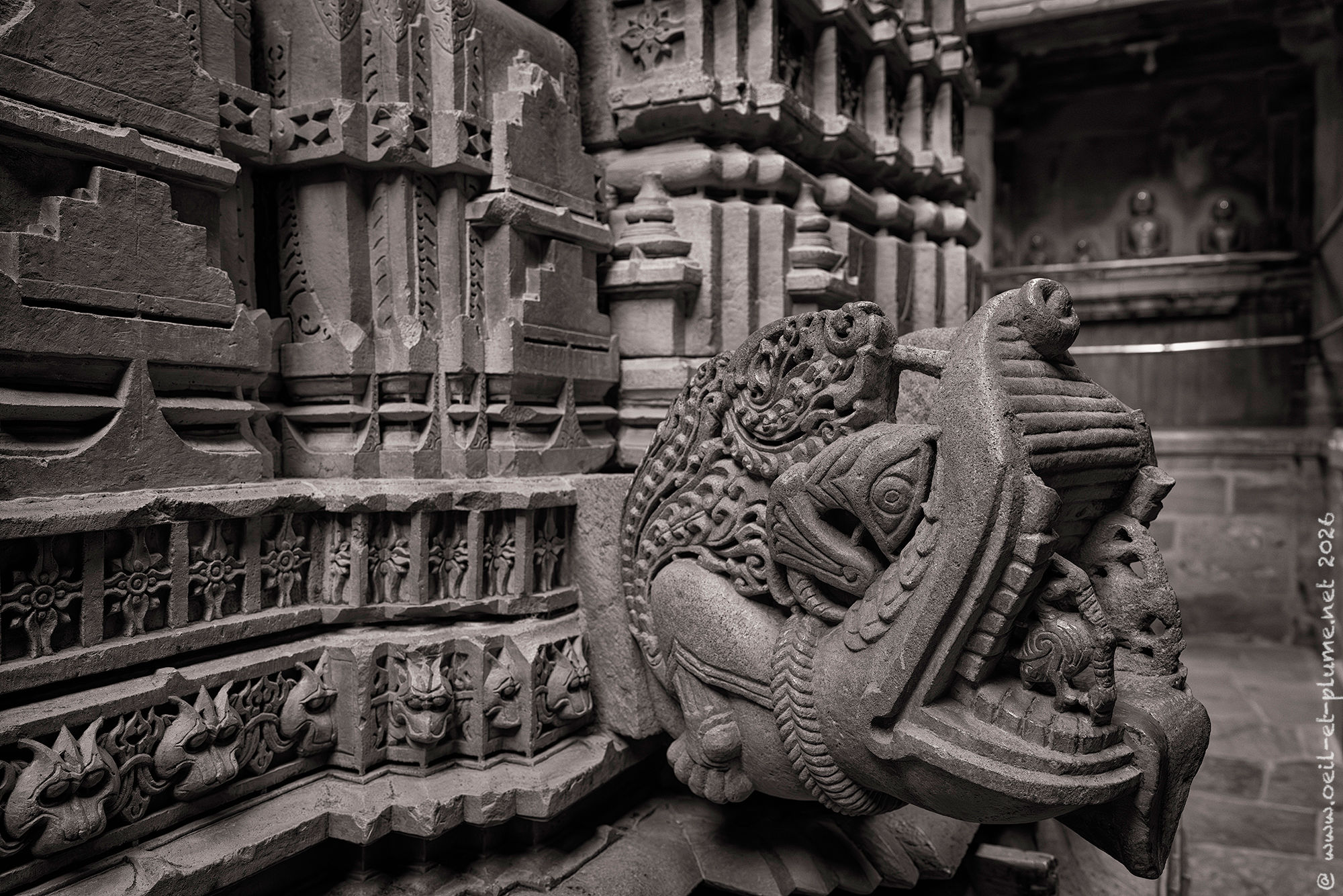
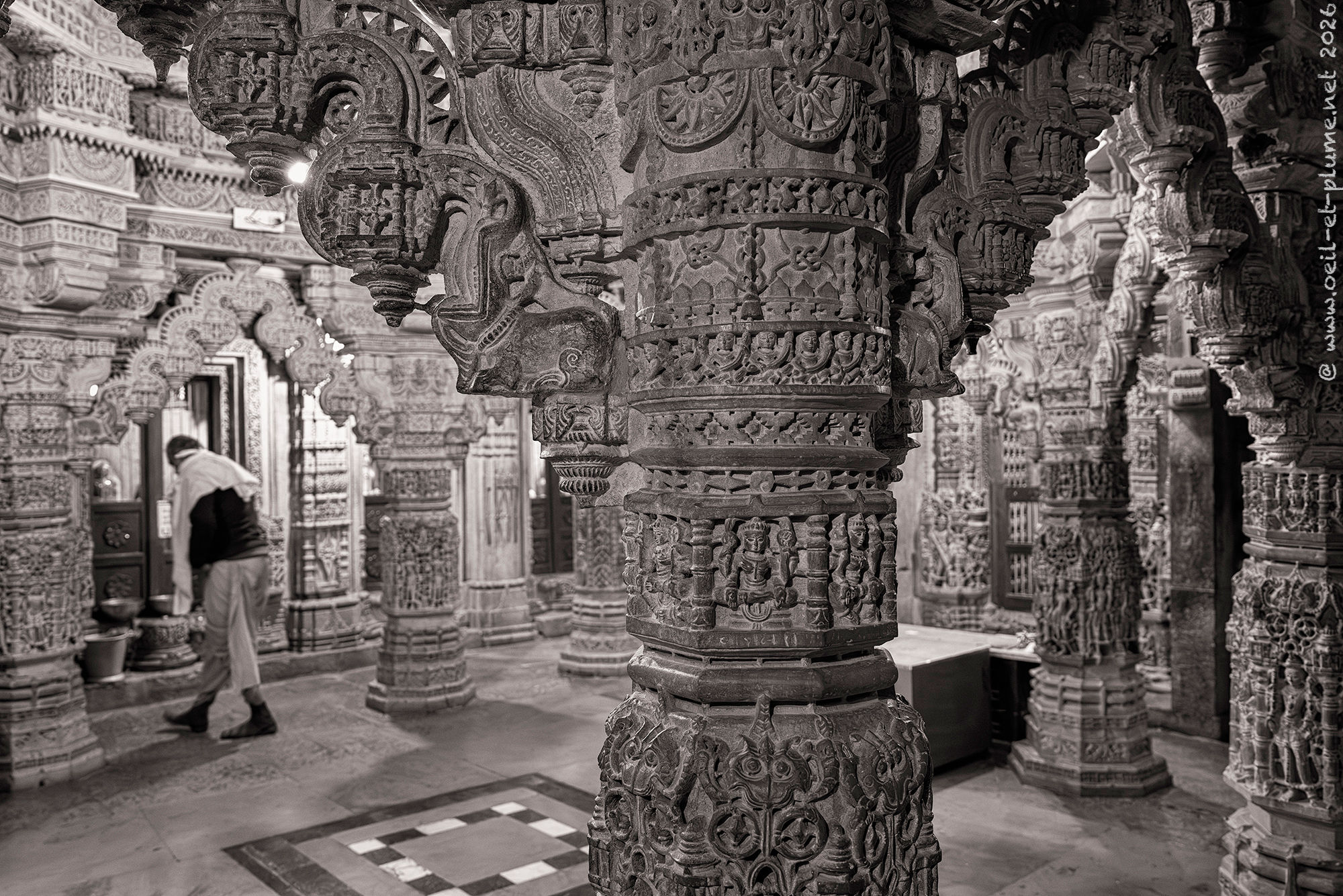
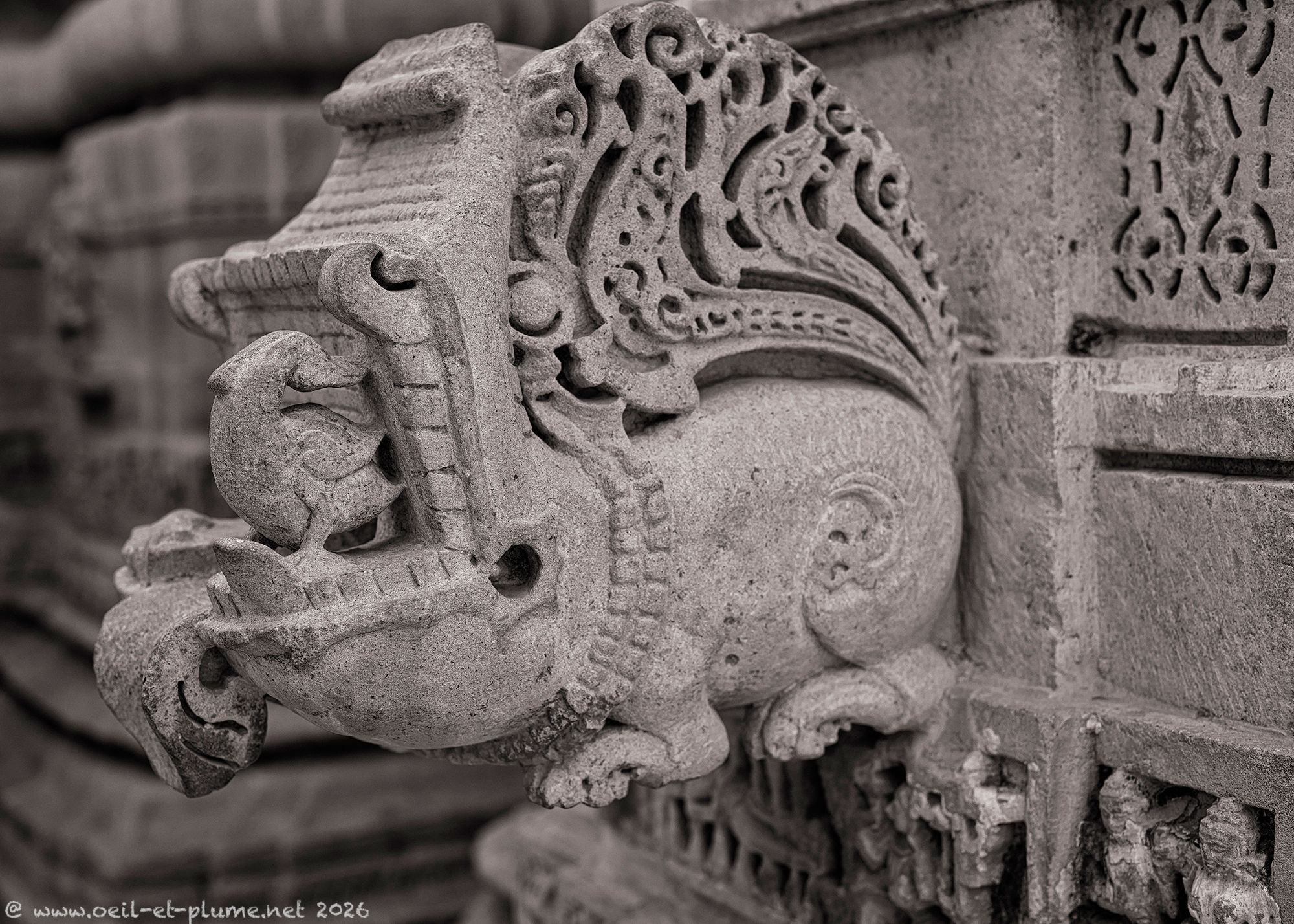
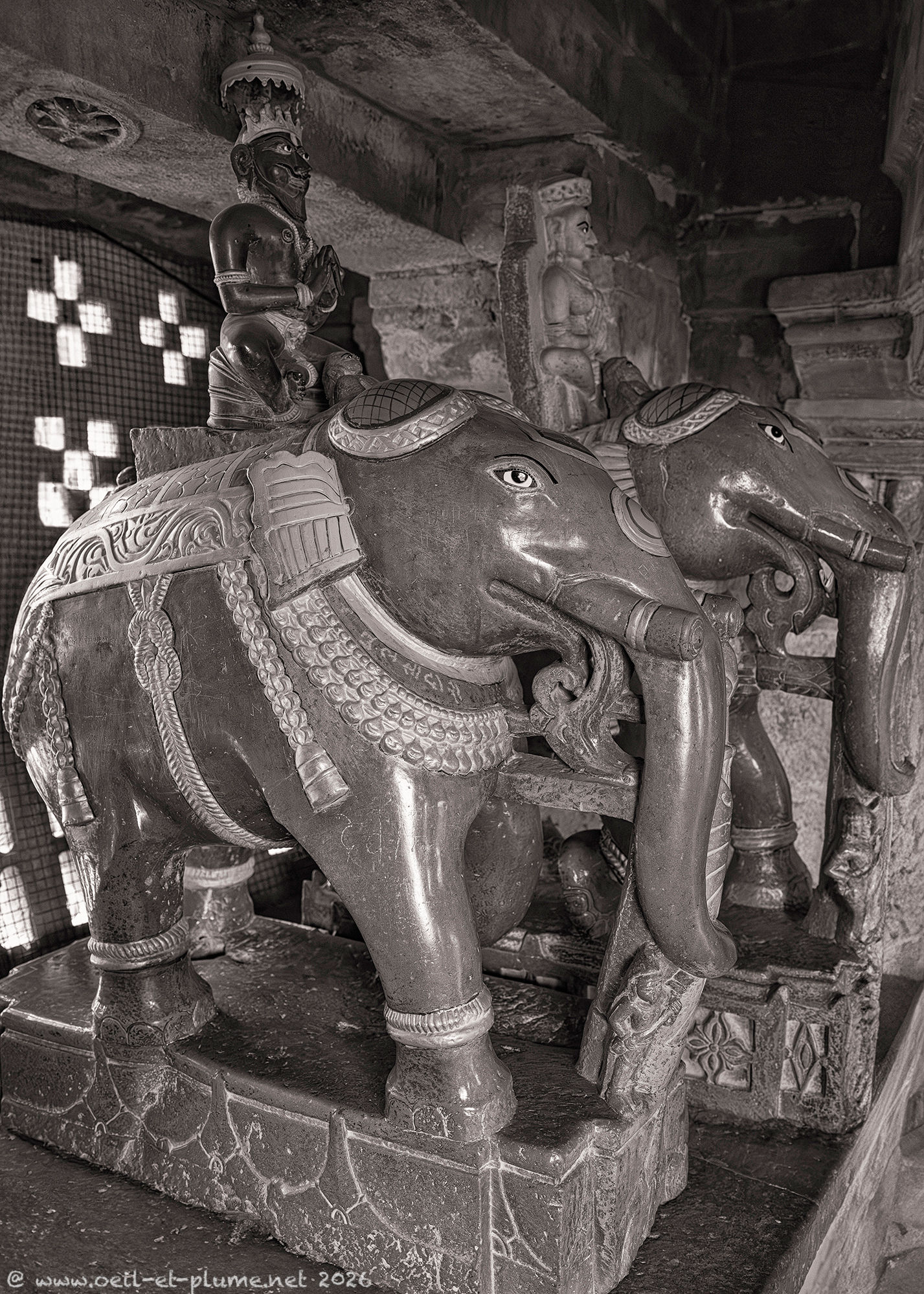
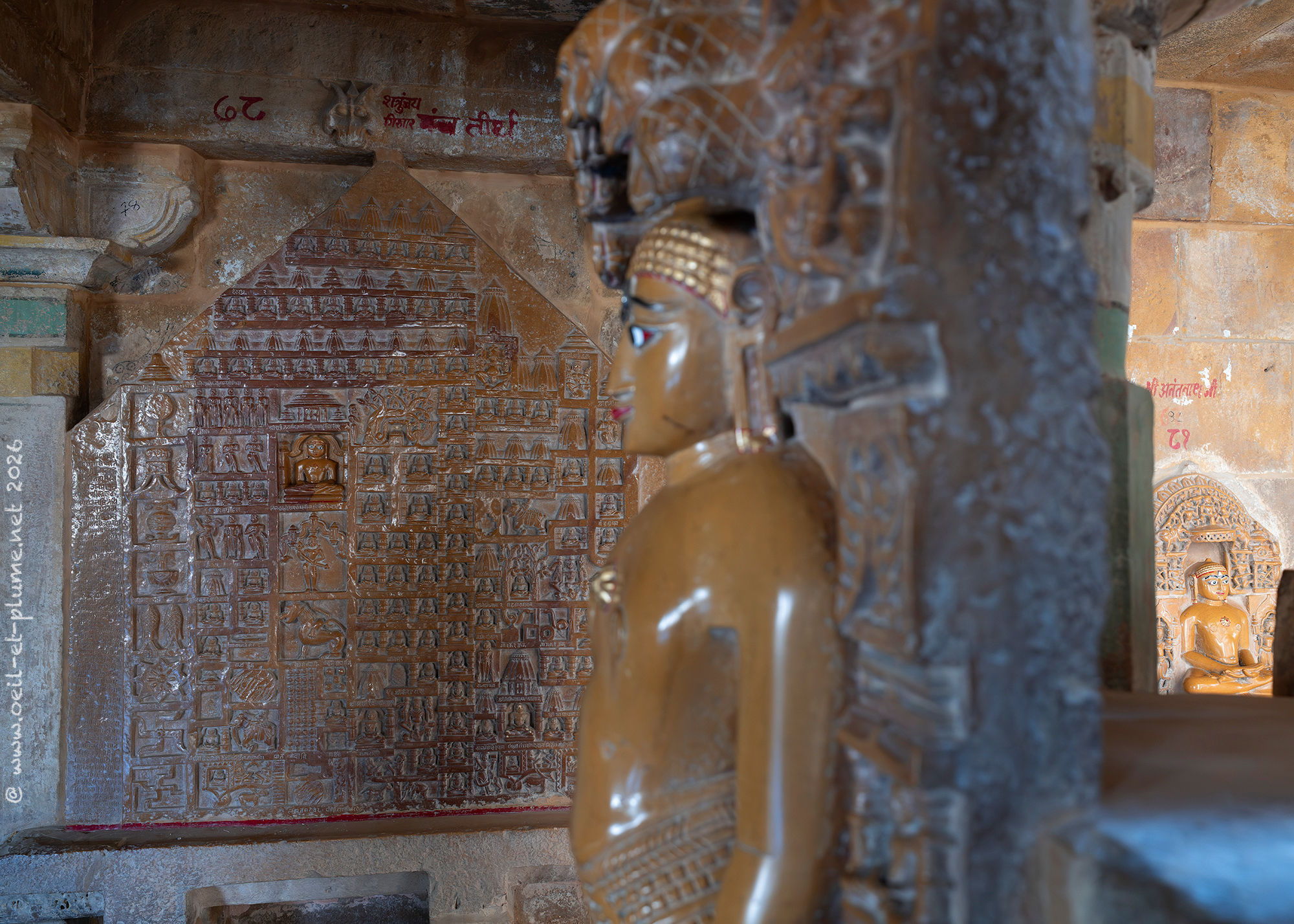
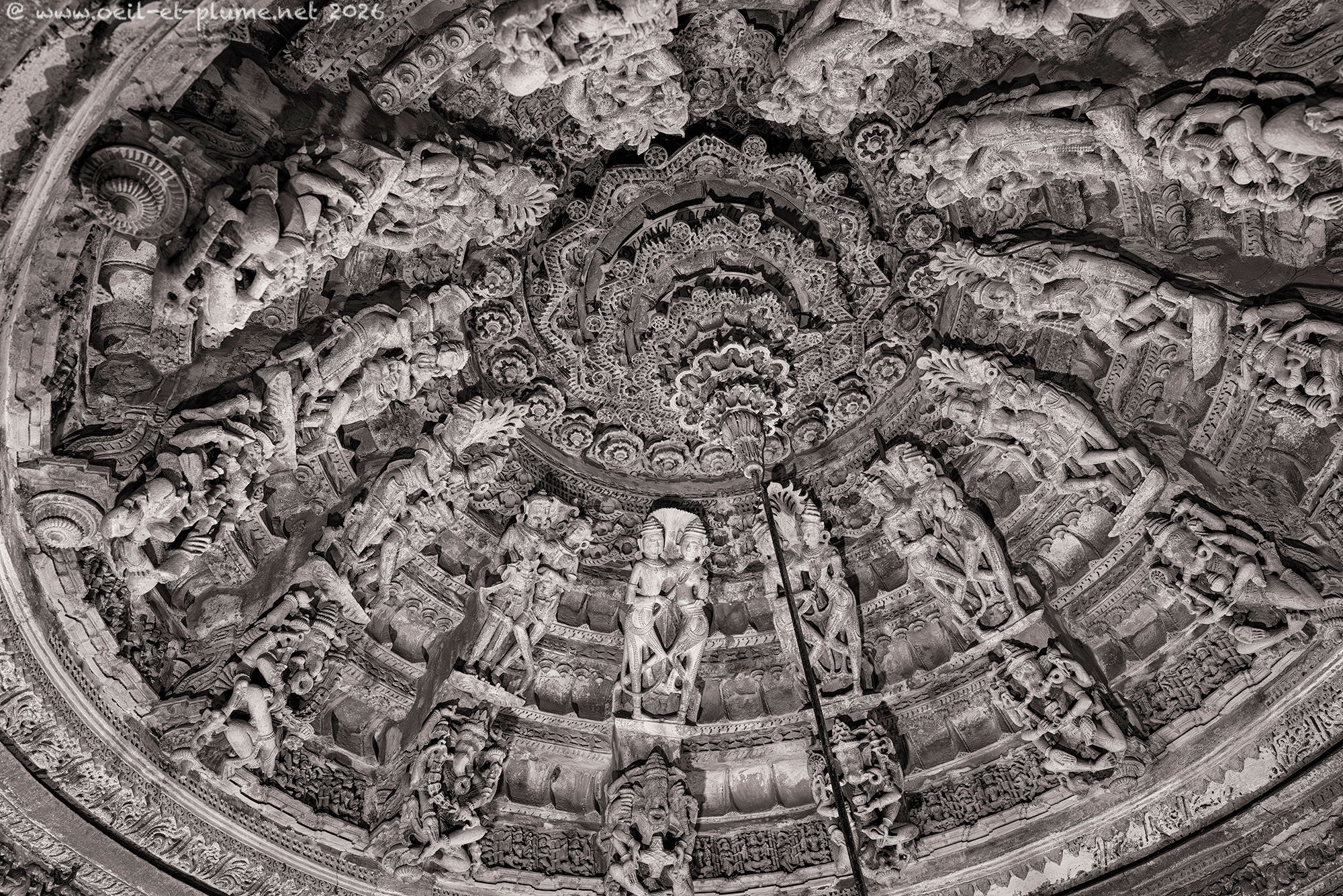
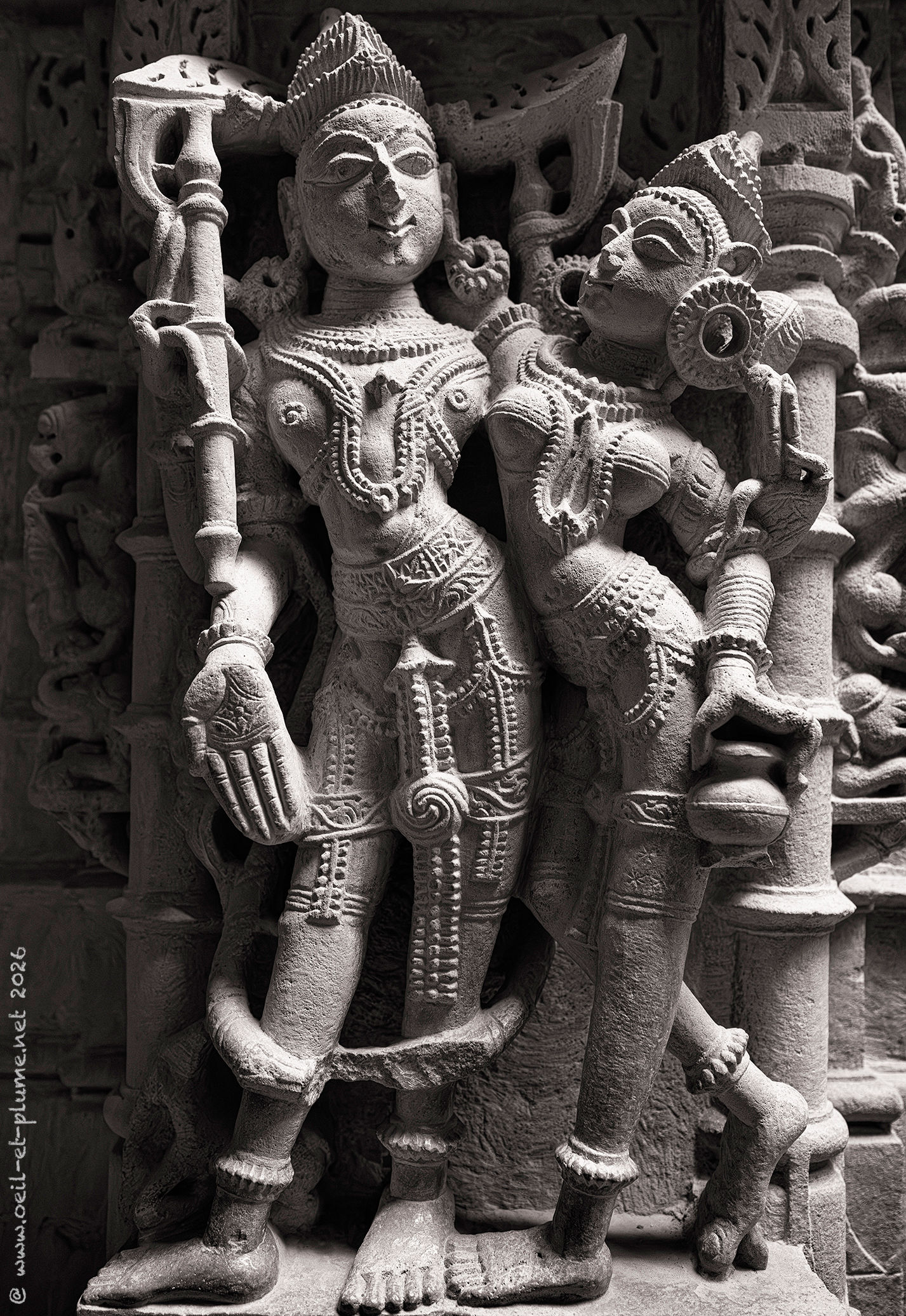
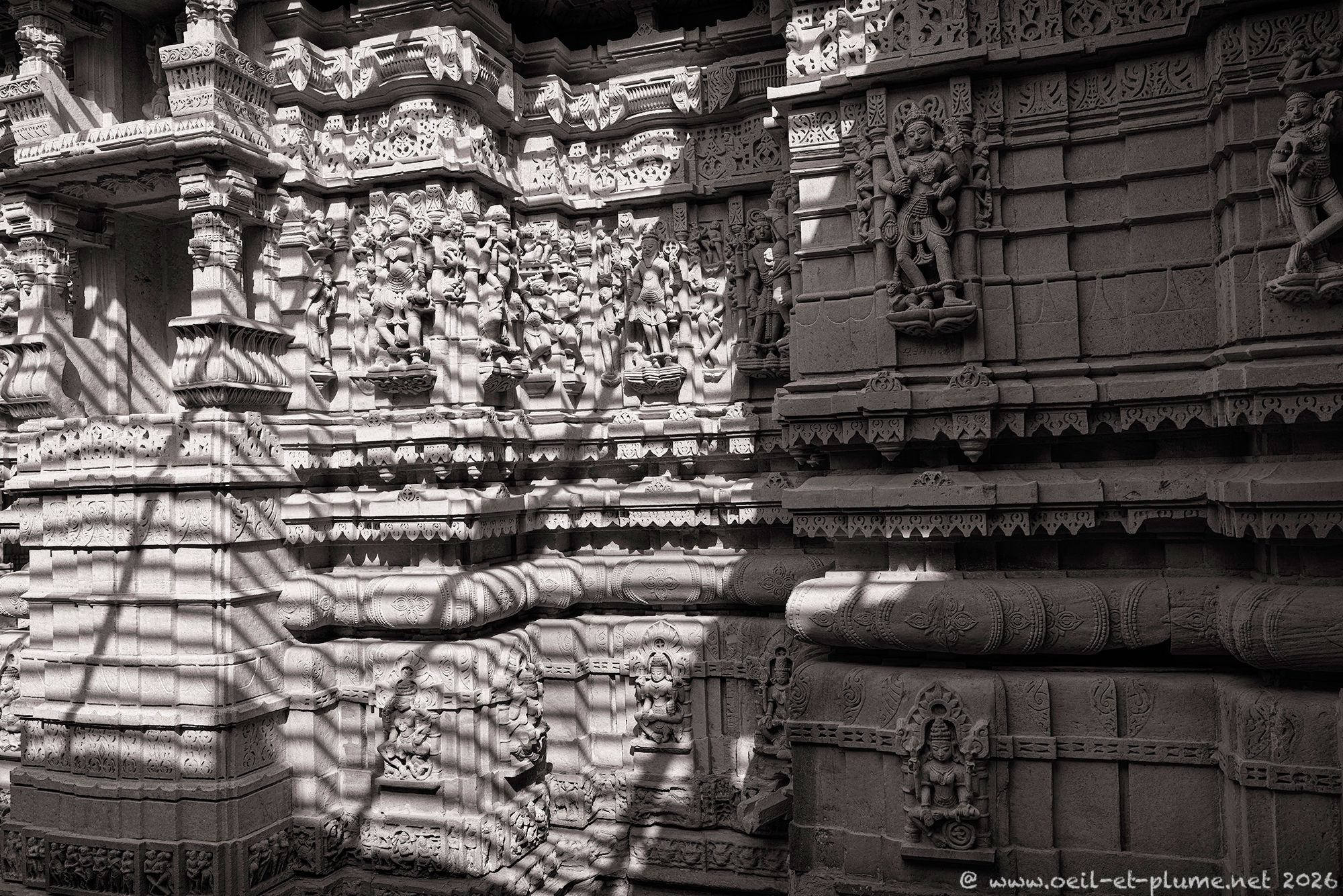
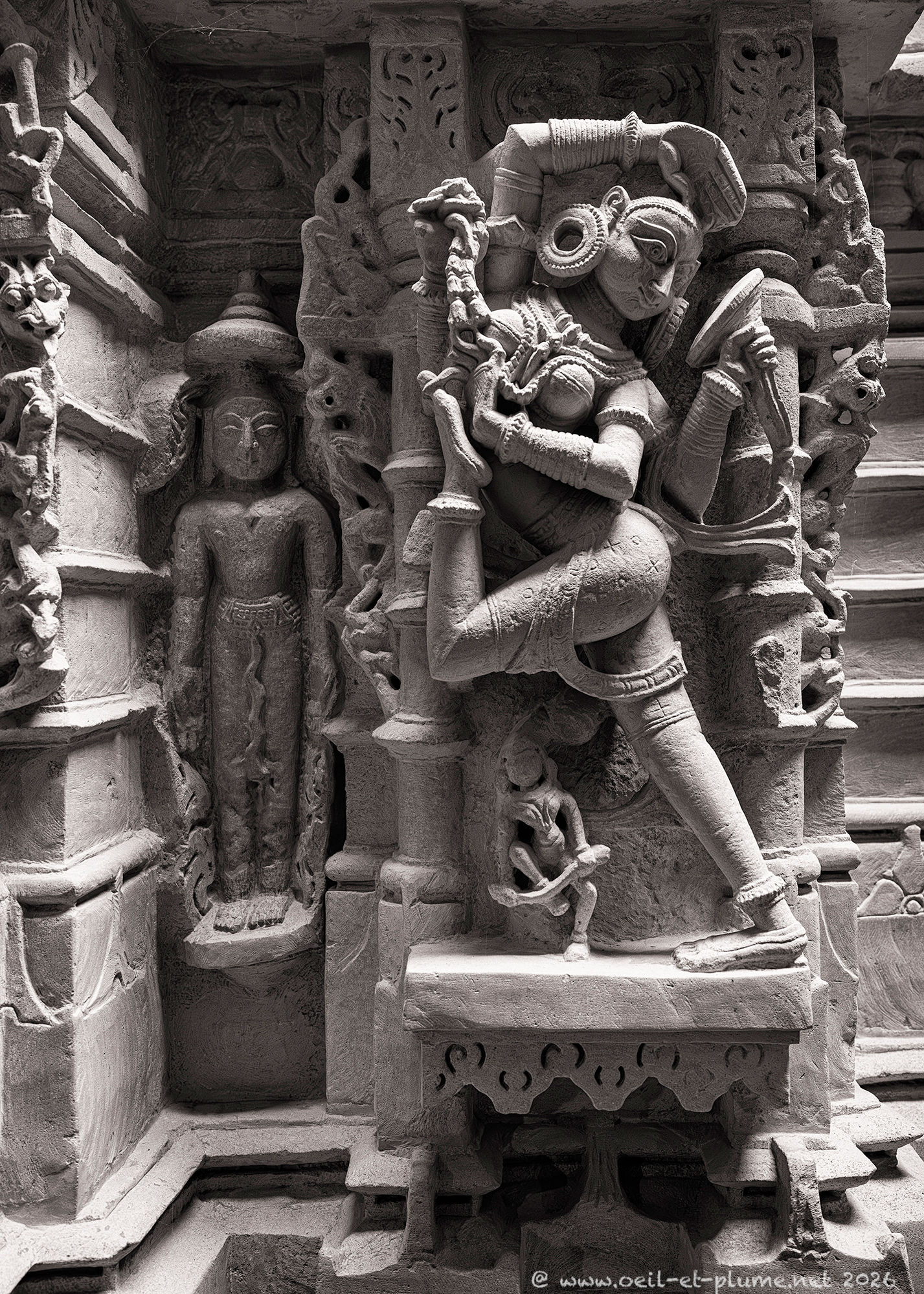
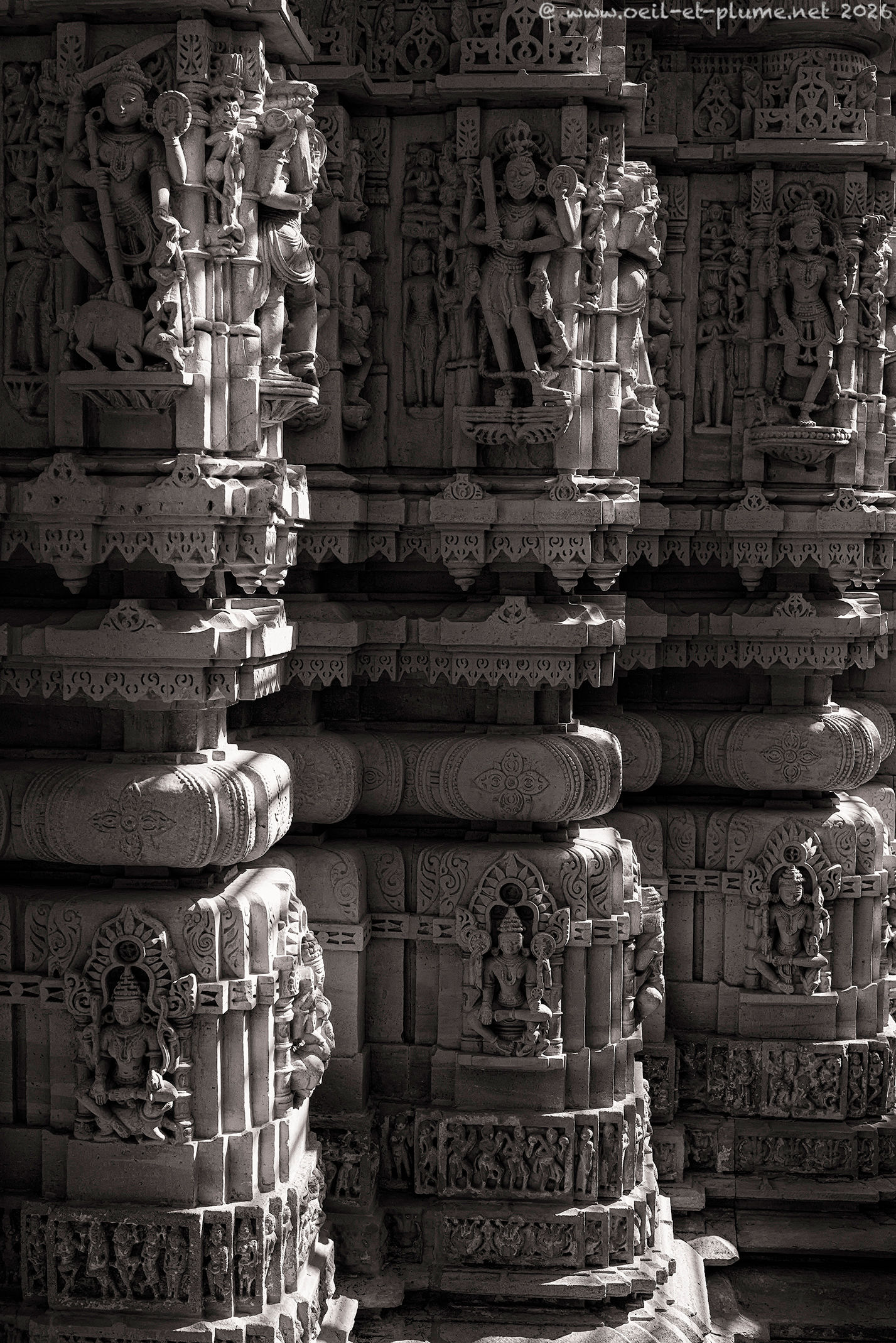
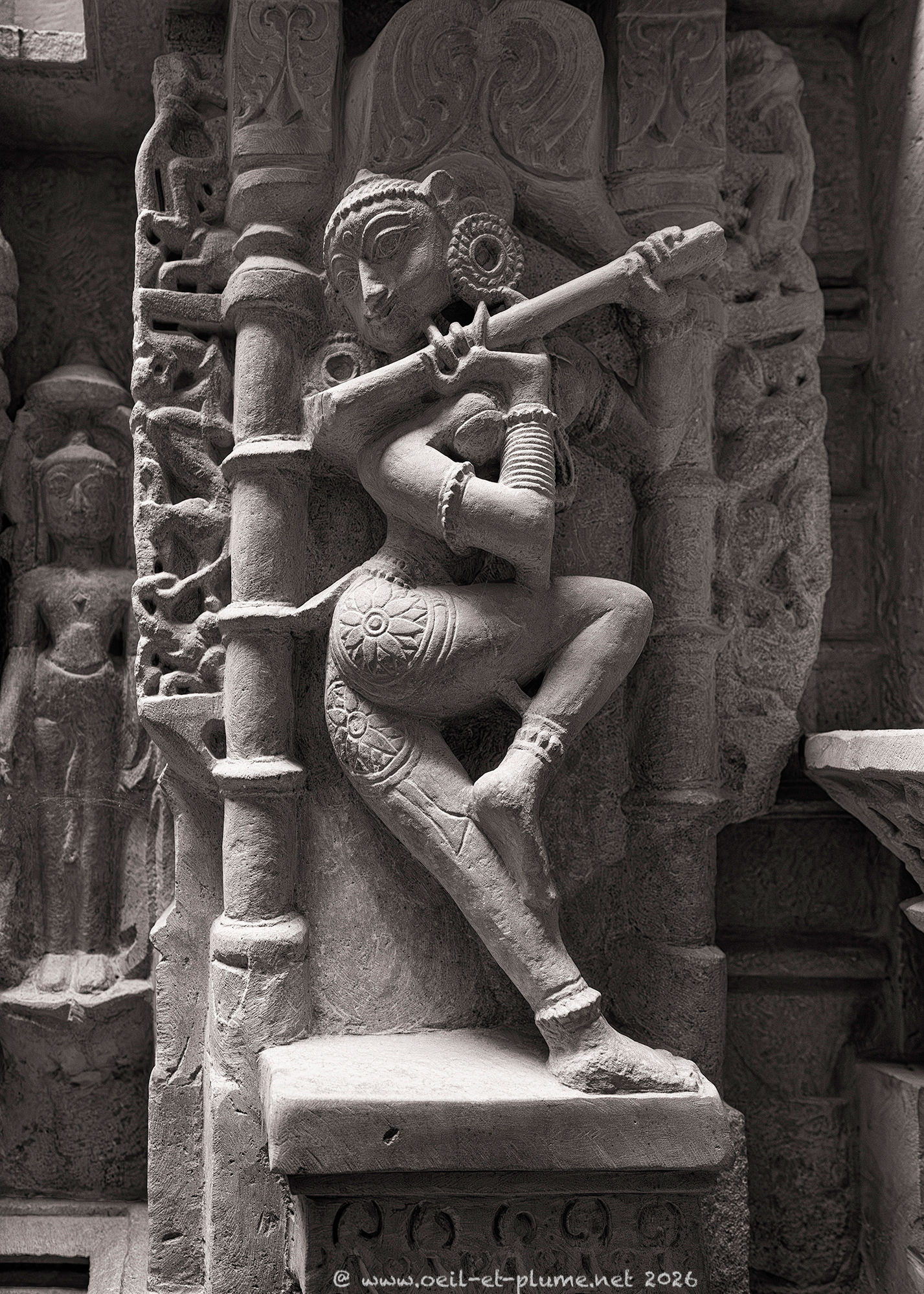
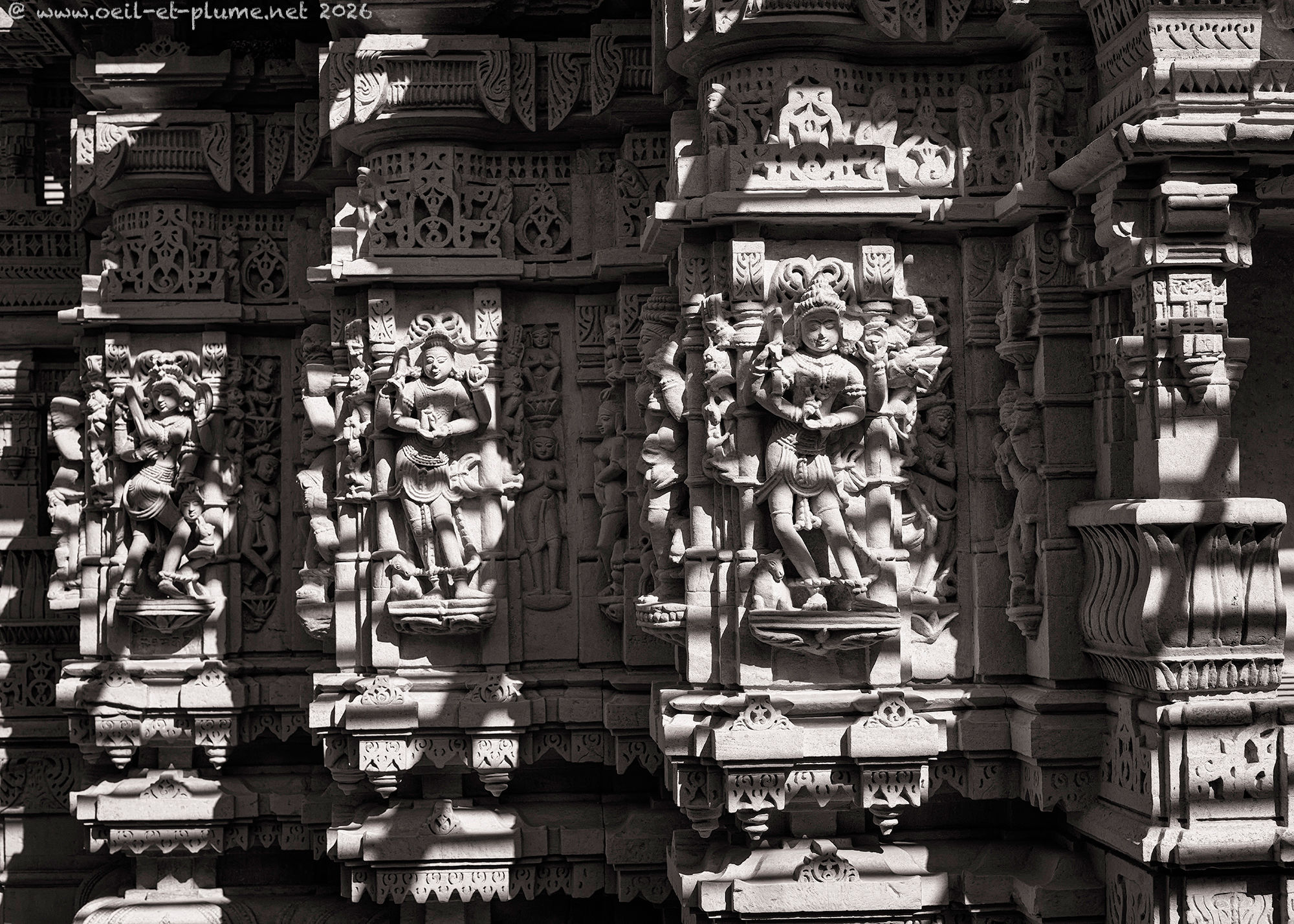
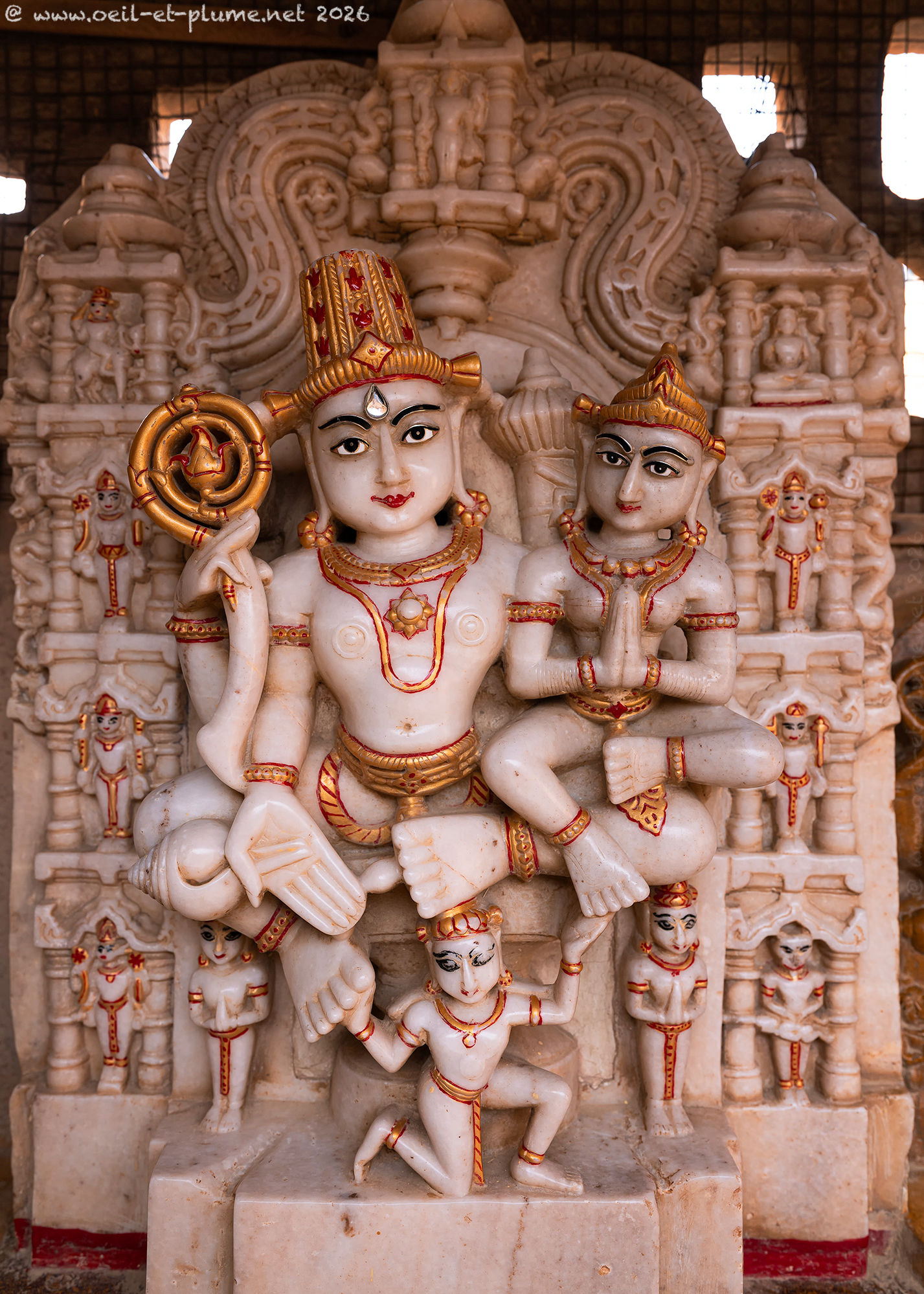
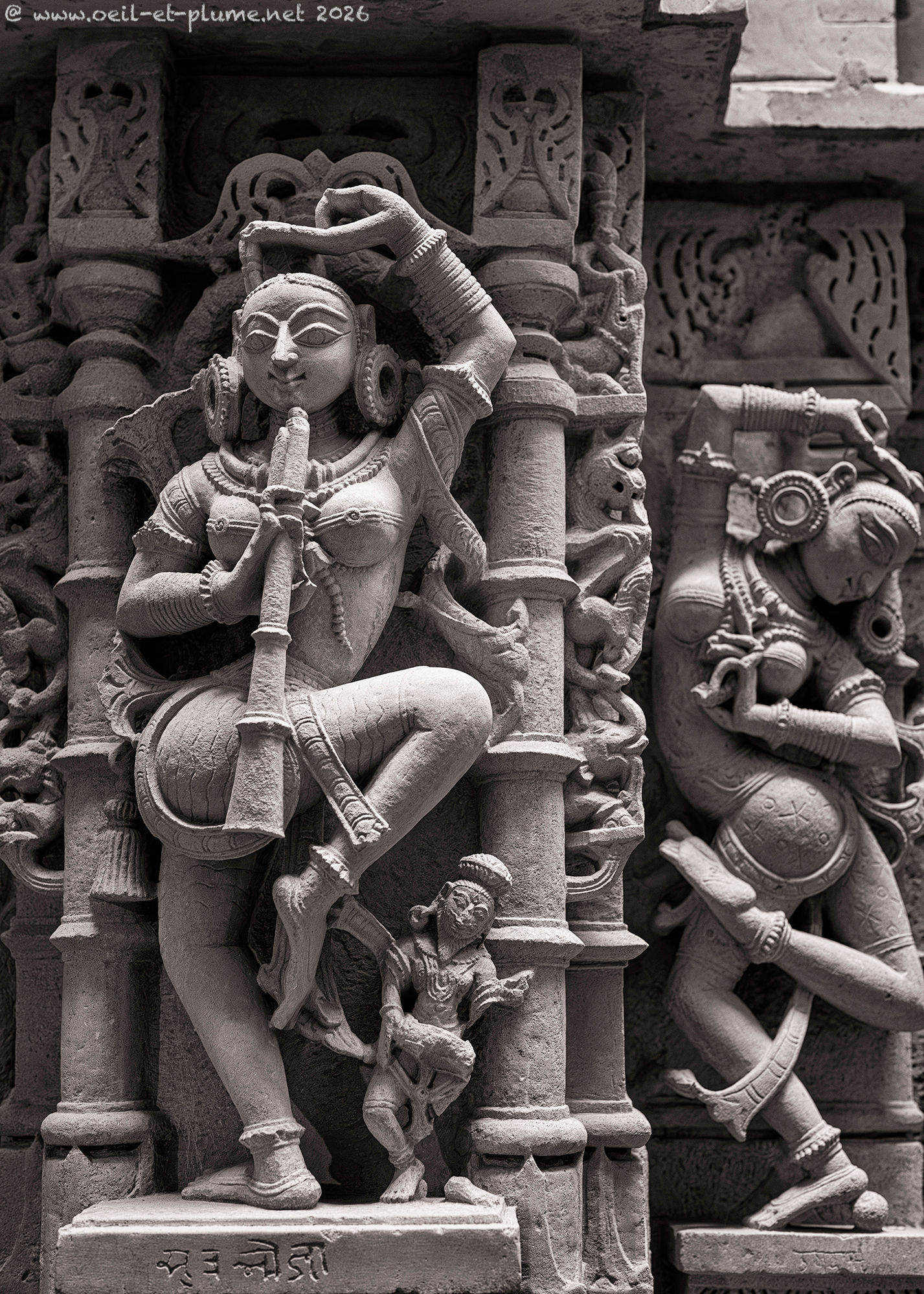
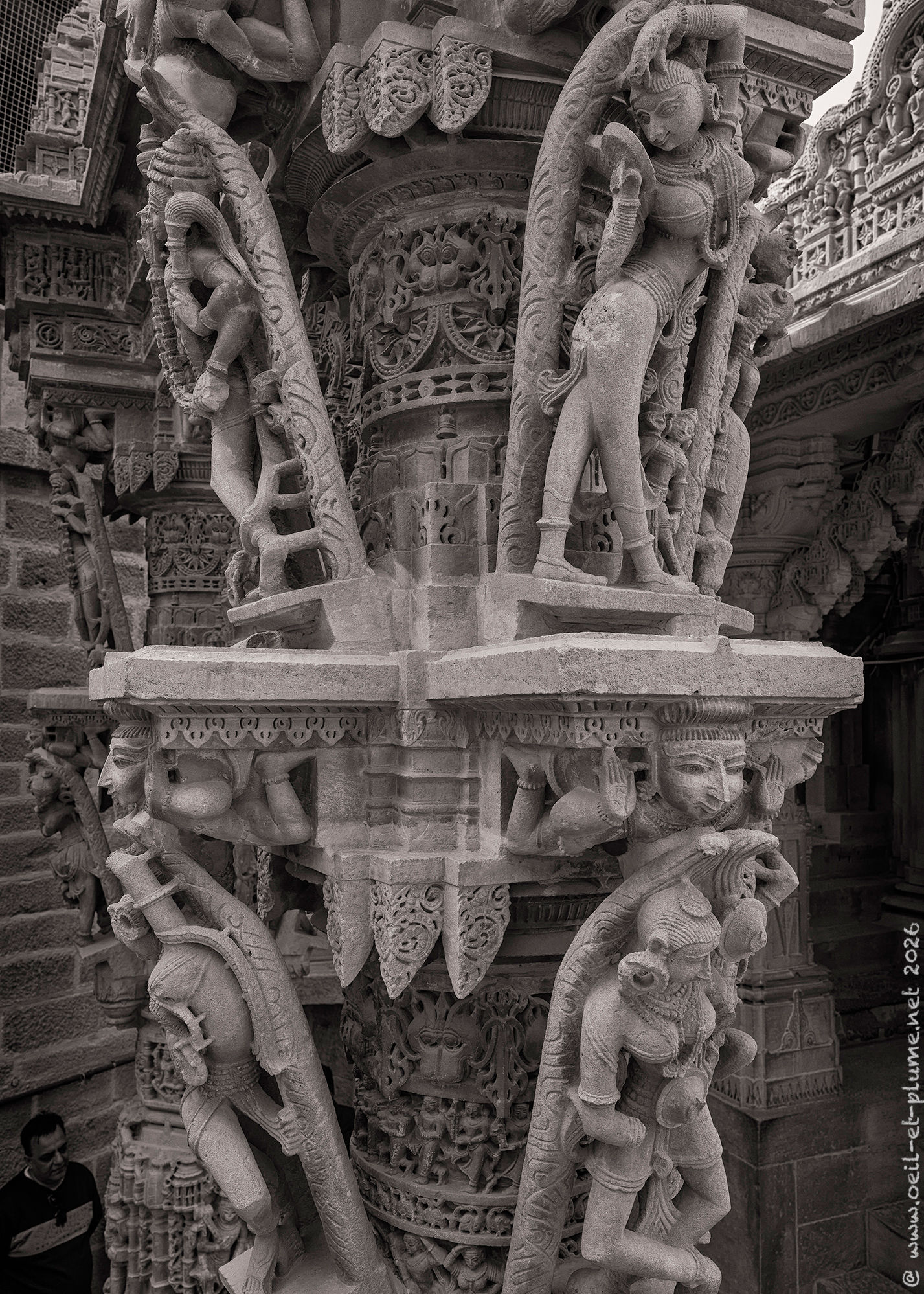
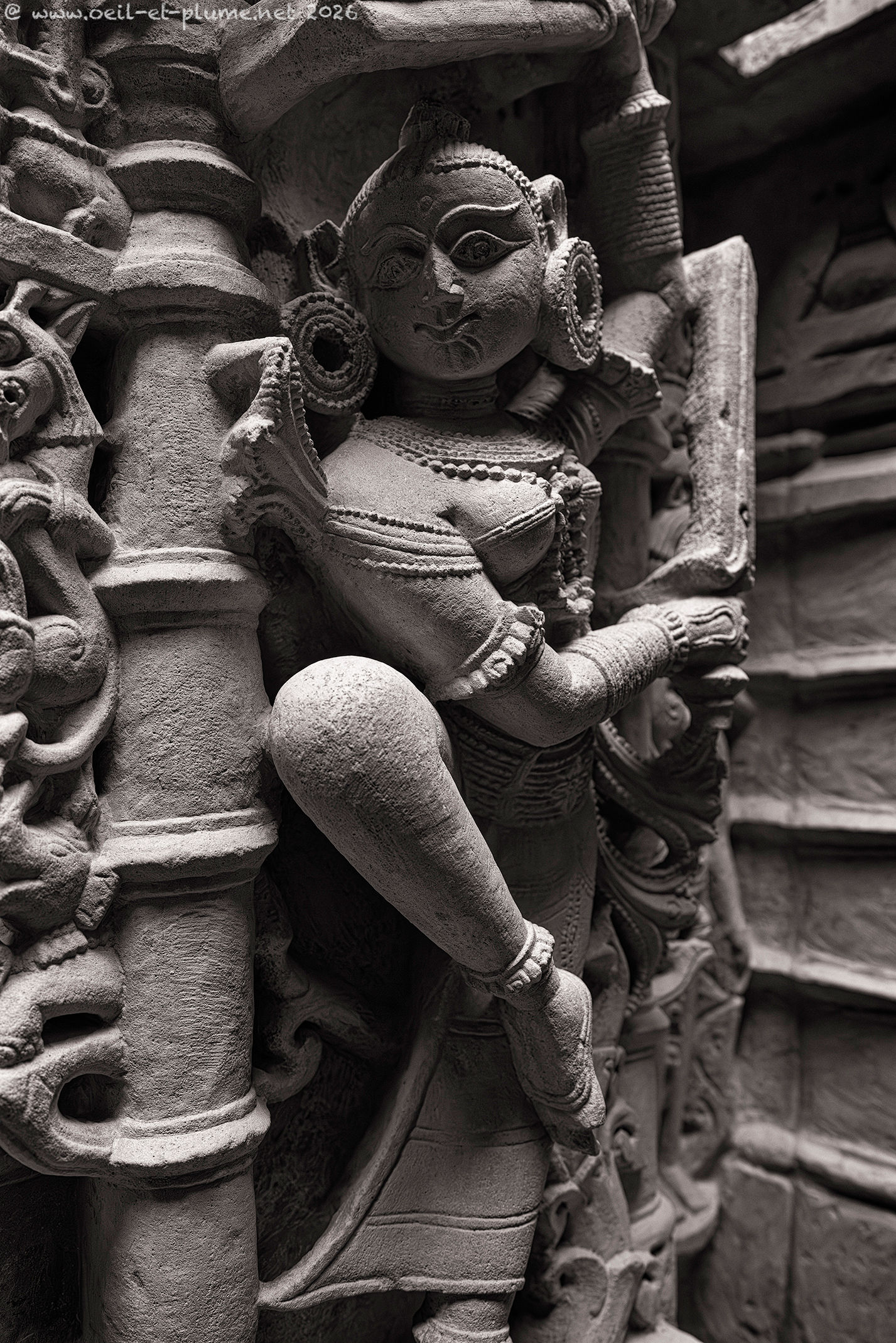
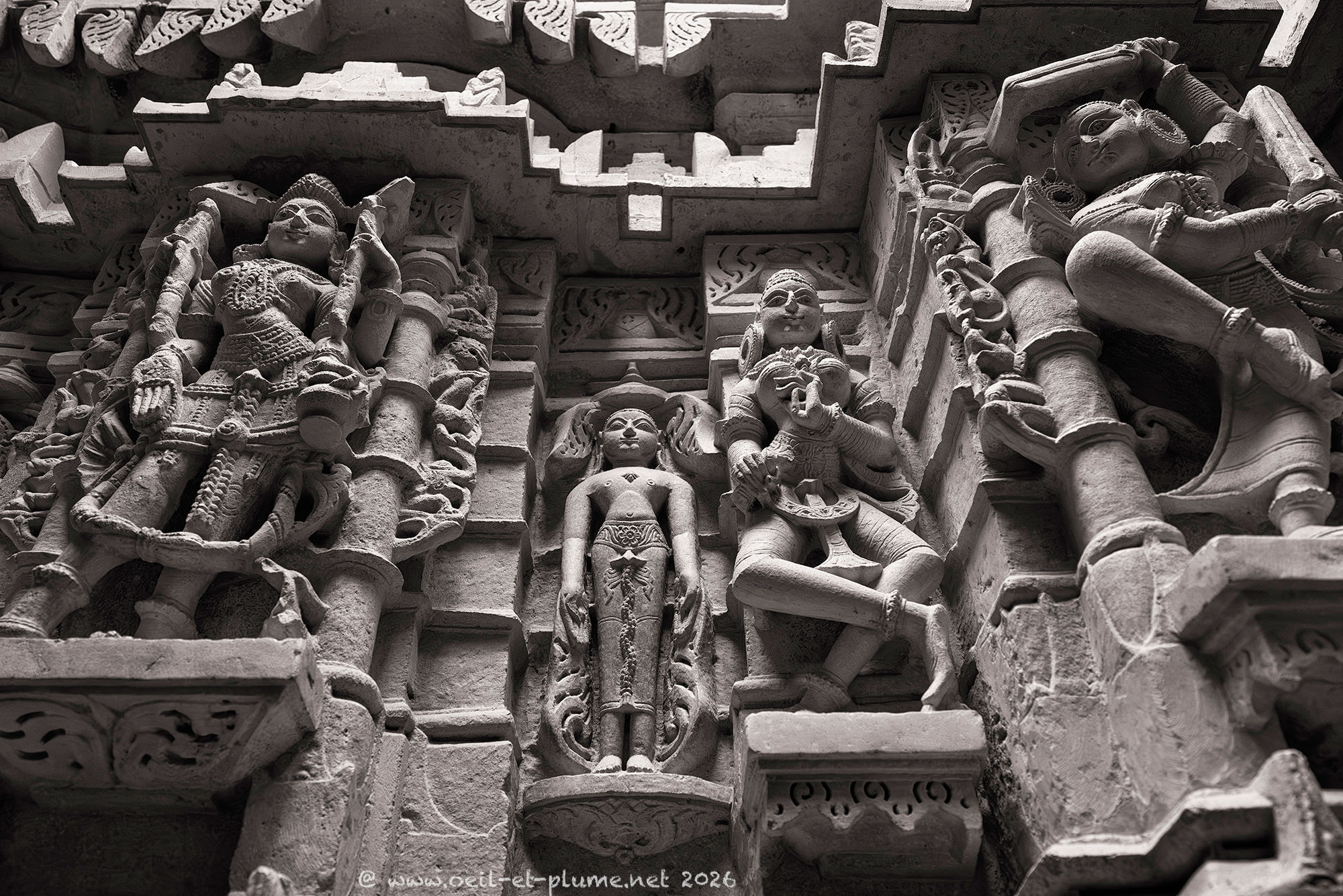
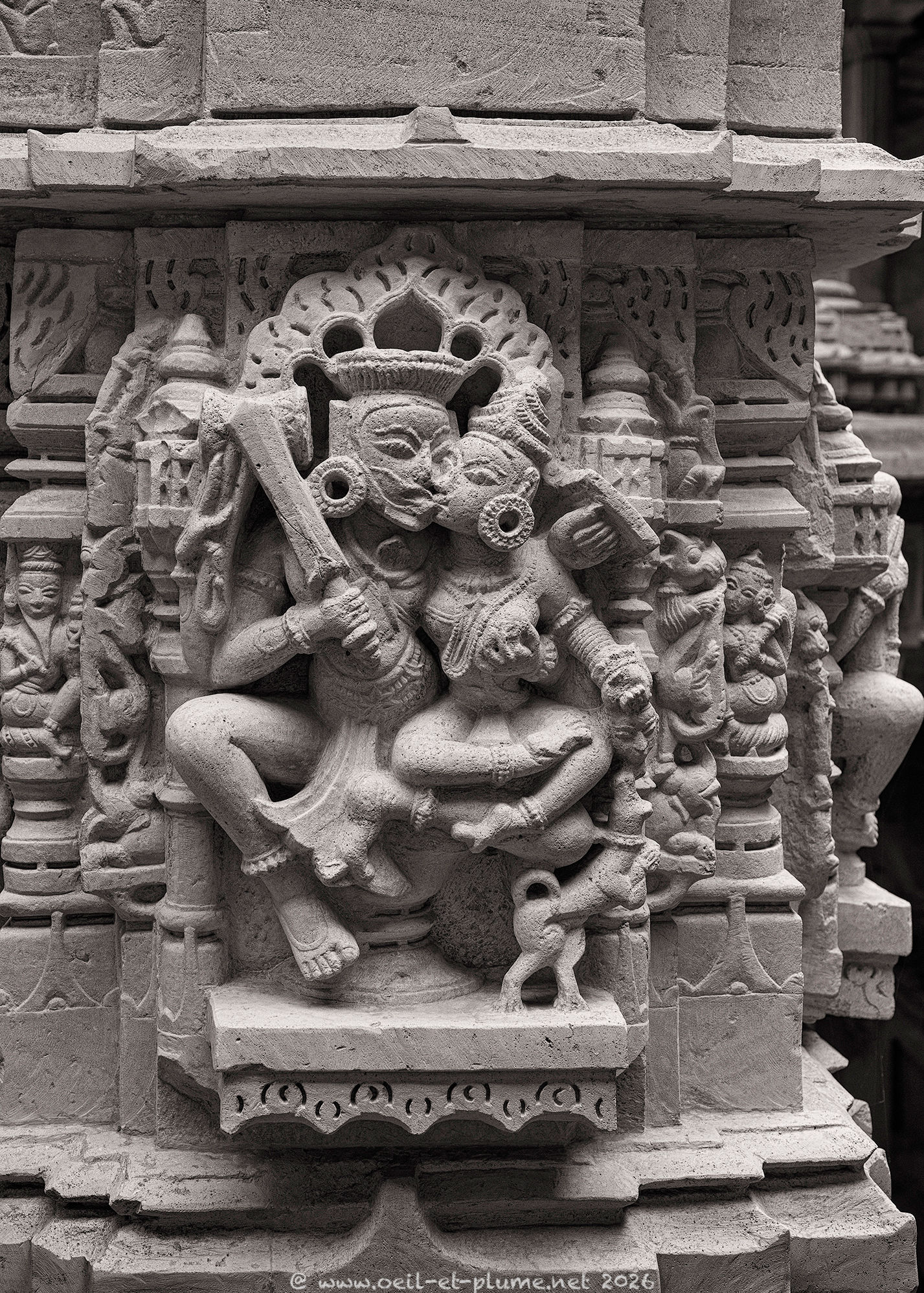
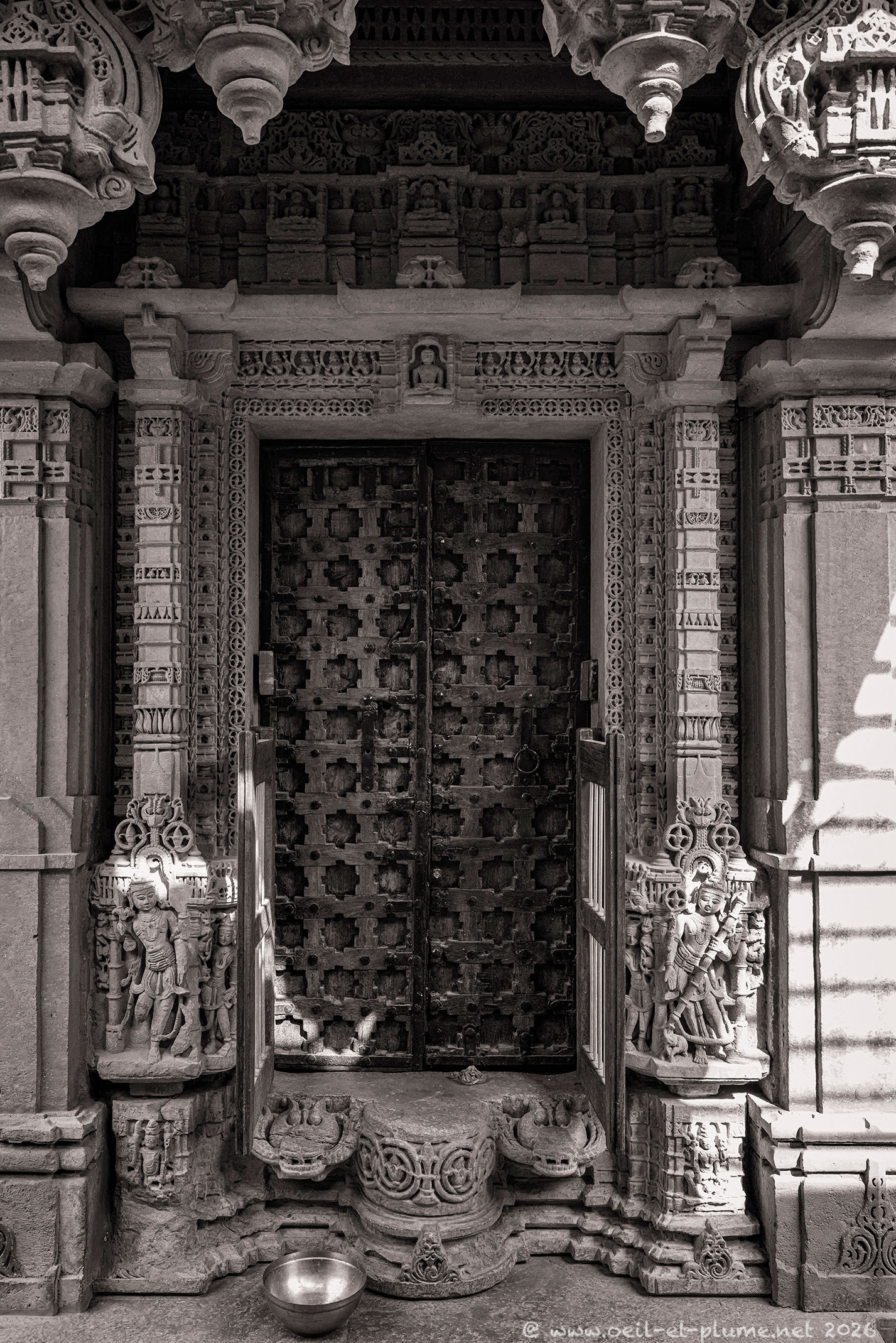
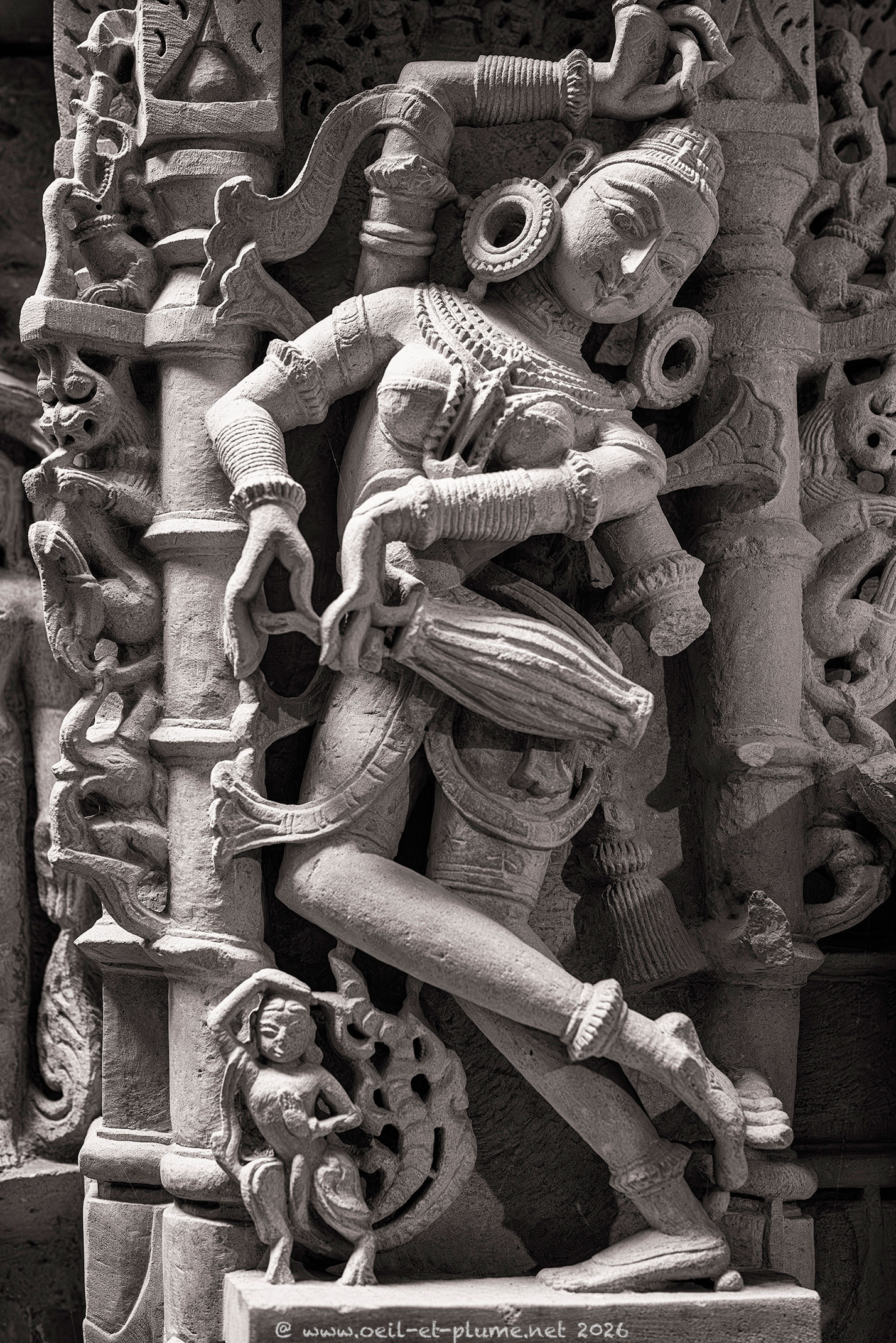
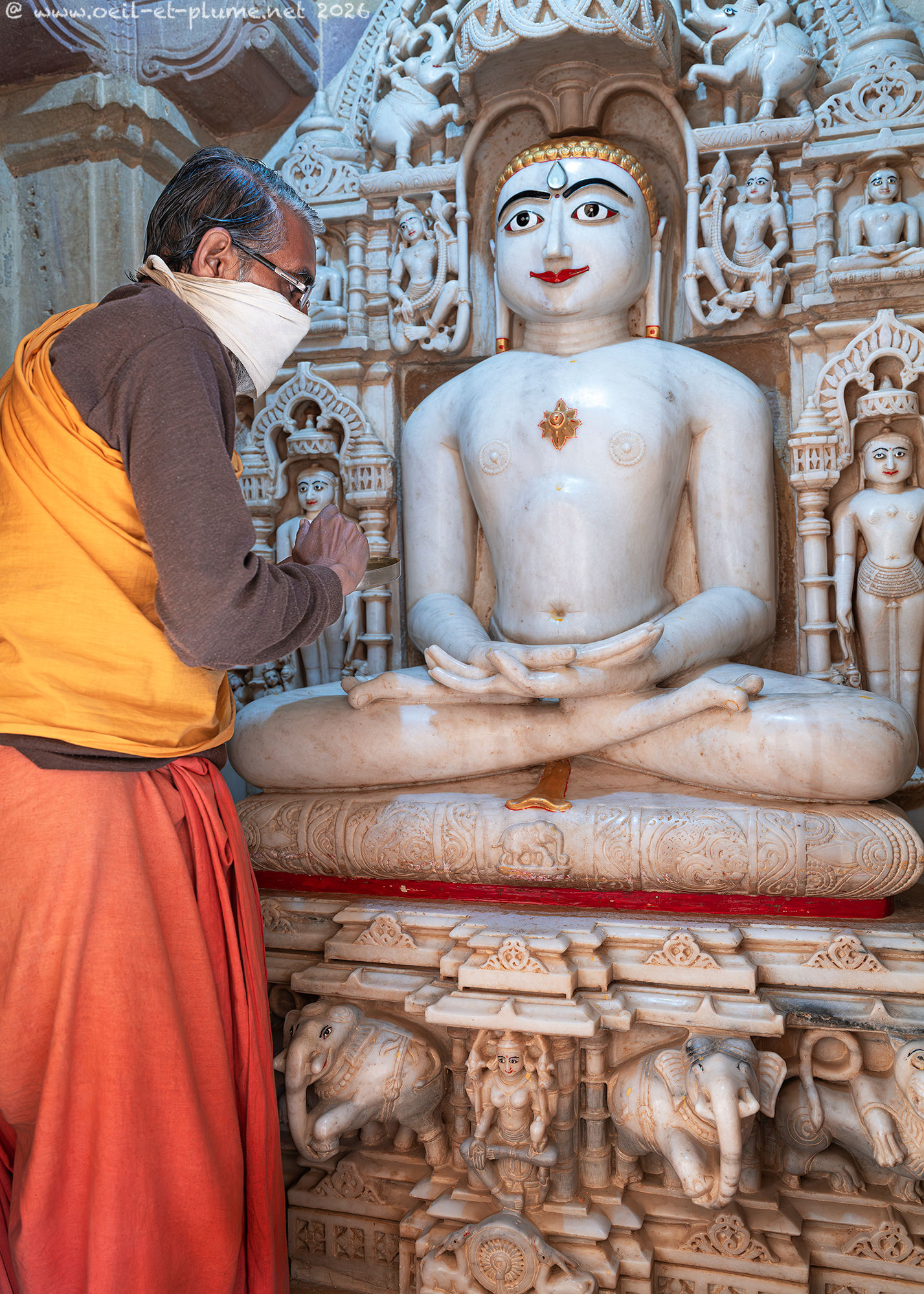
Between the 12th and 15th centuries, the Jain community of Jaisalmer constructed a remarkable religious complex of seven interconnected temples inside Jaisalmer Fort. These temples are considered true architectural gems, renowned for their intricate marble and sandstone carvings, ornate pillars, sculpted ceilings, and finely detailed arched gateways (toranas). They stand as outstanding examples of medieval western Indian temple architecture.
Jaisalmer is also home to some of the oldest libraries in India, preserving rare manuscripts and artefacts of Jainism. These collections include ancient palm-leaf and paper manuscripts, many beautifully illustrated and meticulously preserved, offering invaluable insight into Jain philosophy, ritual practice, literature, and medieval scholarship.
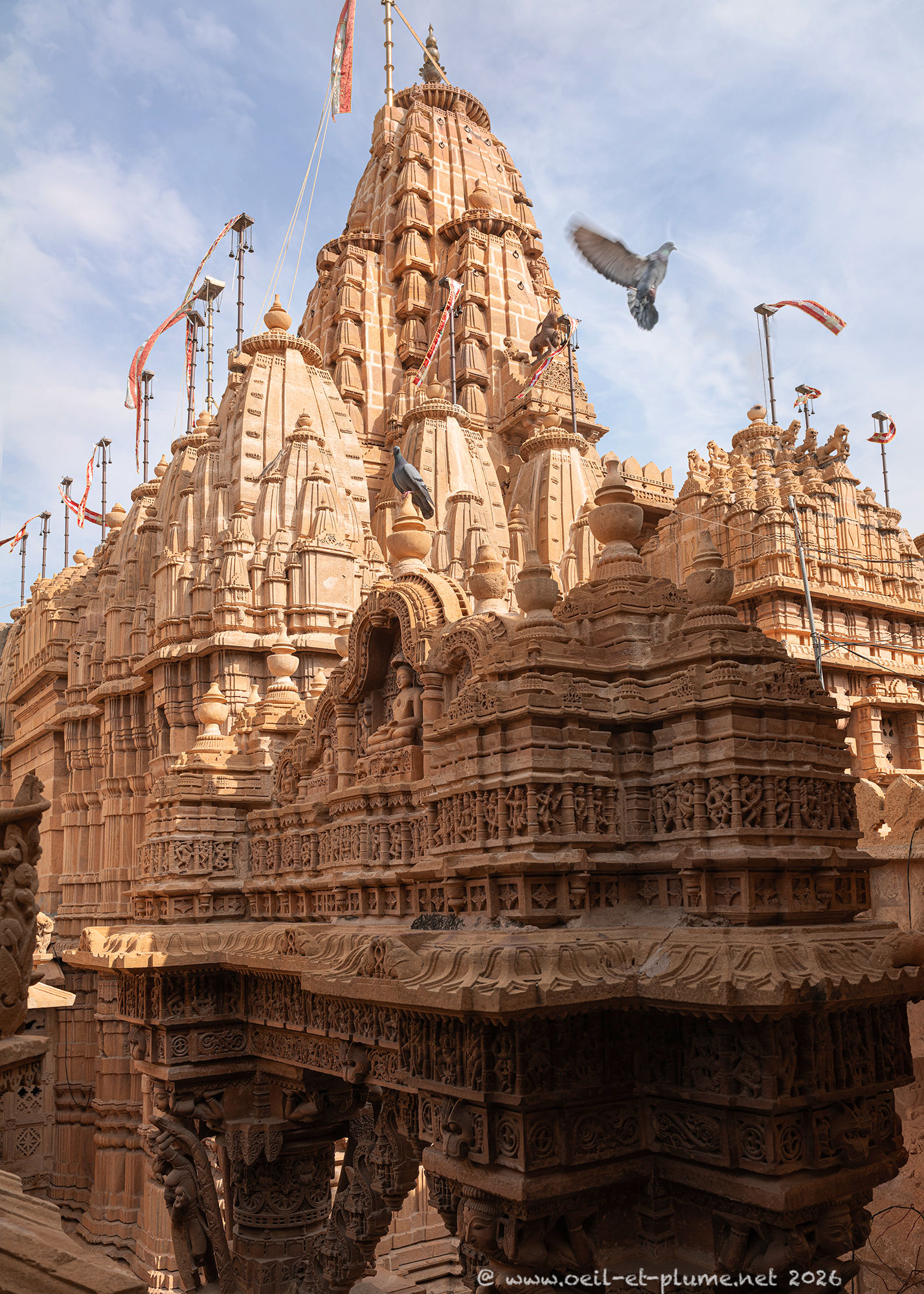
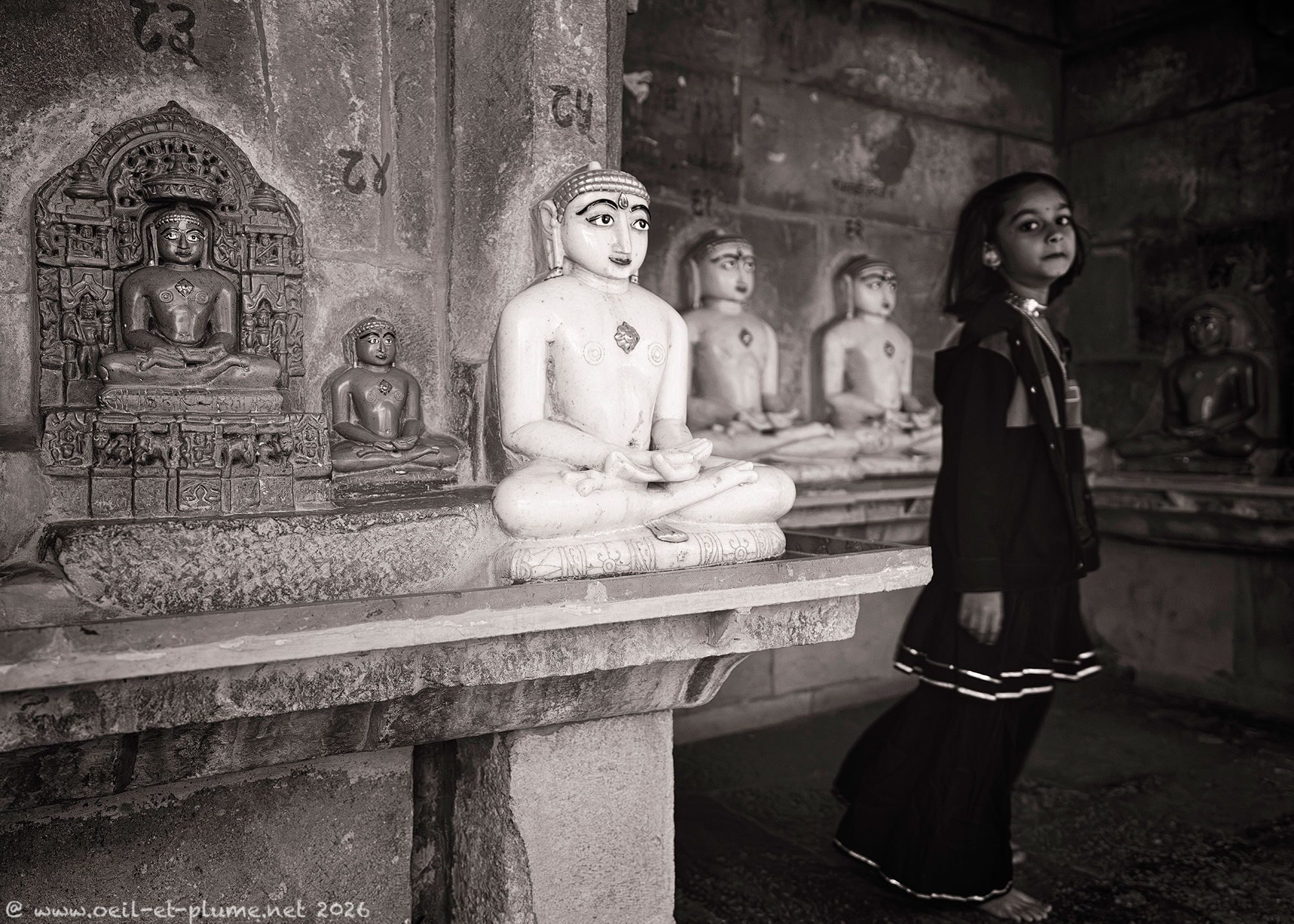
Detailed historical and architectural analyses of these temples are available elsewhere online. My photography attempts to relay the extraordinary atmosphere prevailing in those architectural marvels.
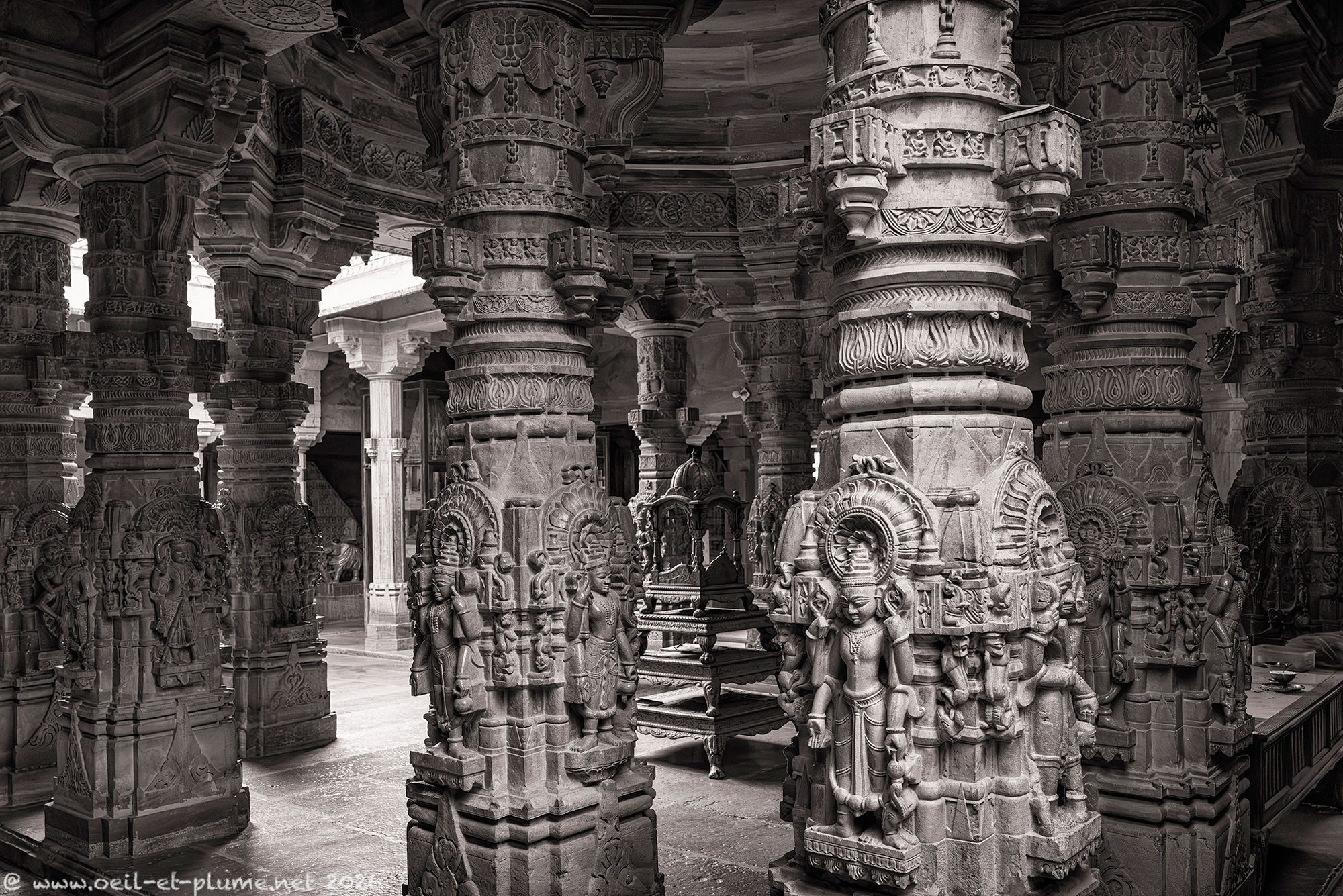
Over several days, I returned to the Jain temples of Jaisalmer at different hours, observing how shifting light transforms the carved sandstone and marble surfaces. I spent long, quiet, and contemplative moments within their walls — absorbing the serenity of the spaces and connecting with the profound spiritual energy they radiate. My work aims to capture the subtle interplay of light, silence, texture, and devotion that define these sacred spaces shaped by centuries of Jainism.
Jain cultural heritage
I was so deeply moved by the Jain temples of Jaisalmer that I later regretted not visiting the famed Dilwara Temples in Mount Abu in Rajasthan. Built in white marble between the 11th and 13th centuries, the Dilwara temples are celebrated for their extraordinary architectural refinement — a masterpiece of intricate marble carving and astonishingly delicate craftsmanship.
Historically, the prosperity of Jaisalmer was closely tied to overland trade routes linked to the Silk Road. However, the rise of Mumbai as a major maritime port gradually shifted commerce toward sea trade, diminishing the importance of traditional desert caravan routes across the Thar Desert and significantly affecting the Bhati kingdom’s revenues.
Today, Jaisalmer continues to draw heavily upon the legacy of its medieval golden era. Local agriculture faces increasing challenges due to a hotter and drier climate, while renewable energy projects — particularly wind and solar farms — have expanded in recent years, taking advantage of the Thar Desert’s abundant sunlight and steady winds.
The city’s modern economy is largely driven by domestic tourism, centered on its rich Jain cultural heritage which also contributes to major local cultural events such as the Jaisalmer Desert Festival. I will explore in my next post the vibrant celebration of Rajasthani music, dance, and desert traditions.
Cheers,
