
My stay in Jaisalmer coincided with the 2026 Desert Festival – a vibrant celebration of Rajasthani music, dance, traditional dress, food and desert traditions.
Thar Desert
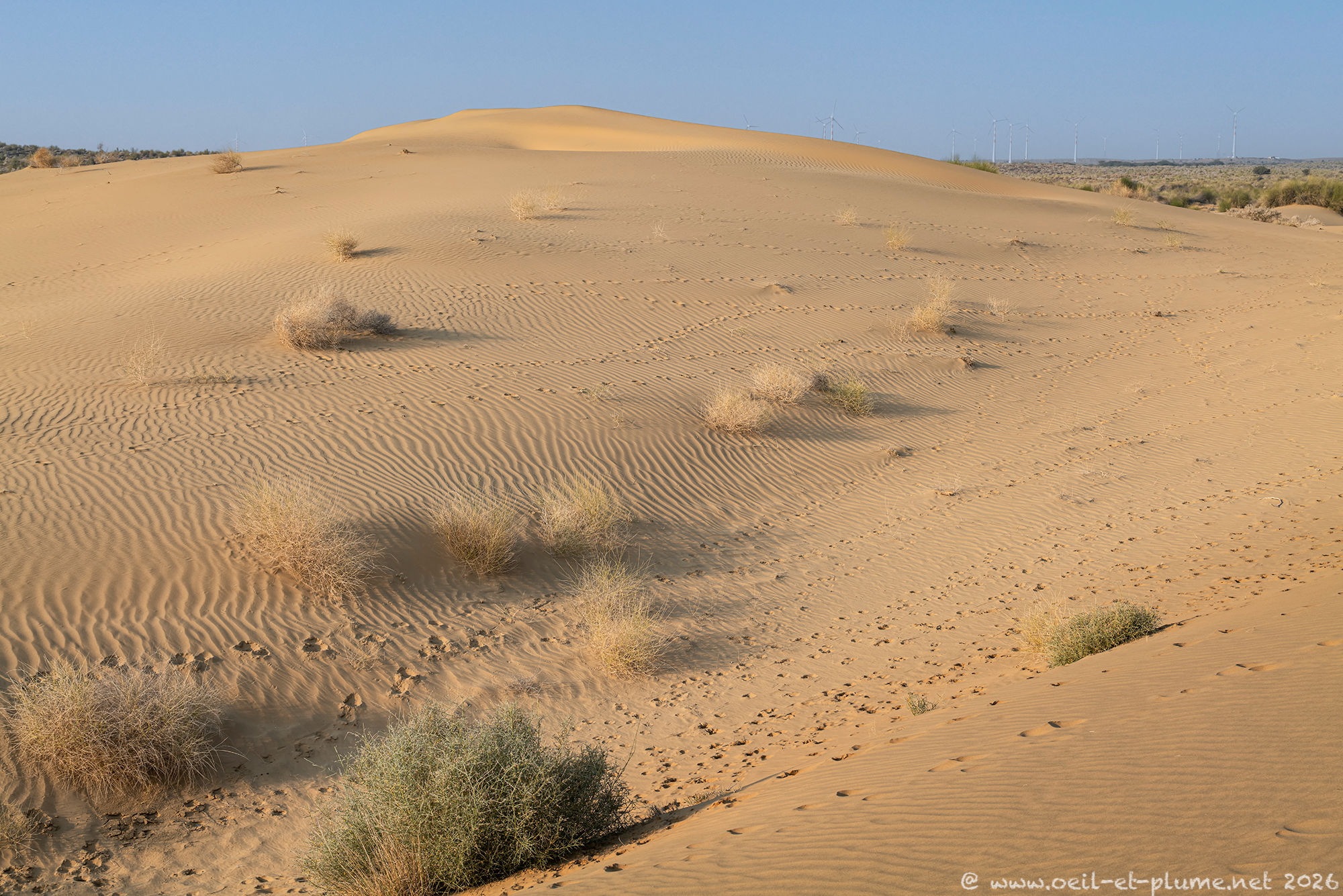
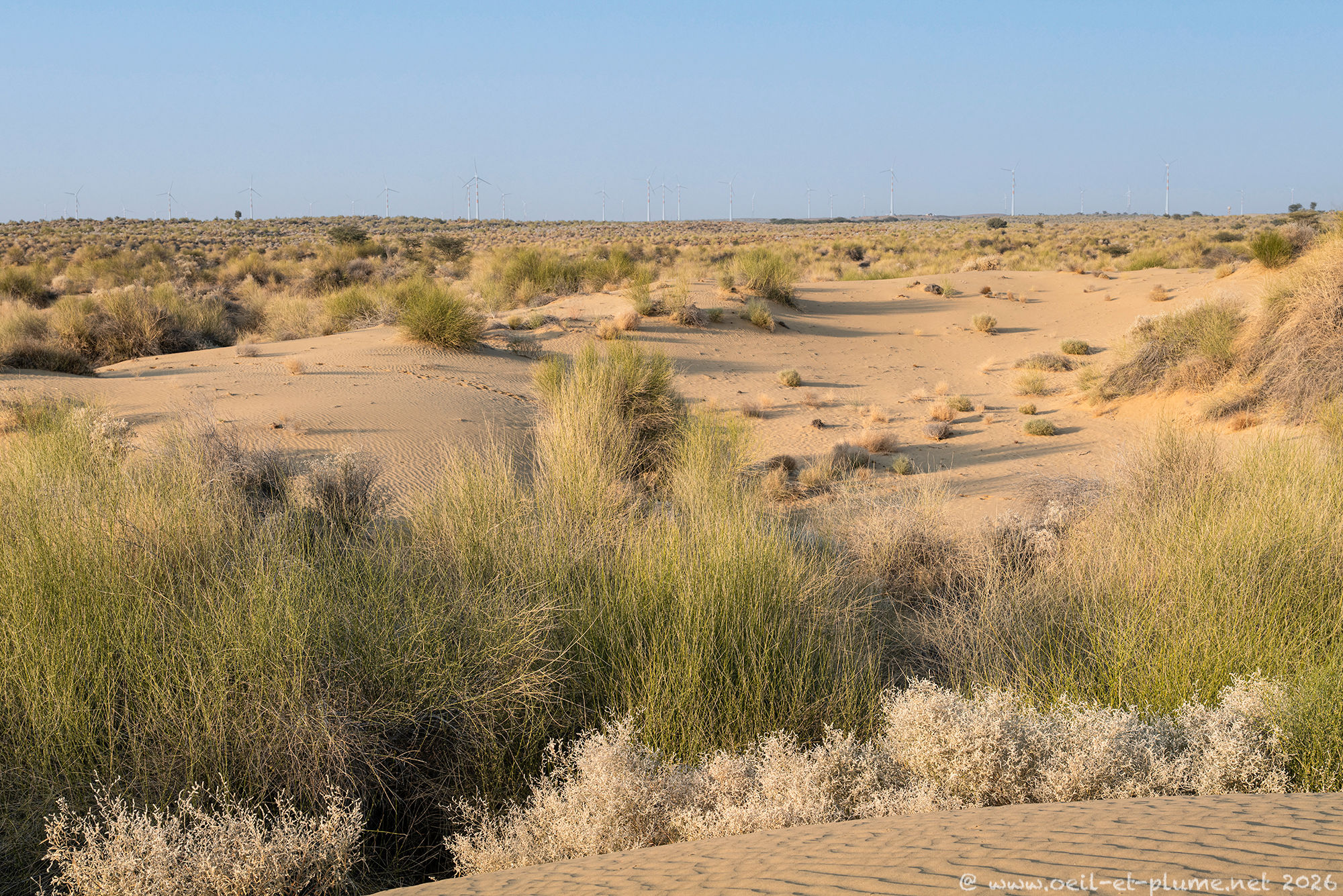
Ahead of the cultural festival, I longed to be introduced to the Thar Desert, stretching north of Jaisalmer and across the international border into Pakistan. Riding my gentle dromedary, Johnny, and guided by Mobai, I spent several days wandering through its vast, wind-shaped expanses.
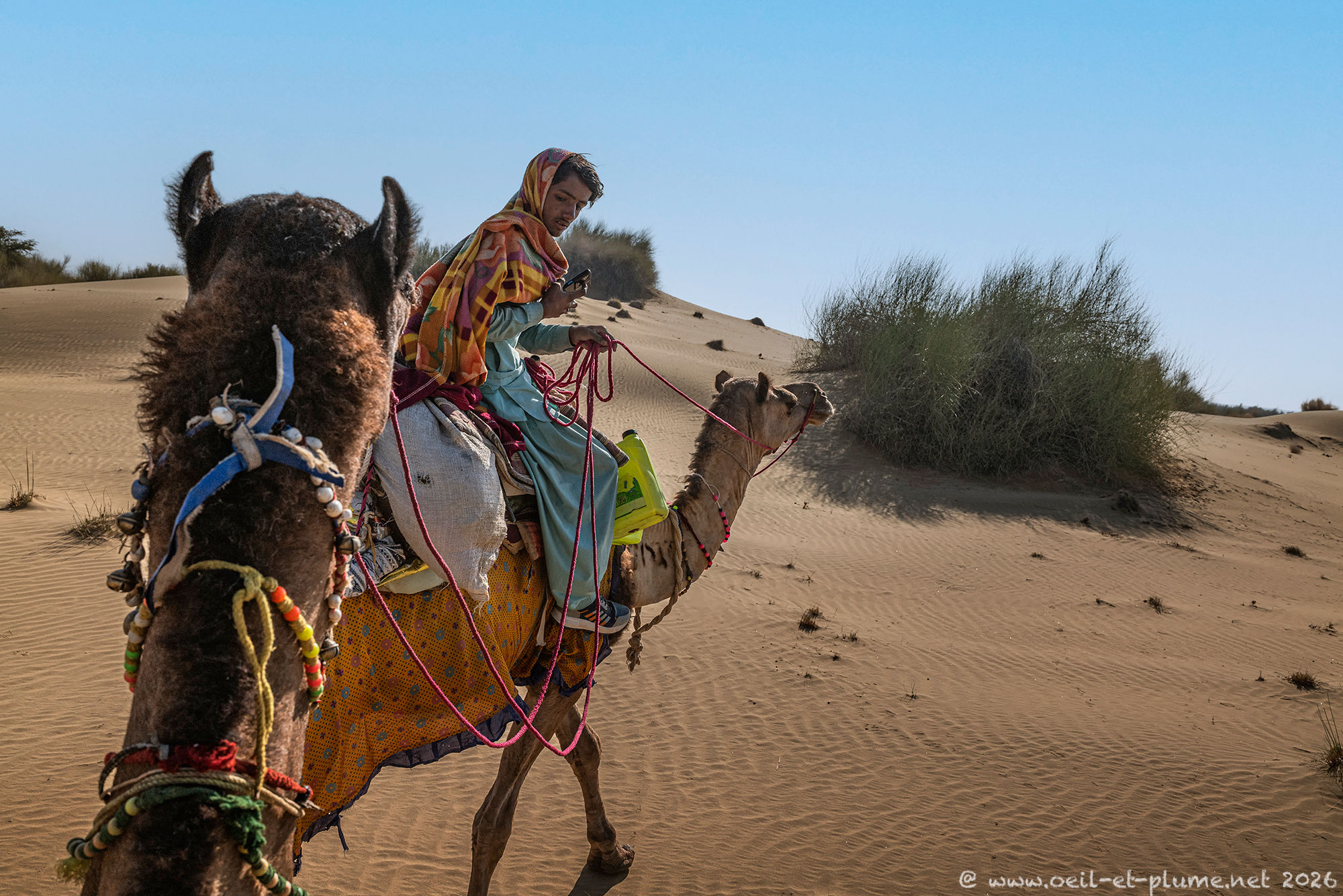
Visually, the Thar Desert does not mirror the cream-soft, sweeping curves of the Empty Quarter covering part of Oman, Yemen, Saudi Arabia, and the United Arab Emirates; nor does it resemble the golden dunes of the Sahara, the towering dark-red sand mountains of the Namib Desert, or the dramatic rocky landscapes of Wadi Rum in Jordan.
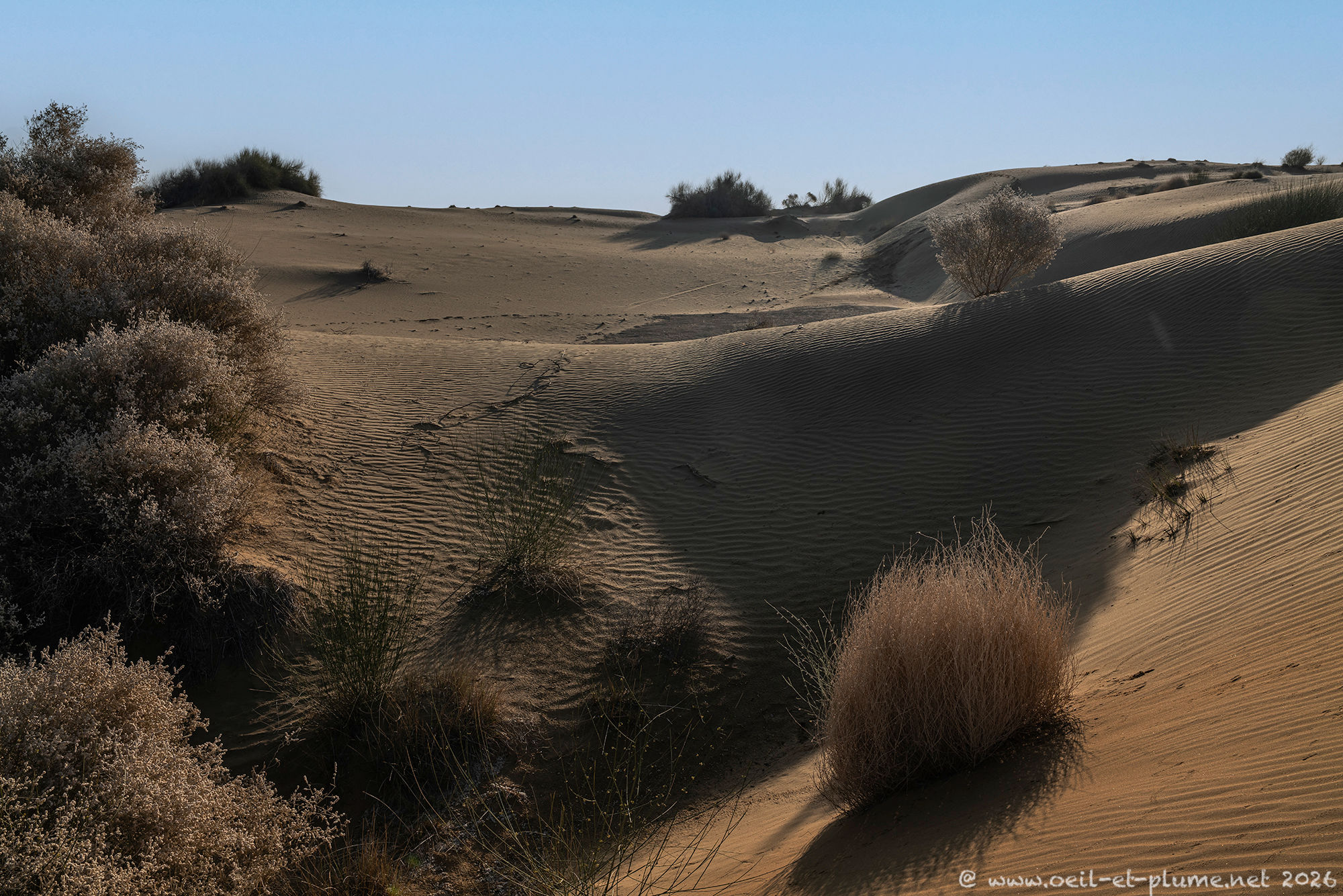
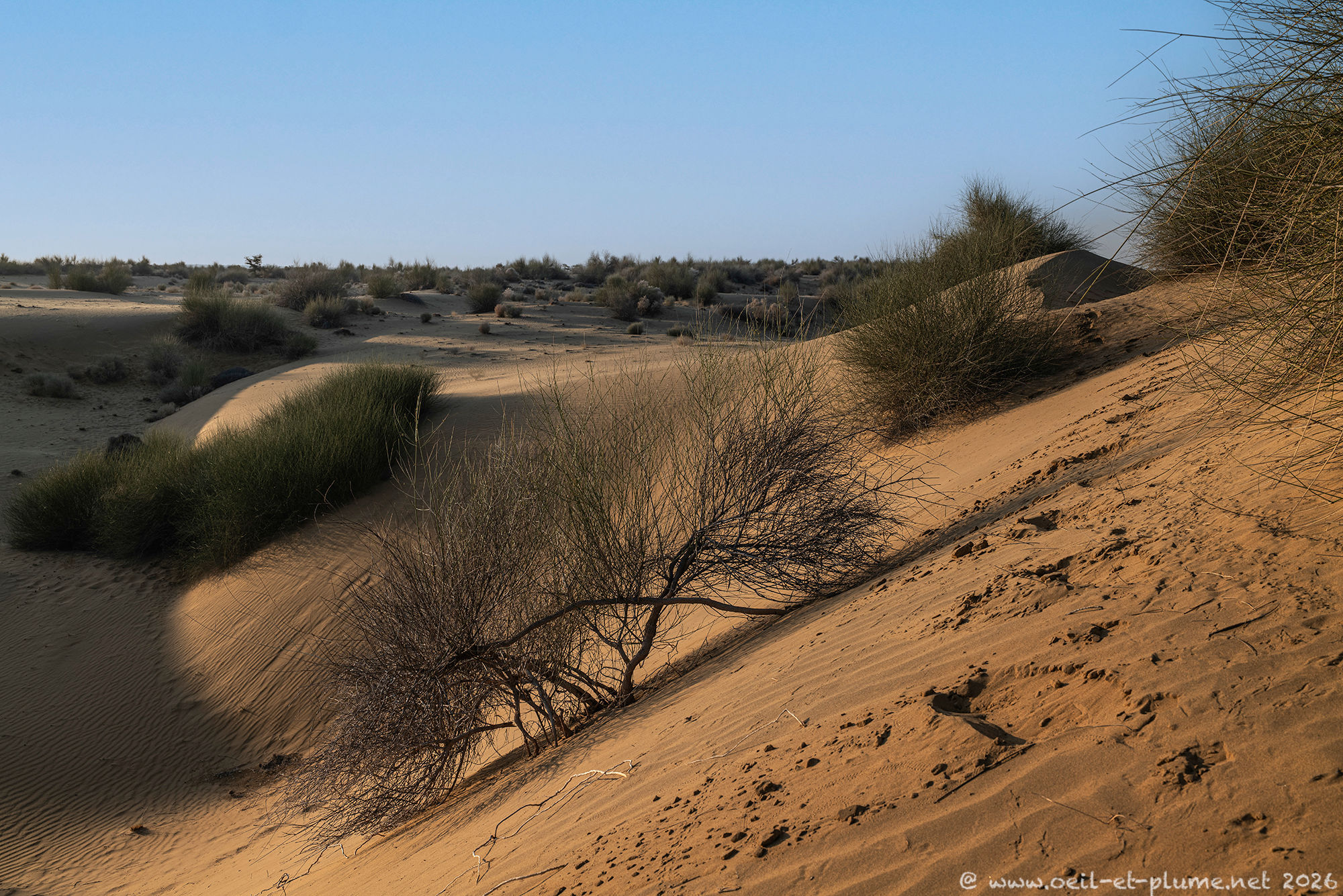
Instead, the Thar reveals a bare beauty — textured scrublands, resilient grasses, scattered khejri trees, and humble villages that rise organically from the earth. Its dunes are lower, its colour palette more muted, yet its spirit is vibrant, shaped as much by its people, music, and camels as by wind and sand.
We trekked mostly across flat, semi-desert terrain, where the land stretched endlessly beneath a pale sky. Yet we eventually reached a pocket of true dunes and spent a night there, cradled by sand and silence. Thousands of stars and a luminous moon invited us to their quiet light show, the desert transformed into a vast silver amphitheater.
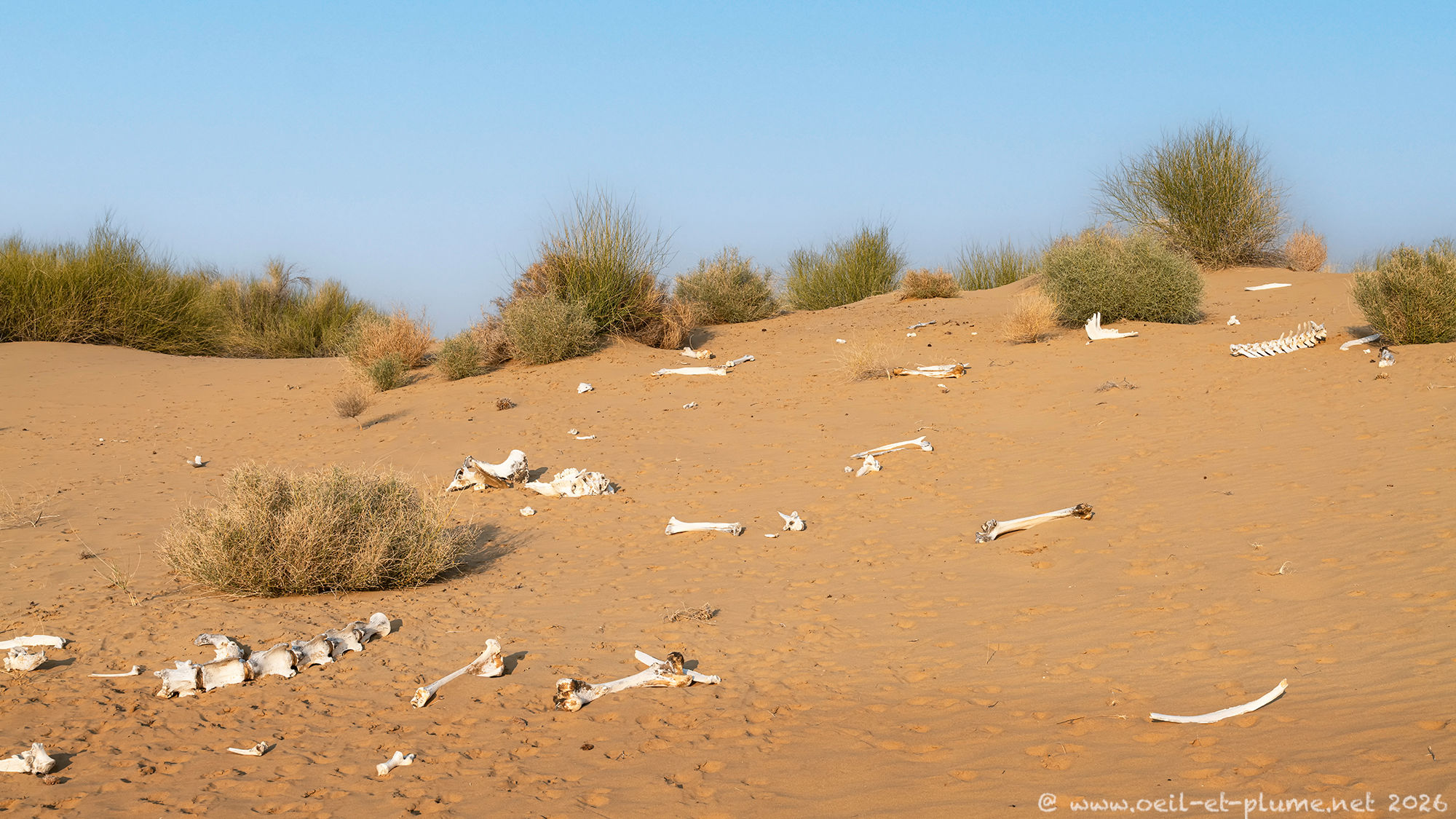
At dawn, the remains of a camel reminded us how unforgiving life can be in such an arid environment — beauty and brutality sharing the same breath. In the distance, hundreds of operating windmills traced the horizon, their slow-turning blades marking the fragile boundary between ancient rhythms and modern ambition.
Jaisalmer Desert Festival
Held every year, the Jaisalmer Desert Festival is a vivid expression of Rajasthan’s cultural soul. Over three vibrant days, the desert transforms into a stage where heritage, colour, and sound blend beneath open skies.
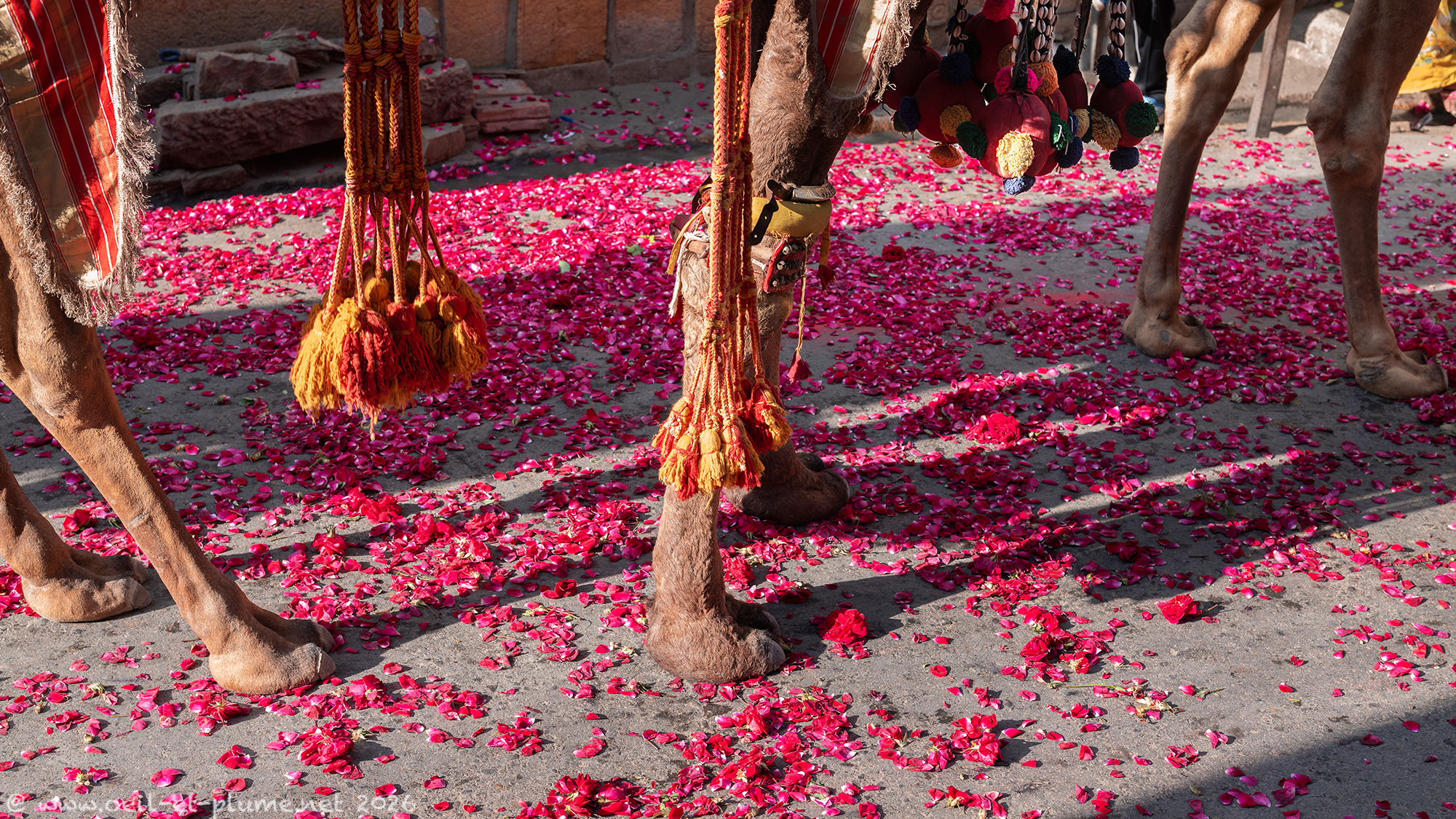
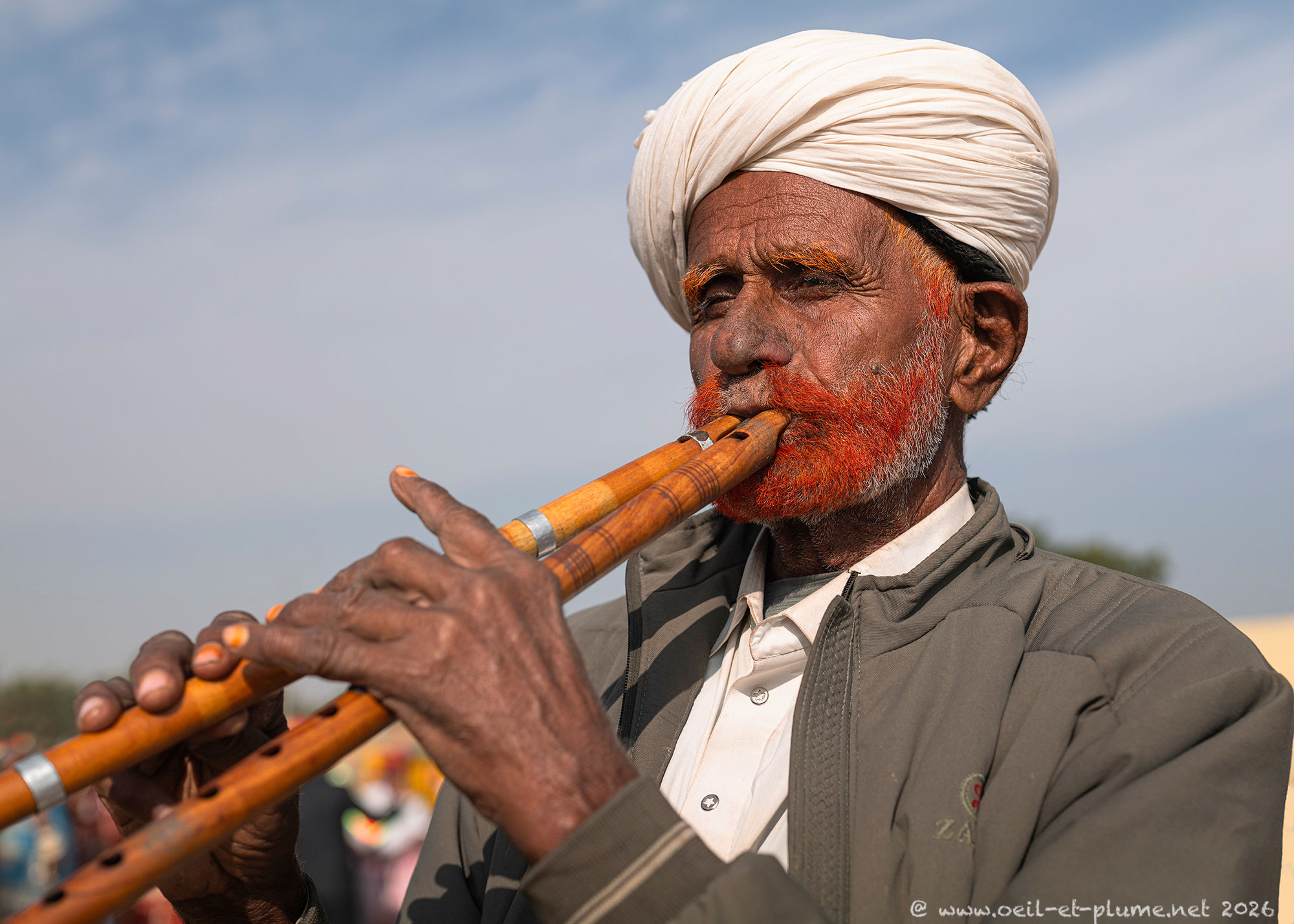
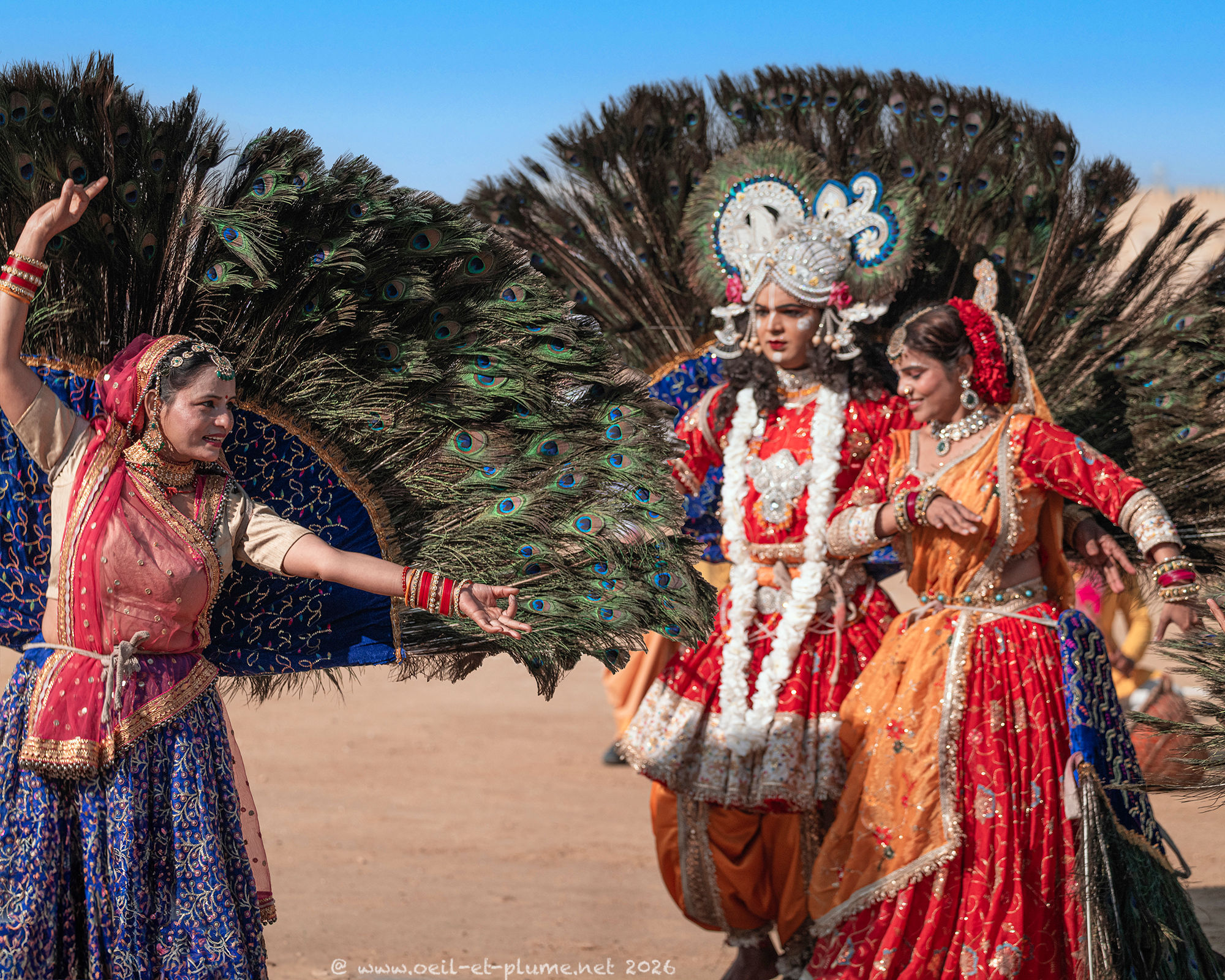
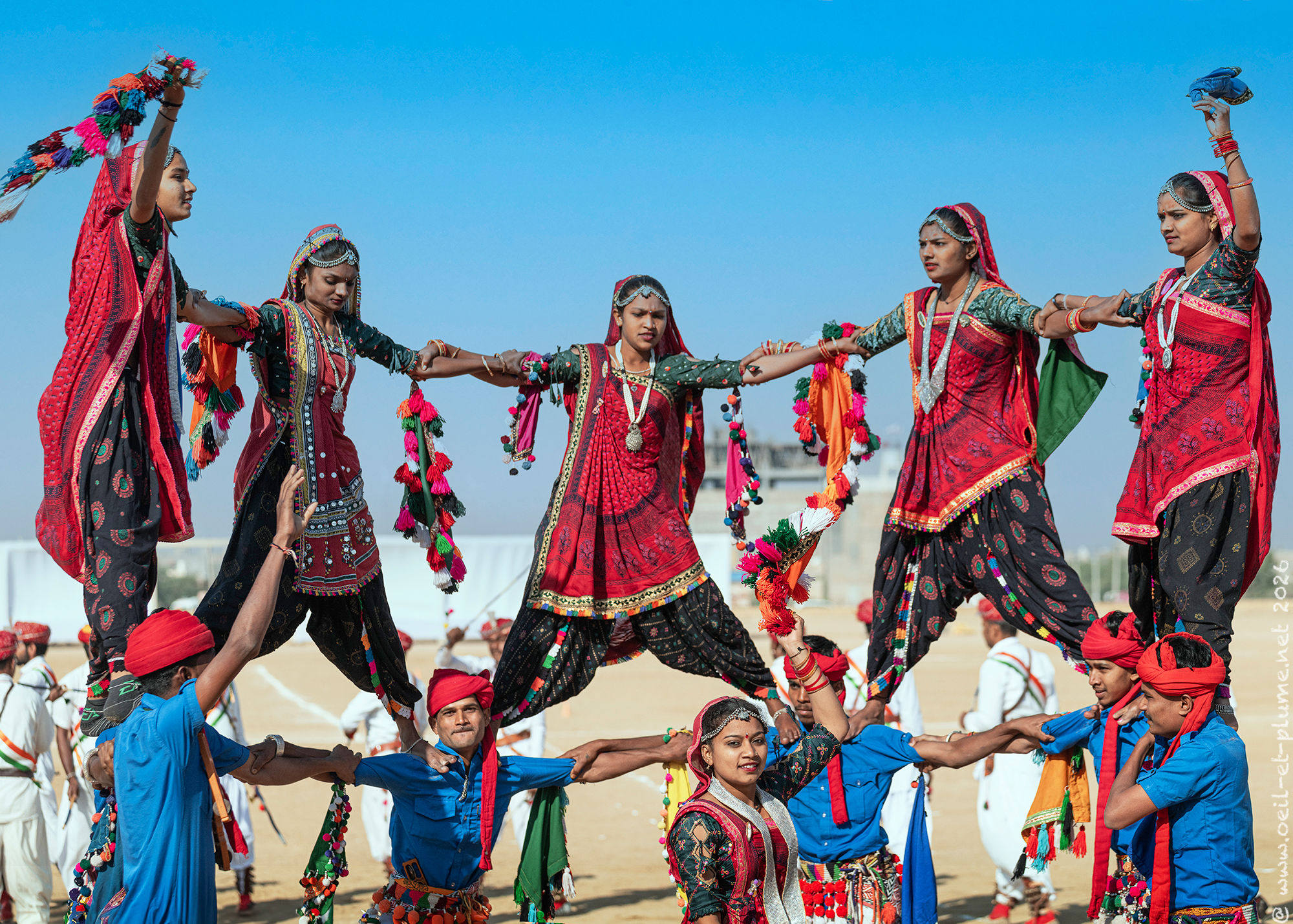
The Jaisalmer’s Desert Festival showcases Rajasthan’s rich cultural heritage through camel parade, folk music, traditional dances, turban-tying, and “longest moustache” competition. Rajasthani dromedaries remain central throughout the event, as they are not merely as an animal of transport, but as a cultural emblem of desert resilience and artistry. Their festive attire – draped in embroidered textiles, mirror work, tassels, and ankle bells – does not stay unnoticed.
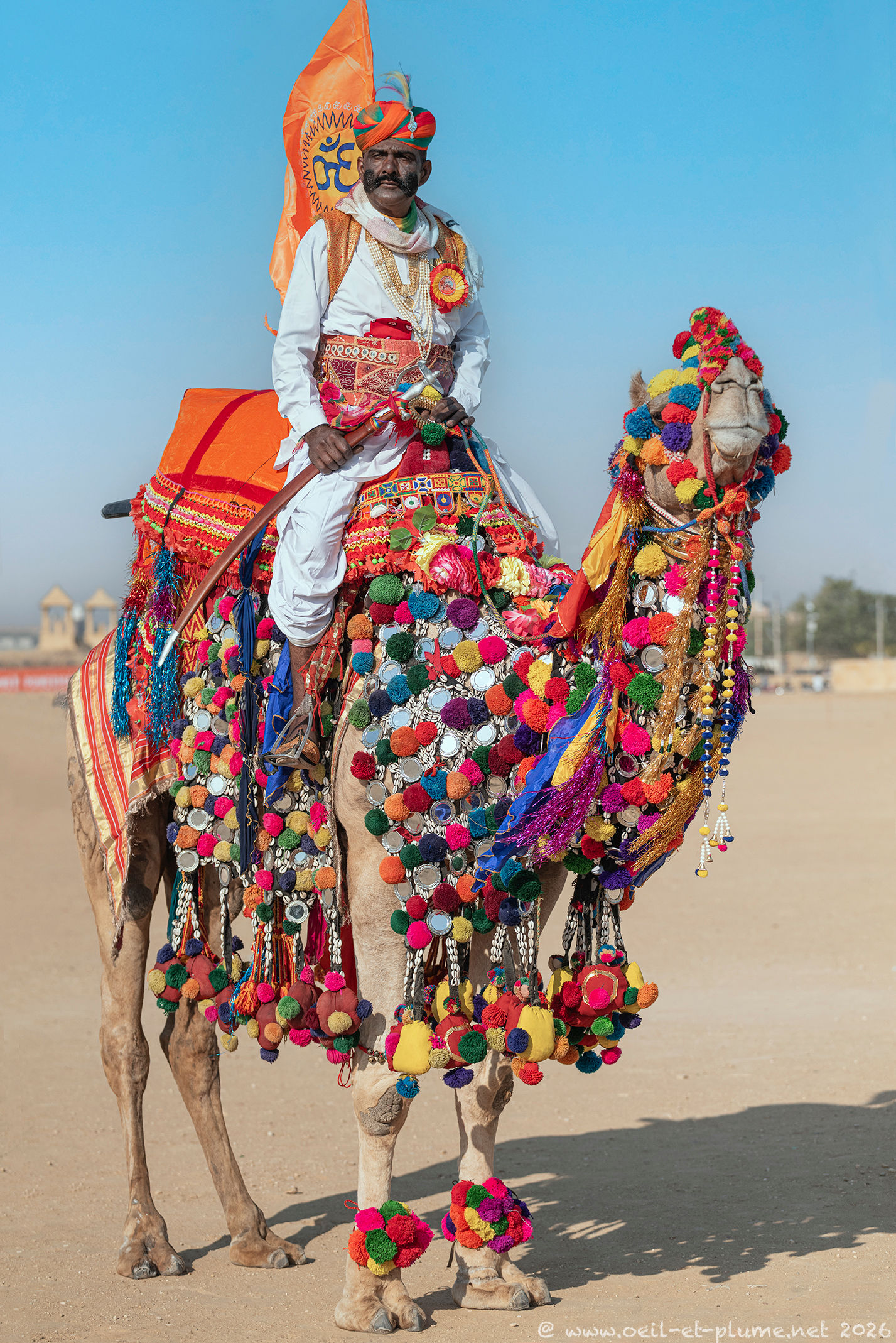
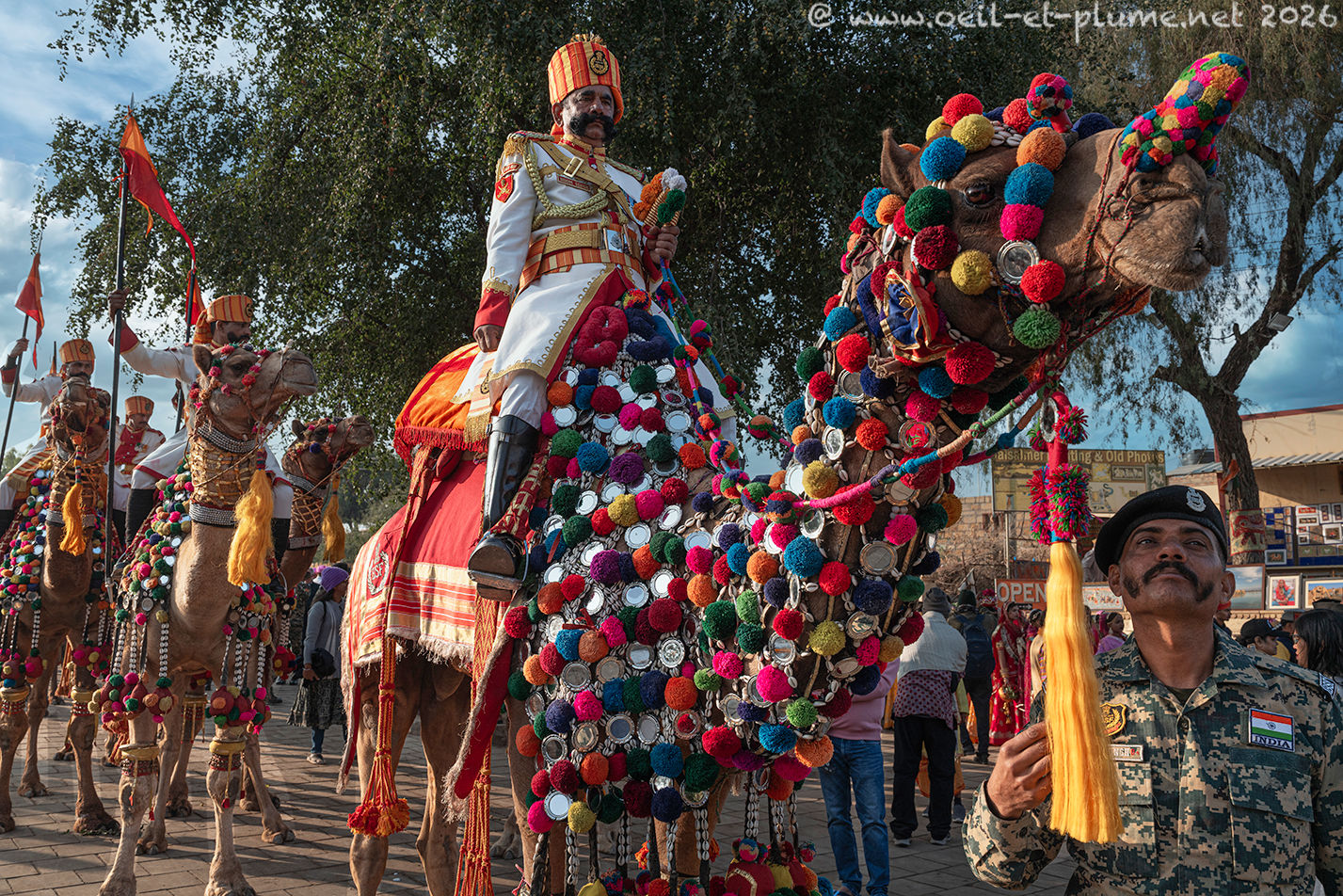
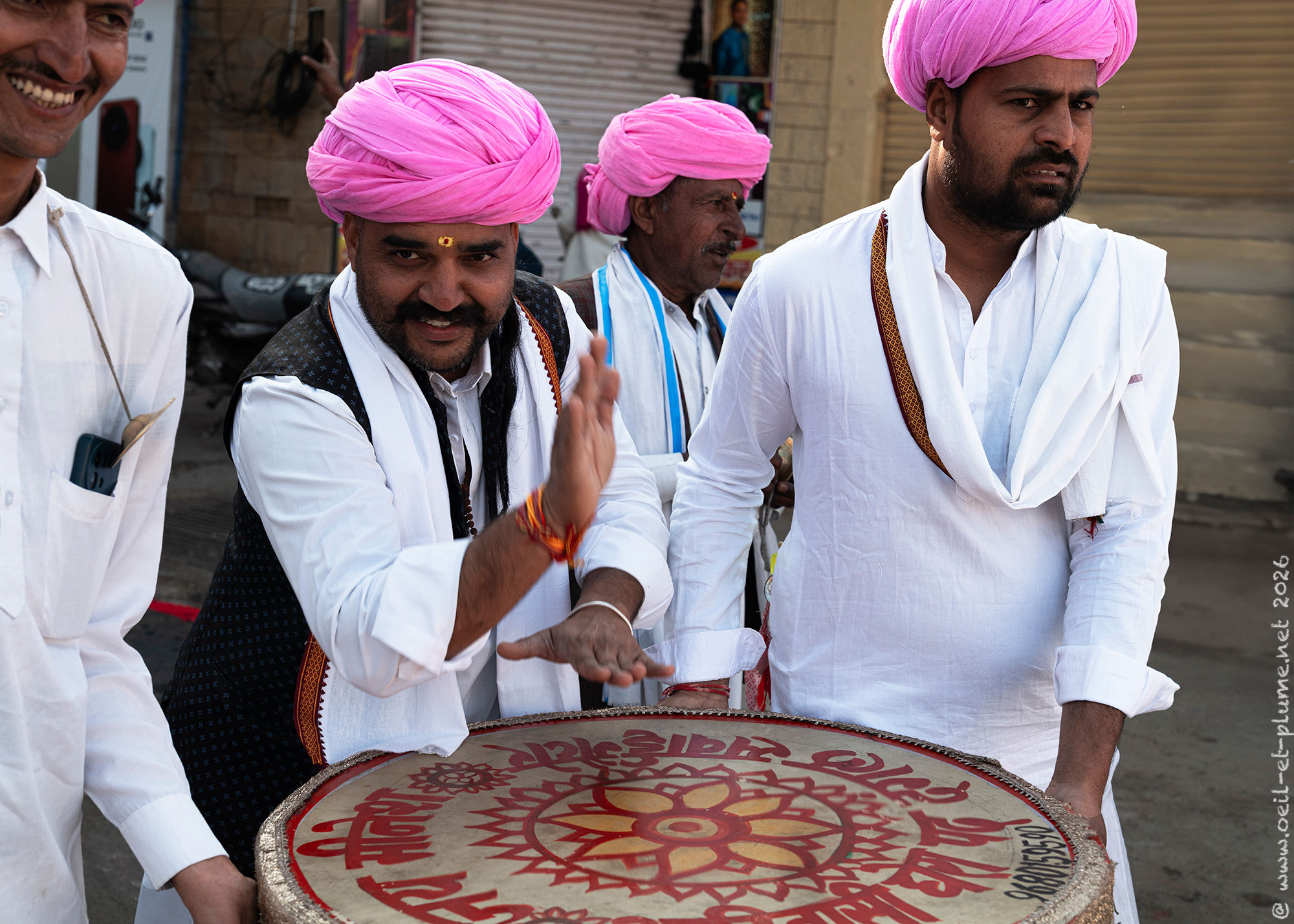
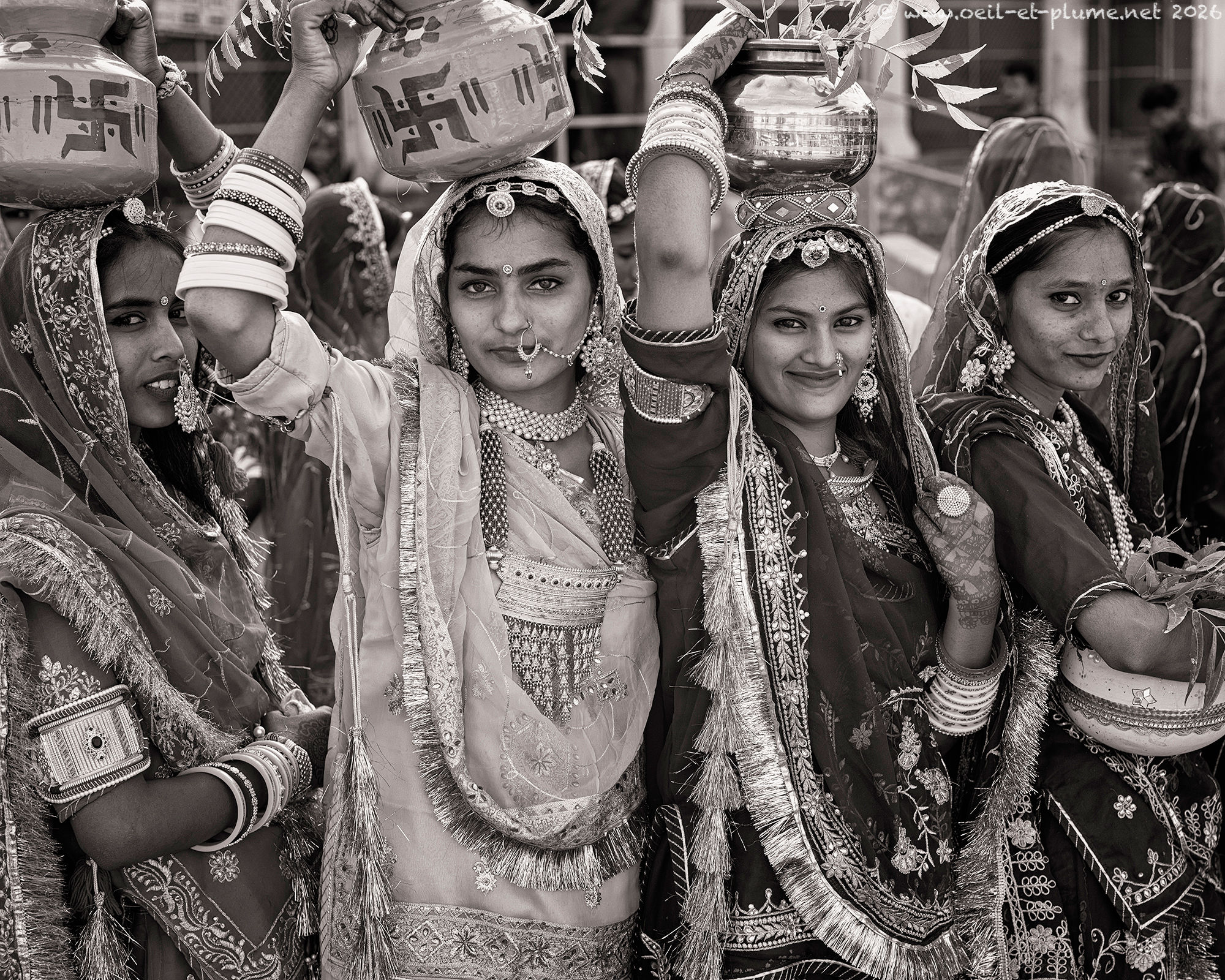
An Indian Border Security Force (BSF) unit entrusted with guarding the international border in the Thar Desert leads the opening parade. Their brass and drum fanfare kickstarts loudly the progression of the caravan across the old town. Camel riders in traditional attire guide them through the old town, creating a moving tapestry of colour. Various performant groups follow the camel-riding squad – young women in Rajasthani traditional dress, musicians, dancers, acrobats. The colourful and noisy folk reaches a large public stadium where the official celebrations and the competitions will take place.
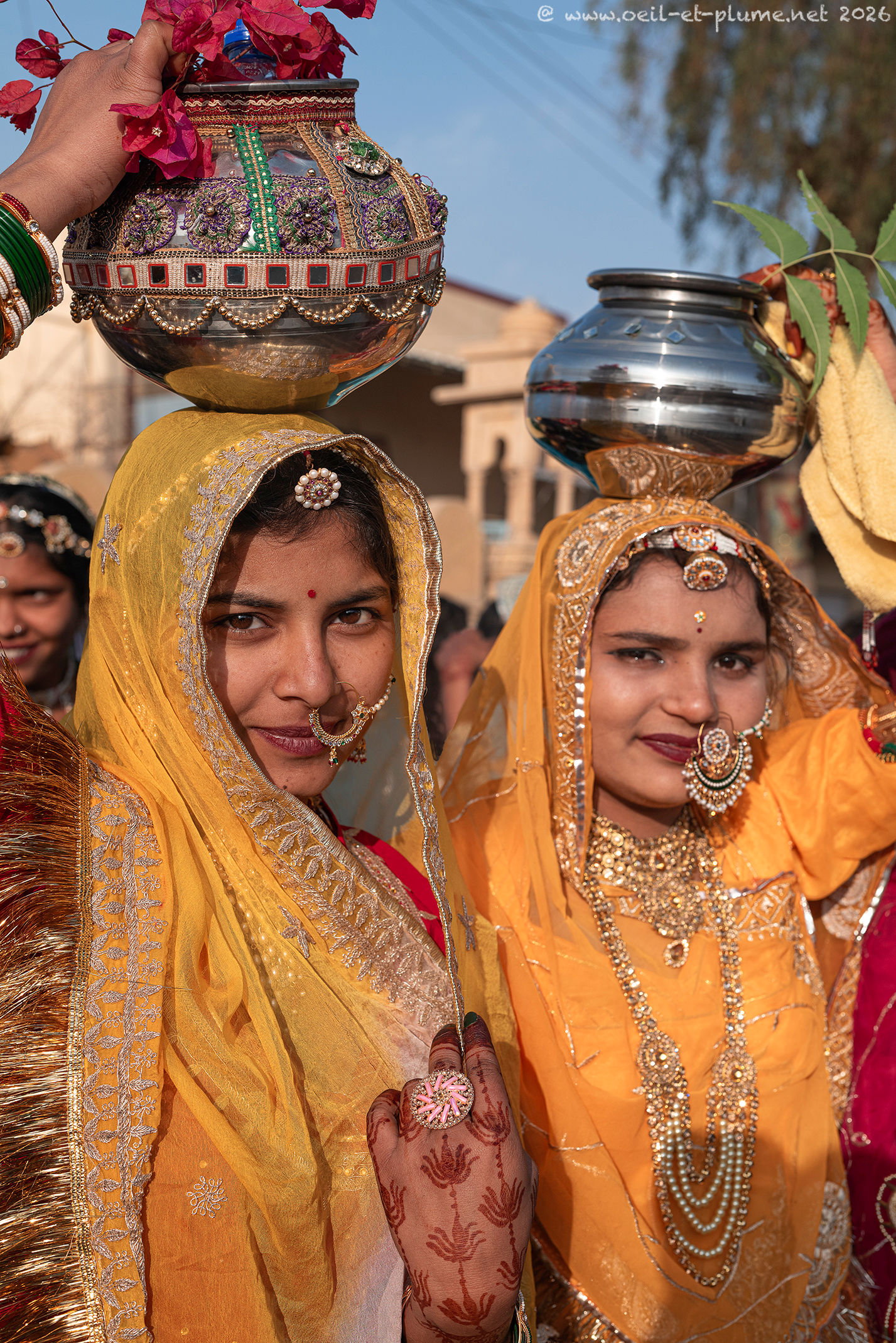
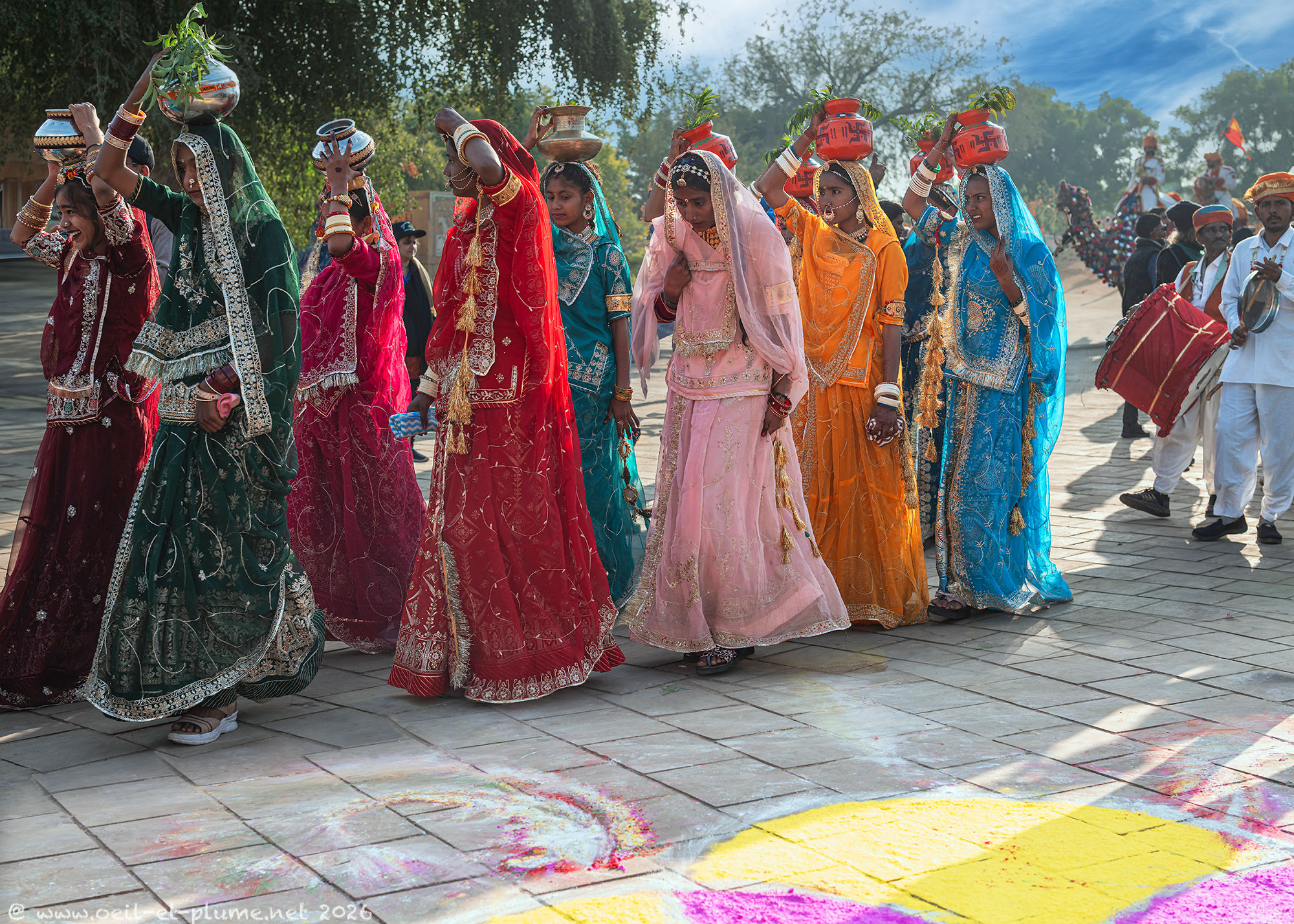
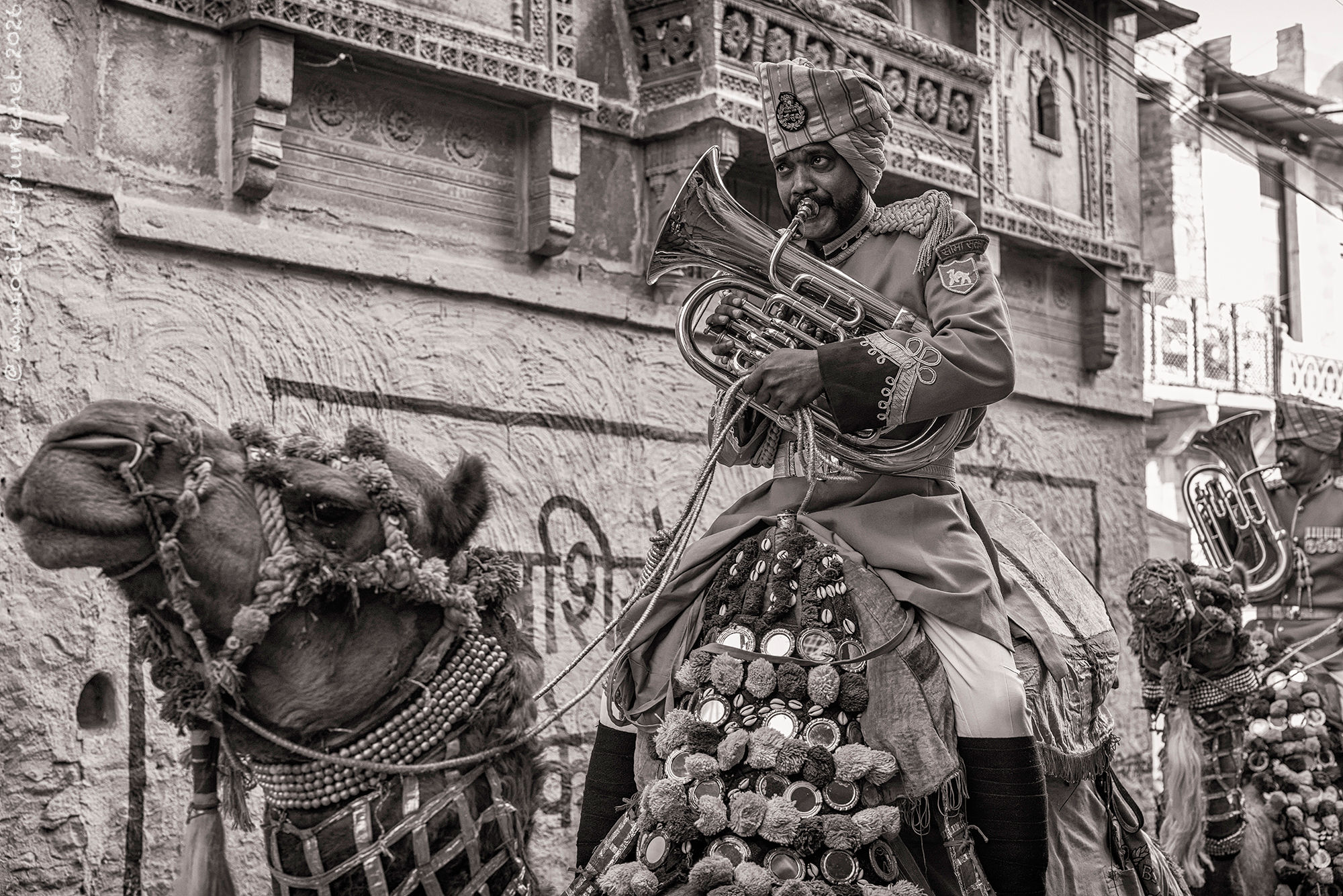
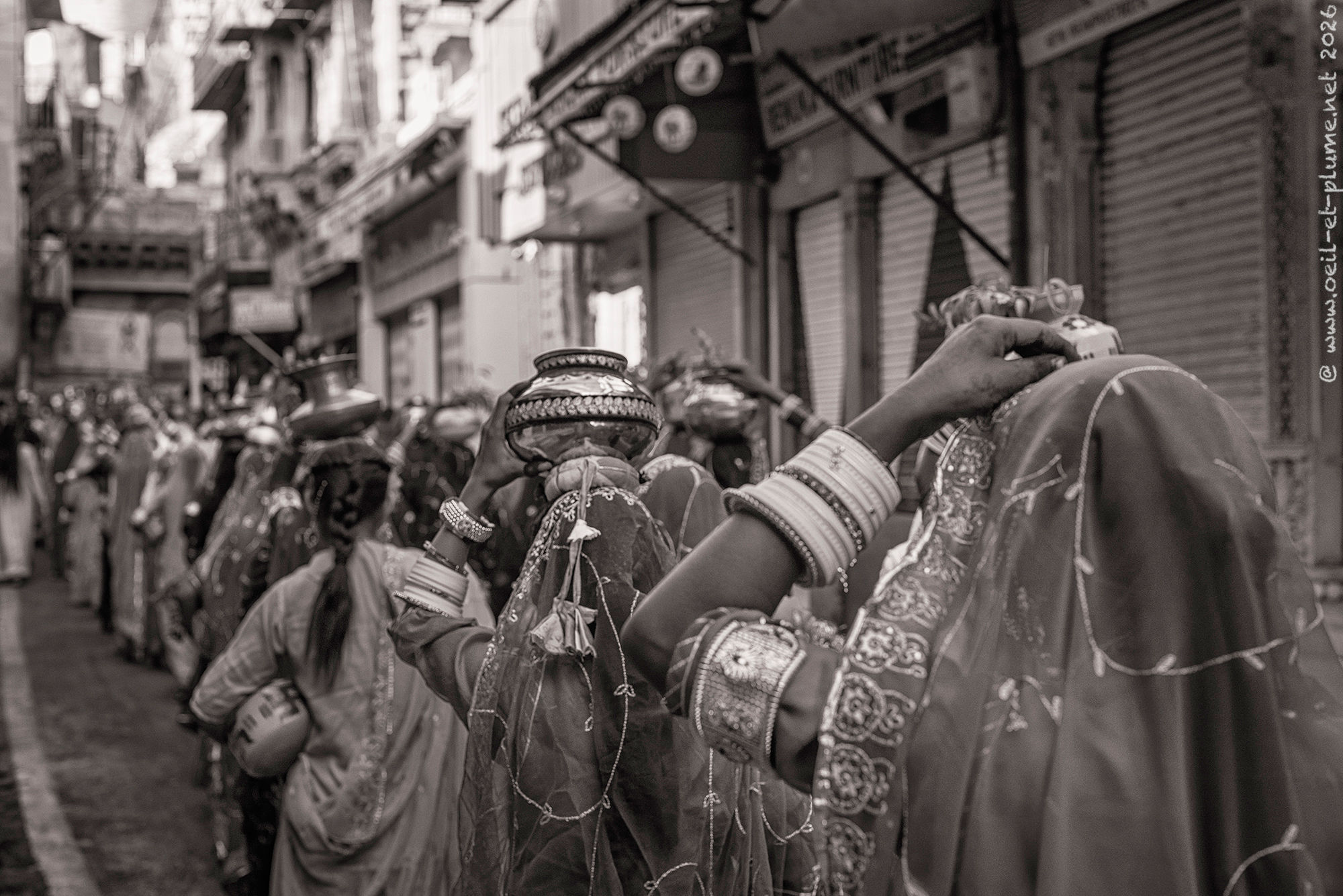
What makes the festival particularly fascinating is how strongly its features resonate across the Thar region — beyond modern political boundaries. Similar cultural expressions can be found in cities like Lahore, Multan, and Karachi on the Pakistani side of the desert.
Traditional puppeteers, for example, perform identical string-manipulated folk theatre. A single puppeteer operates handmade marionettes from above, narrating vivid tales in animated voices while accompanied by a singer beating a drum. These performances preserve oral storytelling traditions that long predate national borders.
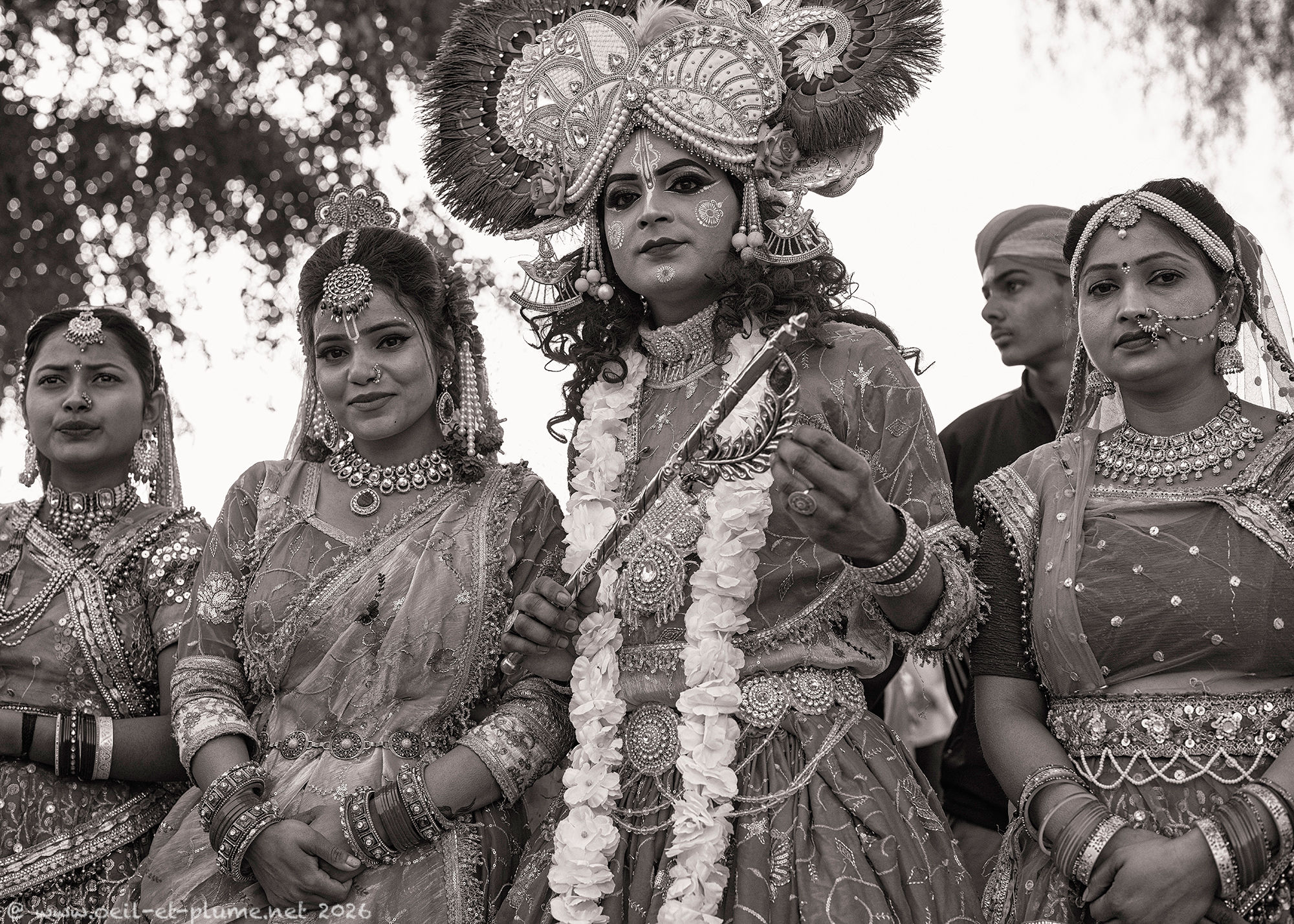
Likewise, the presence of Hijra/Kinnar communities — culturally recognized third-gender groups — reflects a shared social fabric across Rajasthan and Sindh. Hijra people may wear traditional women’s clothing like saris and perform dances during official cultural events. These individuals face significant social challenges while navigating their identity in a deeply conservative society. Yet, their participation in public celebrations adds another layer to the region’s deep-rooted traditions.
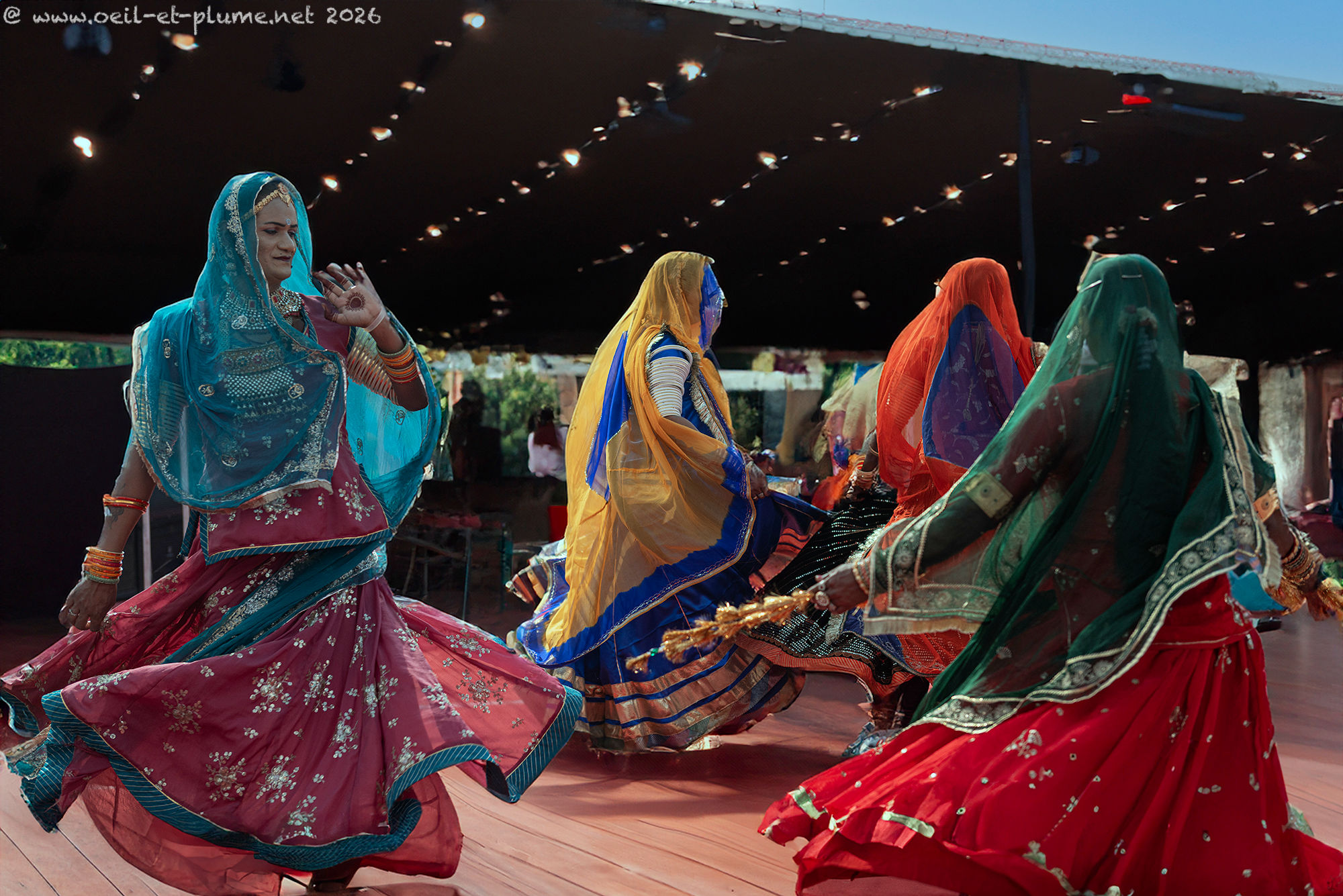
Yet, Hijra/Kinnar communities managed to produce some very famous artists. Born in Jaisalmer, Queen Harish, a famous Indian folk dancer and drag queen, has toured the world over and has featured in international movies before his accidental death in 2019.
Moustache competition
All major cultural festival in Rajasthan include a so-called “moustache competition” and a female pageant contest. The latter valorises the richness of Rajasthani female dress and jewellery, as well as with the grace of women’s gestures and walking. For the males, the moustache competition considers in fact also the beard, the hair, as well as the traditional dress and ornaments. In addition, both female and male competitors are assessed on their ability to connect visually and orally with the judges and their public audience.
As foreign photographer, the challenge is to approach the participants as the event organisers direct the public to dedicated sitting areas located far away from the scene. In Jaisalmer, the female competitors were kept virtually out of close-up reach. In turn, I managed to meet the male competitors in their backstage area.
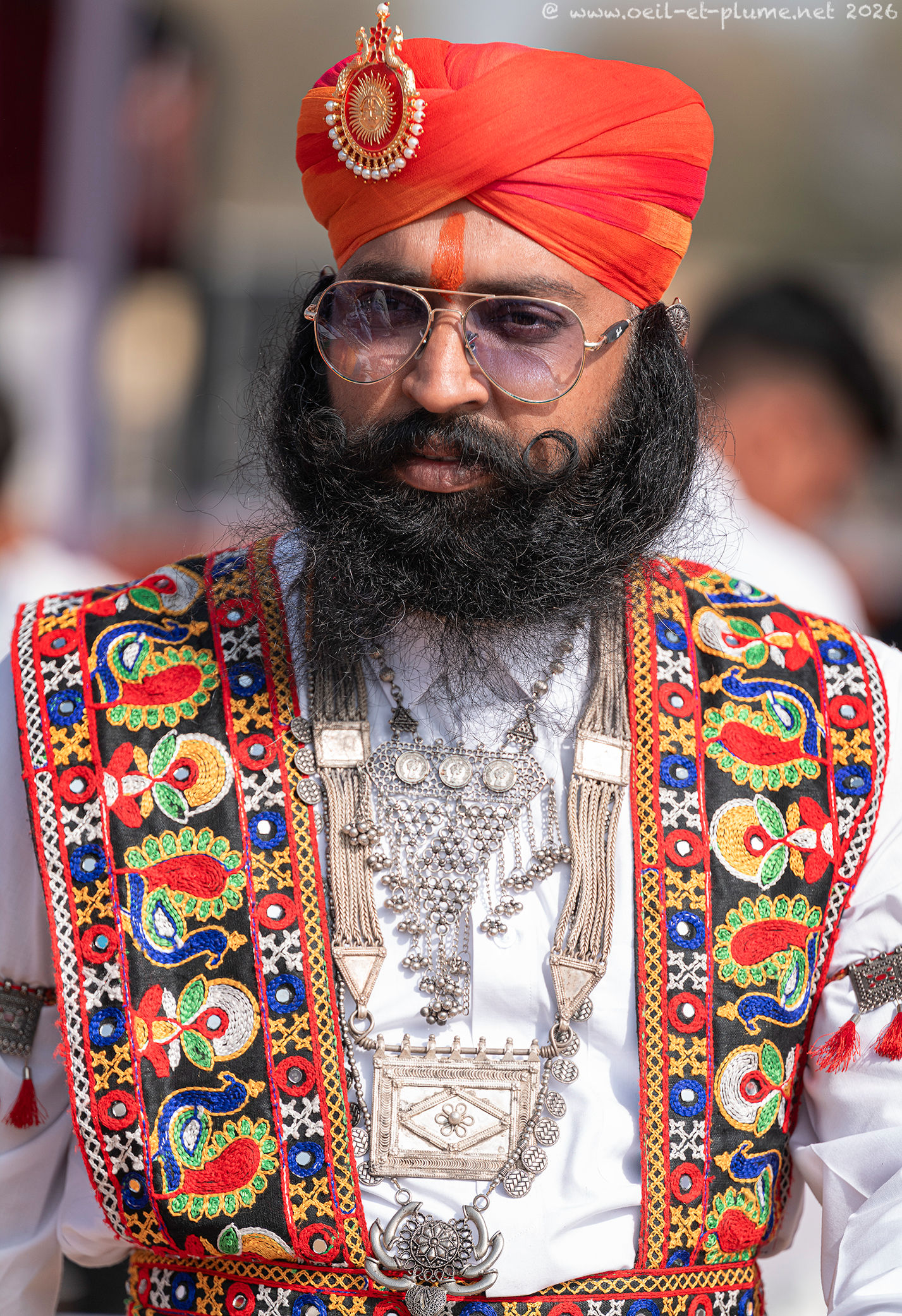
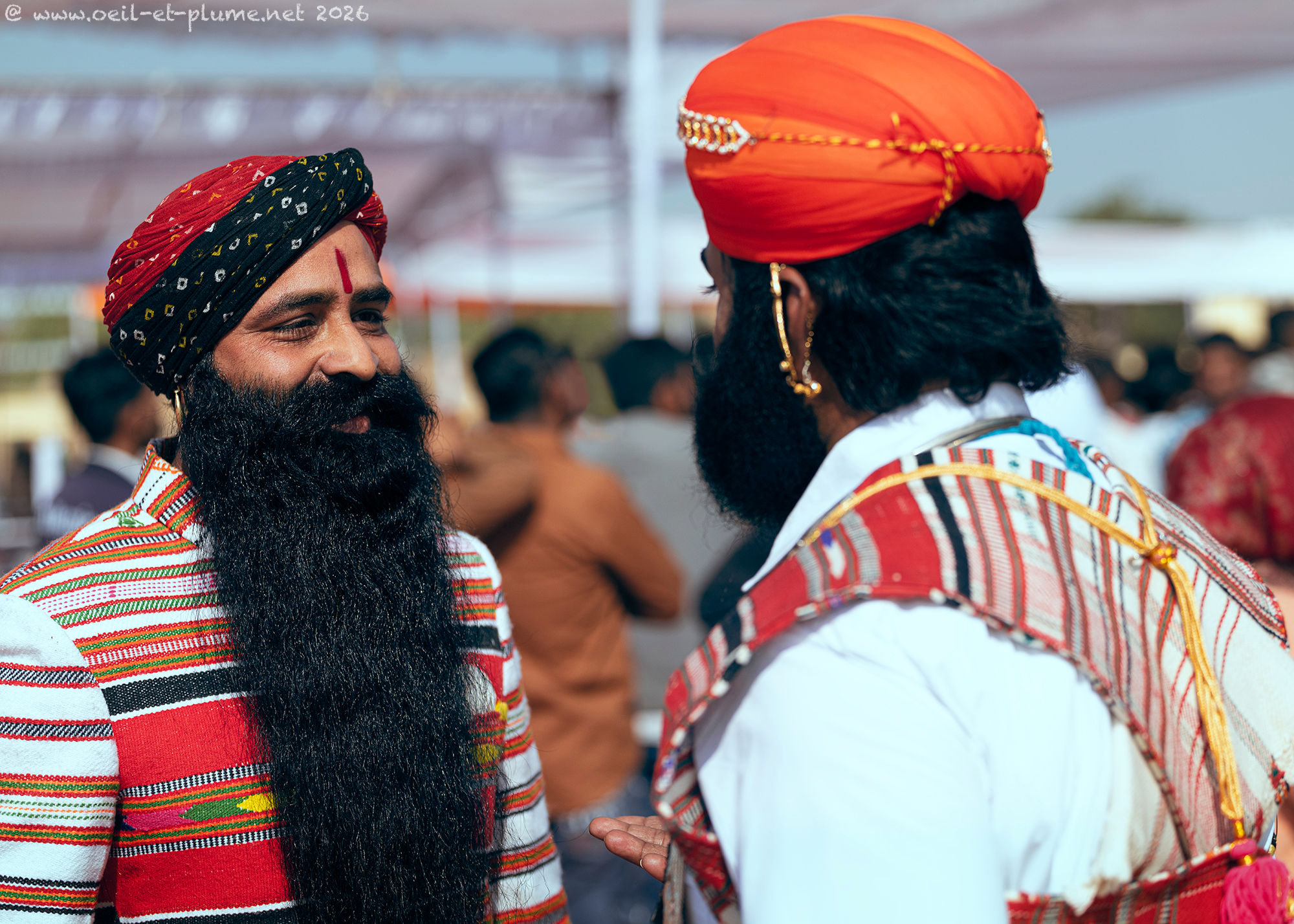
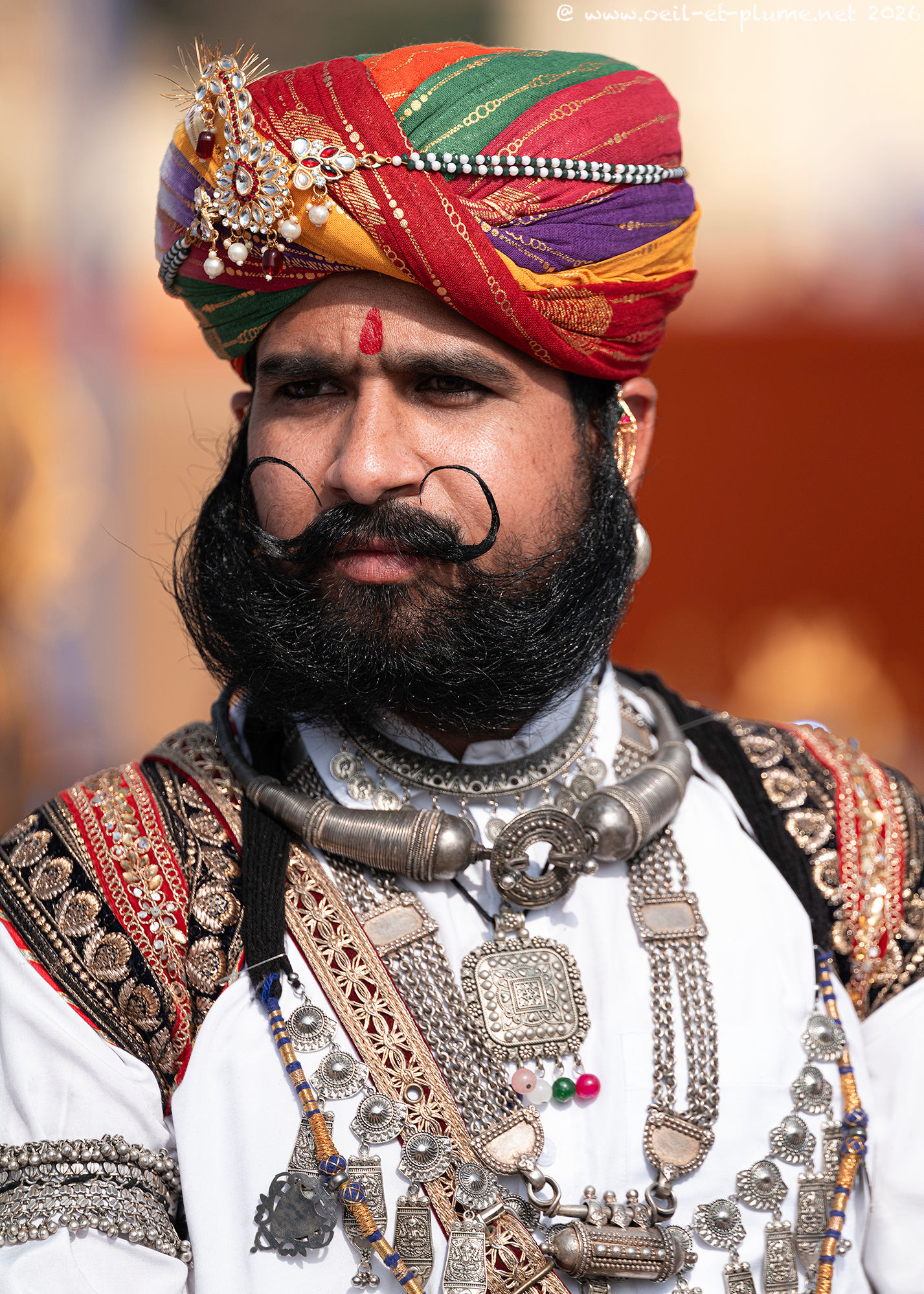
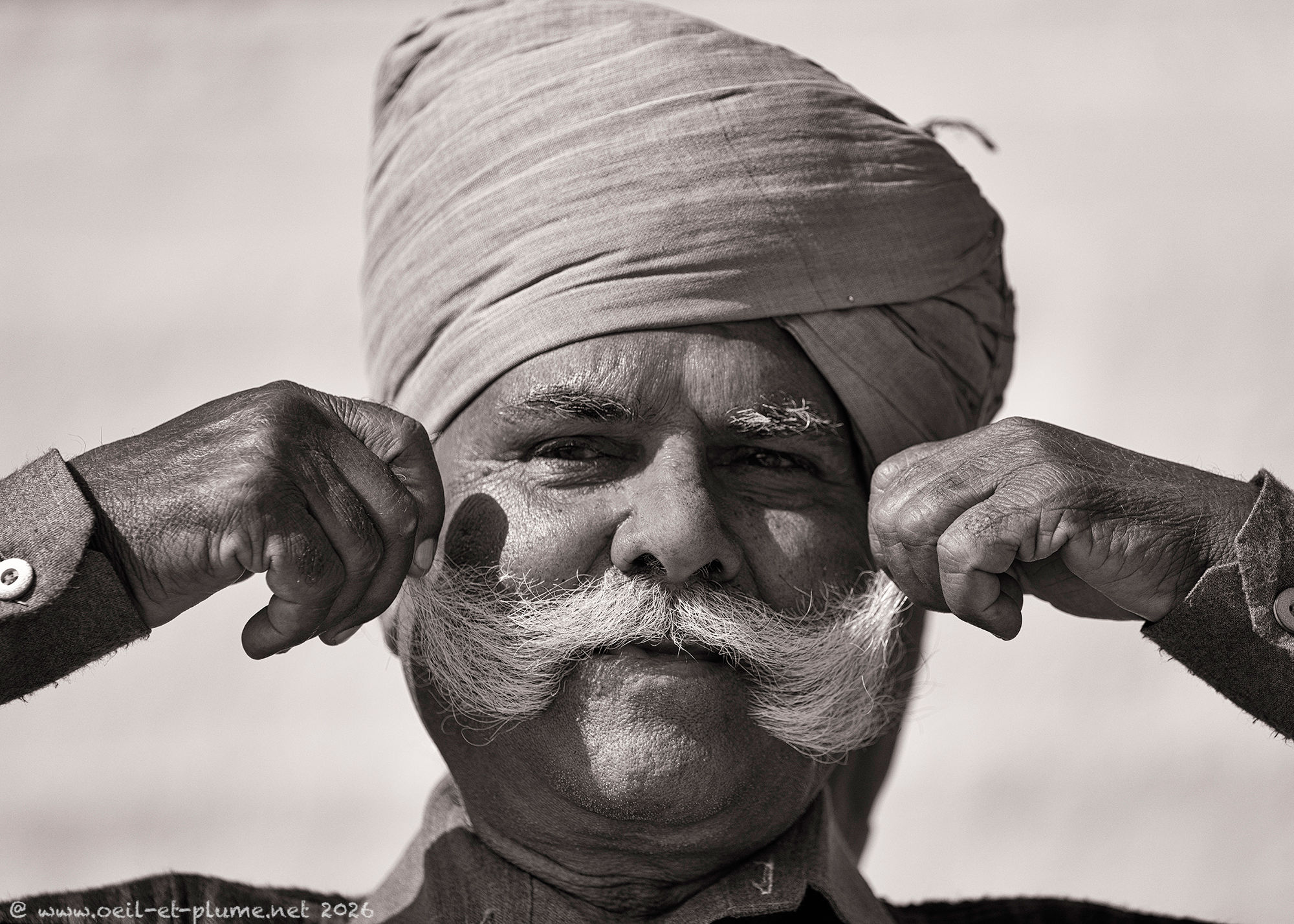
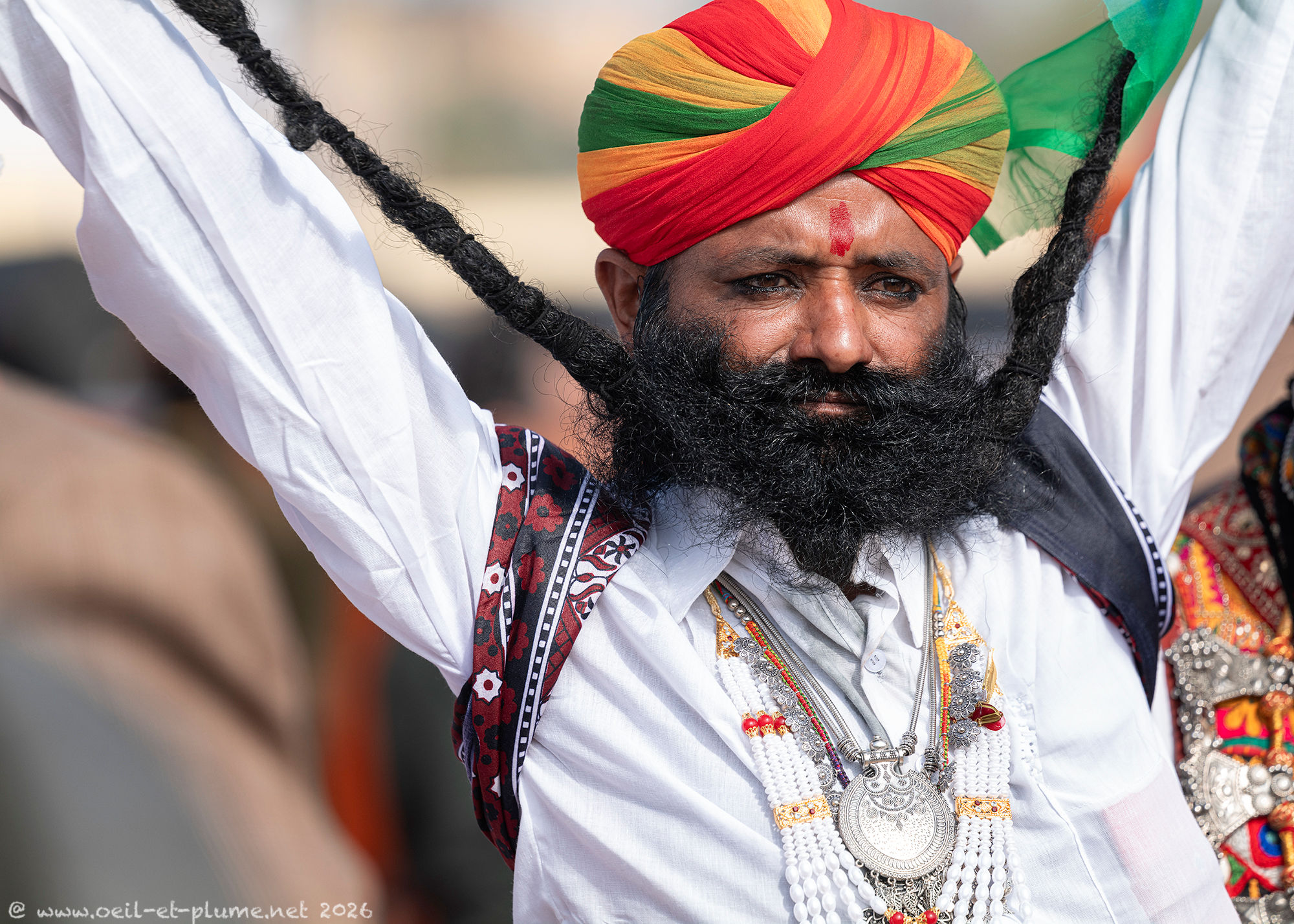
“I did not cut my beard since seventeen years” stated proudly one of them to me. The venerable beard of those Rajasthani men is so long that it is usually tied around the neck or placed deep underneath the shirt. Once fully extended, its length may exceed the maximum outreach of their hands. Sign of virility, elegance and social distinction, the moustache stands proudly upwards, in a symmetrical, rounded and elegant design.
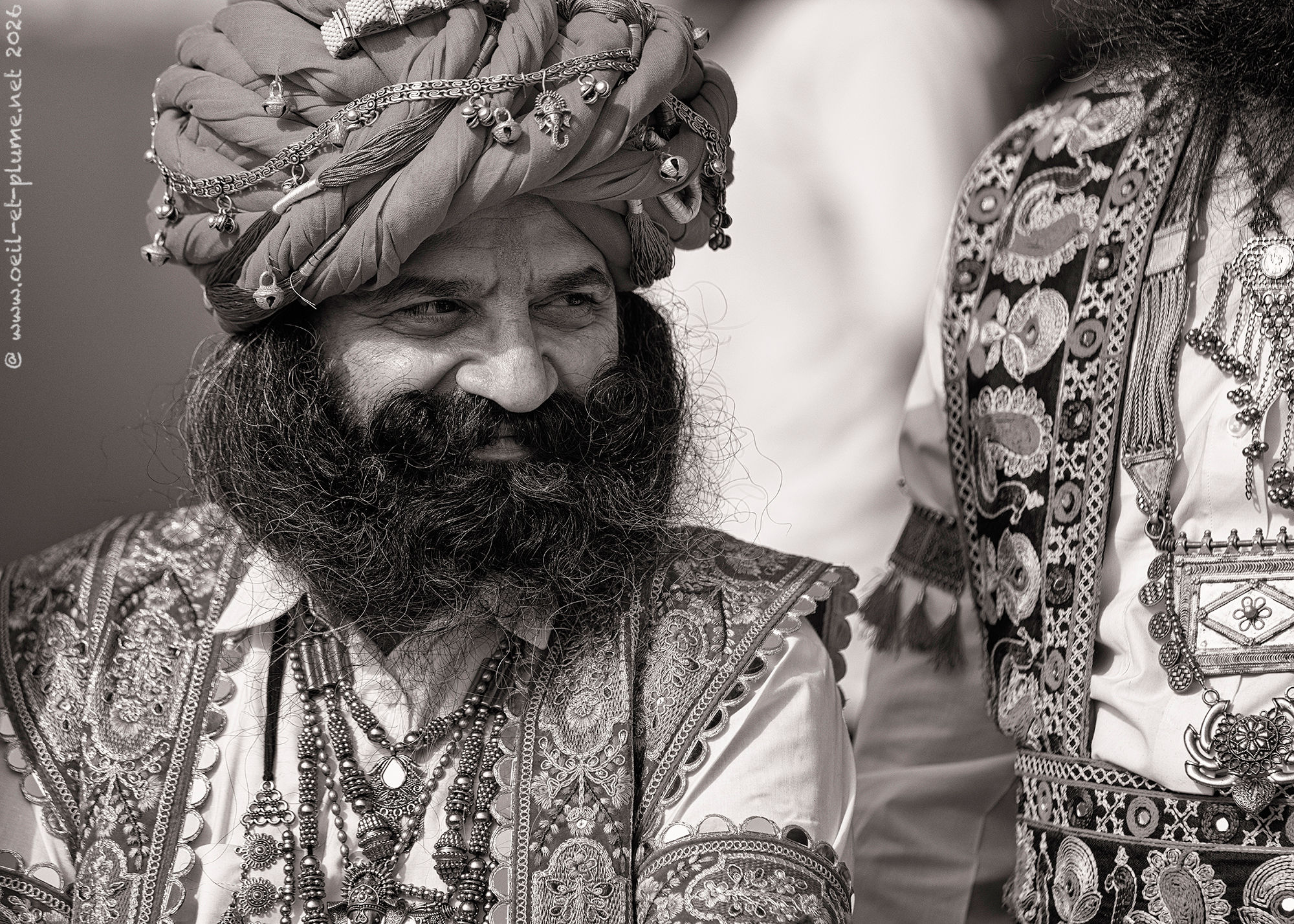
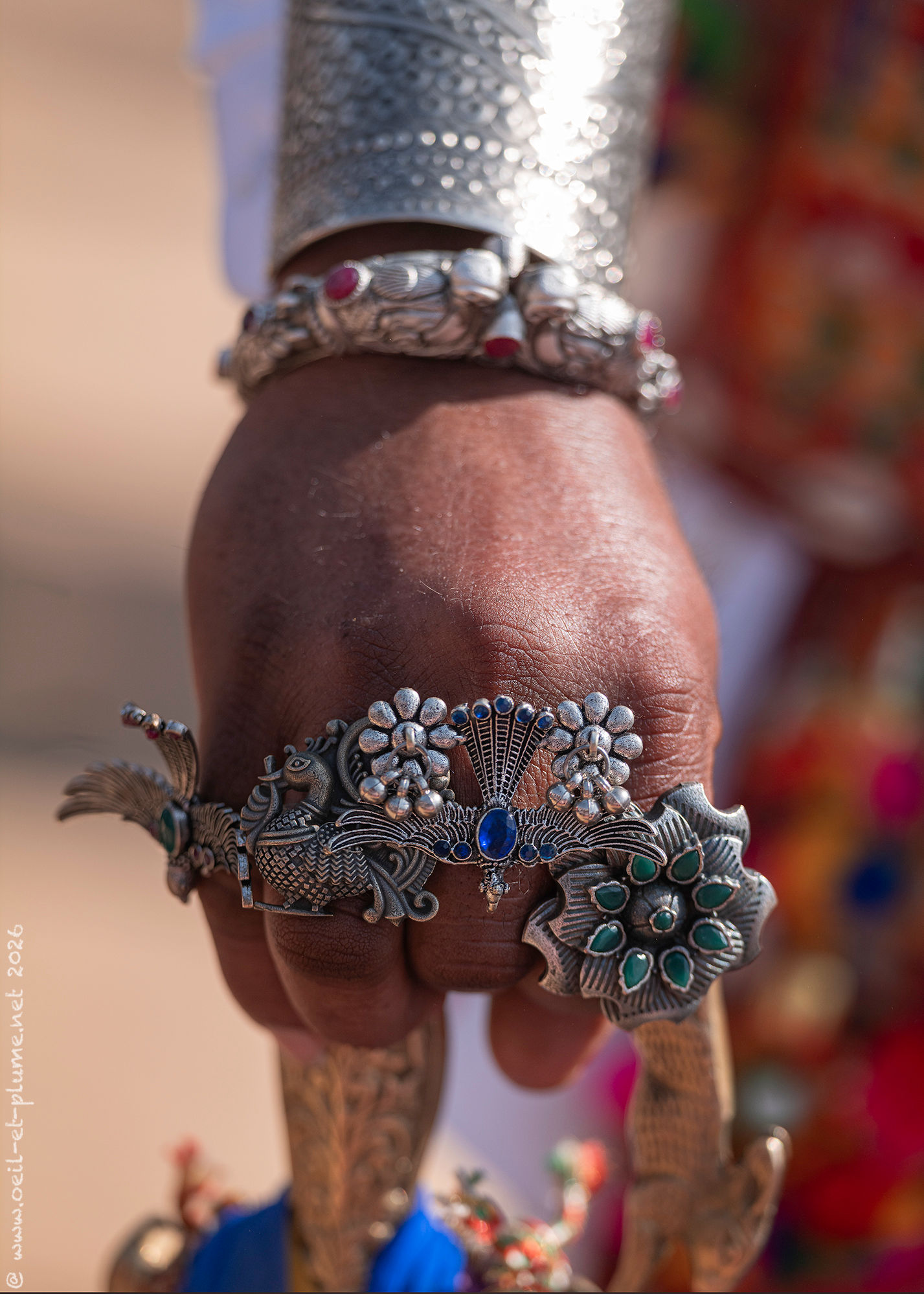
The Rajasthani traditional male dress includes a wealth of silver jewellery, at times enriched with set precious stones. In my appreciation, certain candidates wear over one kilogram of silverware. Furthermore, some of them hold a beautifully carved steel sword to complete the traditional attire.
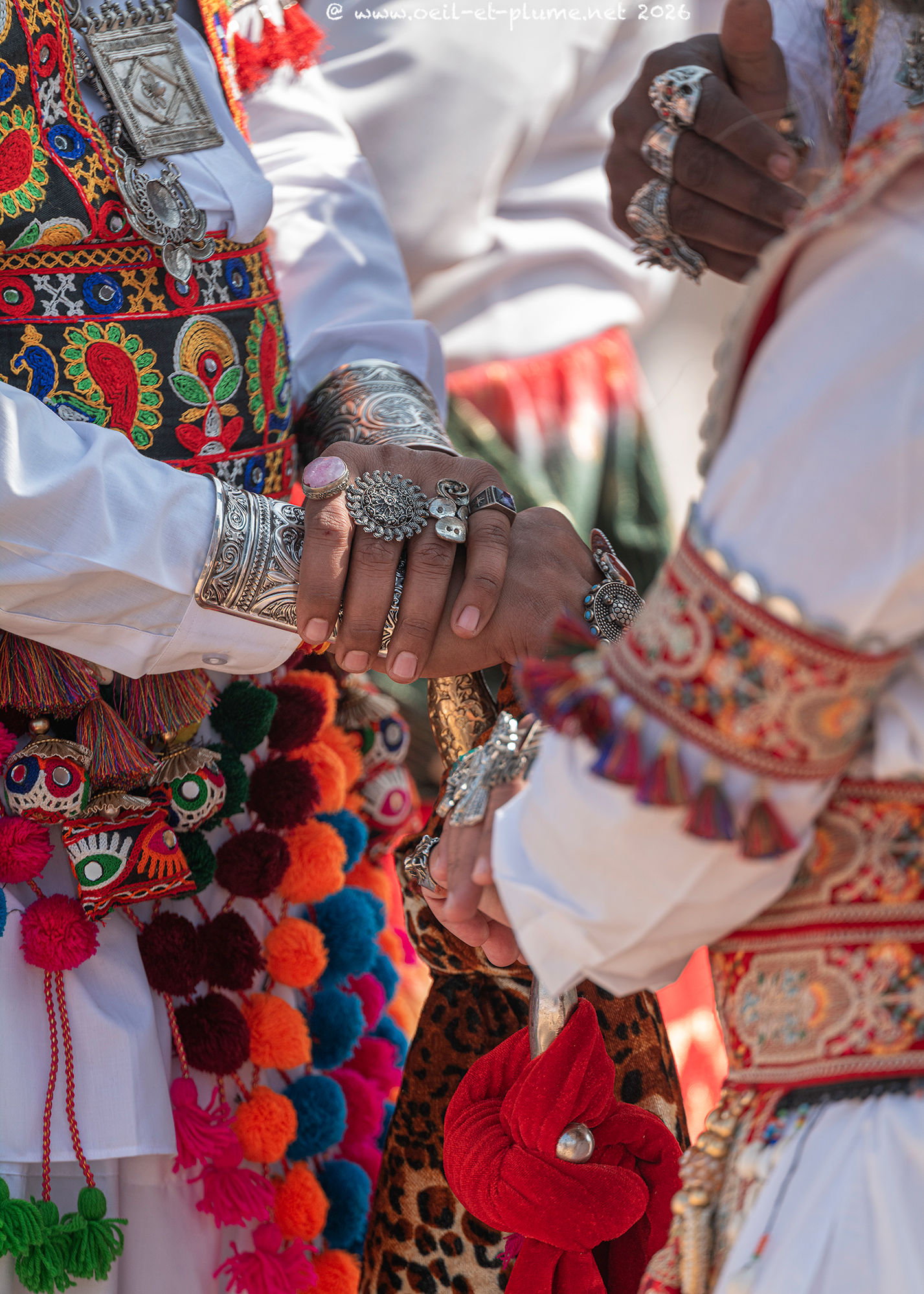
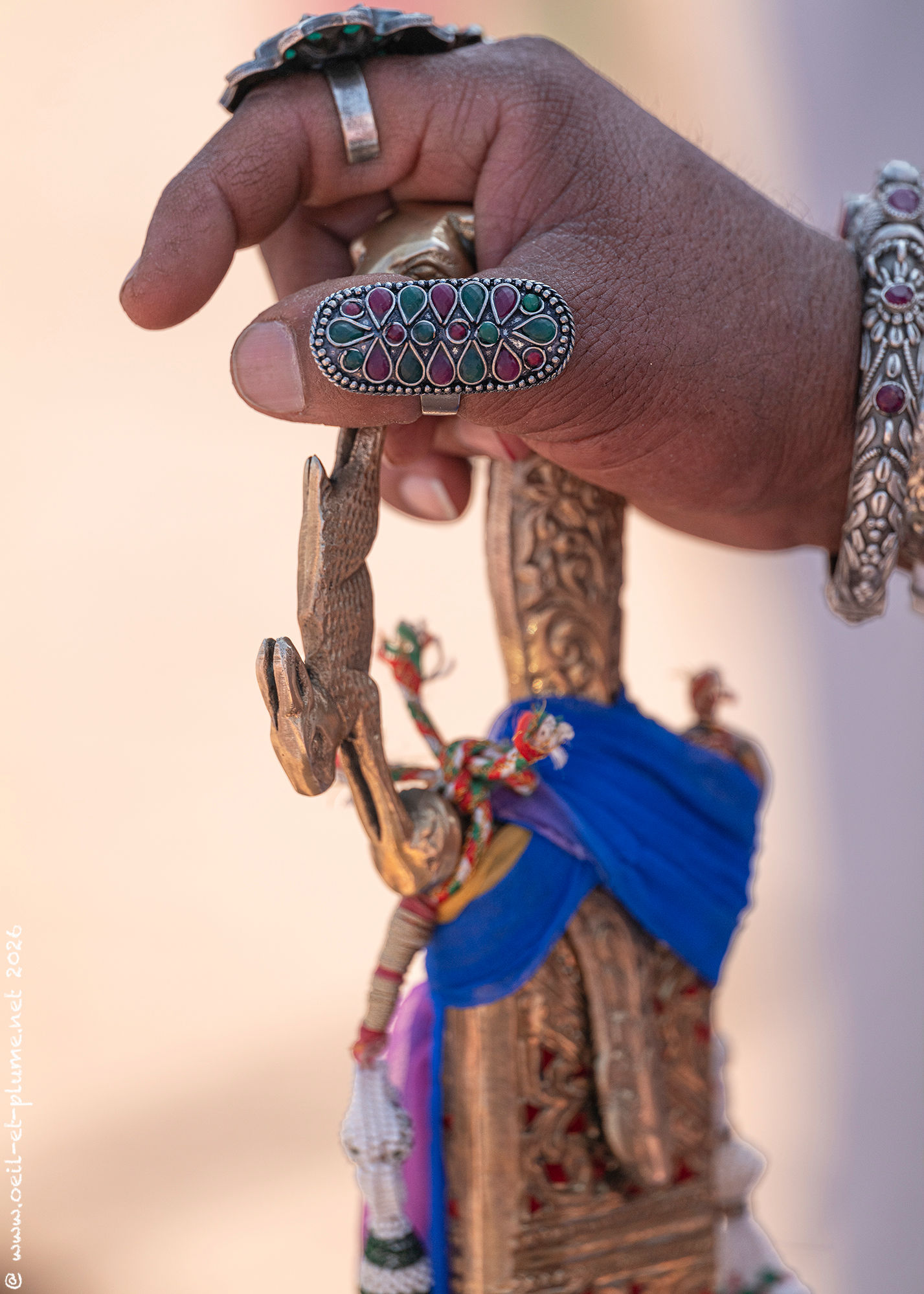
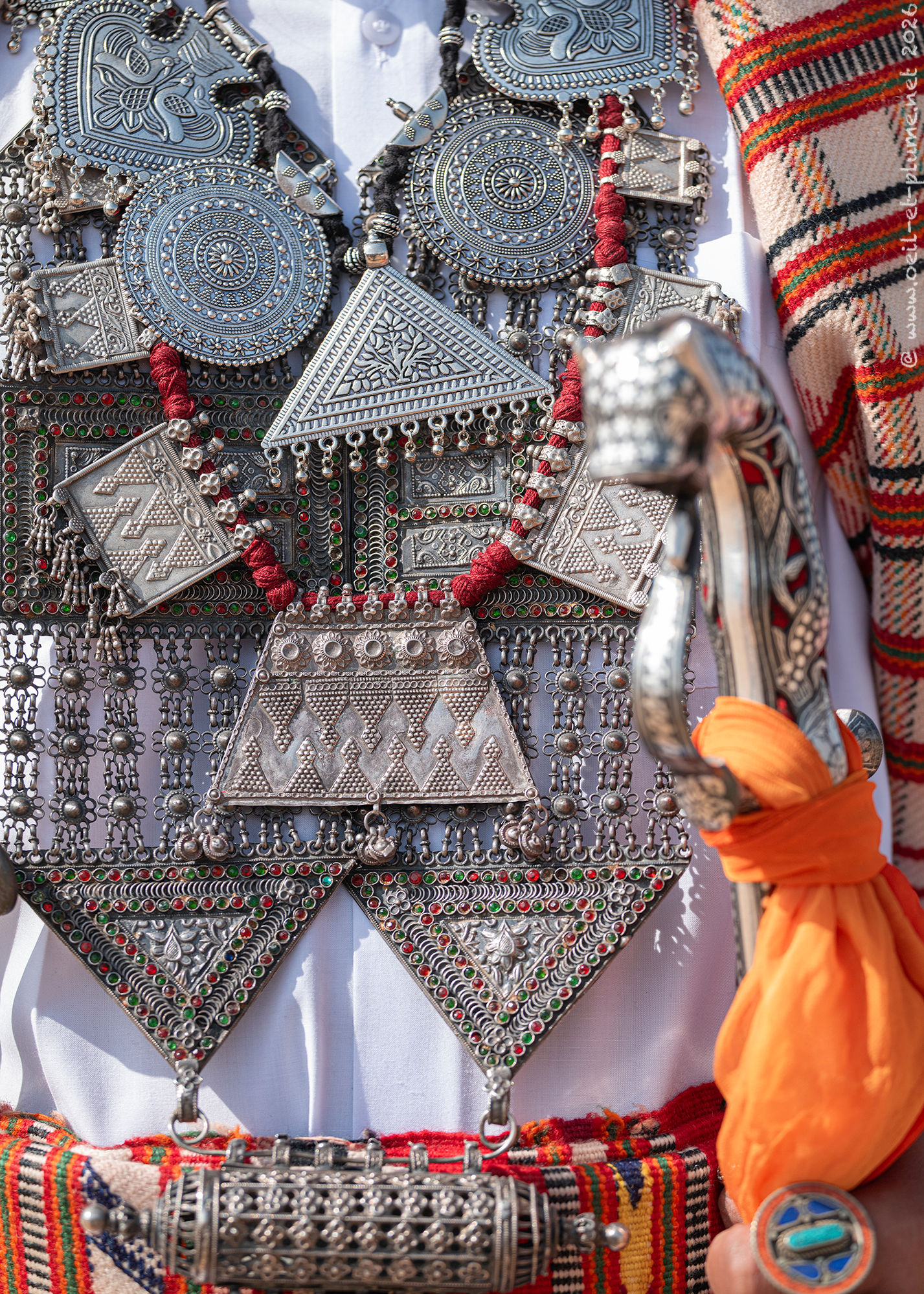
Many of the male competitors obviously knew themselves before the event. In fact, many of those shiny bearded males tour the cultural festivities organised throughout Rajasthan during the year.
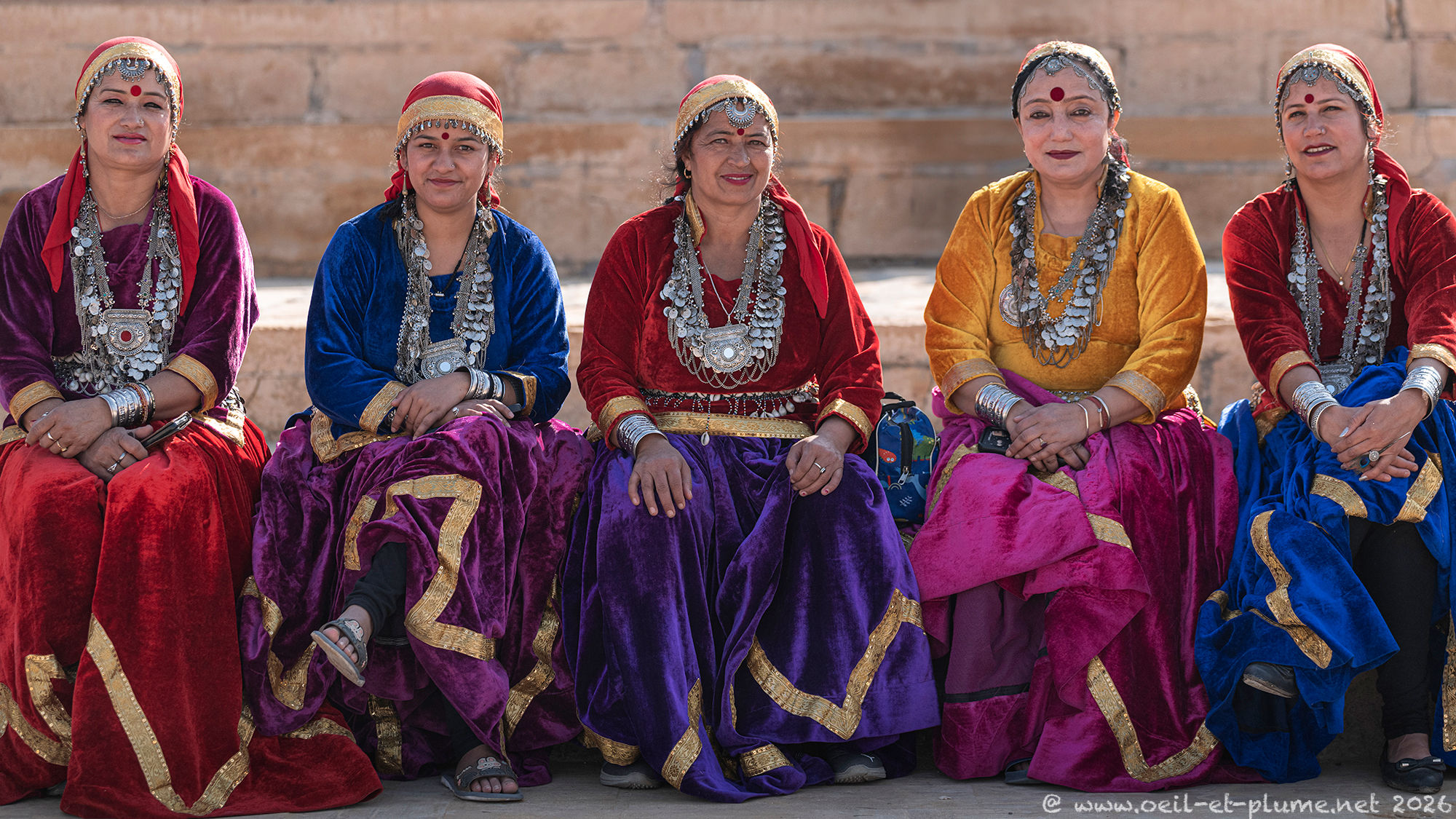
One may wonder how much attractive are those handsome men to the Rajasthani women. As I missed asking the existential question to the ladies sitting below, I leave to my female readers to answer it.
The Desert Festival is not run simply to attract Indian or foreign visitors to Jaisalmer. The day after the competition, I met with the winner of the title “Mr. Moustache Jaisalmer 2026” in a Hindu temple located in the Fort. He was carrying a large plate of sweets to offer them to the deities in thanks for his victory. In India, all life episodes cross faith and religion, rather soon than later.
Cheers,
