
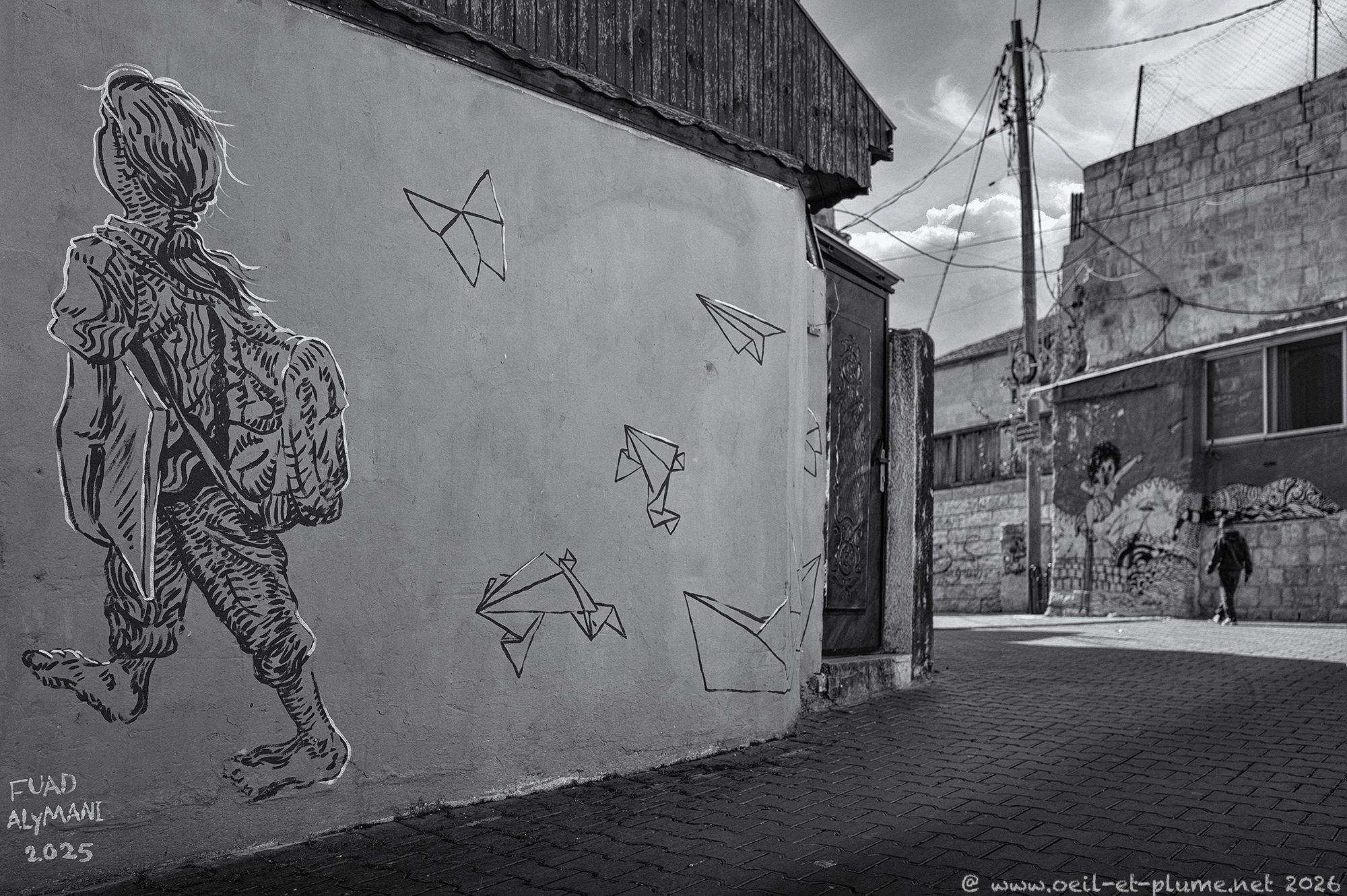
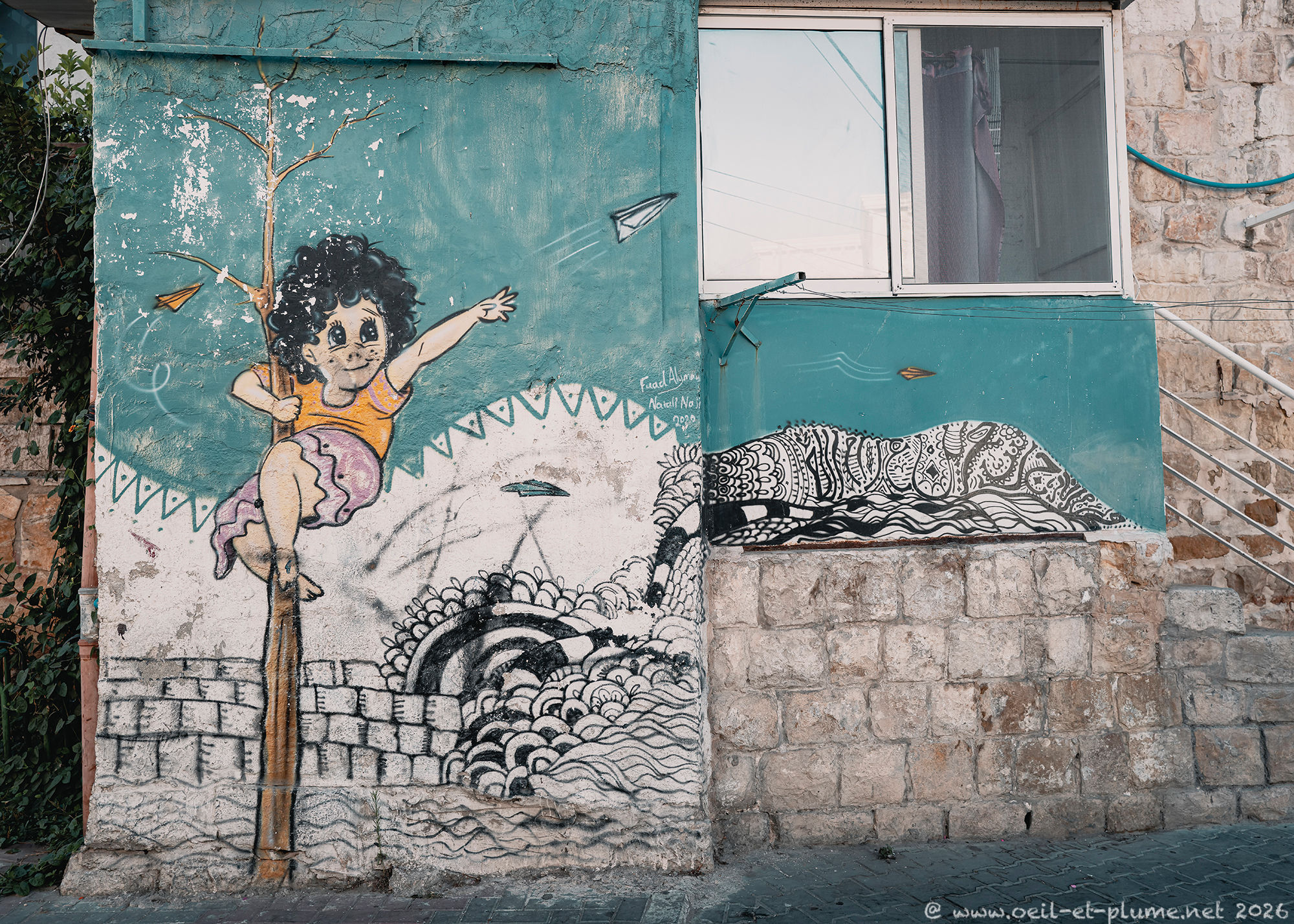
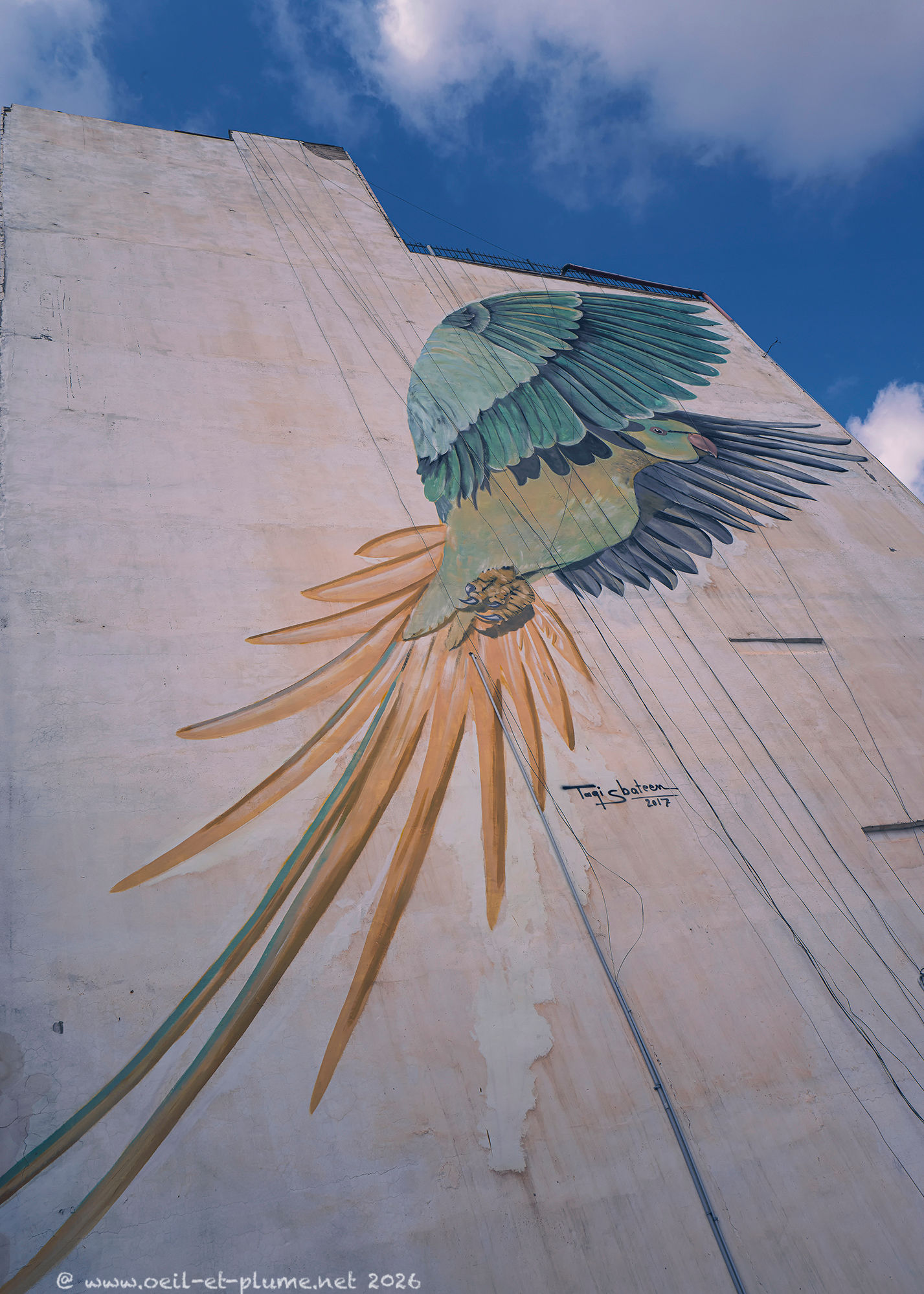
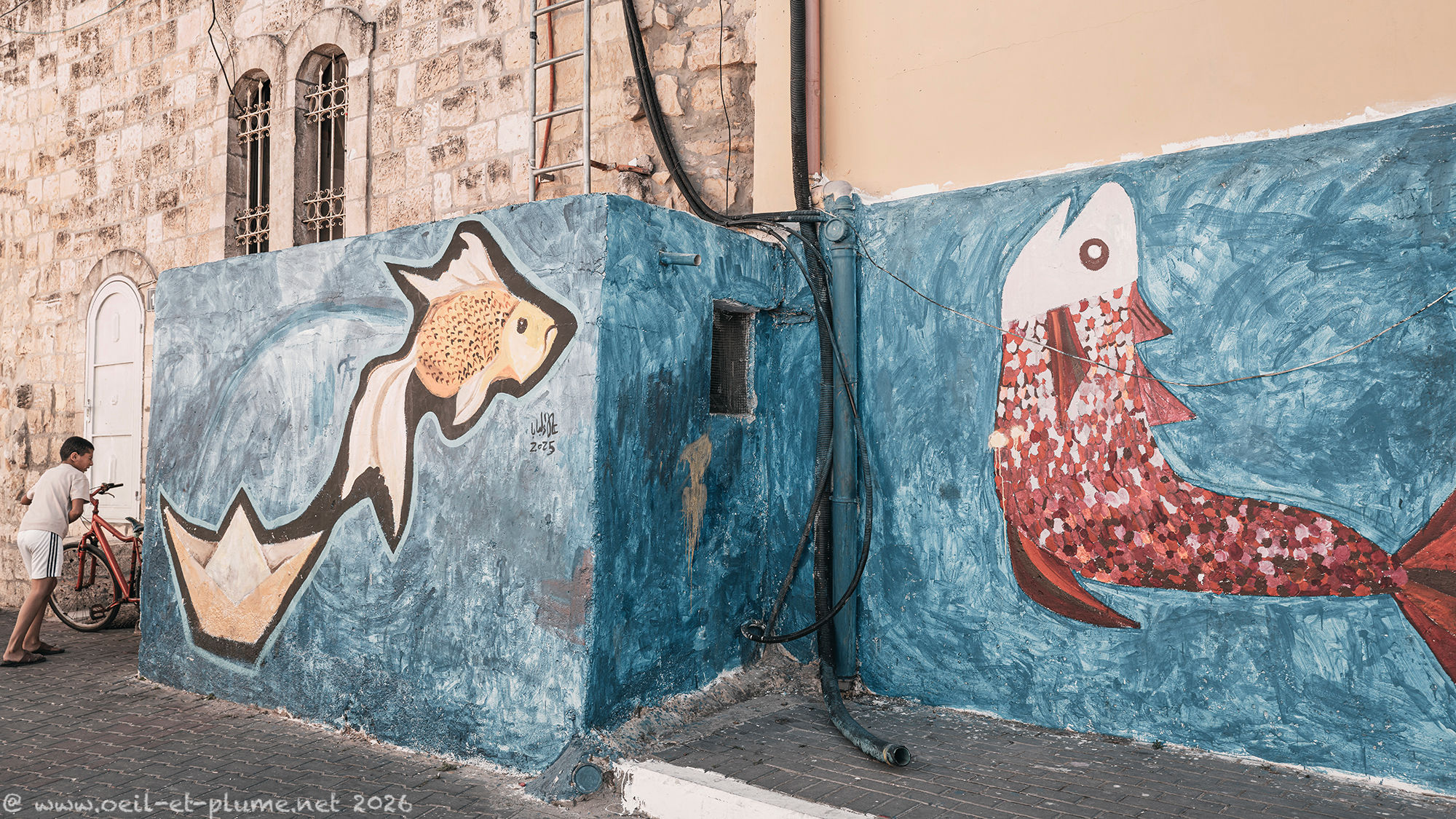
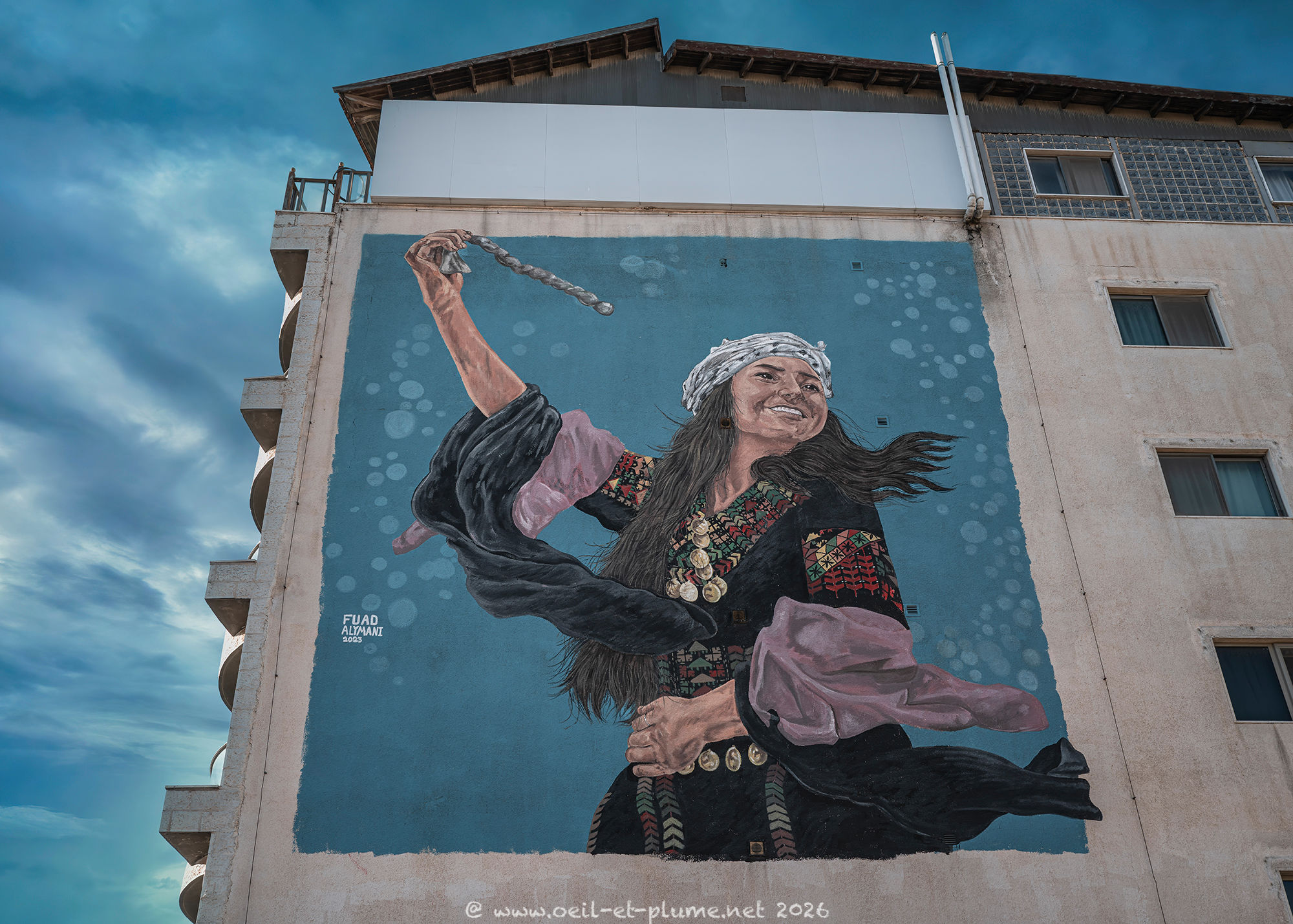
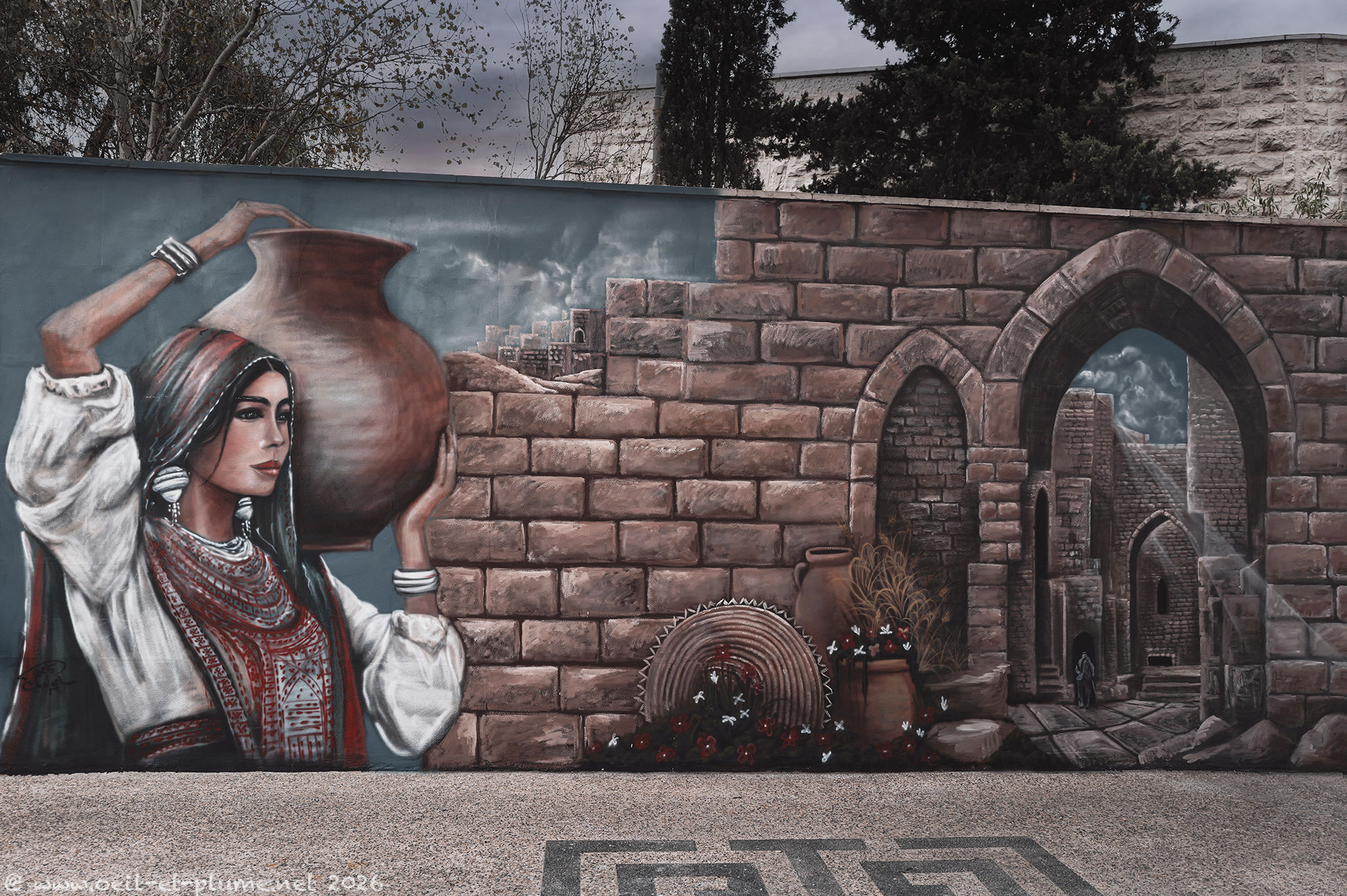
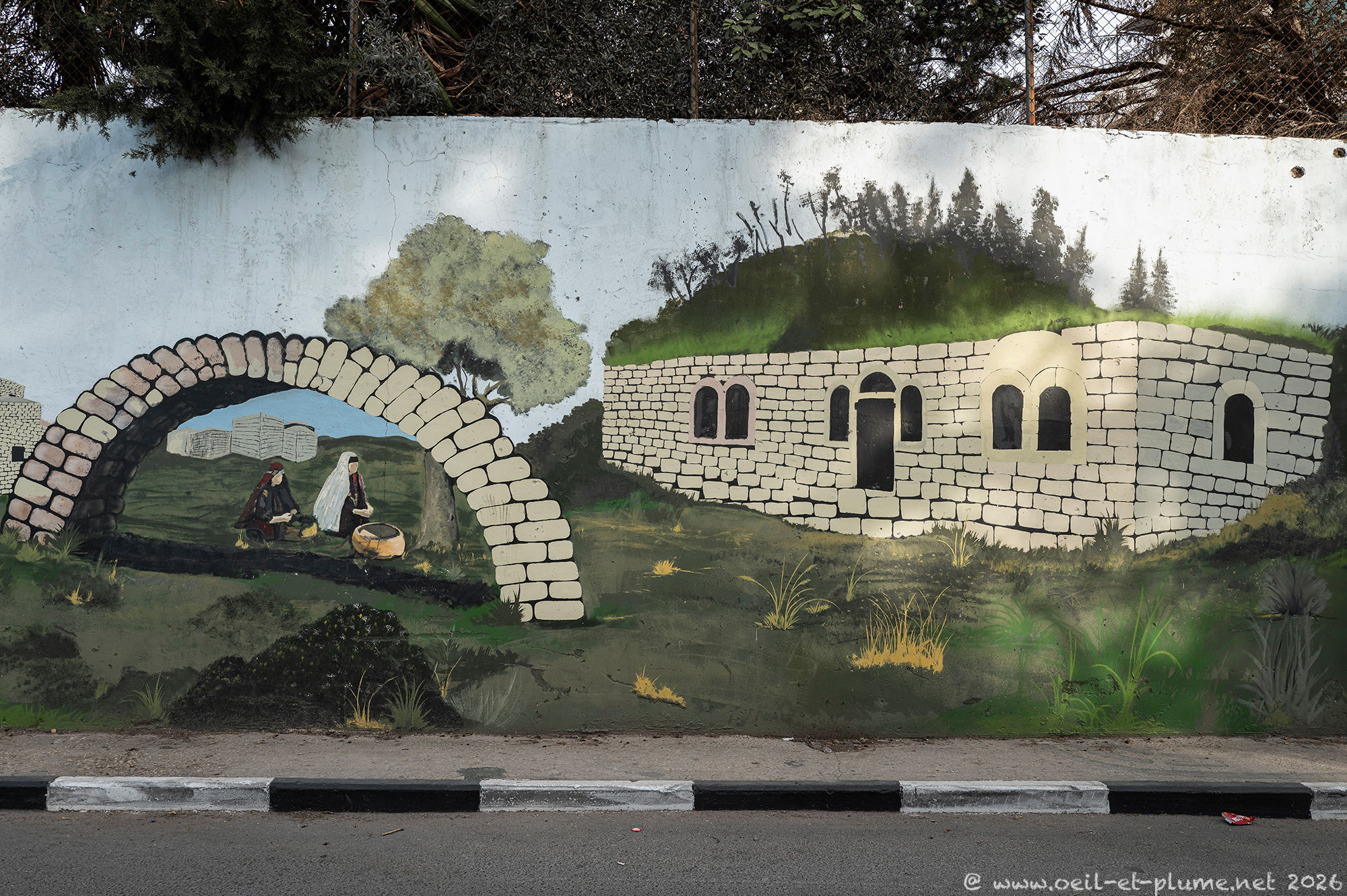
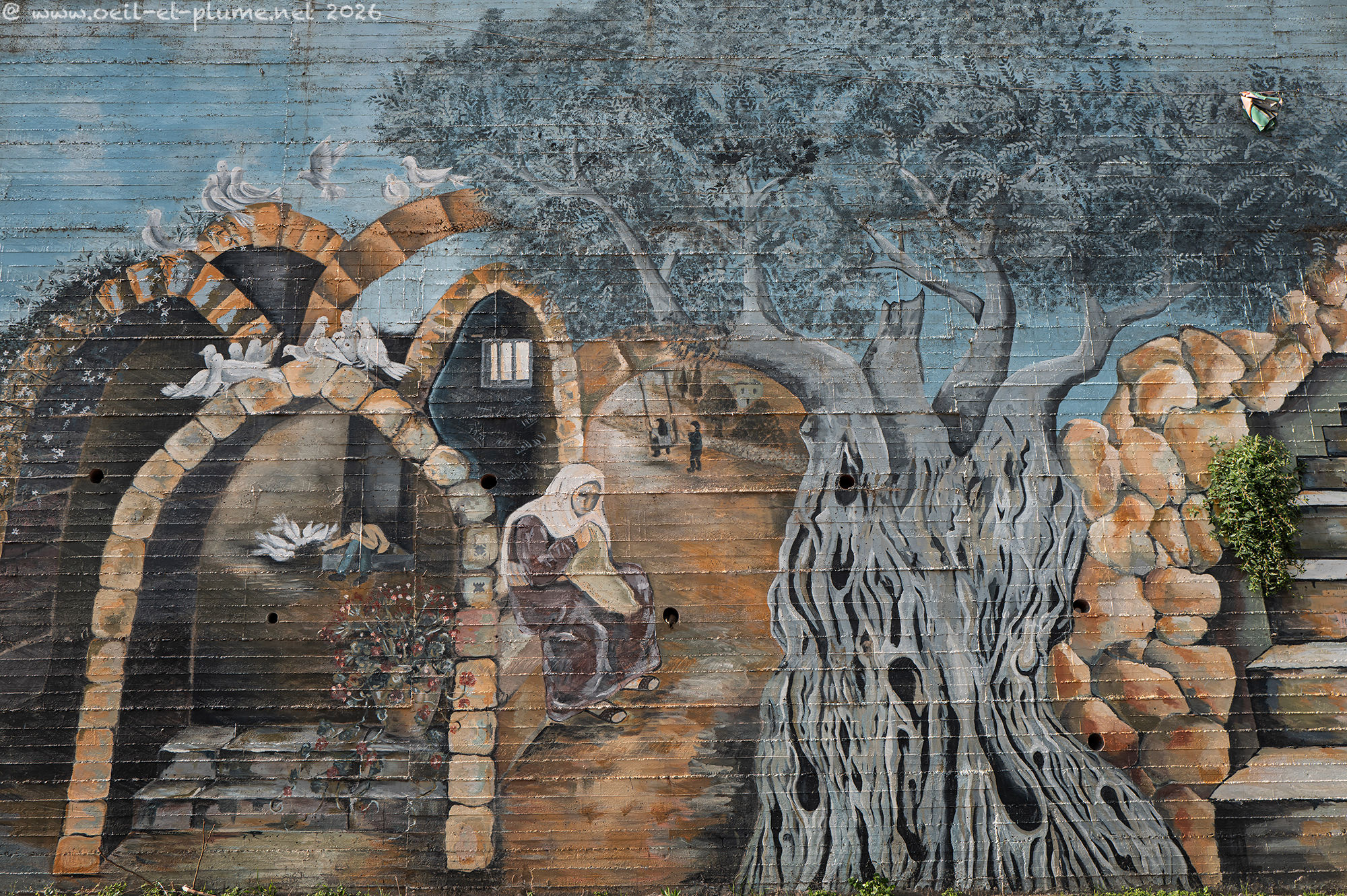
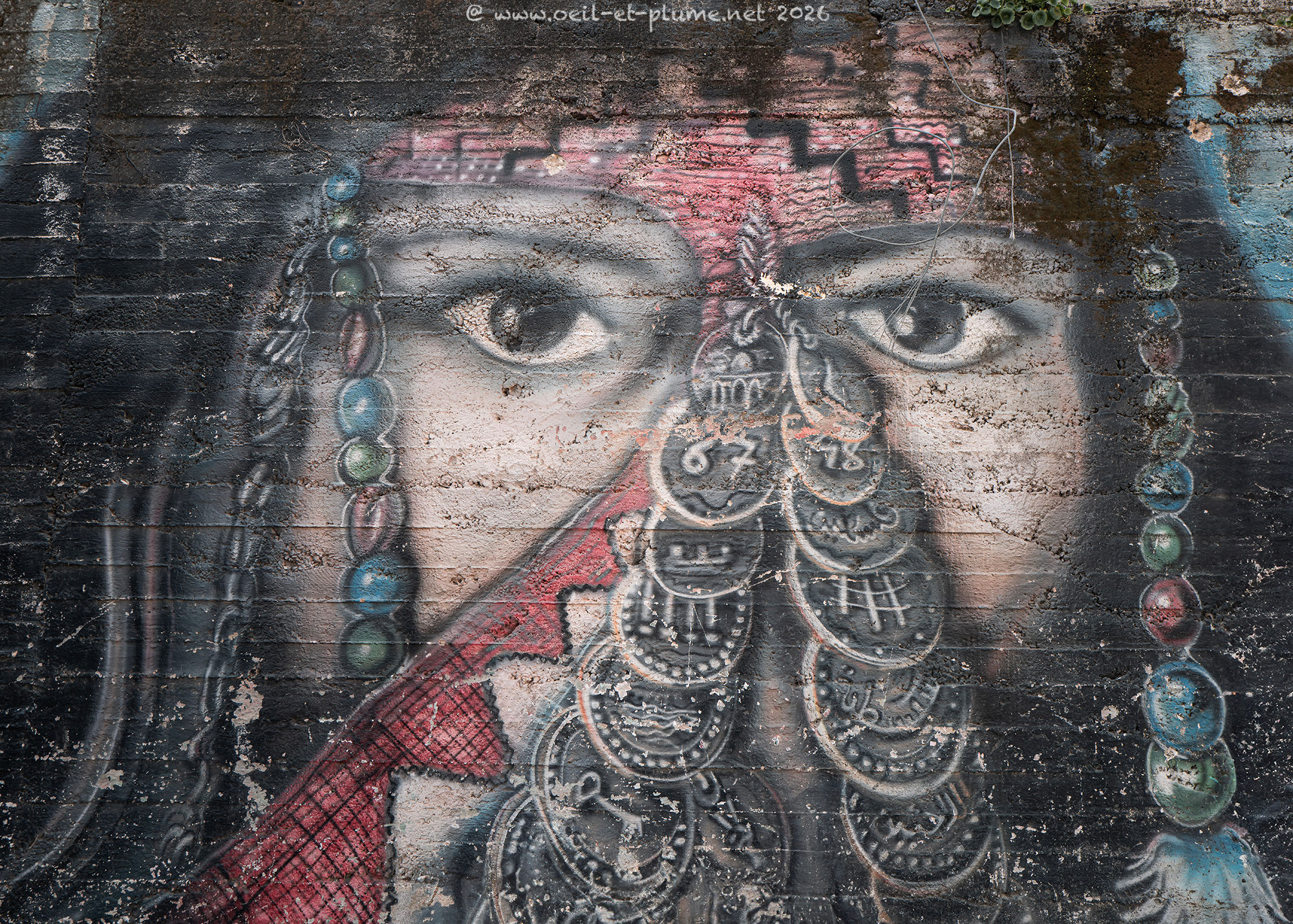
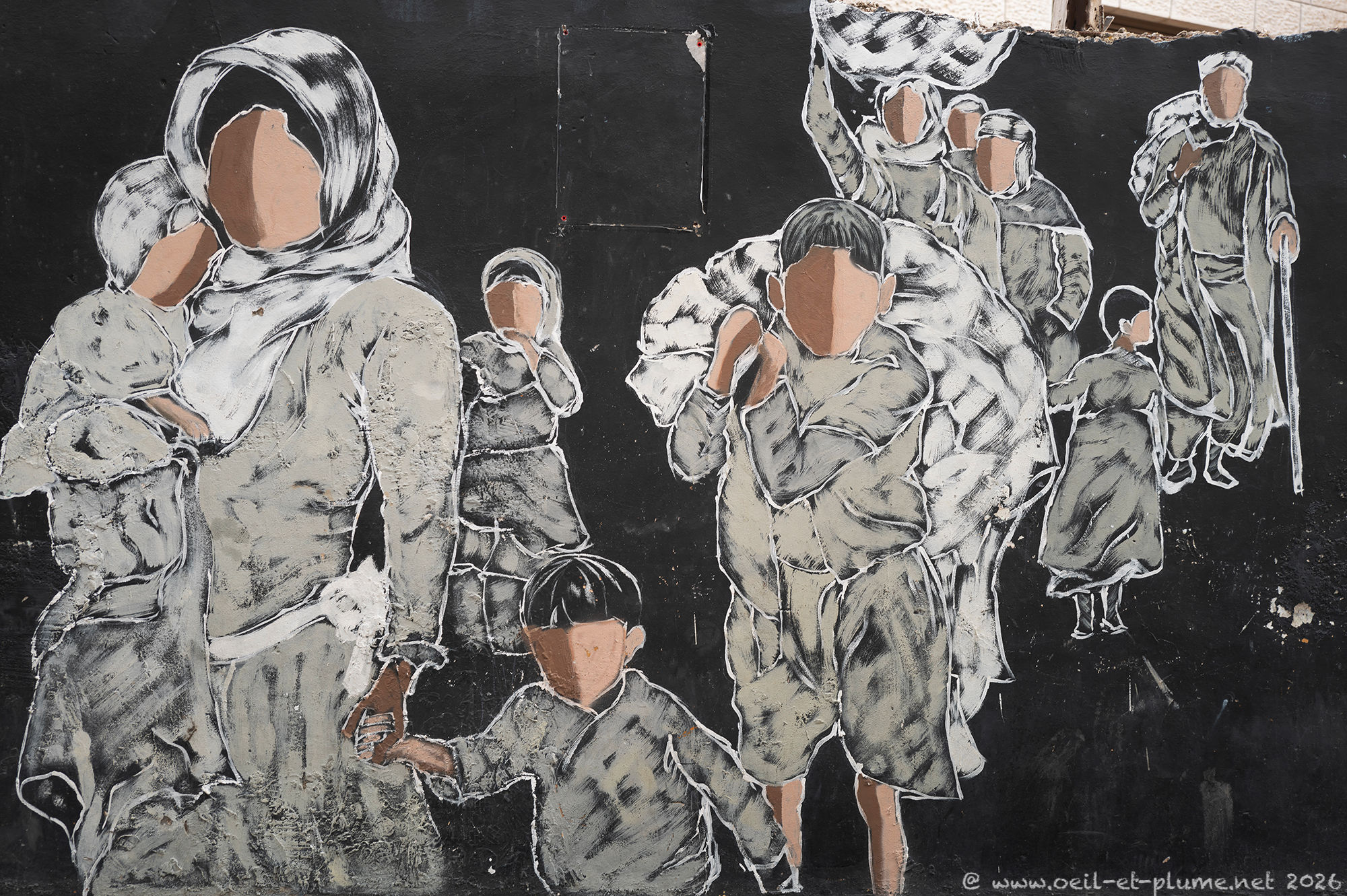
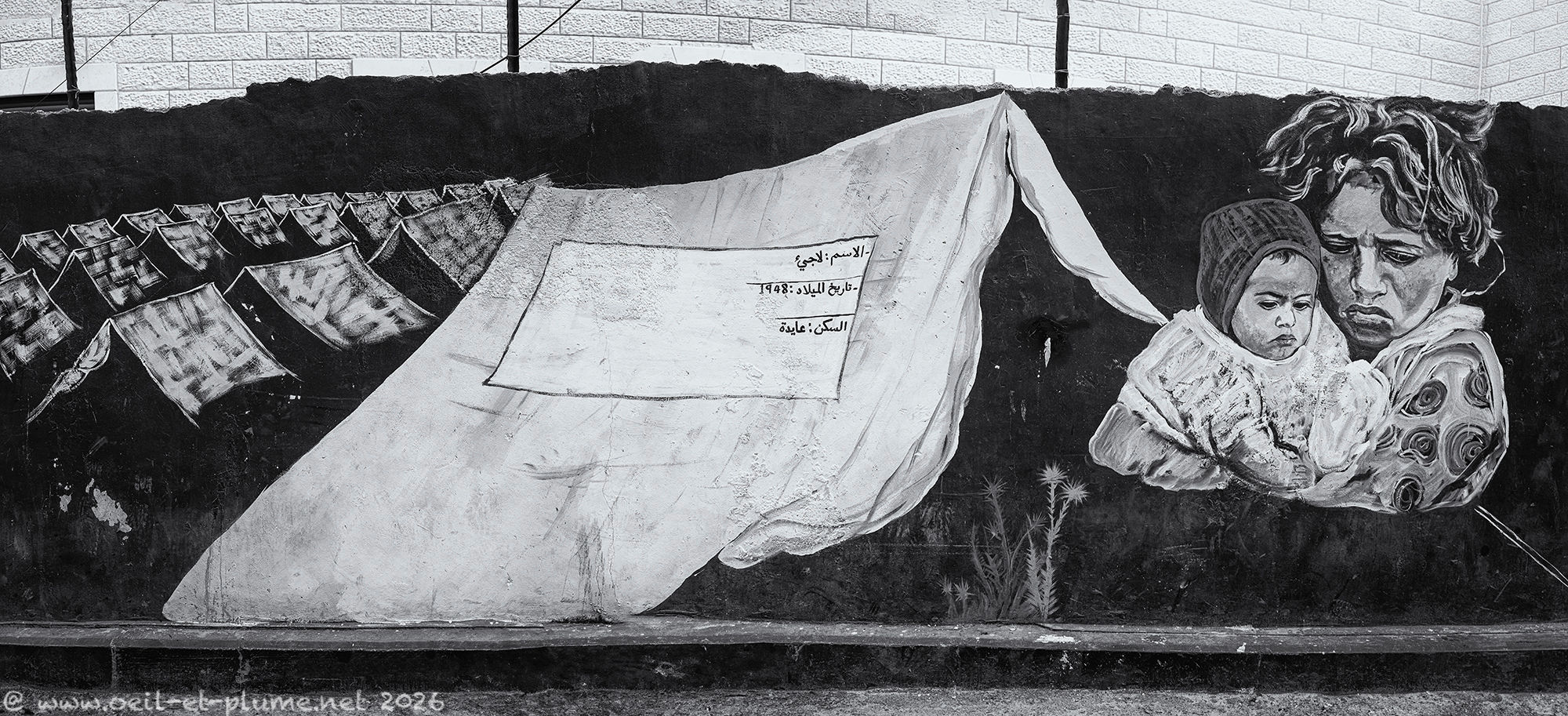
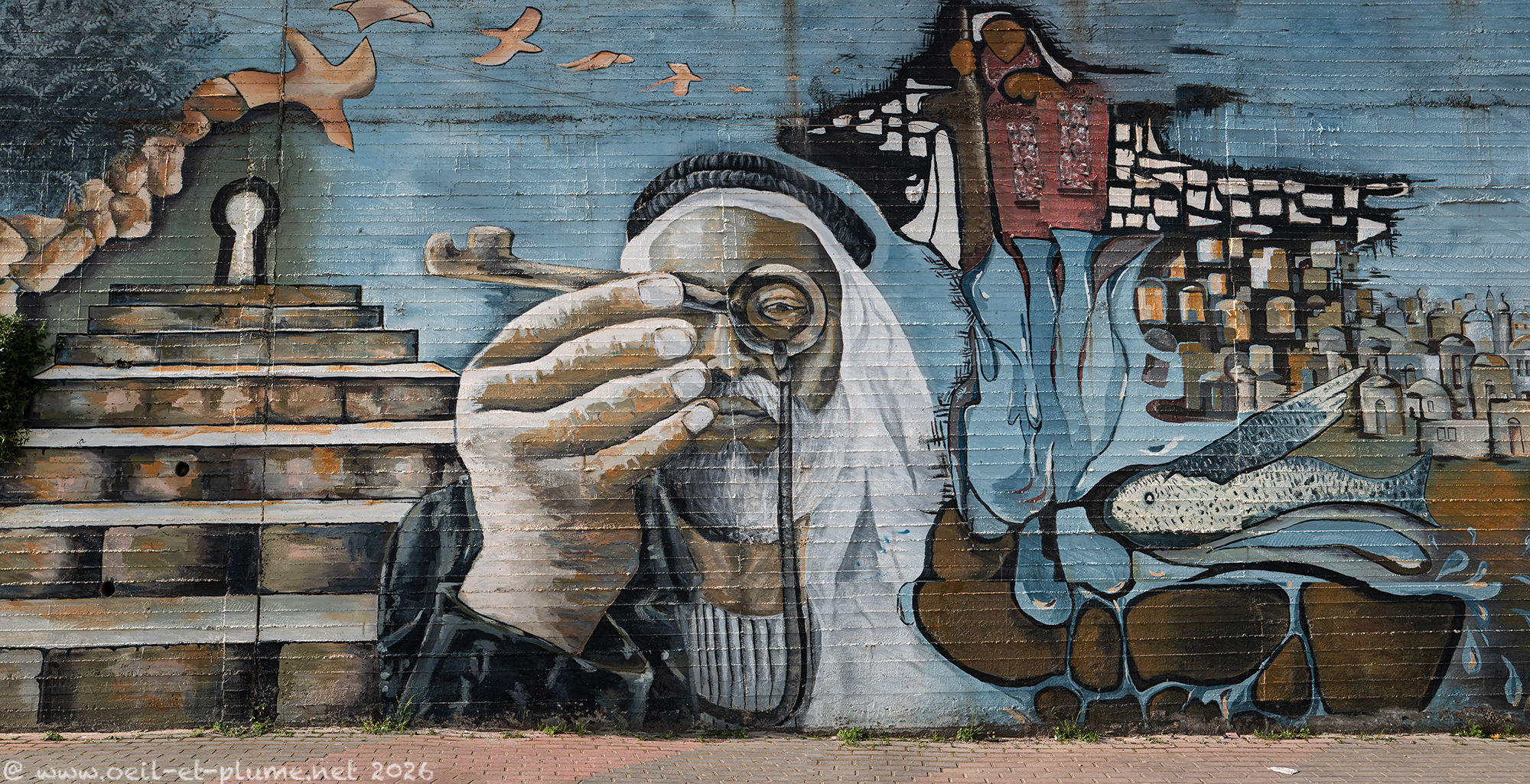
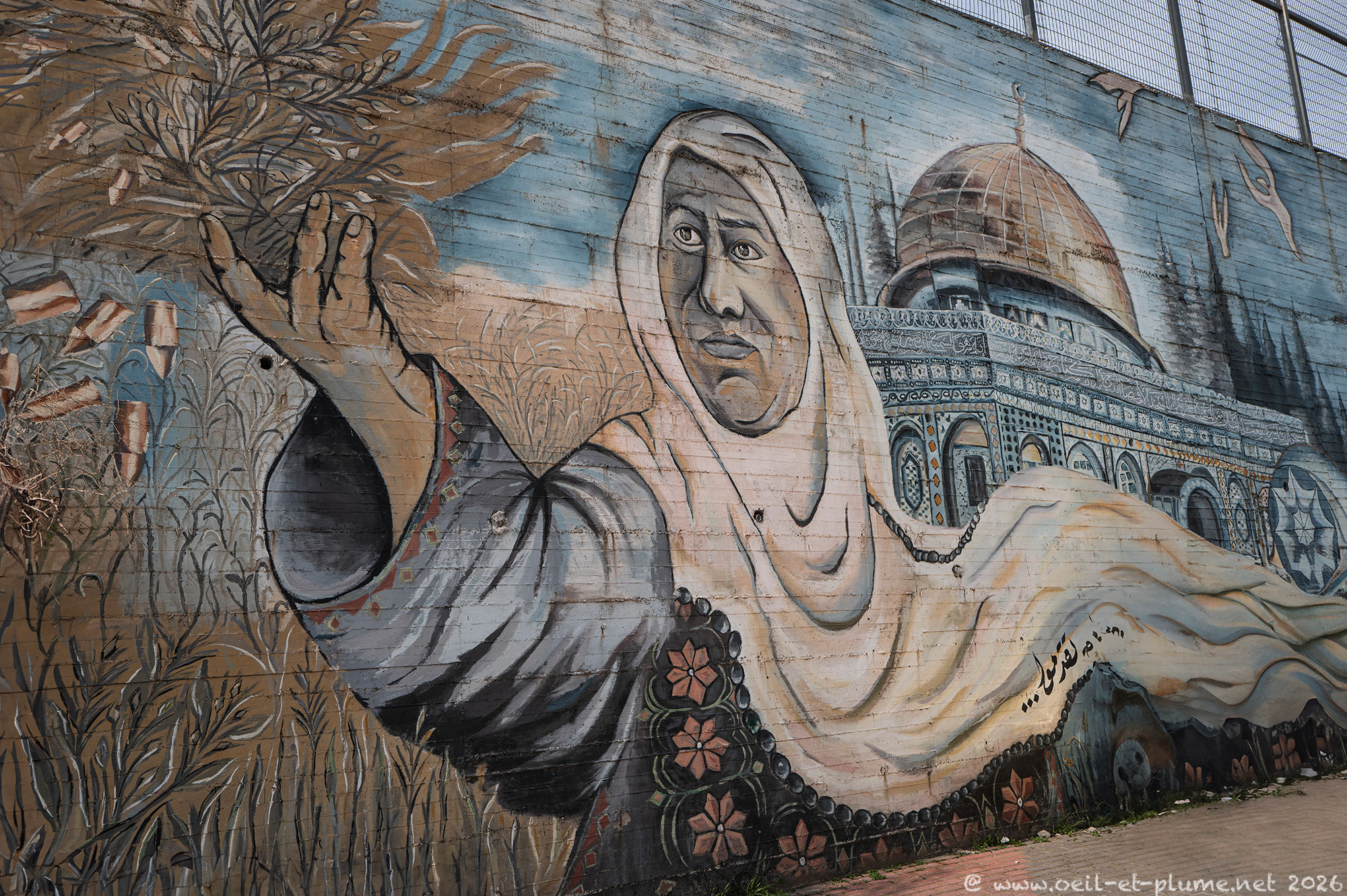
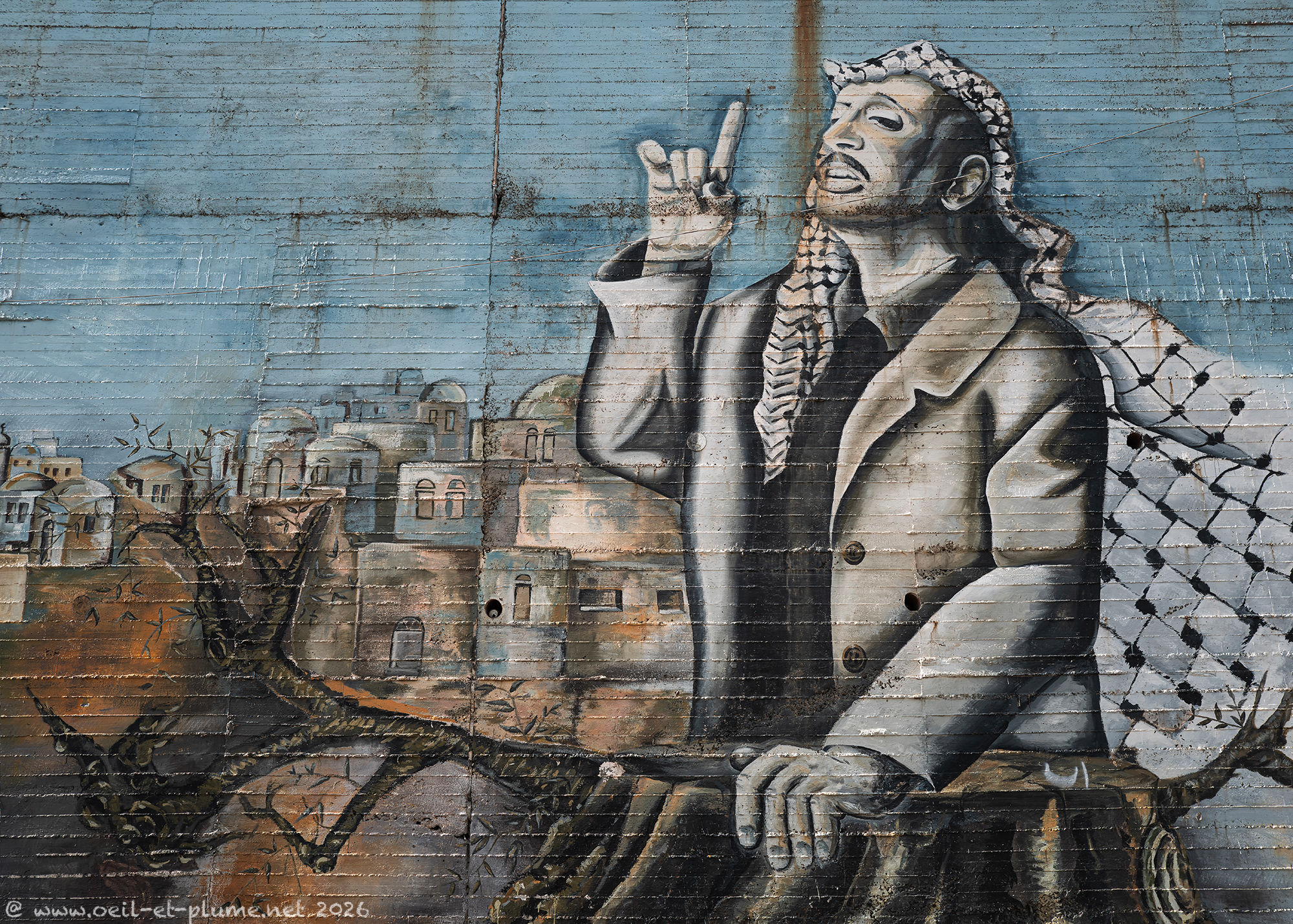
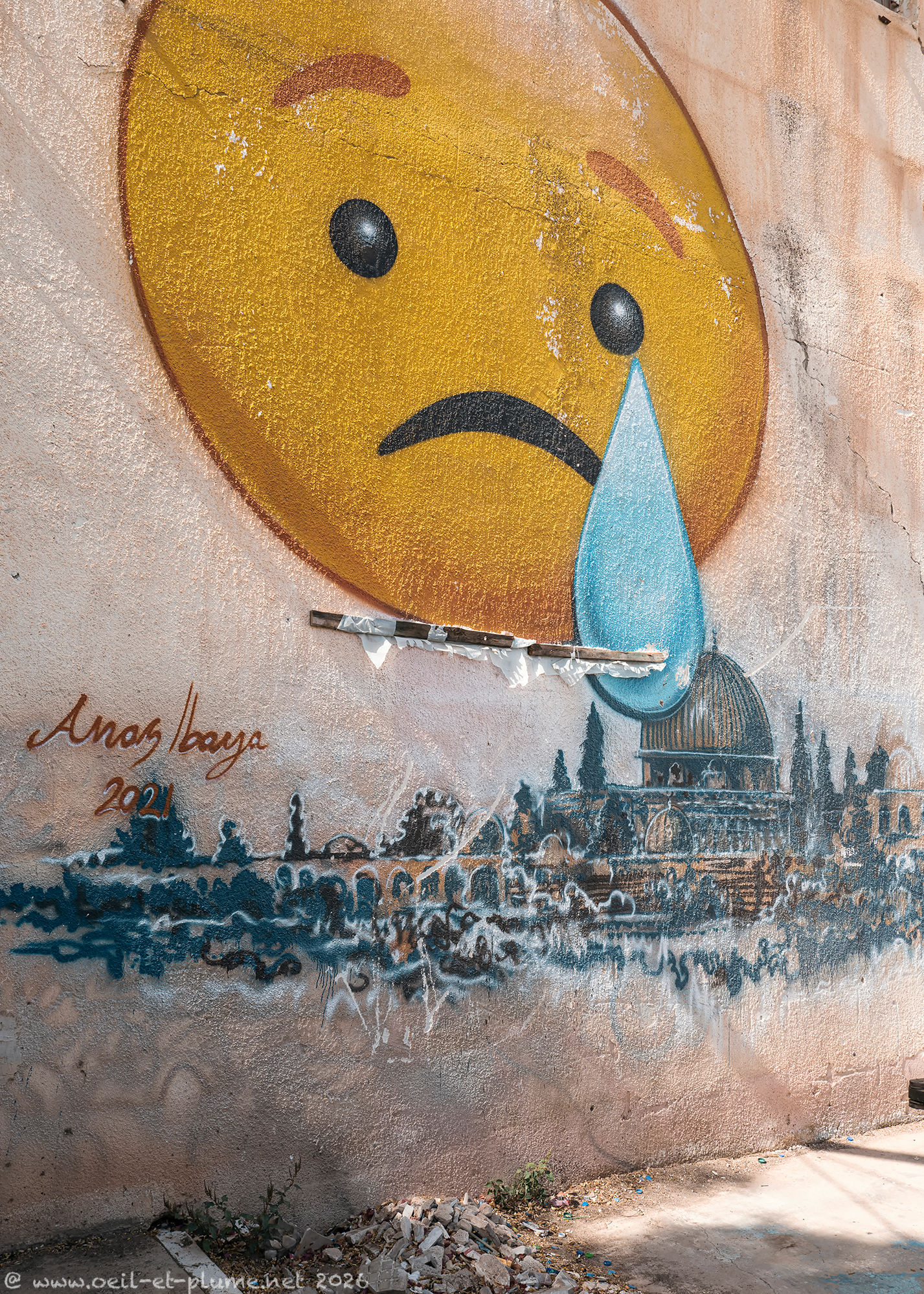
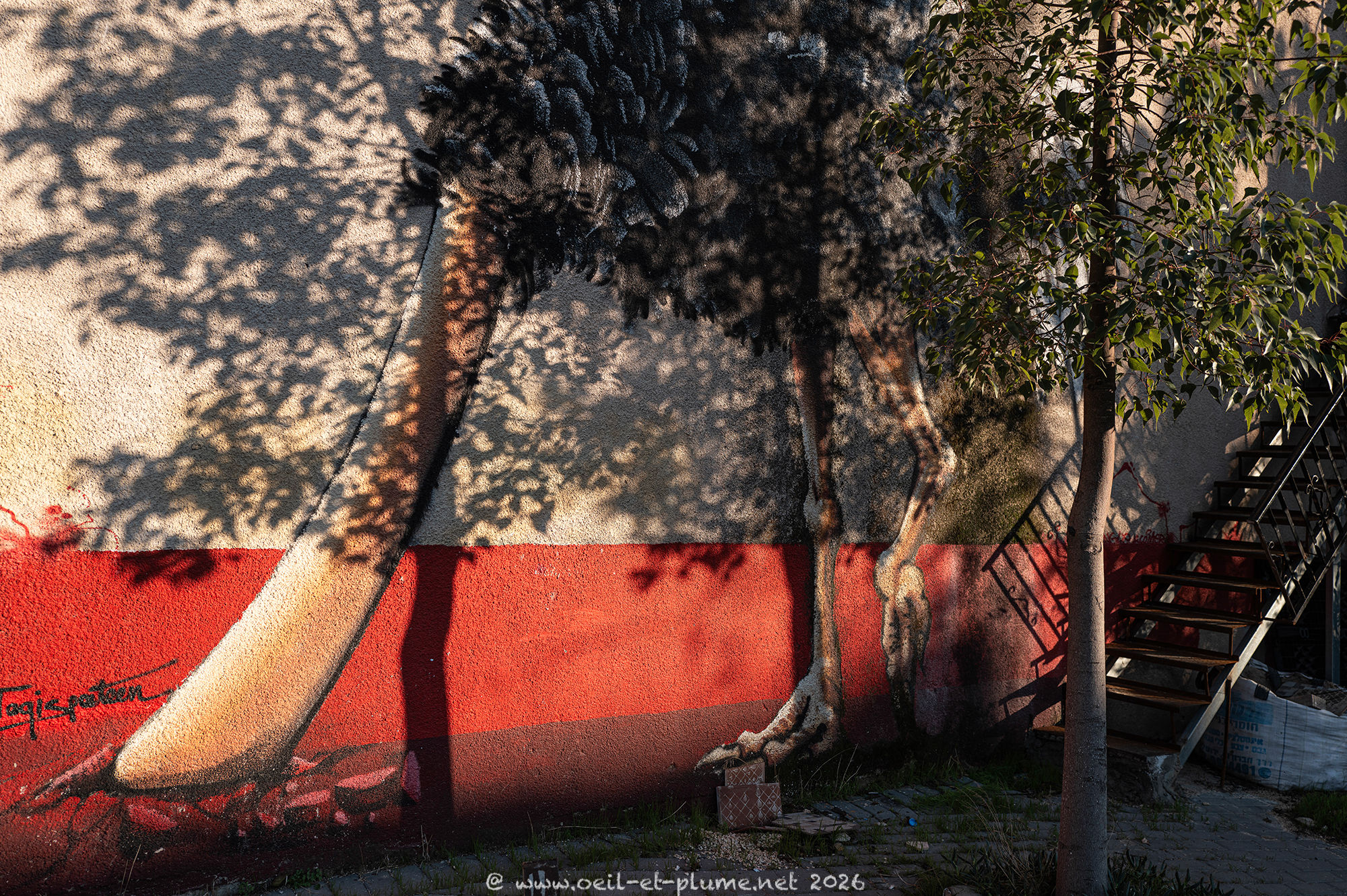
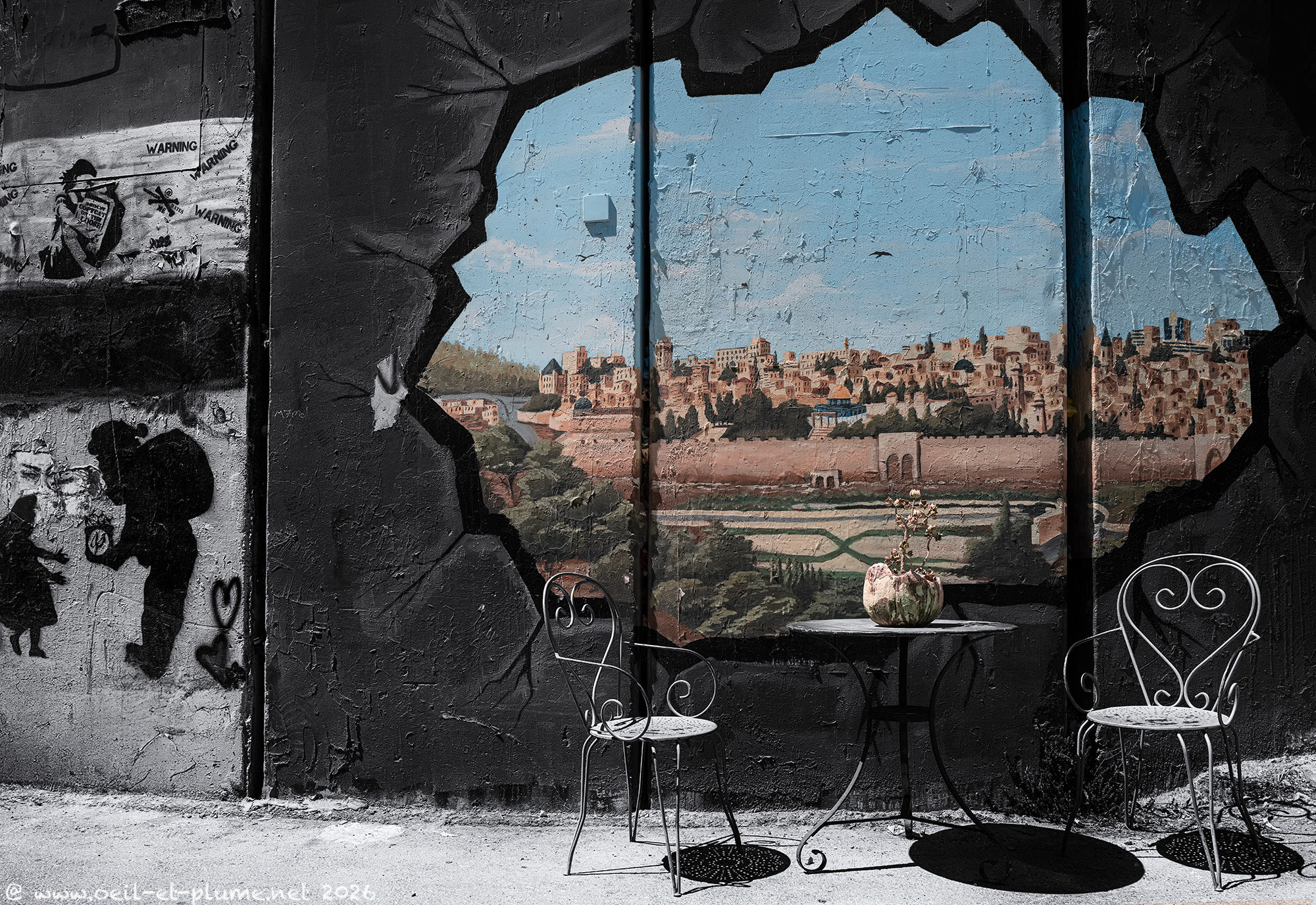
Street art represents often a subject of my photographic and sociological interest in my globetrotting. My stay West Bank followed the path. Compared to other contexts in the world, the street art that I came across in the Palestinian territory was often less aesthetically refined than politically loaded. Here and there, some beautiful candid murals tell the history of local urban settlements, such as below in Hebron and Jericho.
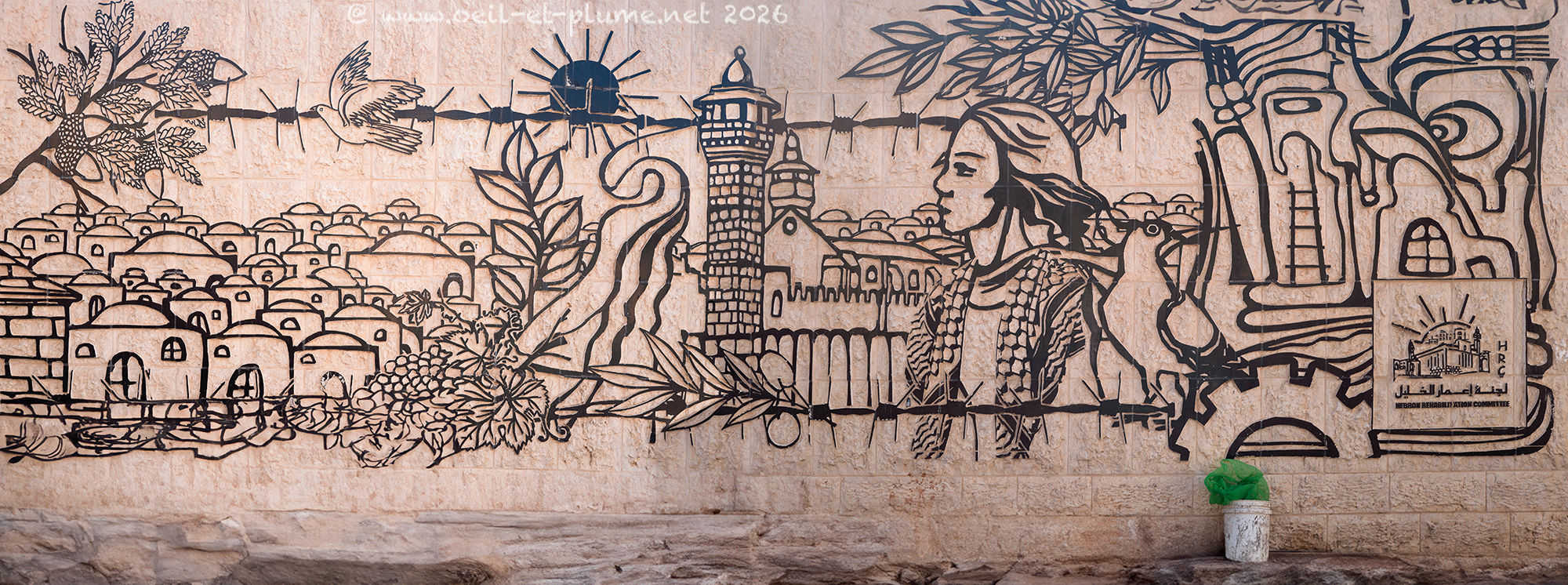
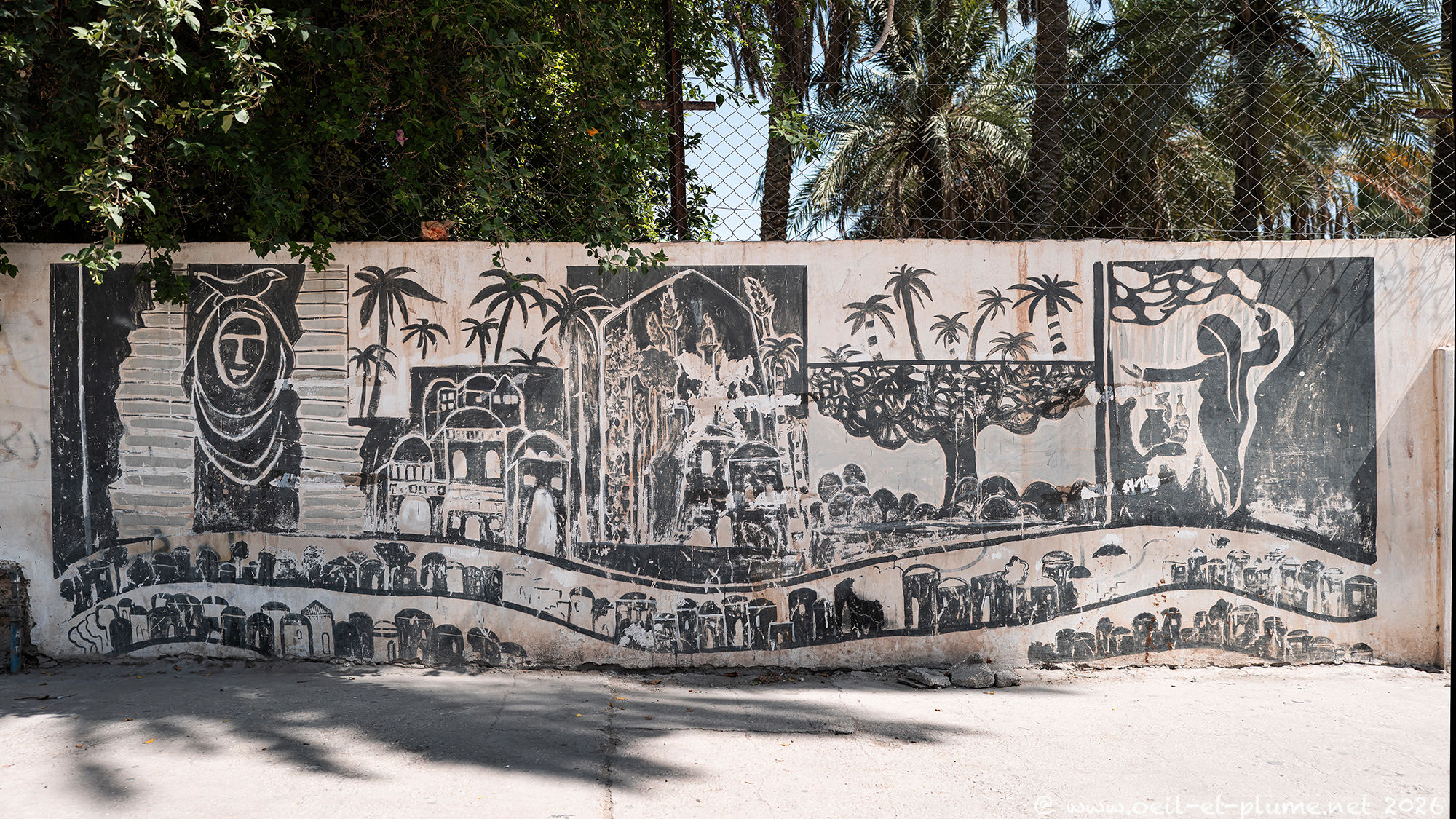
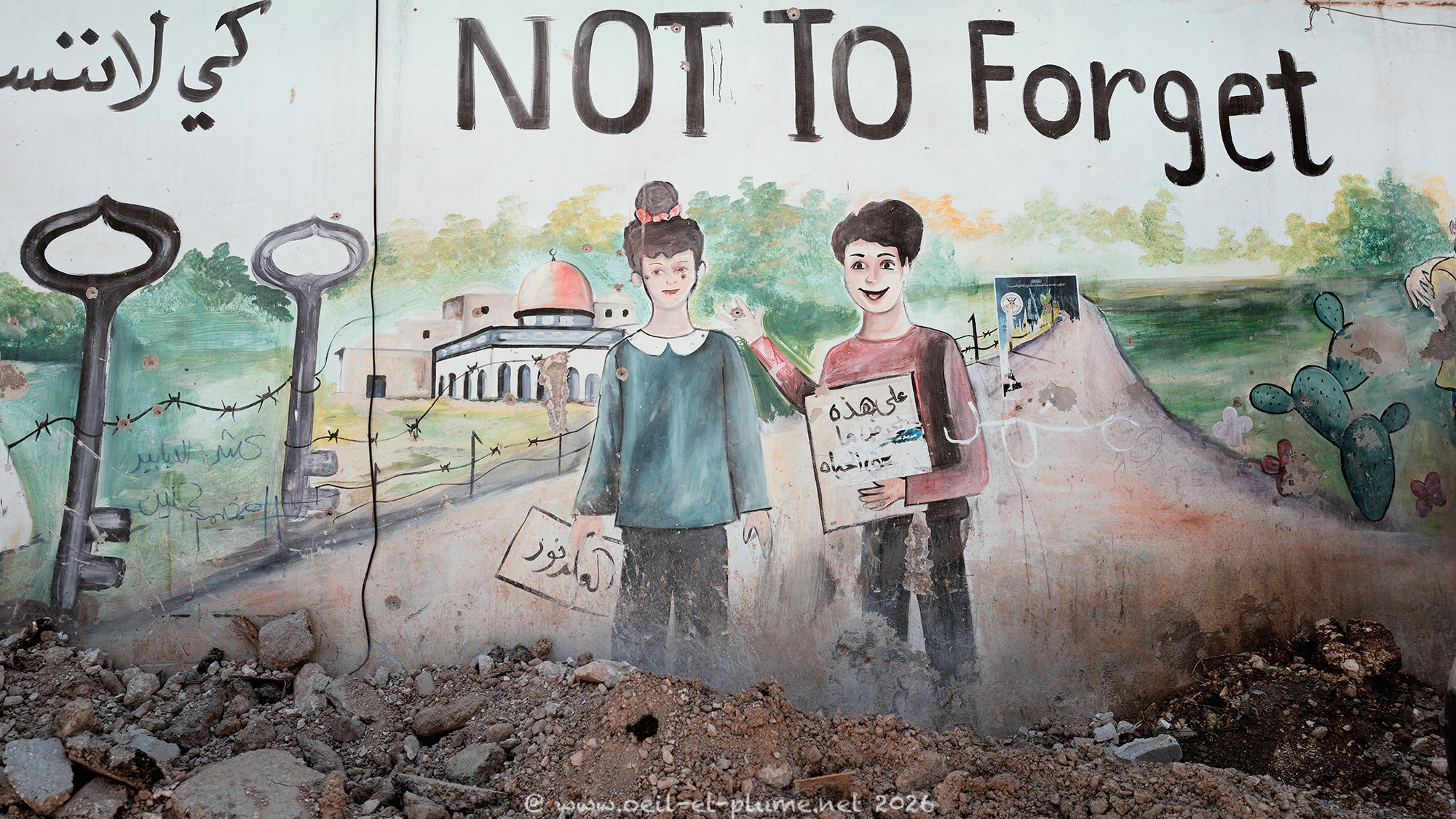
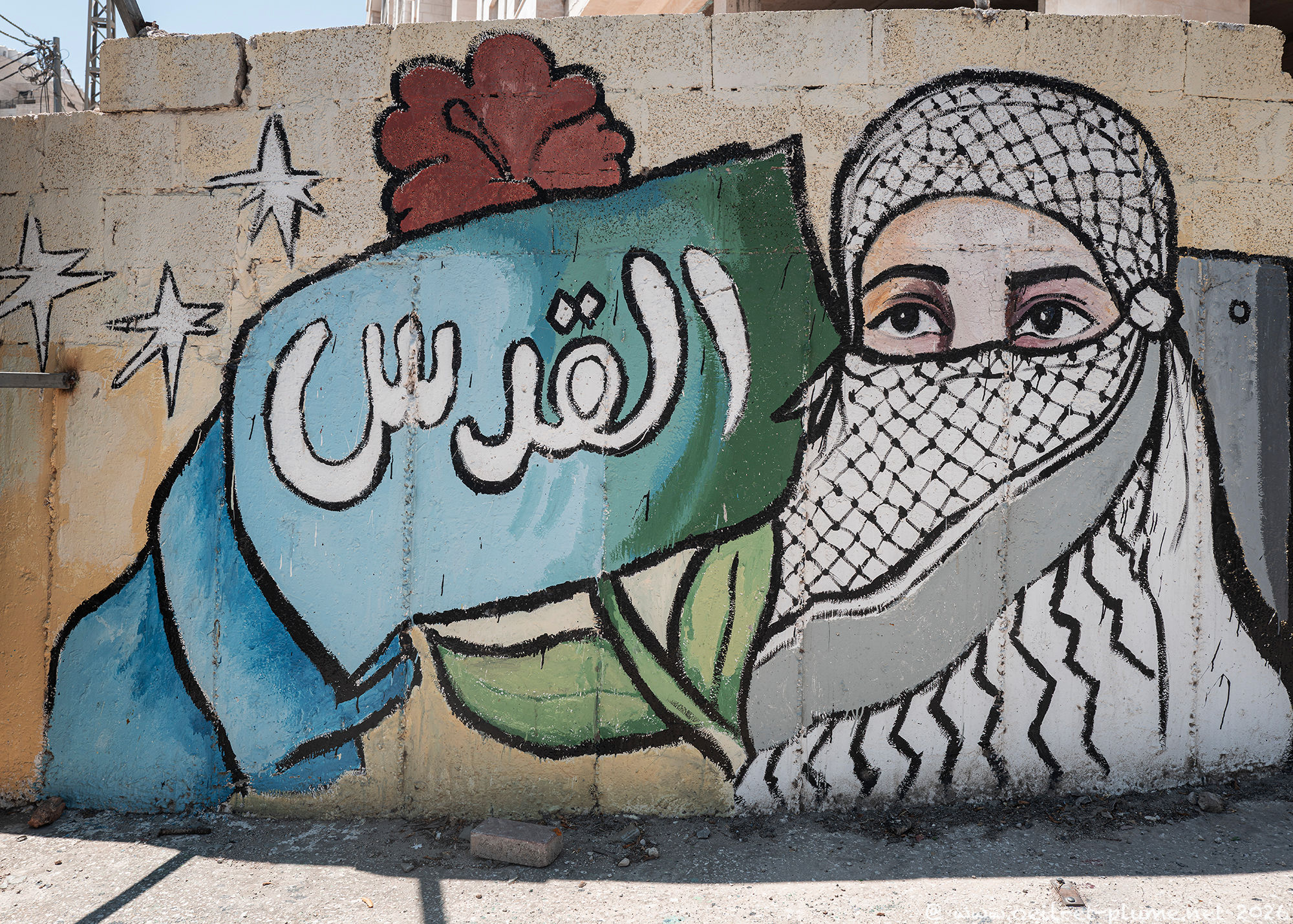
More often, Palestinian street art in the West Bank serves as a medium for cultural expression and political resistance, transforming physical structures like the separation barrier and public spaces into canvases for memory, education, resilience, hope and defiance. This art form connects personal struggles and collective identity, turning everyday environments into political spaces that educate, inspire, and sustain the Palestinian narrative against the backdrop of occupation.
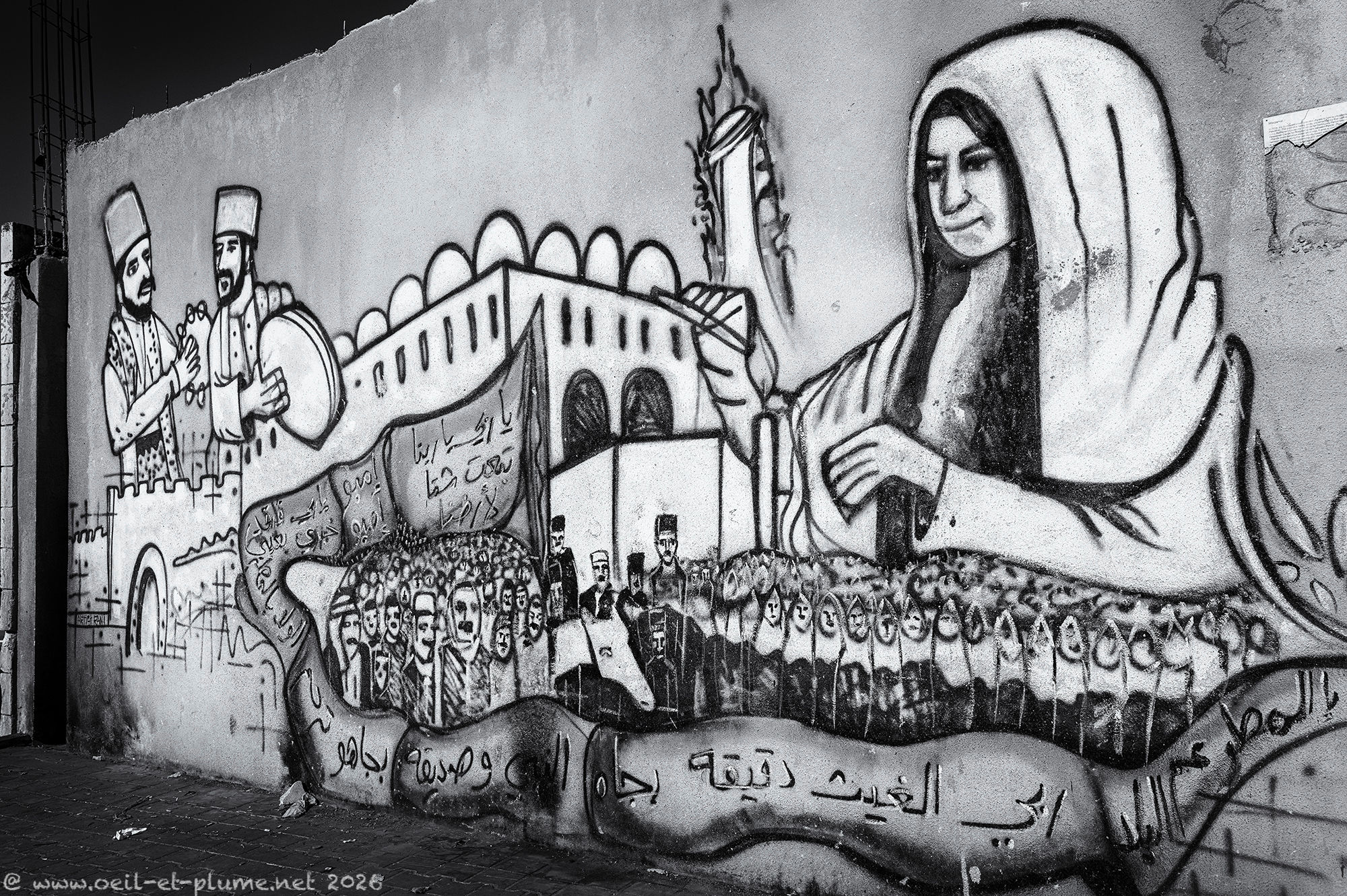
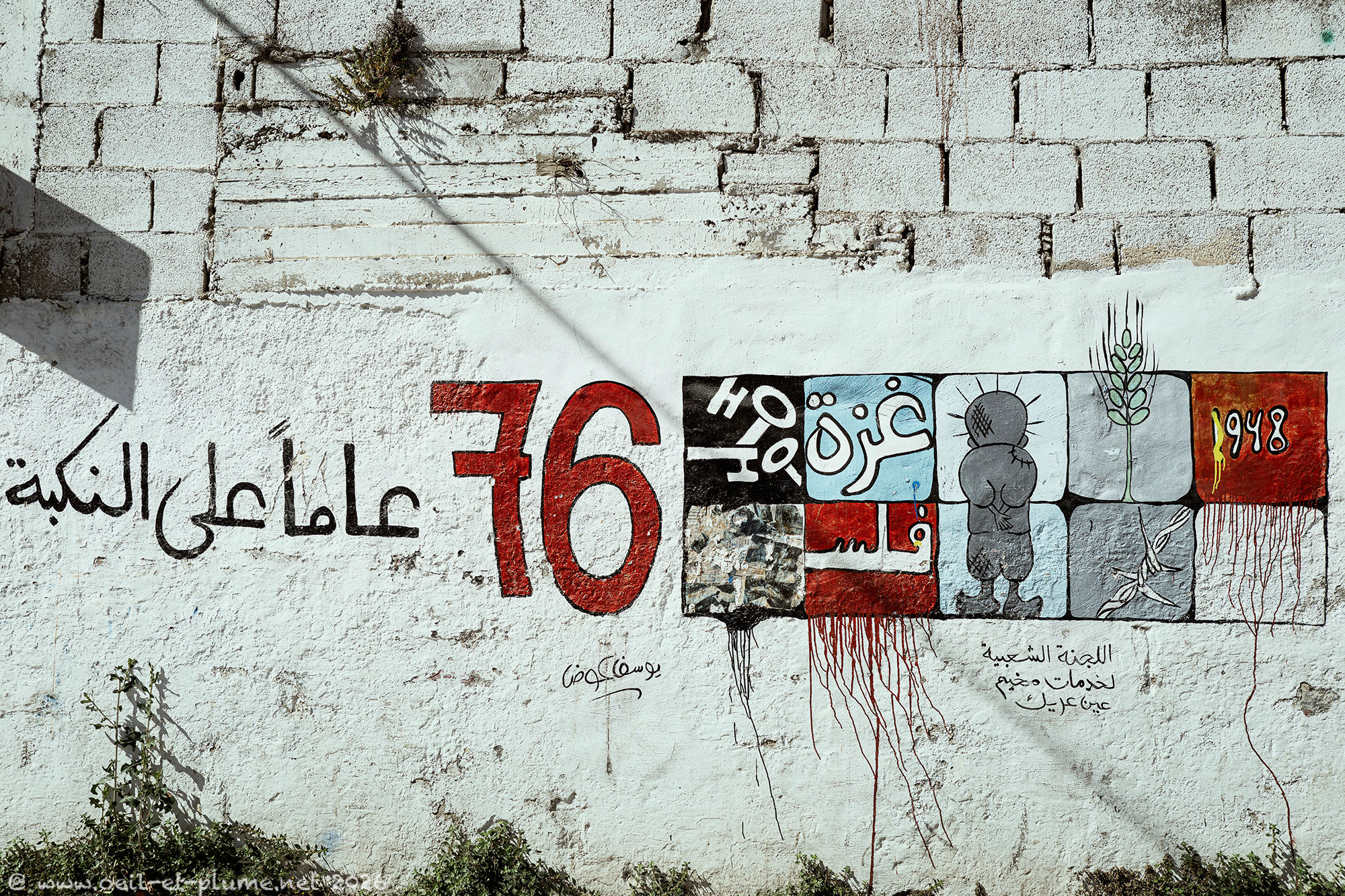
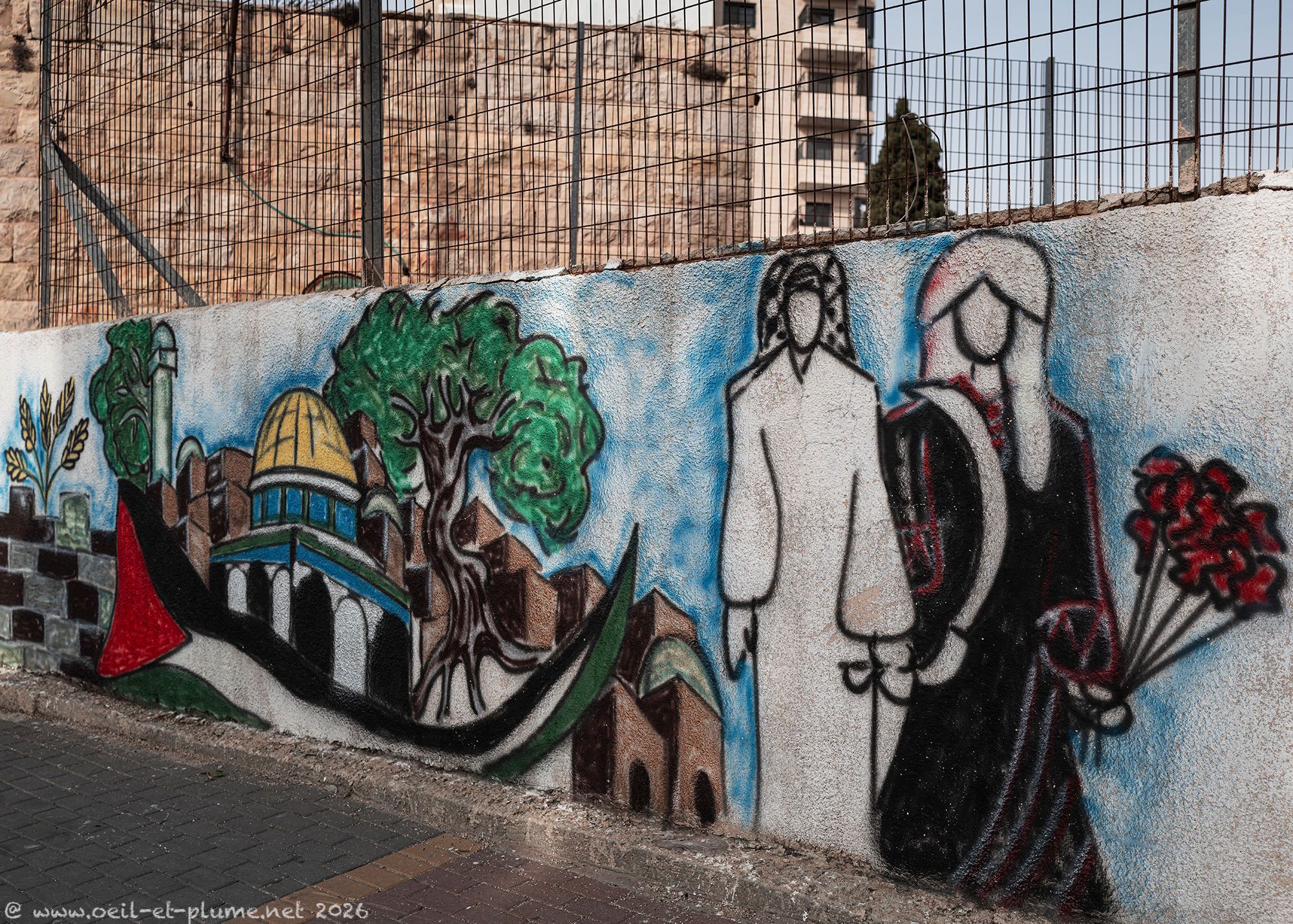
Through vibrant murals, Palestinian artists commemorate the historical mass displacements of 1948 and 1967. They also highlight the ongoing struggles over land, water, freedom of movement destruction of properties, often stressing the emotional distress of women and children. Young couples epitomise the growing difficulty of Palestinian youth to secure their livelihood and access to essential services – to build their sustainable future.
The political messages expressed are often implied, privileging powerful and well-known historical references and visual symbols over words:
- Barbed wire represents the Israeli occupation; bird and fish illustrate the constraints on movement.
- Olive tree symbolises Palestinian resilience, while olive branches call for peace. Key remind about the right of return of Palestinian refugees, especially in Jerusalem and more broadly recall Palestinian heritage. Loupe call for monitoring and justice.
- Palestinian flag, shepherding, farming, water-fetching, textile weaving and embroidery, dabke dancing and music playing, recall Palestinian socio-cultural identity promote political unity.
Continuing here.
Cheers,
