
Continues from here.
Hardship
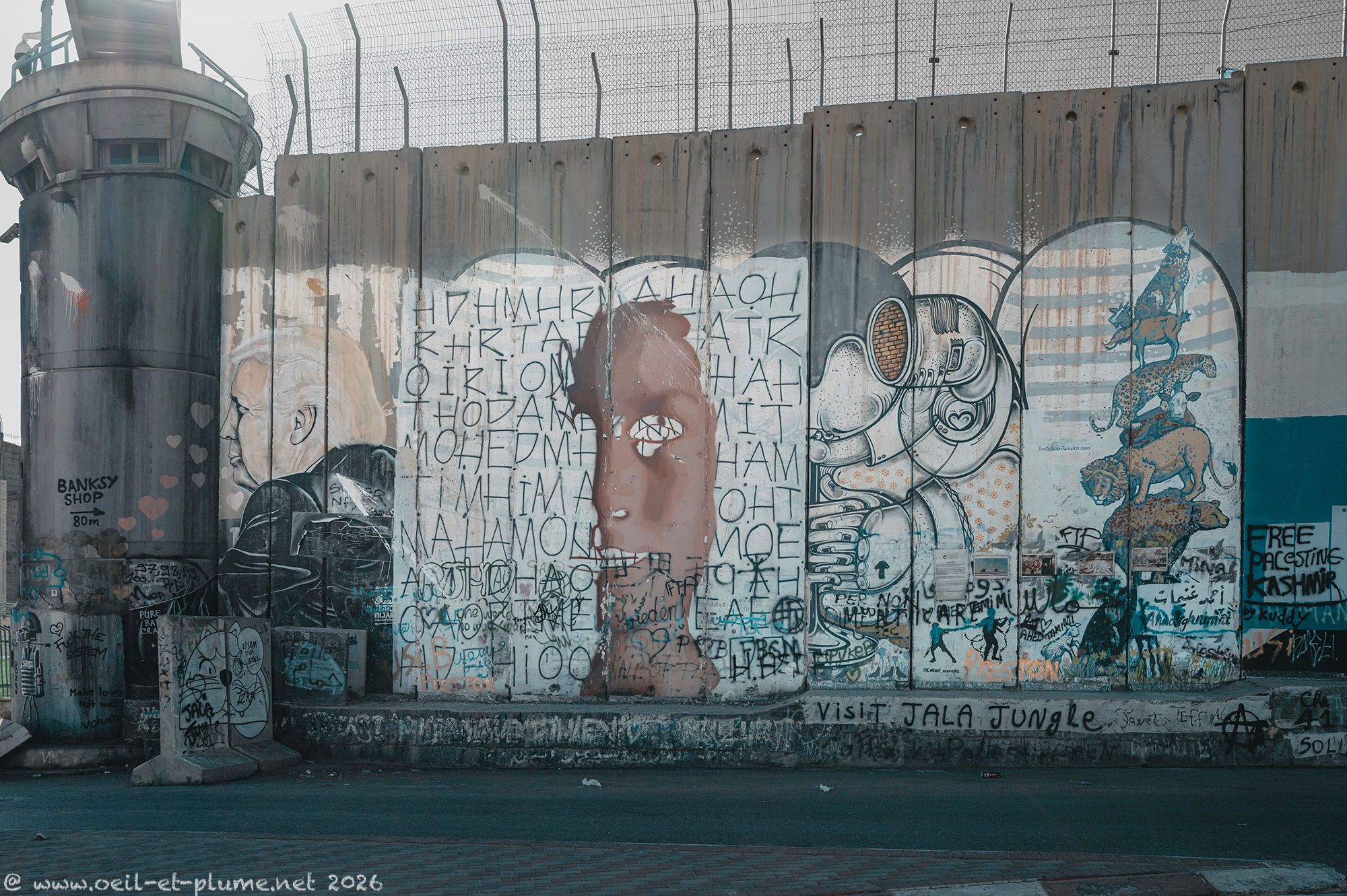
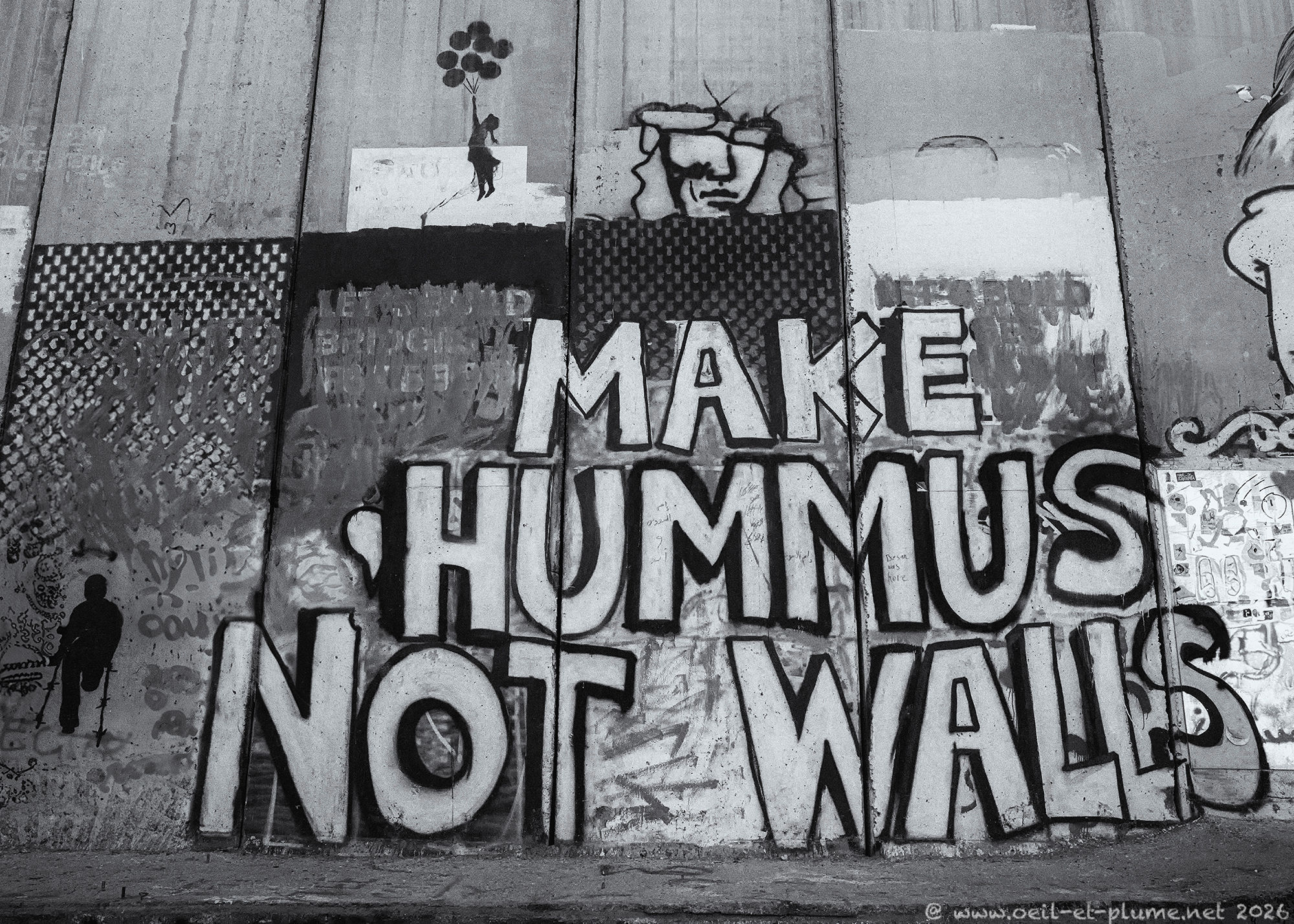
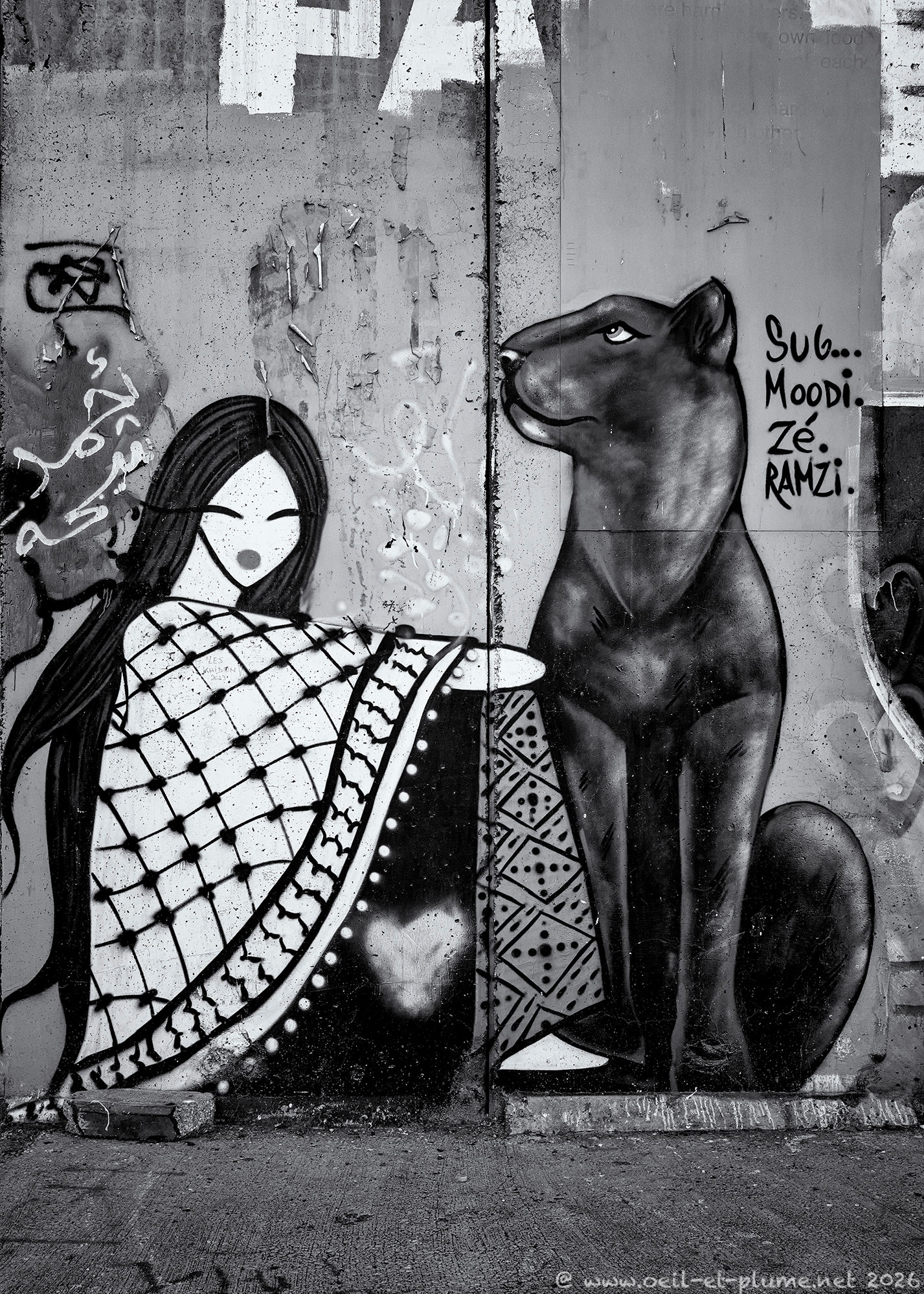
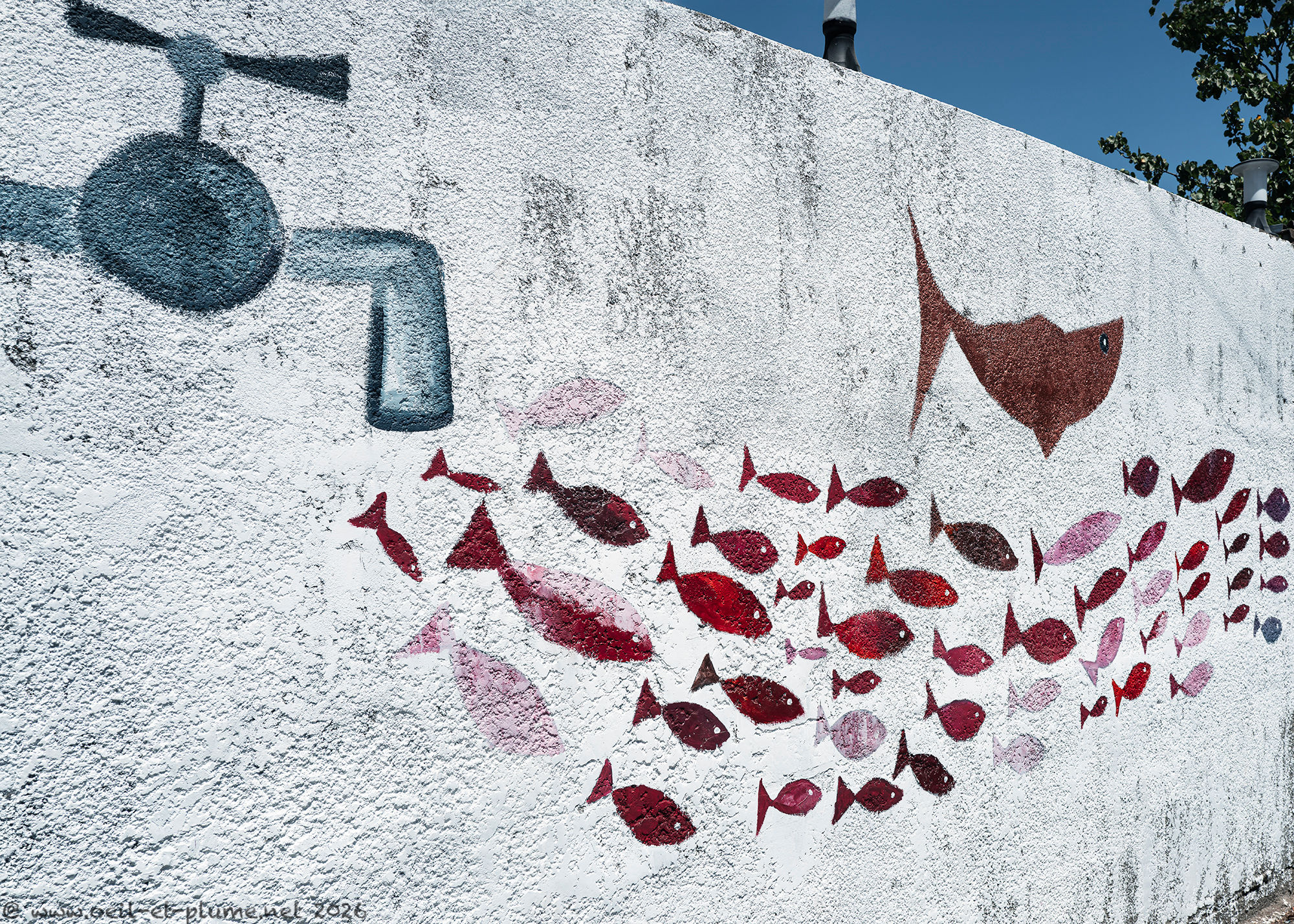
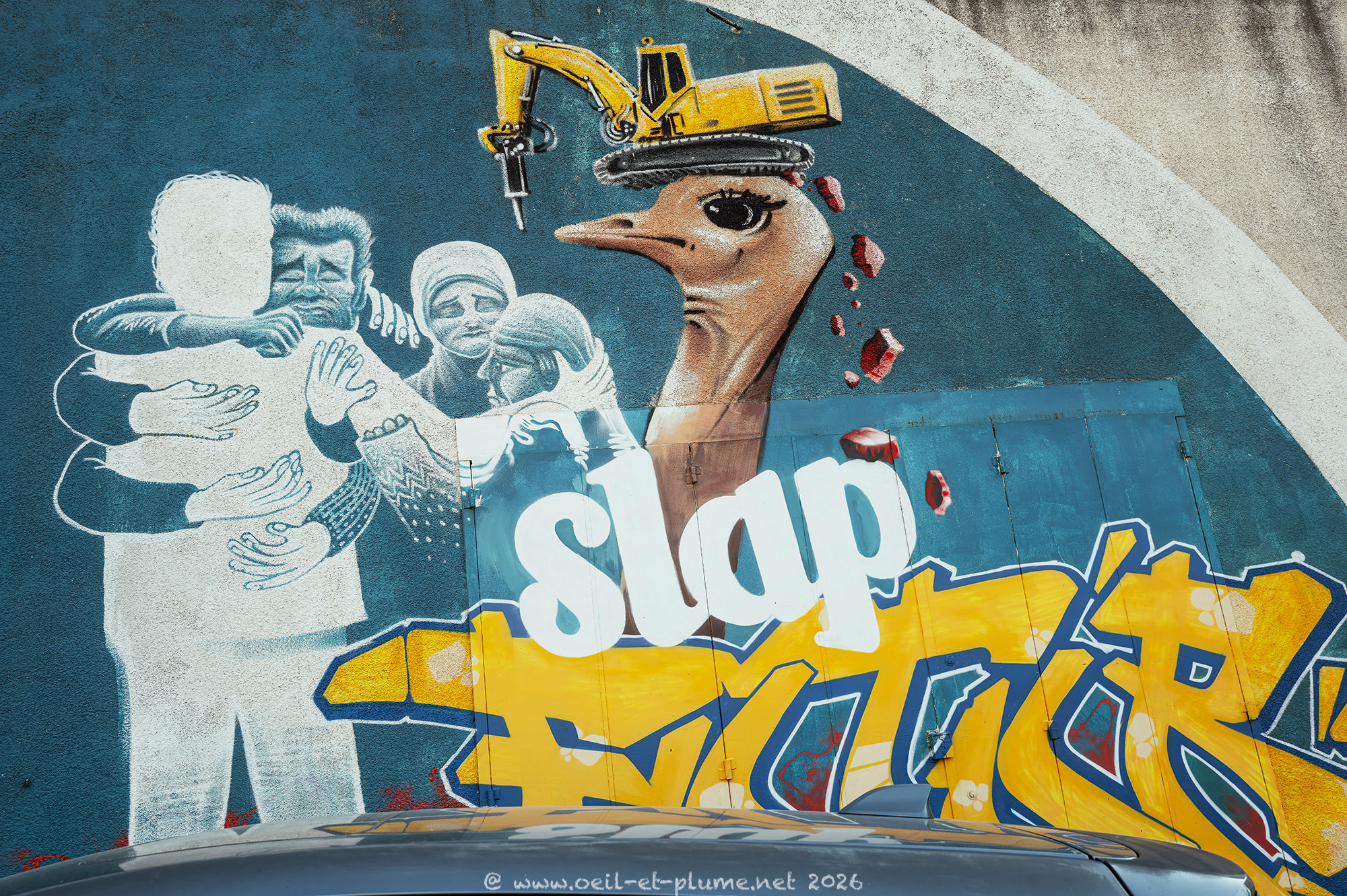
Built starting in 2002, the Israeli West Bank barrier near Bethlehem and Ramallah is one of the most well-known sites for political street art, featuring works by international and local artists. The wall provided an ample visual tribune for political graffitis on both sides and from abroad. On the Palestinian side, it symbolises the restrictions of movement under Israeli occupation, the loss of land and other livelihood means, and more largely the socio-economic hardship of Palestinians today. Worth recalling here that Palestinians used graffitis as a means of political communication already during the two Intifadas (1987-1993 and 2000-2005).
Resistance
Against the backdrop above, some murals call for passive or active resistance. Peaceful resistance can be powerful. The Intifadas, the first one in particular, were characterised by mass demonstrations and other acts of civil disobedience by Palestinians against Israeli occupation. Murals often refer to those critical historical moments to suggest further acts of resistance.
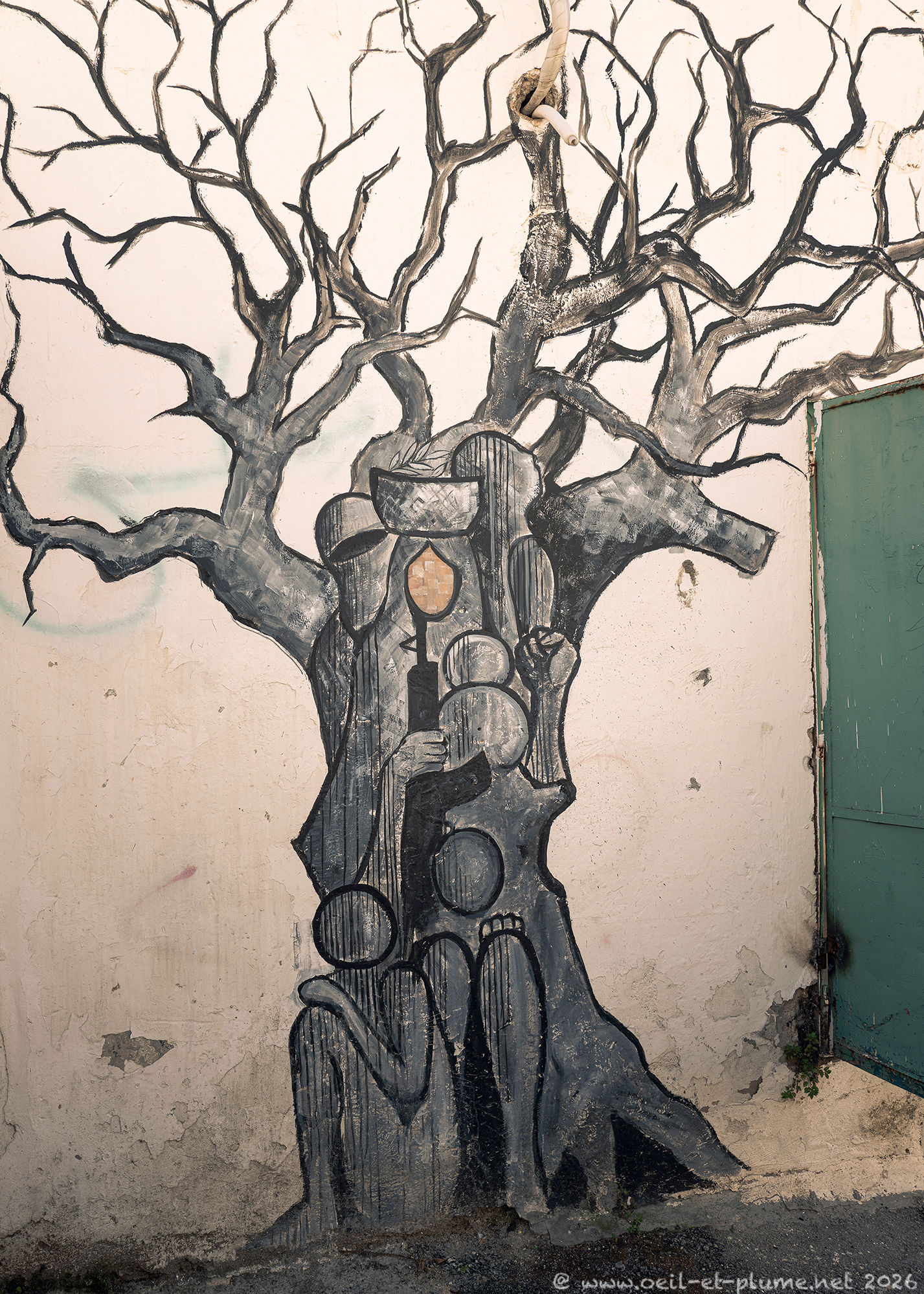
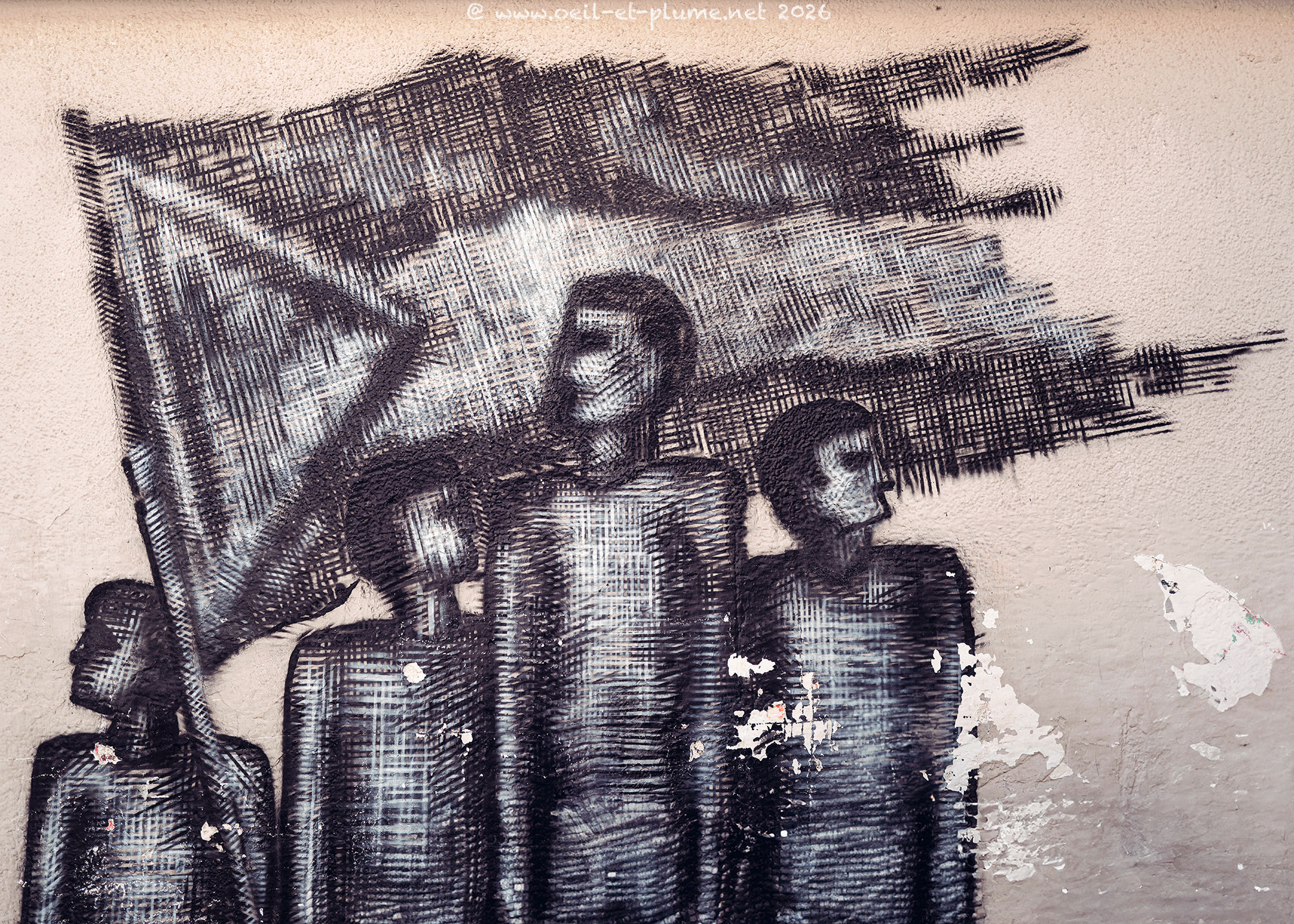
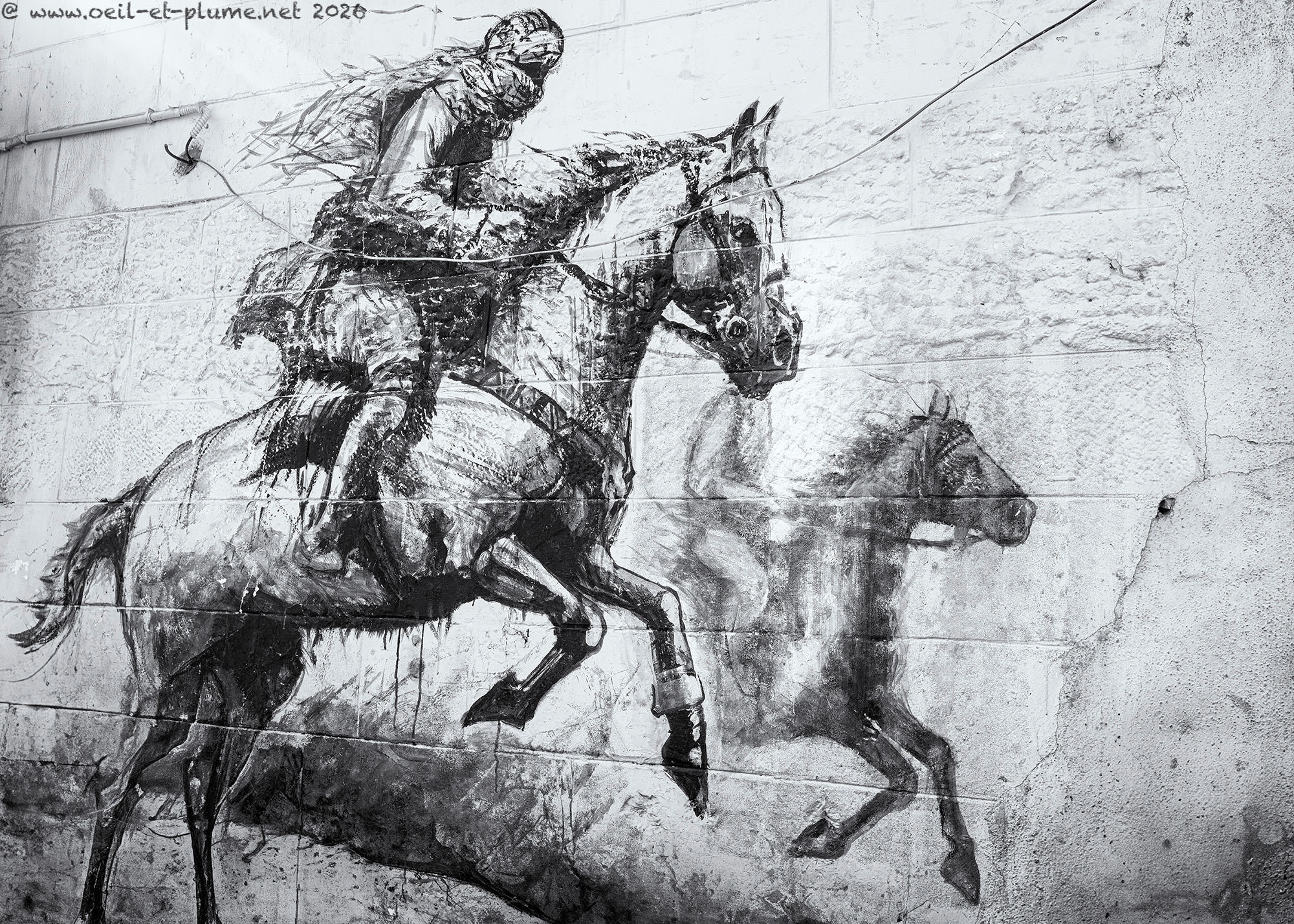
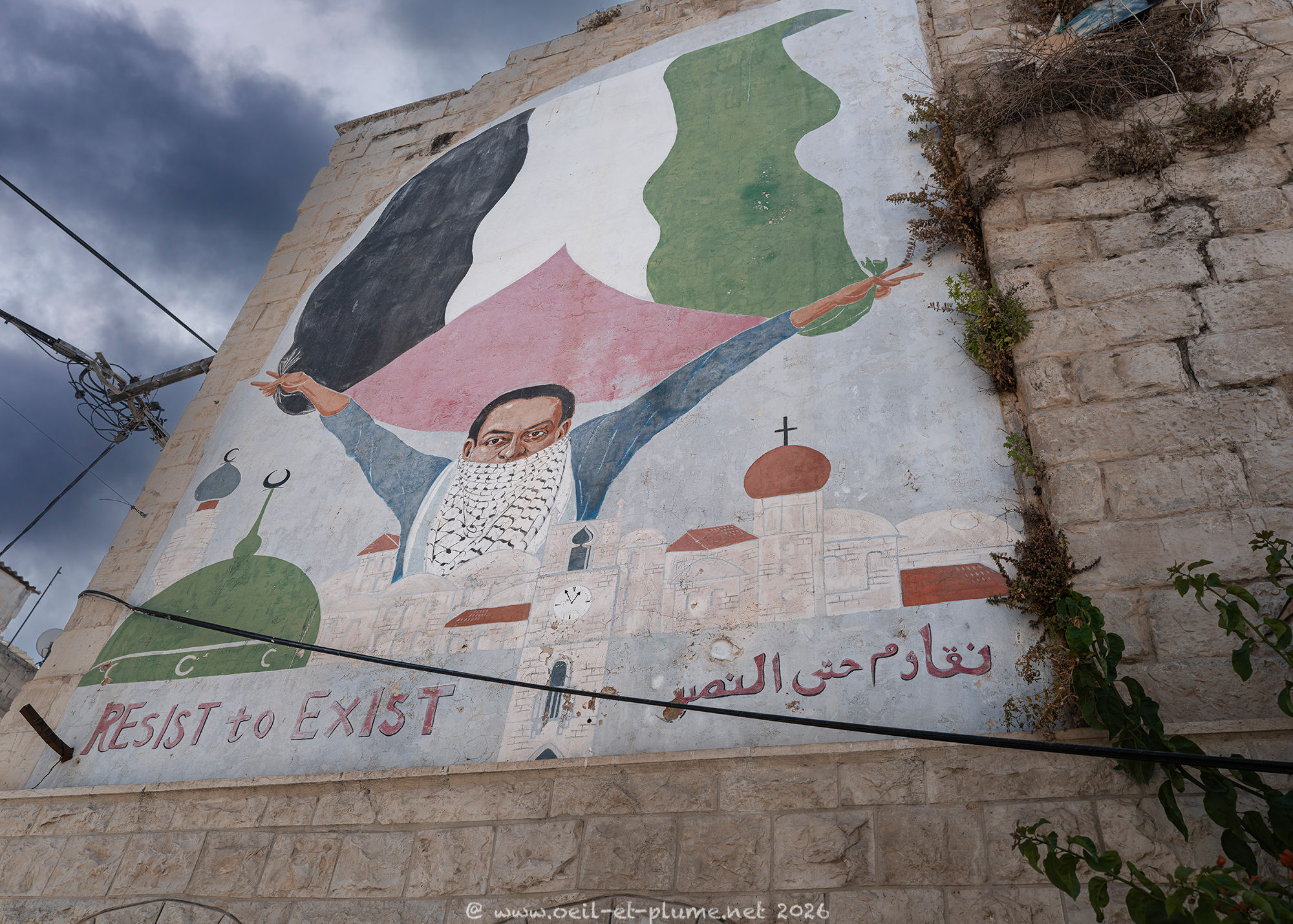
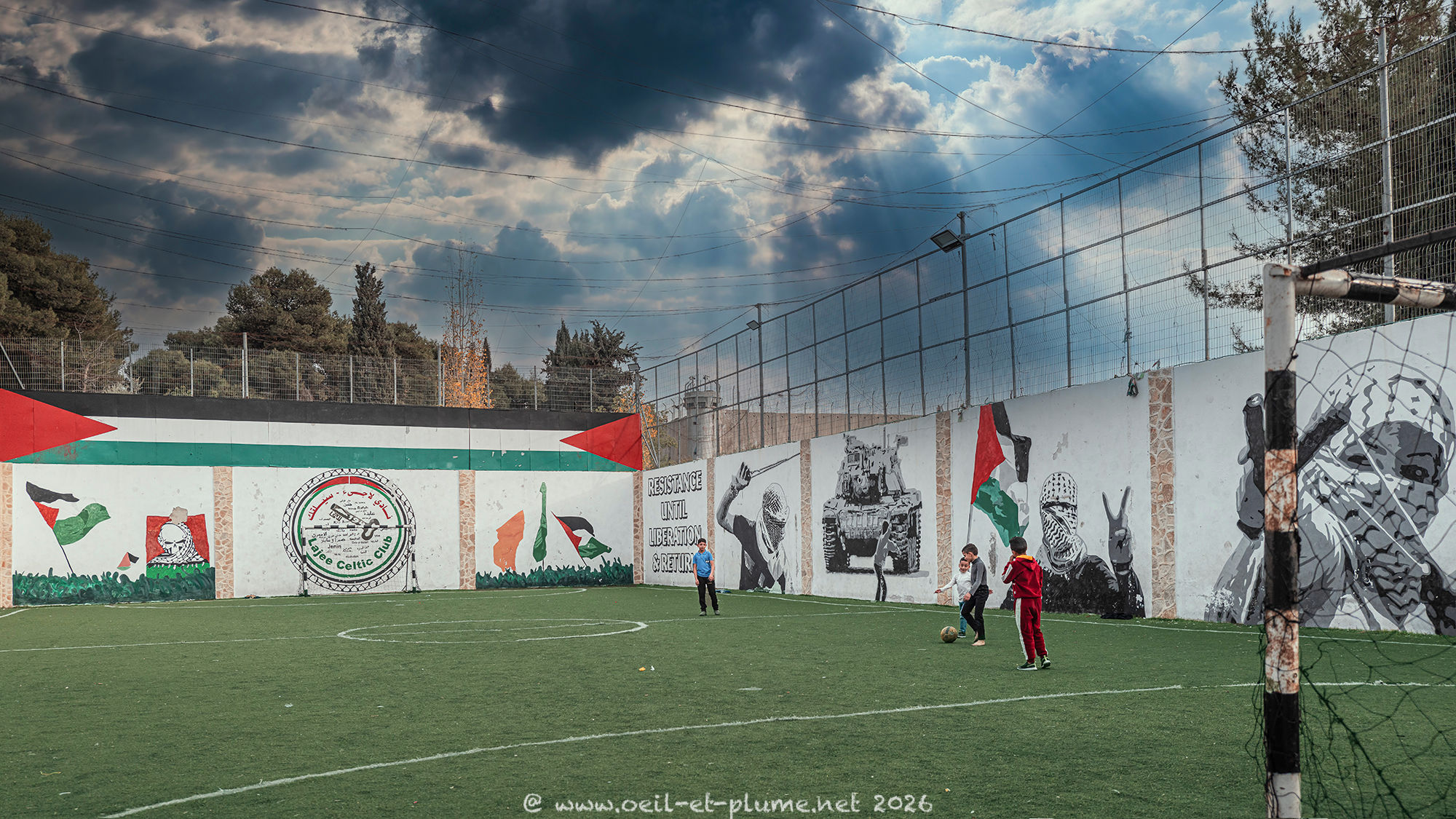
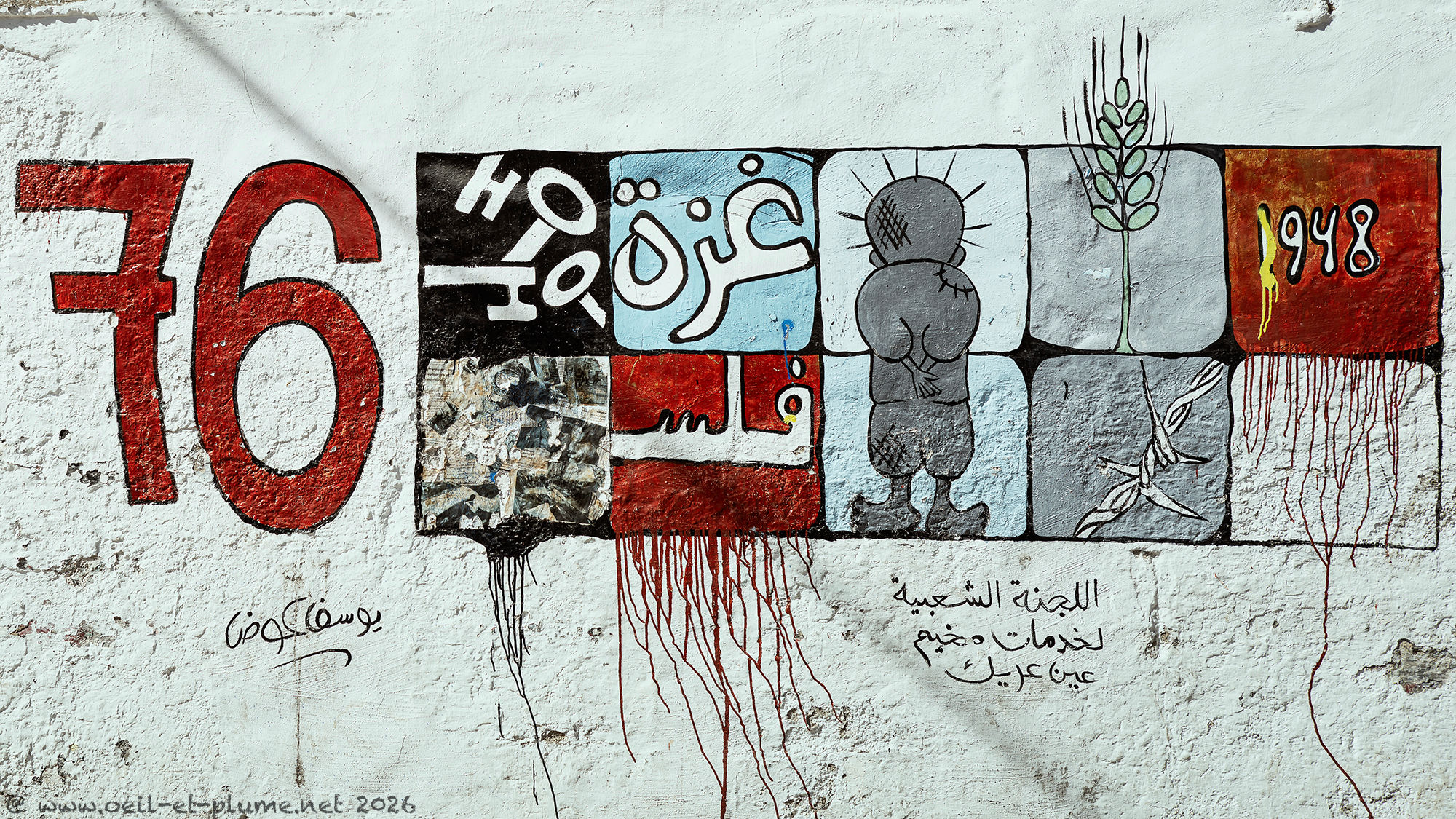
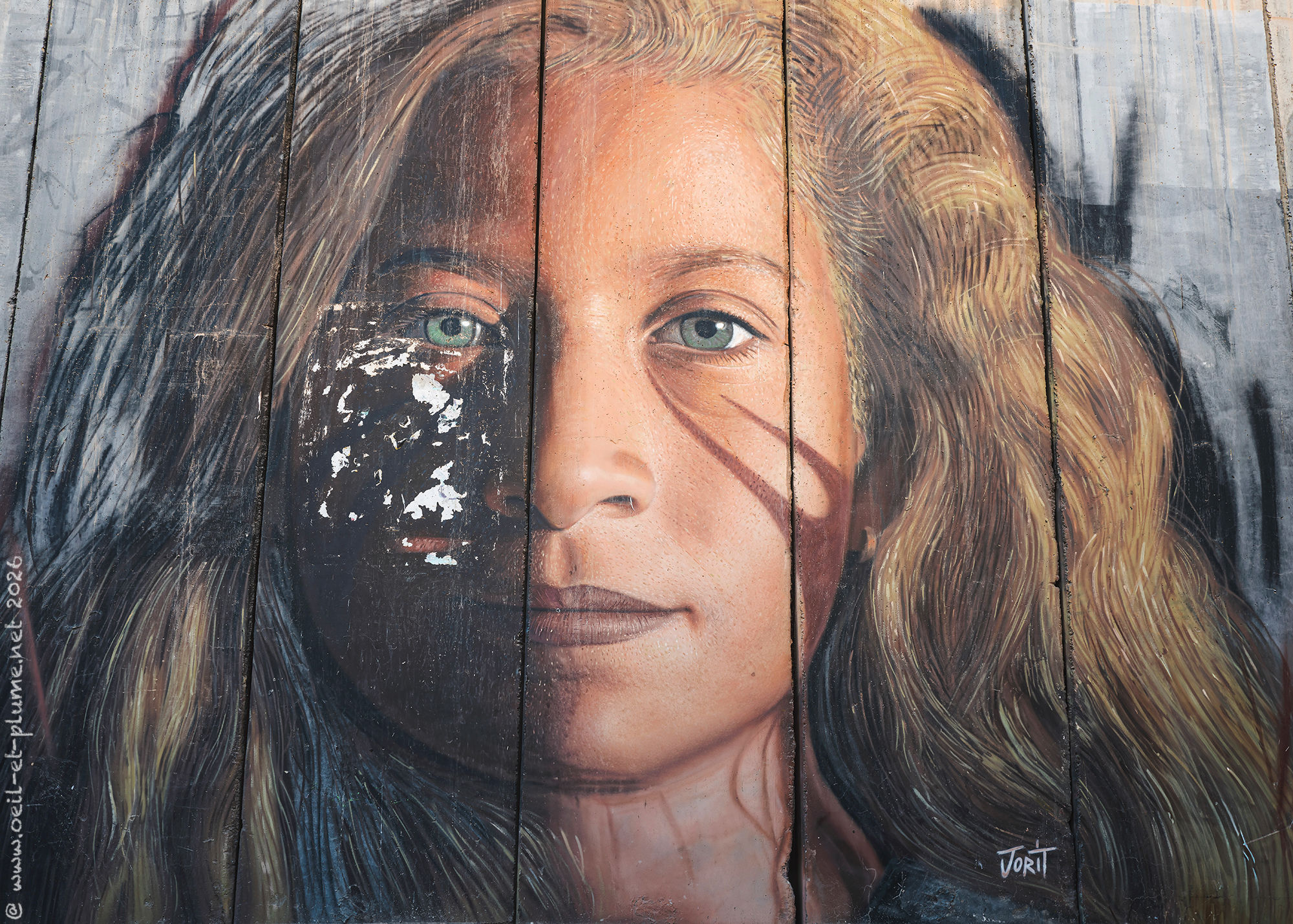
Two emblematic figures of Palestinian resistance to present here:
- Above, Handala – iconic cartoon child symbolising Palestinian identity and refugee experience. The barefoot refugee boy will remain ten years old because that was his creator’s age when he fled Palestine in 1948. He will reveal his face only upon the realisation of the right of return. His posture—back turned, hands clasped behind his back—represents a steadfast rejection of external political solutions that do not address Palestinian sovereignty and justice. His creator, the Palestinian political cartoonist Naji al-Ali, was killed at his workplace in London in 1987. His violent death further cemented Handala in the visual language of Palestinian resistance.
- Below, Ahed Tamimi. The Palestinian activist is most known for her slapping of two Israeli soldiers near her home in the West Bank in 2017, in a gesture protesting against the soldiers’ handling of her cousin. The scene was videoed and broadcasted. The video of the 16-year-old’s defiant act went viral, drawing international attention to the tensions in the occupied territories. Following the incident, Ahed was arrested and detained by Israeli authorities for eight months. Upon release, she developed her activities as social activist banking on her international network.
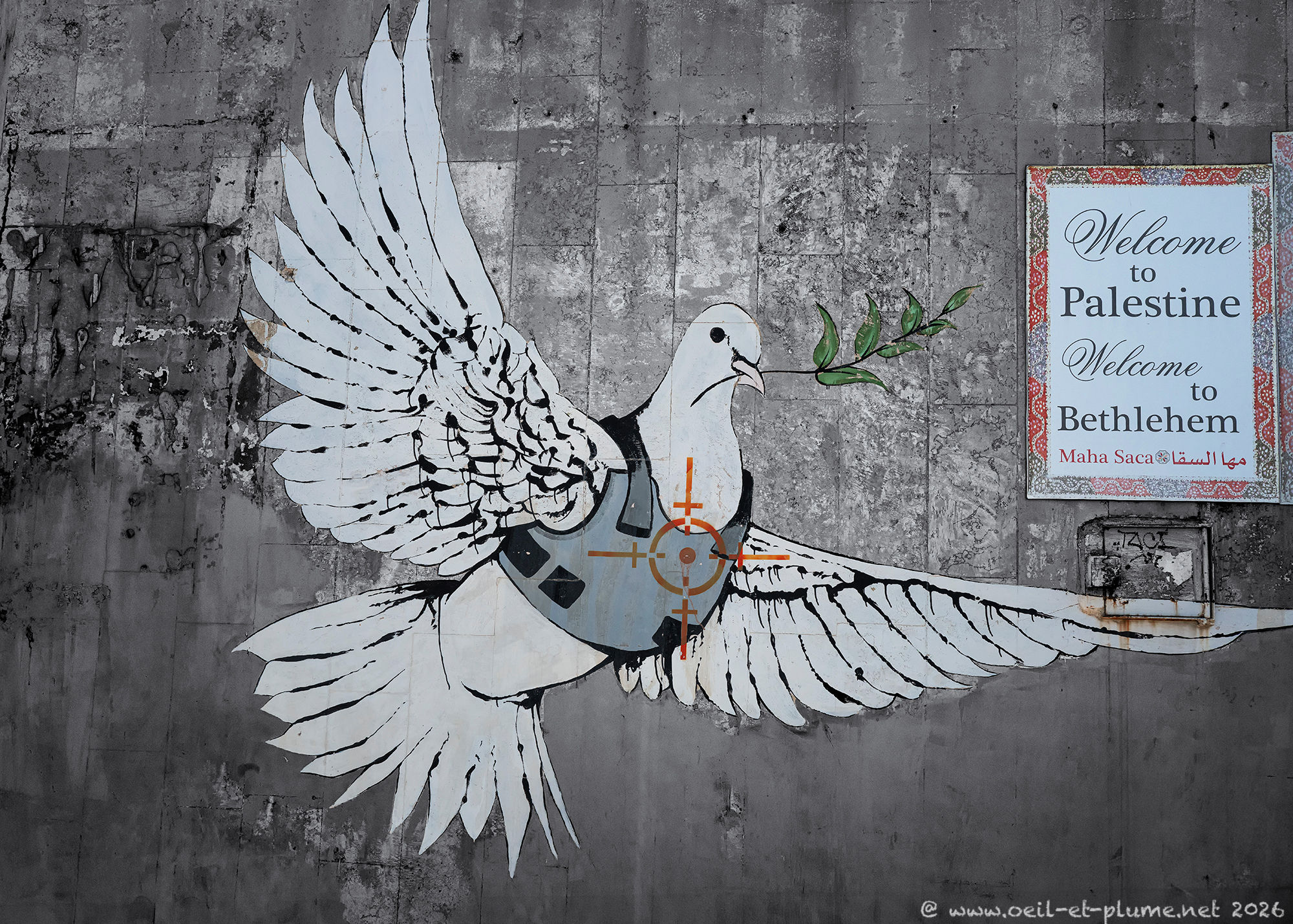
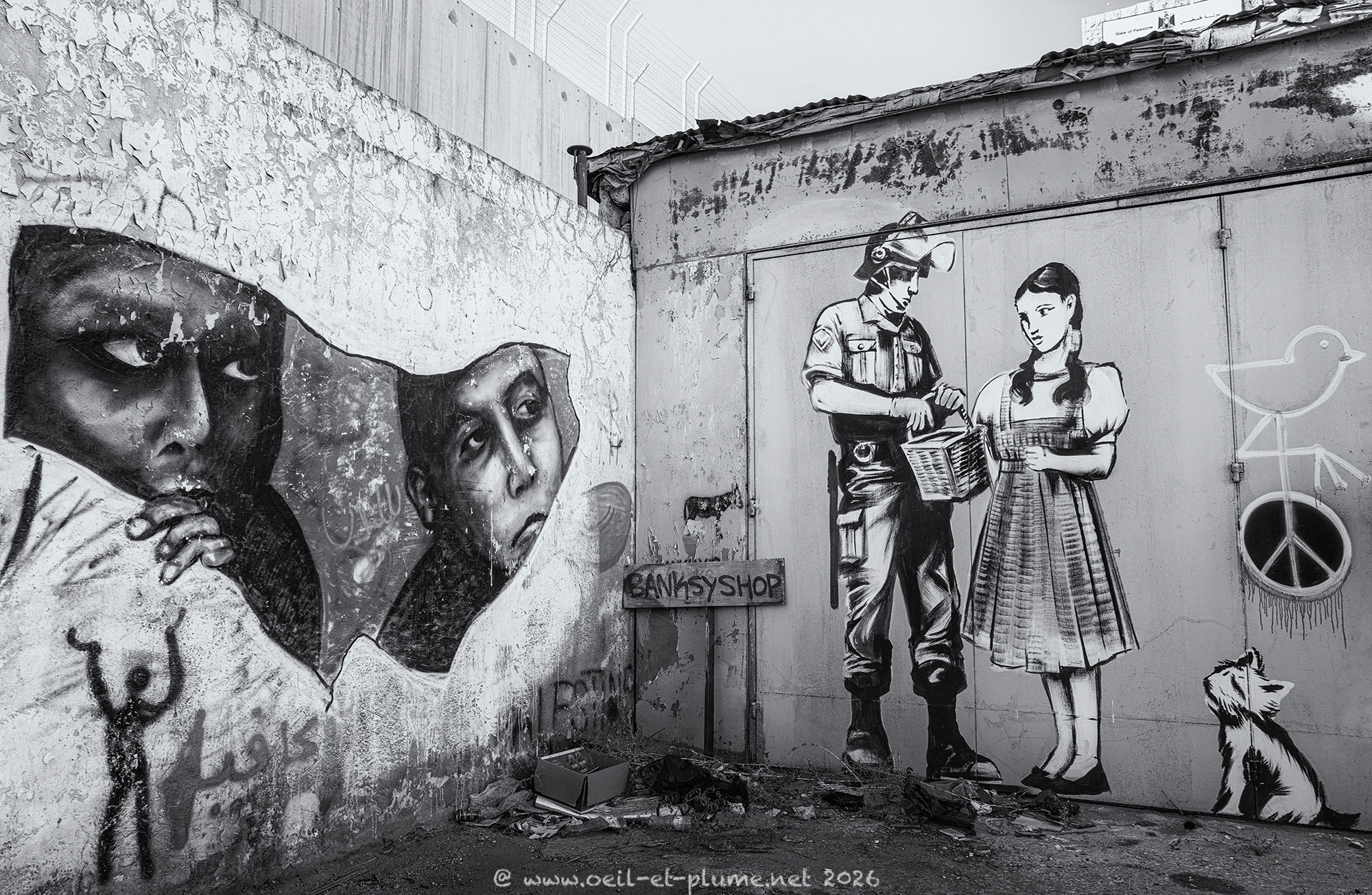
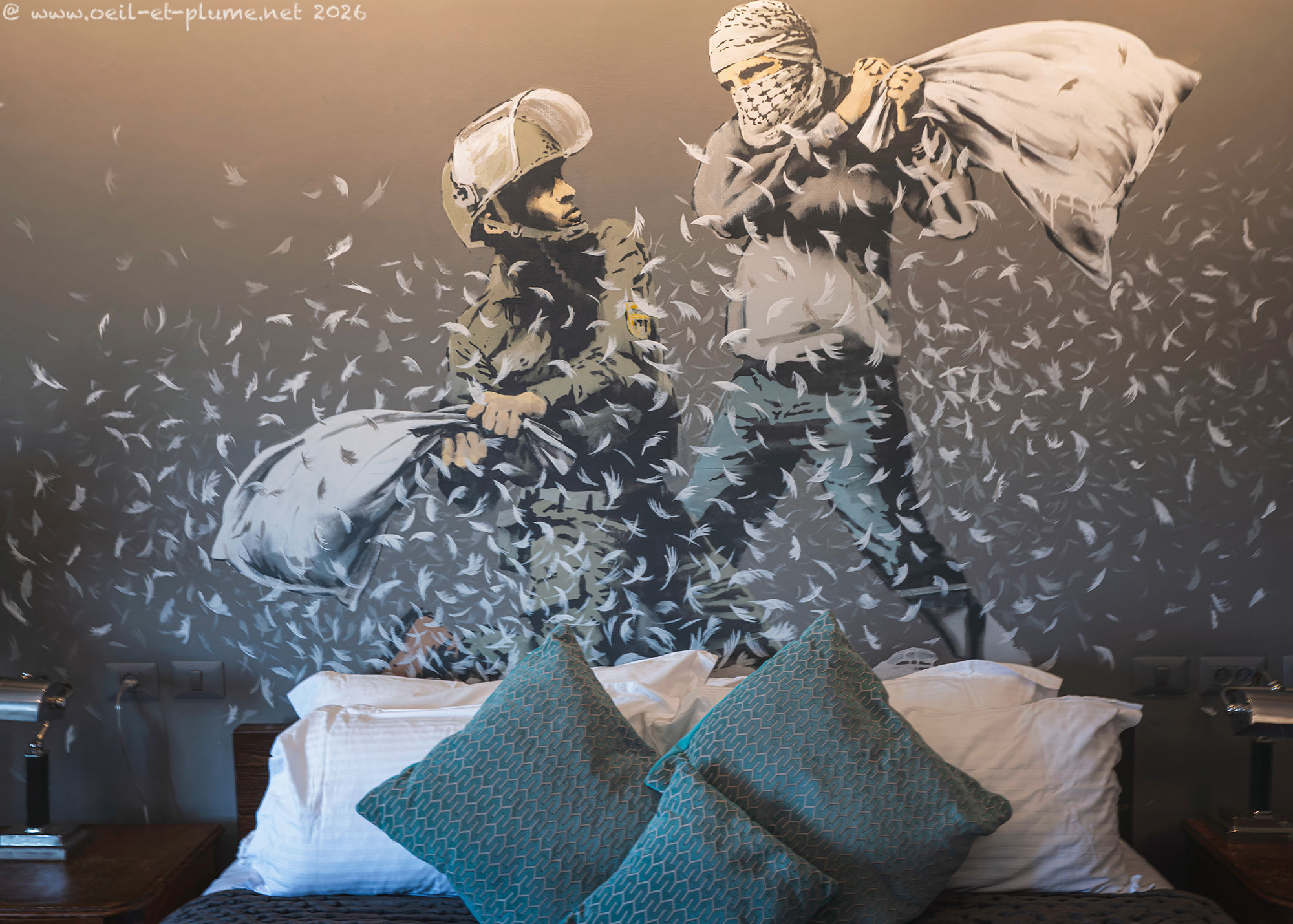
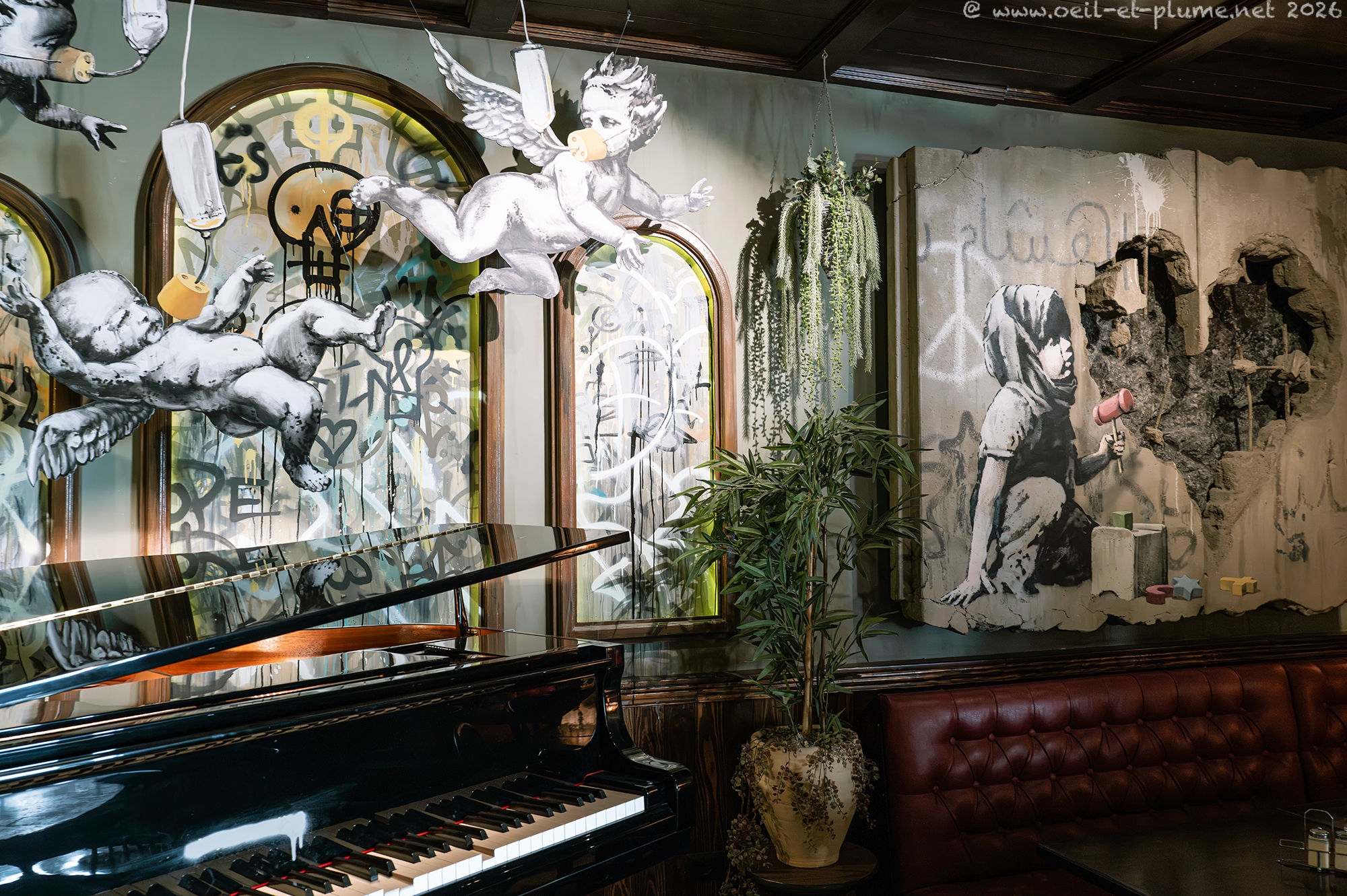
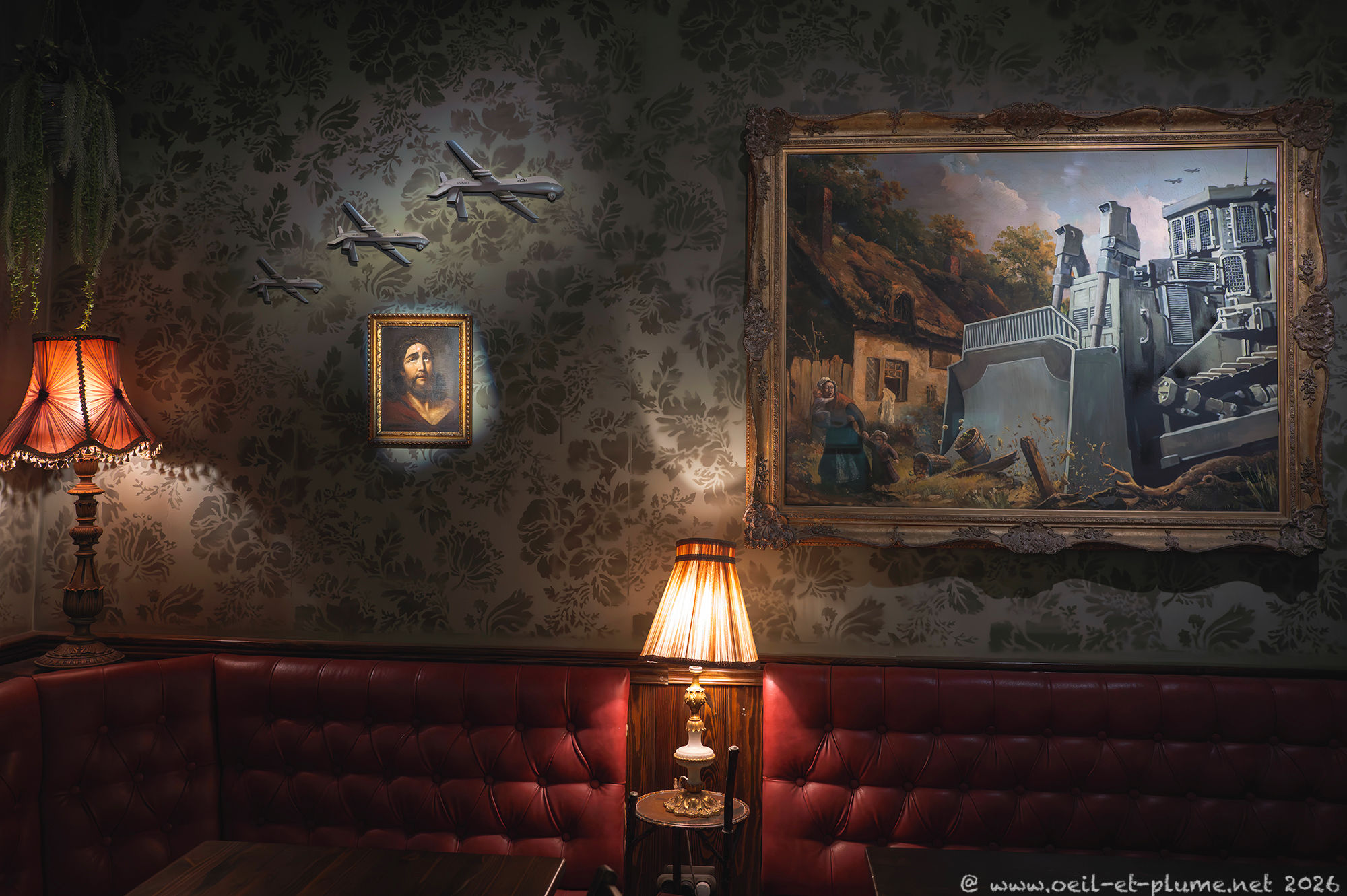
Bansky, the enigmatic and anonymous street artist known globally for his distinctive stencils and subversive political messages, has traveled to the West Bank multiple times in the last decades, leaving behind a trail of thought-provoking artwork. His pieces highlight the daily struggles of the Palestinian people, and more broadly the human cost of the ongoing occupation.
Bansky’s related art pieces were created not only on various buildings but also on the West Bank barrier, transforming the concrete wall from a symbol of division into a site of international protest and solidarity. His initiative was followed by numerous Palestinian and international artists. Banksy also worked inside the former Palestine Hotel located next to the wall in Bethlehem. The hotel literally overlooks the West Bank barrier. By placing his art in such a charged environment, Banksy consolidated and amplified the Palestinian narrative of resistance.
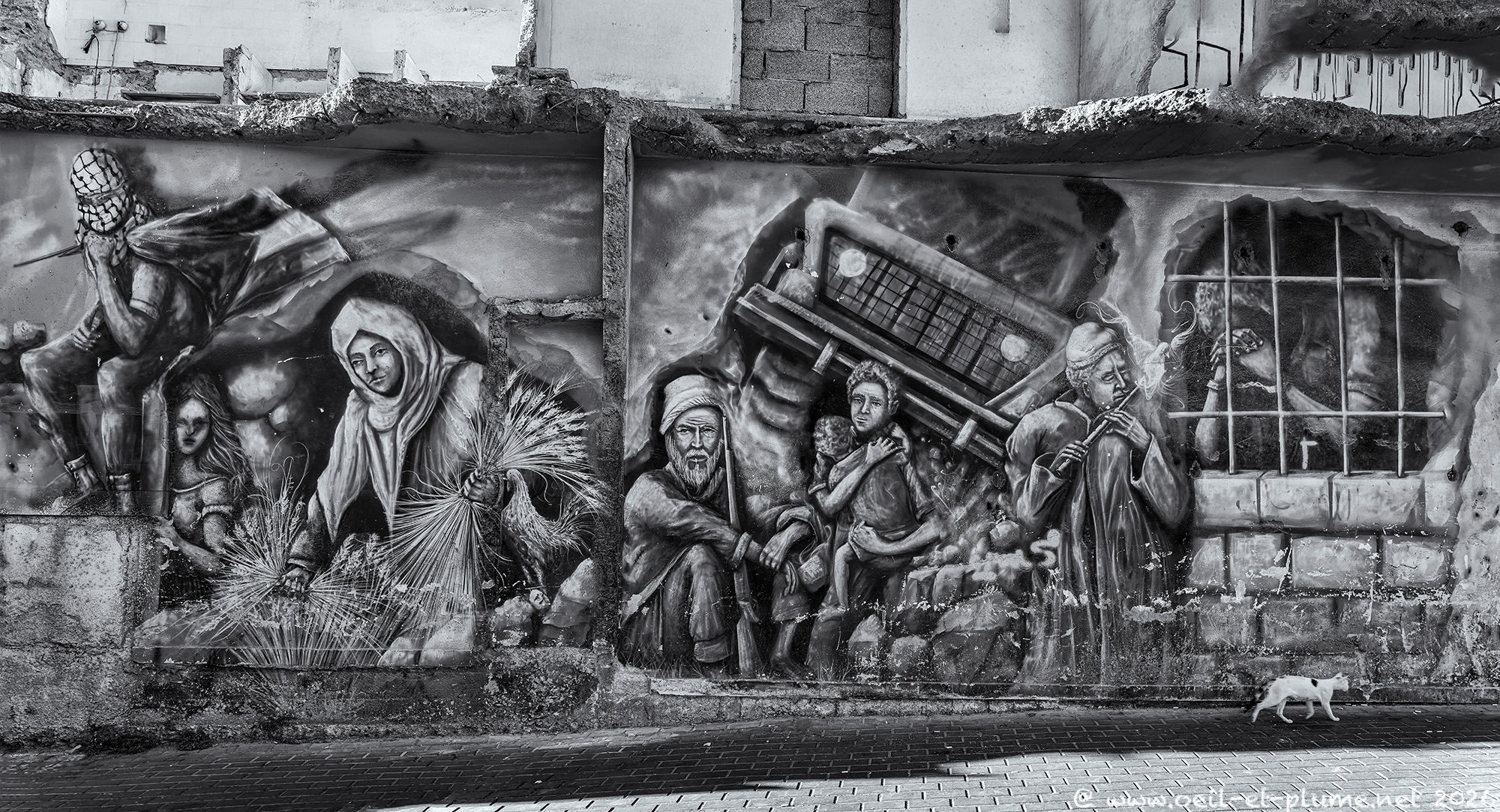
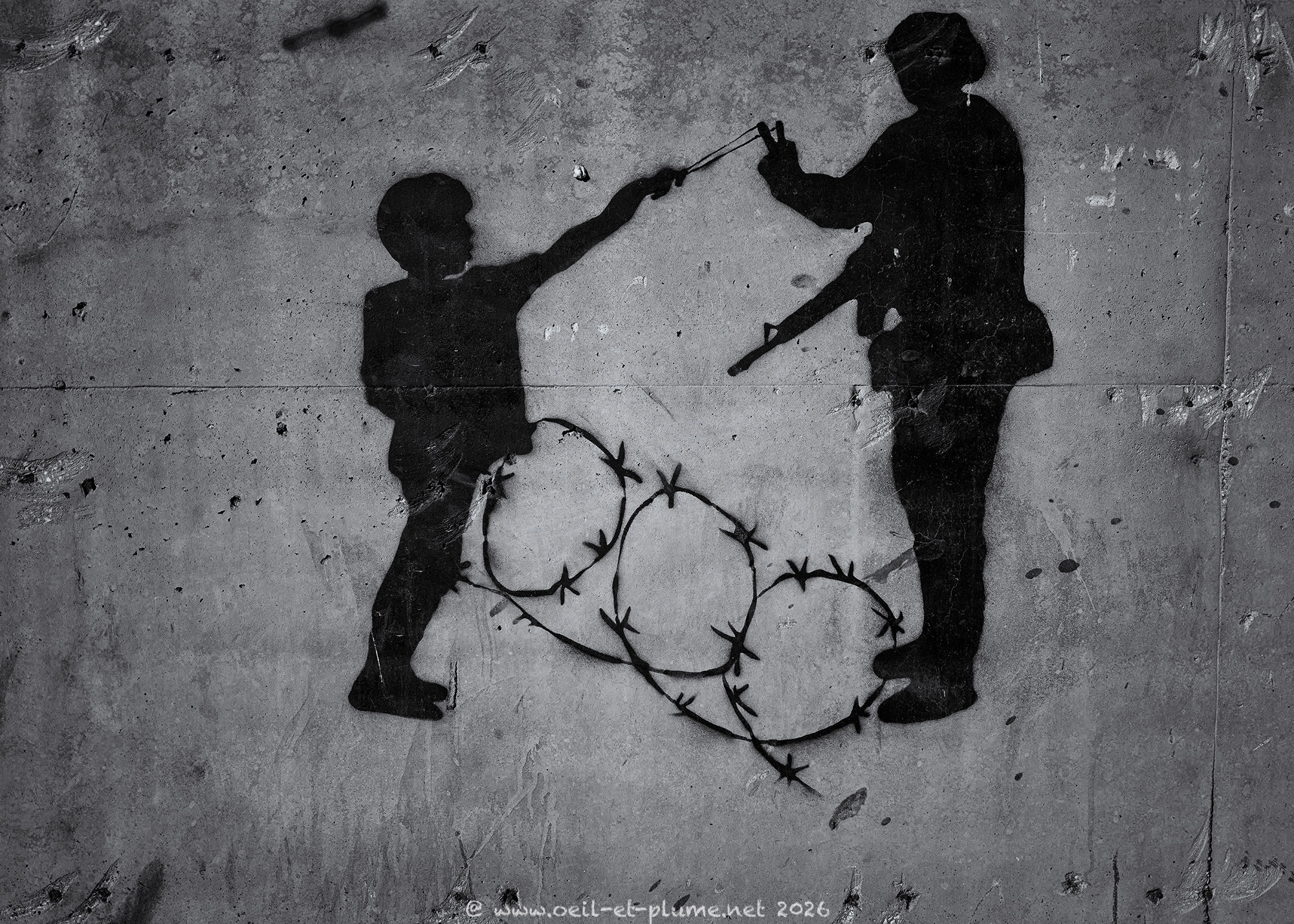
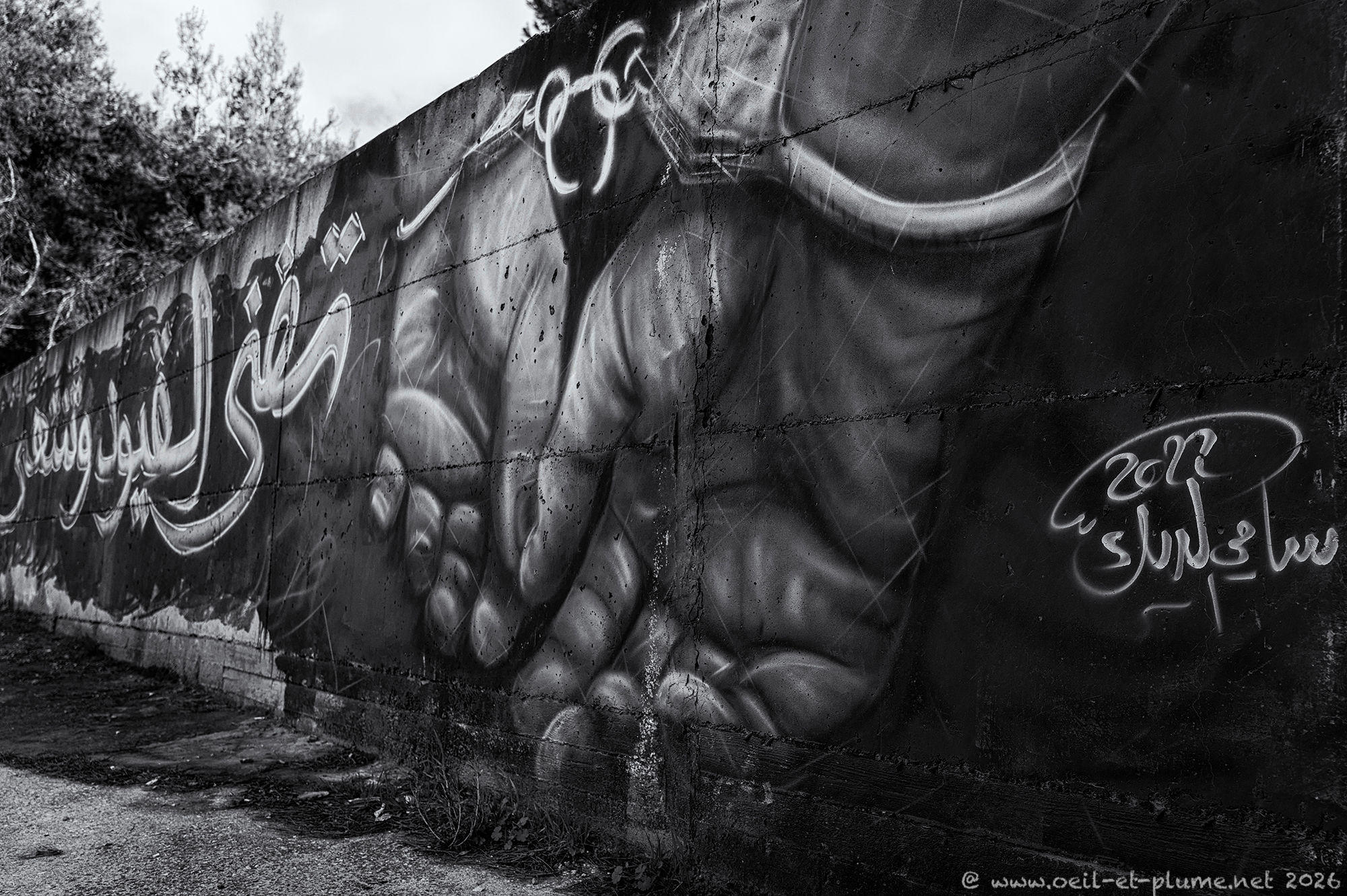
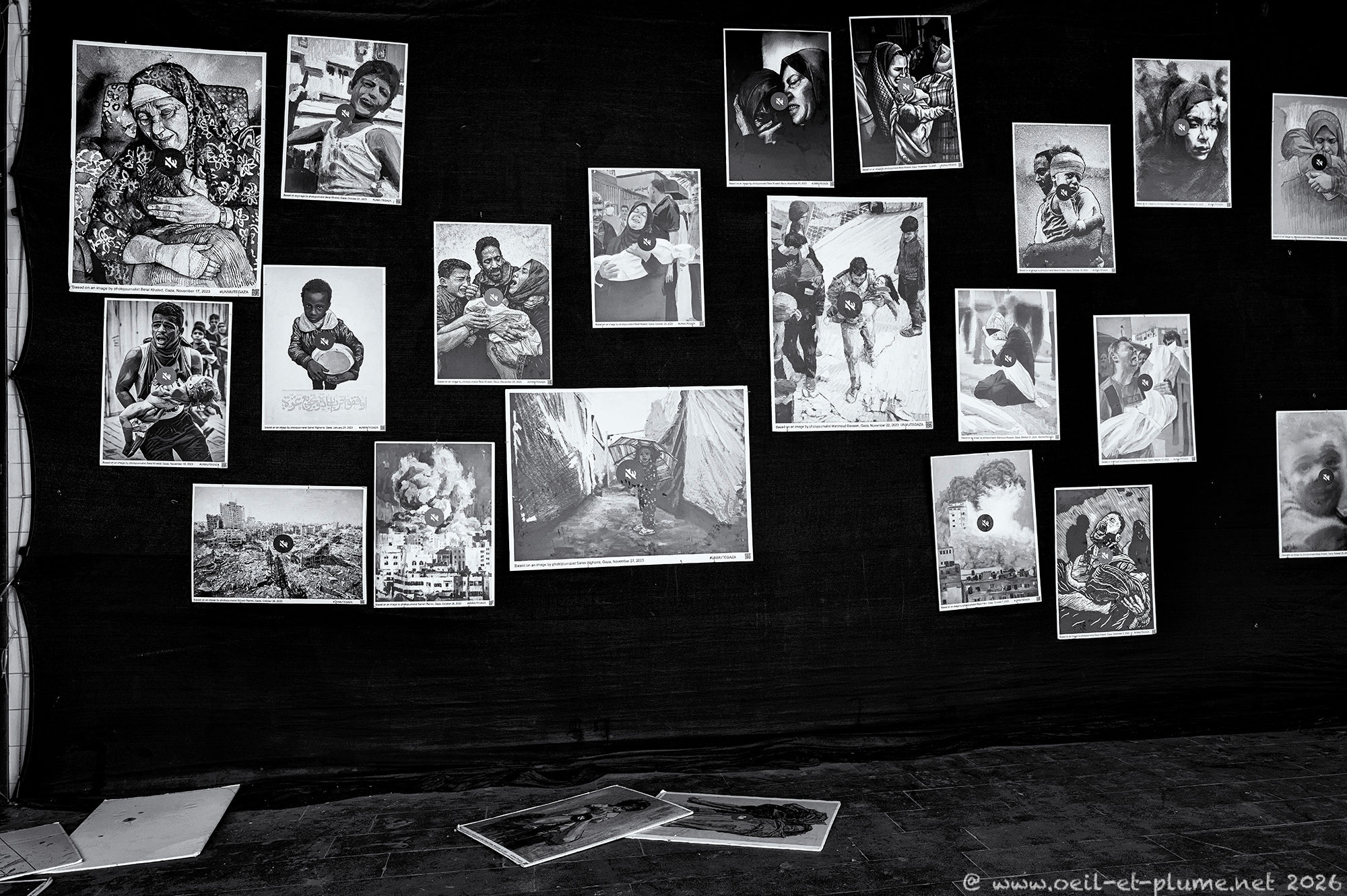
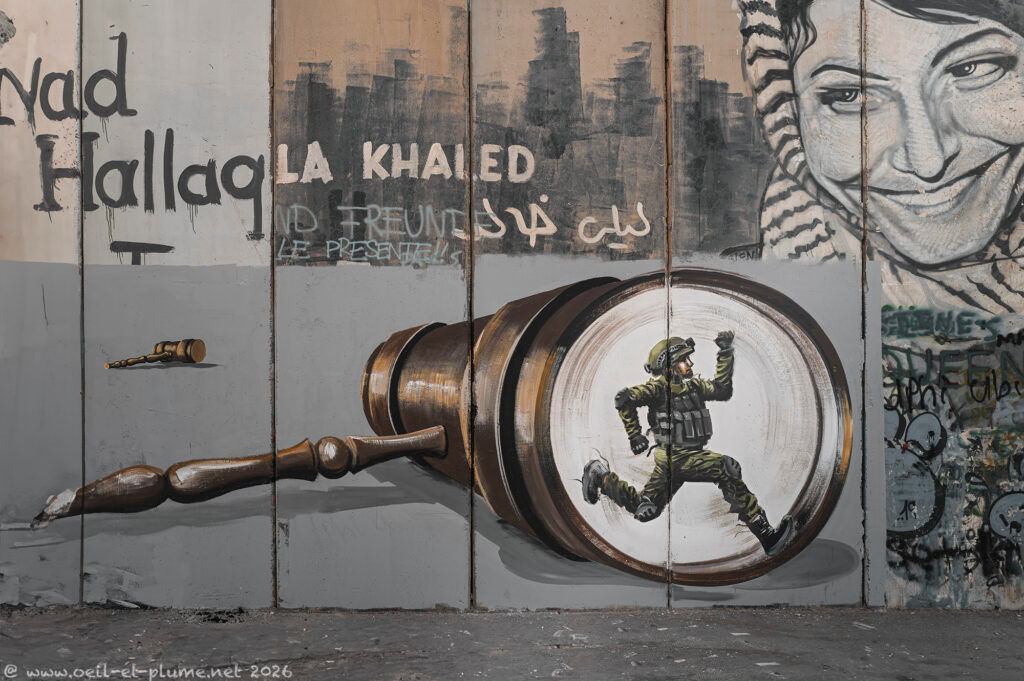
A few Palestinian graffitis call clearly for armed resistance. Armed struggle is depicted as a means to ensure the physical and political survival of Palestinian people. It is presented mostly in an idealised or symbolised perspective. Murals flag the strong imbalance of warfare means, such as a slingshot against an assault rifle or an armoured vehicle. Furthermore, they depict the humanitarian plight of Palestinian militants, including their deprivation of liberty under Israeli custody. Last but not least, graffitis call for stronger justice mechanisms to protect Palestinians against Israeli military.
Together
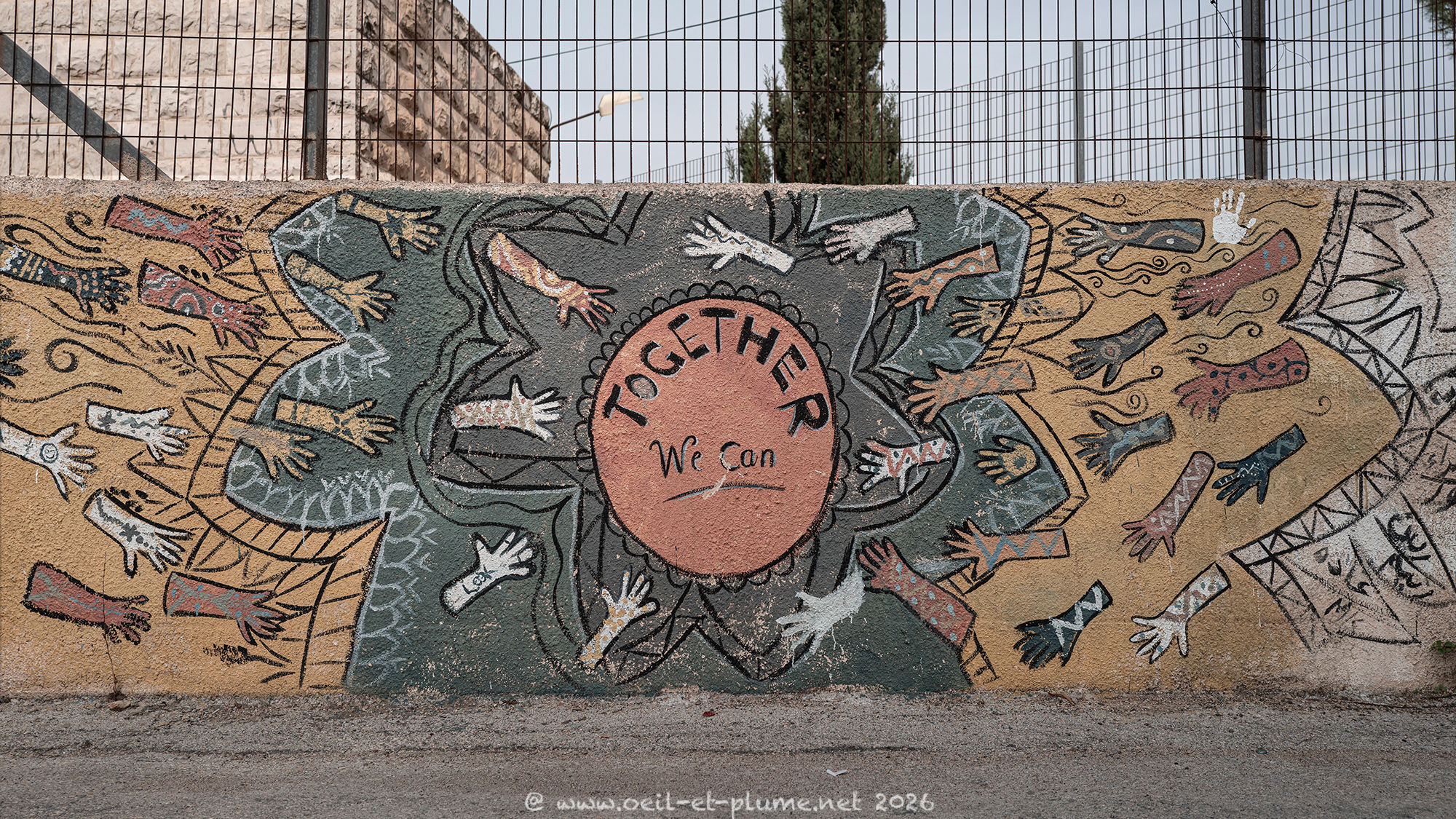
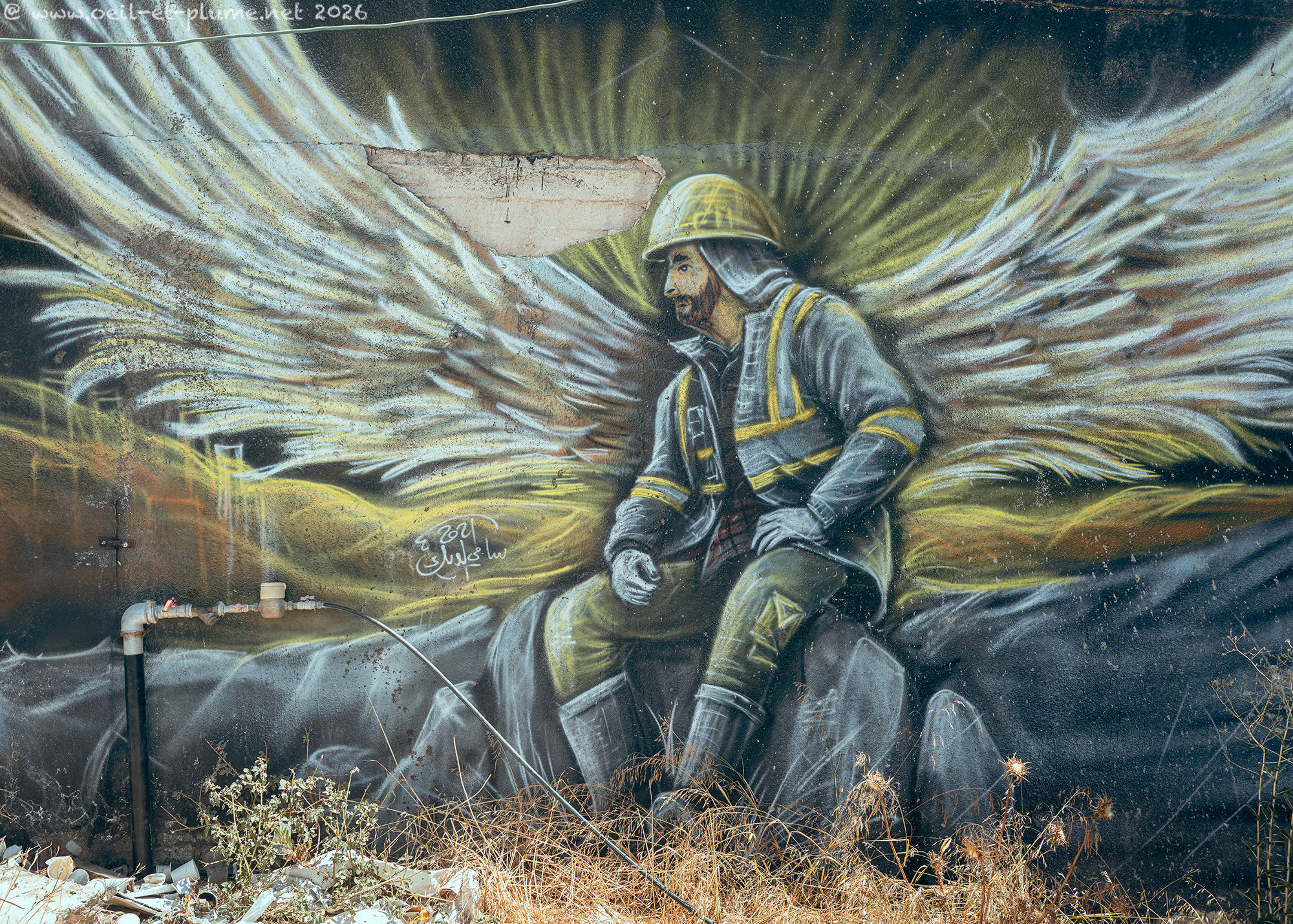
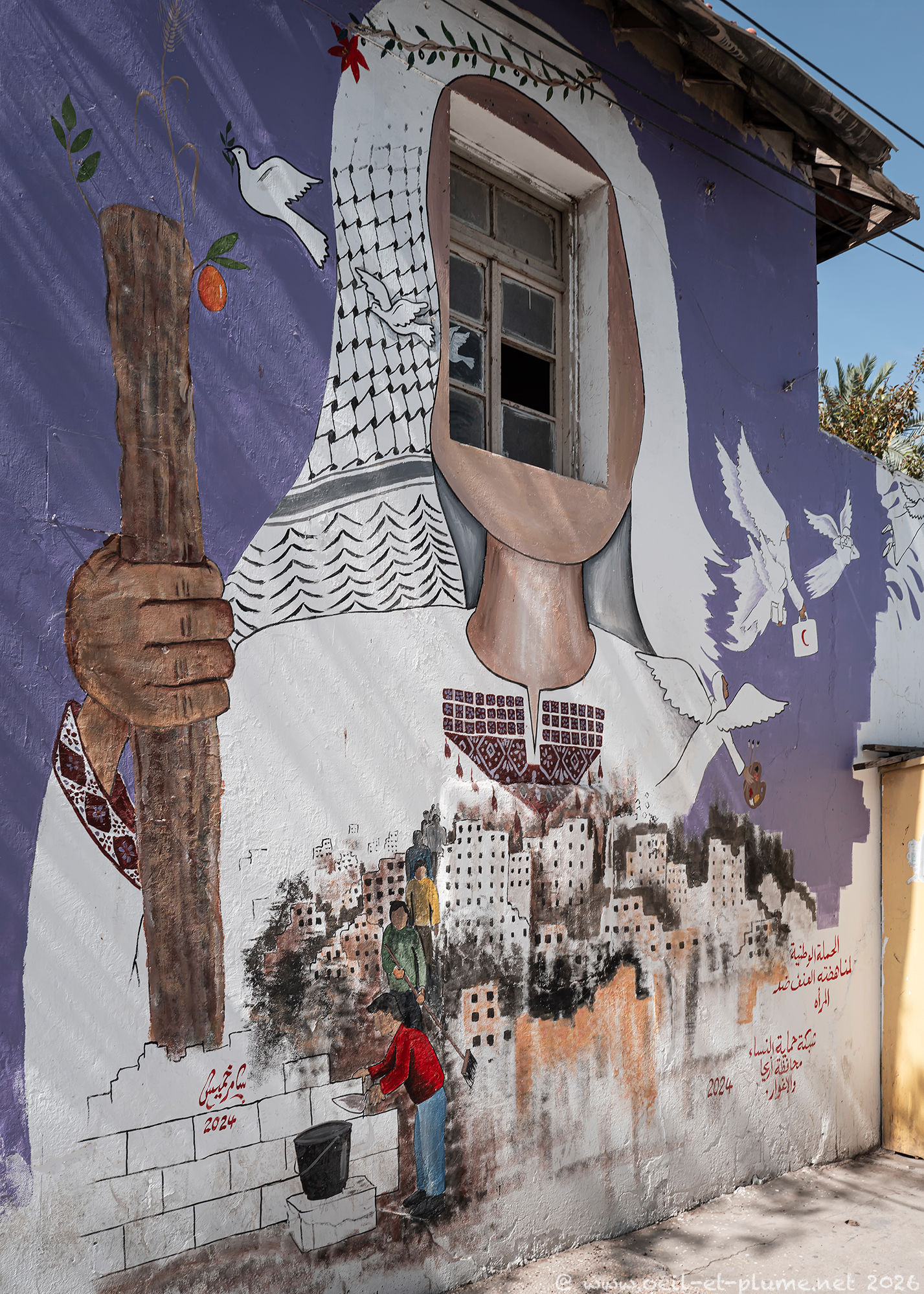
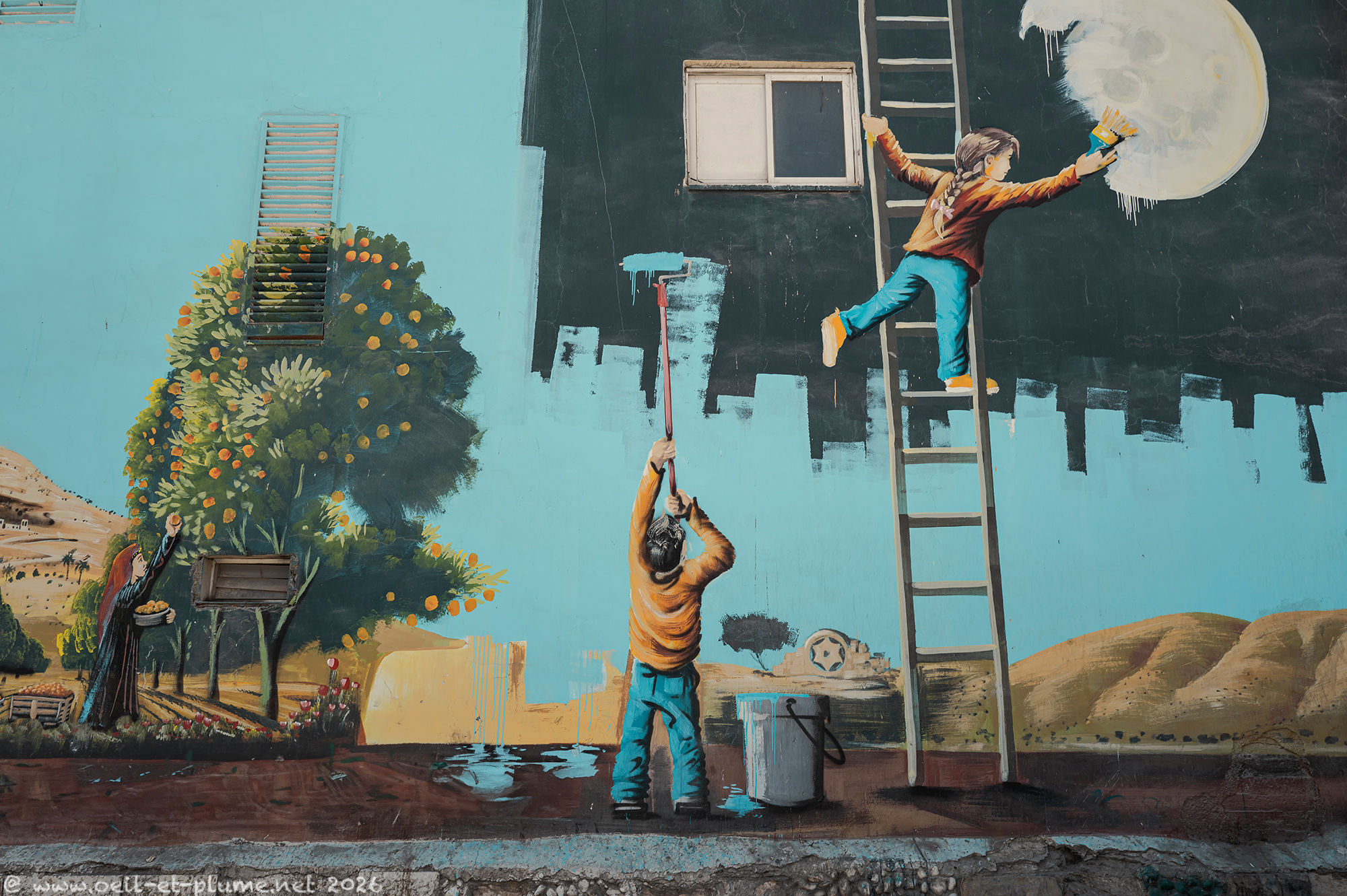
In such a tense and even depressing context, it was challenging to identify more positive messages conveyed by Palestinian artists. In the short term, they call for solidarity, both amongst Palestinians and between them and others living abroad. People risking their lives to rescue and help others are praised for the humanitarian values promoted. Hope is still to be found here and there, rarely elaborated in its concrete modalities. Murals urge for a lasting peace to be forged in a way or another, to allow Palestinian to build their life anew. Some graffitis call for a stronger unity amongst Palestinians. By doing so, Palestinians may get stronger international support to broke a sustainable political solution. Together, we can.
Cheers,
