
Disputes between the three monotheist religions in the Holy Land have been unfortunately a rather constant pattern since ages. As contemporary illustrations of the historical trend, I chose two specific religious sites in Jerusalem and in Hebron with an emphasis on the Jewish and Muslim perspectives.
Temple Mount / Noble Sanctuary, Jerusalem
The Temple Mount is a hill in the Old City of Jerusalem which is of profound religious significance for the three Abrahamic religions. It is central to the identities of Judaism, Christianity, and Islam.
According to the Hebrew Bible, King Solomon commissioned the building of the First Temple in the 10th century BCE, before its destruction by the Babylonians in the 6th century BCE. Erected in around 516 BCE and expanded by Herod the Great in around 18 BCE, the Second Temple was sacked and destroyed by the Romans in 70 CE. Both structures are believed to have been erected on the top of the Temple Mount, although their exact location on the top hill remains controversial.
Since the first Muslim conquest of Jerusalem in 637, the Temple Mount is home to an Islamic compound named Al-Aqsa or Noble Sanctuary. The present site is a flat plaza surrounded by high retaining walls (including the Western or Wailing Wall), which were originally built by Herod the Great. The plaza is dominated by two monumental structures originally built respectively in the 7th and 8th centuries: the shrine of the Dome of the Rock and the Al-Aqsa Mosque. Al-Aqsa Mosque is the third holiest place for Muslims after Mecca and Medina.
Jewish and Muslim communities have long rivalled over the access to the Temple Mount, prayer times in the Noble Sanctuary and sovereignty over the site. Those tensions rose sharply in the early 20th century, culminating in violent episodes. After the 1948 war, East Jerusalem was occupied by Jordan who expelled all the Jews from the Old City. Israel regained control of the area during the 1967 war.
Since 1967, a fragile agreement framed the pilgrims’ access to the Temple Mount: Jordan’s Jerusalem Islamic Waqf (Islamic charitable trust) administers daily religious and civil affairs inside the Al-Aqsa compound, while the Israeli police controls security and external access.
Non-Muslims including Jews are permitted to visit the Temple Mount but historically have been restricted from praying there to prevent conflict. Worth noting here that some Orthodox Jews refrain from visiting the hill top to avoid stepping over of the remains of the former Jewish Temples.
Jews have full prayer rights at the bottom of the Western Wall. In recent years, there has been a growing movement of Jewish activists demanding to pray on the Mount itself – demands often backed by Israeli political and security forces. In parallel, Israeli security forces have stepped up their restrictions over the access to the Al-Aqsa compound for Palestinians.
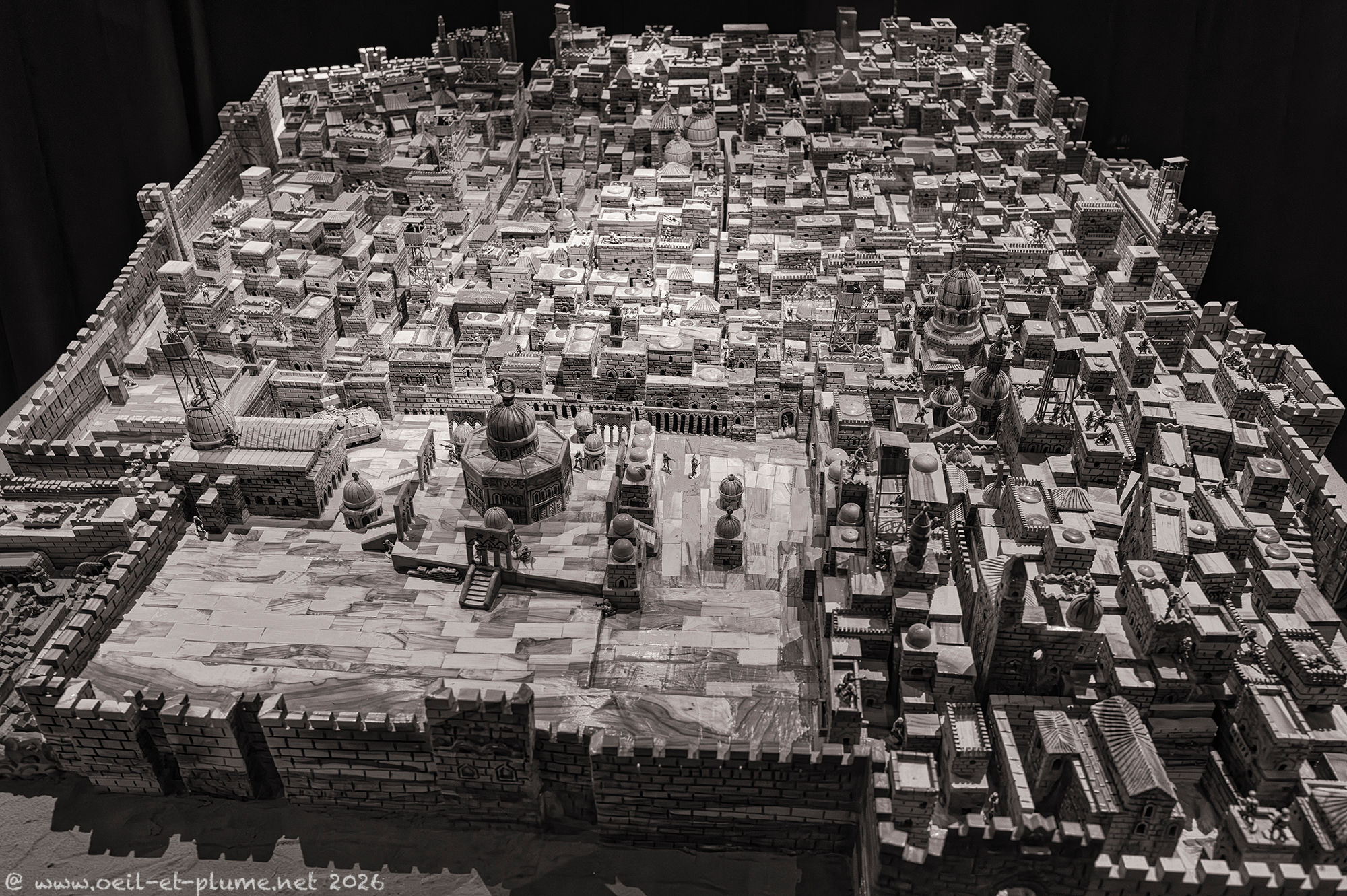
Presented in my previous post, the caustic artist Banksy illustrated the ongoing trend visually. Having acquired a wooden miniature representation of Old Jerusalem created by the late Palestinian artist Tawfiq Salsaa, he added small pieces of military infrastructure and equipment as well soldier figurines. During my visit to the Temple Mount, the reality was less grim but still complicated and frustrating for Muslim worshippers.
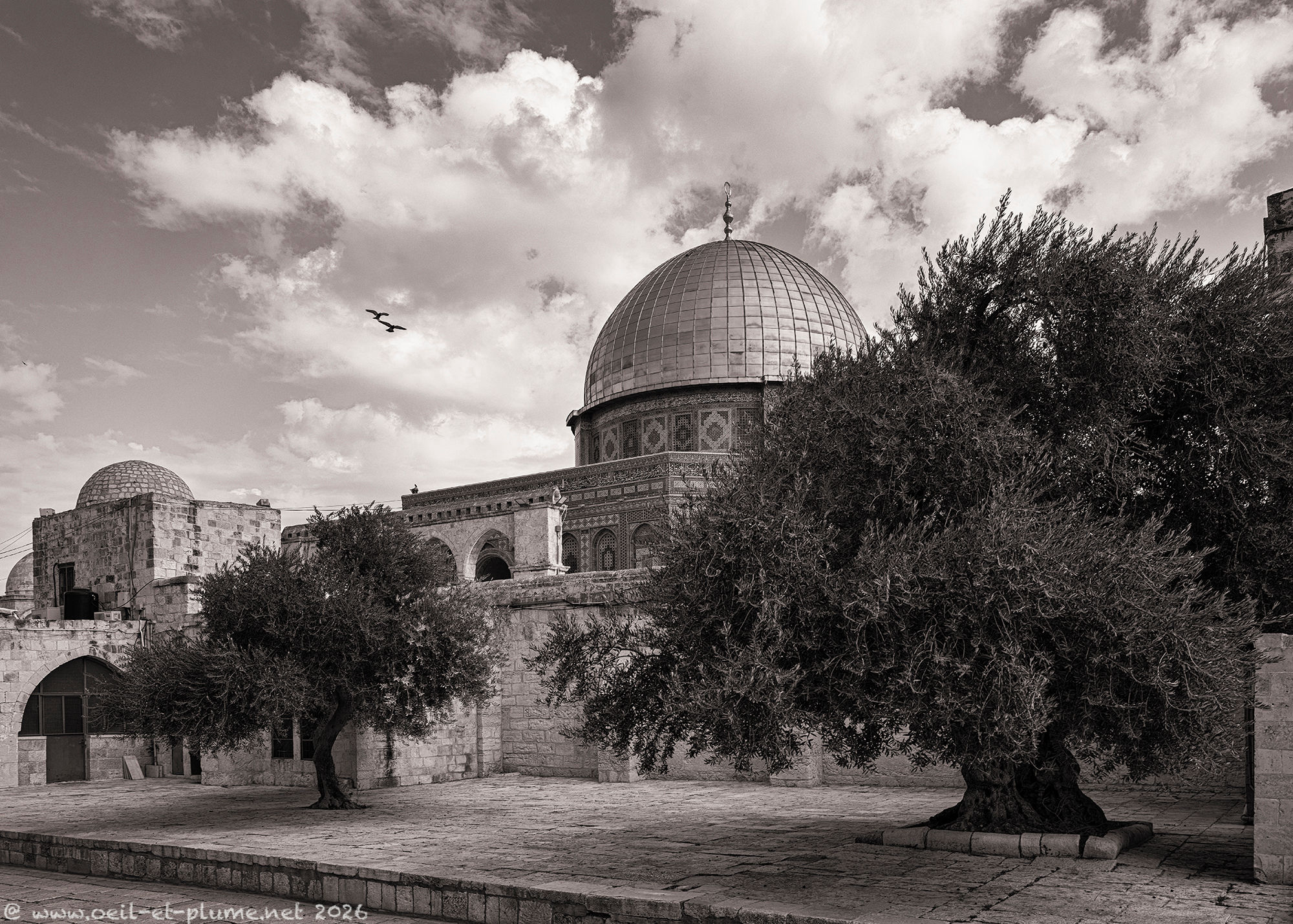
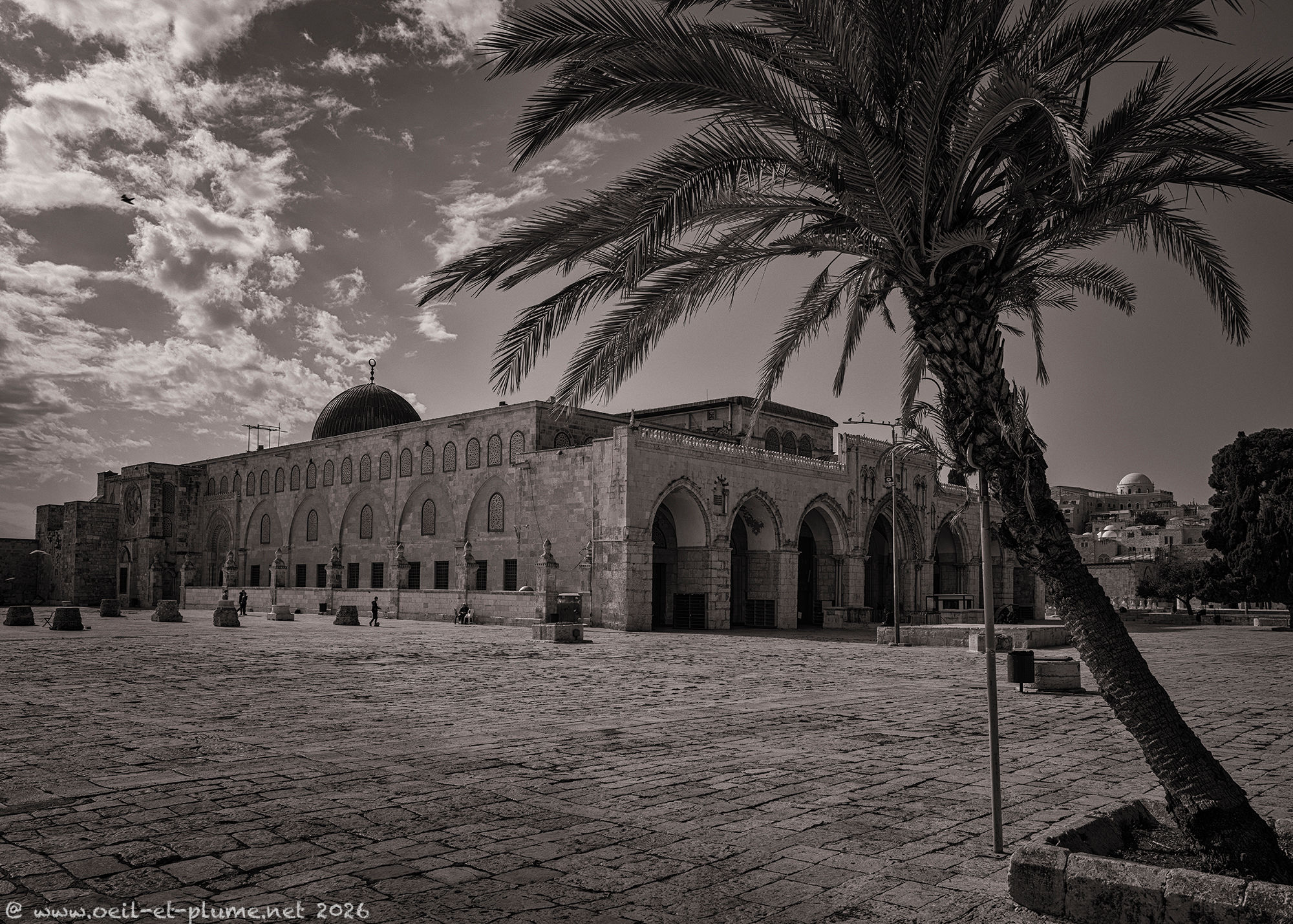
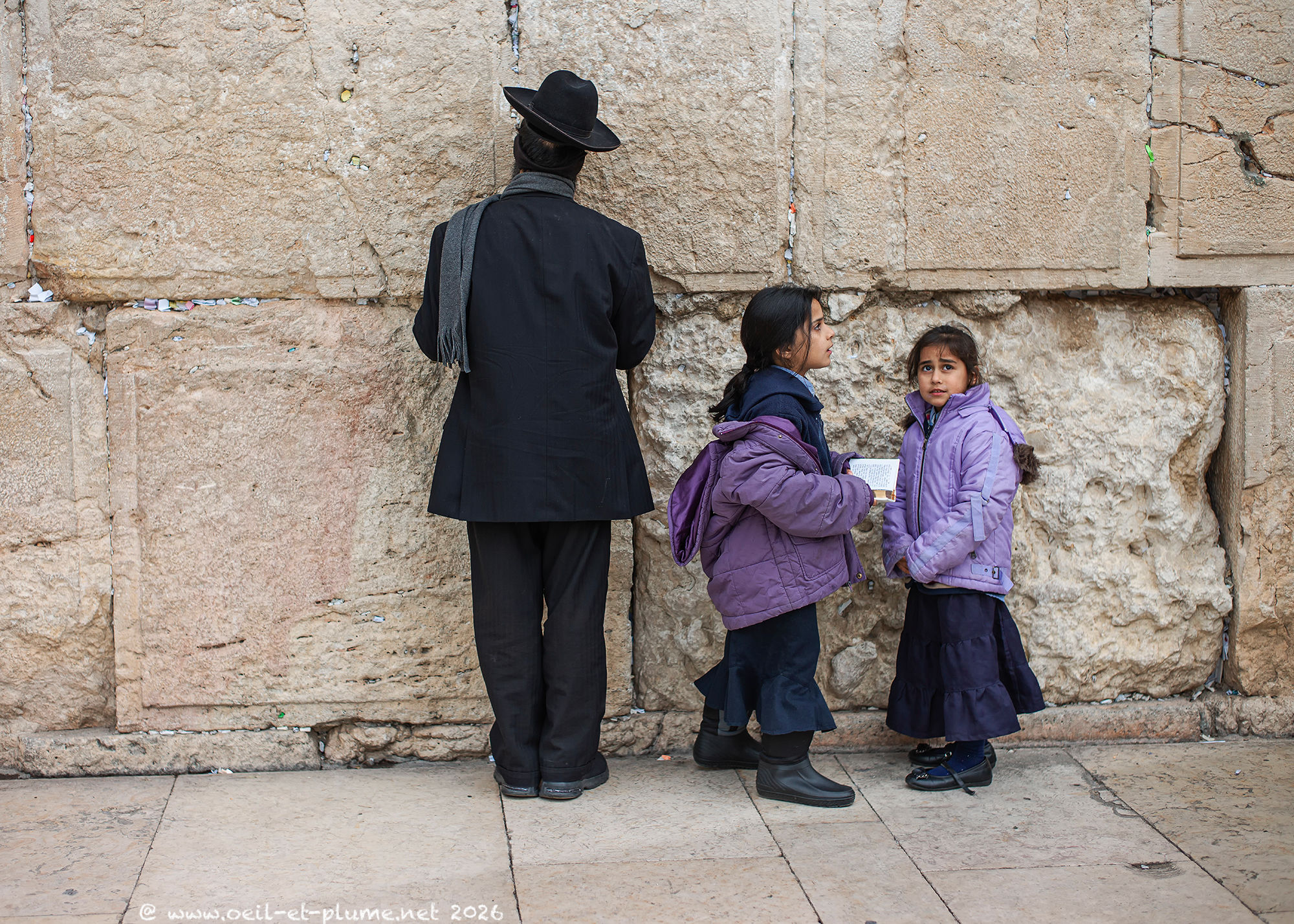
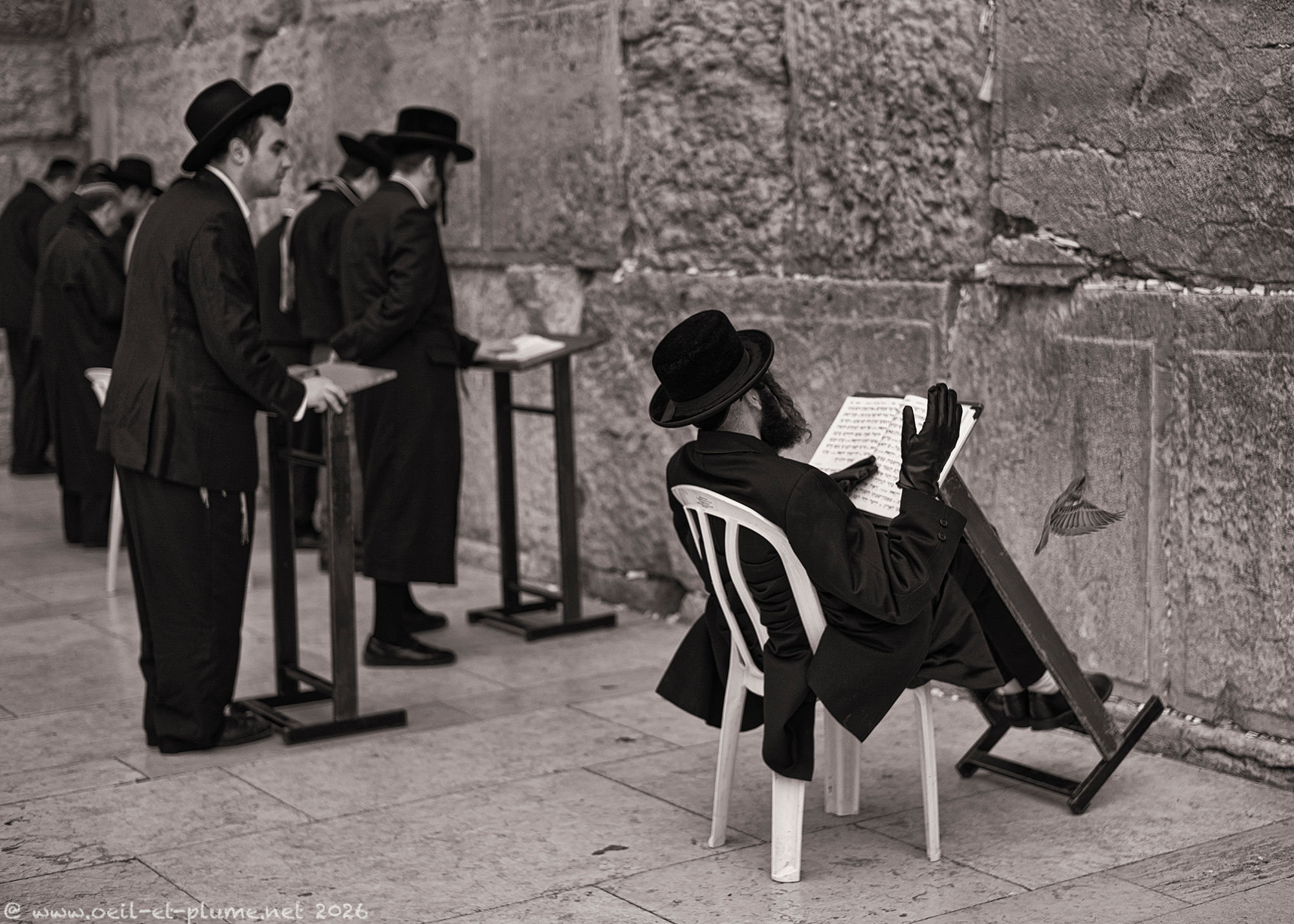
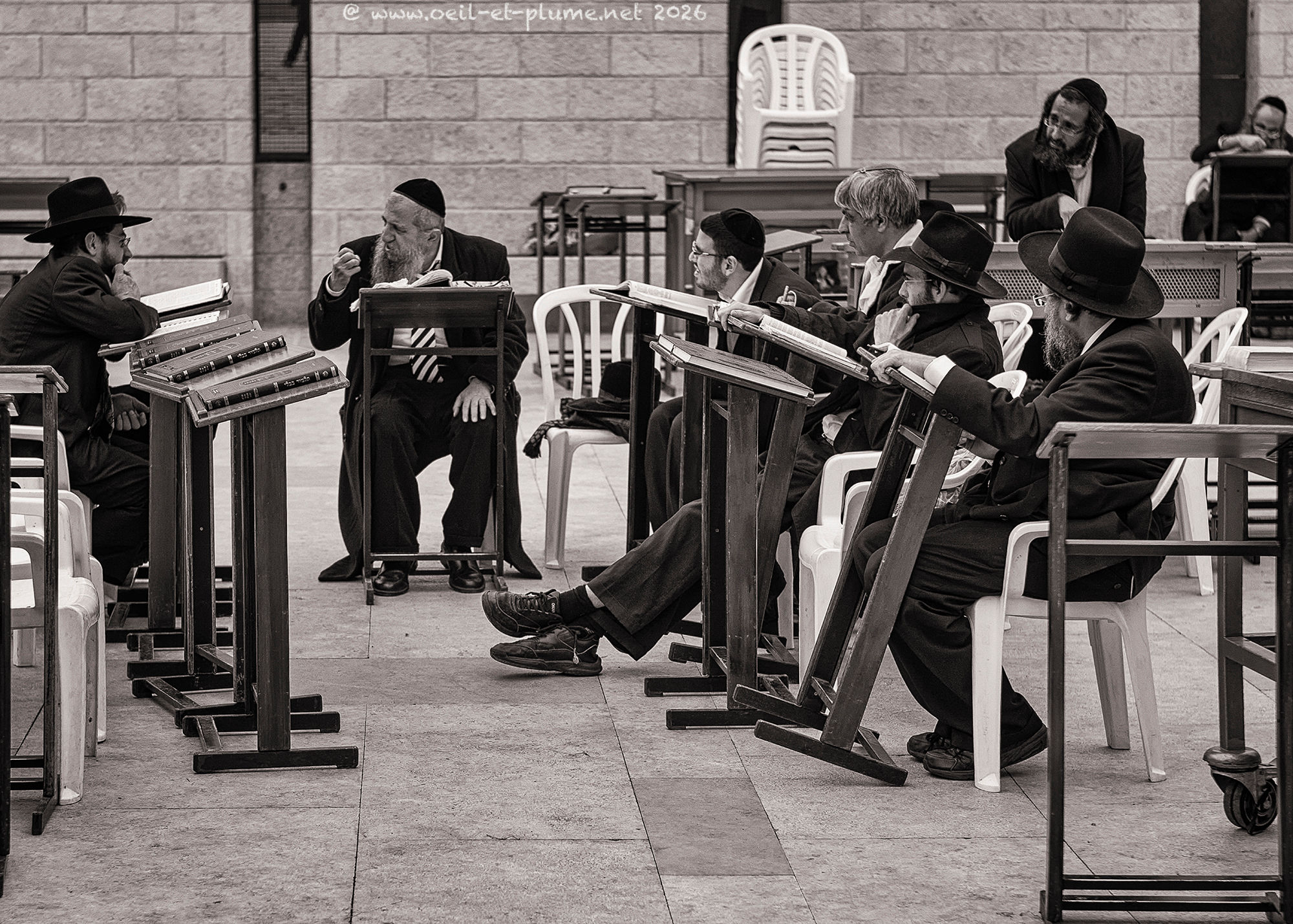
Israeli pressure on the Temple Mount can be observed also in the Old City, the Wailing Wall and the Western Wall plaza. Remnant of the Second Temple, the Wailing Wall constitutes a mourning place for Jews following its destruction in 70 BCE. The Western Wall plaza was created to accommodate Jewish pilgrims. Following the 1967 war, Israel demolished the entire Moroccan Quarter to create the large, open paved area seen today.
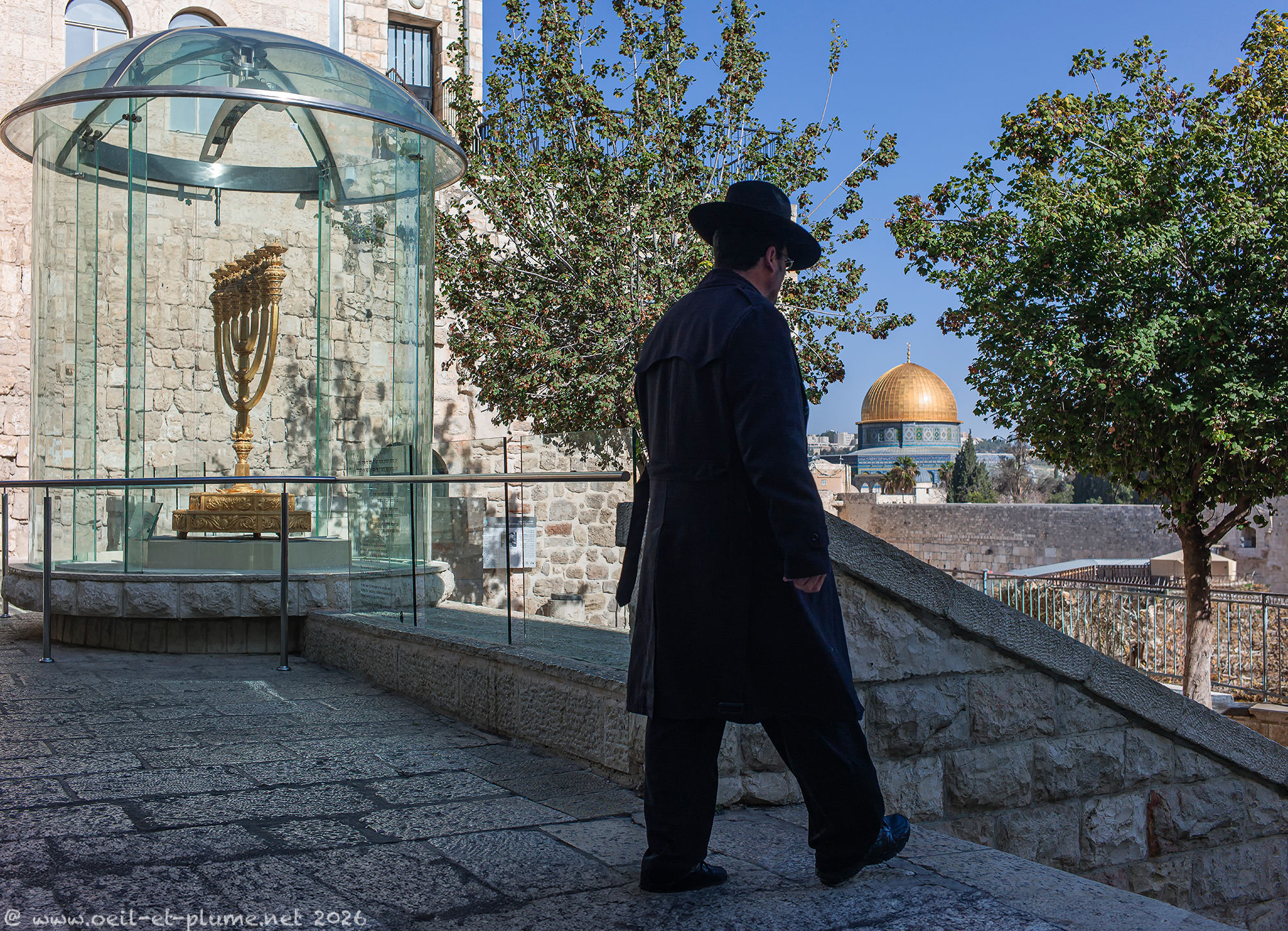
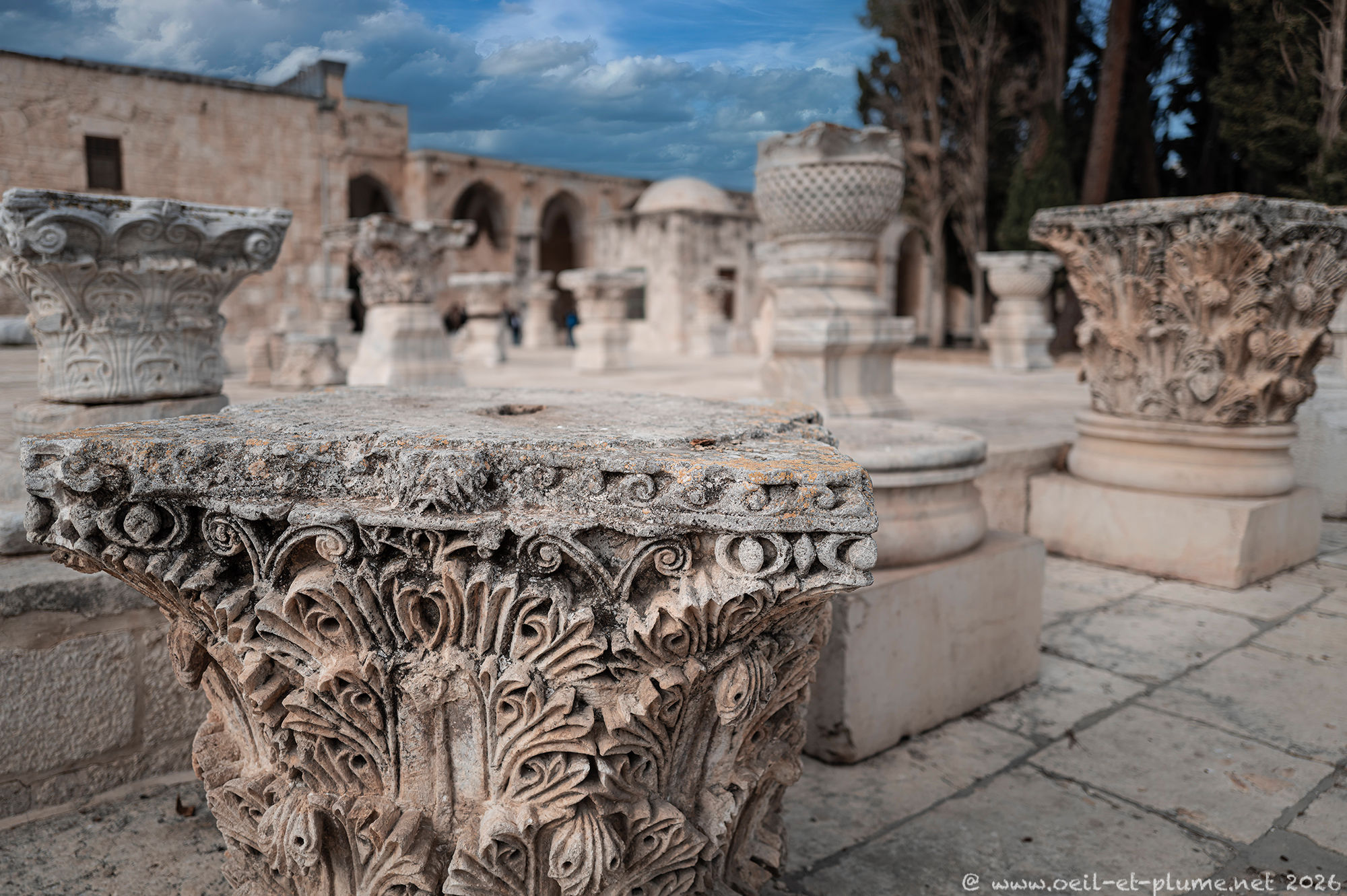
On the top of the Temple Mount, the plaza displays evidence its turbulent history, including stone artefacts of the second-century Roman temple of Jupiter.
My visit in the Temple Mount focussed on the two major pieces of Islamic architecture in the Al-Aqsa compound or Noble Sanctuary. As this is not a piece of documentary photography, I purposefully mingled pictures created inside the Dome of the Rock and inside Al-Aqsa Mosque to interpret both structures together, specifying a few elements of each structure whenever deemed necessary.
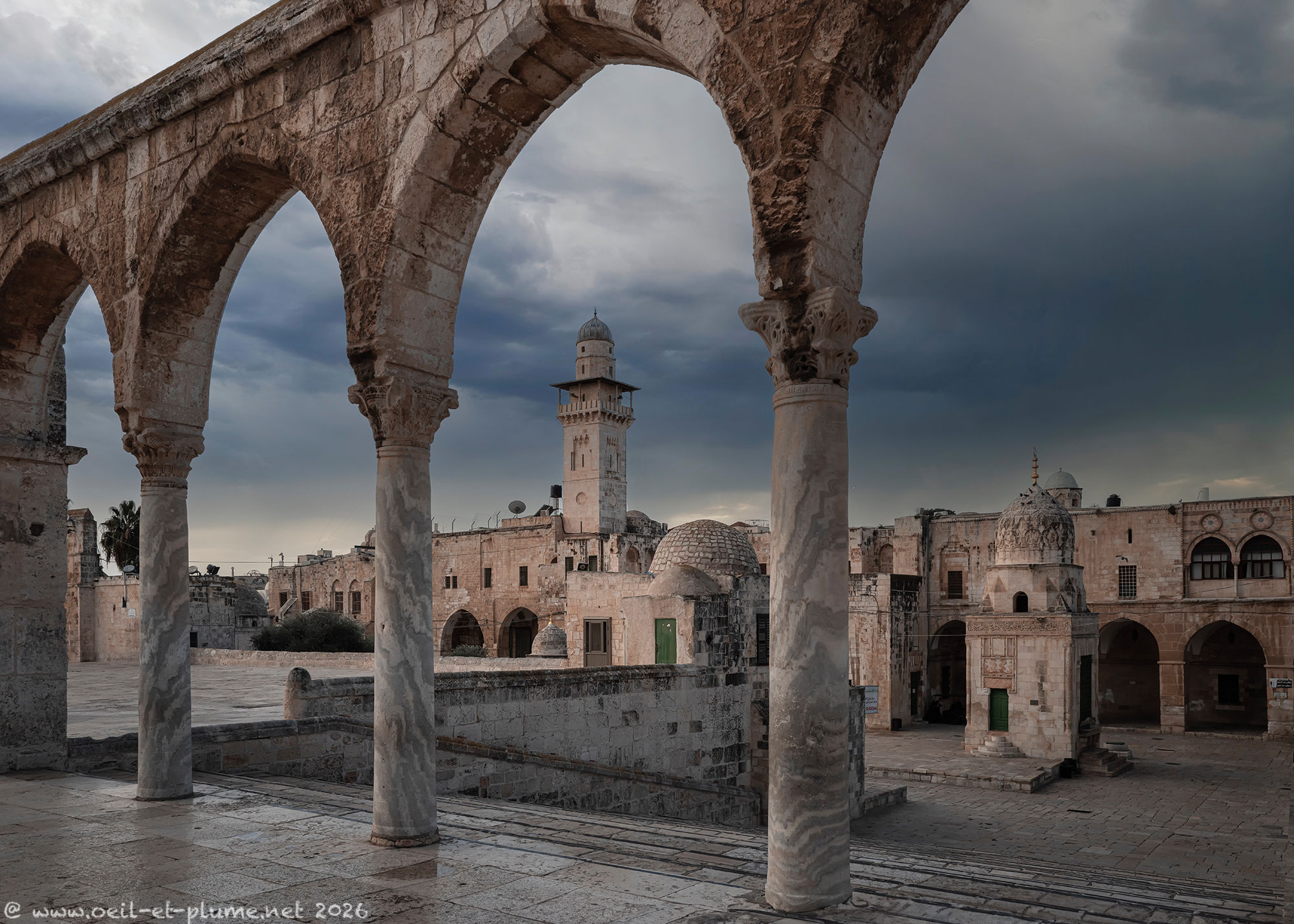
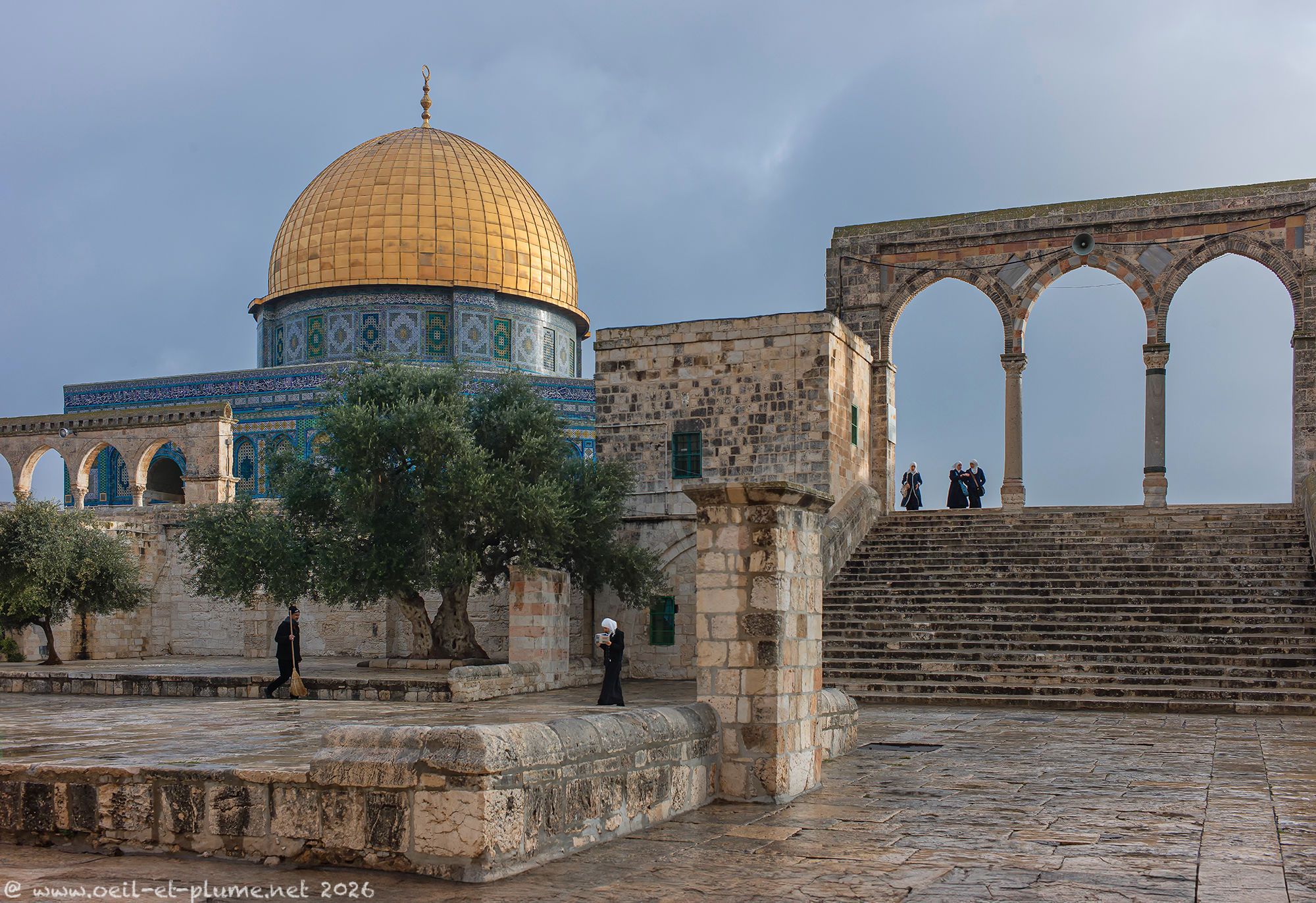
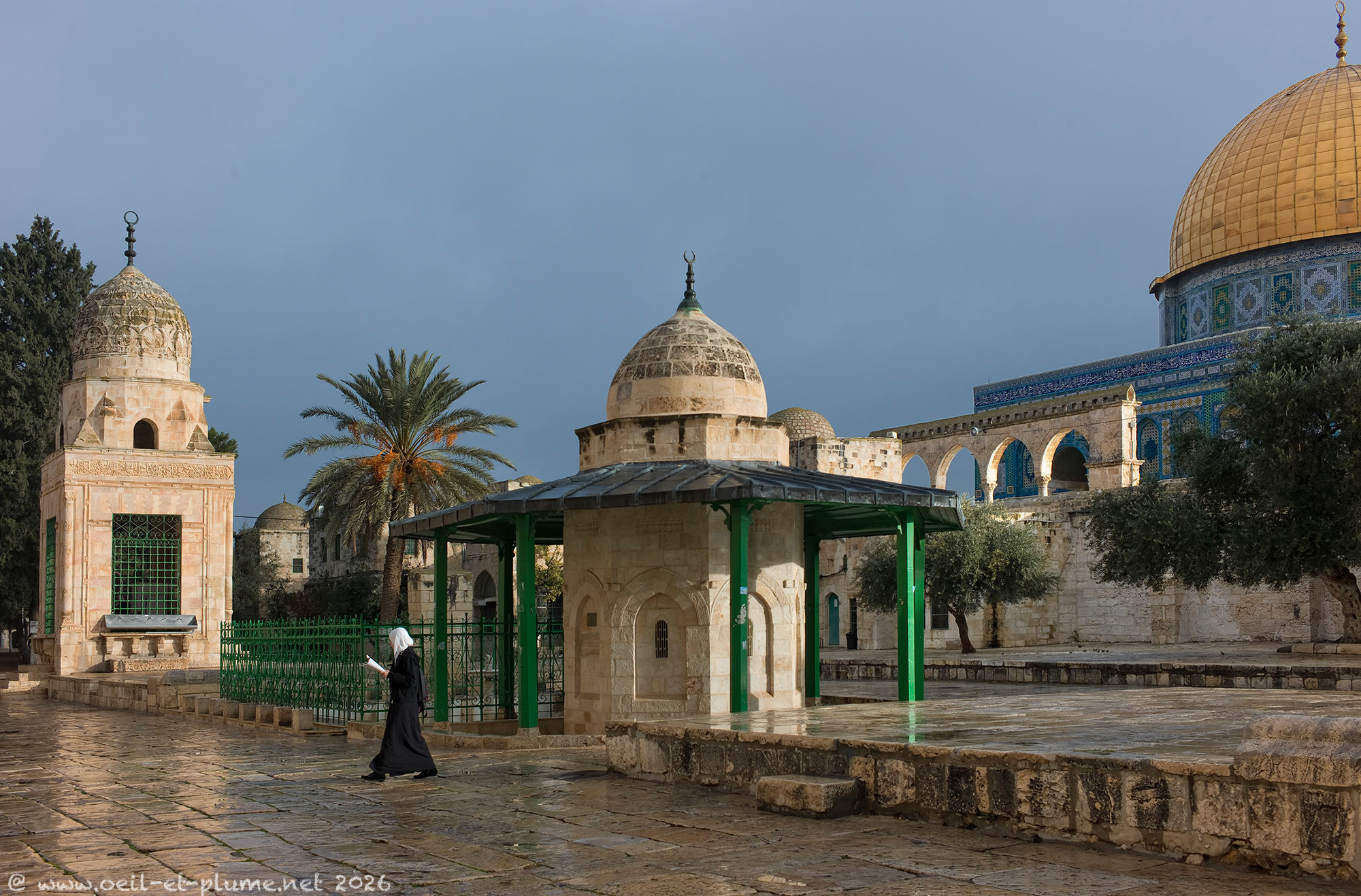
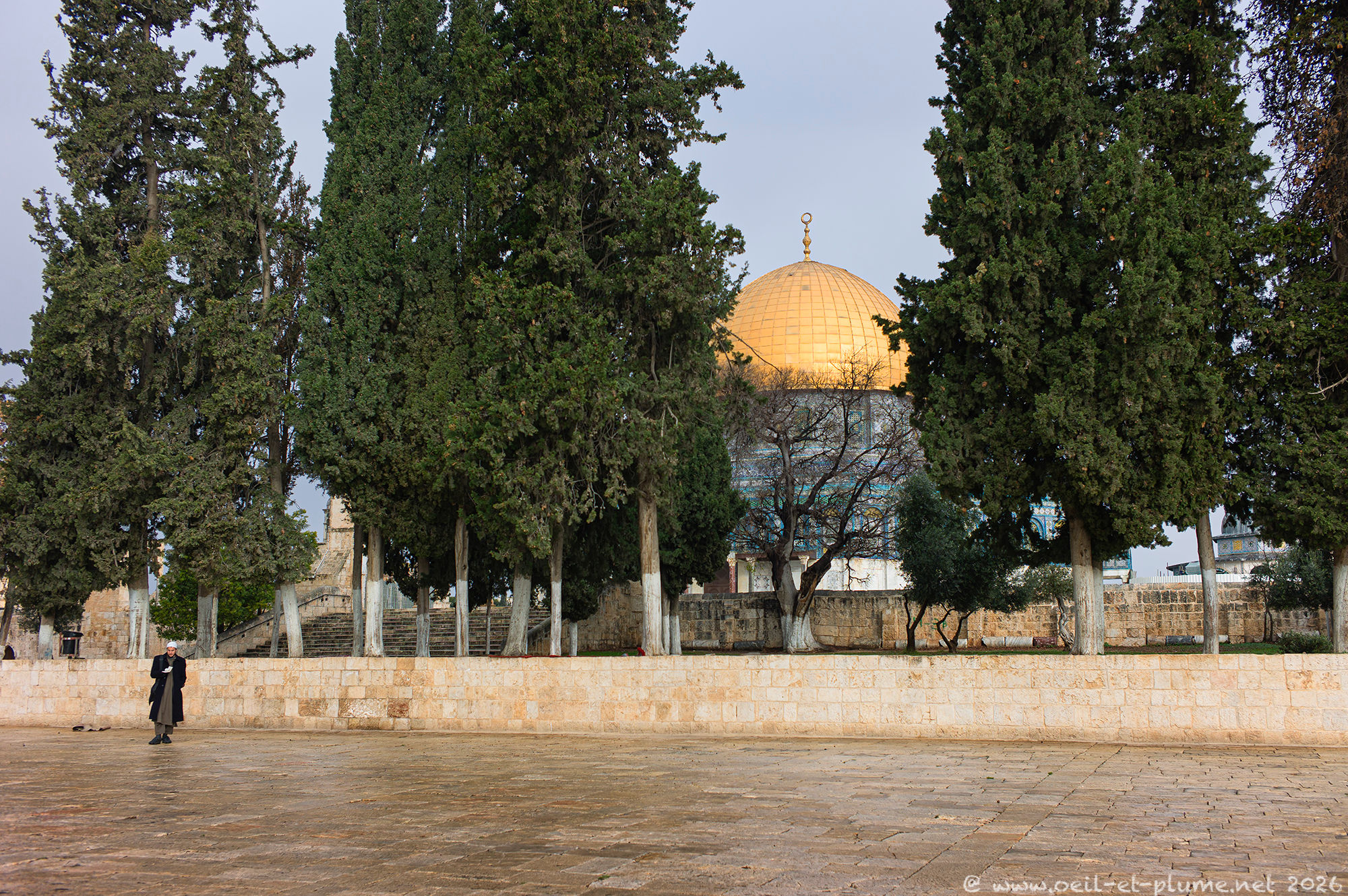
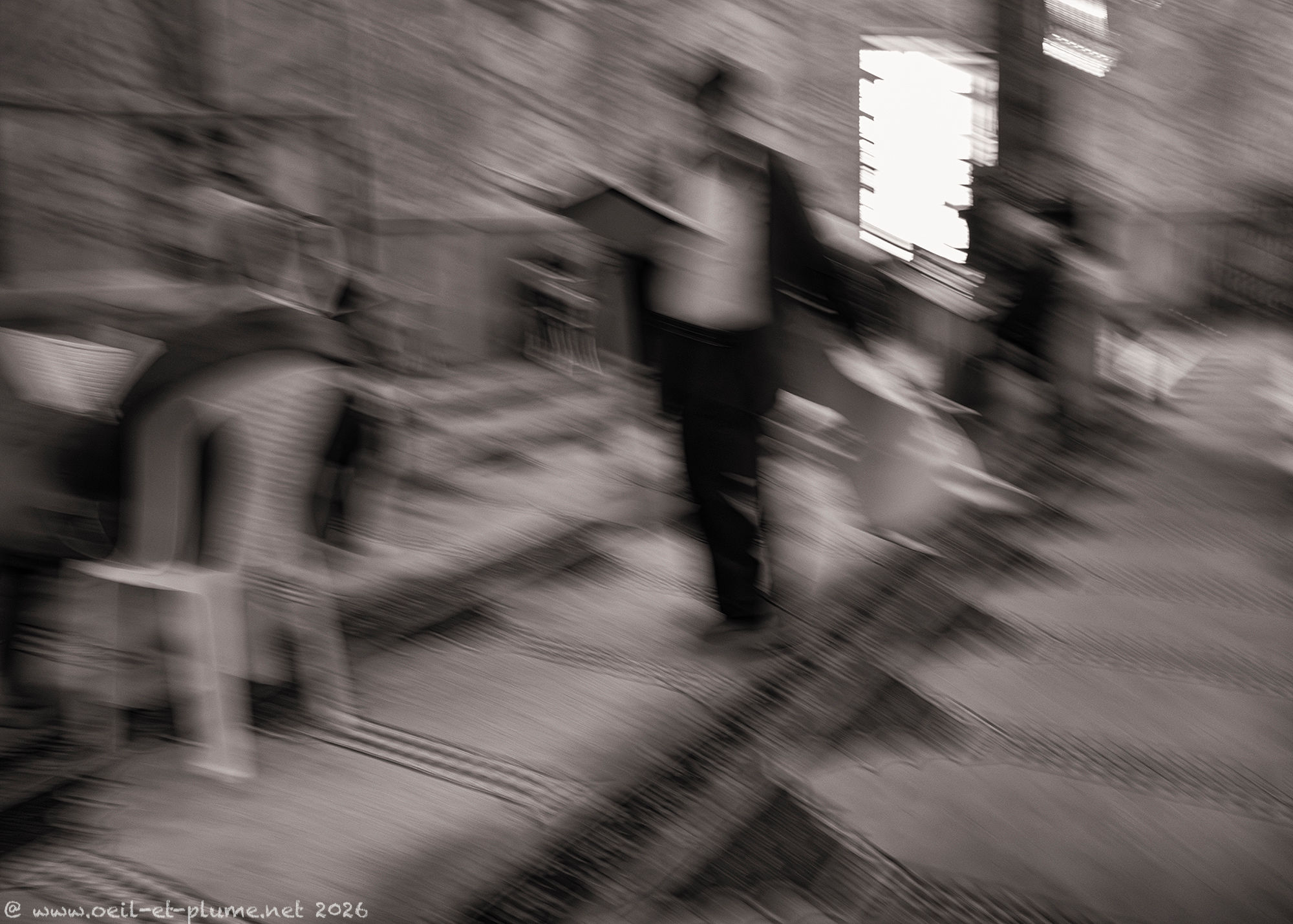
The Dome of the Rock is an octagonal Islamic shrine at the centre of the Al-Aqsa compound. It is the world’s oldest surviving work of Islamic architecture. Near the Dome, a couple of Muslim female students were walking hastily to attend their classes. Some male worshippers were rehearsing their prayers before entering the mosque. The stormy weather added a dramatic touch to the scene, feeding an ethereal ambiance.
Inside both buildings, my attention is drawn to the few Muslim pilgrims in various halls, quietly studying religious texts. Deeply absorbed, they scarcely acknowledge my presence. They seem acutely aware of the sanctity of these places, and of the privilege of being there given the access restrictions in place.
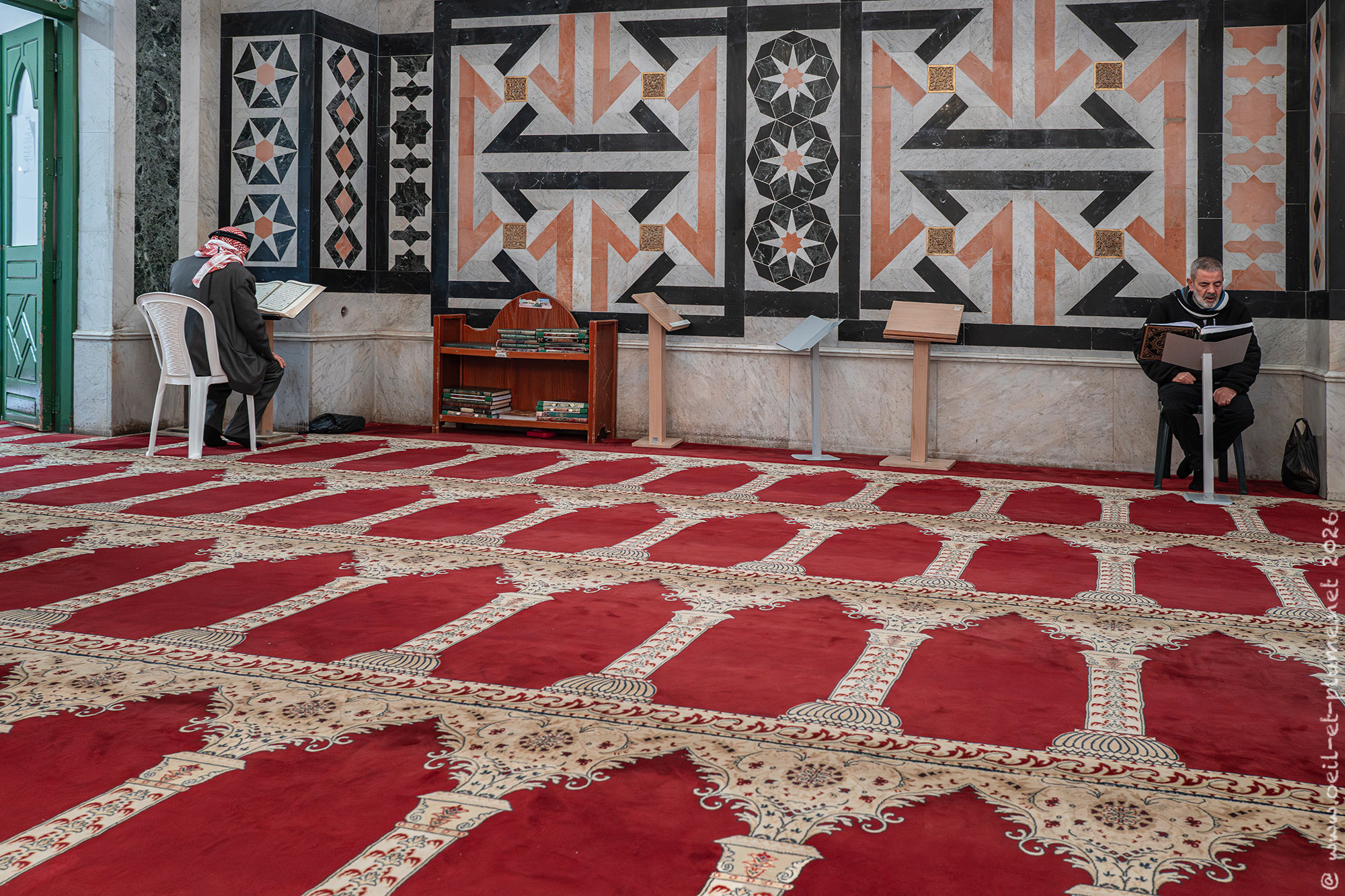
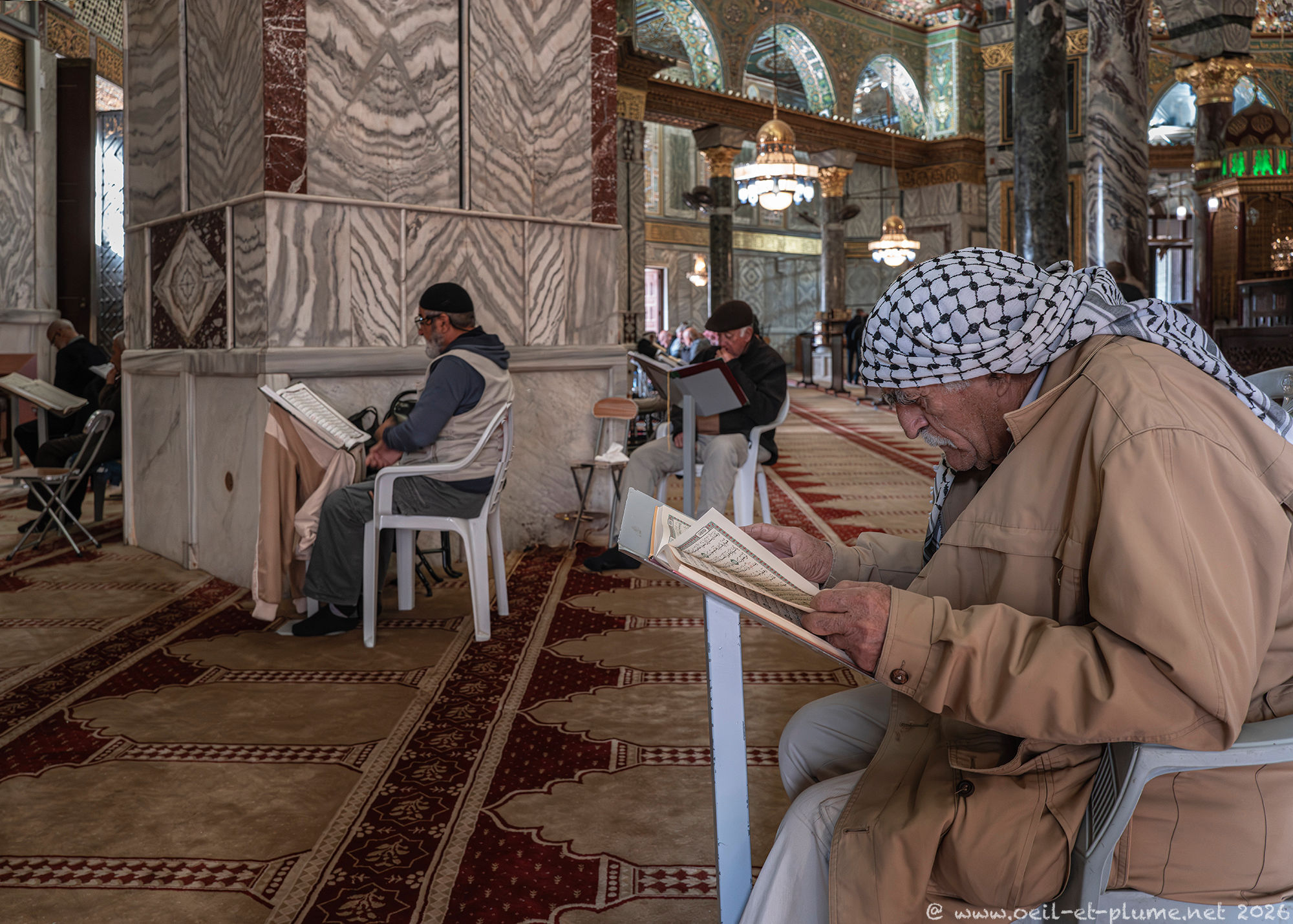
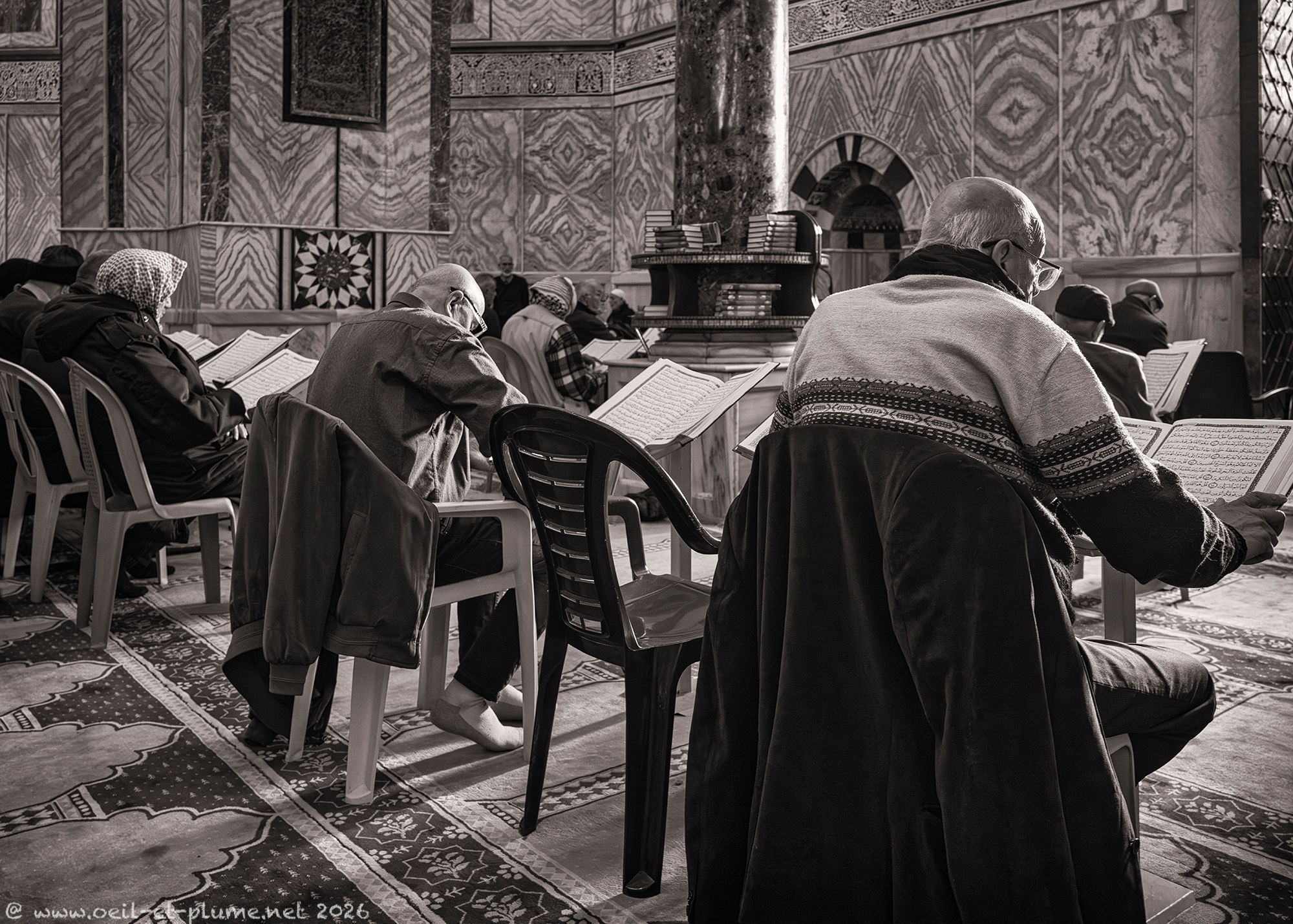
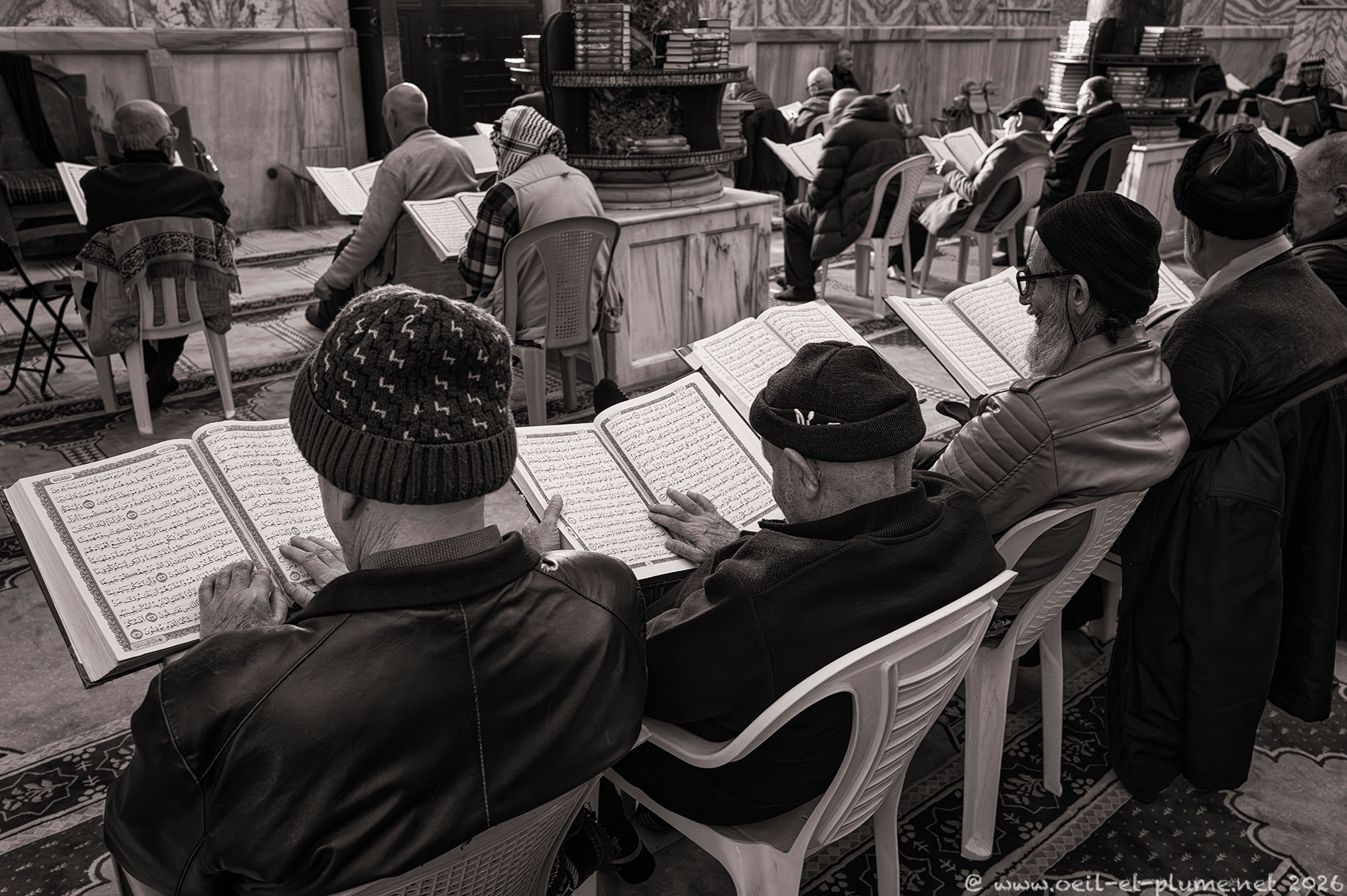
The Dome of the Rock was built directly over the Foundation Stone – a massive rock outcrop sacred to all three monotheist faiths. It is believed that this is where God created the world as well as Adam, and where Abraham attempted to sacrifice his son. More generally, the Stone would be pervaded by the Divine presence more than anywhere else on Earth. For some Jews, the Foundation Stone is the rock upon which the Ark of the Covenant was placed in the First Temple. Muslims believe that the prophet Muhammad left our world to the Heaven from there too.
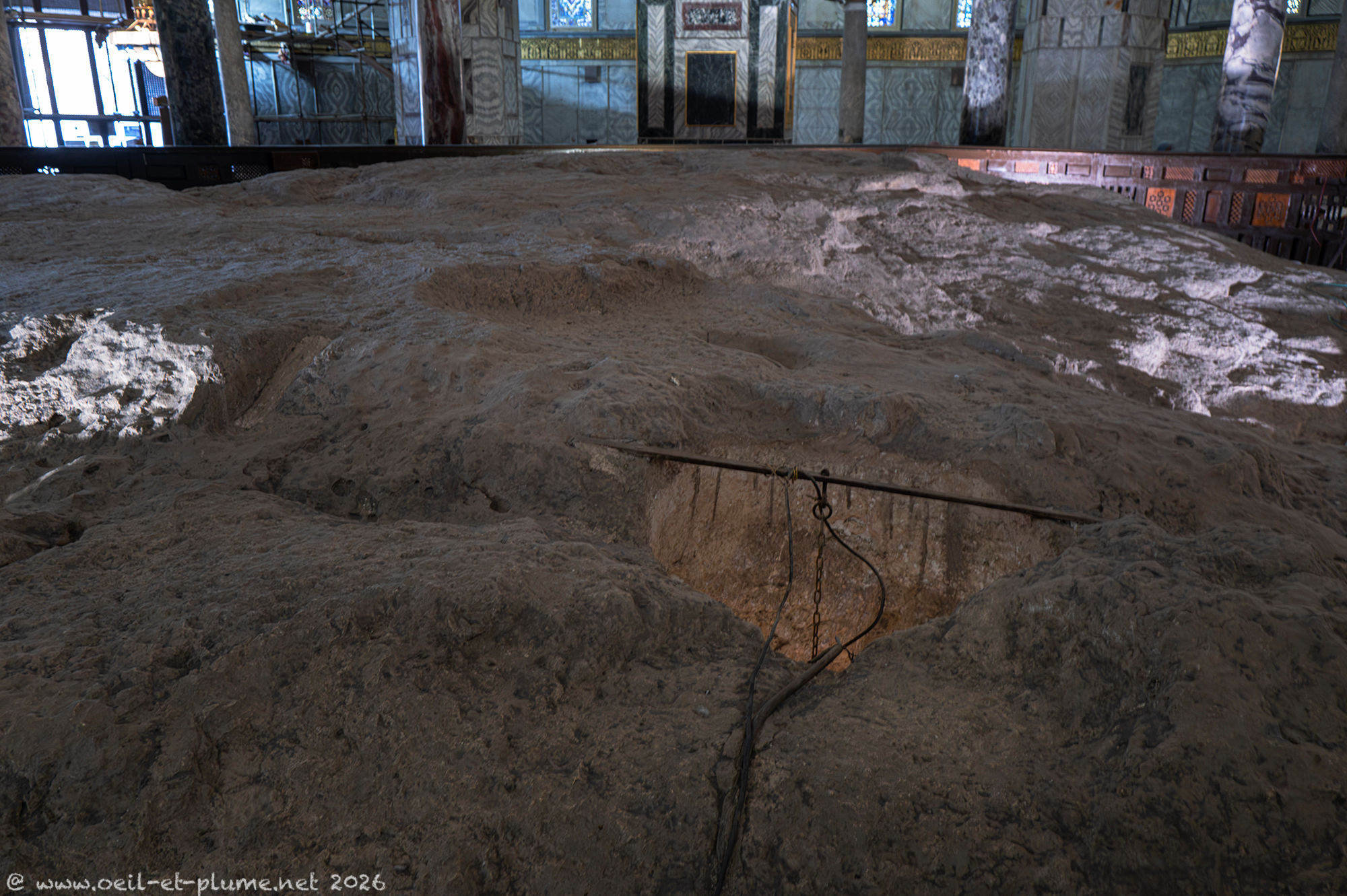
The Foundation Stone is also known as the Pierced Stone because of a small hole on the southeastern corner that connects with a cave beneath the rock. The underground cave is accessible and used as prayer room. Muslims call it the Well of Souls as they believe that there, the souls of the deceased gather to await Judgment Day. I felt quite emotionally moved to visit such special place, even if religious practice is not my cup of tea.
I was also mesmerised by the richness of the inner architecture of both religious buildings. Their interiors lavishly decorated with painted wood, mosaic, faience and marble, much of which was added several centuries after its completion. In the Dome of the Rock, the inner colonnade features light and dark stone voussoirs in its arches. The interior mosaics and the inscription band running along the drum of the dome contains some of the earliest known Quranic calligraphy.
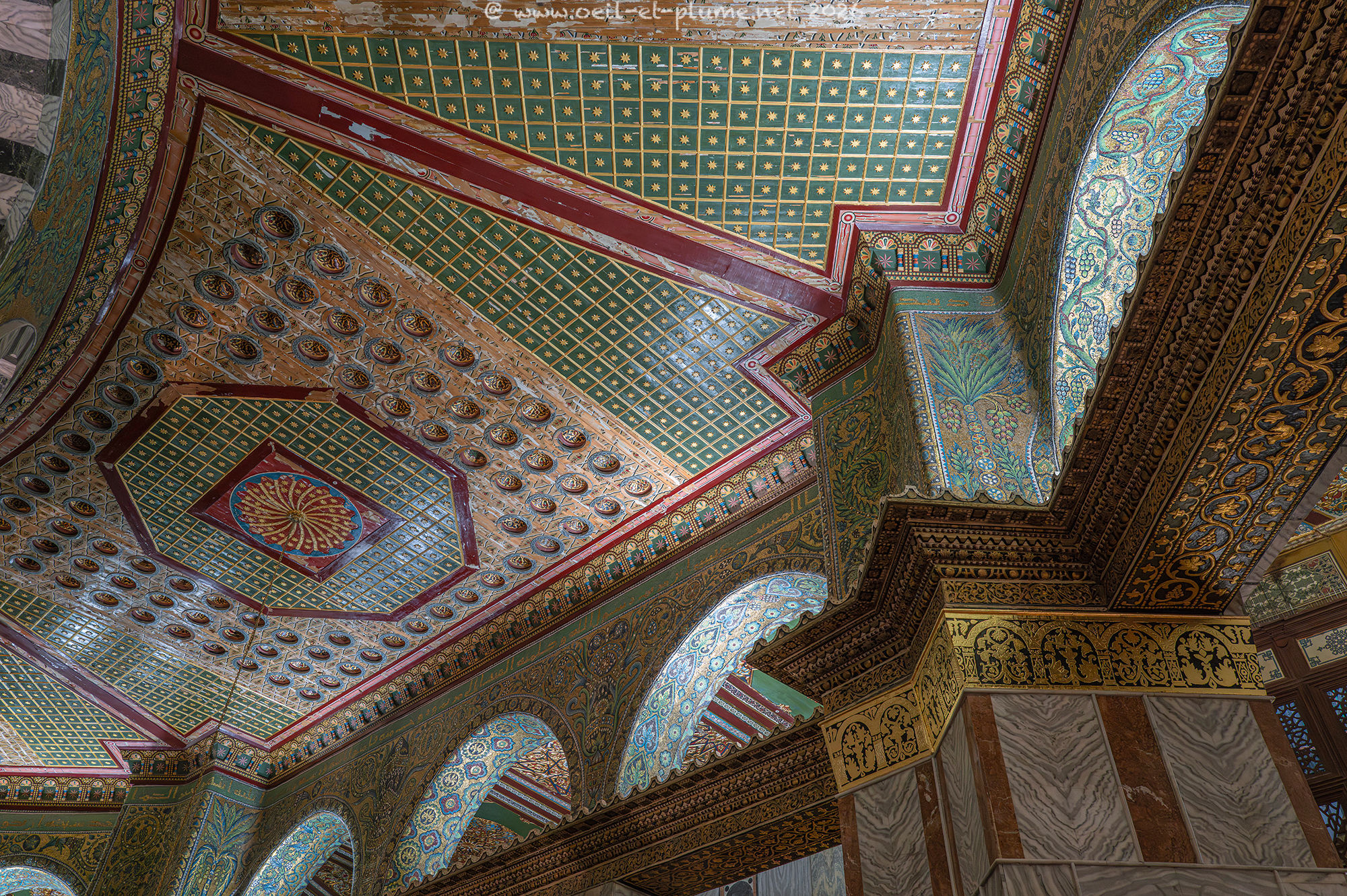
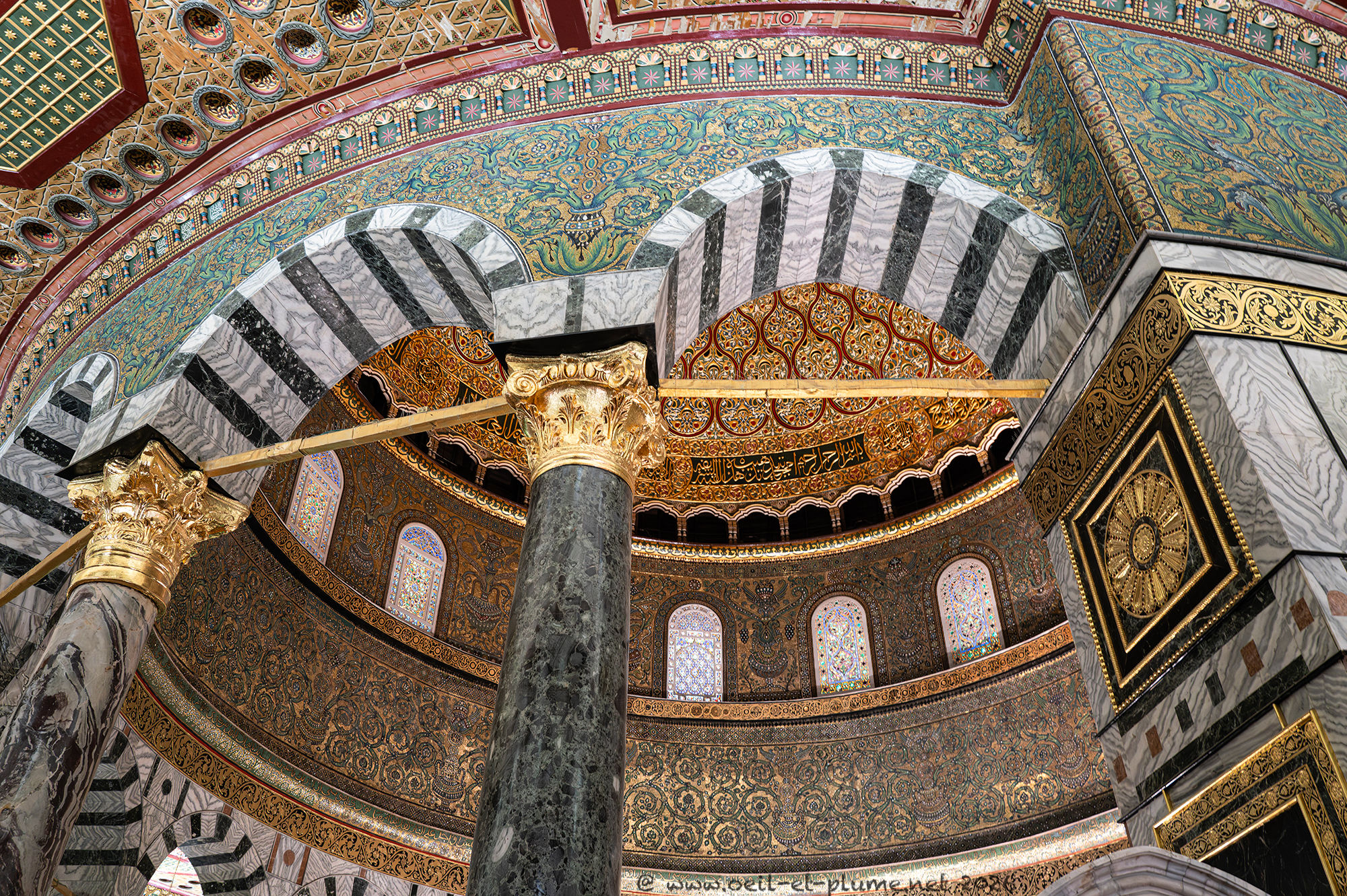
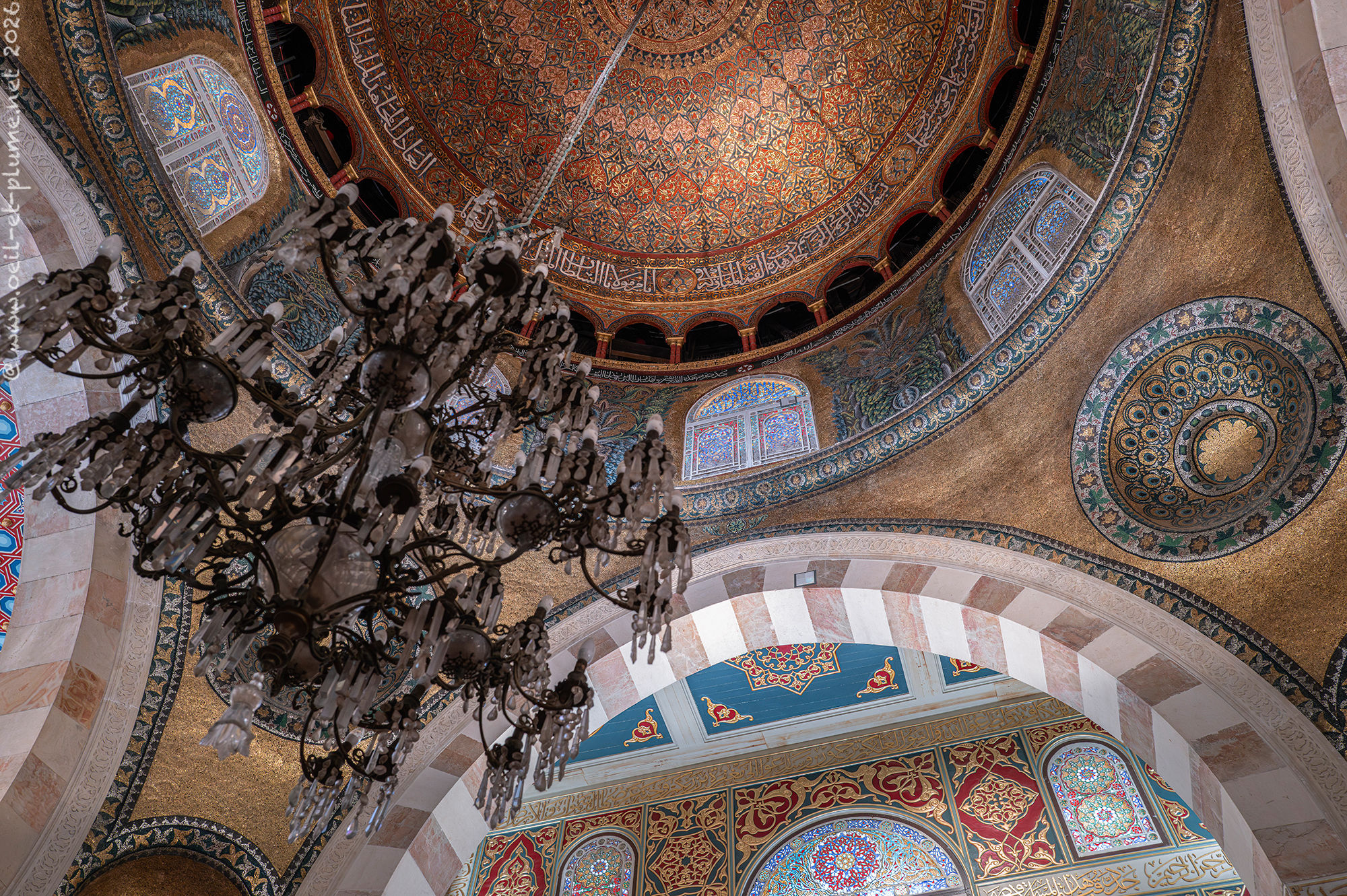
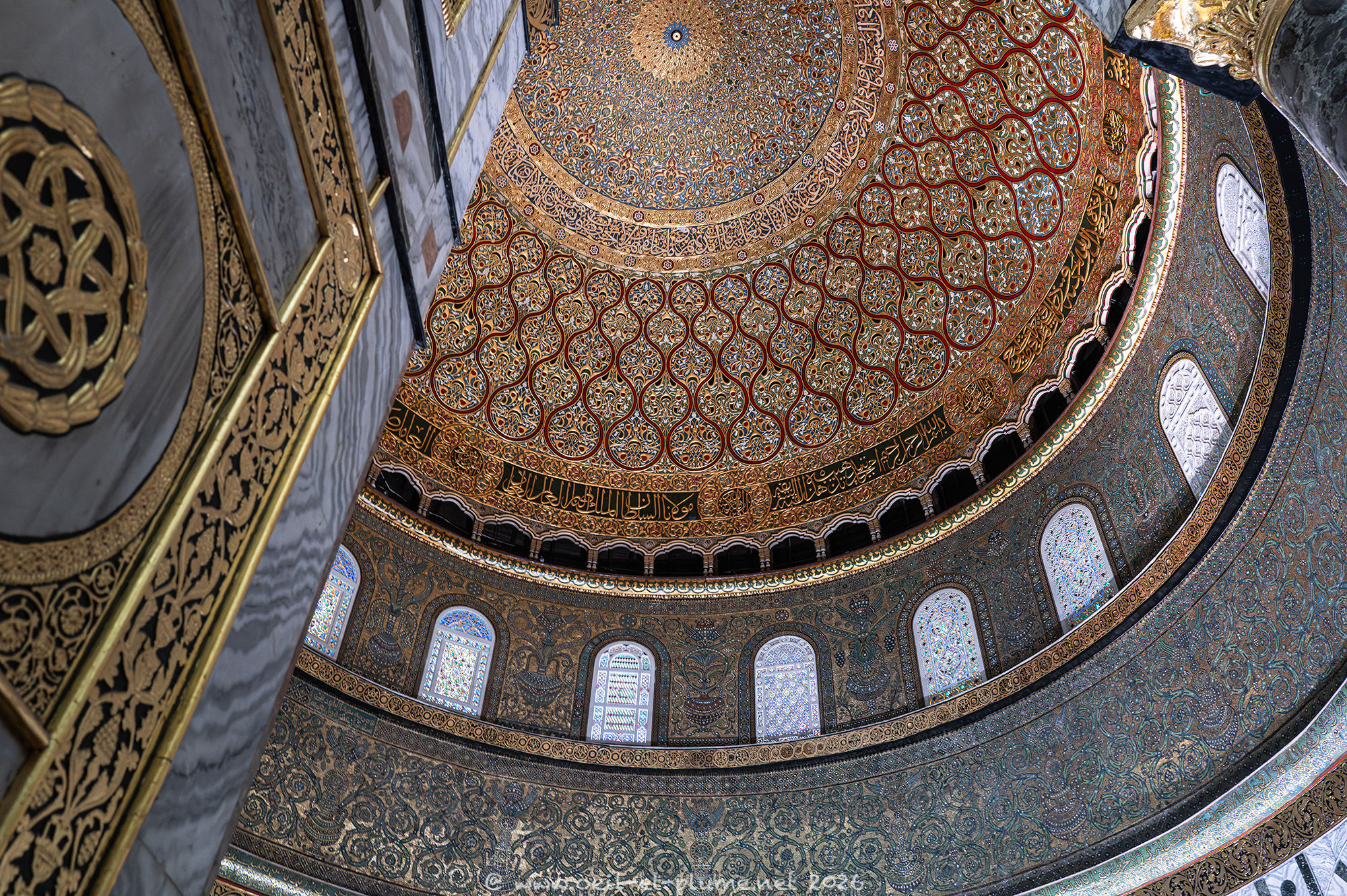
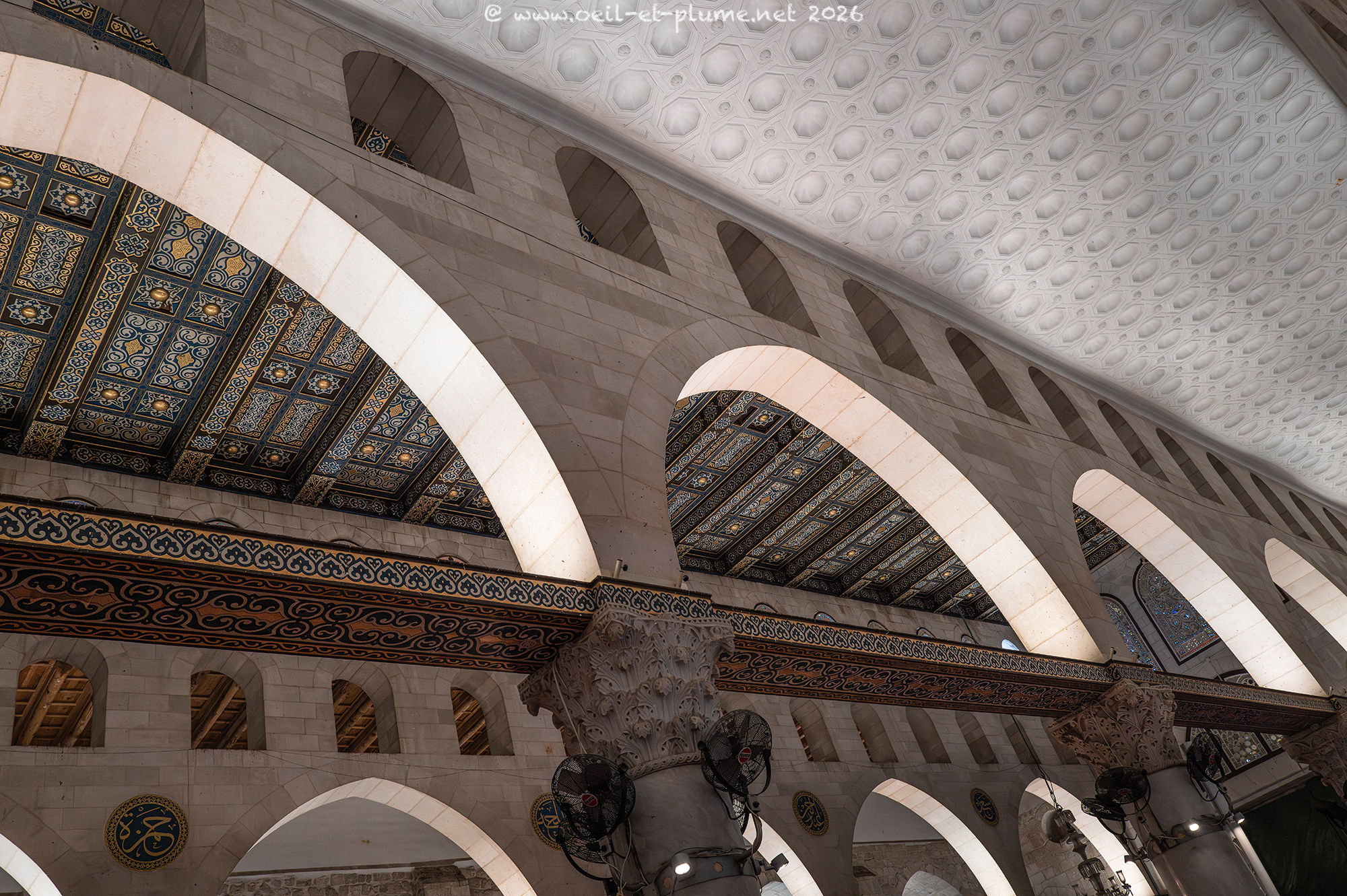
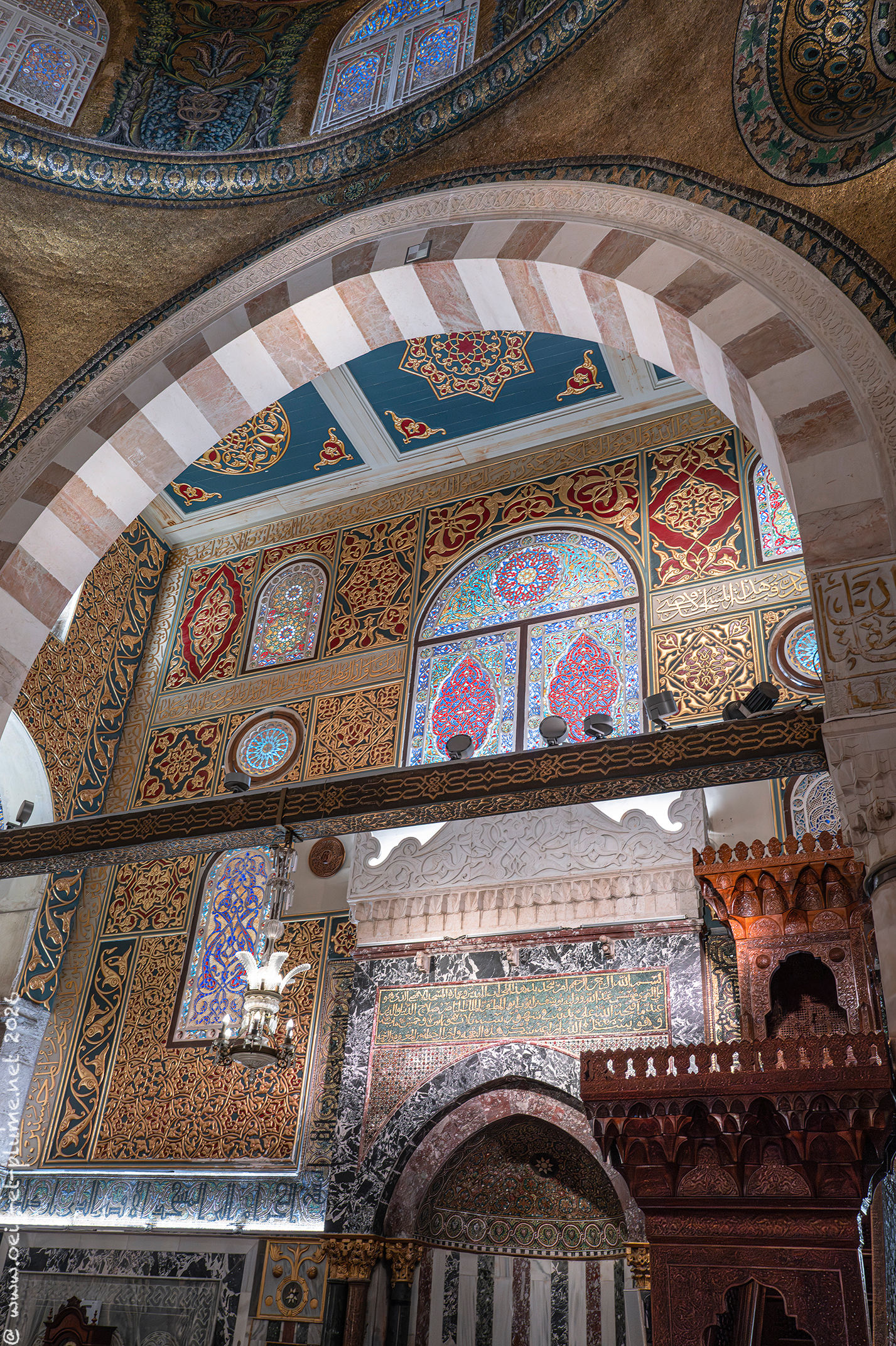
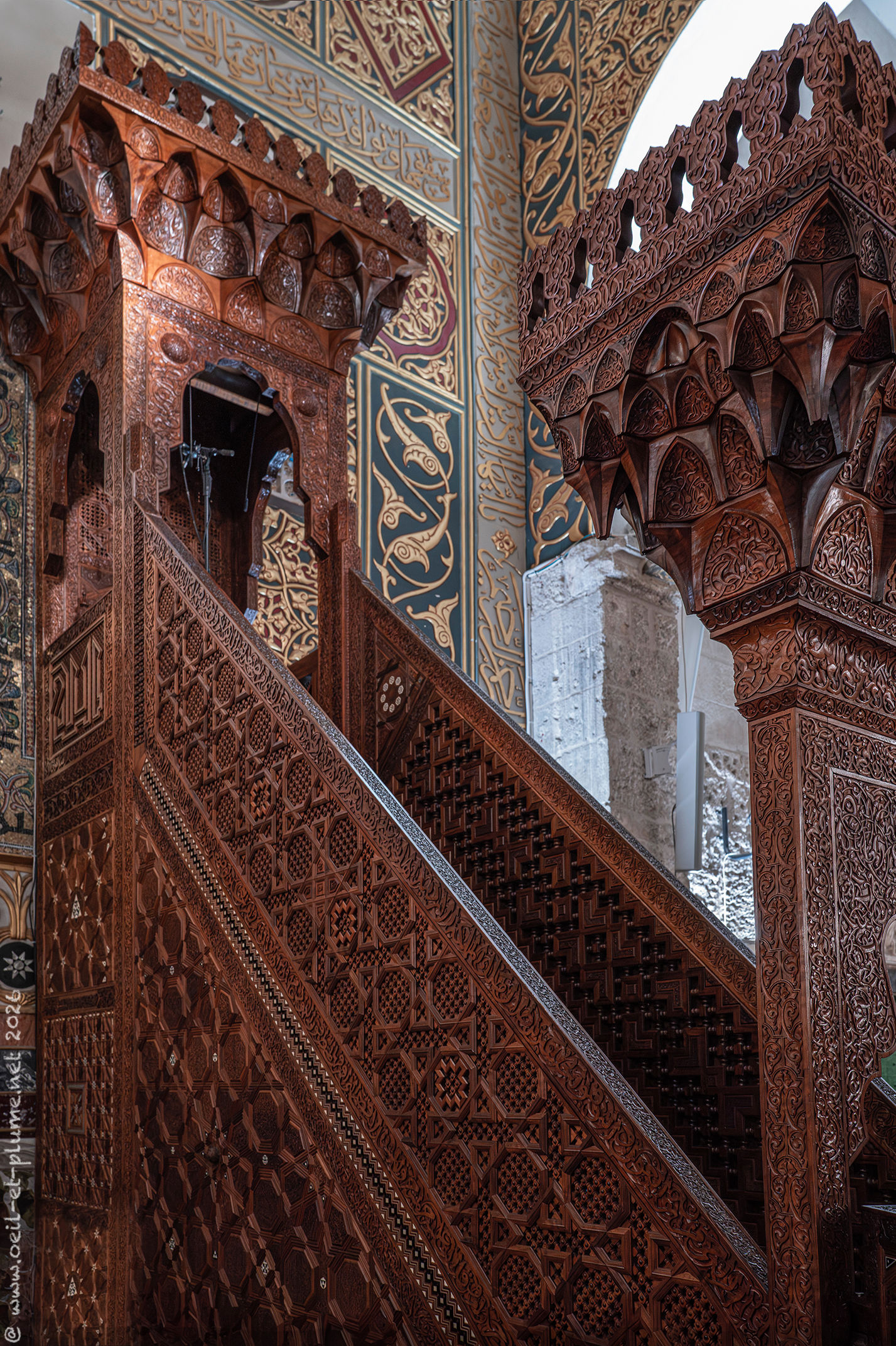
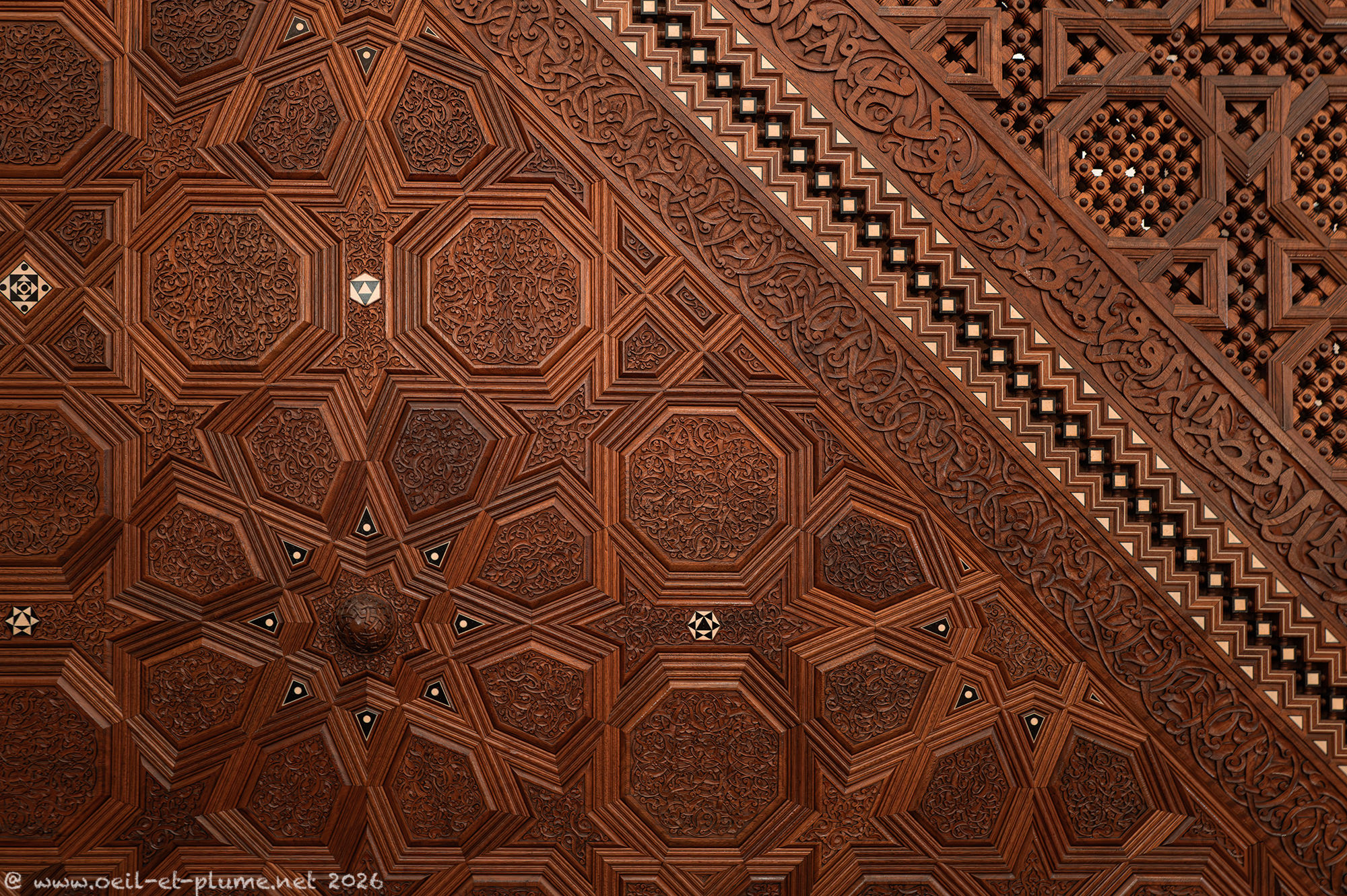
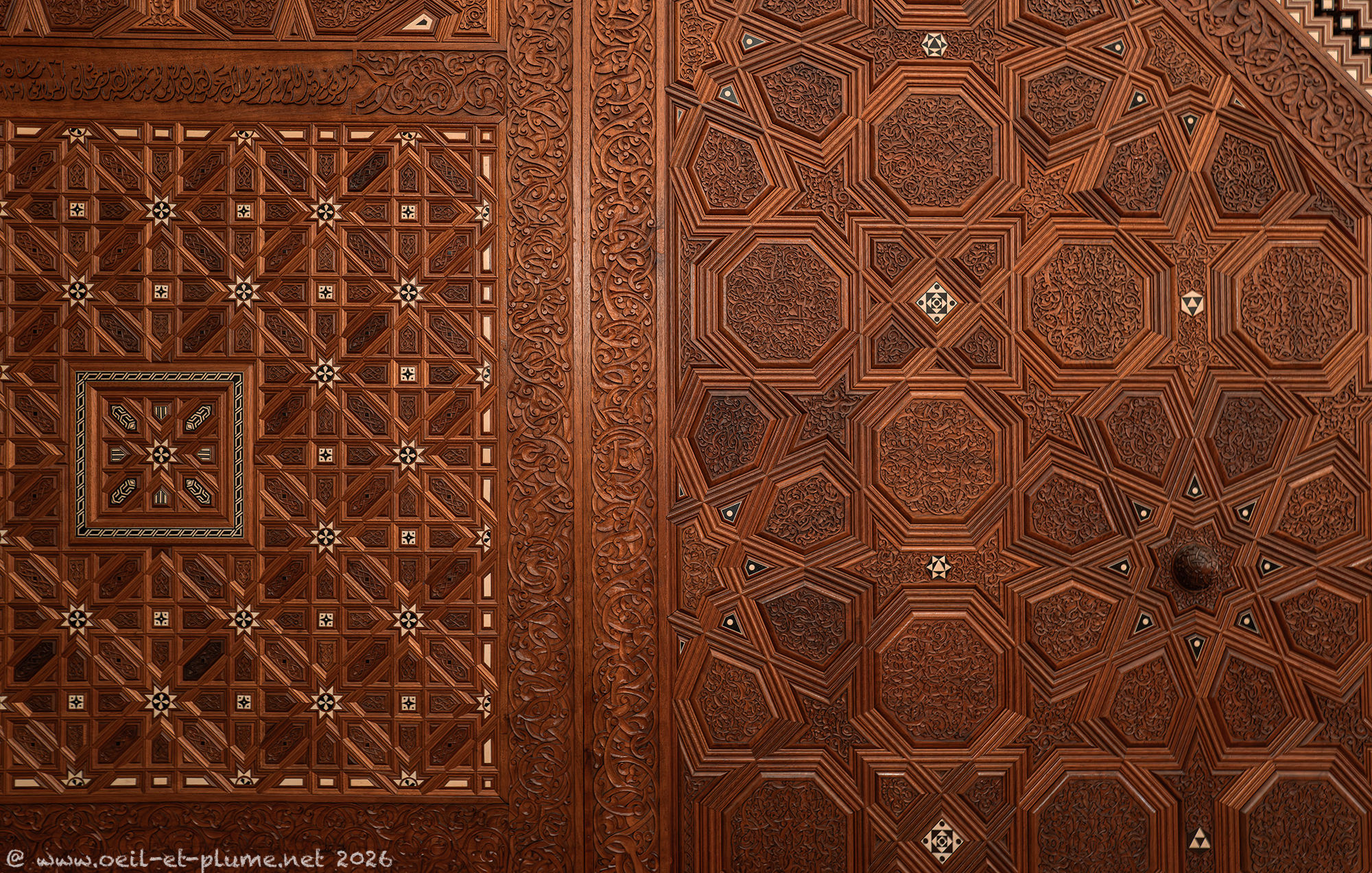
The minbar (mosque pulpit) of Al Aqsa Mosque represents another handicraft marvel. Made of precious wood, the thousands of pieces are assembled together without nails. This is a contemporary replica of a 11th-century master piece created for a mosque in Aleppo, Syria, and later moved to Jerusalem by Saladin in the late 12th century. The original piece was one of the most famous minbars illustrating medieval Islamic art. It was destroyed by arson lit by a Christian fundamentalist in 1969, and was recreated by an international team of experts in 2007.
The initial construction of the Dome of the Rock was undertaken by the Umayyad Caliphate in 691 CE. The historiography contends that the Caliph Abd al-Malik commissioned the building not only for religious reasons, but as a political statement to assert the dominance of Islam in a city sacred to Jews and Christians, creating a monument that would rival the nearby Church of the Holy Sepulchre.
Ibrahimi Mosque / Cave of Machpelah, Hebron
The Ibrahimi Mosque, also known as the Cave of the Patriarchs, is a site of profound religious significance located in Hebron, revered by Muslims, Jews, and Christians. Muslims regard it as the fourth holiest site in Islam, while Jews consider it the second holiest in Judaism, referring to it by its biblical name, the Cave of Machpelah.
The site is traditionally believed to be the burial place of key biblical patriarchs and matriarchs: Abraham and his wife Sarah, Isaac (one of Abraham’s son) and his spouse Rebecca, and Jacob (one of Isaac’s sons) and his wife Leah. For some Jews, it is also the burial site of Adam and Eve, which prompt them to designate Hebron as the “City of the Four Couples.” Muslims believe that the prophet Muhammad stopped by the tomb in Hebron on his nocturnal journey from Mecca to Jerusalem to pay his respects to the biblical figures buried there.
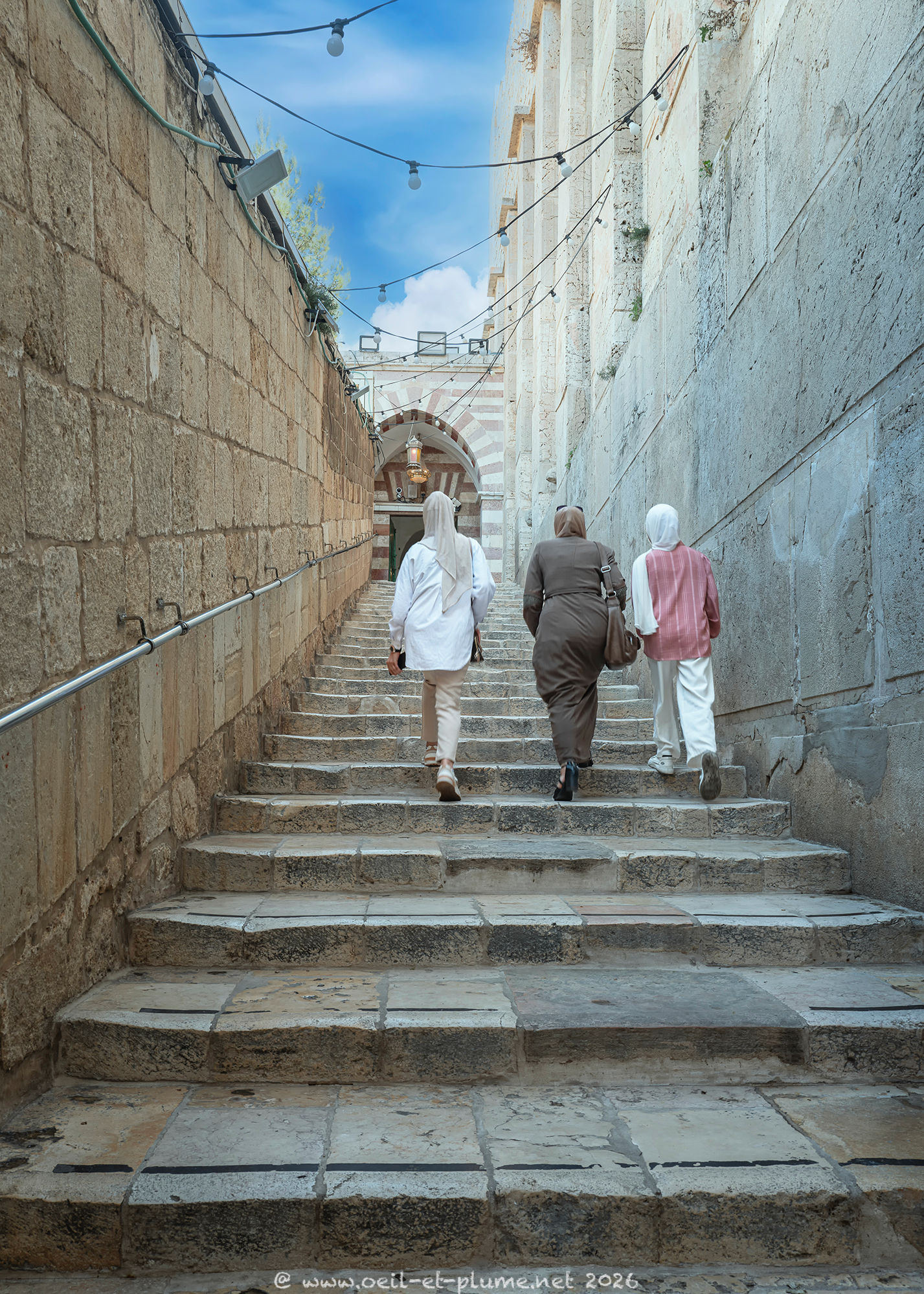
The Ibrahimi Mosque traces its origins to approximately 3,800 years ago, rooted in the biblical tradition that Abraham purchased the Cave of Machpelah to bury his wife, Sarah. This act established the site as the ancestral burial ground for his family.
The first monumental structure built over the cave was commissioned by Herod the Great in the 1st century BCE, designed to protect the sacred tombs. Following the Muslim conquest of Palestine in 638 CE, the site was converted into a mosque. During the Umayyad period, it underwent significant renovations, including the addition of a ceiling, which solidified its status as a major pilgrimage destination for Muslims.
In 1100 CE, the Crusaders captured Hebron and converted the mosque into a basilica named the “Castle of Saint Abraham.” However, Saladin reclaimed the site in 1187 CE, restoring it to its function as a mosque and adding two minarets. Subsequent centuries saw further modifications and renovations, particularly during the British Mandate following World War I and under Jordanian rule from 1948 to 1967, shaping the complex architectural and historical landscape seen today.
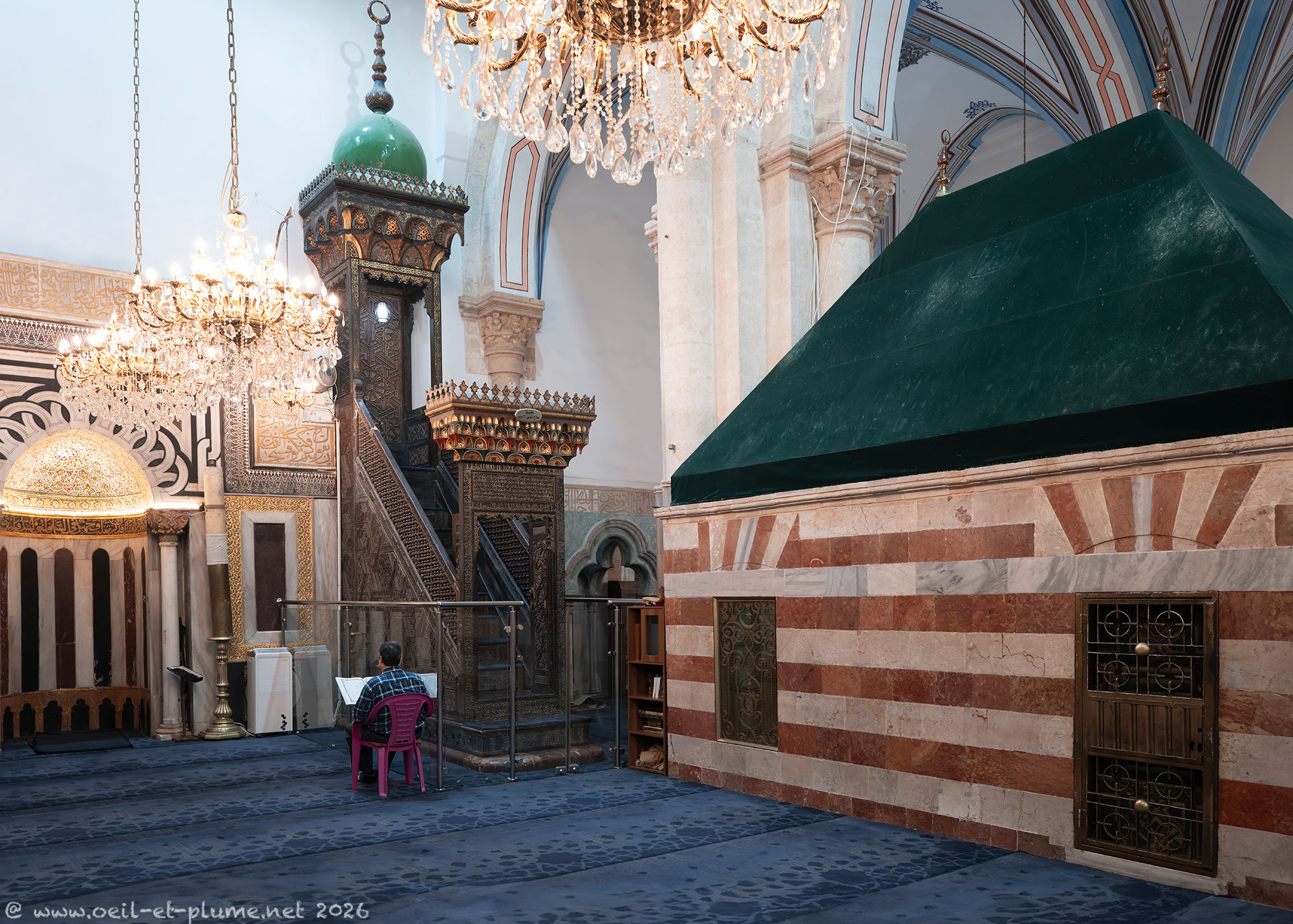
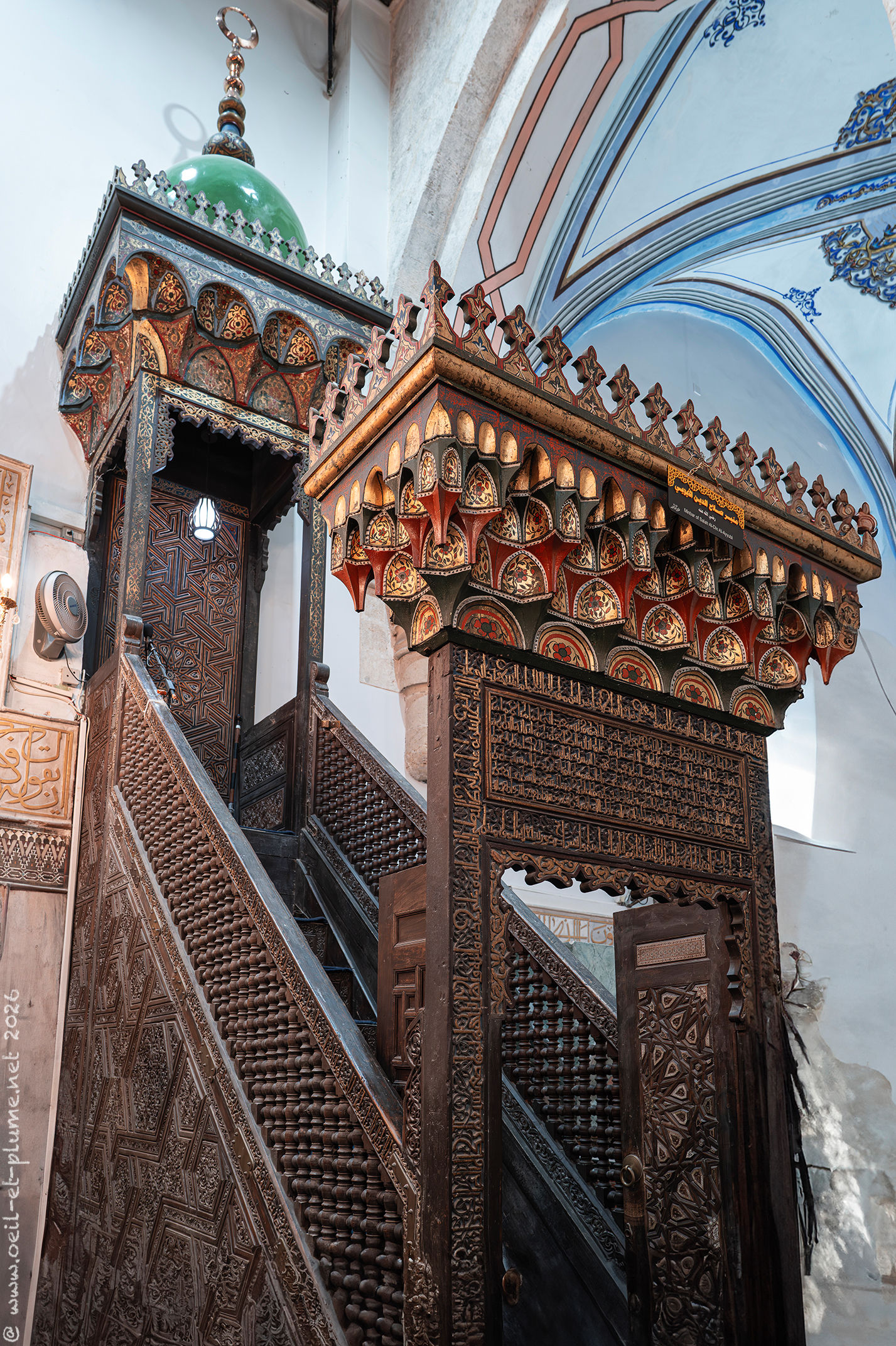
Dating the 11th-century, the beautiful minbar was initially built for an Islamic site in present-day Ashkelon in southern Israel but was moved to its current location by Saladin in 1191. The geometric style of the delicate artefact resembles the minbar of Al-Aqsa Mosque in Jerusalem and is considered as one of the most significant historic minbars in the medieval Muslim world.
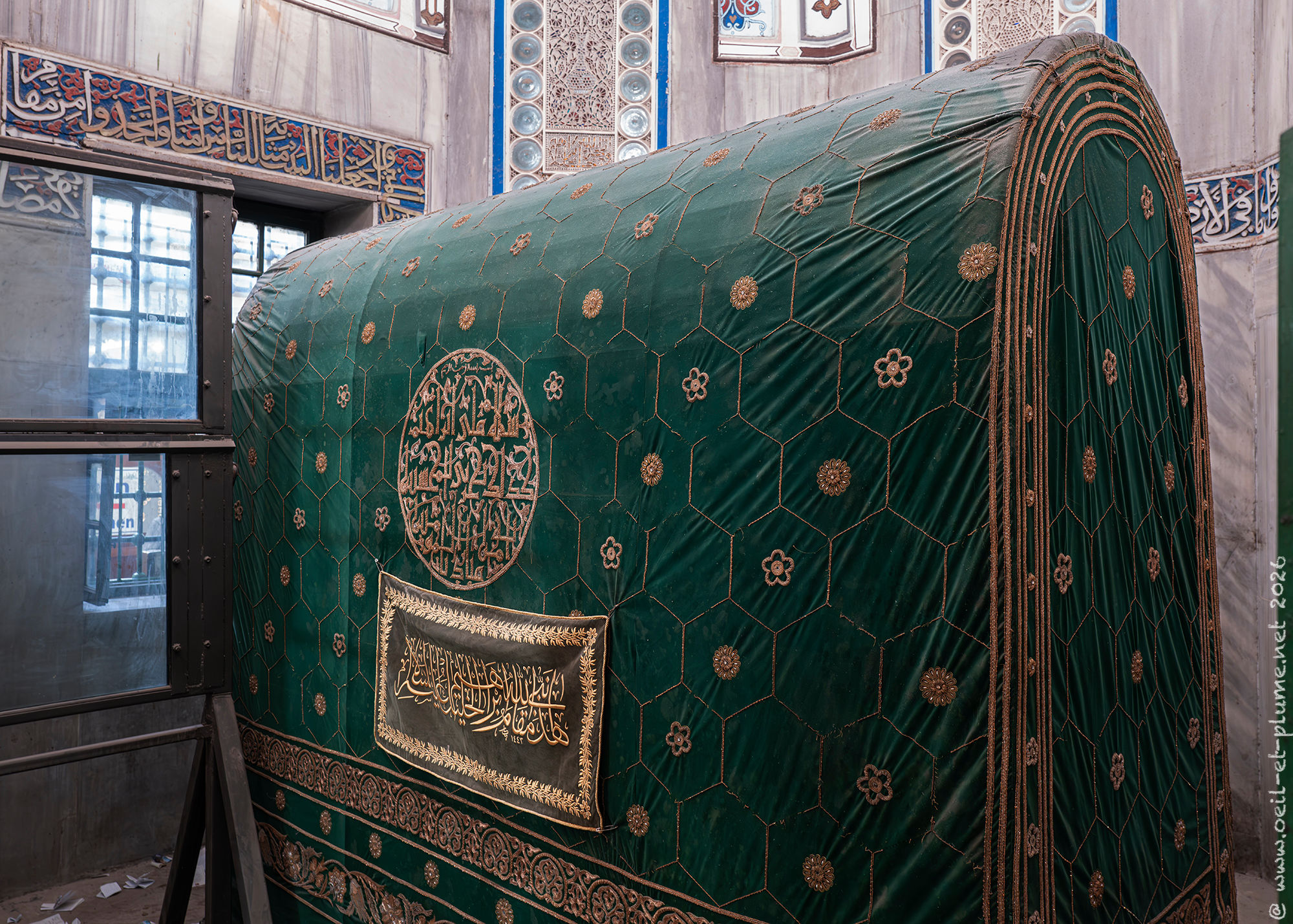
The cenotaphs (empty grave structures covered with ornate religious cloth) are other key elements of the inner architecture. There are four cenotaphs in different locations, dedicated respectively to Abraham and Sarah, as well as to Jacob and Leah.
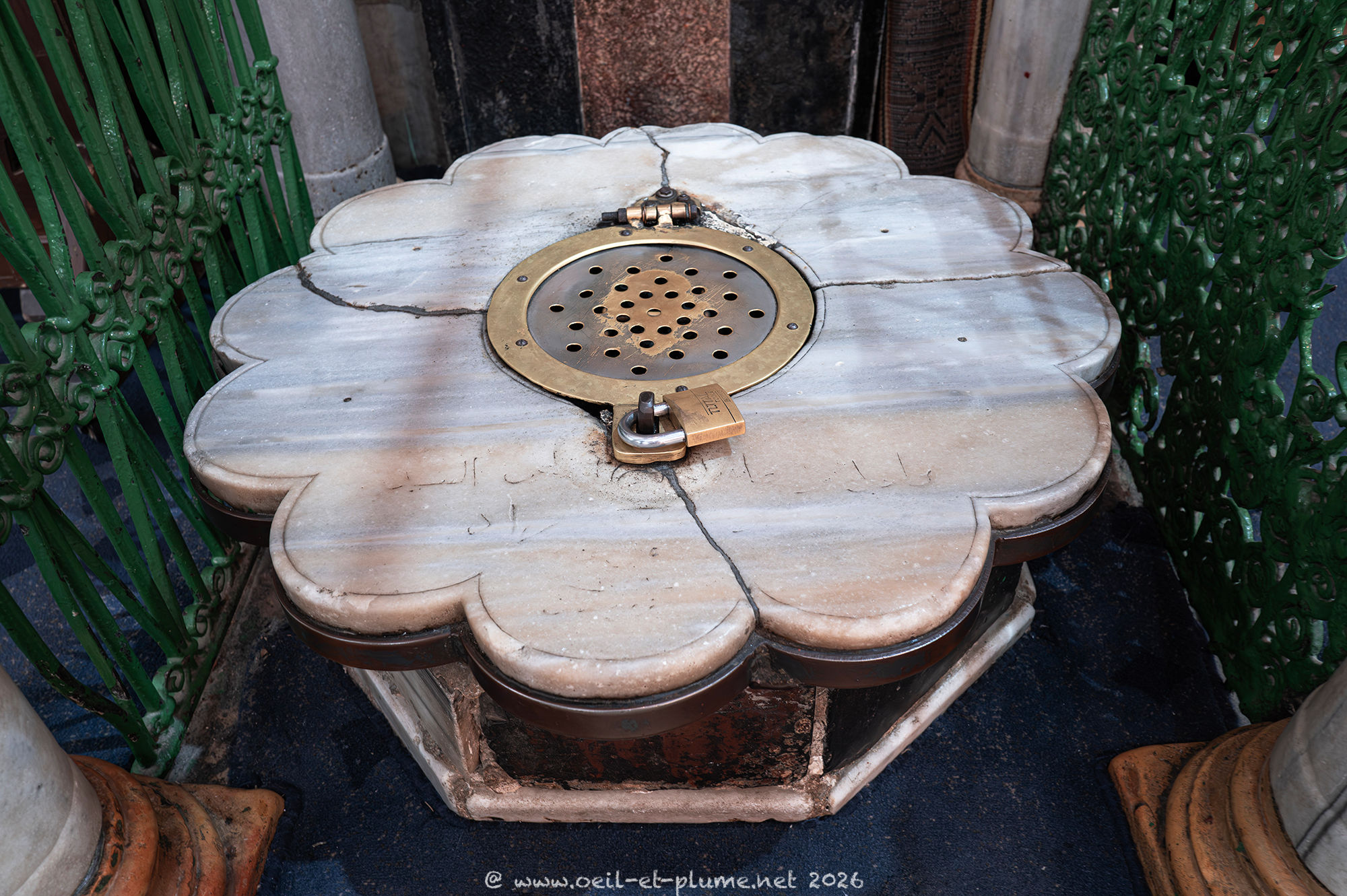
The graves themselves are believed to be located in underground caves underneath the mosque. Access to the cave system has been restricted for centuries and hotly disputed. It was lost for Jews during medieval times. After the 1967 war, Israelis endeavoured to regain access to the tombs. In 1968, a slender girl was lowered through the narrow hole located in the northeastern part of the building (see below). She reached an entrance room, but not the series of tomb chambers underneath. In 1981, a group of Jewish settlers broke into the caves and photographed the burial chambers.
Today, the management and access to the Ibrahimi Mosque remain a flashpoint of the Israeli-Palestinian tensions, reflecting the complex socio-political dynamics in Hebron. Various violent incidents took place since 1967.
In 1994, an orthodox Jew killed 29 Palestinian Muslims and injured another 125 praying in the mosque, before being killed himself. In the aftermath, the site was physically divided to separate Muslim and Jewish worshippers – an arrangement formalised by a 1996 agreement. Based on the latter, the Waqf assumes the Muslim religious functions and the maintenance of most of the building under the close supervision of Israeli security forces.
Israeli security measures at the site have much increased in recent years, as much as the pressure on the Palestinian religious authorities, worshippers and workers. The situation affects also the Palestinian resident population living in the surroundings of the religious site.
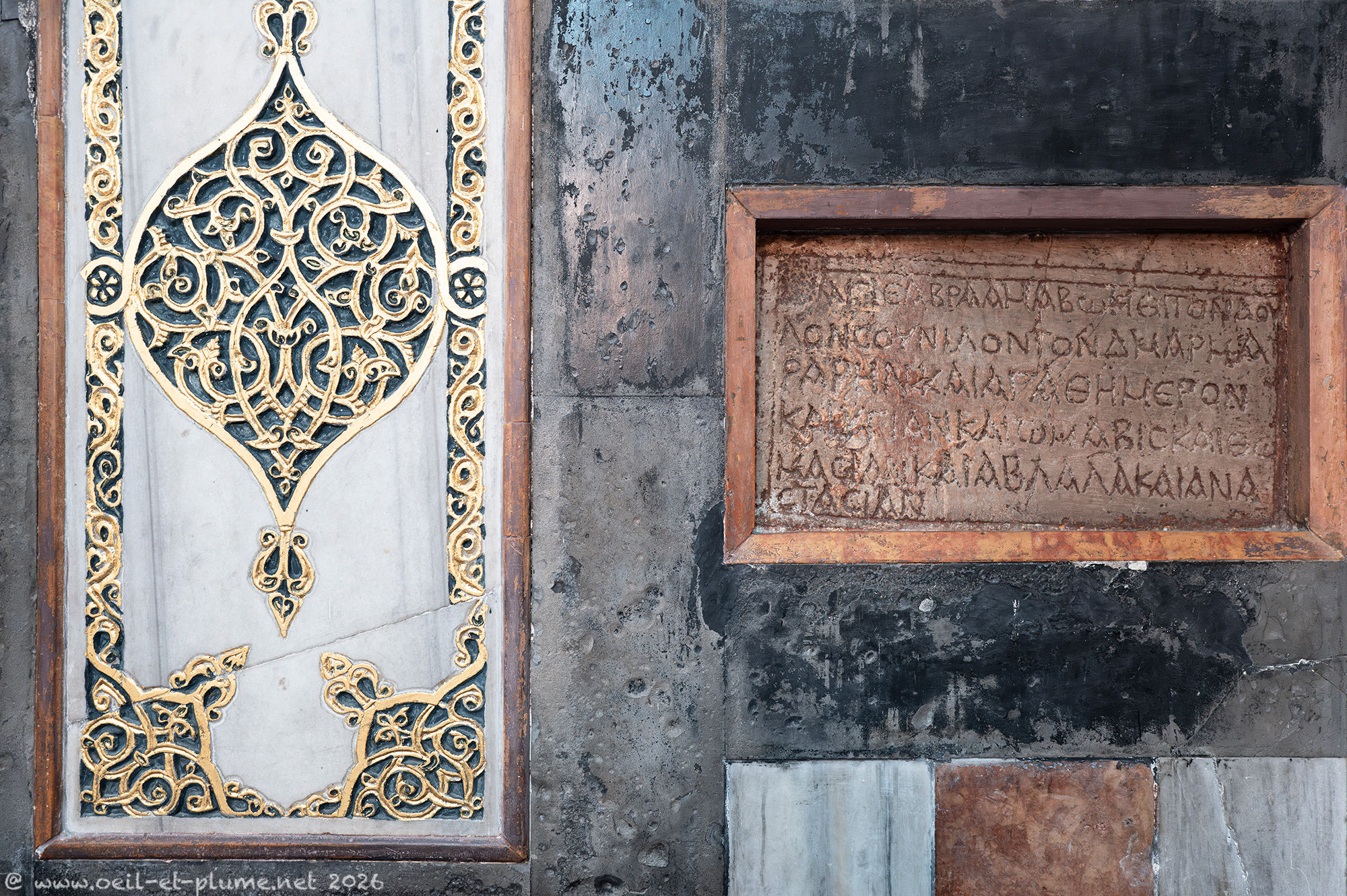
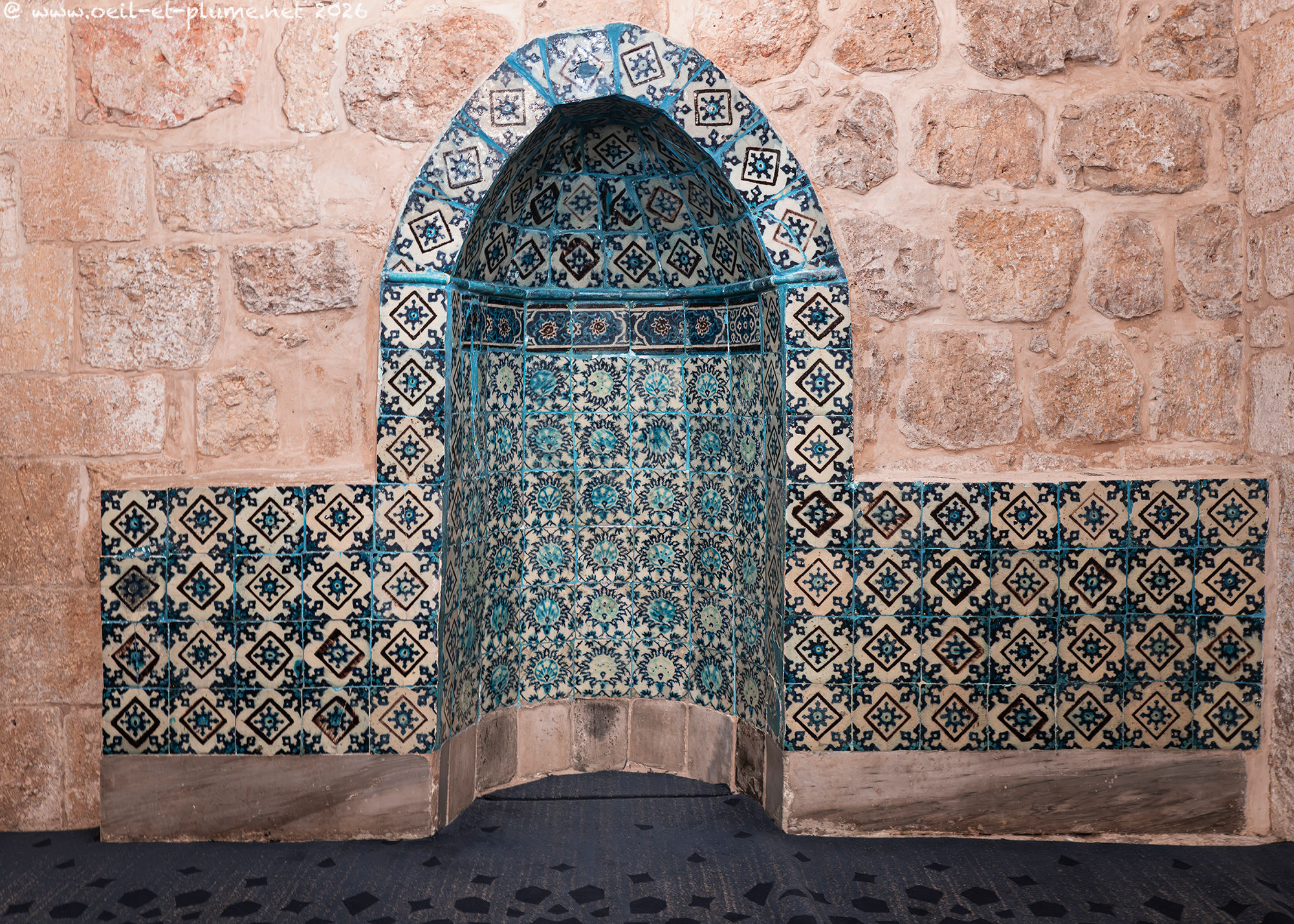
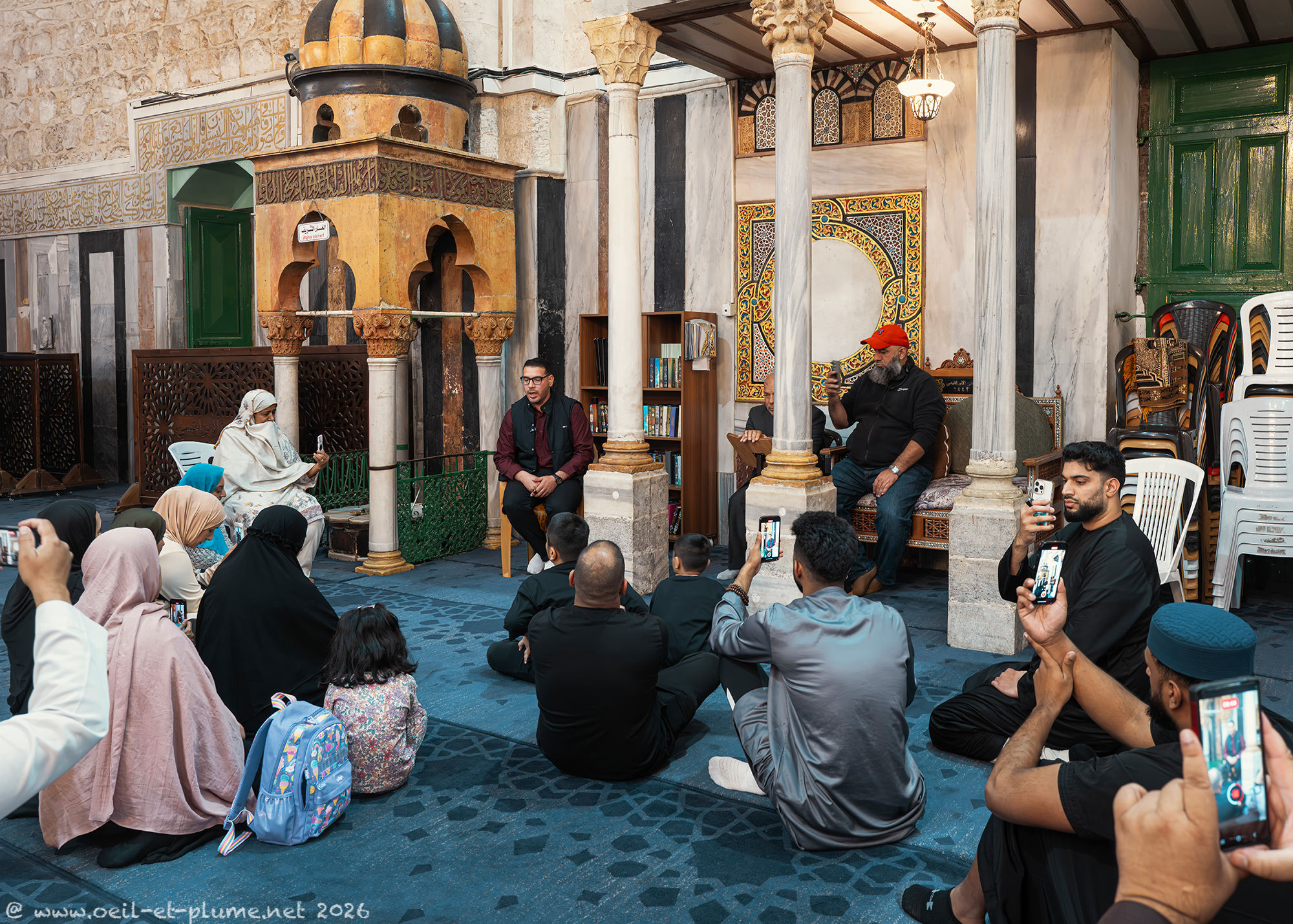
Nowadays, fewer Palestinian Muslims visit the Ibrahimi Mosque compared to the past, according to the local Waqf. I met only a few of them, who were gathered with the muezzin to listen to his worship songs. The scene distilled an enjoyable breath of serenity contrasting with the tense environment of the disputed religious site.
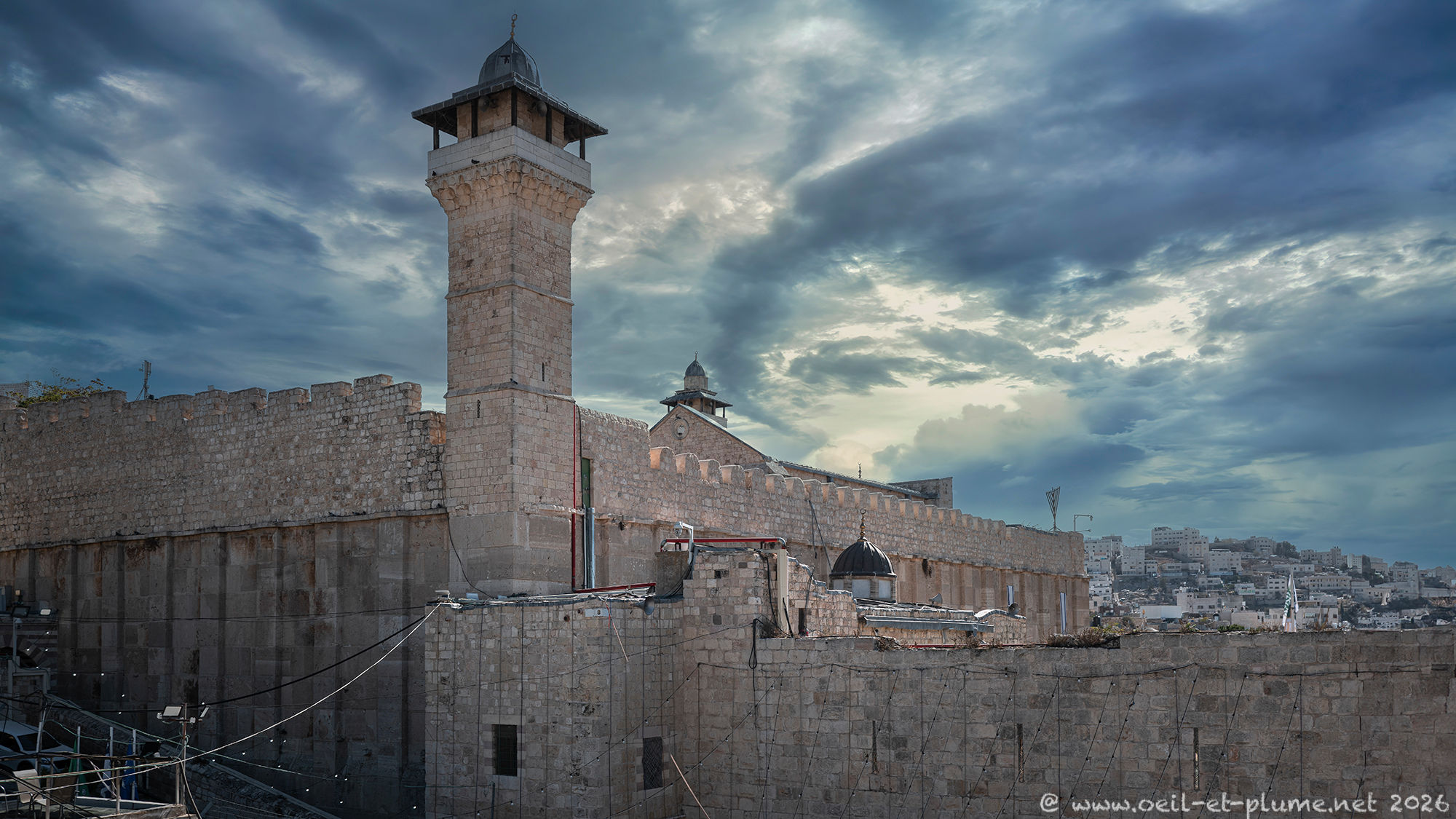
The Temple Mount / Noble Sanctuary and the Ibrahimi Mosque / Cave of the Machpelah represent two microcosms of today’s ongoing conflict in Jerusalem and the West Bank between Israelis and Palestinians. Within the legal framework of military occupation, security concerns raised by Israeli authorities may be considered legitimate in their perspective, yet they frequently intersect with religious rights and the everyday life of local Palestinians.
Striking a sound balance between these considerations is far from straightforward and often becomes a source of controversy. In such a context, religion and politics emerge as deeply interconnected spheres, each continuously shaping and influencing the other. This is probably not what God had envisaged for the humanity.
Cheers,
