
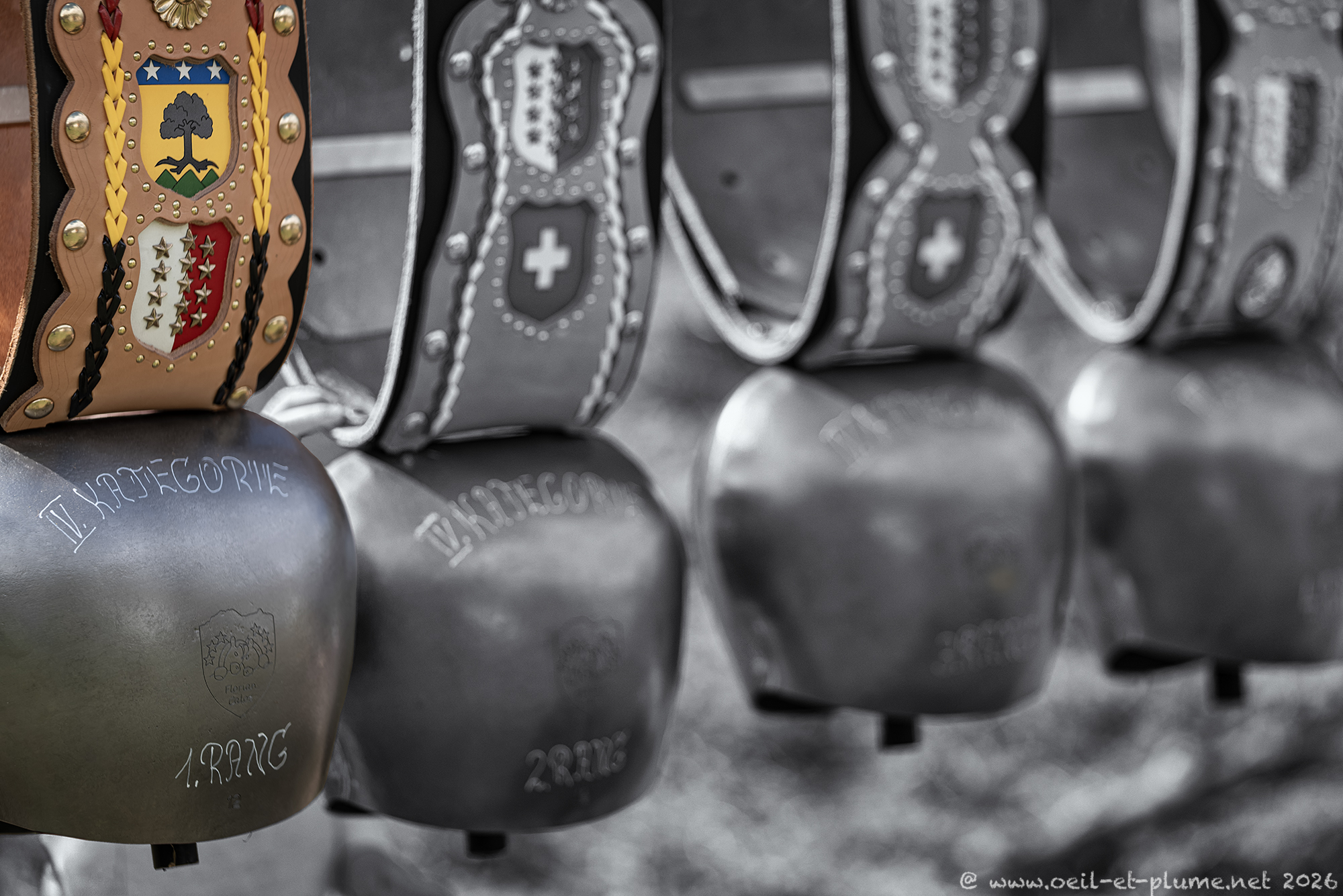
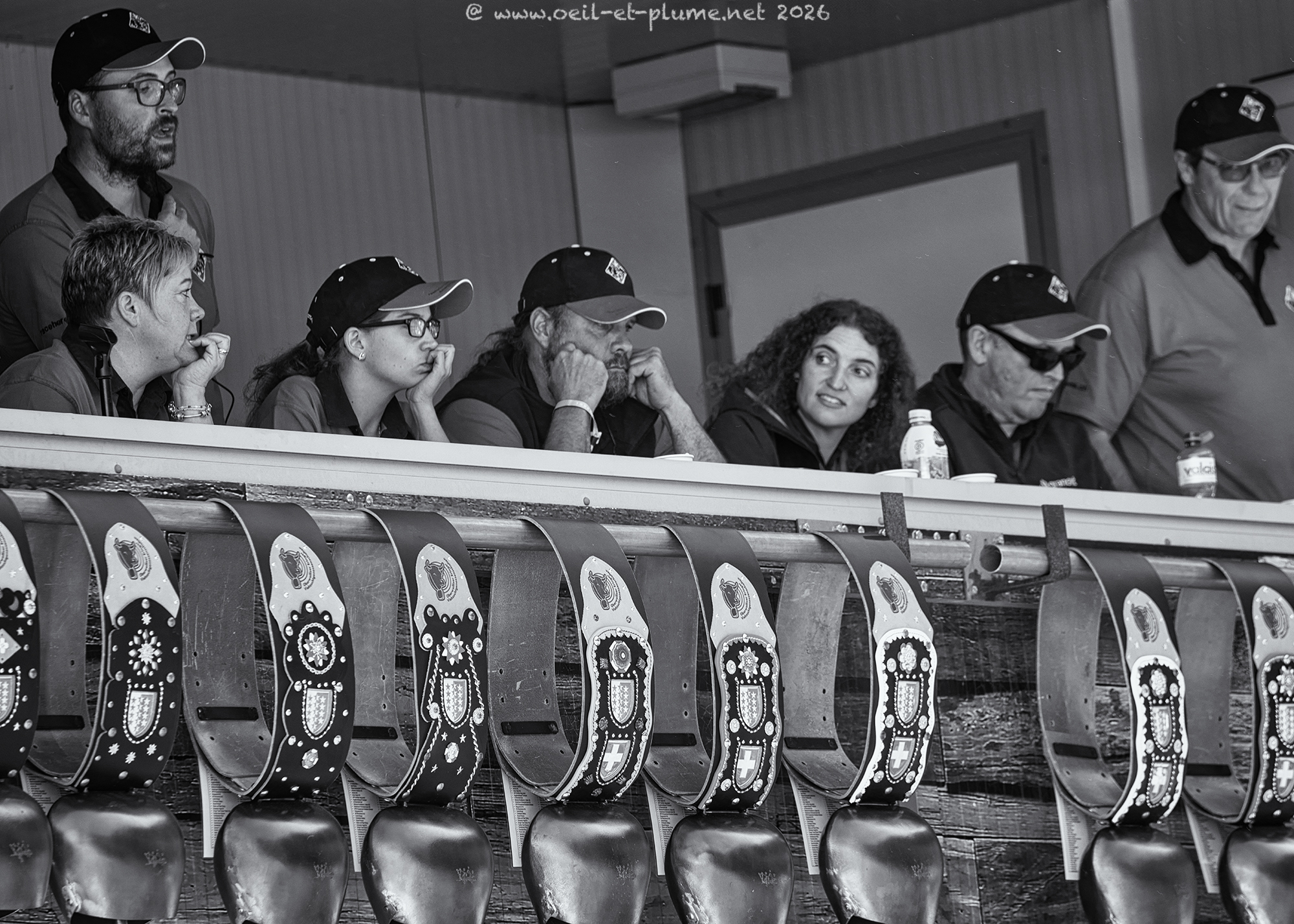
The imposing metal bells gleam in the spring light, their clappers swinging in the breeze. Beautifully crafted, their leather belts are as strong as Hérens cattle. Soon, they will adorn the necks of the winners of today’s Battle of Queens.
We are in the Valais area of the Swiss Alps, where a specific breed of cows is raised since ages. The physical characteristics of the Hérens cattle fit well with the rude geographical environment. Stocky and robust, those cows are agile in mountainous landscape and cope well with the strong climatic variations over the year. Moreover, owners of the Hérens cattle concur to state that the cows are generally easy to raise and lead. While they produce lesser quantities of milk than many other cattle breeds, their meat is much appreciated by gastronomes.
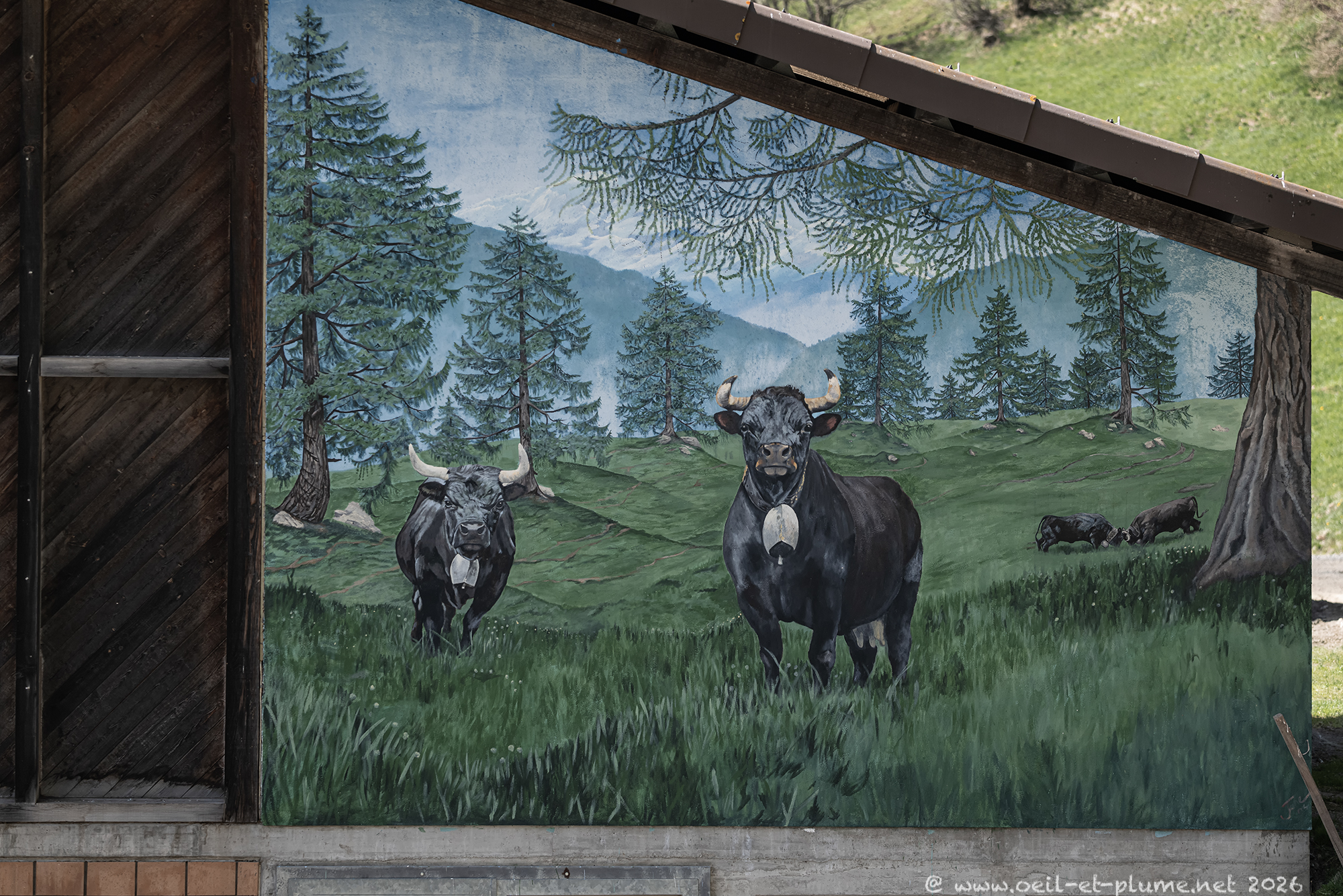
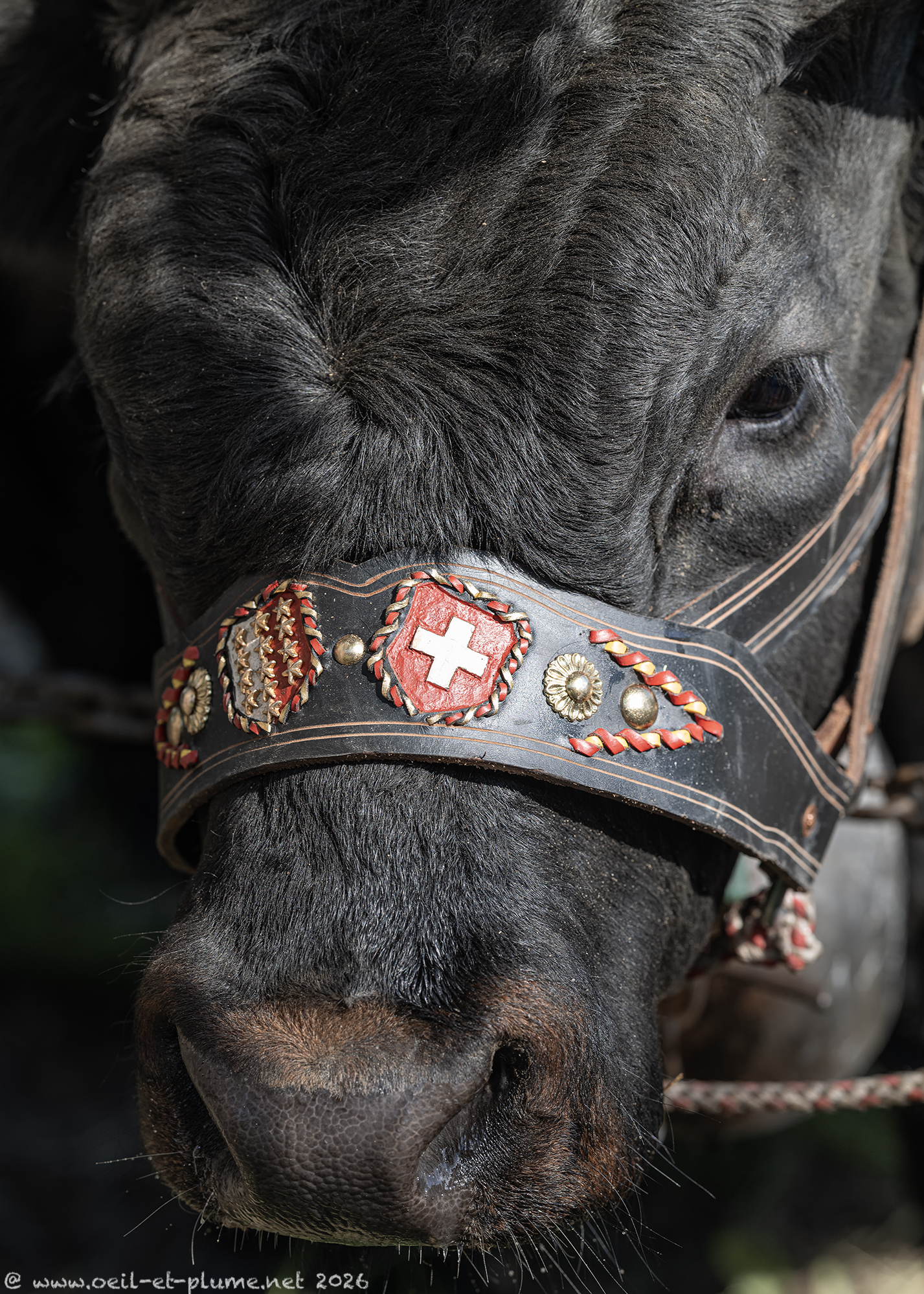
The Hérens cattle are renowned not only for their physical robustness but also for their bellicose temper and their unique social structure centered around dominance fights. Keen to live in herds, they elect their leader through fighting. Those fights take place usually early spring when the cows leave their winter quarters, as well as early summer when the group leaders meet with other herds in hight pasture lands after their seasonal migration (inalpe). Hence the Battles of Queens, during which the cows naturally establish their hierarchy without human intervention.
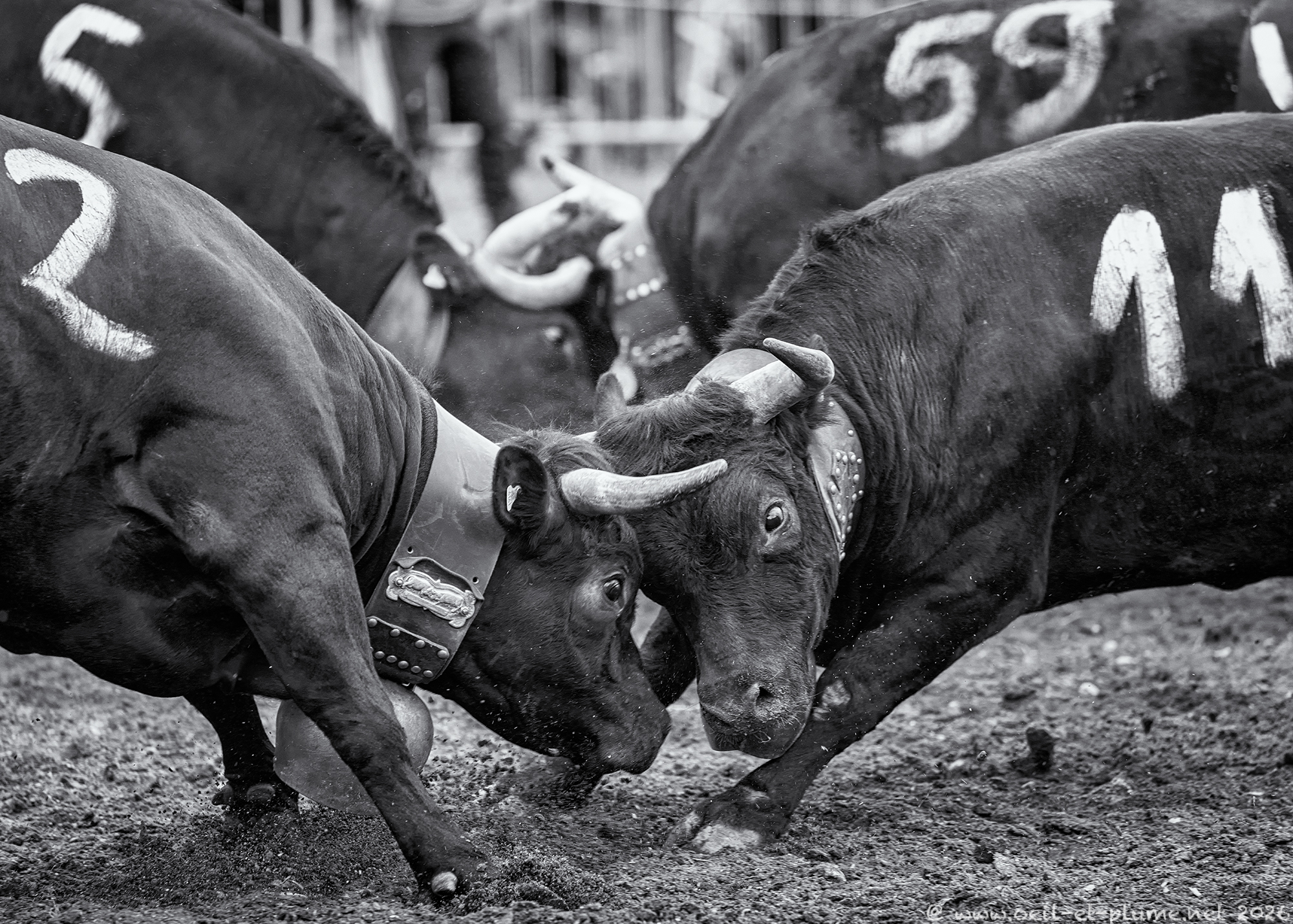
This instinctive behaviour has evolved into a popular cultural event in Valais, where farmers bring their best cows to compete in organised tournaments. Selected through regional contests, the most combative cows partake the national Battle of Queens, held annually. The final winner is crowned the “Queen of Queens” (Reine des Reines) – a title yielding significant prestige to the owner. Those fights share no similarity with corridas, which oppose bulls and people. Unlike bullfighting, they rarely result in serious injury, as the cows typically stop fighting once the hierarchy is established.

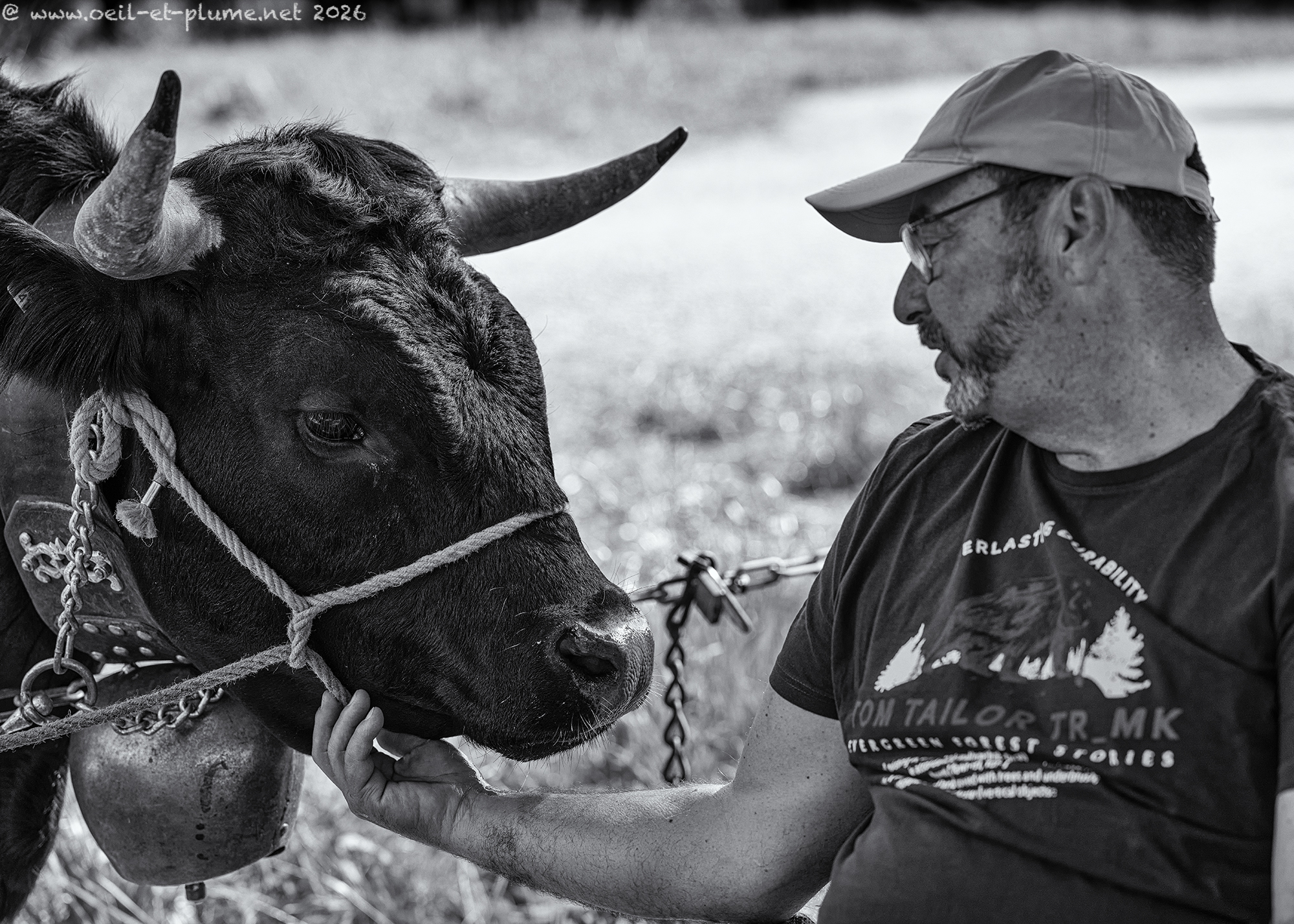
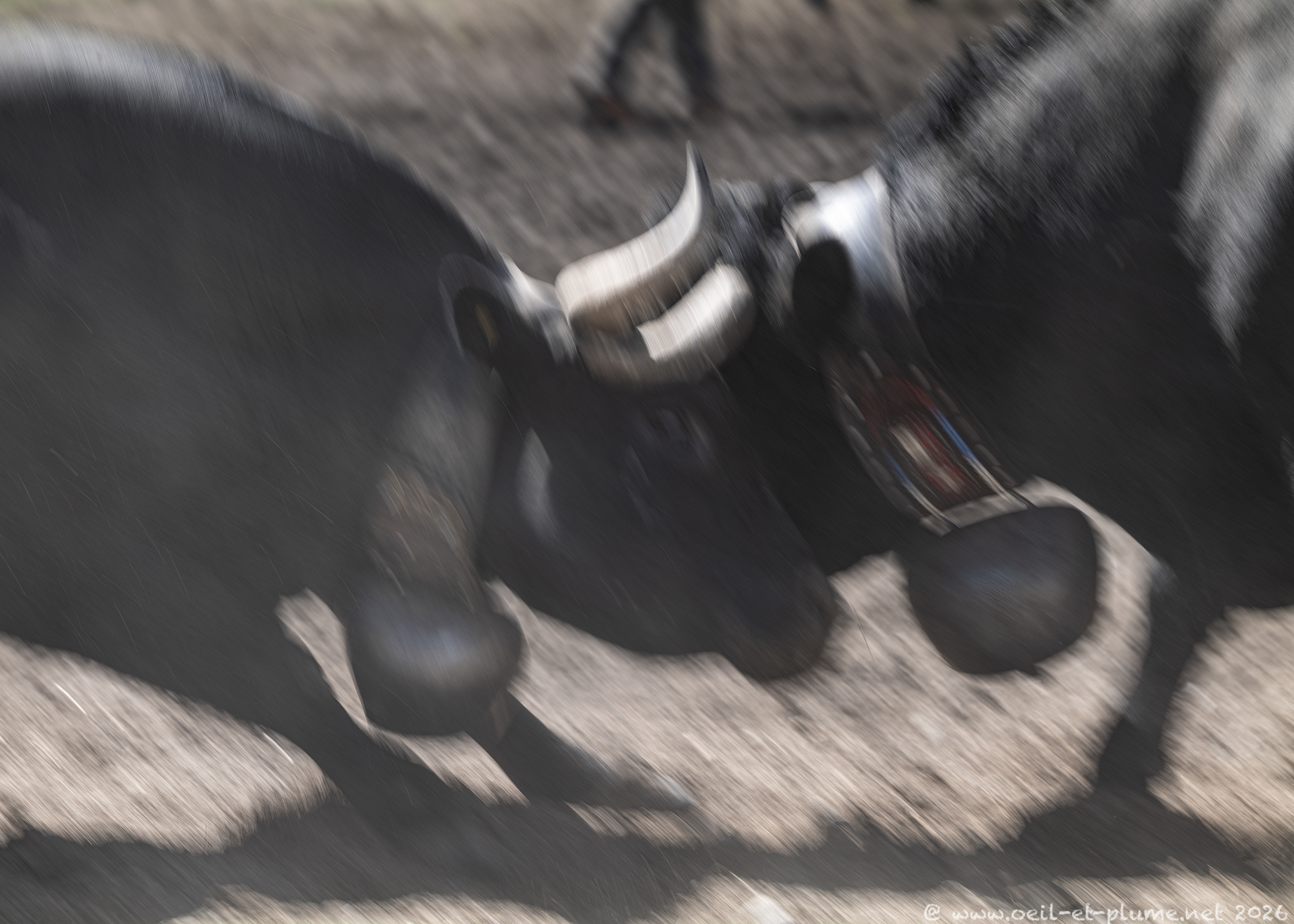
I recently attended three battles of Queens to refine my understanding and feelings about them. Drawing upon those traditional contests, my photographic essay aims to go beyond the usually candid and frozen visual representations of the fighting. My pictures capture and interpret motions and emotions expressed by the cattle and the people; they also explore the deep and special connection between the cows and their owners.
Battles of Queens
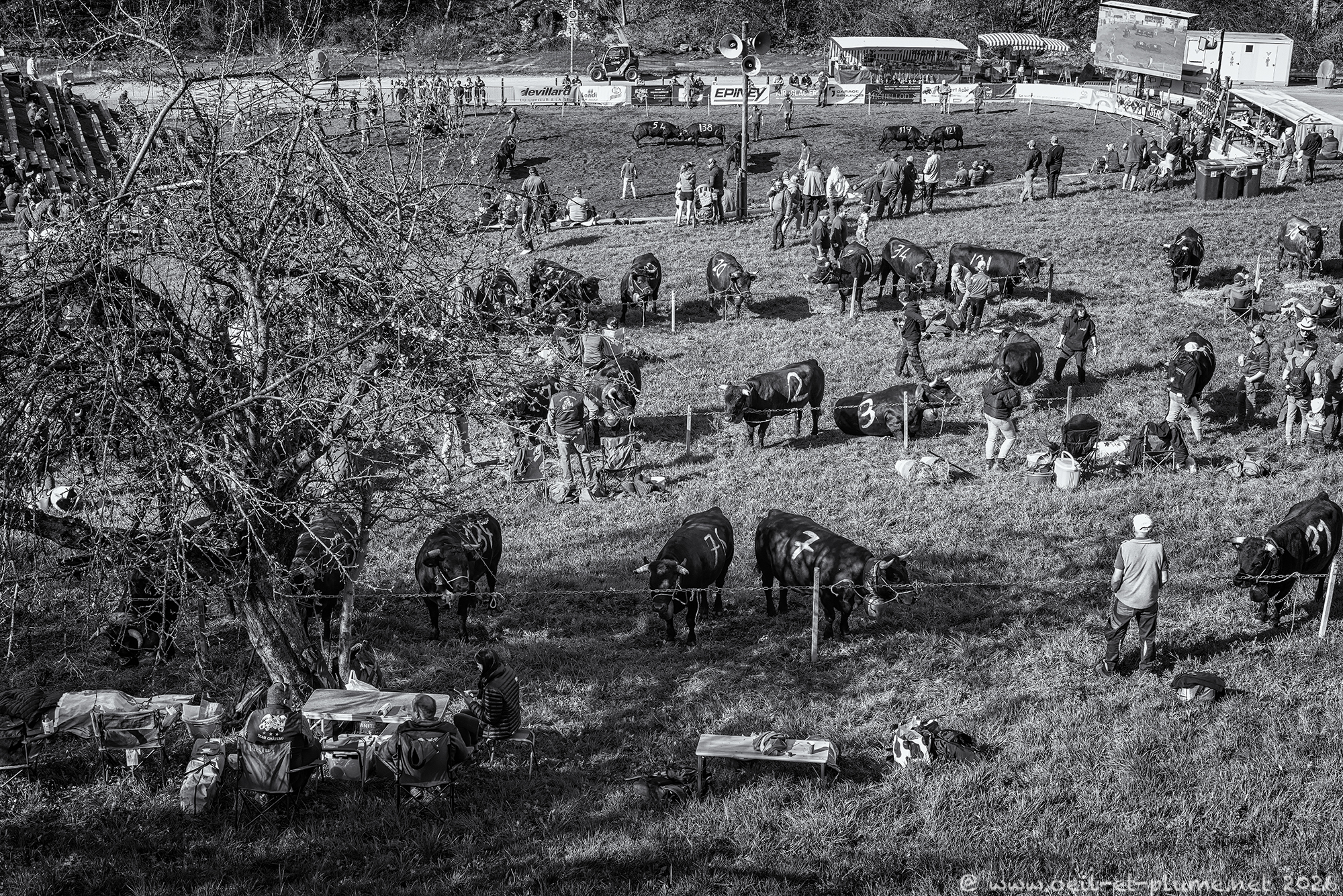
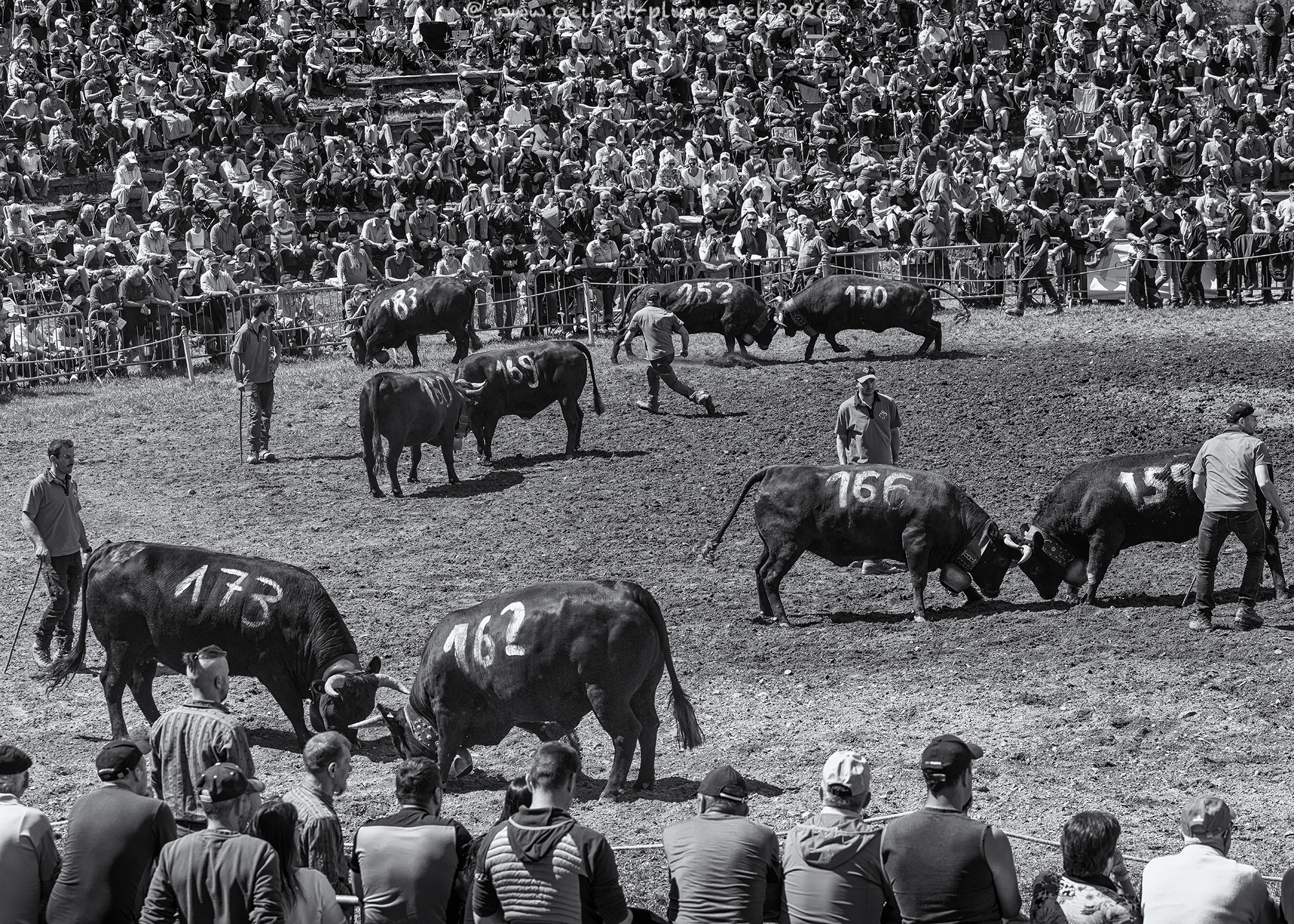
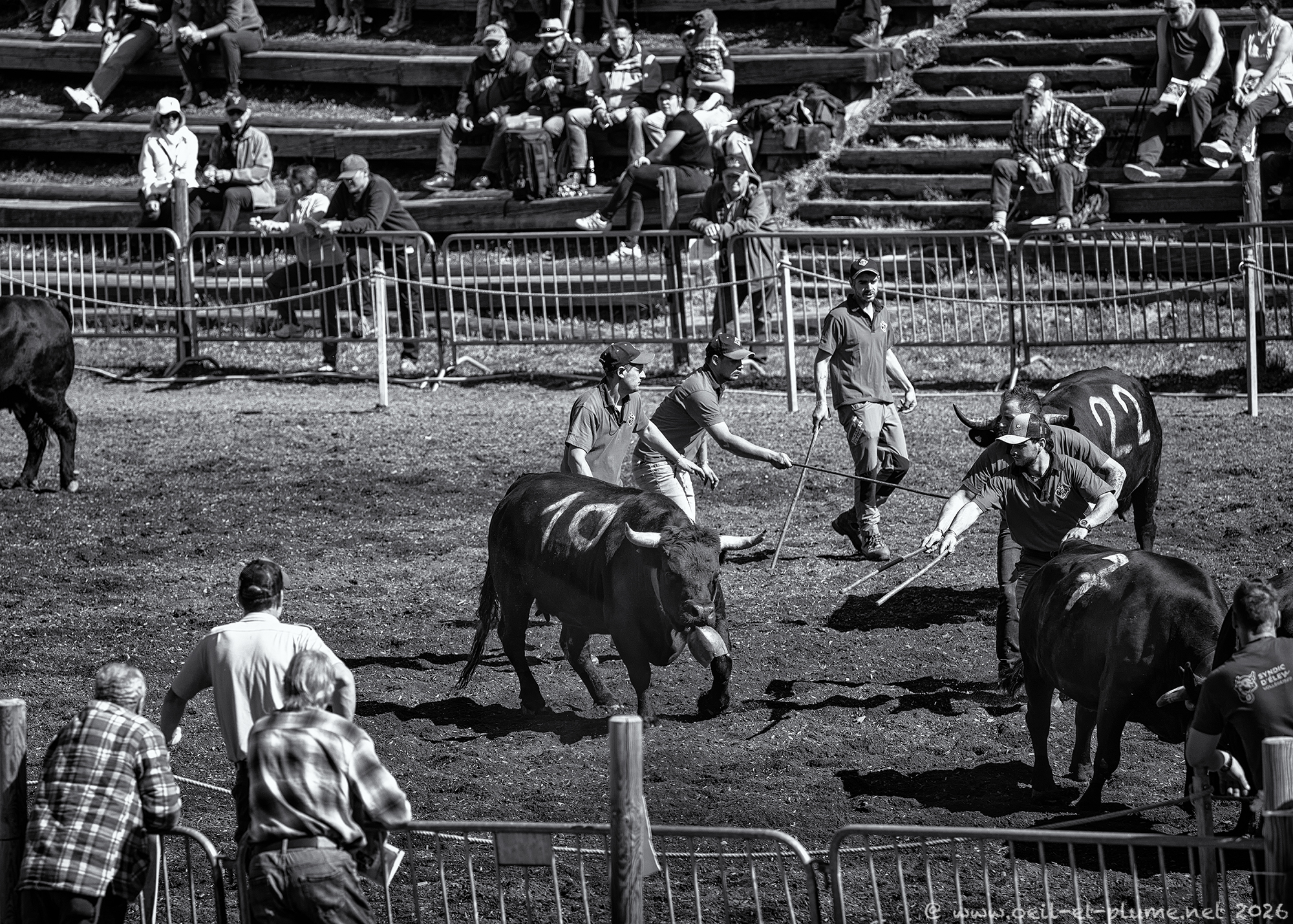
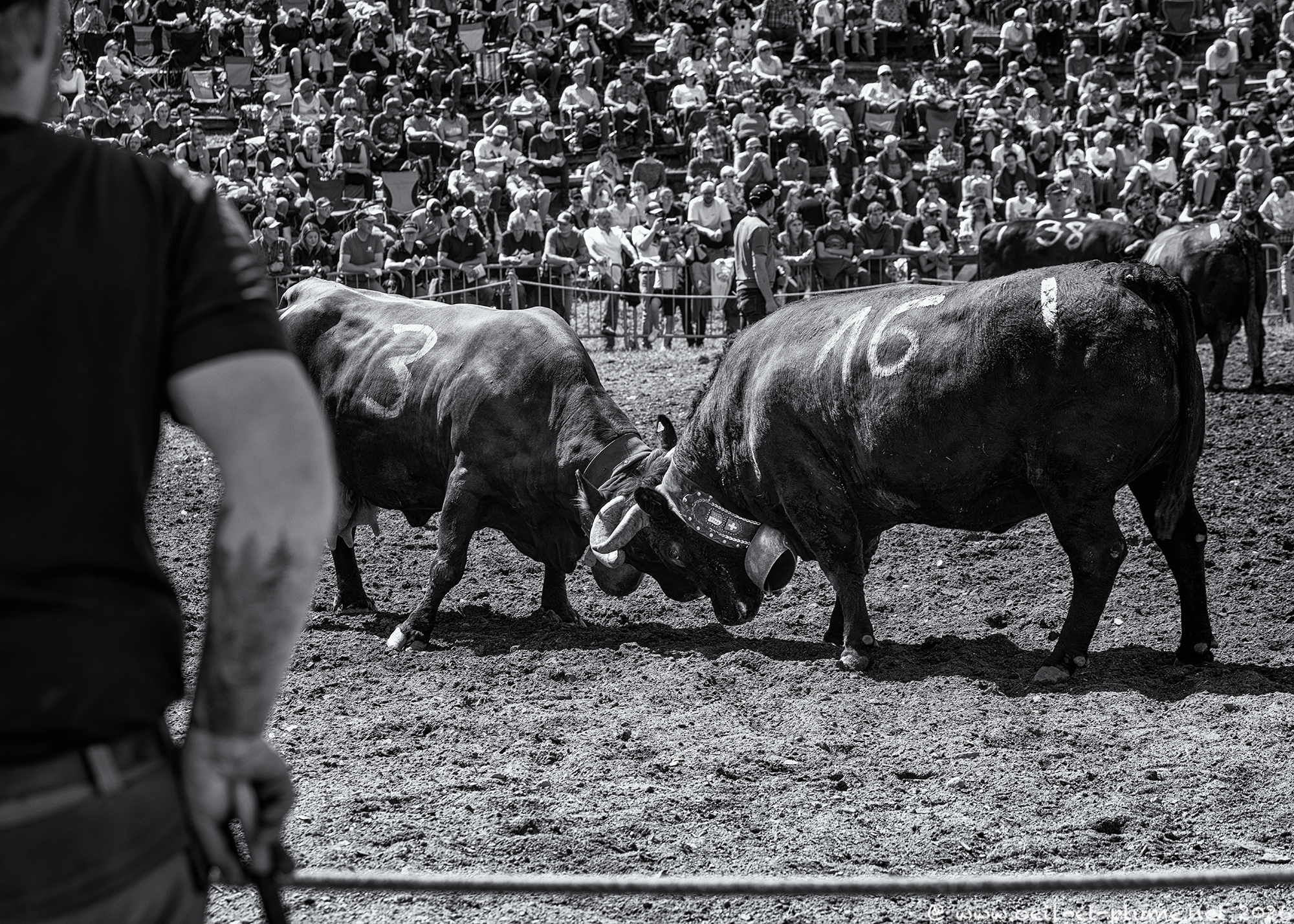
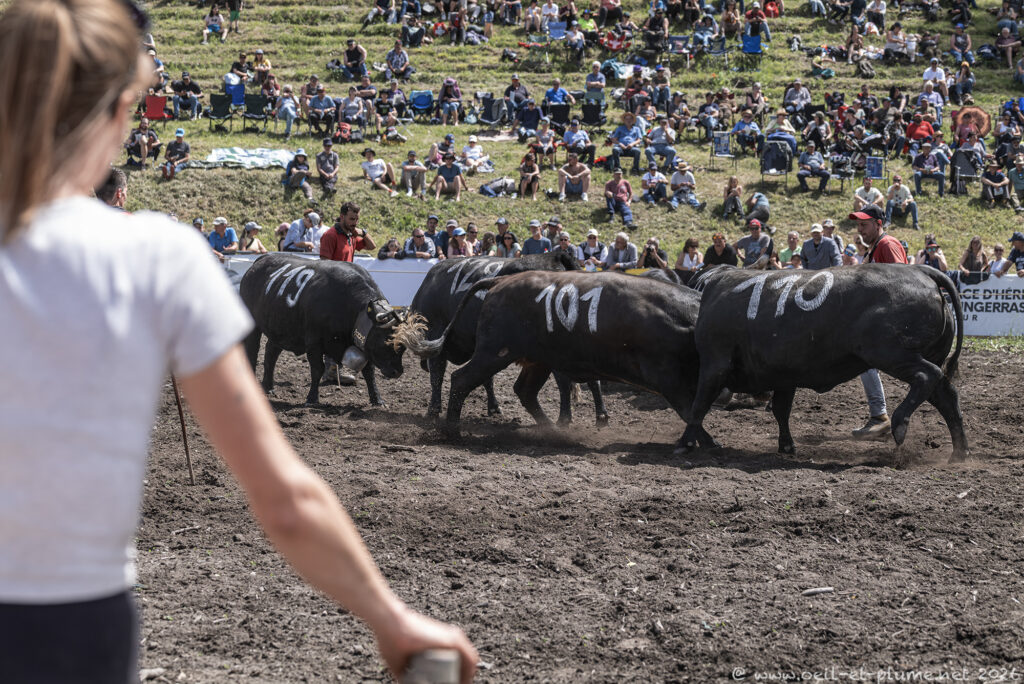
The various fighting rounds are structured along several categories defined primarily by the weight of the animals. Prior to the fights, the horns of the participating cows are inspected to minimise the risk of serious injury. Once inside the arena, the owners release their animals and depart, making way for the beaters. These handlers guide the cows to encourage engagement and monitor the bouts, acting on instructions from the jury. The beaters’ role is inherently risky, as they operate amidst multiple simultaneous fights.
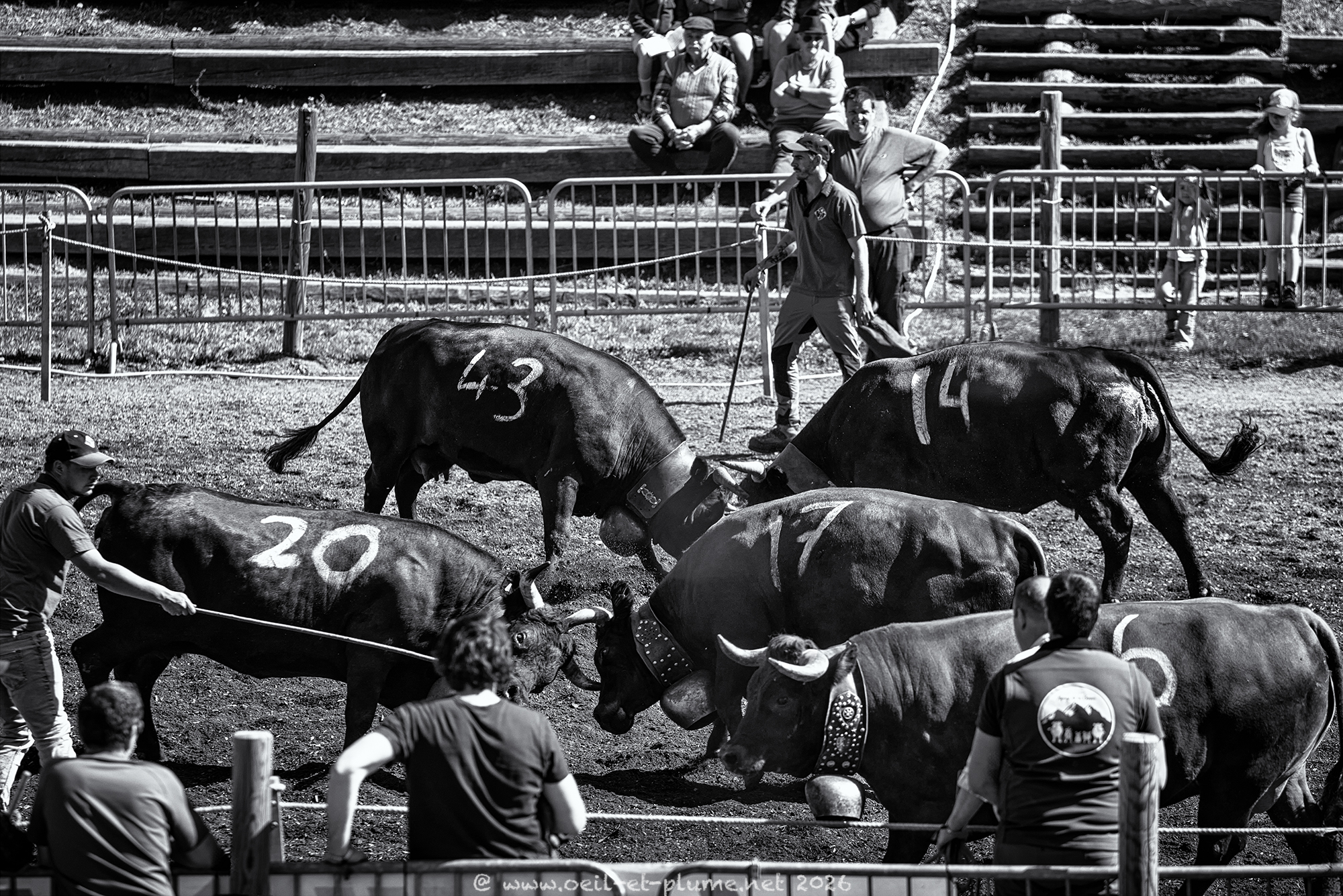
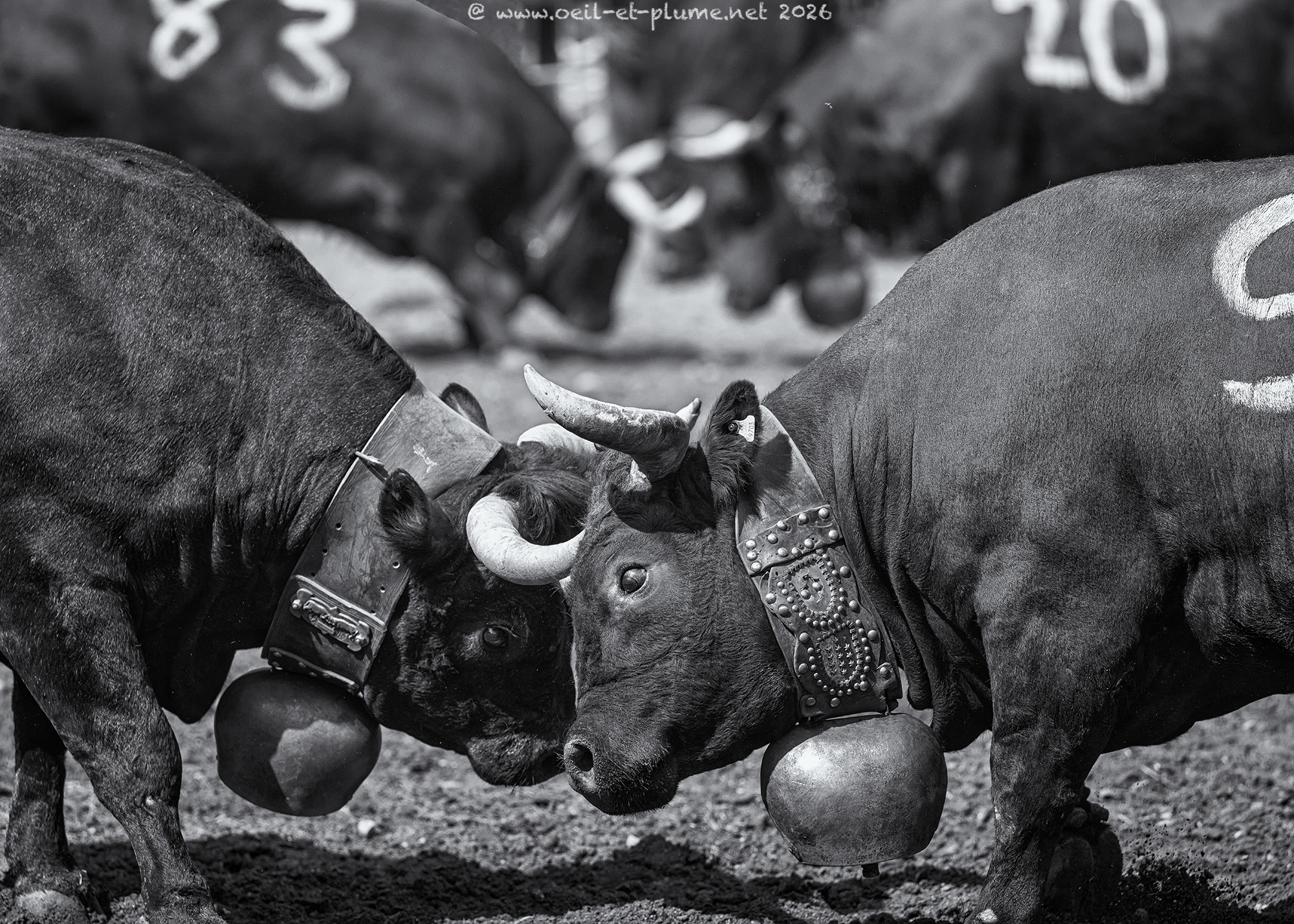
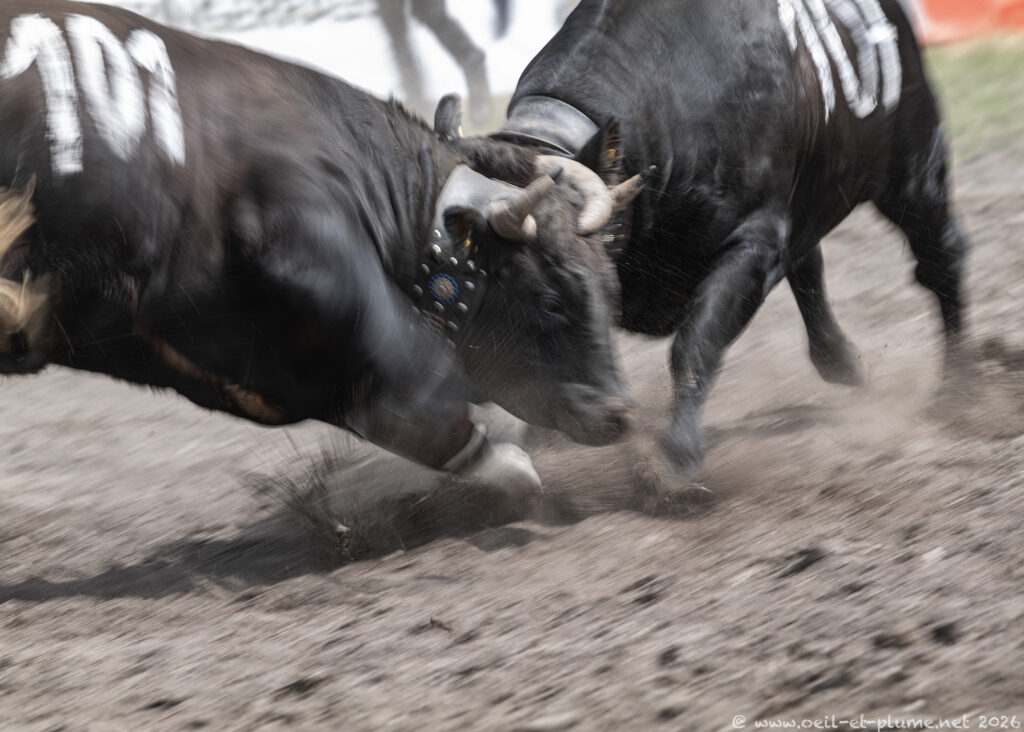
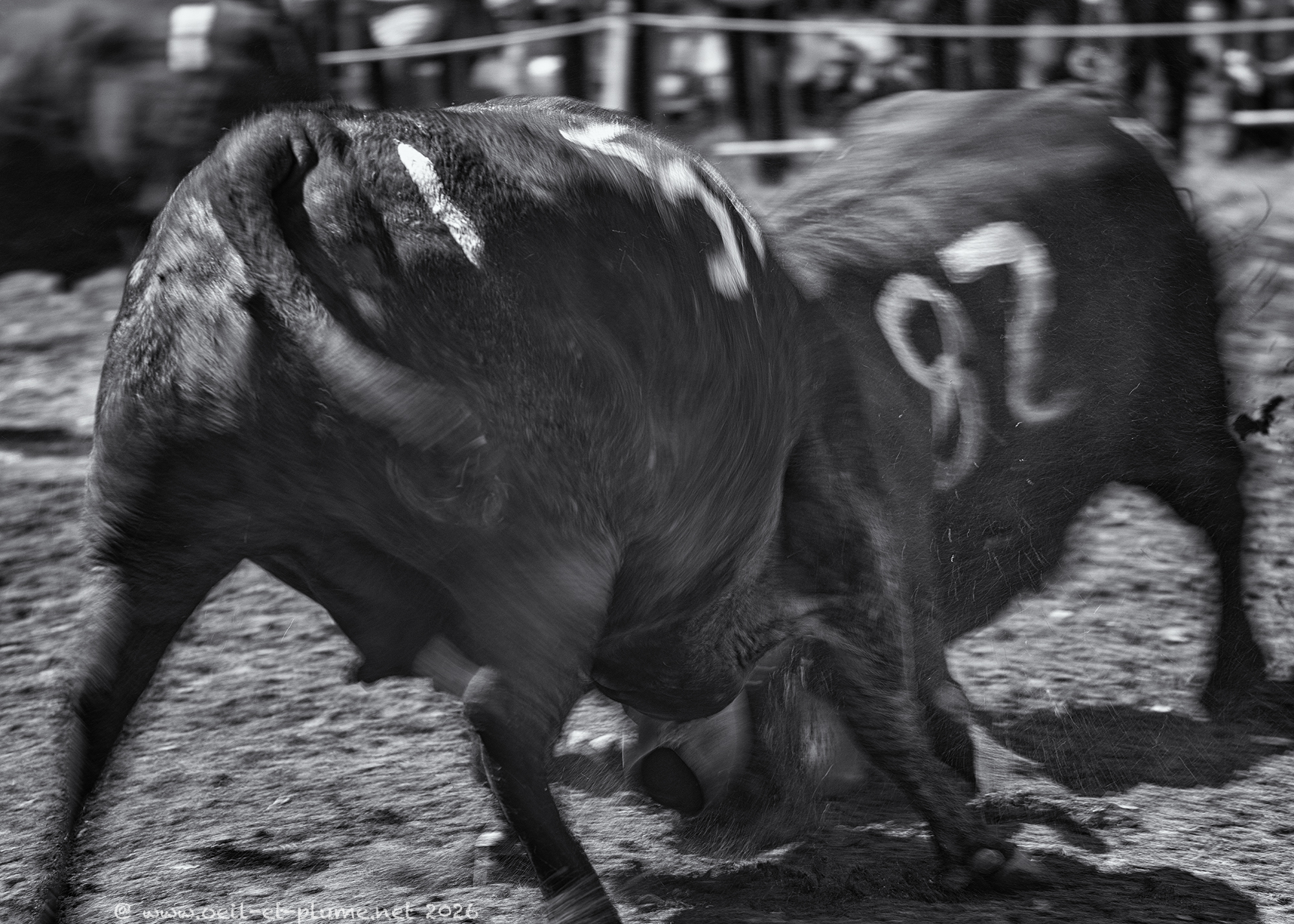
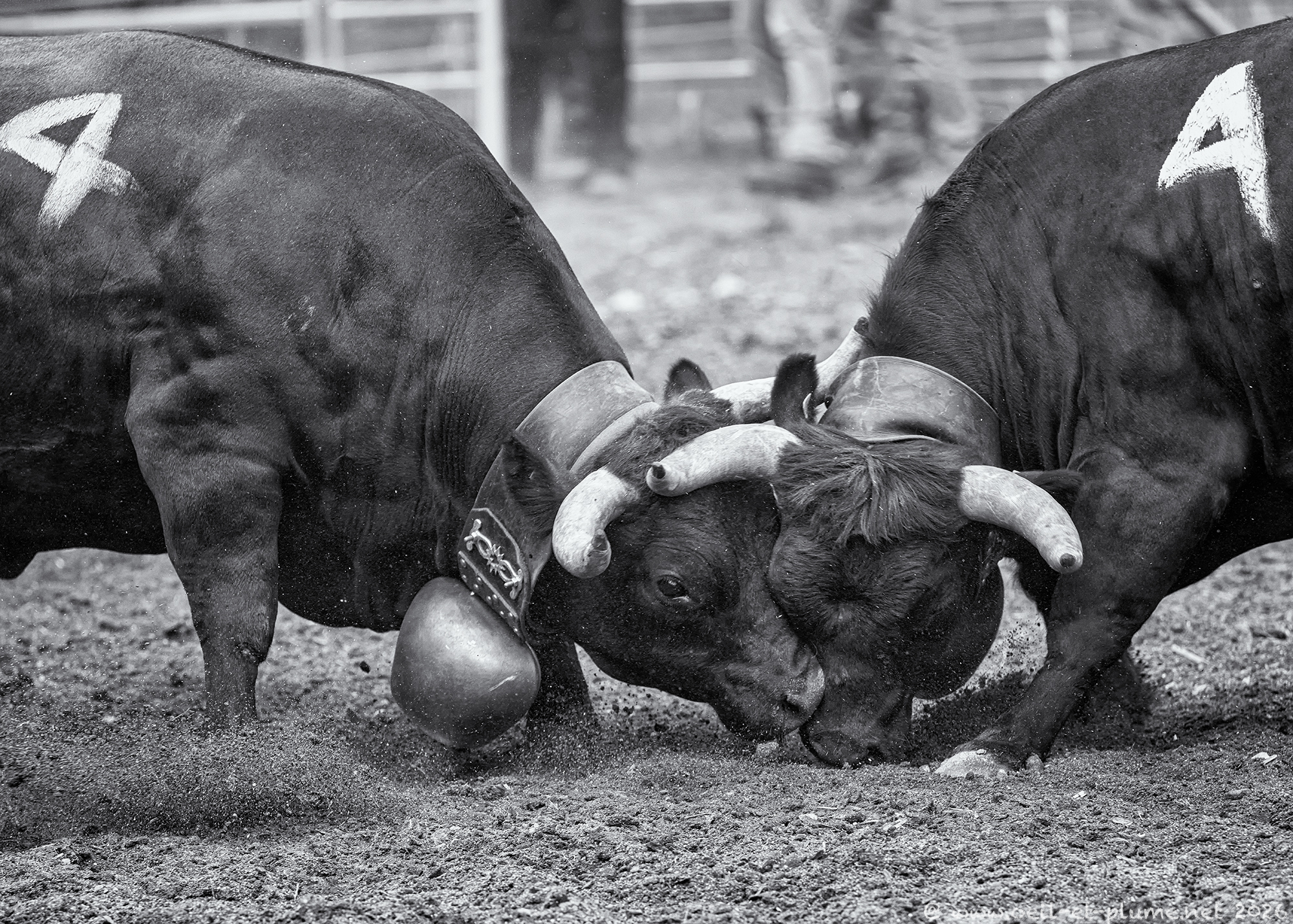
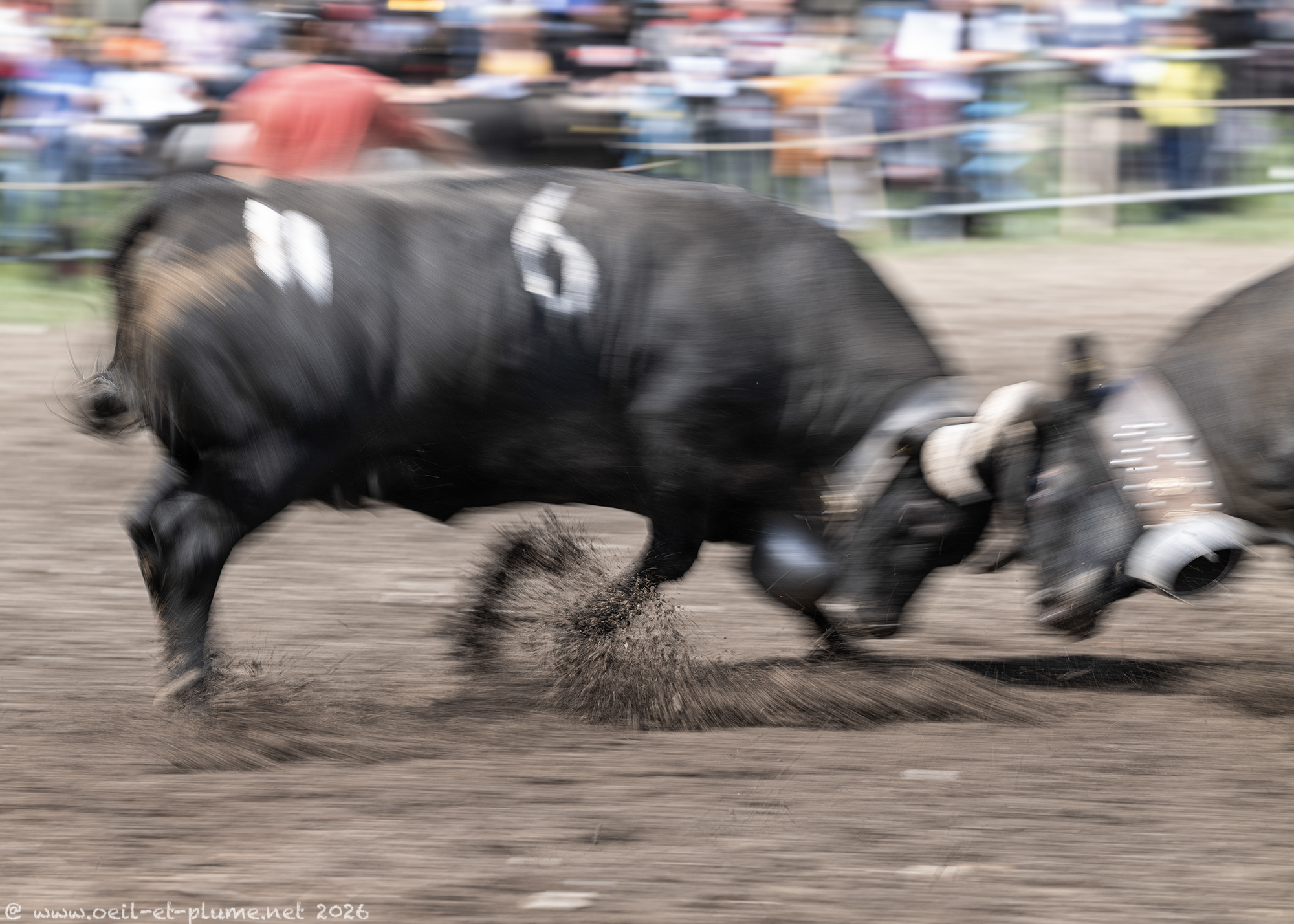
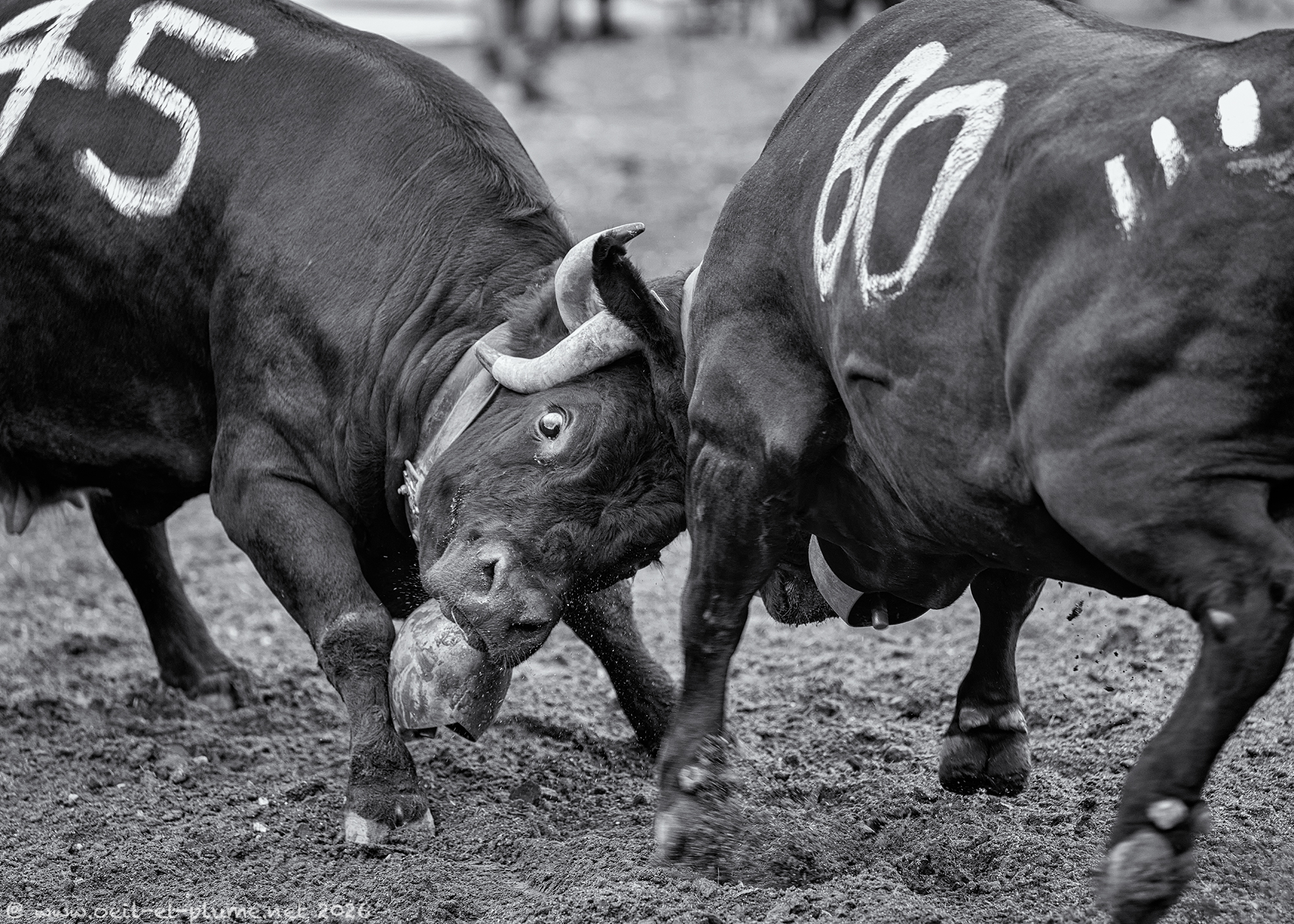
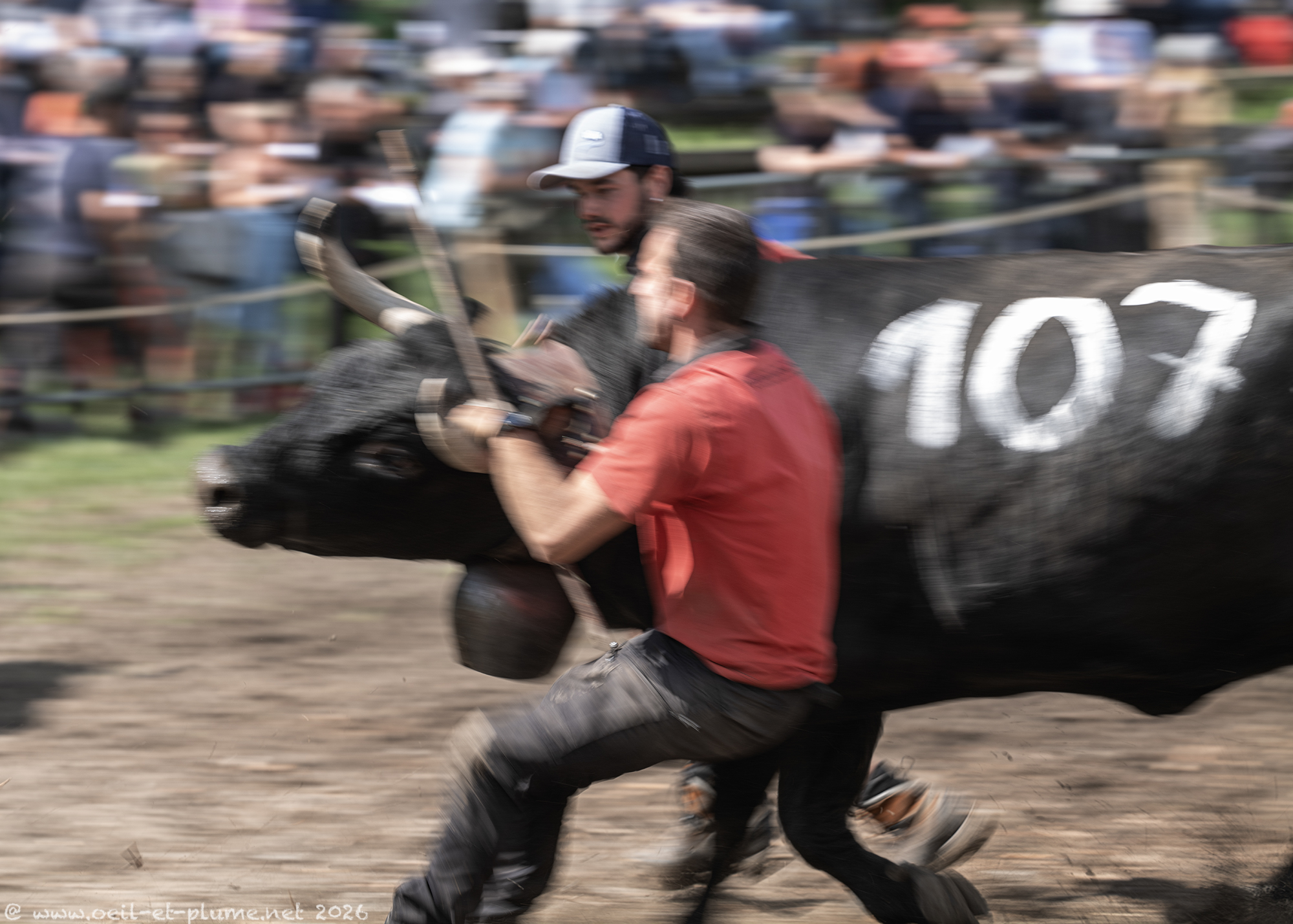
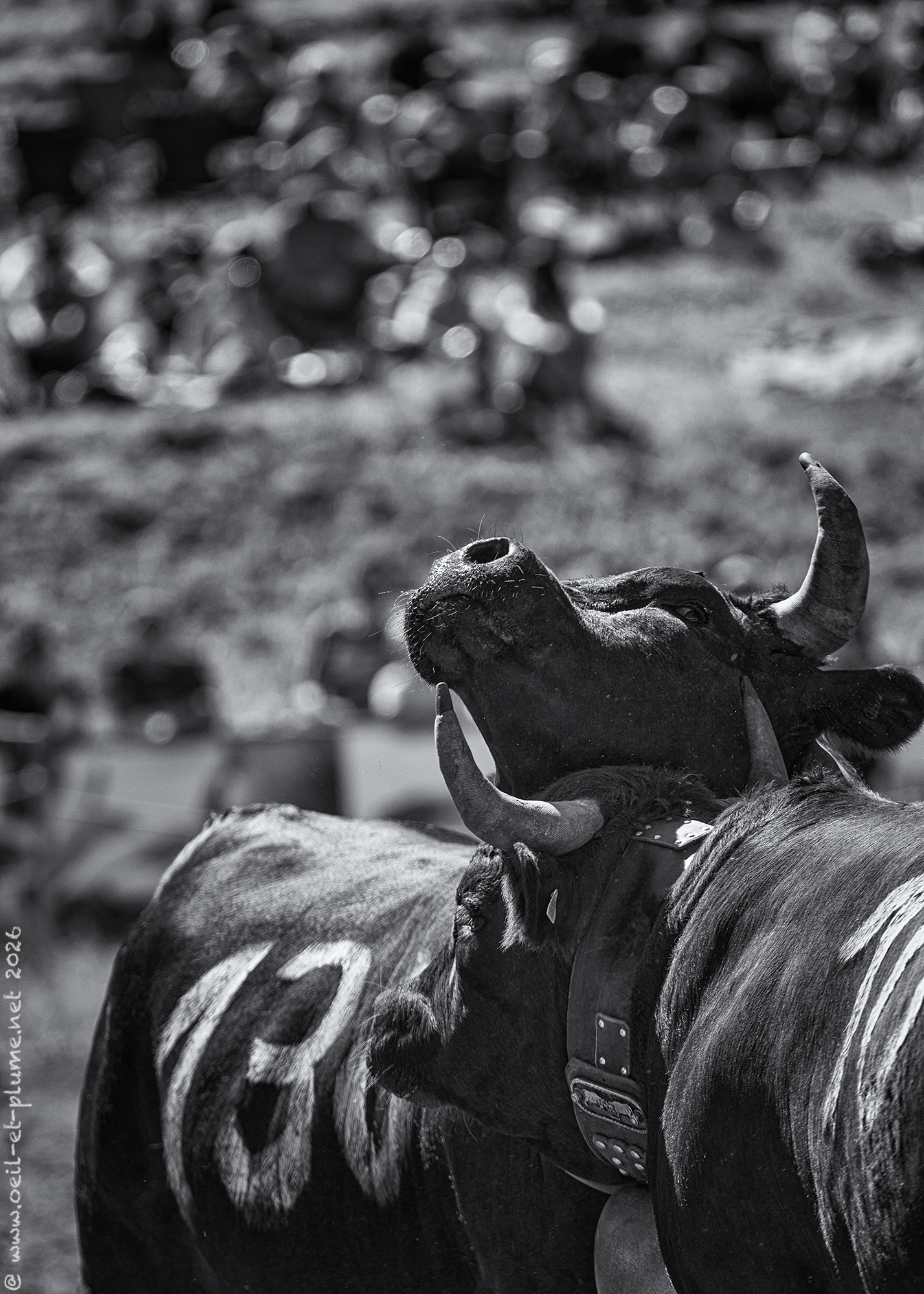
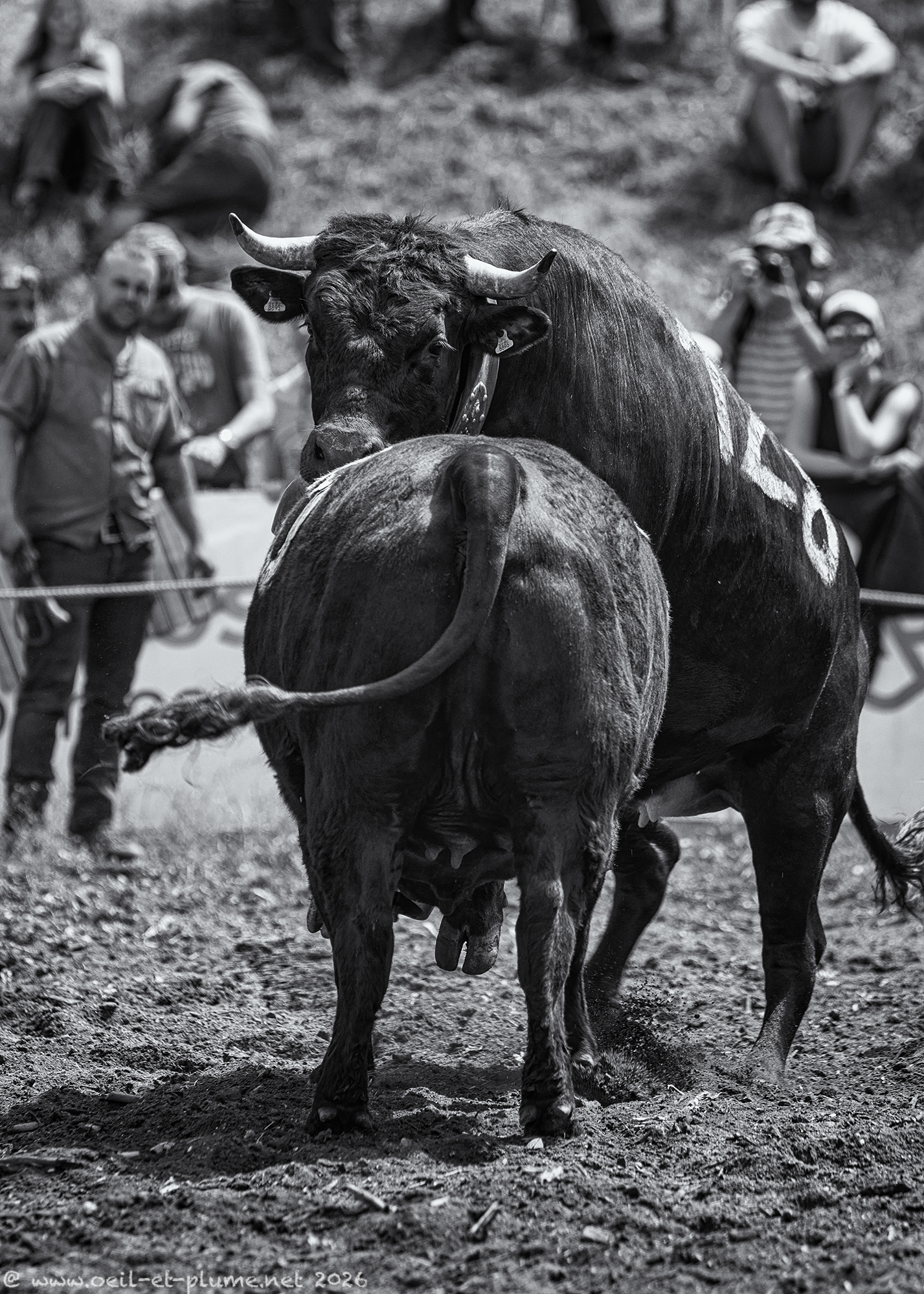
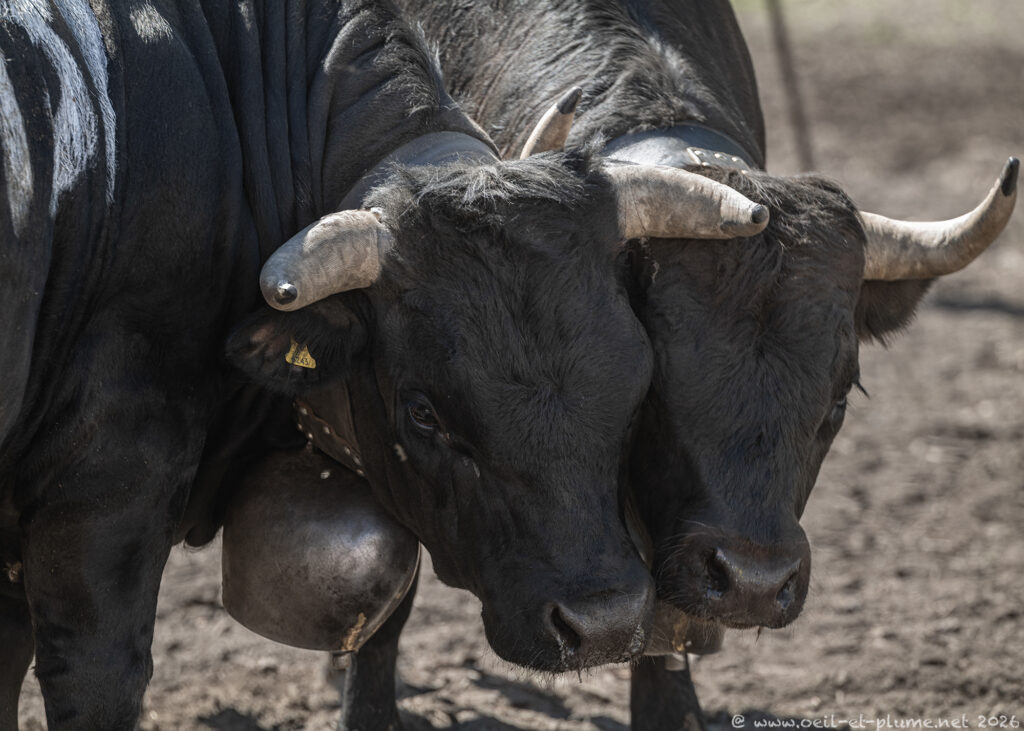
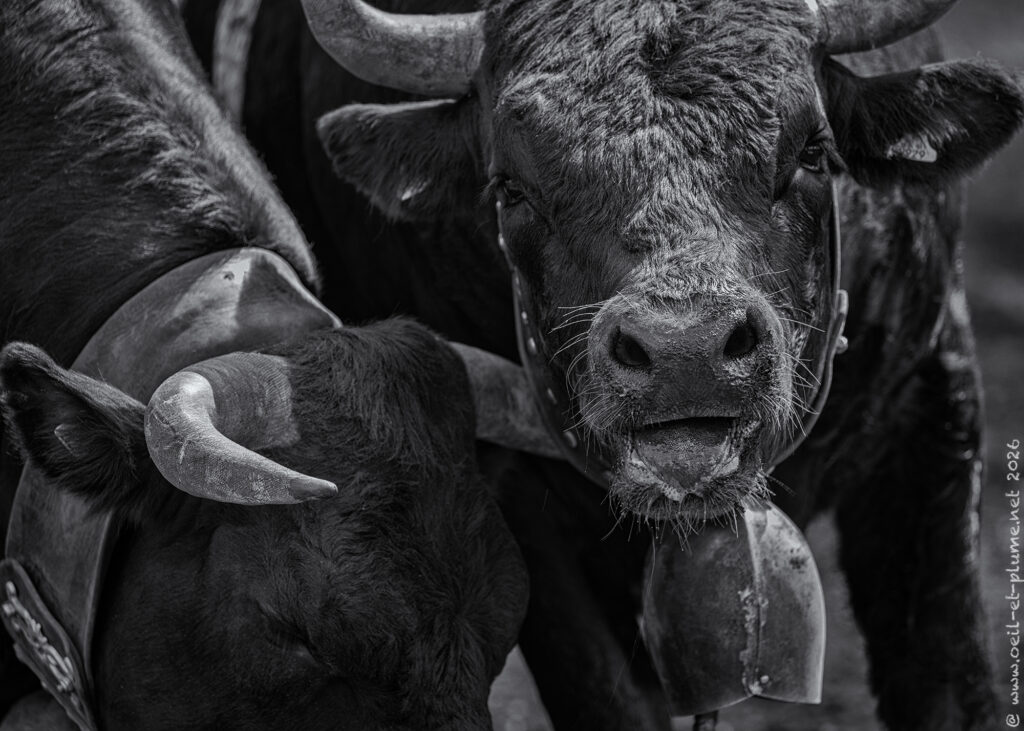
Once released into the arena, the cows rarely engage in combat immediately. Instead, they circle the space, identifying potential challengers and observing their surroundings. When a pair of opponents forms, a phase of mutual assessment and intimidation begins. The animals stand still, breathing heavily, lowering their heads, and pawing the ground to tear up earth and grass, all while gauging their counterpart’s reaction. Suddenly, the two fighters engage and clash.
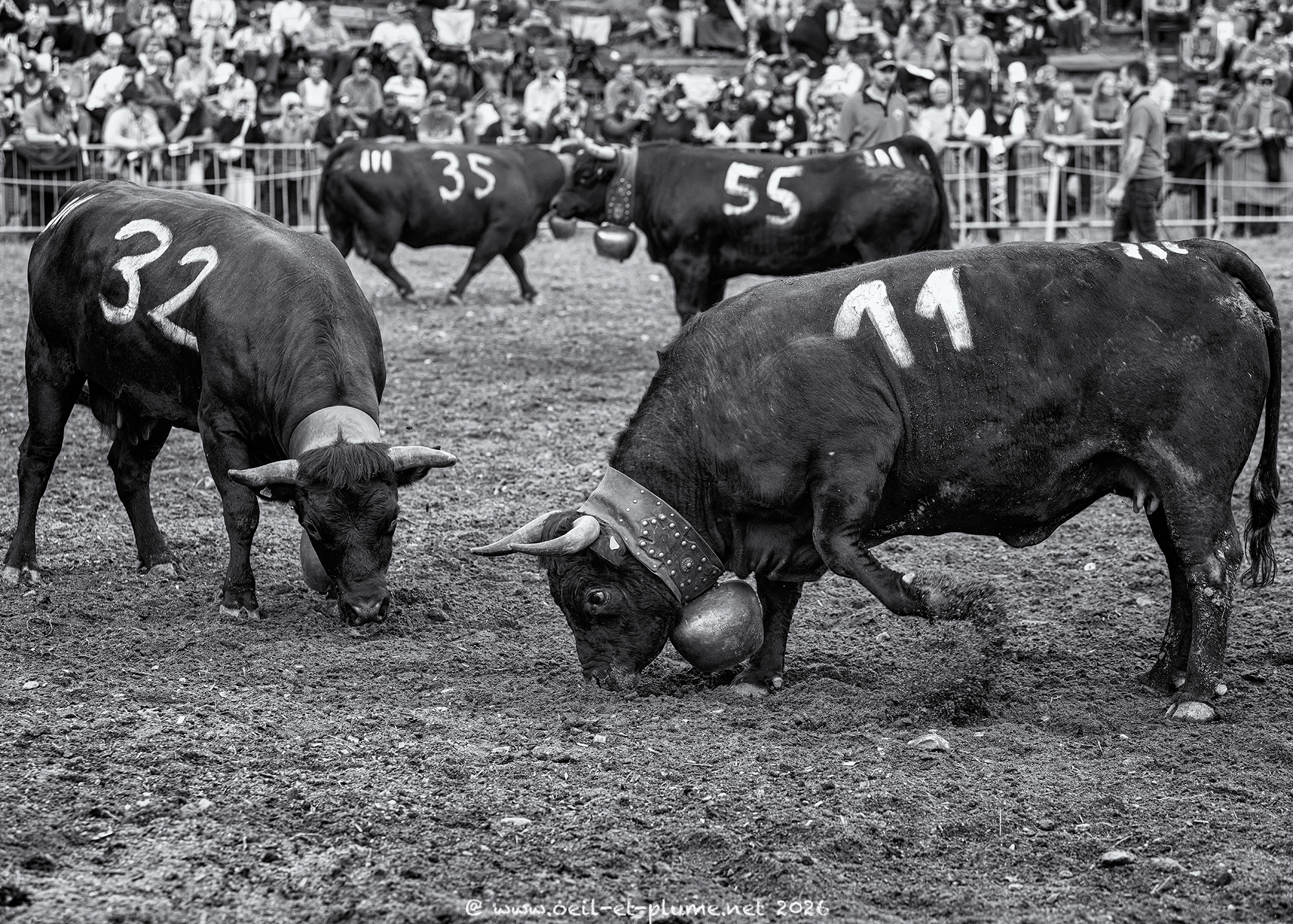
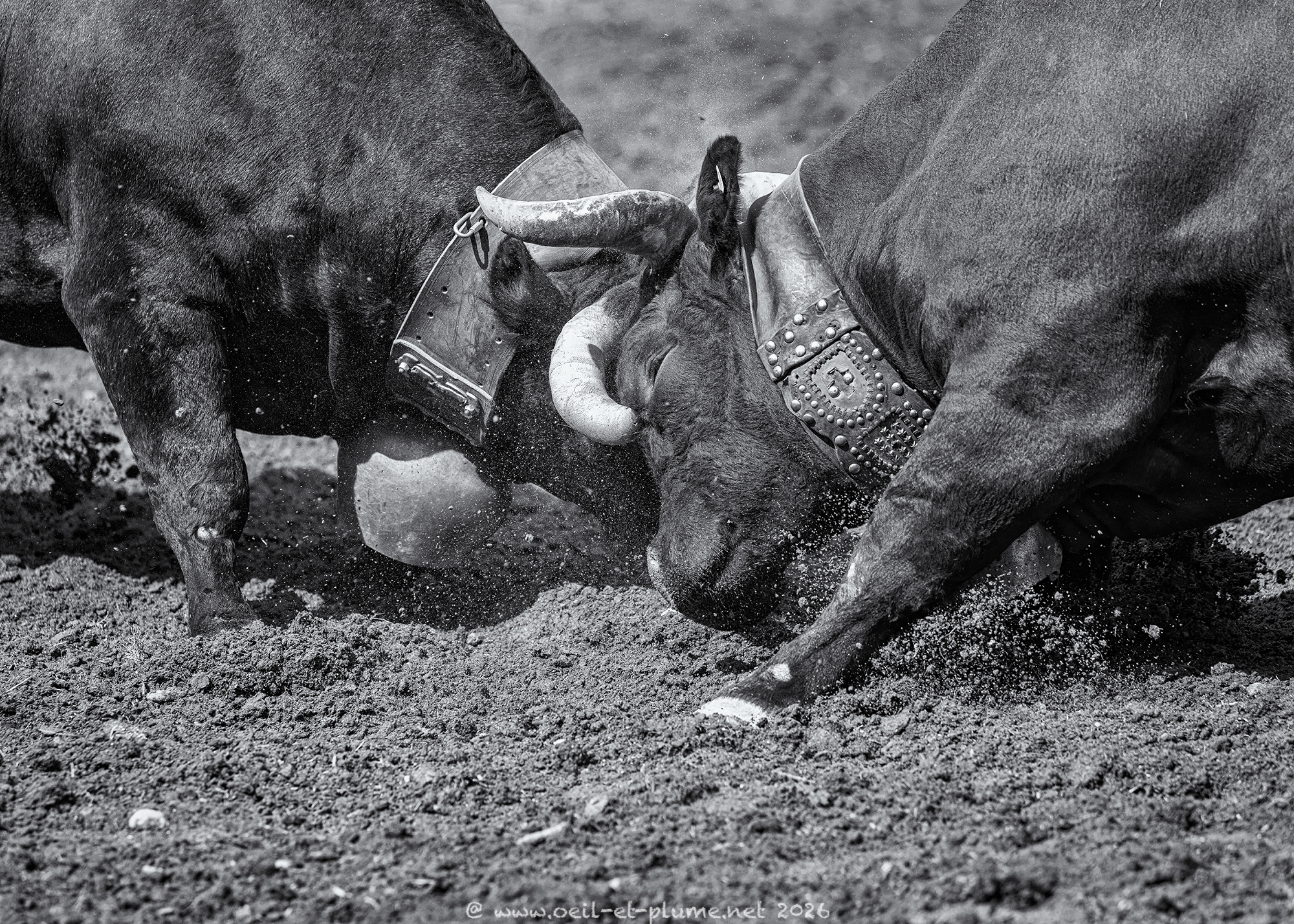
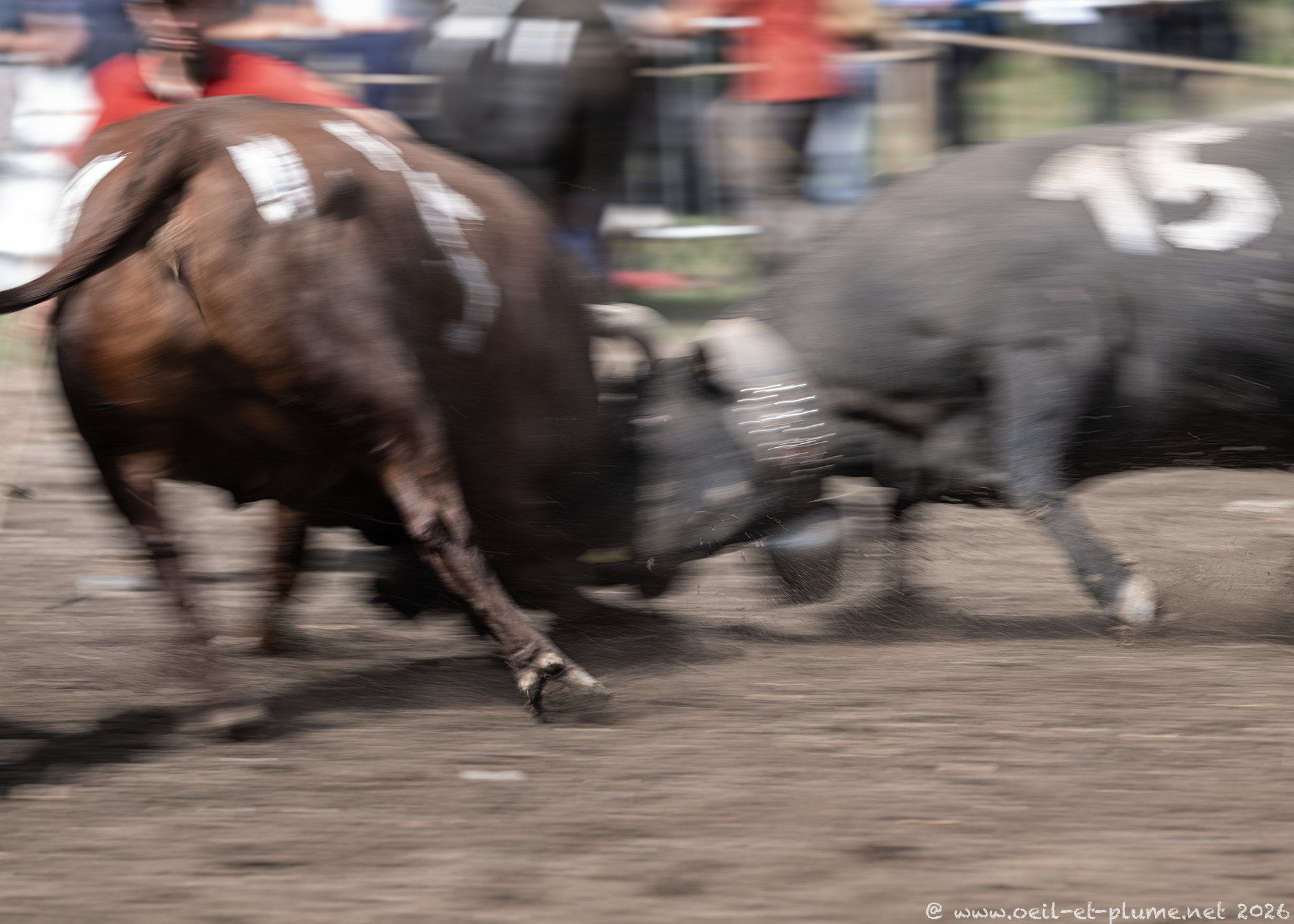
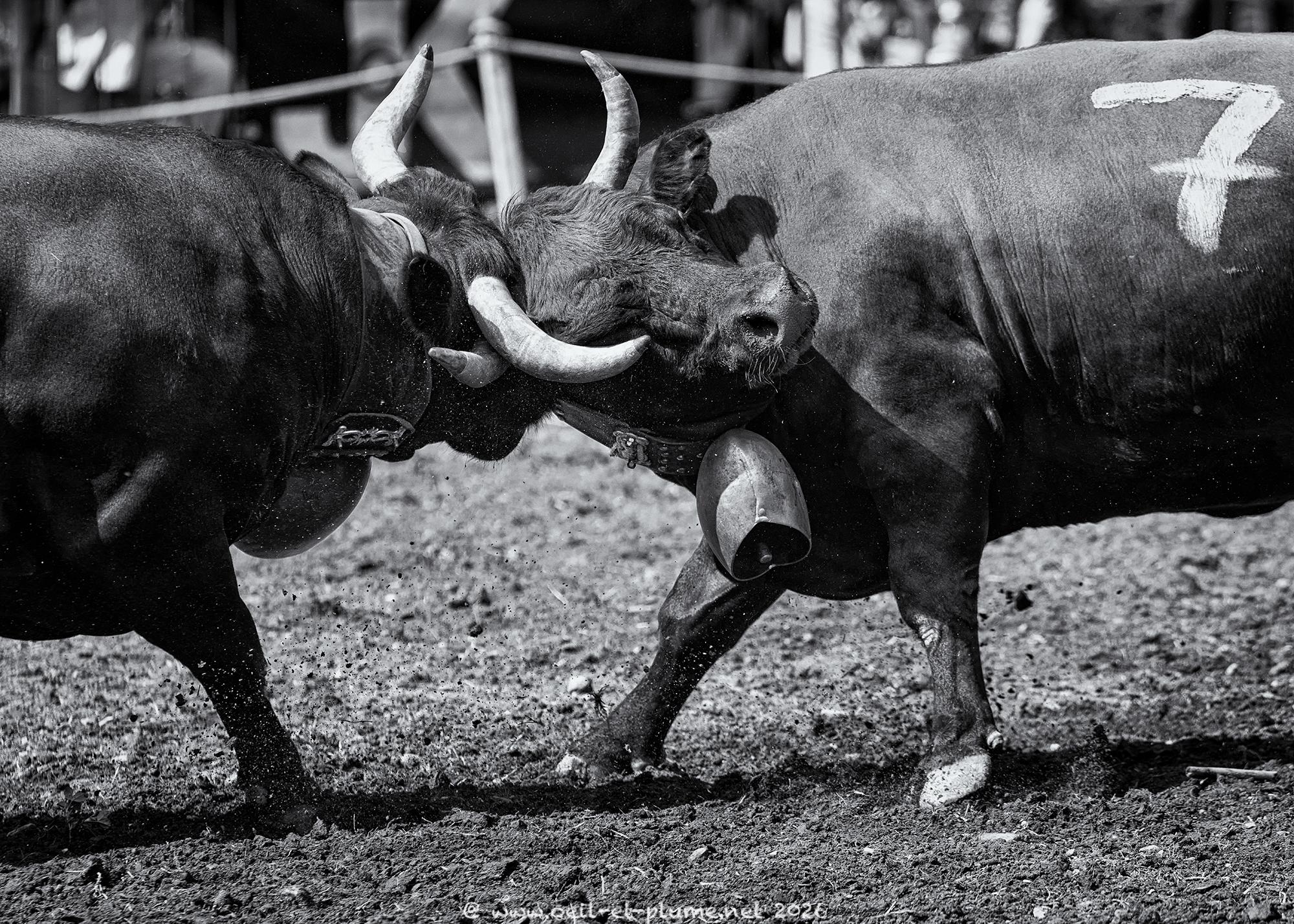
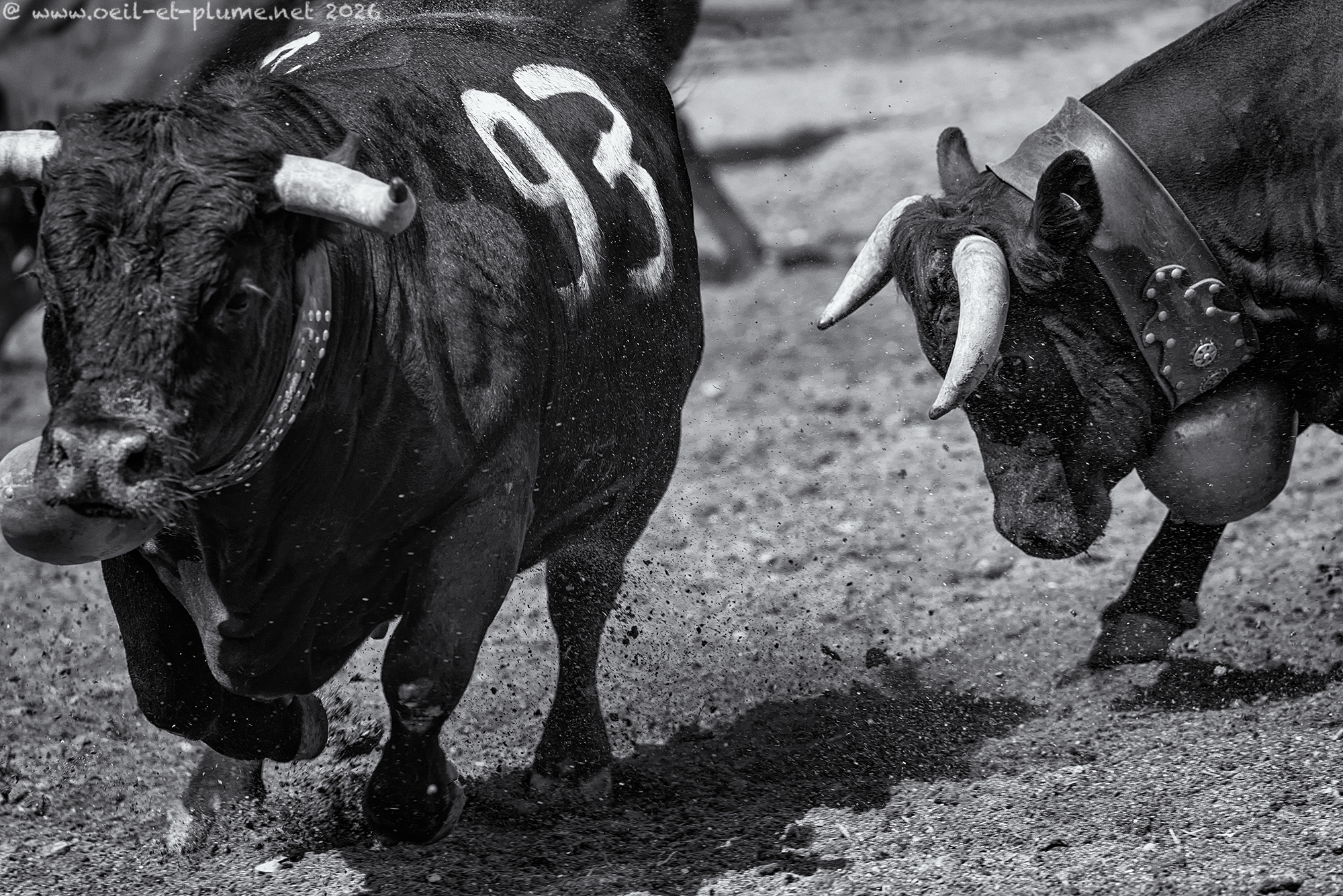
Cows that lose the fight or avoid engaging their opponents are eliminated from the competition. The most combative animals in each category advance to a final round, where the winners are awarded one of the prestigious bells mentioned earlier.
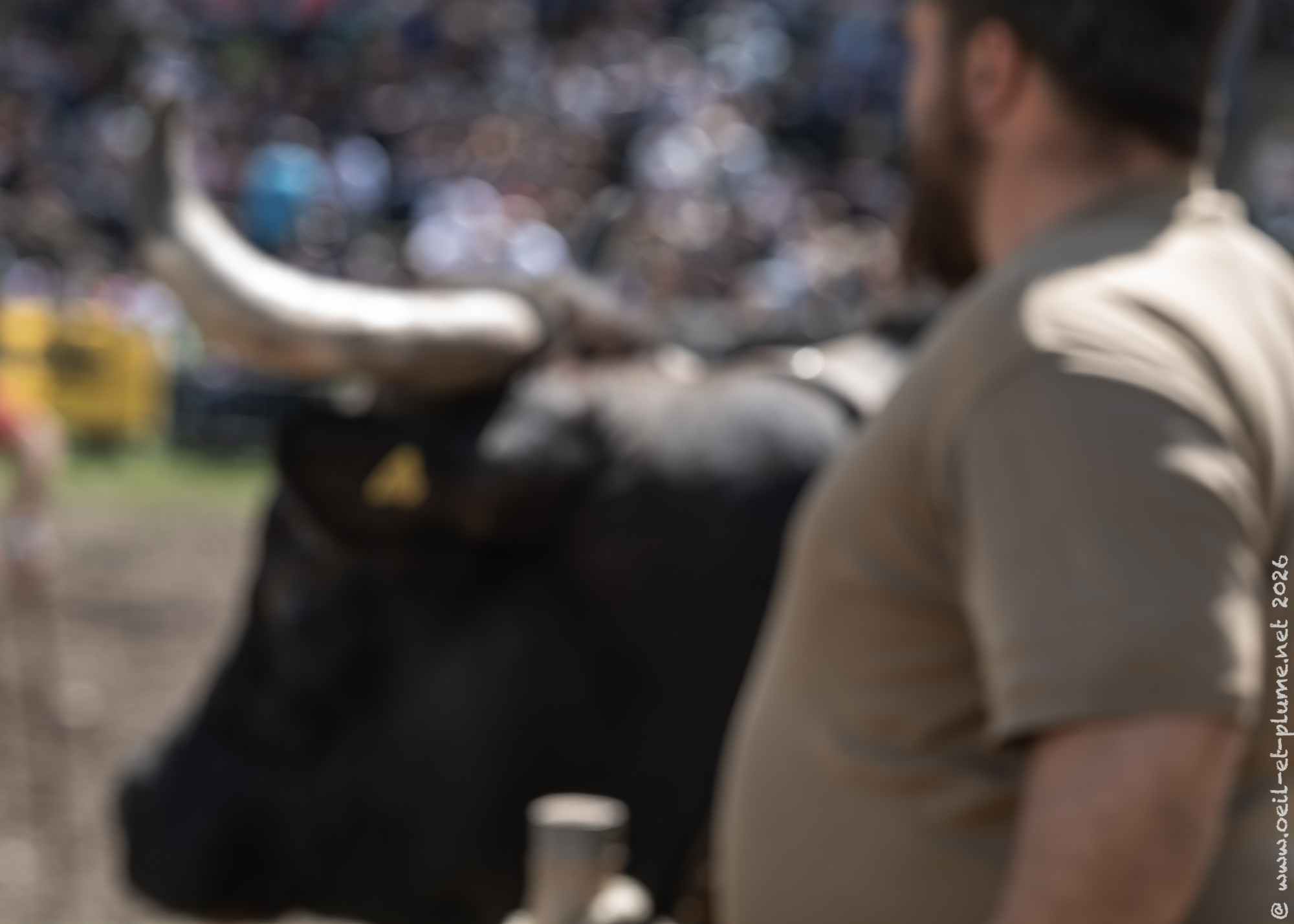
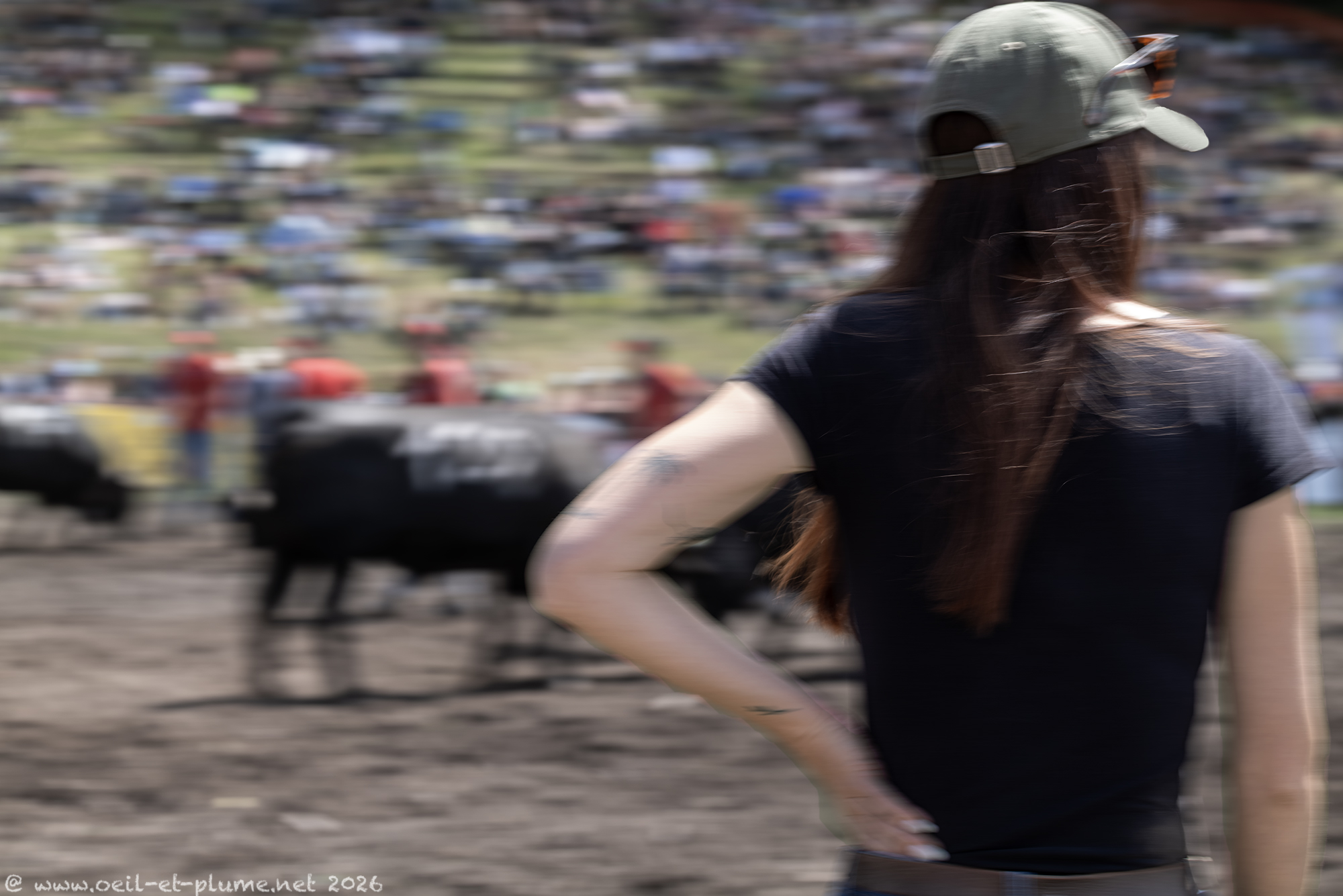
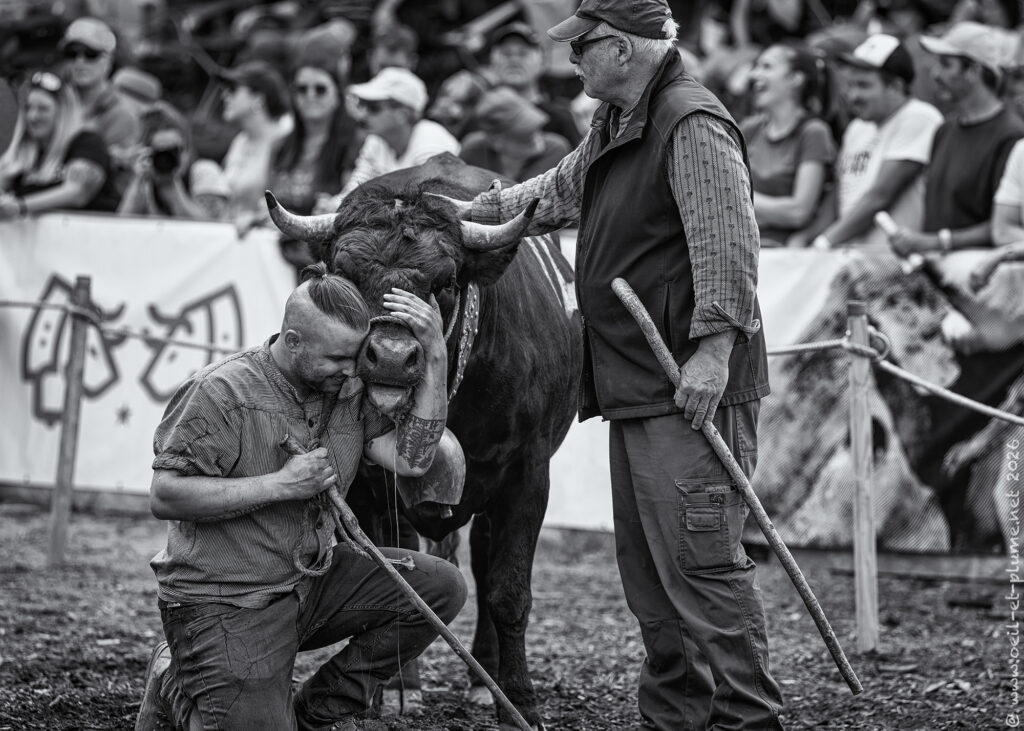
Awaiting the jury’s call to enter the arena, cattle owners chat quietly about their farming and herding routines. The atmosphere shifts palpably as the battle begins; tension rises, and owners stand vigil at the edge of the ring, coaching their champions with urgent voices and expressive gestures. Yet, this intensity dissolves the moment the clash ends. Before and after the fight, the intensity softens into tender affection, as owners frequently encourage or praise their cows with gentle caresses and even kisses.
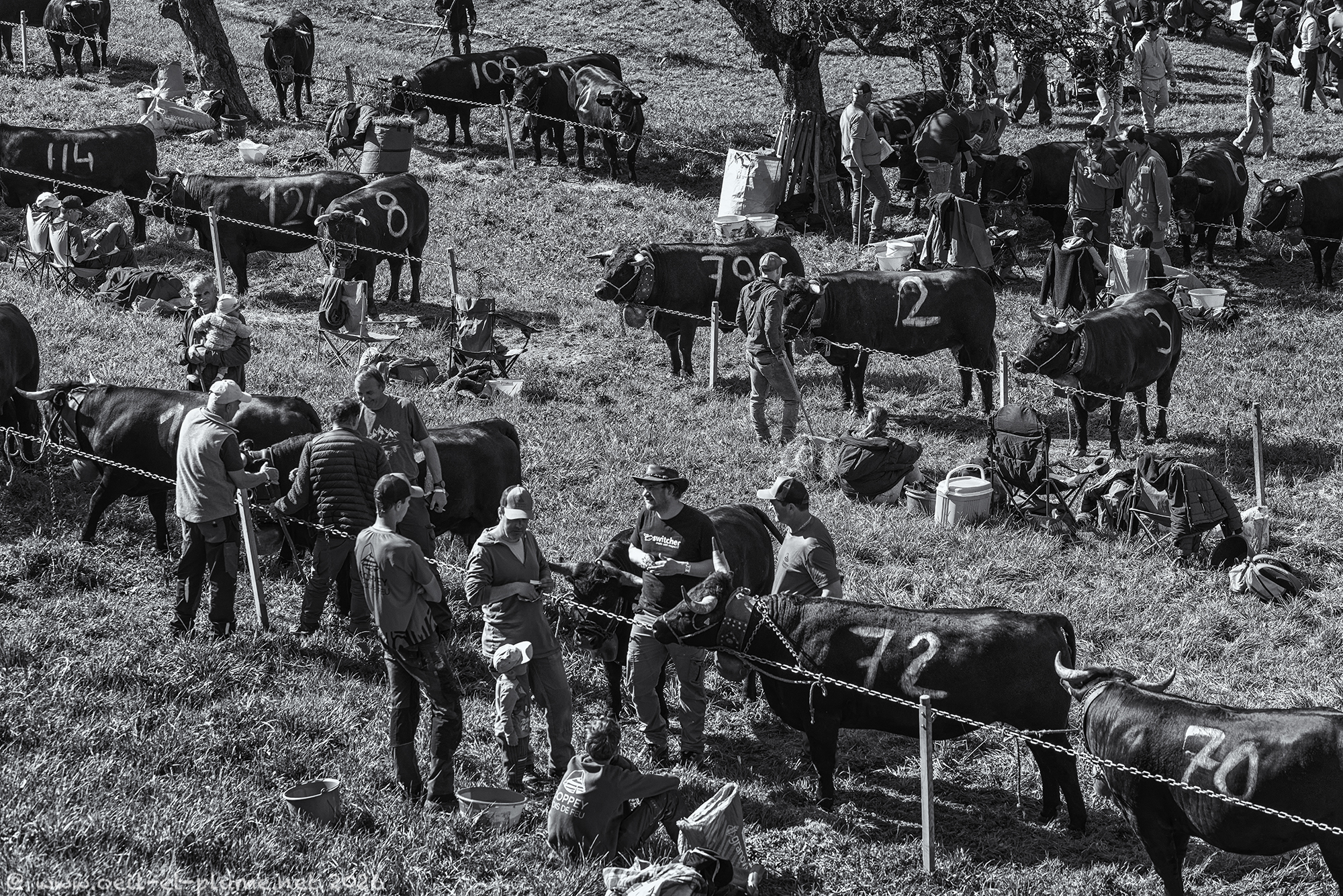
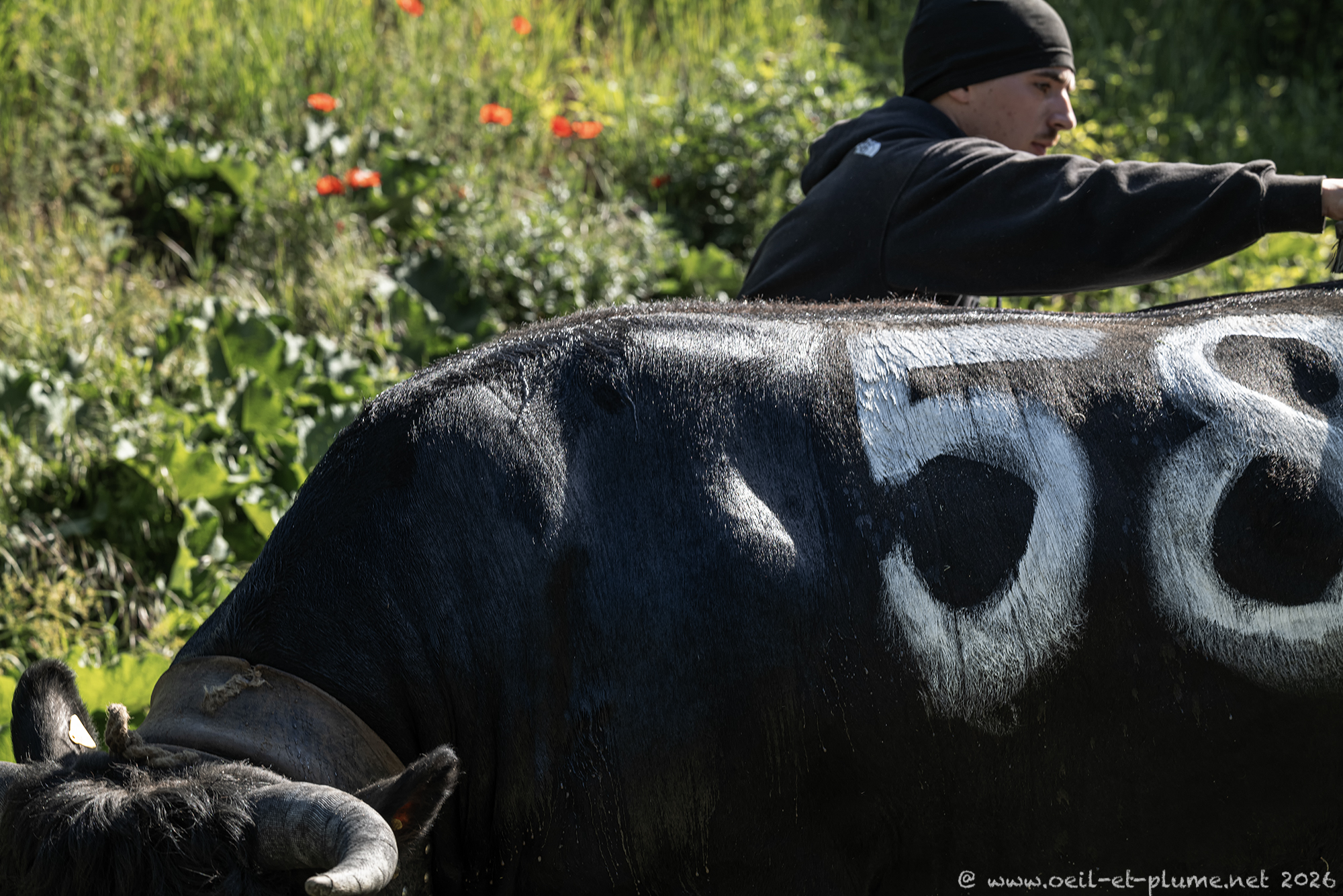
Surrounding the arena, the audience watches the fighting with rapt attention, their collective energy surging with spikes of excitement, joy, or disappointment as the duels unfold.
I deeply enjoy this shared emotional connection both among the spectators as well as between the people and the cattle. There is a raw and genuine beauty in the scene mixing harmoniously fierce competition, care and mutual respect. Let’s return to the arena where the fighting is ongoing.
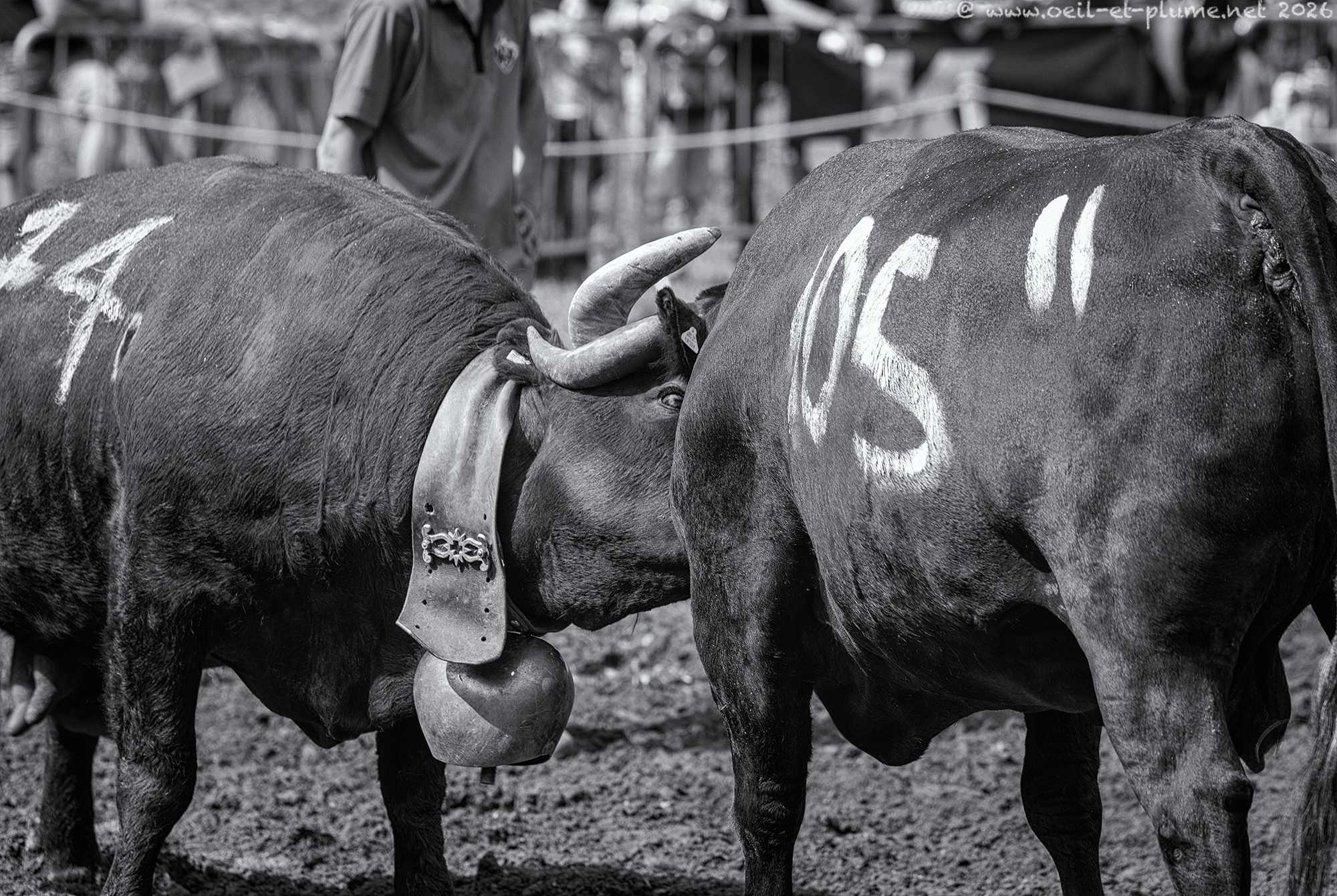
Following the tournament, a selection of participating cows undergoes veterinary inspections, which include anti-doping control. Battles of Queens are a serious matter indeed.
To continue here.
Cheers,