
In Rajasthan, every piece of traditional architecture is a poem written in stone. Therefore, the theme of Rajasthani architecture is best introduced with poetry:
“Oh, hear the song of golden stone,
Where desert heat and beauty meet,
A honeyed crown upon the throne,
The breeze that whispers through the street.
Here, lattice veils of carved design
Hide quiet queens from common eyes,
Where shadow, light, and grid align
To touch the vast and azure skies.
Each jharokha, arch, and soaring wall
Stands proud against the burning sun,
A silent, grand, and royal hall
Where stone and symphony are one.
And where the rose-hued plaster glows,
The mirrors catch the morning flame,
A vibrant shield of history shows
The weight of every royal name.
Though centuries may drift like sand,
These painted forts will never fade,
Still standing guard across the land,
A timeless song in marble made.
Crafted by an unknown author, the tribute perfectly captures the essence of Rajasthan’s architectural design.
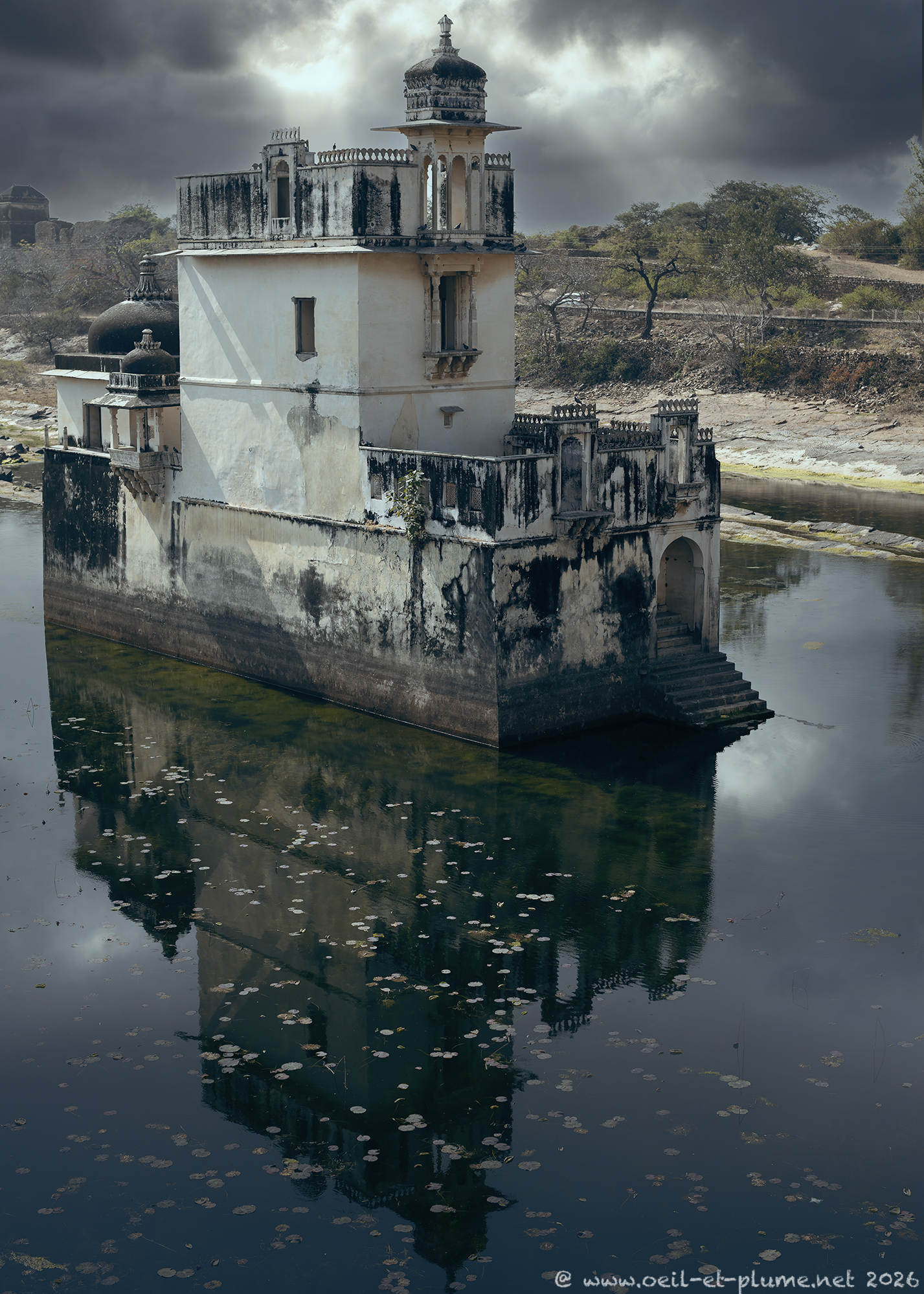
Cultural diversity and blending
Rajasthani traditional architecture represents a striking blend of indigenous Hindu Rajput traditions and Islamic Mughal aesthetics. The process took place mainly during the 16th and 17th centuries, coinciding with the height of the Mughal Empire and its political alliances with Rajput kingdoms in northwest India.
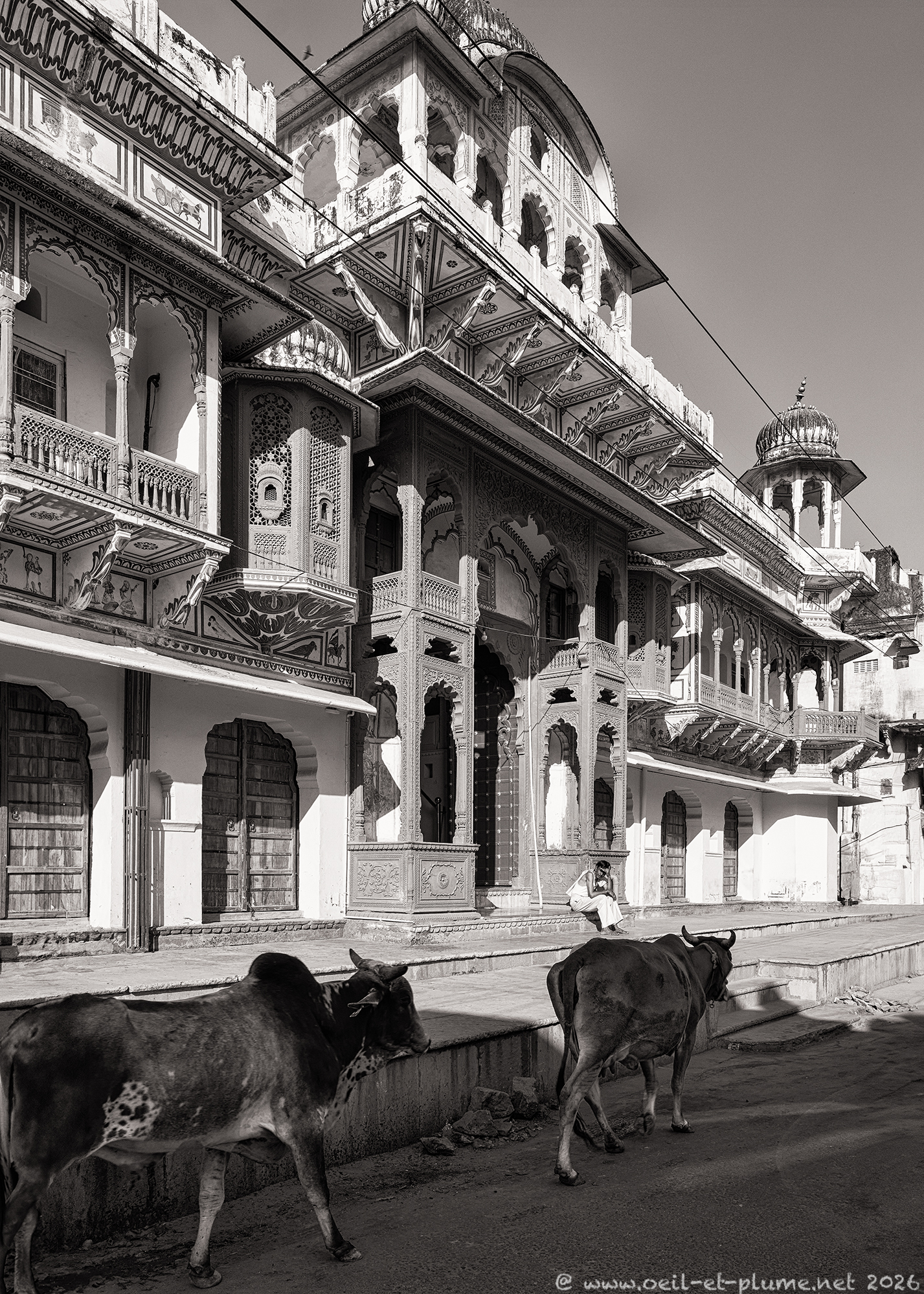
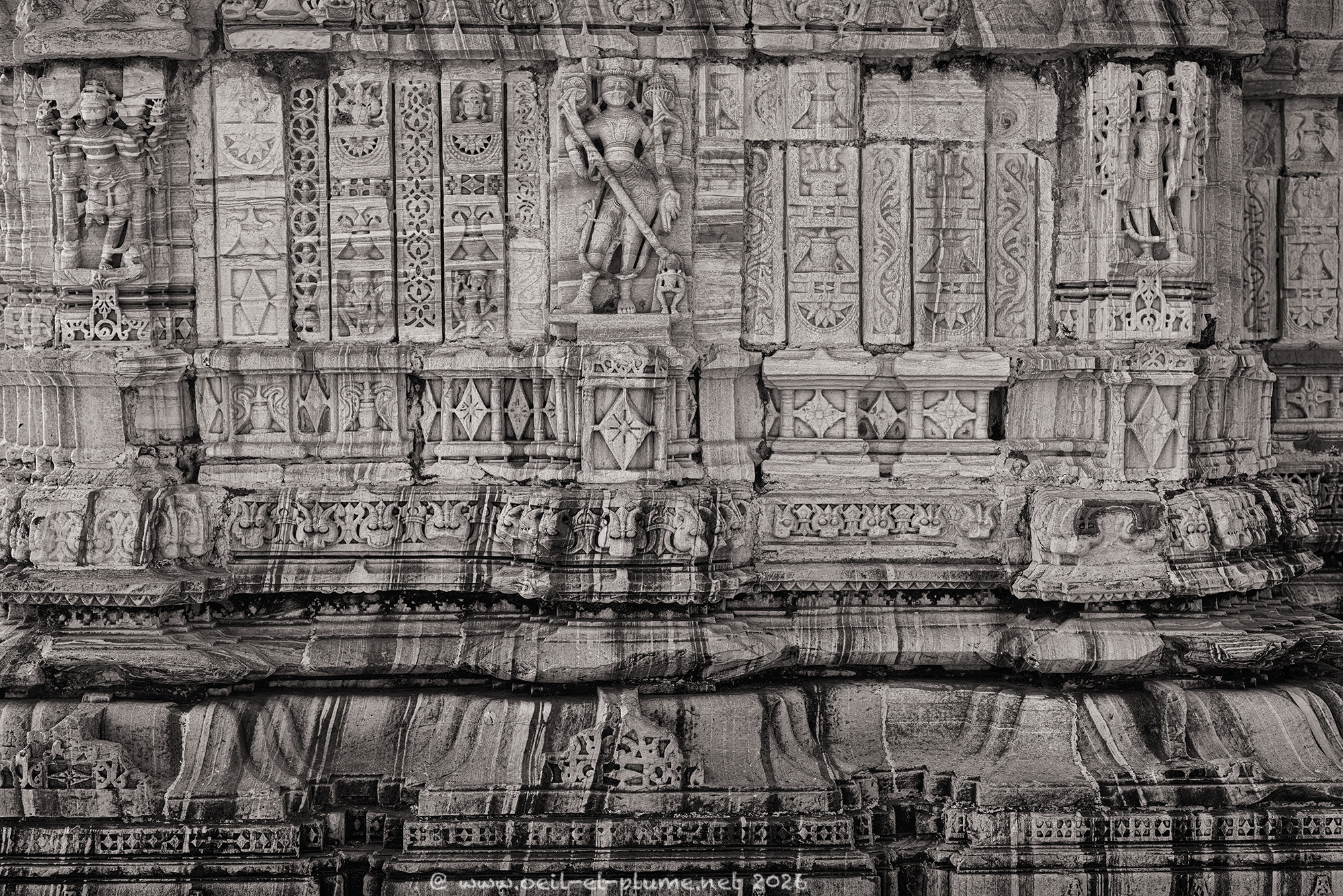
The architectural style is characterized by colossal hilltop fortresses, elaborately painted historic mansions (havelis) , ornate stone balconies (jharokhas), intricate window screens (jalis), and domed cenotaphs (chhatris).
Rajput architecture is known for its sturdy fortifications, cenotaphs, overhanging balconies and screens, while Mughal influence introduced symmetrical gardens, domes, and delicate pietra dura inlay work (polished coloured stones fitted into a marble base to create mosaic-like images). Together, they form the distinct Indo-Saracenic style seen across the region.
In addition, old and contemporary Hindu temples are indeed also part of Rajasthan’s architectural landscape. Last but not least, many private houses of ordinary folk display very interesting architectural elements.
Rajasthani architecture predominantly uses sandstone, marble, granite, and lime mortar. These materials suit the region’s arid climate and provide durability for structures. I love the ochre tones of sandstone and their elaborated interplay with white marble.
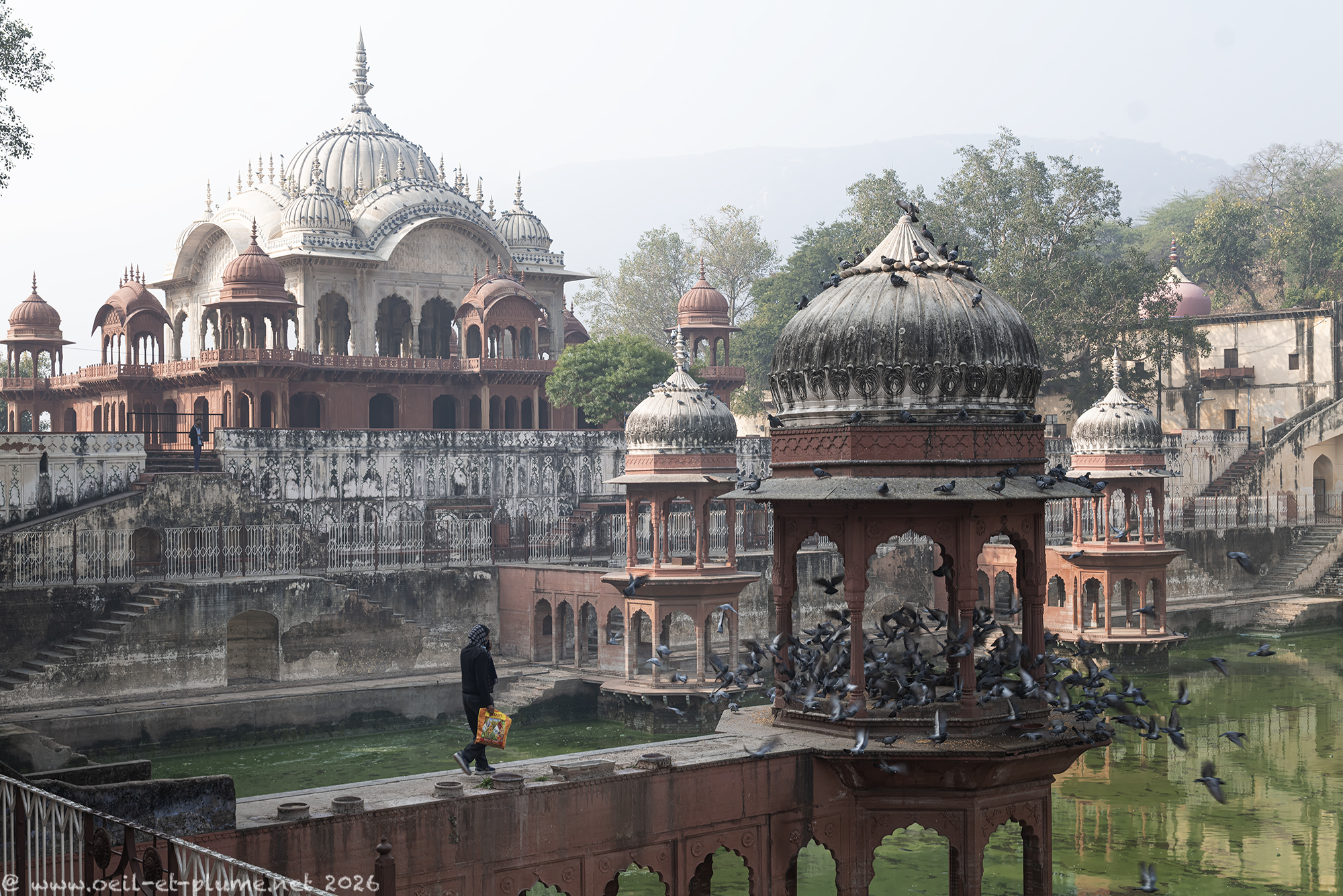
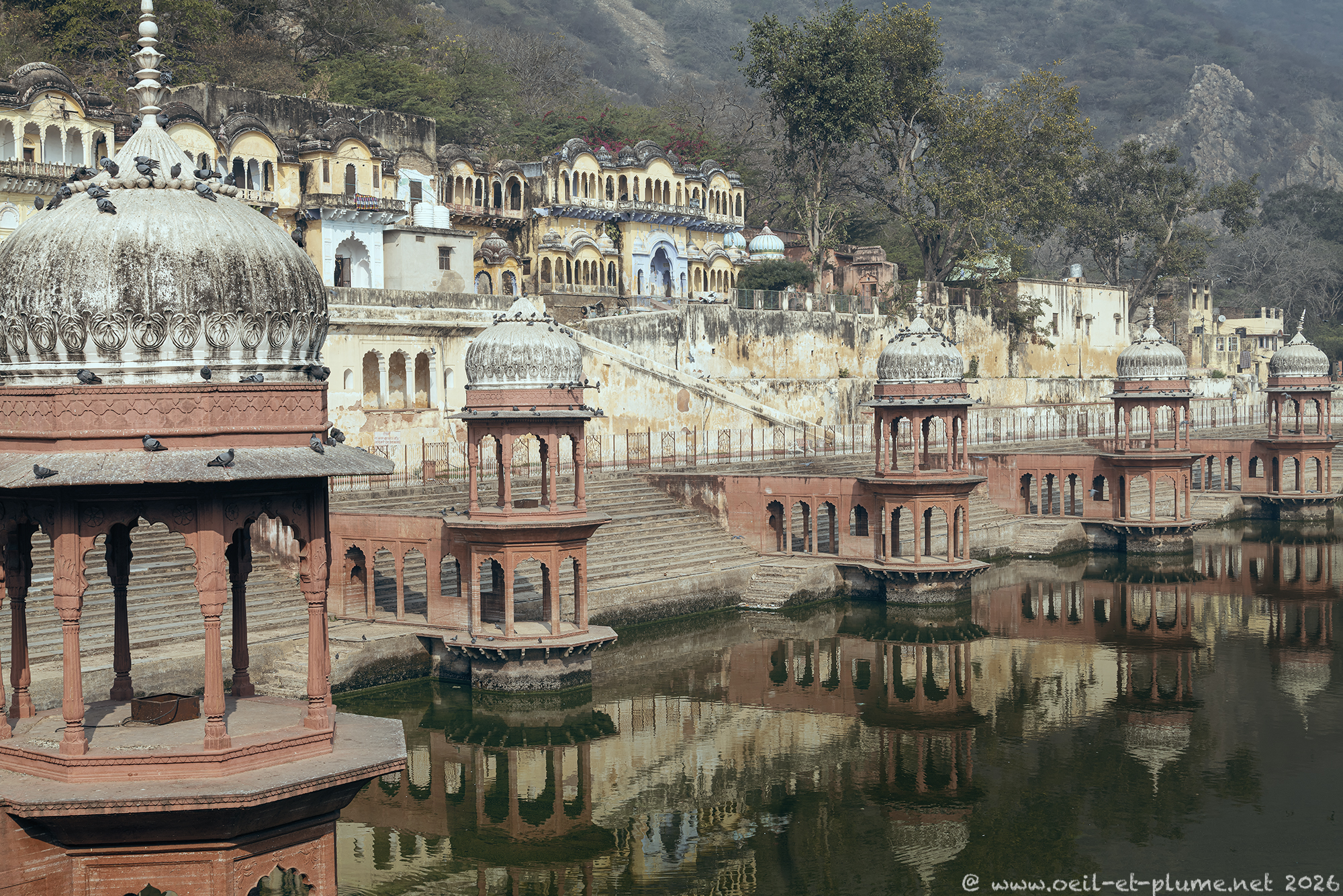
Rajasthan’s traditional architecture amazingly connects functionality with aesthetics. A few illustrations:
- In line with climatic conditions and Muslim tradition, traditional building designs often incorporate water as a key functional and decorative component. Climatic conditions, religious requirements and aesthetic considerations prompted architects to include water wells, fountains and ponds in their structures.
- Rajasthani architecture features brilliant natural climate control. The stone latticework, or jali screens, does more than offer shade. By forcing the desert wind through tiny apertures, the jali naturally acts as an ancient, highly effective form of air conditioning.
- Rajasthan’s fortresses, palaces and havelis often present massive dimensions, allowing proper space and ventilation; their overall design can be complex, intricate. However the different volumes speak to each other harmoniously.
- While the striking blue colour of many houses in Jodhpur and other towns in Rajasthan is tied to the Brahmin caste historically, it gained popularity as the pigmented lime naturally repels heat and insects, keeping homes cool during sweltering desert summers.
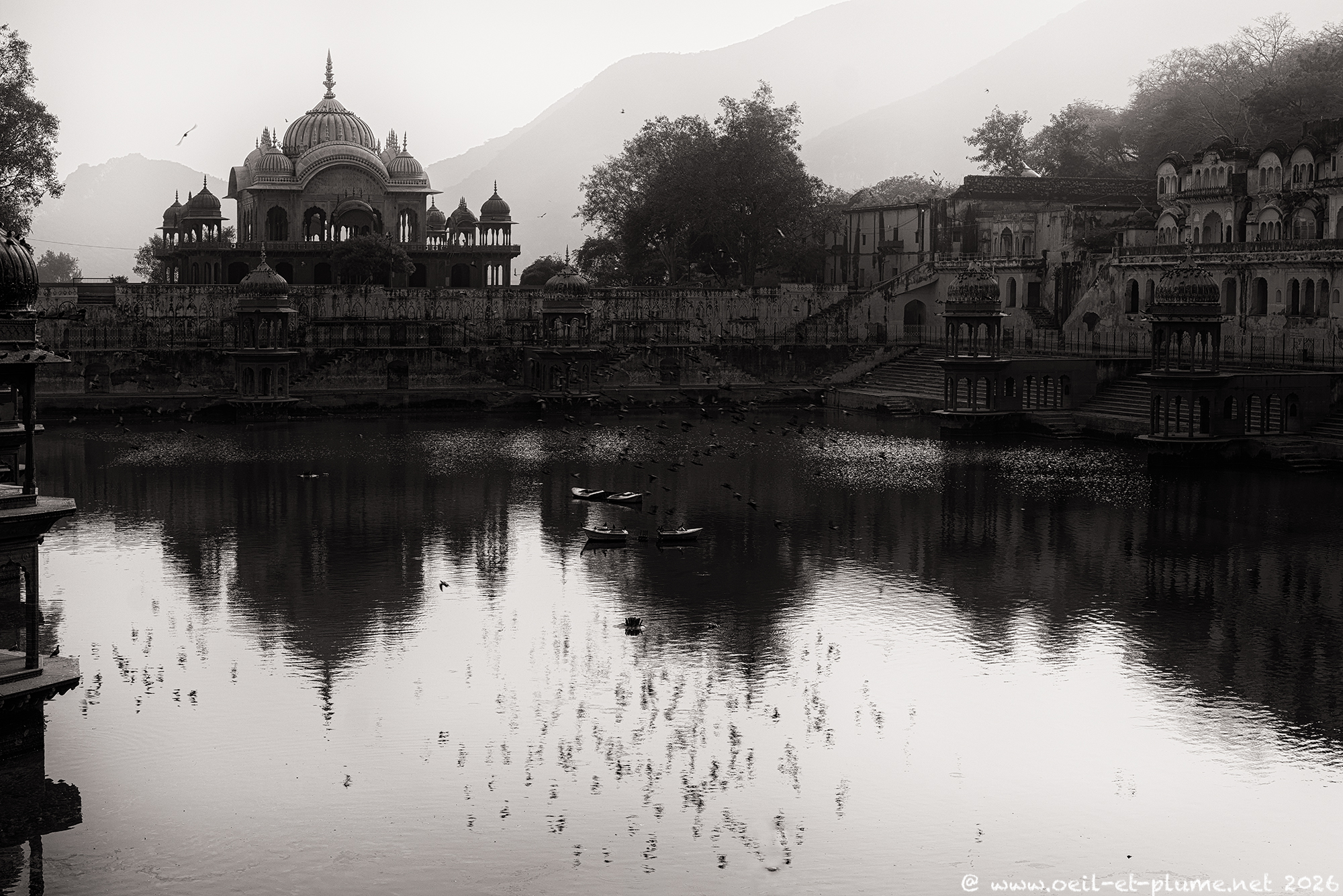
Stone and water cohabit in Rajasthan not only in the fortresses, temples and private mansions. One of the most striking structures in Rajasthan is the step-well, a communal well built with inverted pyramid walls to avoid excess water evaporation in the extreme heat.
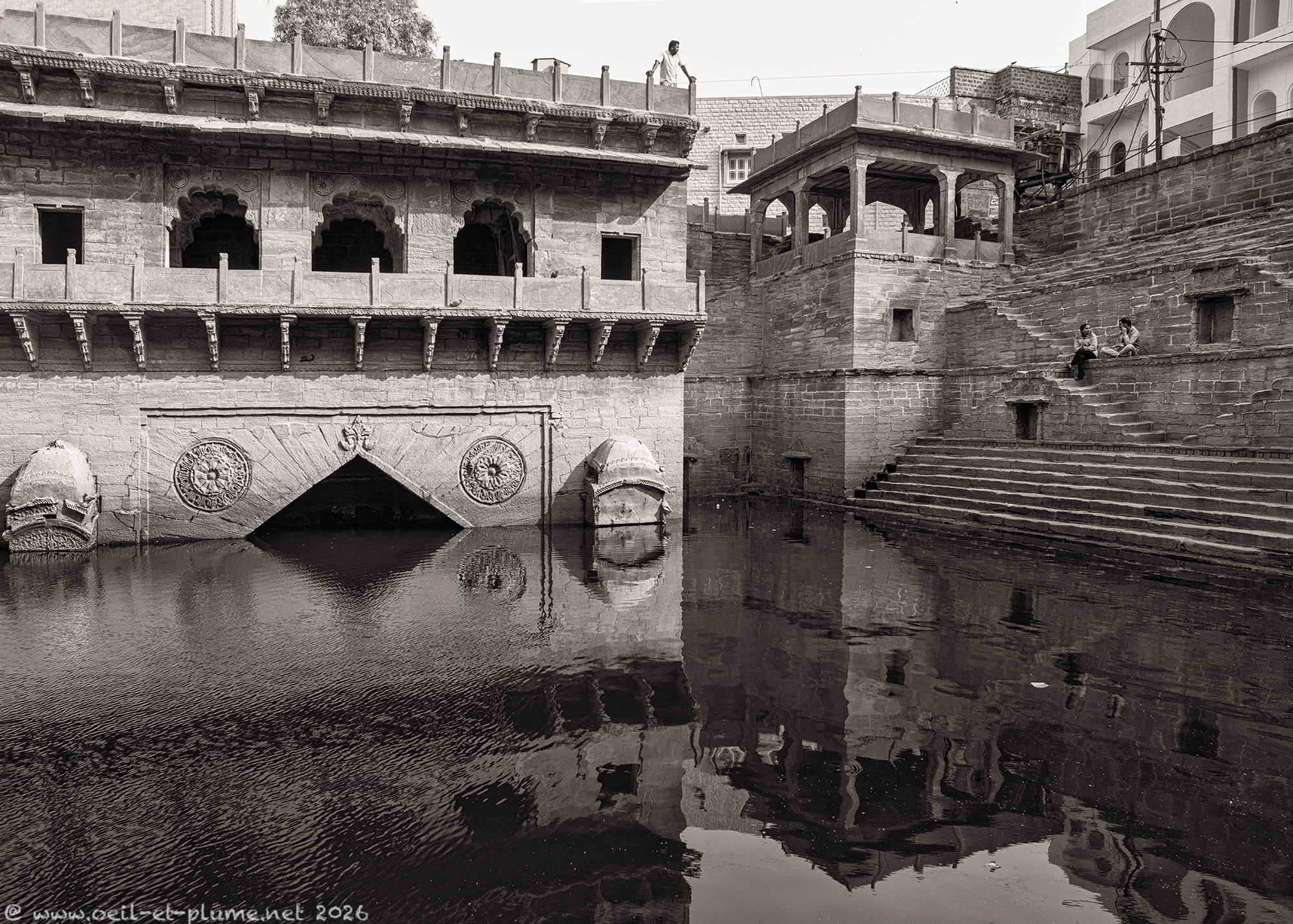
Historically, step-wells were often commissioned, financed, and overseen by royal women—queens, princesses, and royal concubines, in order to provide water sovereignty to people. Moreover, building a step-well was considered an act of supreme virtue that brought immense spiritual merit and political popularity to its creators.
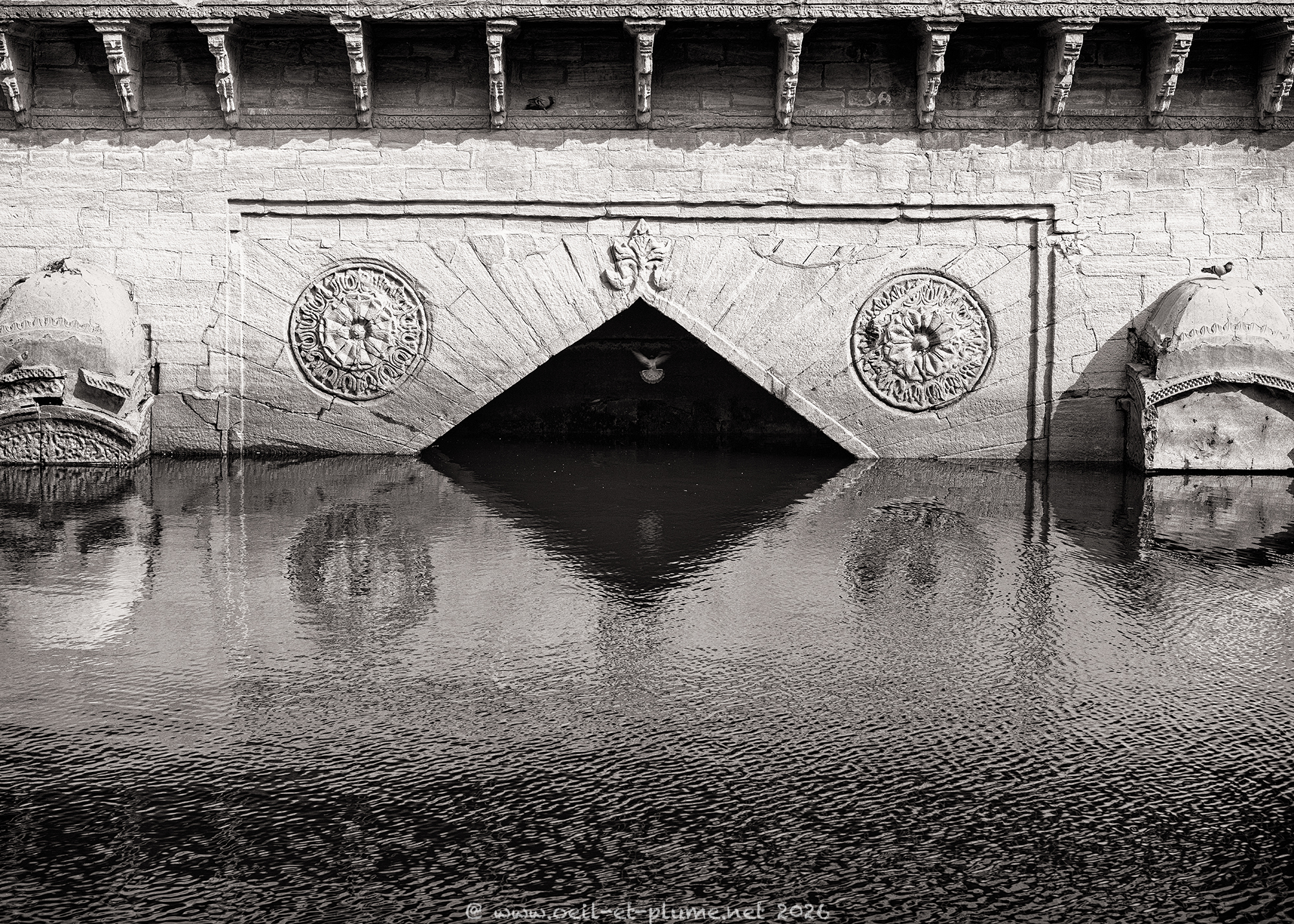
During British colonial rule, step-wells fell into disgrace as British authorities viewed them as breeding grounds for disease and replaced them with modern piped water systems and hand pumps. Today, amid severe water crises, cities like Jodhpur are actively de-silting and restoring these ancient step-wells to harvest rainwater and naturally recharge the city’s dropping groundwater tables.
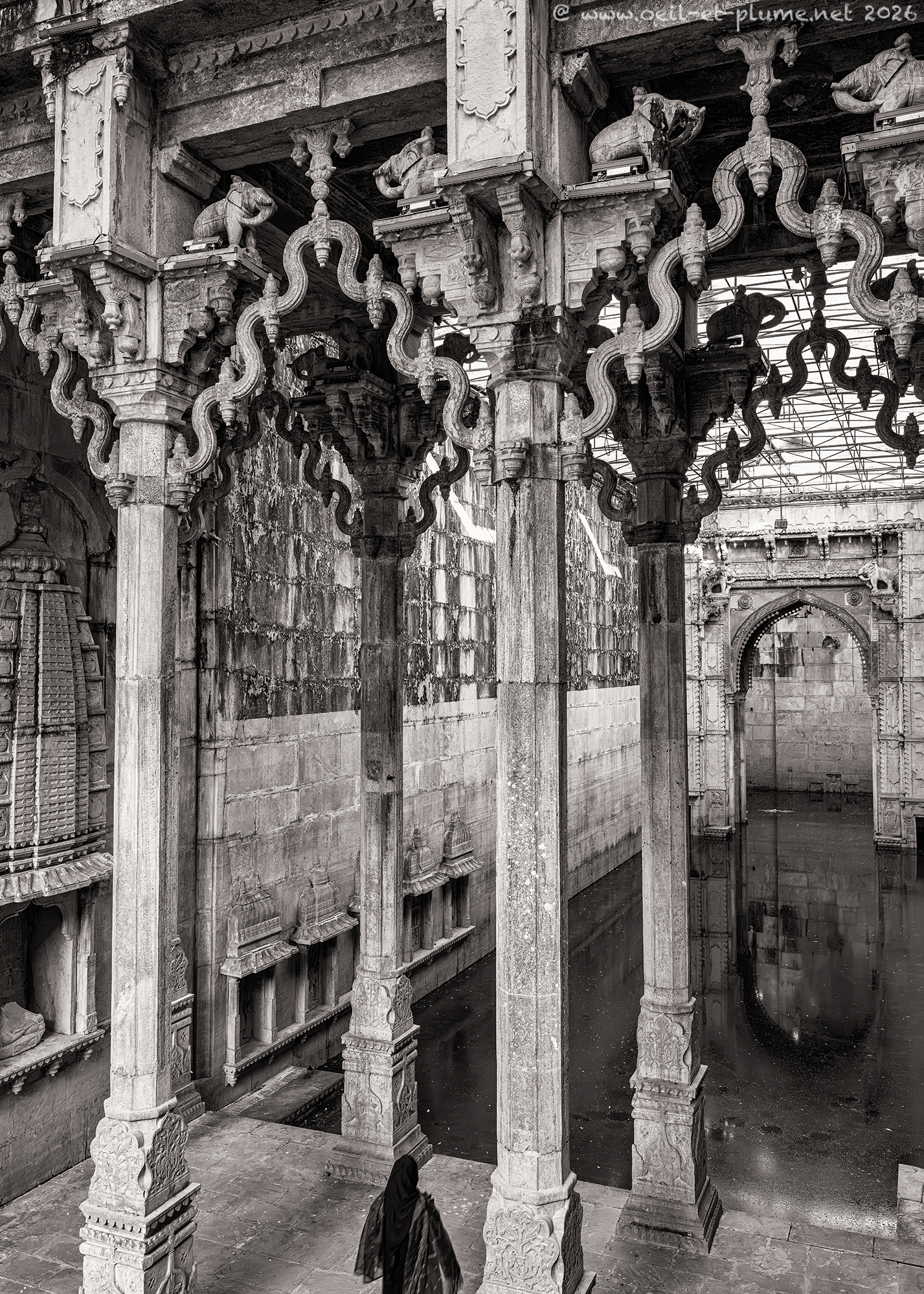
The complex architectural design of Rajput palaces not only displays might and wealth of their owners; it reflects also cultural considerations. The structure entails multiples material or invisible barriers relaying socio-cultural divisive elements such as casts, social classes, gender and age. Internal movements were restricted. For instance, males could not enter the guarded women’s quarters without the consent of the female(s) to be visited.
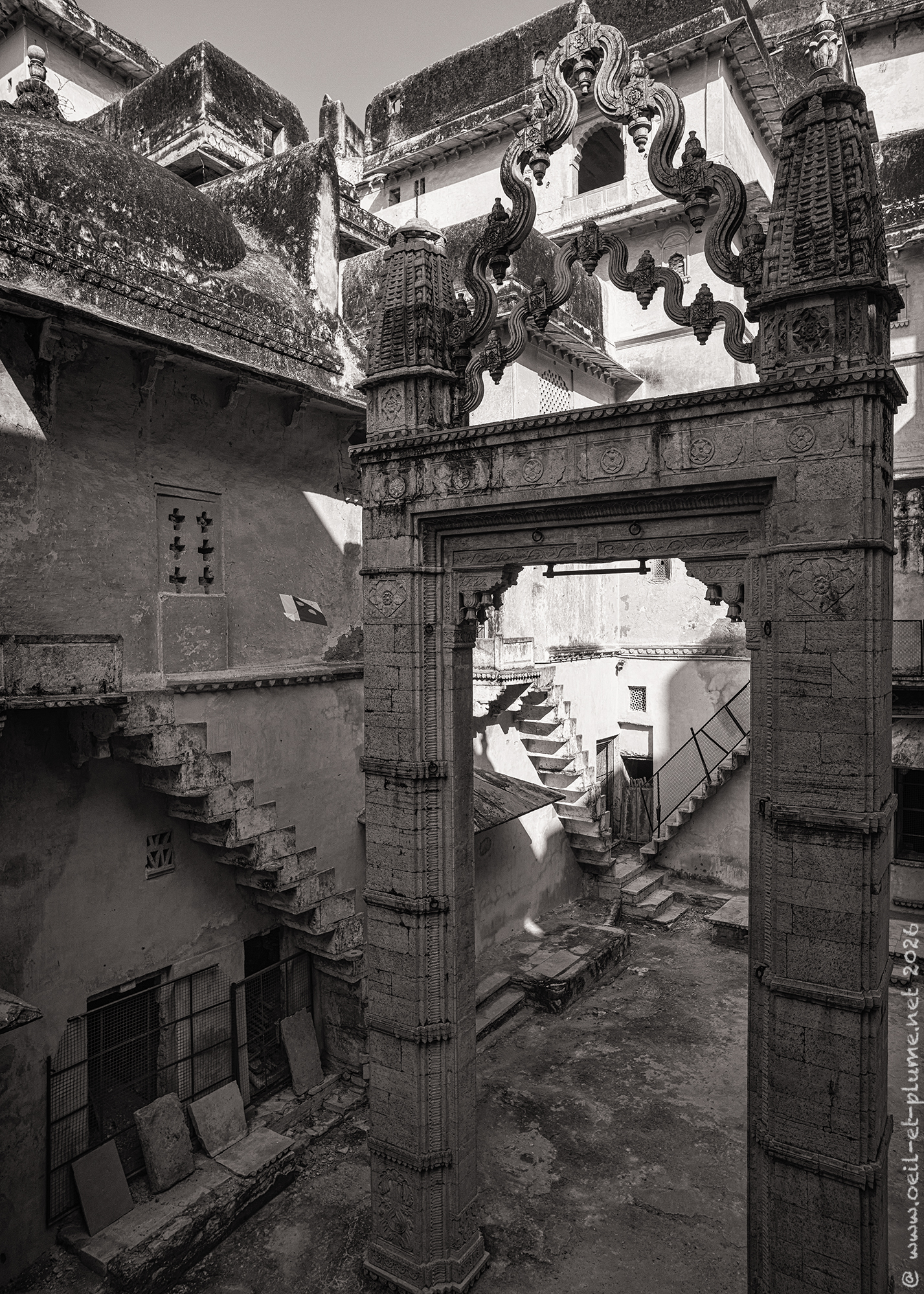
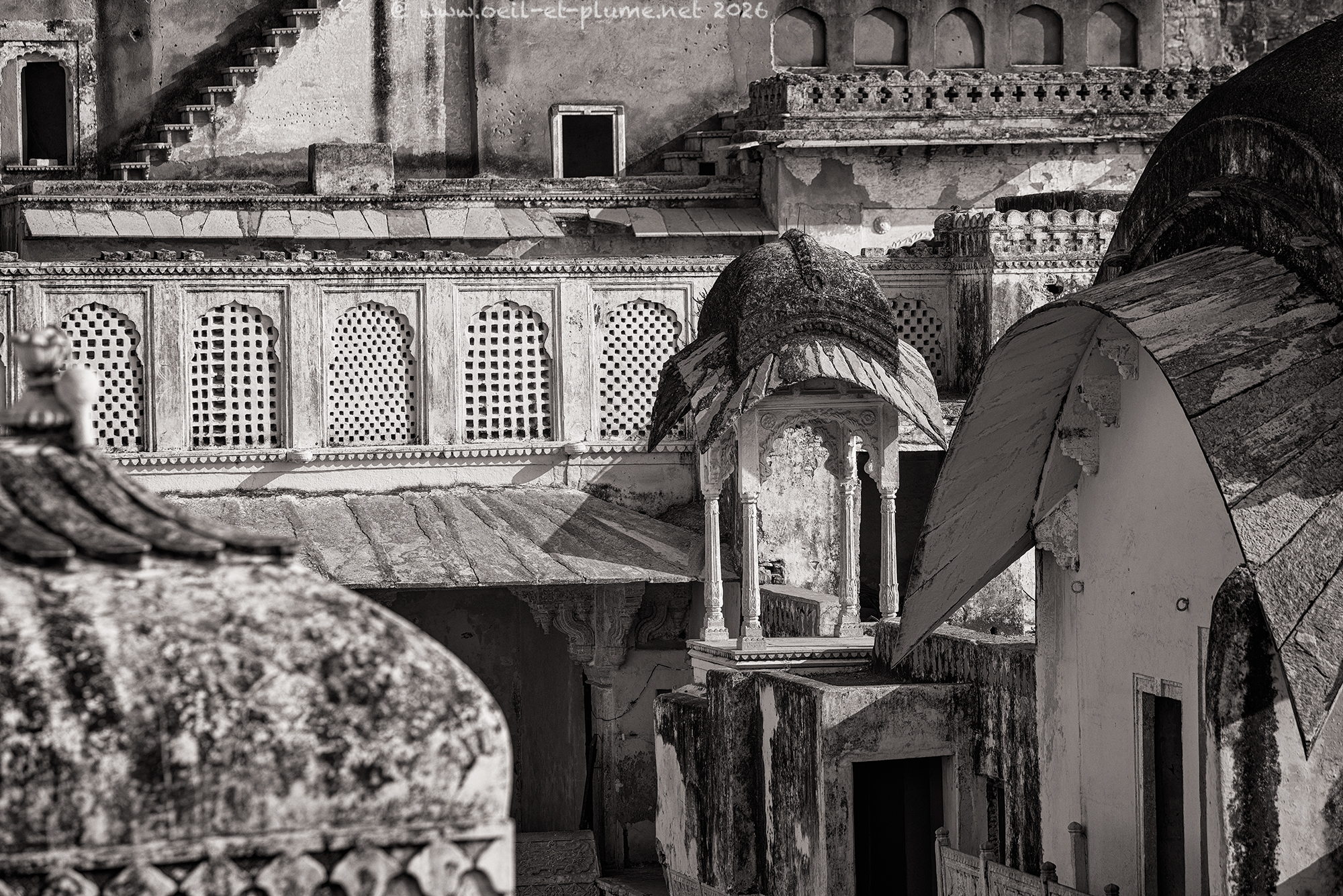
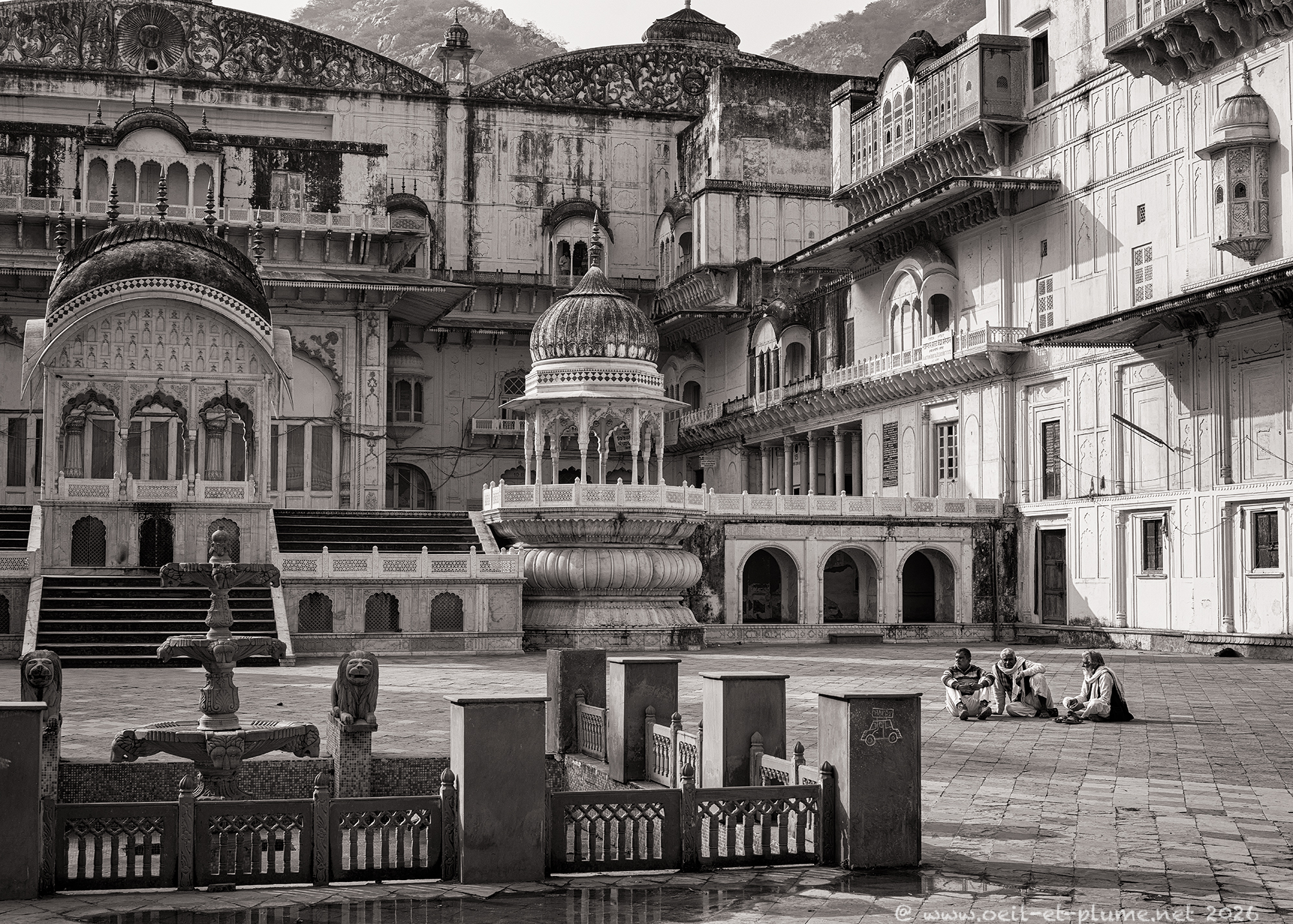
What amazes me is how much Rajasthani traditional architecture blends with Indian contemporary life. Rather than a conservation museum story, it is embedded an everyday’s reality in Rajasthan. Even in decay, those old stones keep local cultural identity alive.
Architectural heritage
Many historical buildings in Rajasthan are in poor state, owing to centuries of exposure to harsh climatic conditions, heavy usage, and periods of neglect. The region’s extreme temperatures, dust storms, and monsoon rains contribute to the deterioration of structures made from sandstone and other local materials. However, rehabilitation efforts are ongoing in come places.
In cities like Jodhpur, the rehabilitation of old quarters steered by public policies preserve cultural heritage and stimulate local economies through housing and commercial revival. In addition, some wealthy families invest in restoring their heritage mansions – an expensive but invaluable endeavour which helps maintaining the region’s unique architectural identity.
The potential for tourism revenue is a primary motivator of the rehabilitation trend, aiming to transform these historical assets into sustainable economic resources. While talking to some havelis owners, I also perceived their pride to revive and sustain a century-old family heritage.
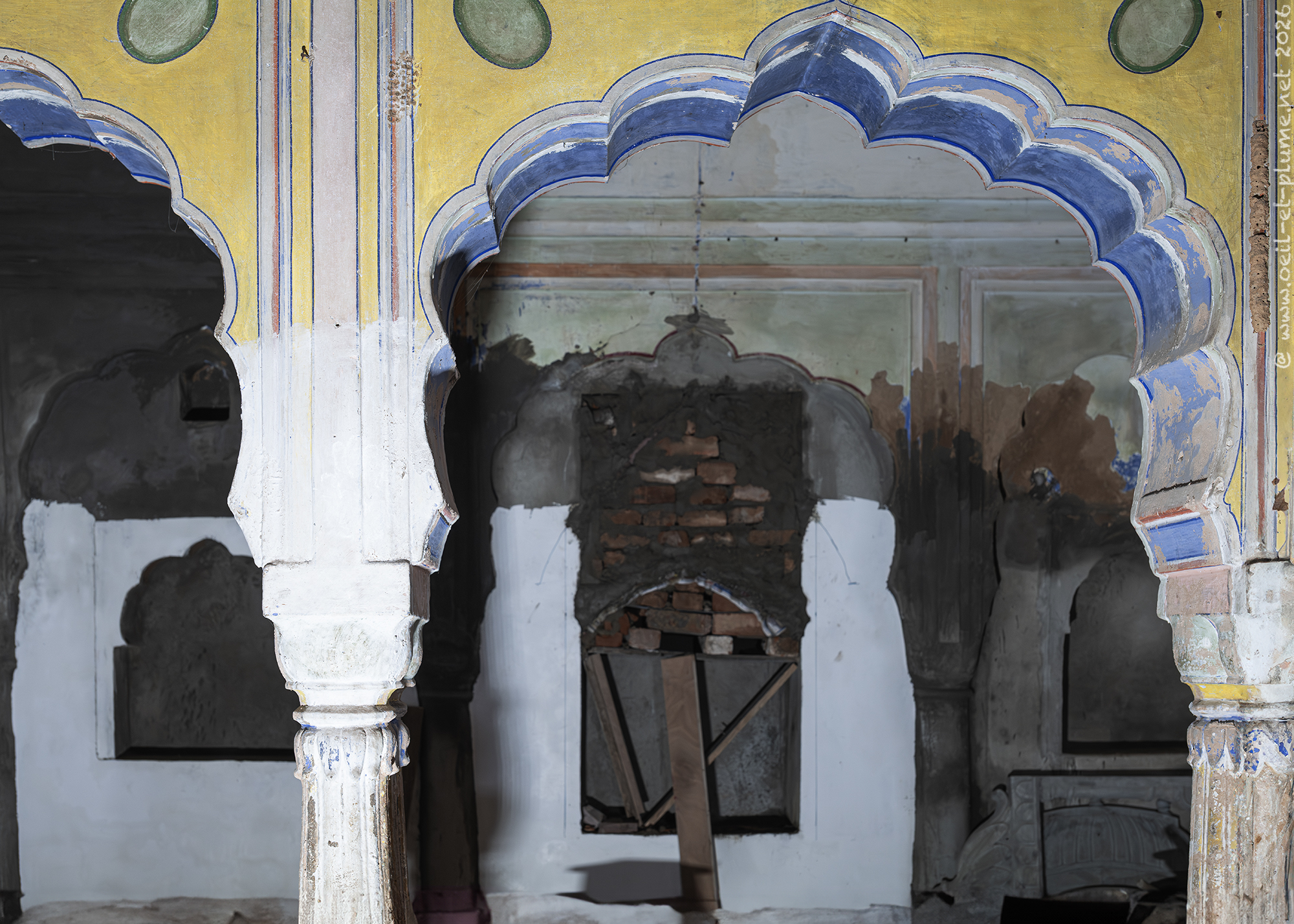
In Jodhpur, I was mesmerised by the aesthetic perfection of the 18th-century Kunj Bihari Temple – mausoleum dedicated to Lord Krishna, built for members of the royal families that lived in the Mehrangarh Fort. However, I struggled connecting with the soul of the restored historical structure as it appears so neat nowadays. My globetrotting mind is often more attracted by decaying structures than neat or new ones. To me, old stones with scars have more stories to tell and propose more space to the imagination.
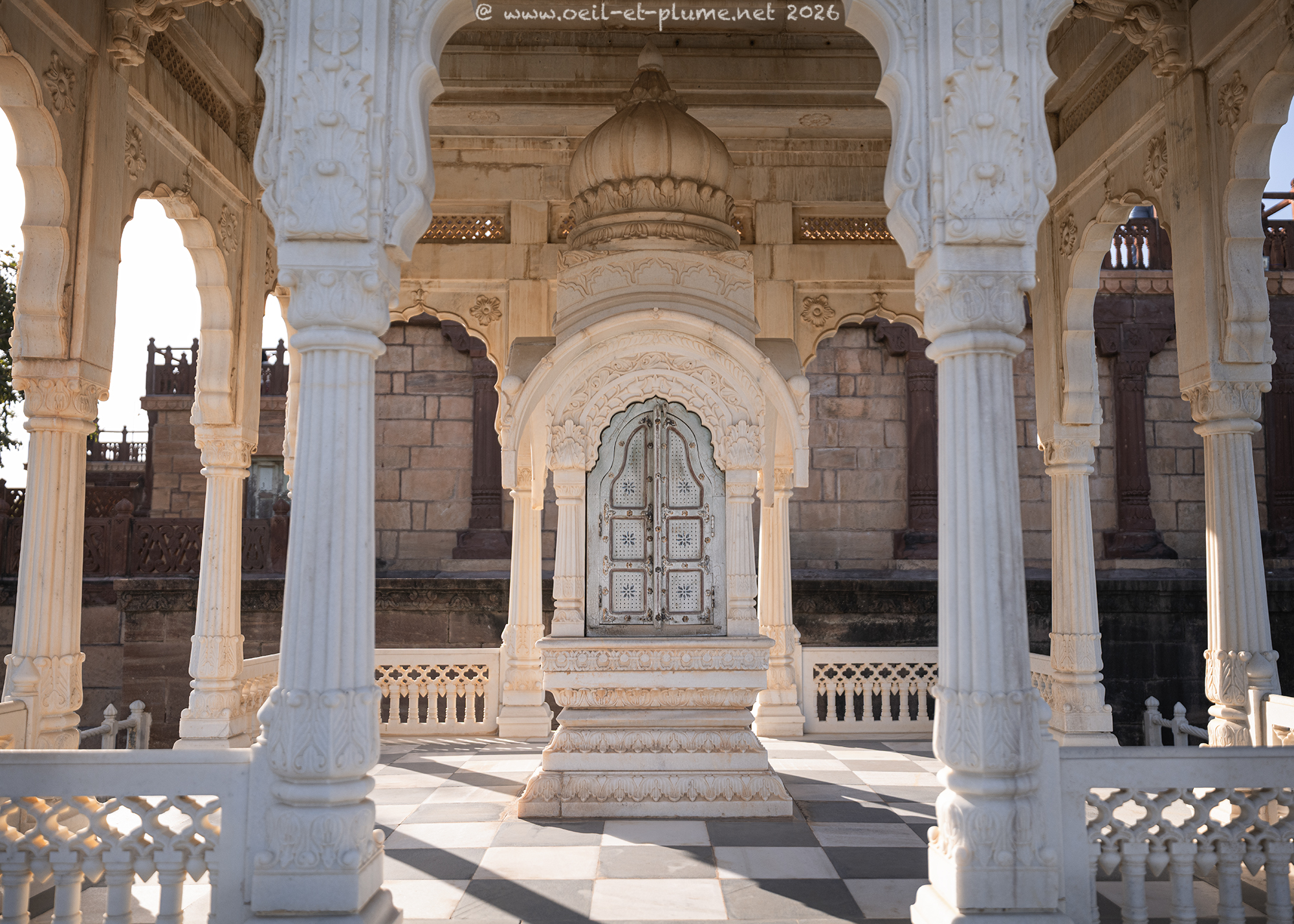
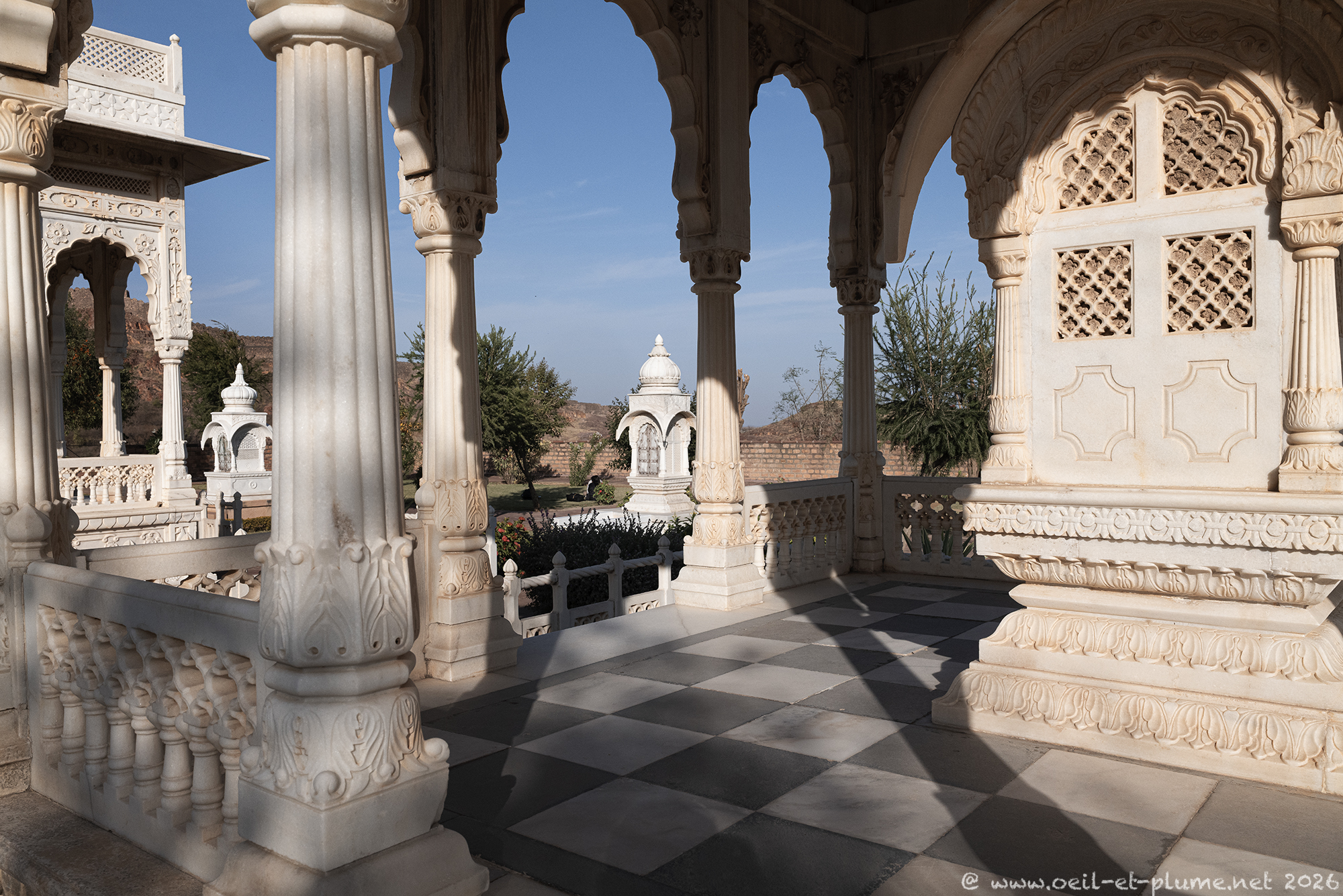
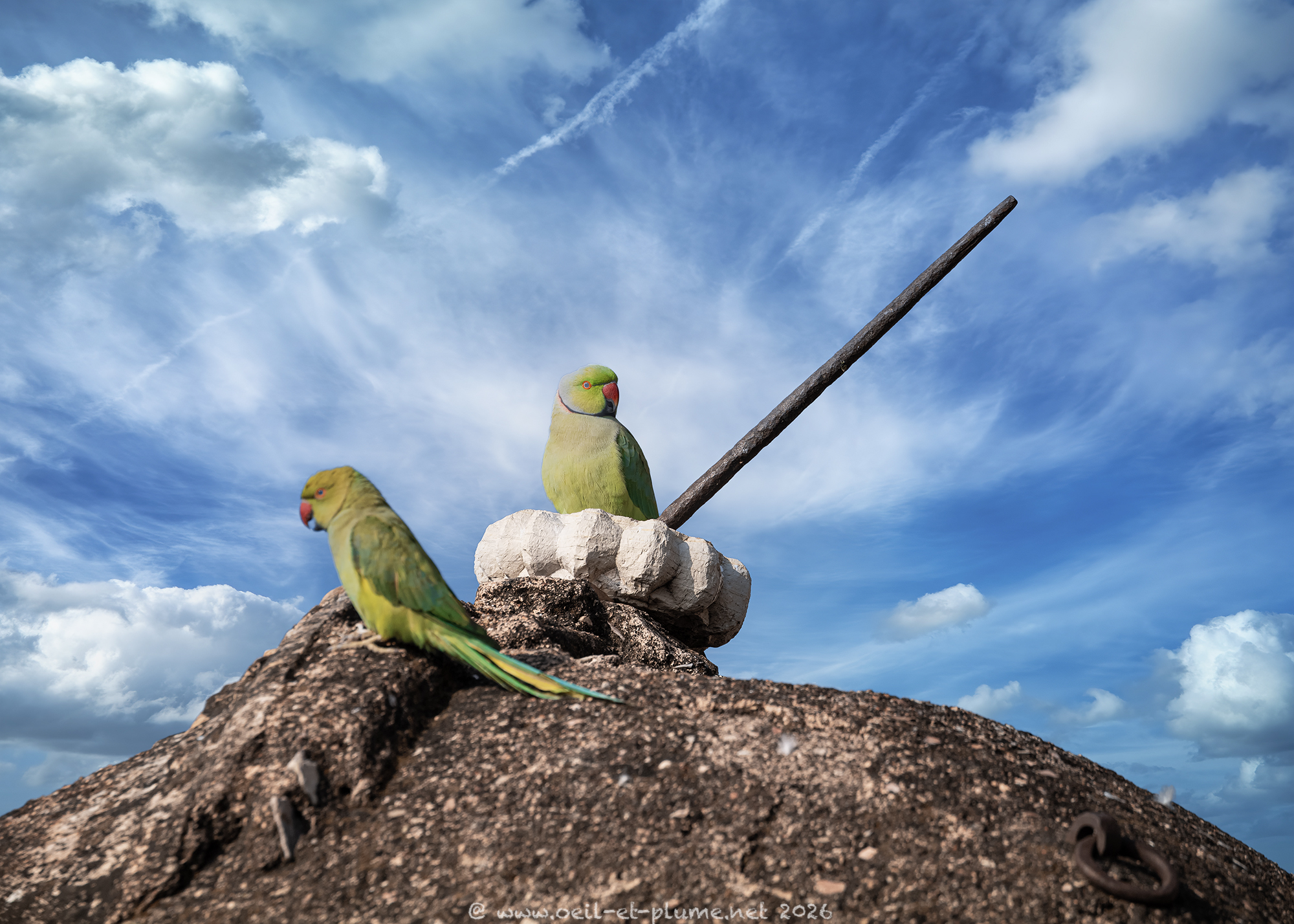
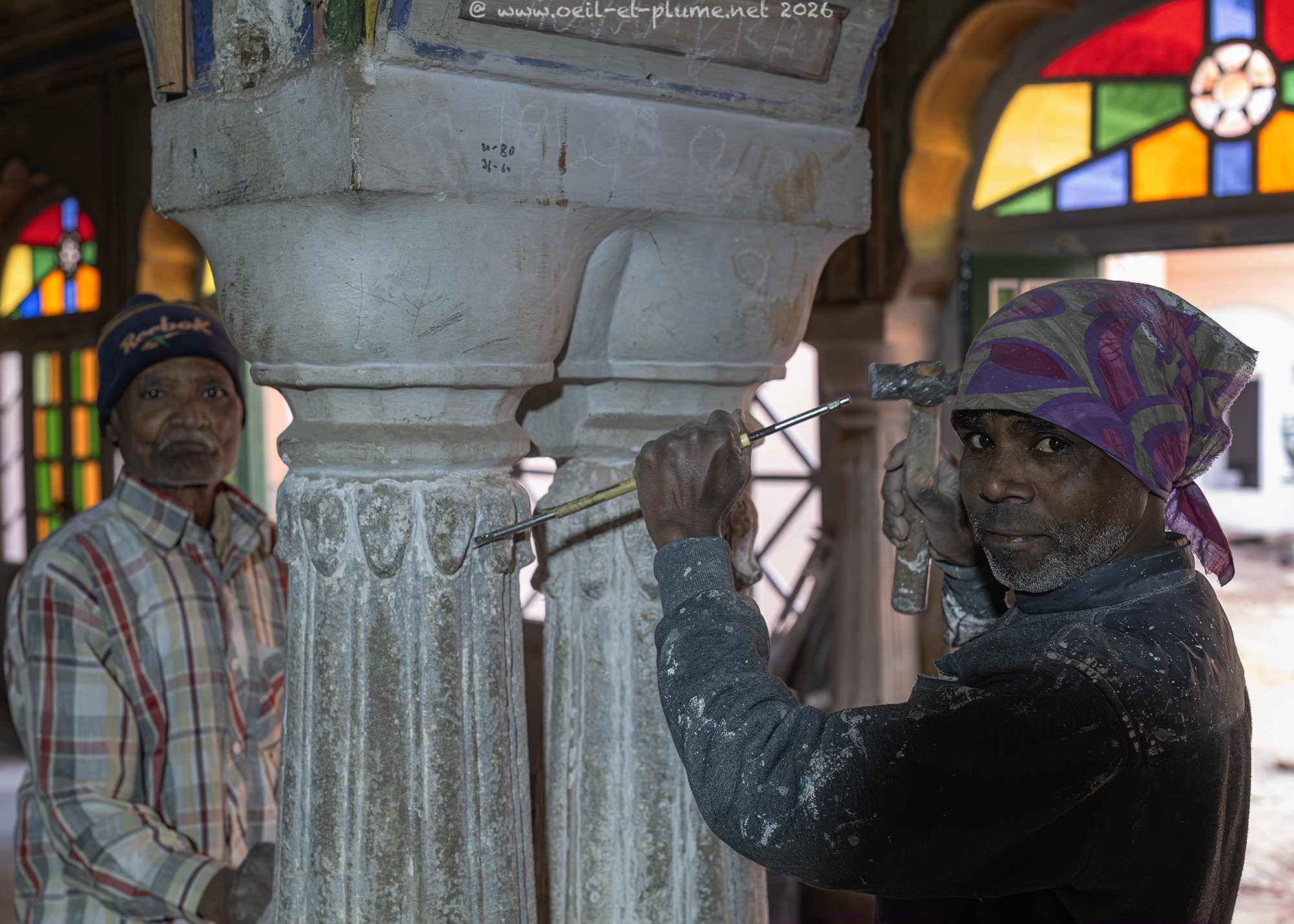
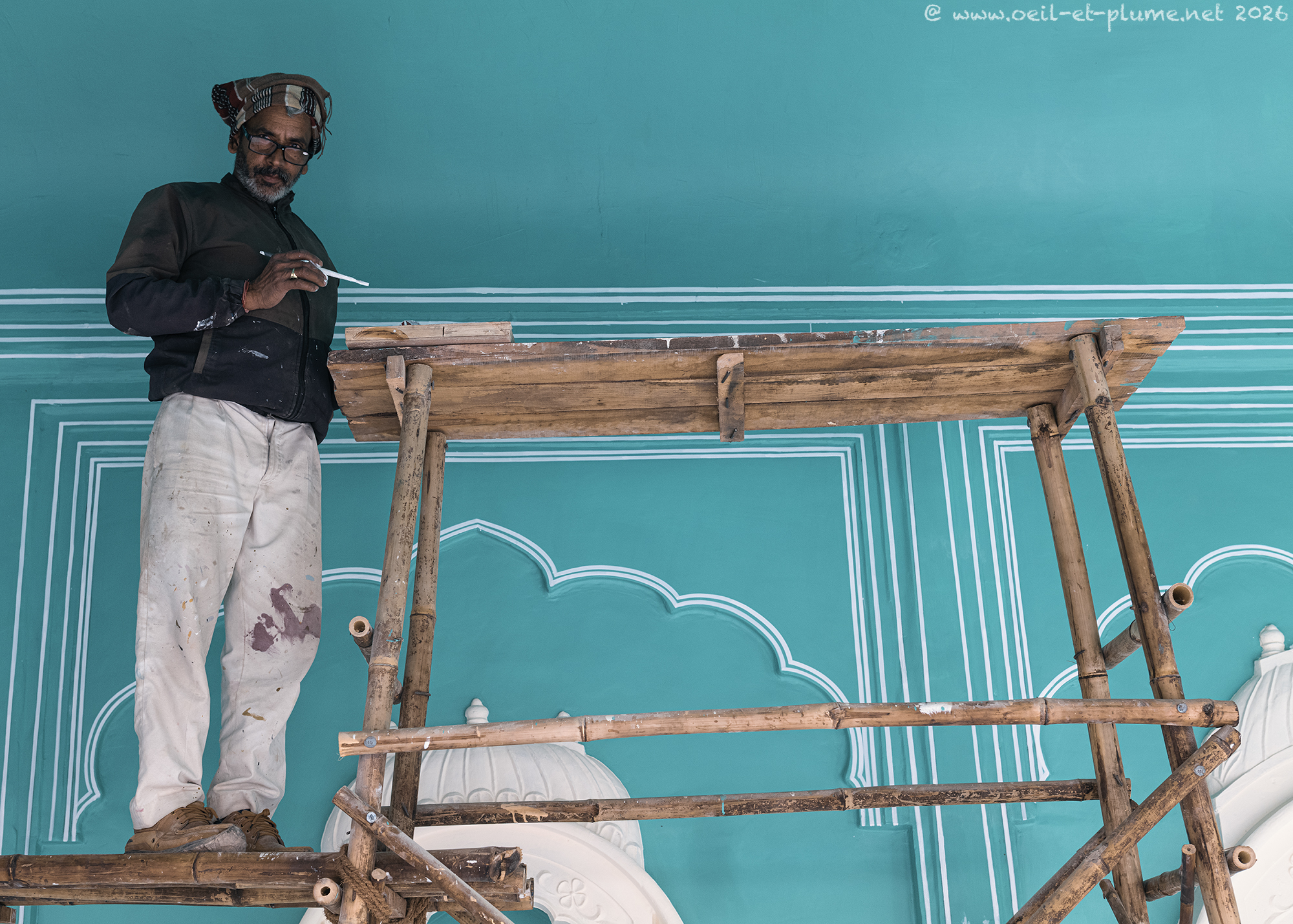
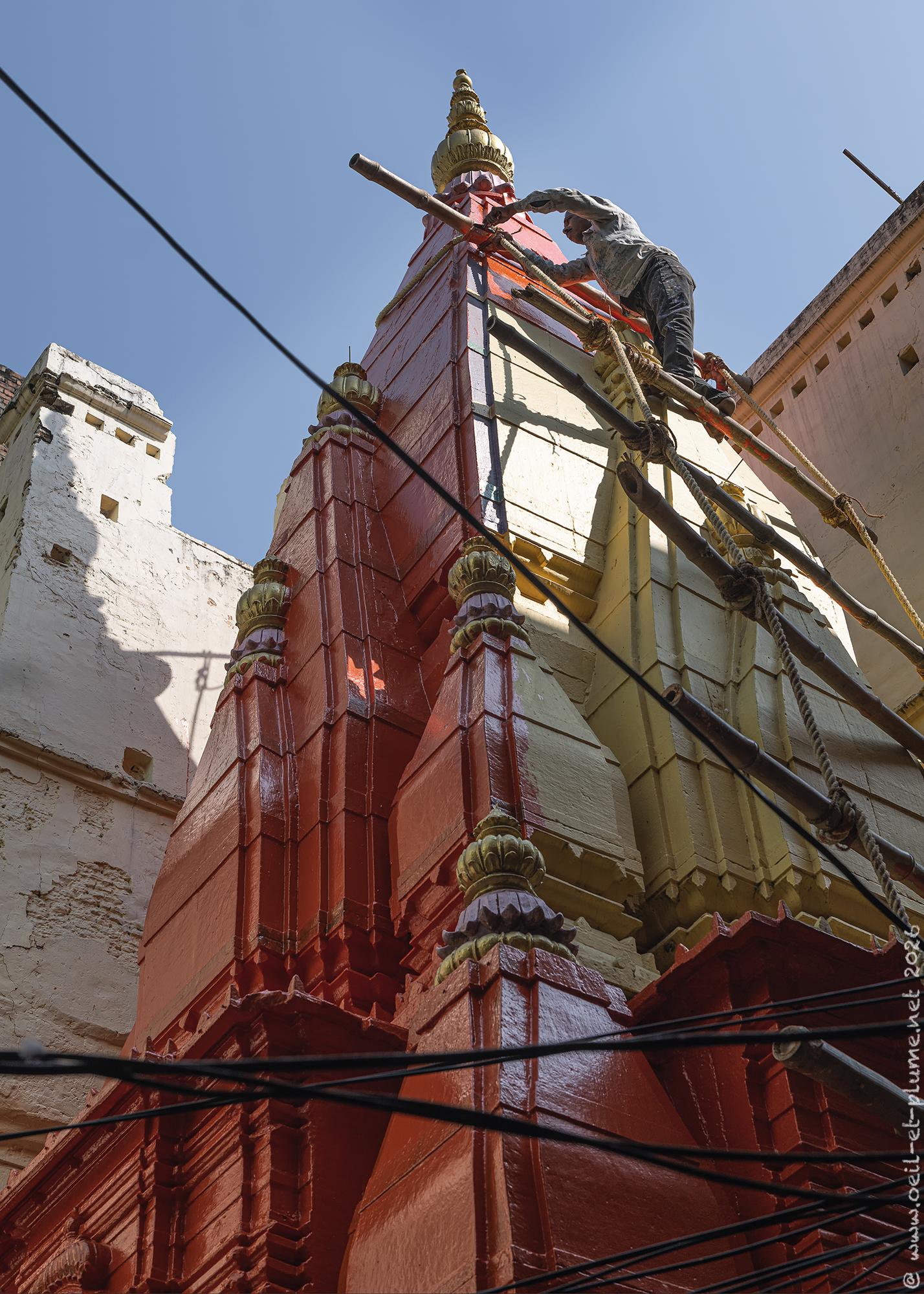
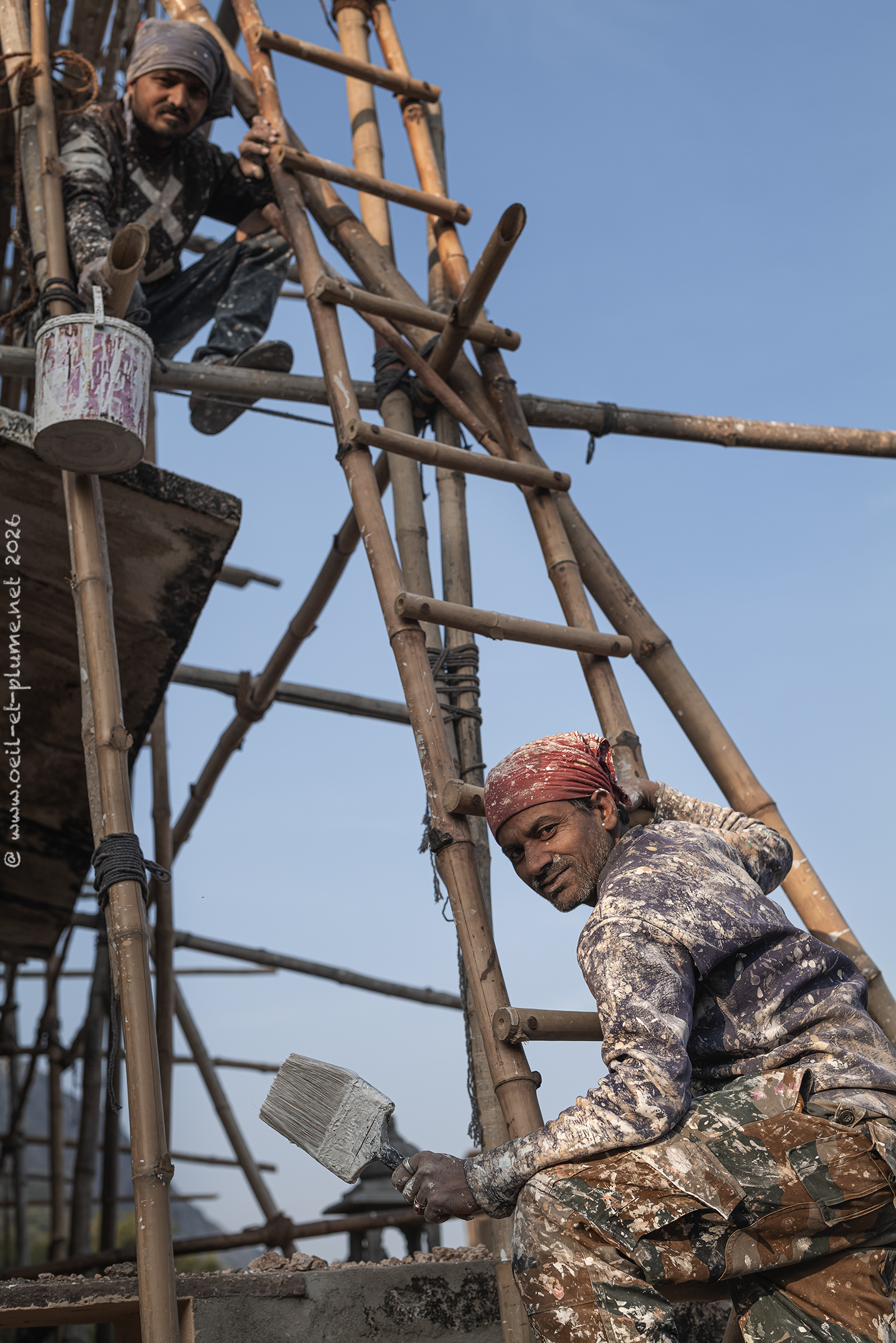
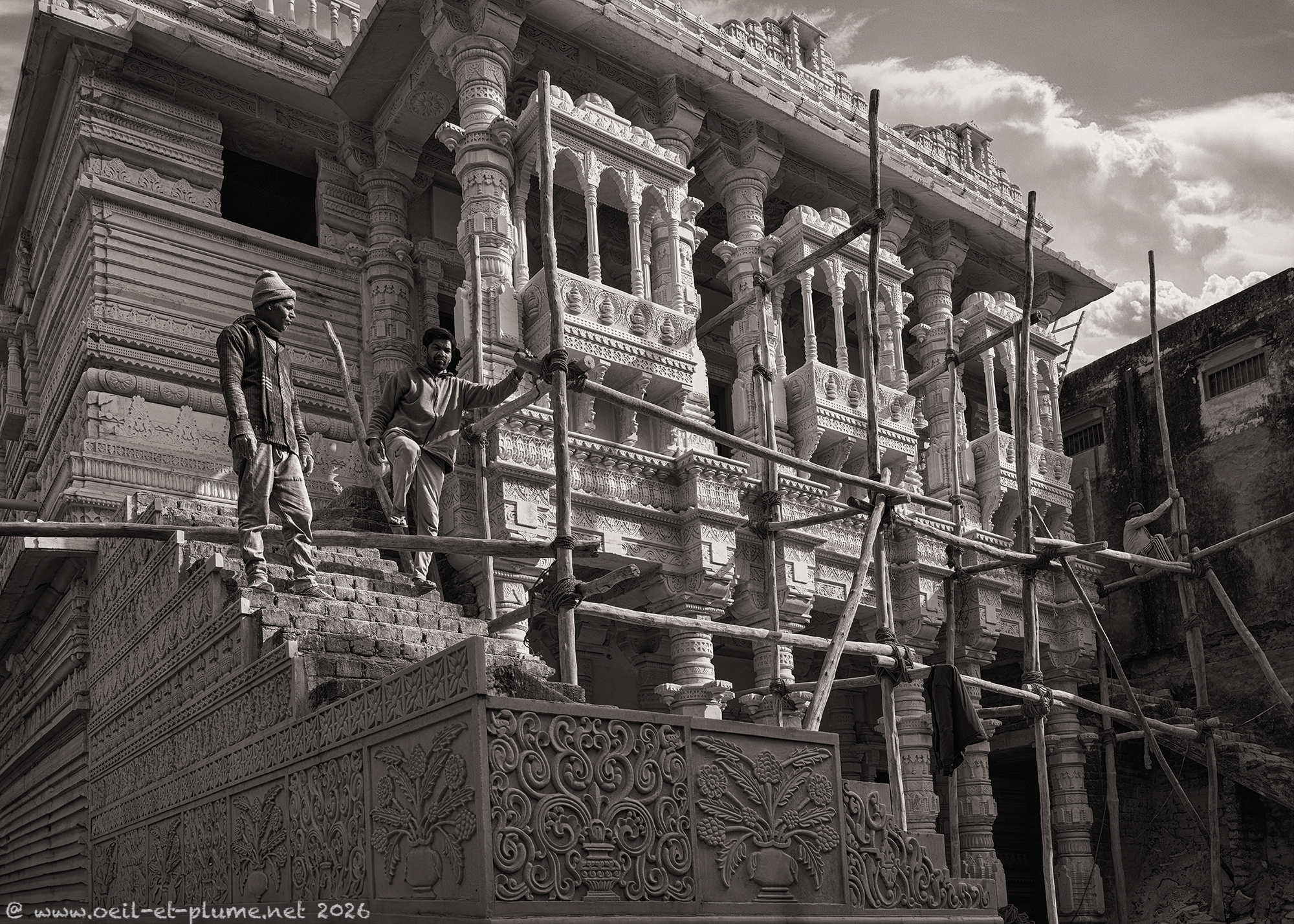
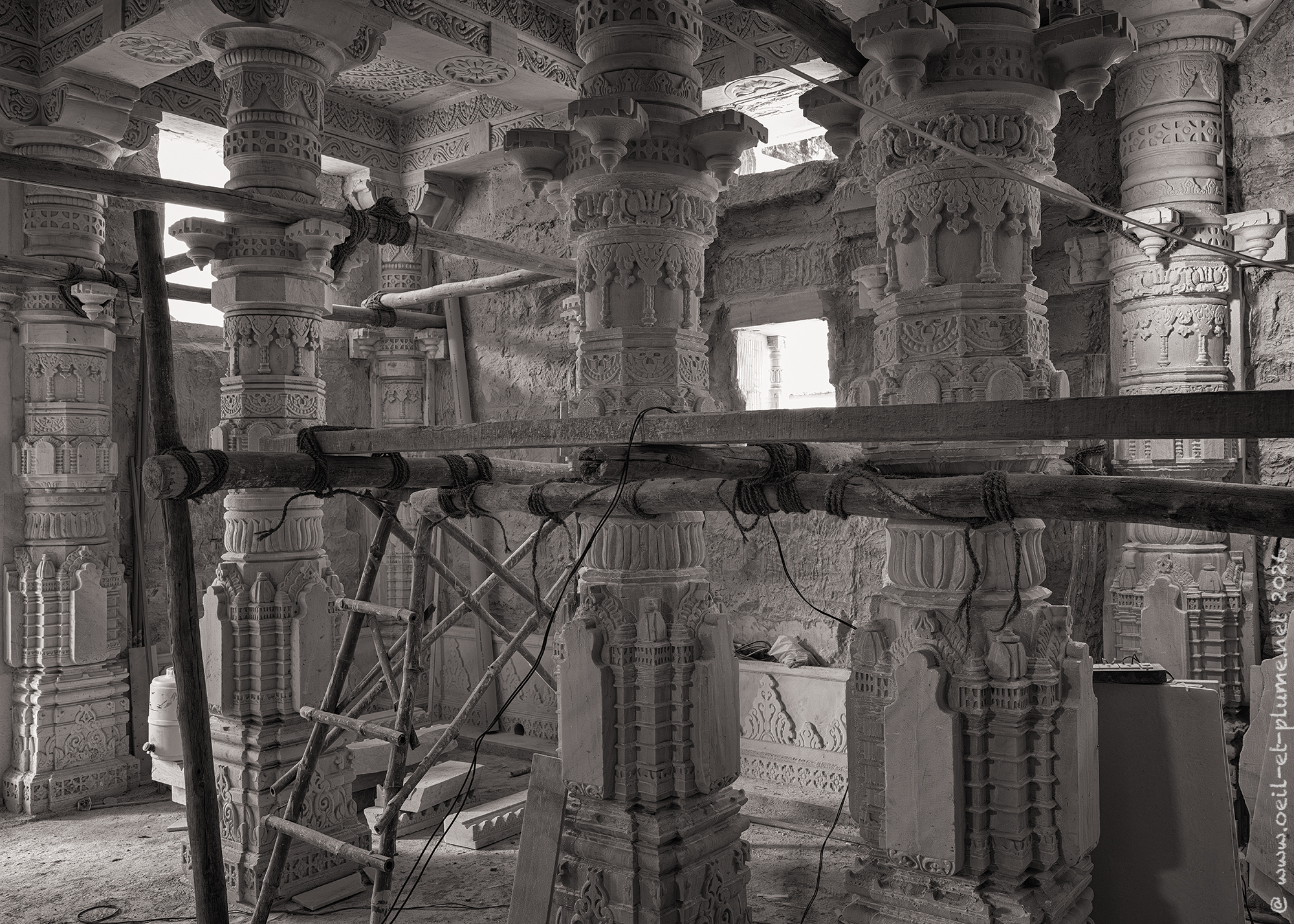
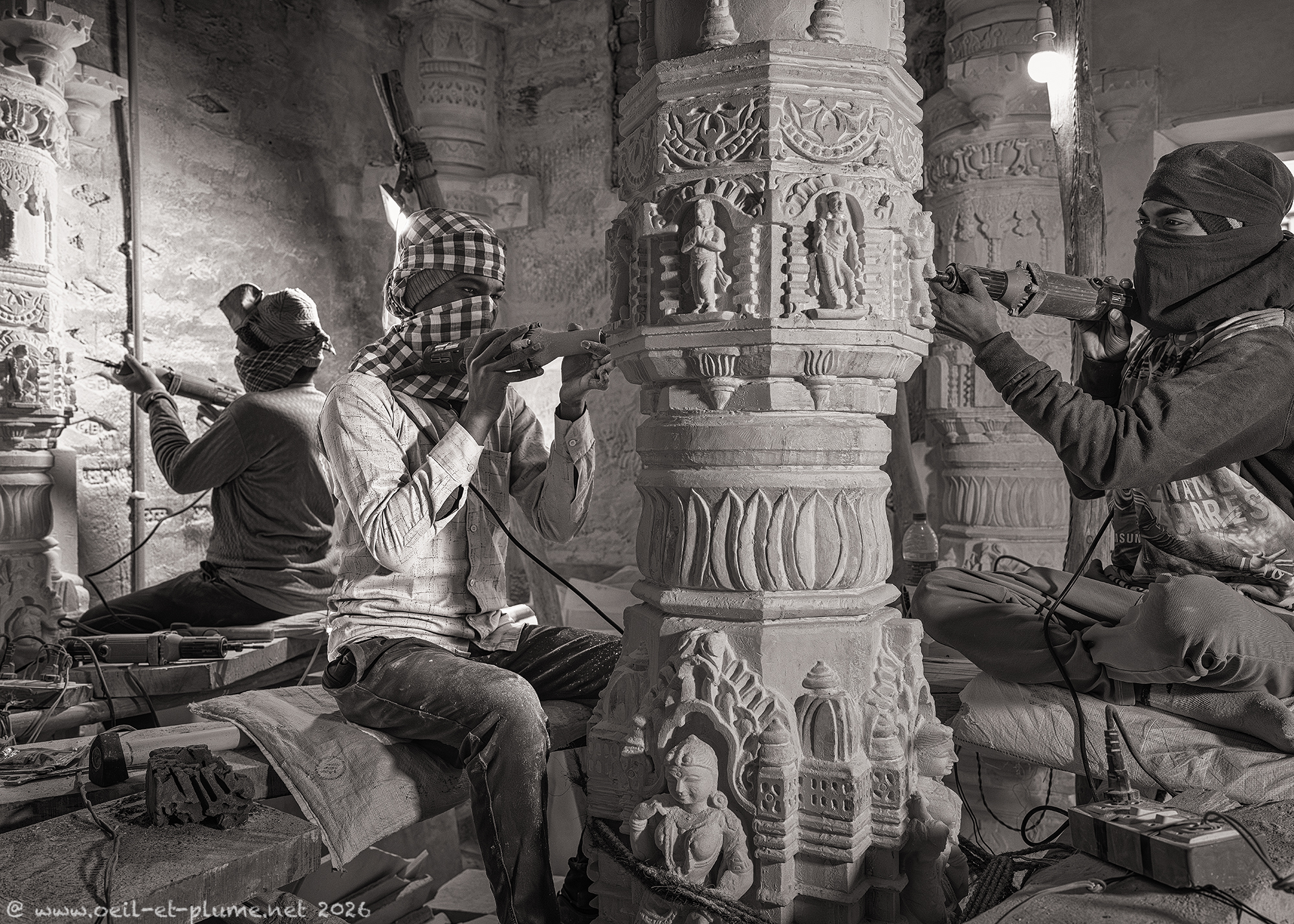
Rajasthan’s architectural heritage is not only about restoration of the old as it inspires new creations. Cities are full of such examples. Only tools have evolved to facilitate and fasten handwork. But those fresh buildings still imply much cultural awareness and technical knowhow. Here and there, there is always work in progress. In Alwar, I was lucky enough to meet a sculptor team at work in a Hindi temple.
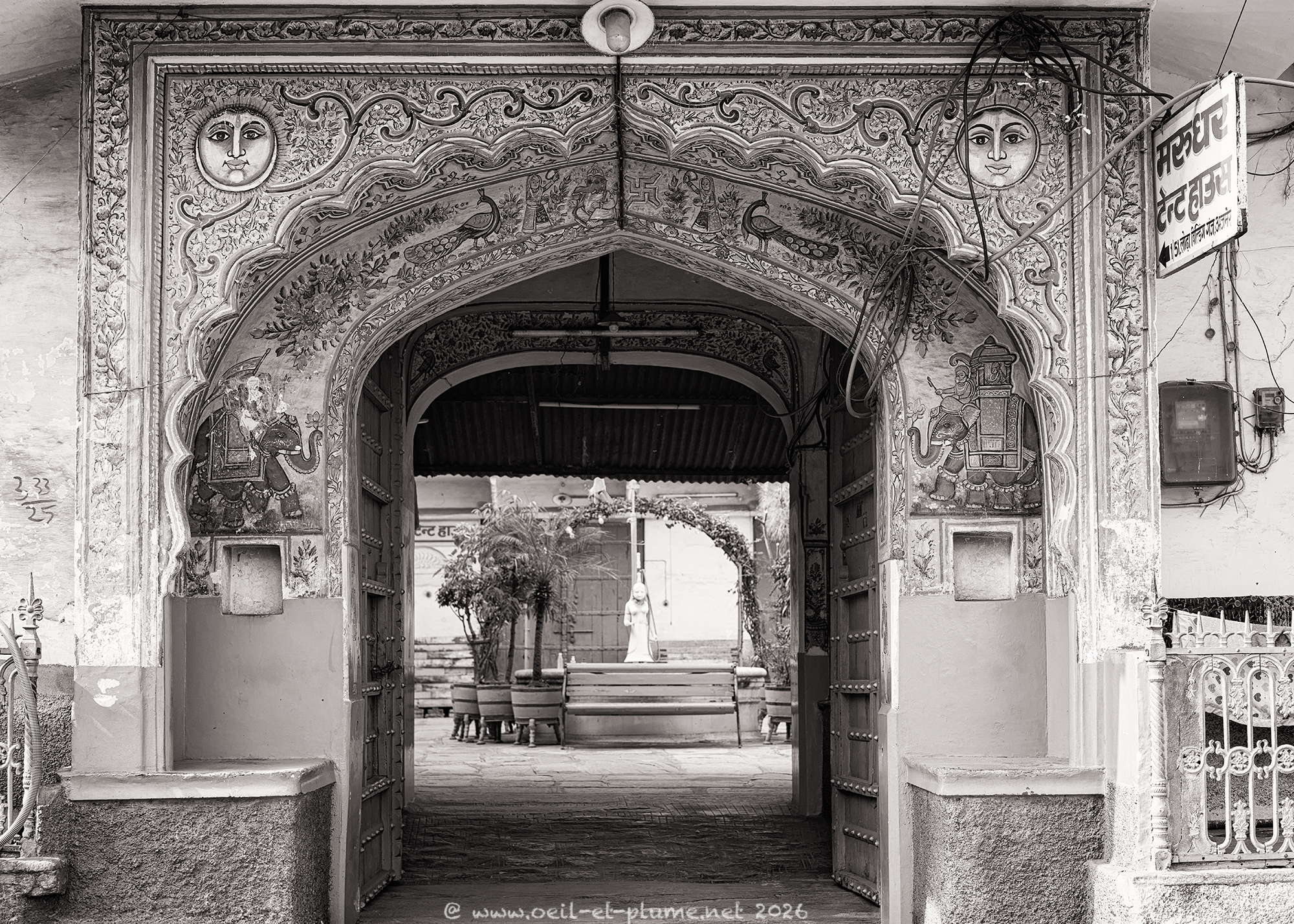
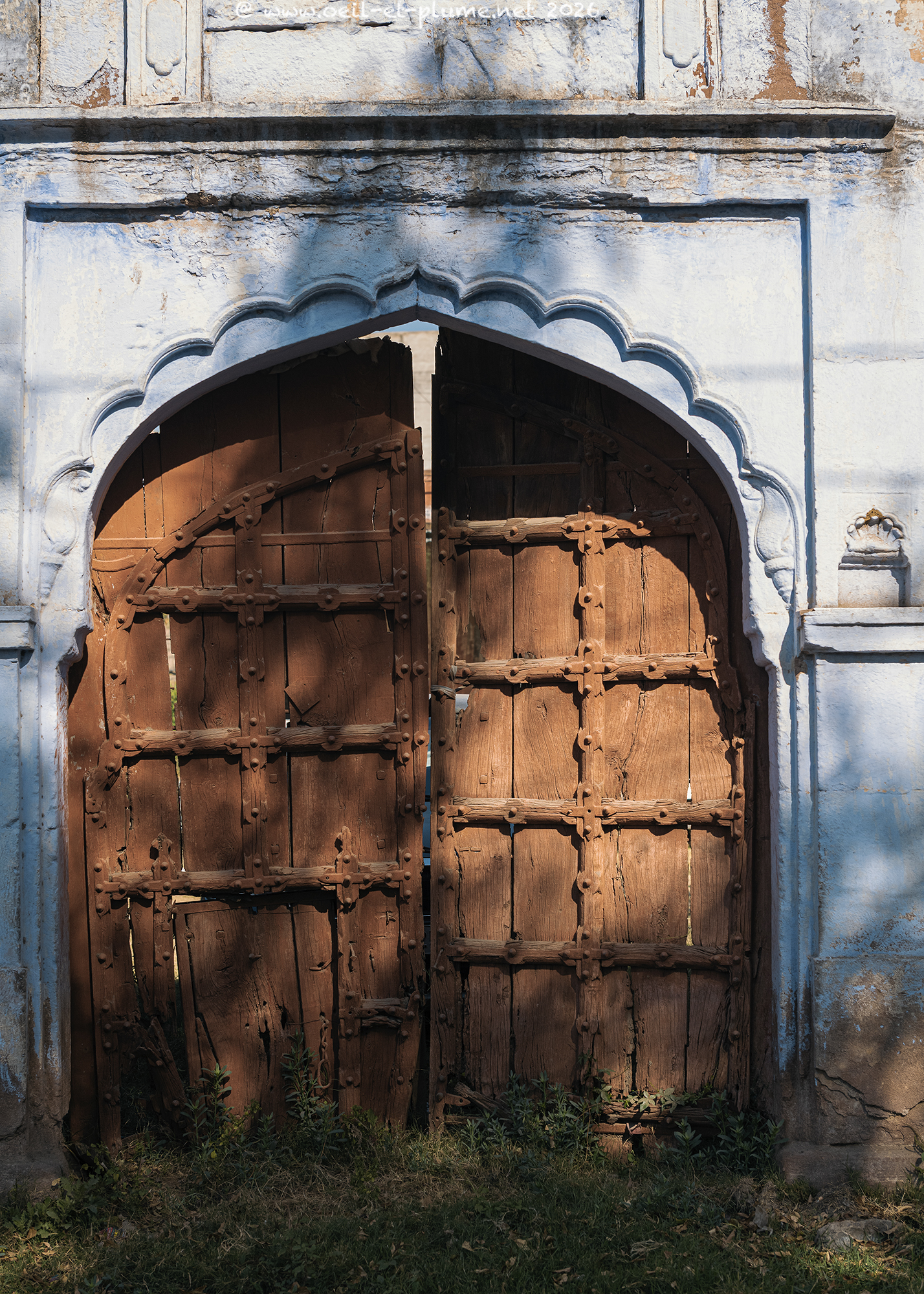
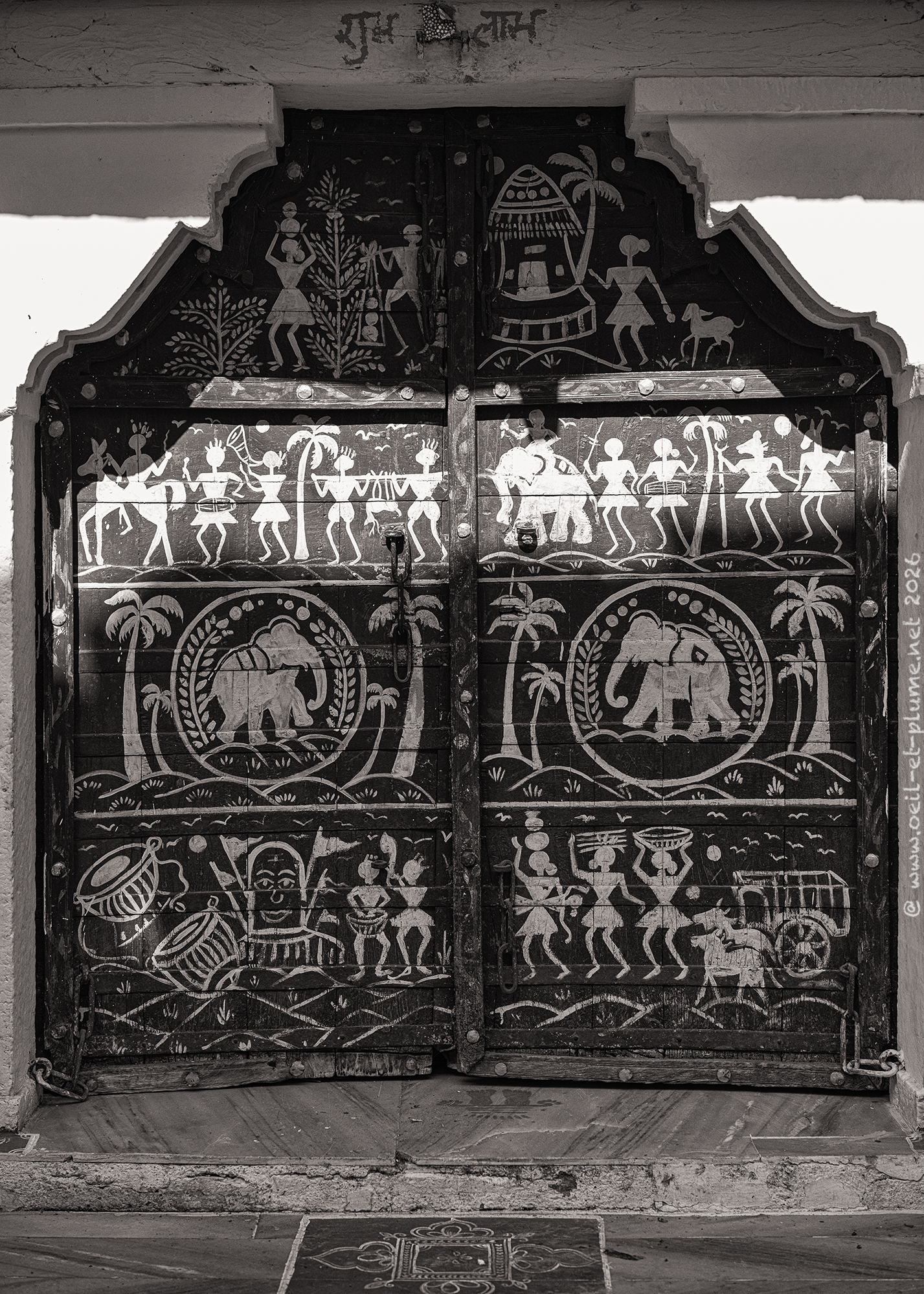
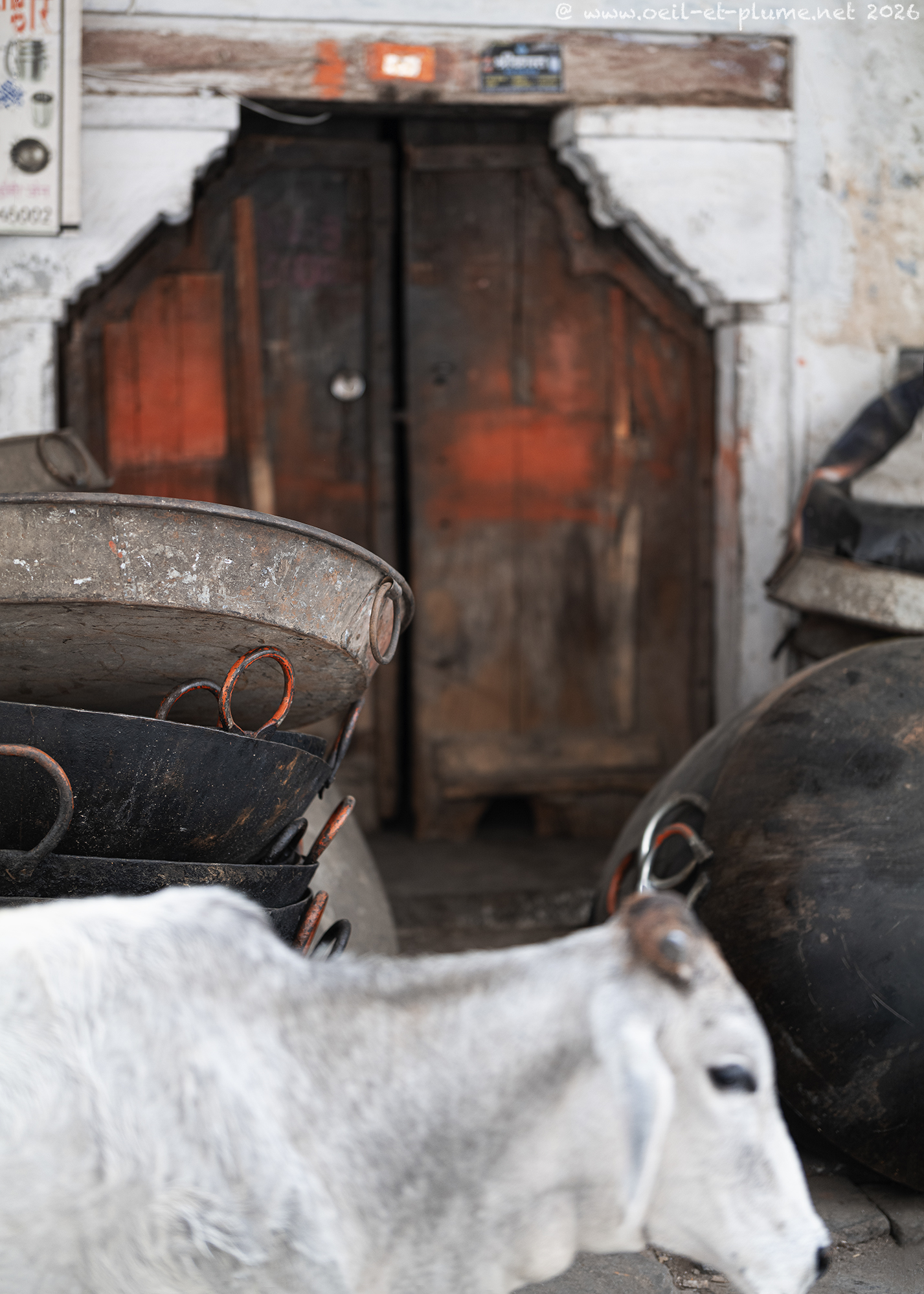
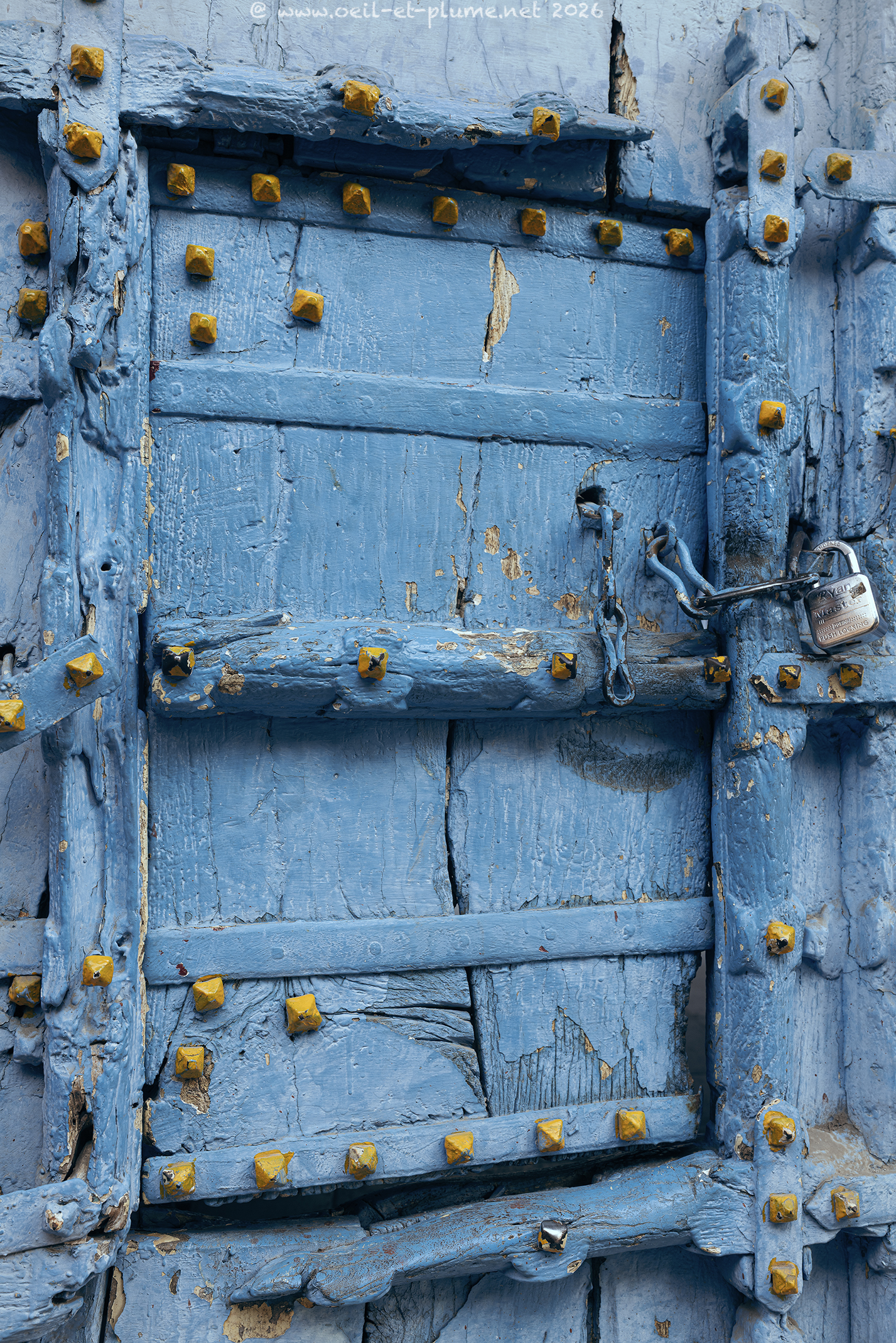
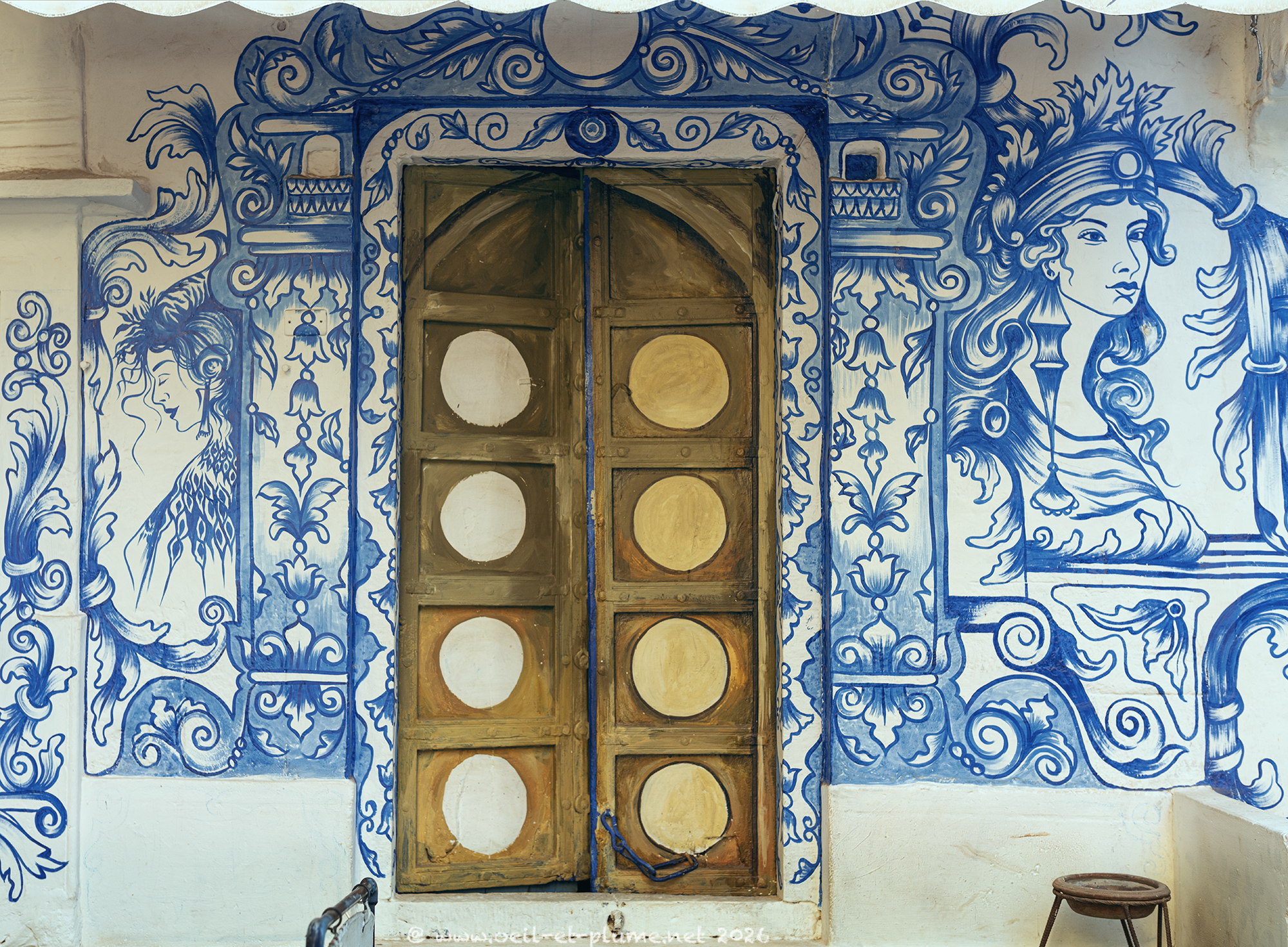
As every traditional structure built in Rajasthan is a poem written in stone, each entrance door there is an art piece. They represent the visit card of the property owners. Old or young, prestigious or modest, Rajasthani entrance doors are so well shaped and adorned that they constitute large canvasses for traditional arts to blossom.
Architectural epic stories
Rajasthan’s traditional architecture is deeply intertwined with local folklore and survival. Towering hilltop forts were built not just for architectural brilliance, but primarily for protection against enemies and to withstand a harsh desert climate. Those stones have innumerable vibrant stories to tell if one can connect, observe and listen.
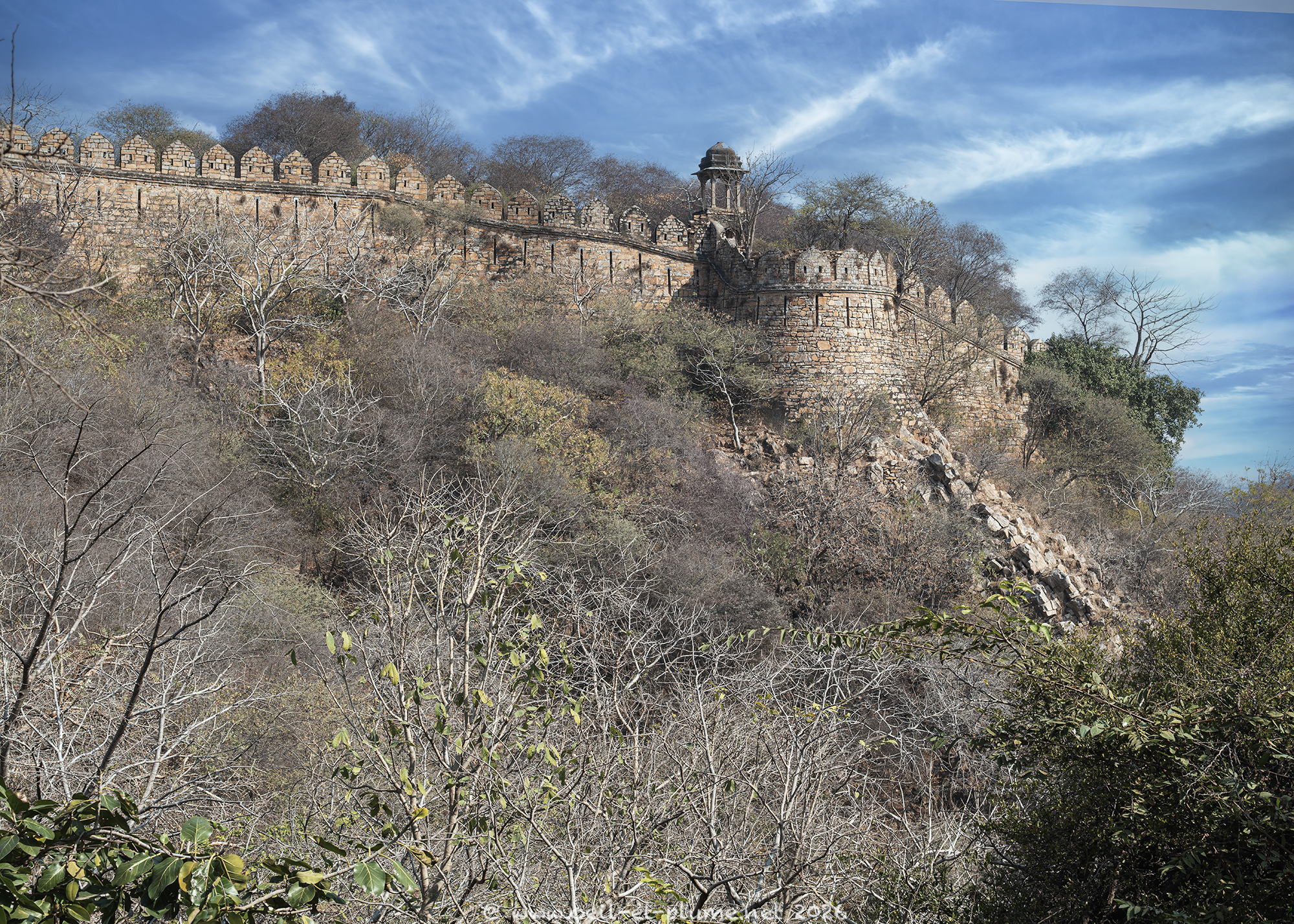
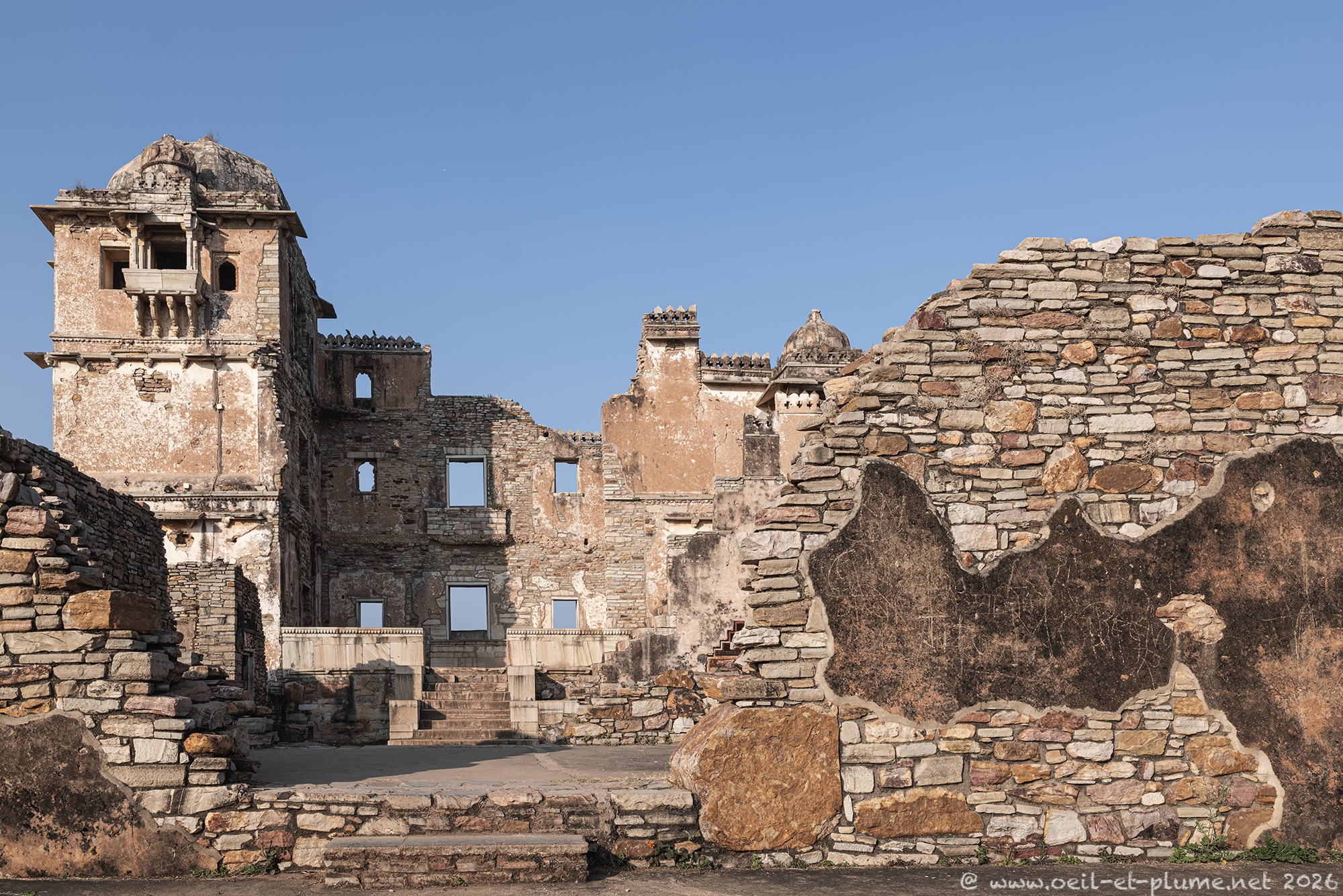
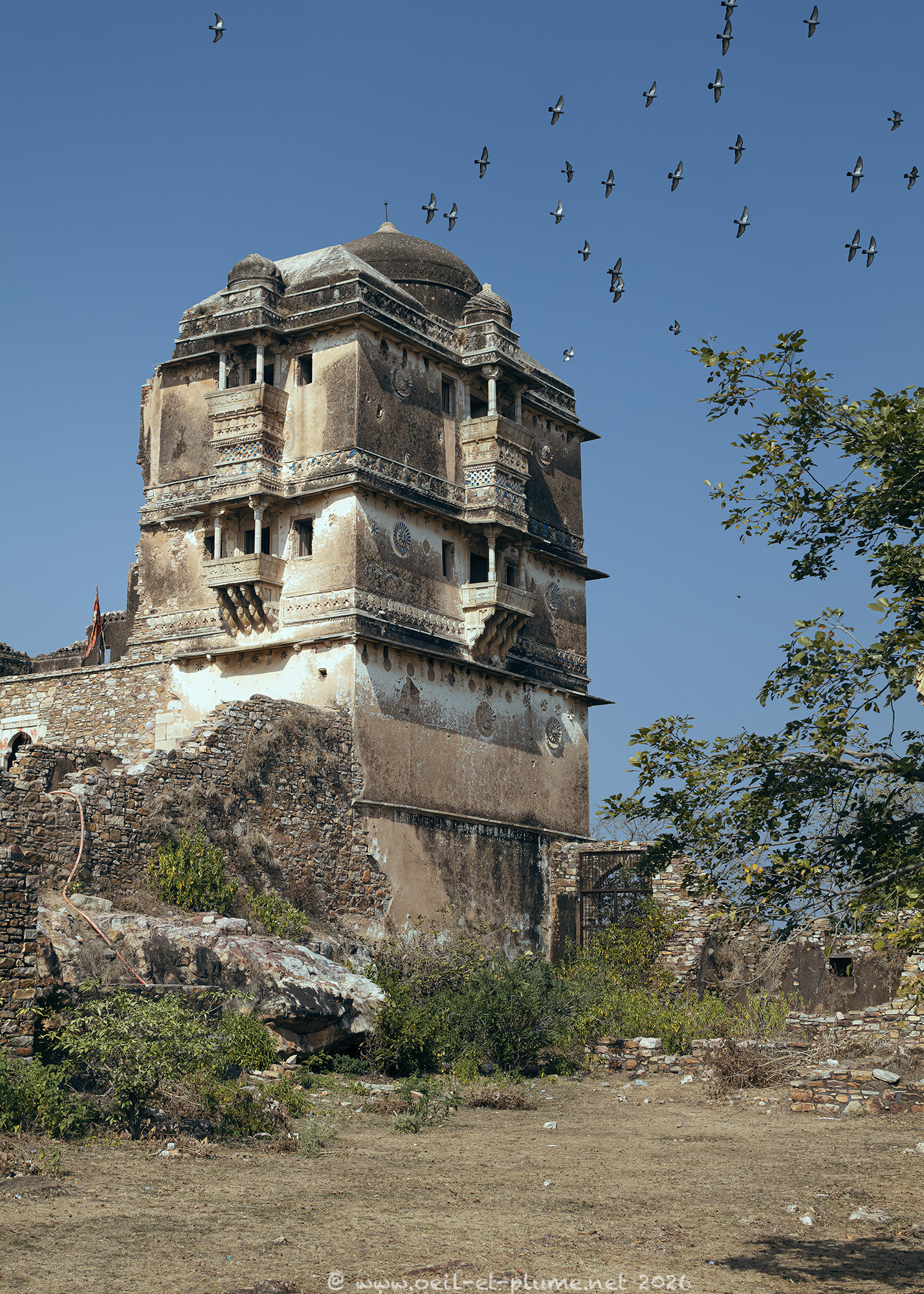
Tales of heroism and tragedy abound in relation to the Rajput hill fortresses. In Chittorgarh for instance, the fort complex served as the capital of the mighty Mewar dynasty for 800 years. The citadel witnessed countless battles – and on three occasions, mass self-immolation instead of submission. After having abandonned Chittorgarh, the Mewar dynasty built the impregnable Kumbhalgarh Fort, with a wall system second only to the Great Wall of China.
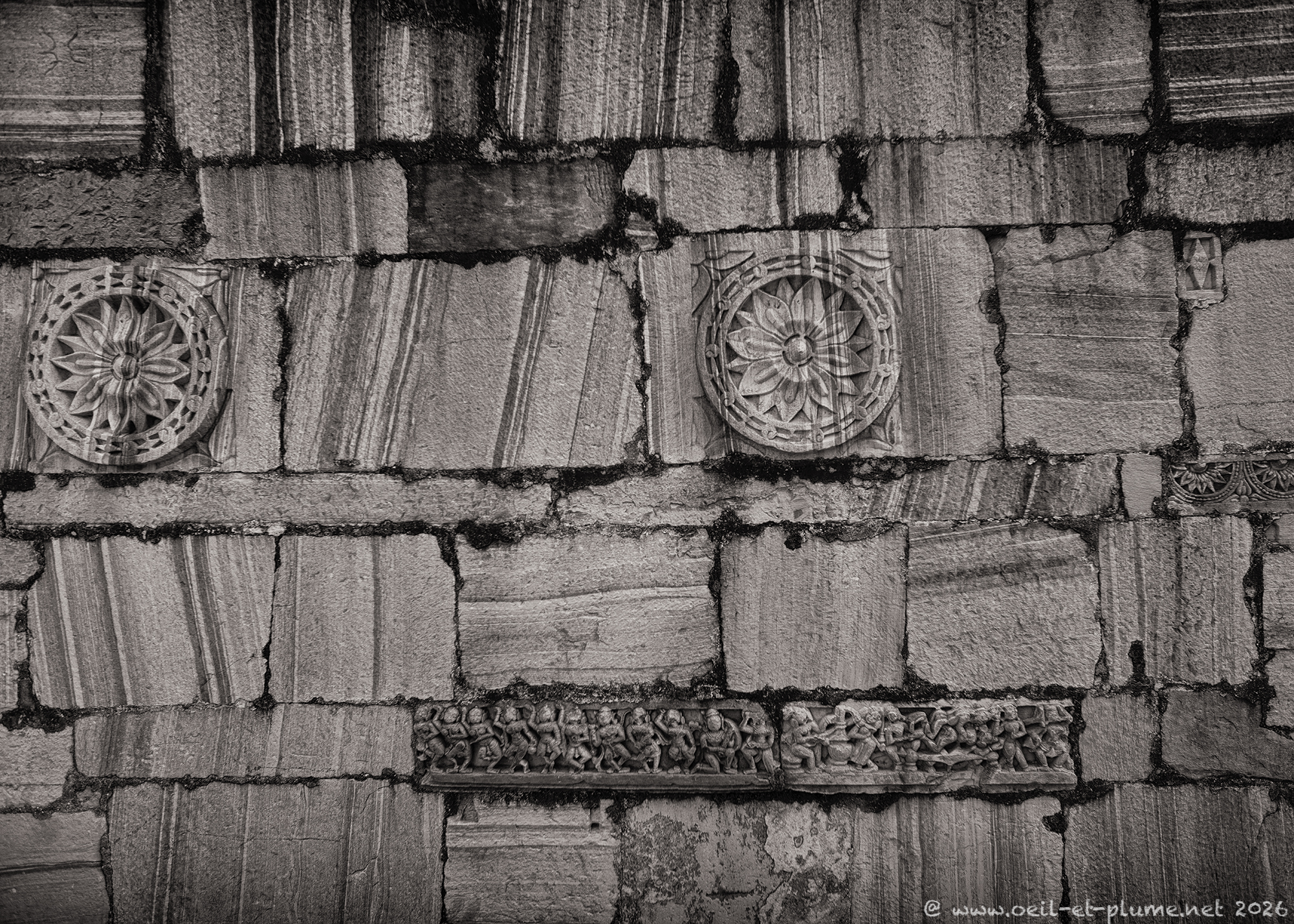
Still run by the Jodhpur royal family, Mehrangarh Fort is also packed with history and tale. Perched above the Blue City, the mighty fortress was built in the 15th century. According to legend, the chosen hill was already occupied by a hermit. Angered by his eviction, the hermit cursed the land, bringing severe droughts to Jodhpur. To appease the gods and lift the curse, a local man named Raja Ram Meghwal was reportedly buried alive in the fort’s foundation. In return, his descendants were granted special privileges by the royal family that continue today.
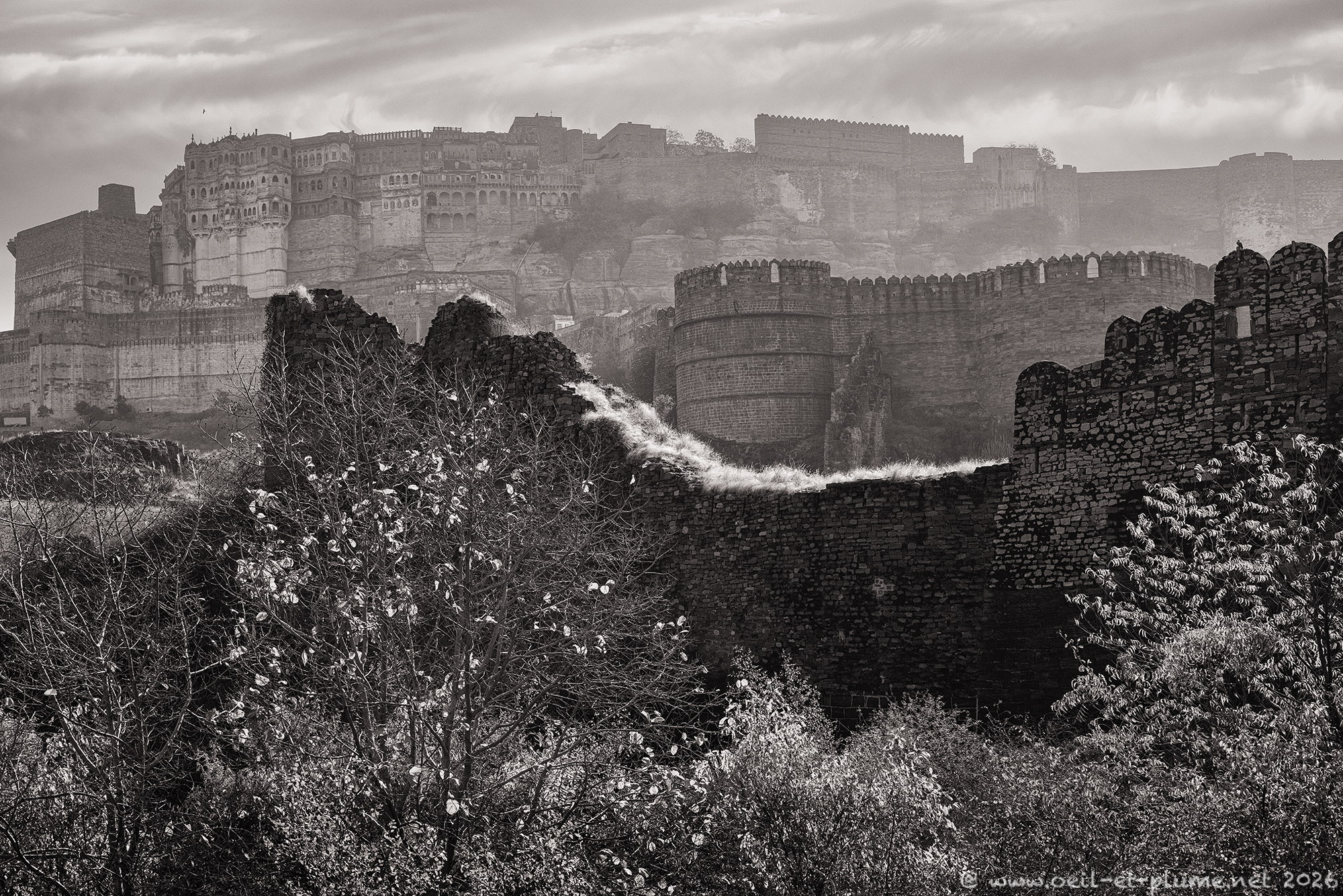
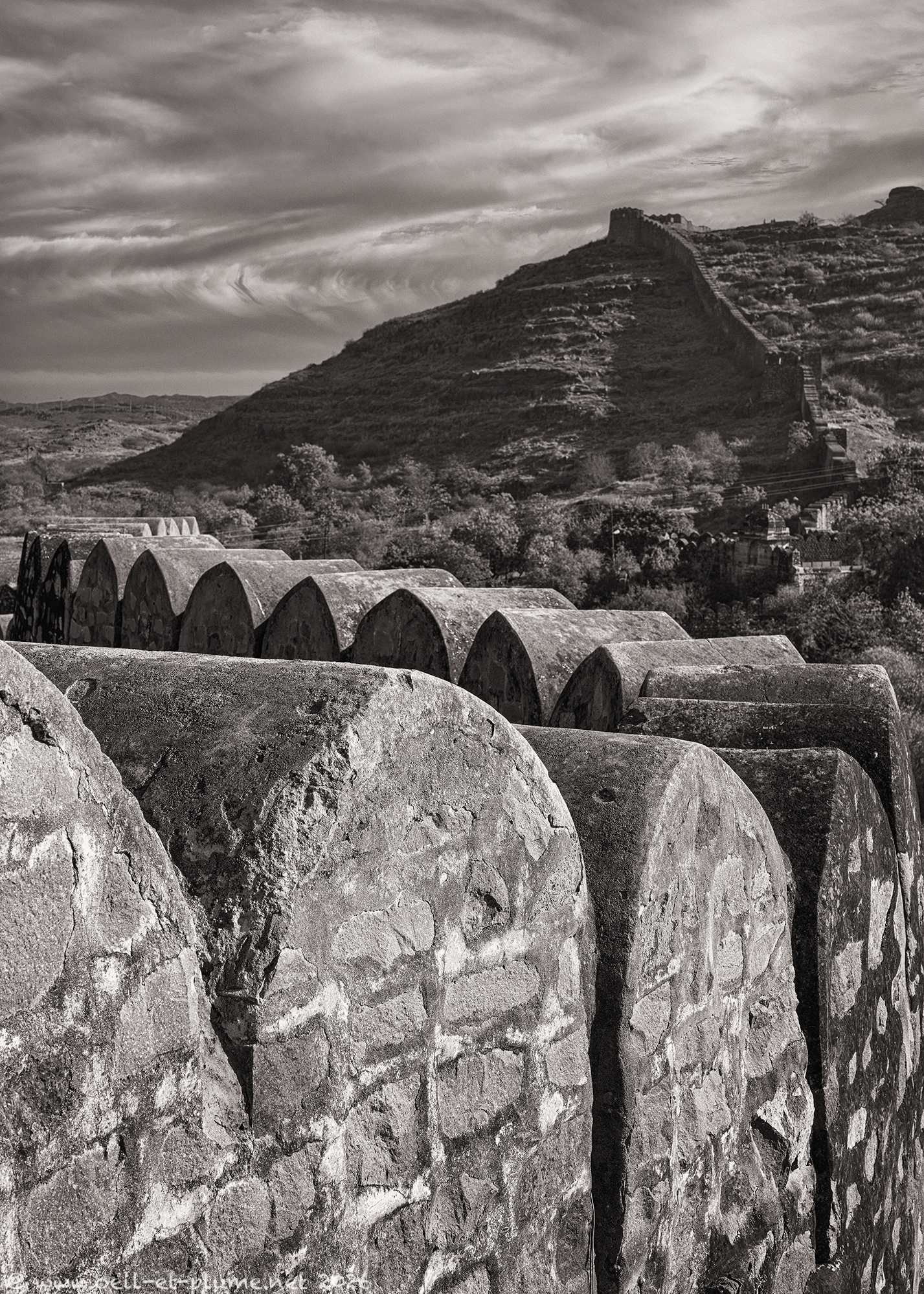
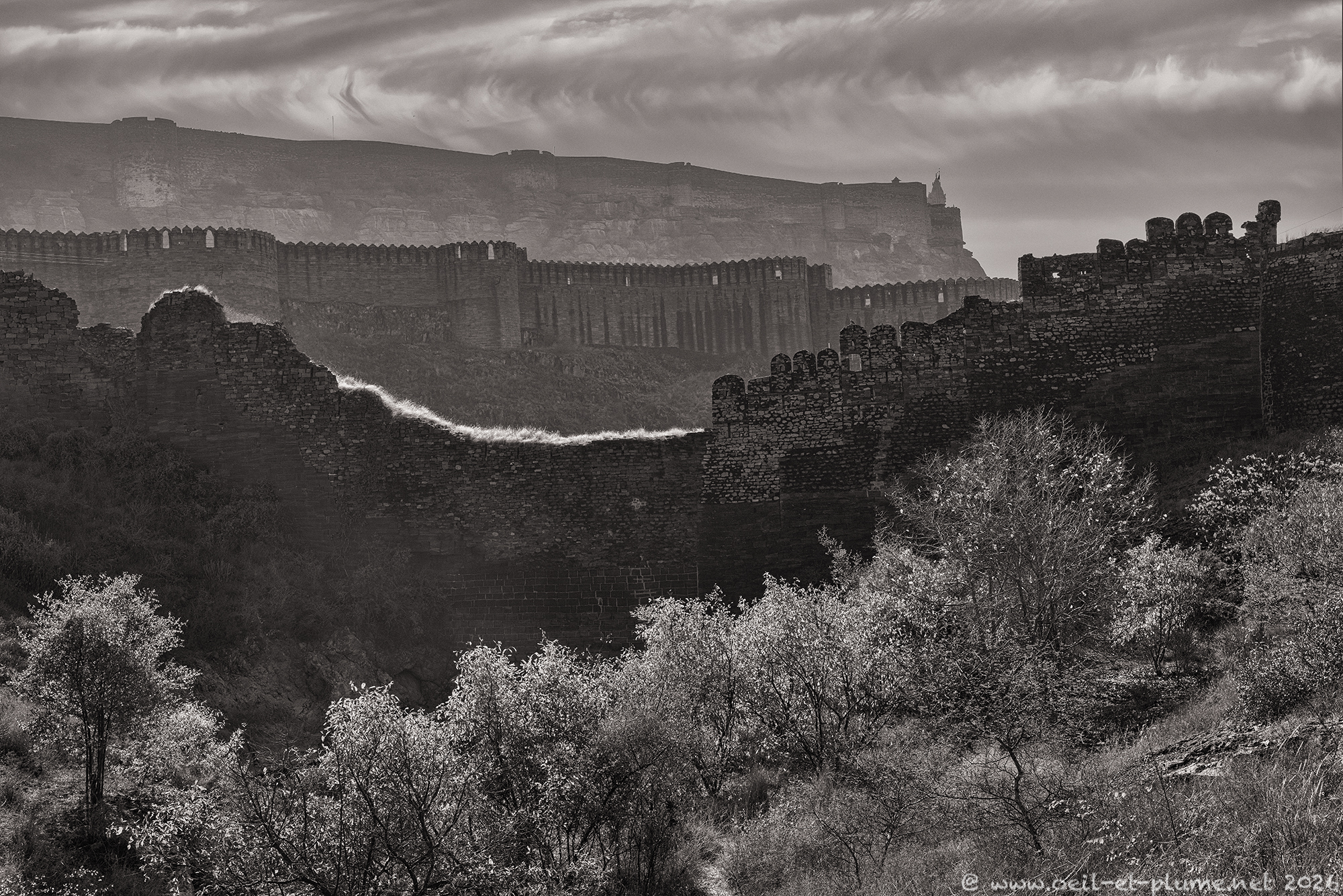
The high walls of Mehrangarh Fort still bear the scars of the multiple battles fought there. The fort’s original entrance still display iron spikes which were used to deter enemy elephants. Just inside the gate are two sets of small hand prints – made by royal widows just before their ritual suicide on their husband’s funeral pyre (sati).
Prospects
Traditional architecture in Rajasthan embodies much of India’s history and culture. Its major monuments are now world-famous, serving as pillars of the Indian tourism industry and being meticulously preserved for future generations. Yet, significant restoration work remains to save other architectural treasures from decay.
Rajasthan has produced architectural marvels born from the interplay between different cultures, primarily Hindu Rajput and Muslim Moghul. Though this interaction was not always smooth, it allowed for a rich cross-fertilisation of cultures in northwest India over centuries, contributing significantly to India’s grandeur.
However, these architectural masterpieces were created by a profoundly unequal society. Thousands of workers spent years in hard labor to build them, presumably receiving very modest rewards. Social inequalities in Rajasthan remain high today.
In the 1930s, Maharaja Umaid Singh, head of the Rathore clan, commissioned a new palatial home in the outskirts of Jodhpur. The Umaid Bhawan Palace fuses Indo-Saracenic and Art Deco styles. The construction of the gigantic complex took nearly 15 years and employed over 3,000 workers.
More recently, Swaminarayan Mandir was inaugurated near Jodhpur in 2025. The magnificent temple is dedicated to Bhagwan Swaminarayan (1781-1830 CE), who taught about moral living and social upliftment. Built entirely from carved Jodhpuri sandstone and assembled without metal or cement, the religious structure is envisioned as a sanctuary of devotion, peace, and cultural pride.
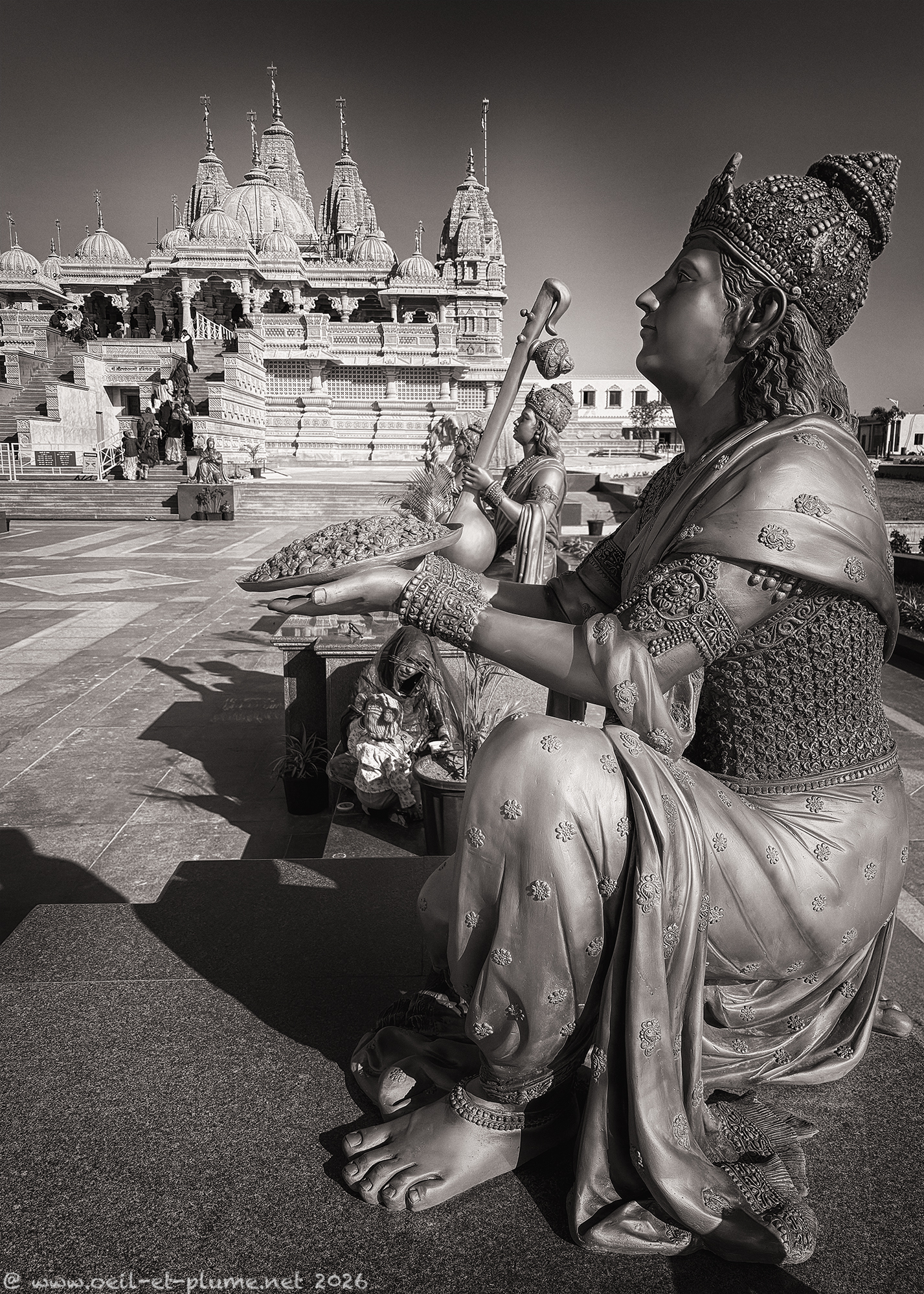
It remains to be seen whether the Indian society will craft similar monumental pieces of architecture in the future. Only time will also tell whether future generations will appreciate the Umaid Bhawan Palace and Swaminarayan Mandir Temple as much as we admire the Mehrangarh Fort in Jodhpur or the Palace of the Winds (Hawa Mahal) in Jaipur.
Cheers,