Introduction
In the quest for remote, untamed Alpine landscapes, I found my sanctuary in the twin valleys of Baltschieder and Gredetsch in the Haut-Valais. Carved into the heart of the Bernese Alps, these deep fissures lie within the UNESCO-protected Jungfrau-Aletsch-Bietschhorn biosphere. Here, nature reigns supreme, offering a raw and breathtaking backdrop for long-distance trekking.
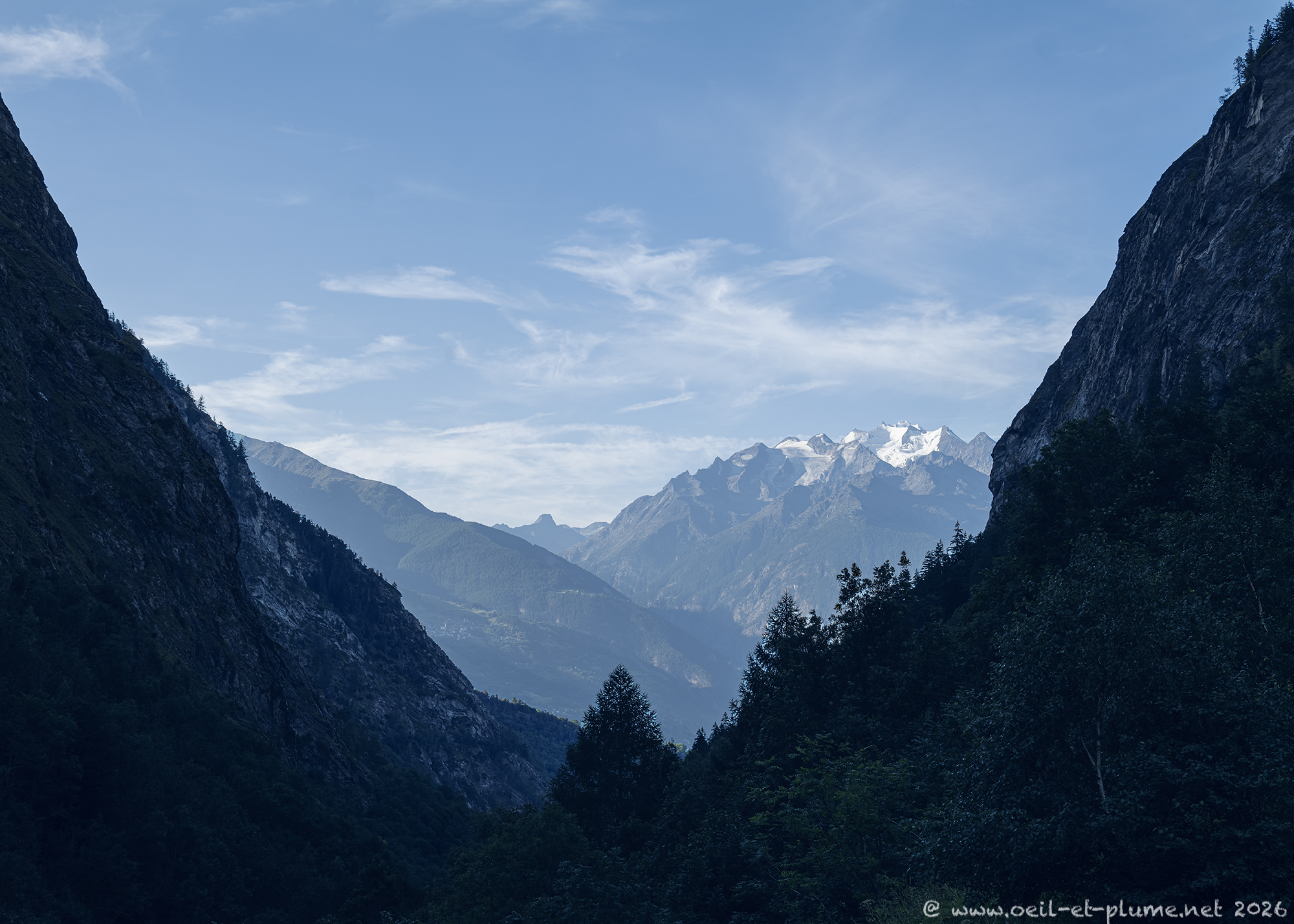
The Baltschieder Valley stands as the wildest of its kind—a narrow, profound incision into the bedrock, accessible only on foot or by air. It is a place of stark beauty, where the silence is broken only by the wind and the occasional cry of marmots or alpine birds. Yet, it is not entirely devoid of human presence; a couple of traditional houses used for seasonal pasture are scattered across the lower part of the valley. High above, near the imposing Bietschhorn and the Nesthorn, a solitary mountain hut offers shelter to those who manage to reach there.
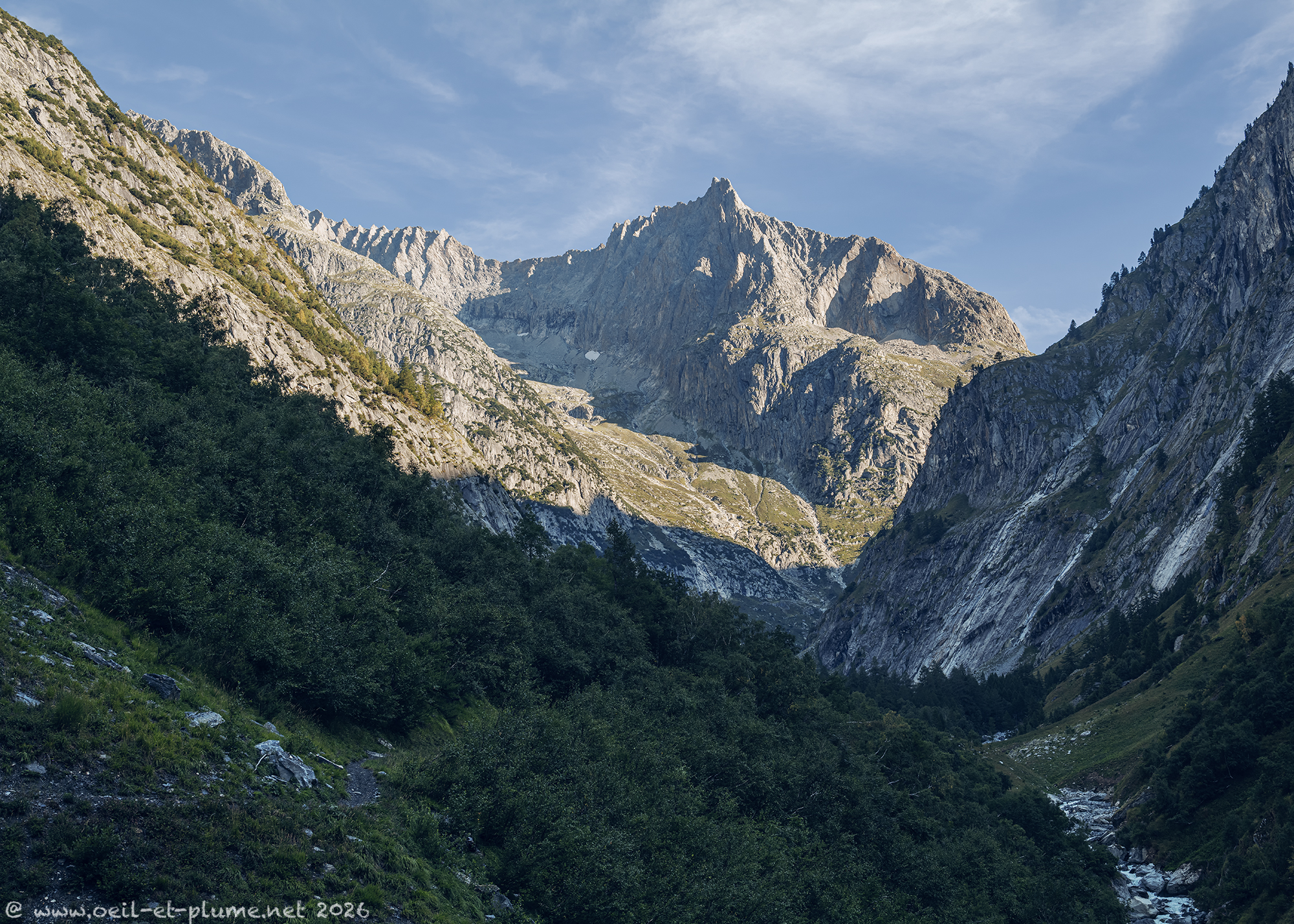
In contrast, the Gredetsch Valley unfolds with a slightly wider embrace. This broader shape allowed for the construction of rudimentary road tracks, used for moving sheep and cattle through the pastures. Despite this slight accessibility, the valley hosts very few traditional dwellings and no mountain huts. Its profound silence is a testament to the enduring power of the wilderness.
This narrative is a fusion of my personal trekking experiences in these two valleys. It is not a documentary record, but rather an exploration of my thoughts, feelings and emotions forged on my way. My essay explores some fundamental truths of our existence: the vital role of water in sustaining both nature and humanity; the pressing impact of climate change on these fragile ecosystems; the imperative to preserve these wilderness areas.
Above all, this story honours the courage, ingeniousness, resilience, and profound respect shown by local communities in their traditional approach to nature. Their way of life, deeply intertwined with the rhythms of the mountains, serves as a reminder of our shared responsibility to protect these natural gems for generations to come.
Water and ice
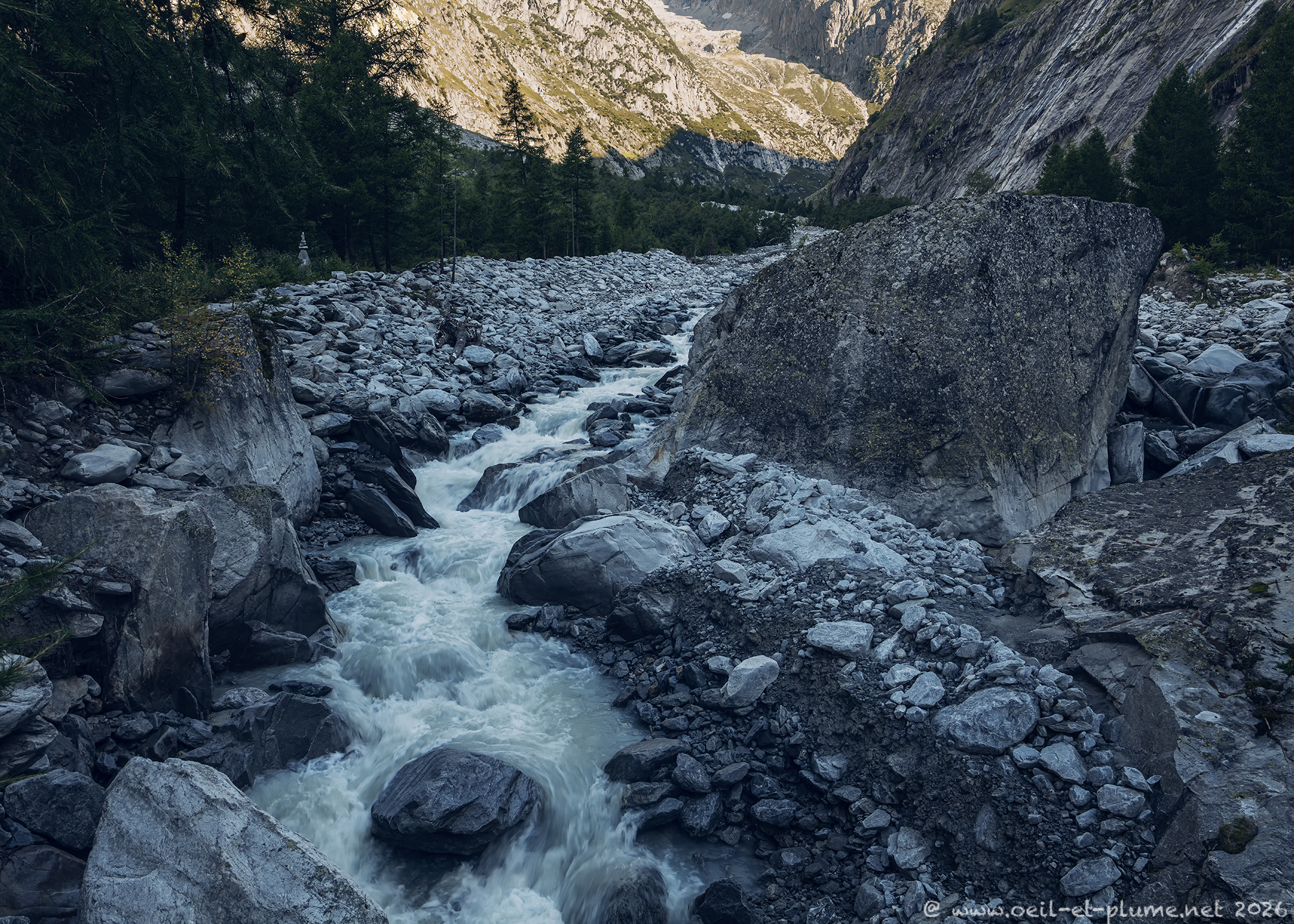
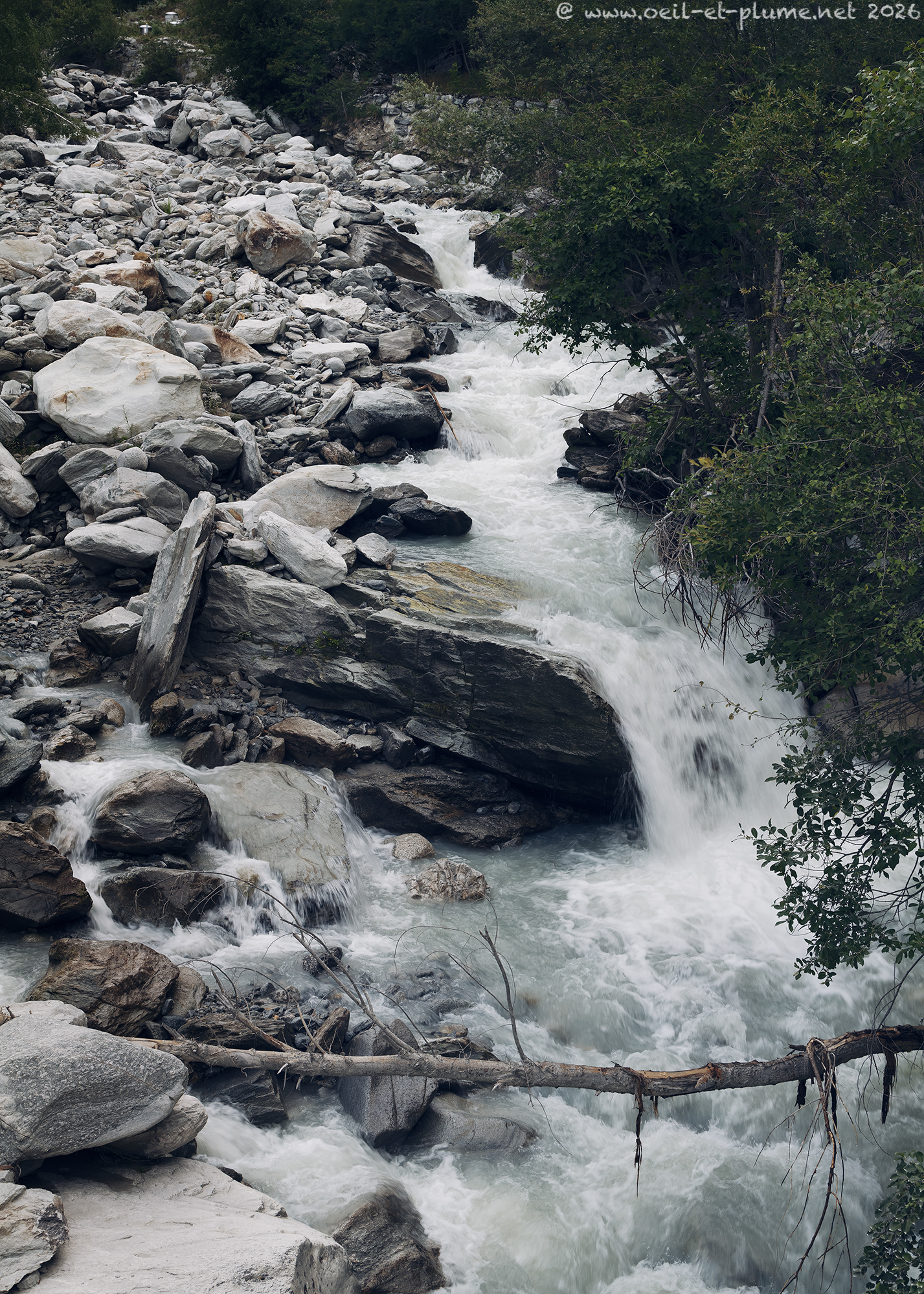
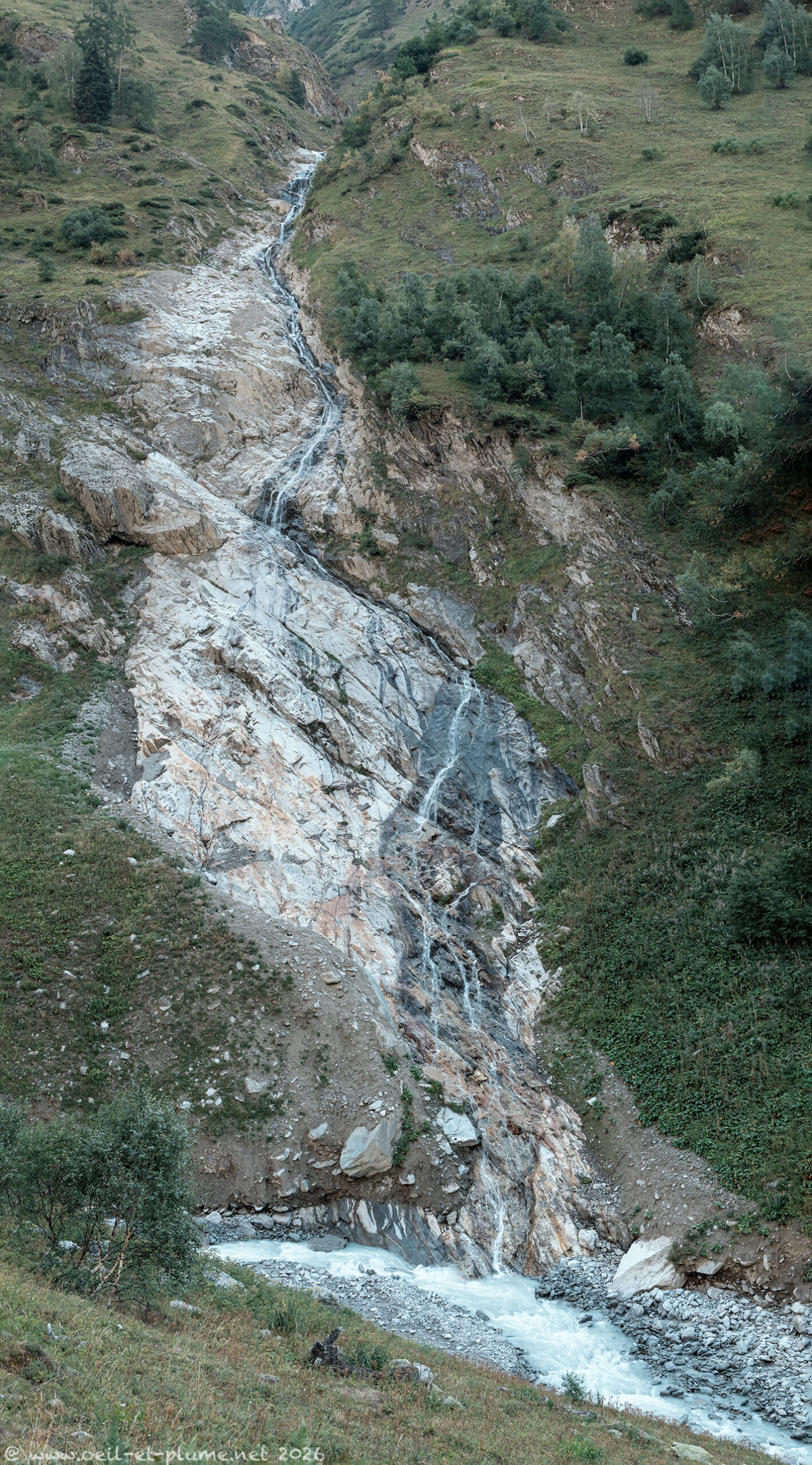
The Baltschieder and Gredetsch Valleys are made of rock indeed, but also of water and ice. Water has carved the two narrow valleys since immemorial times. Turbulent alpine streams, fed by melting ice from the surrounding heights, continue to carve the narrow valleys, reflecting the dynamic interaction between rock, water and ice.
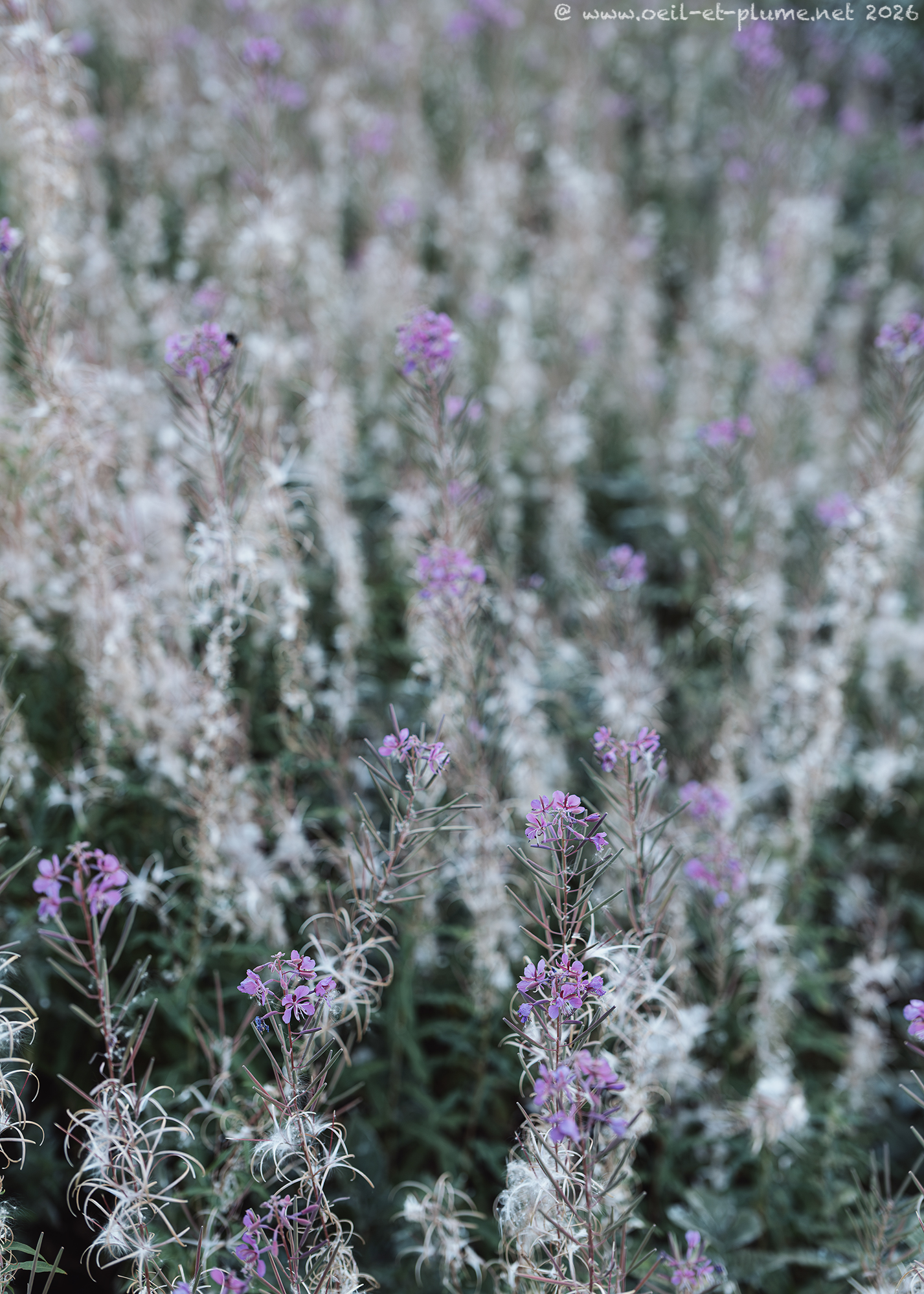
The Jungfrau-Aletsch-Bietschhorn region, recognized as the most glaciated area in the European Alps, showcases Europe’s largest glacier and preserves a significant geological record of the High Alps formation. The area features a wide diversity of ecosystems and an exceptional level of biodiversity that I much enjoyed during my progression toward the upper part of the valleys.
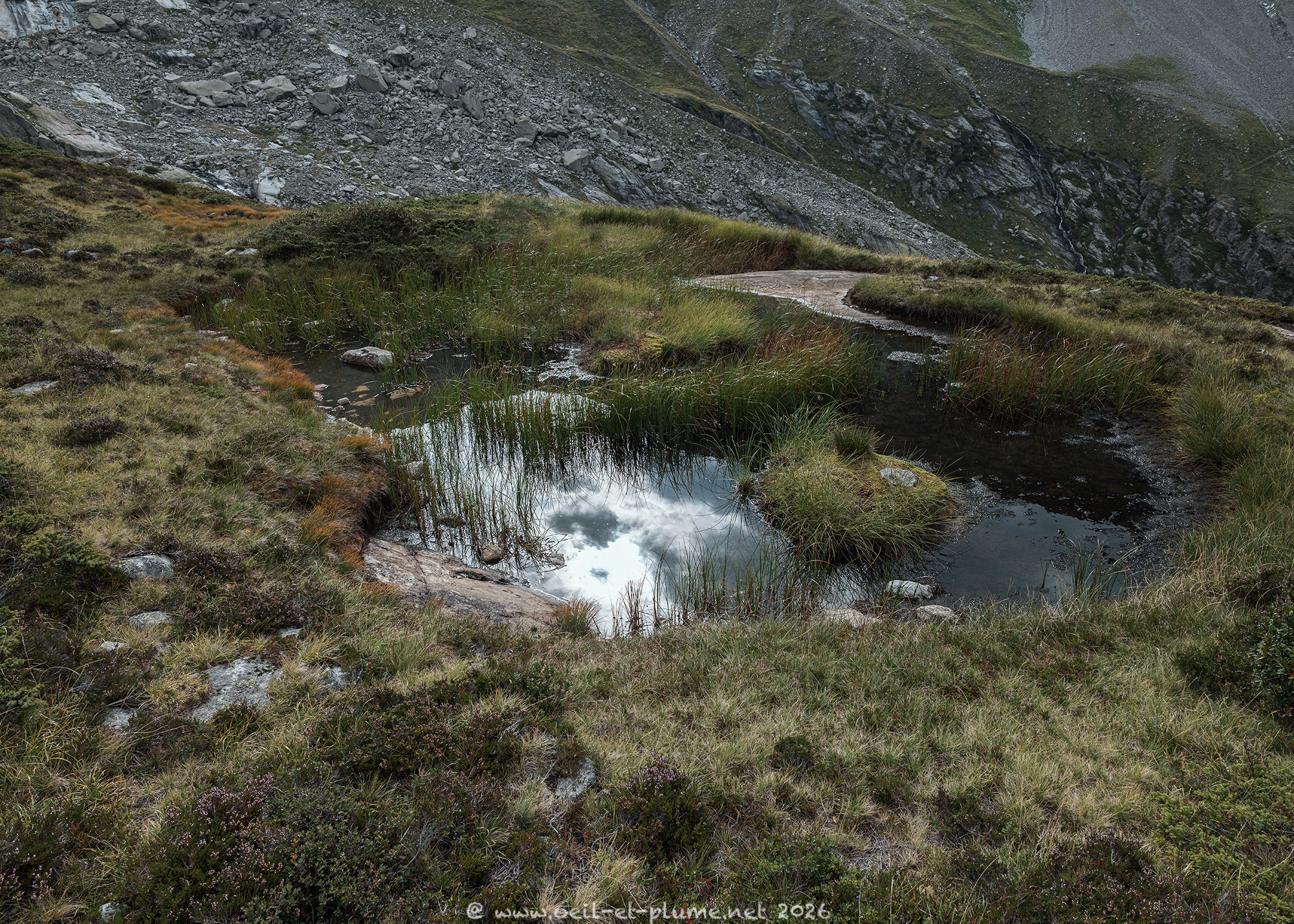
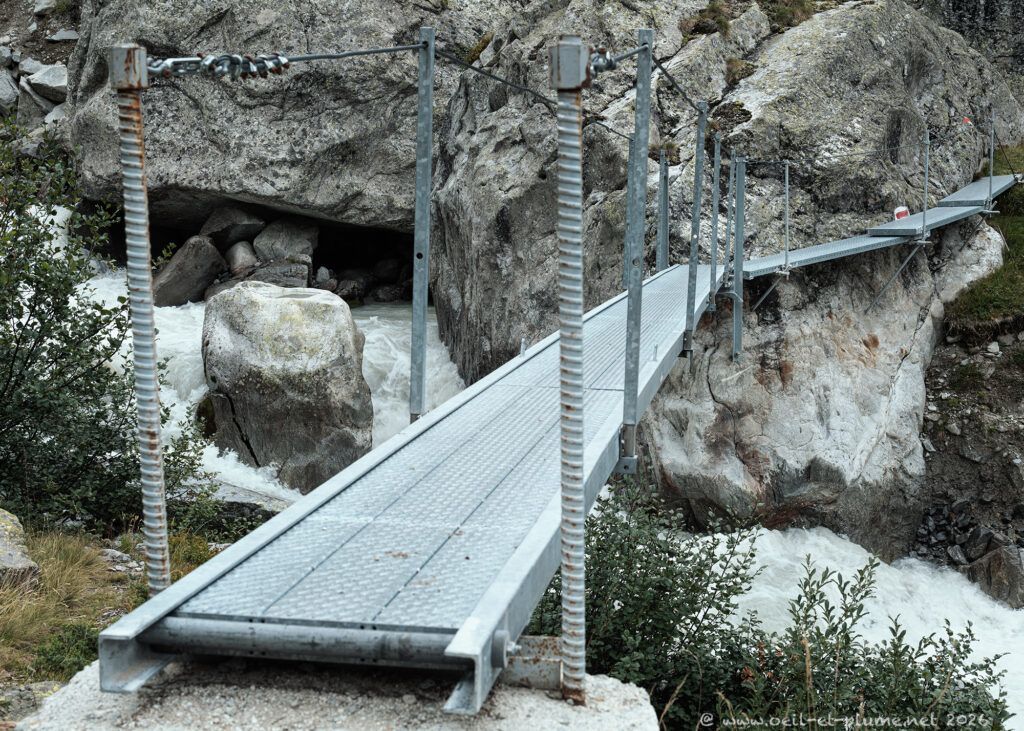
Along the way, water was cascading down from all directions at times, turning my hike into something of a hip-hop session as I dodged the streams and splashes. In the Baltschieder Valley, the trekking route is equipped with several metallic footbridges, which are removed during the winter season. The main river was flowing with impressive volume, speed, and force. This wild power and raw beauty are best experienced on site, as captured in the video footage here.
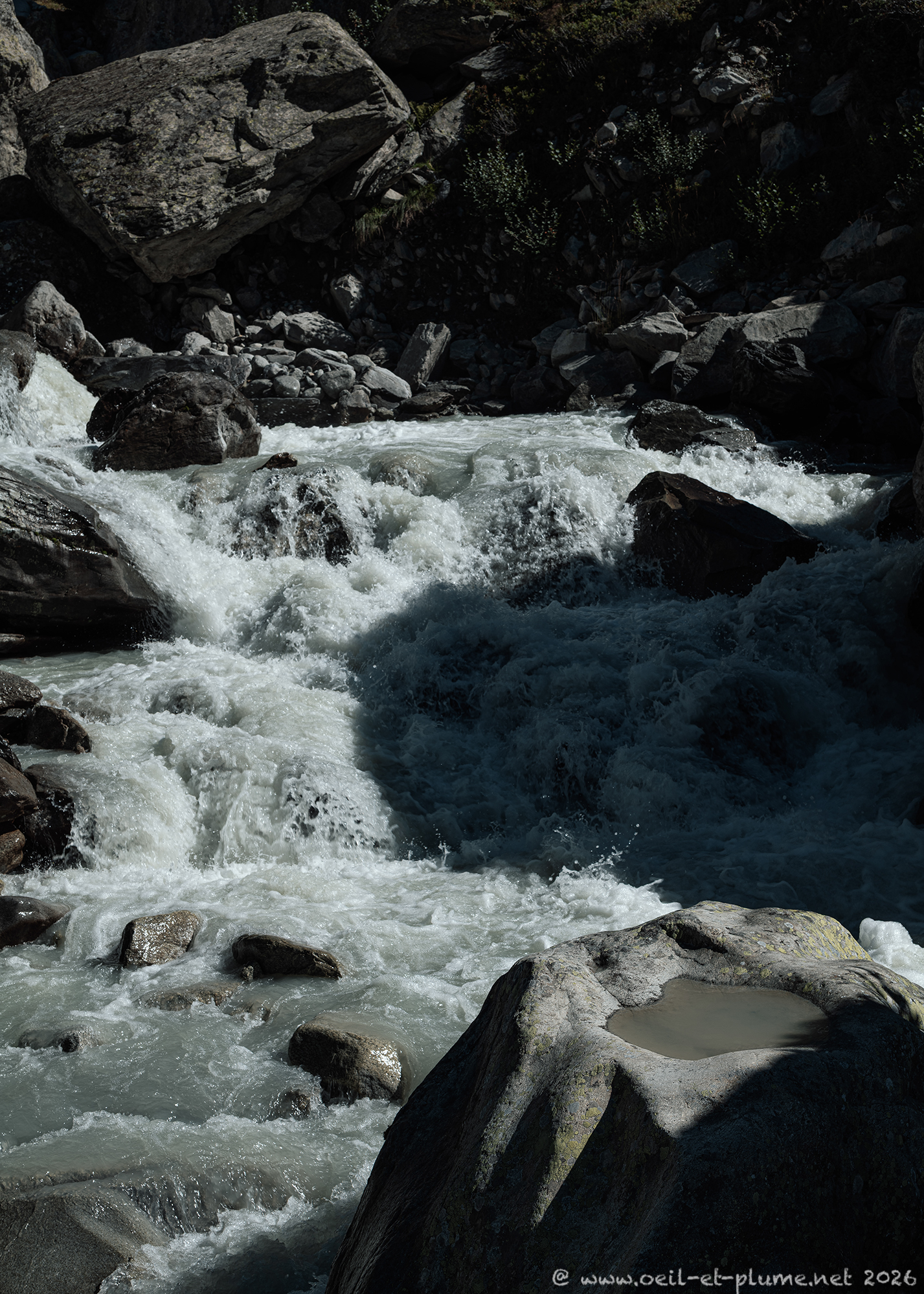
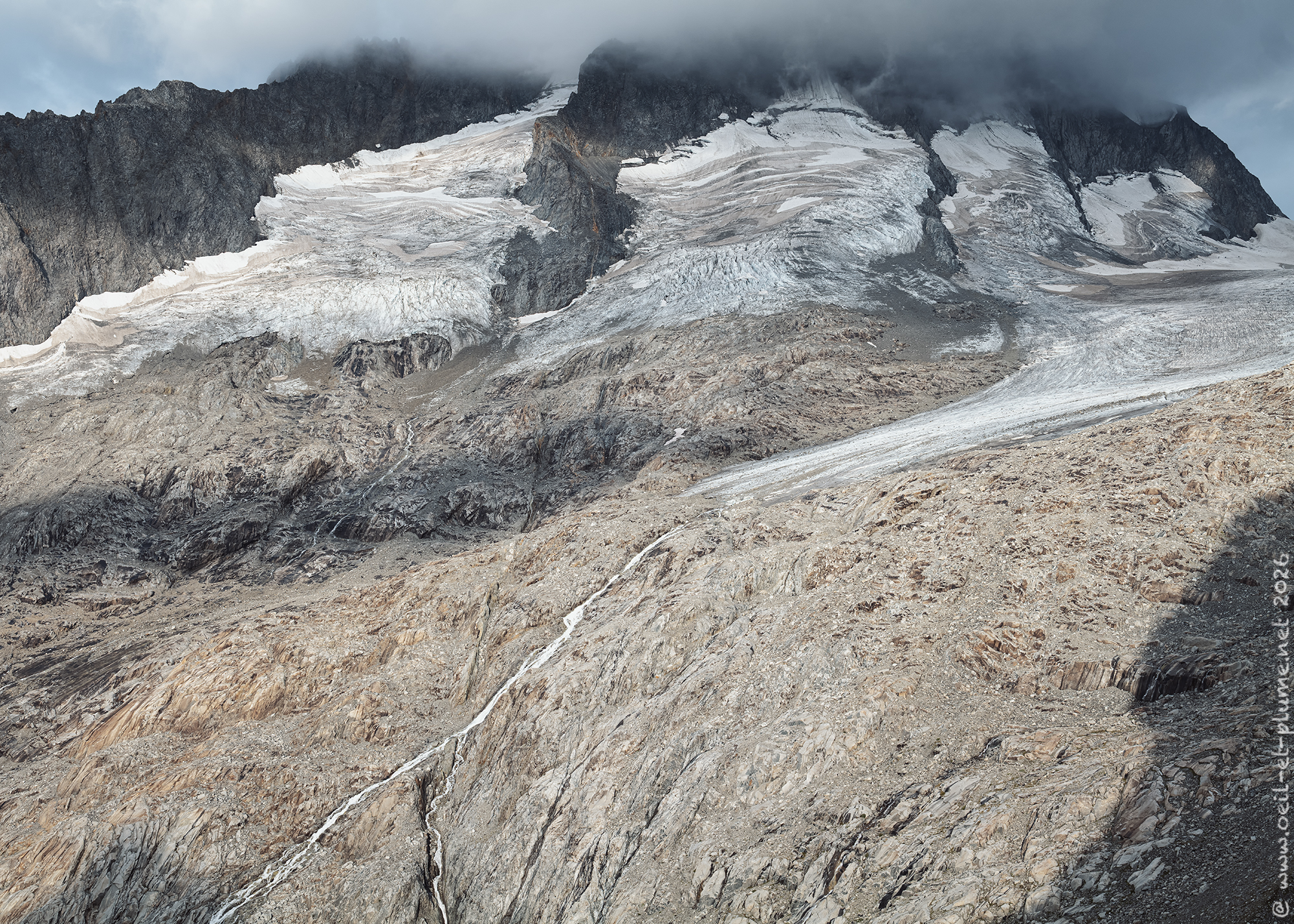
Higher in the valleys, the ecosystems transition into a mineral realm. Rocks become the dominant landscape feature, striated by numerous streams that feed the main river from all directions. Remnants of the previous winter, névés still cling to the most shadowed areas, resisting extinction against the summer heat as long as possible. Perched on the high mountains, glaciers appear in the distance. They are in a pitiful state, visibly suffering from climate change, meager winter snowfalls, and extraordinary summer warmth.
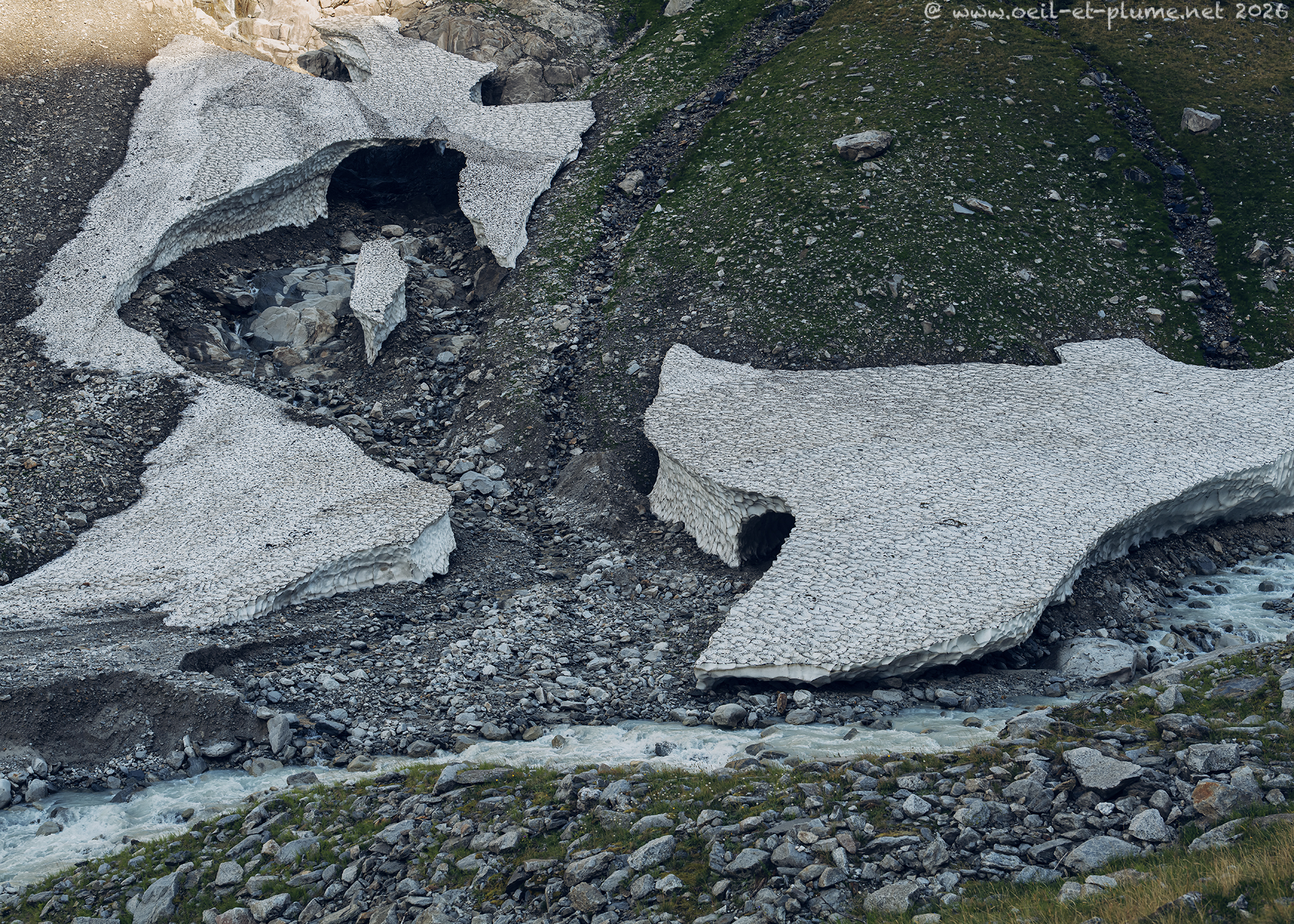
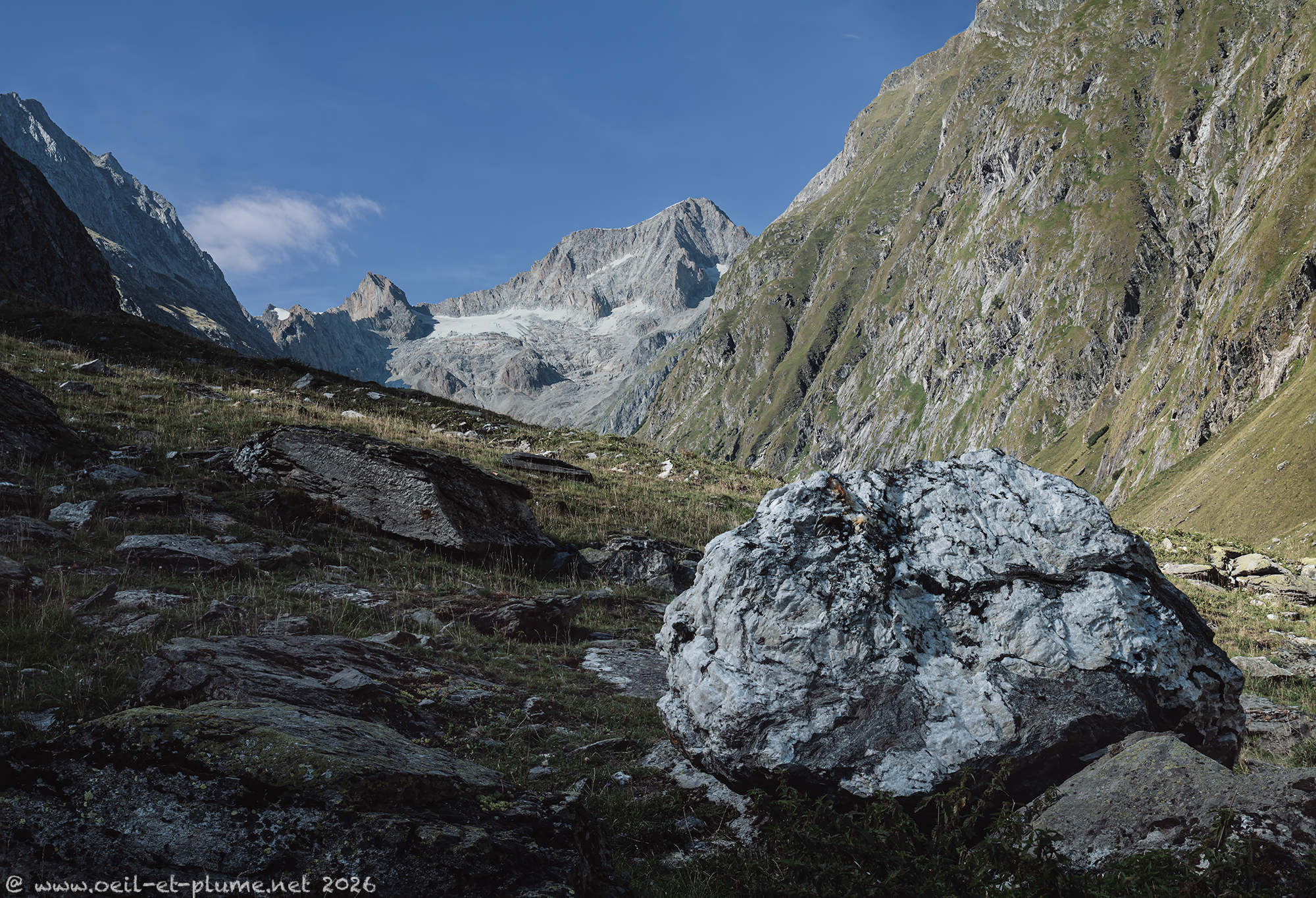
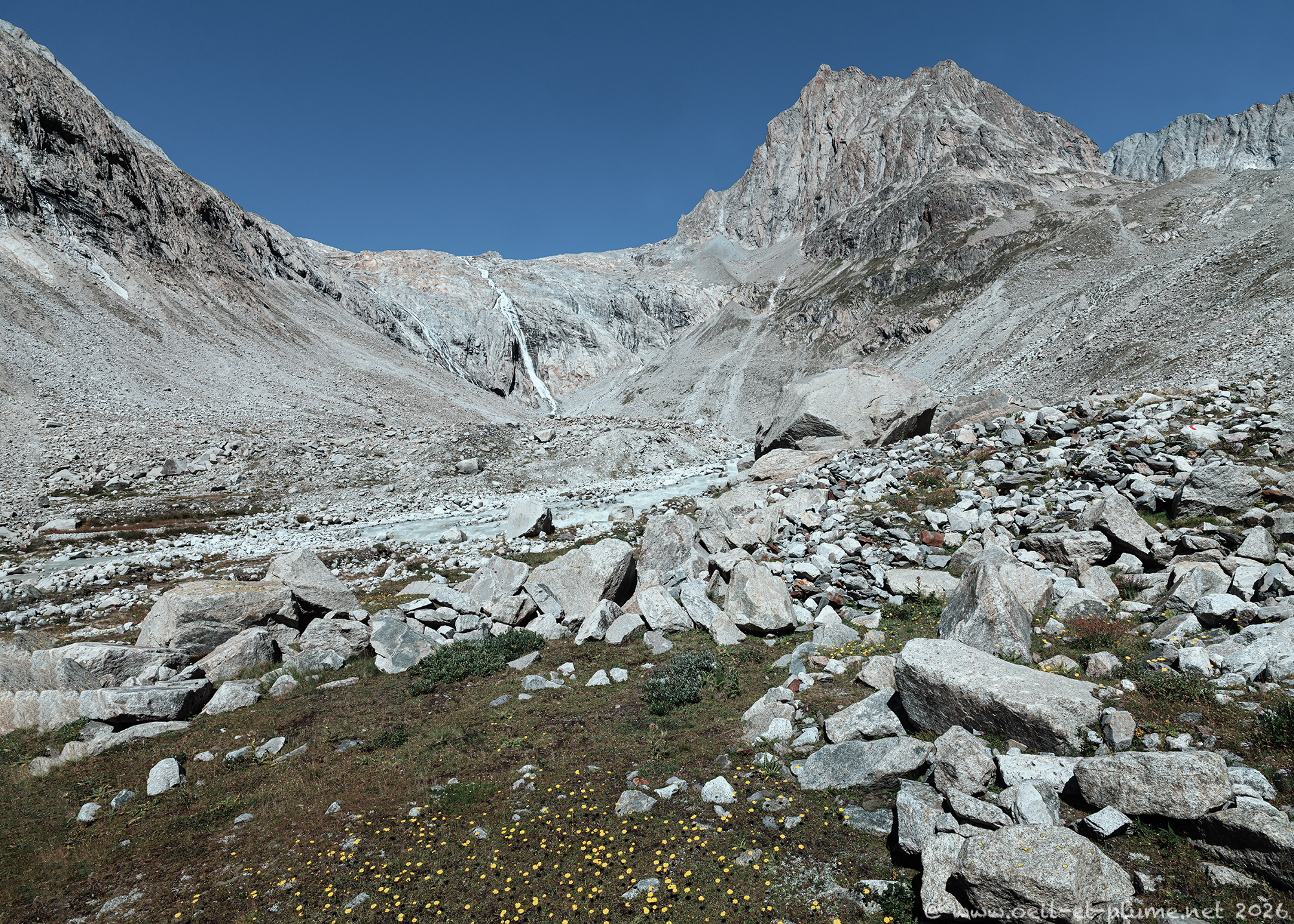
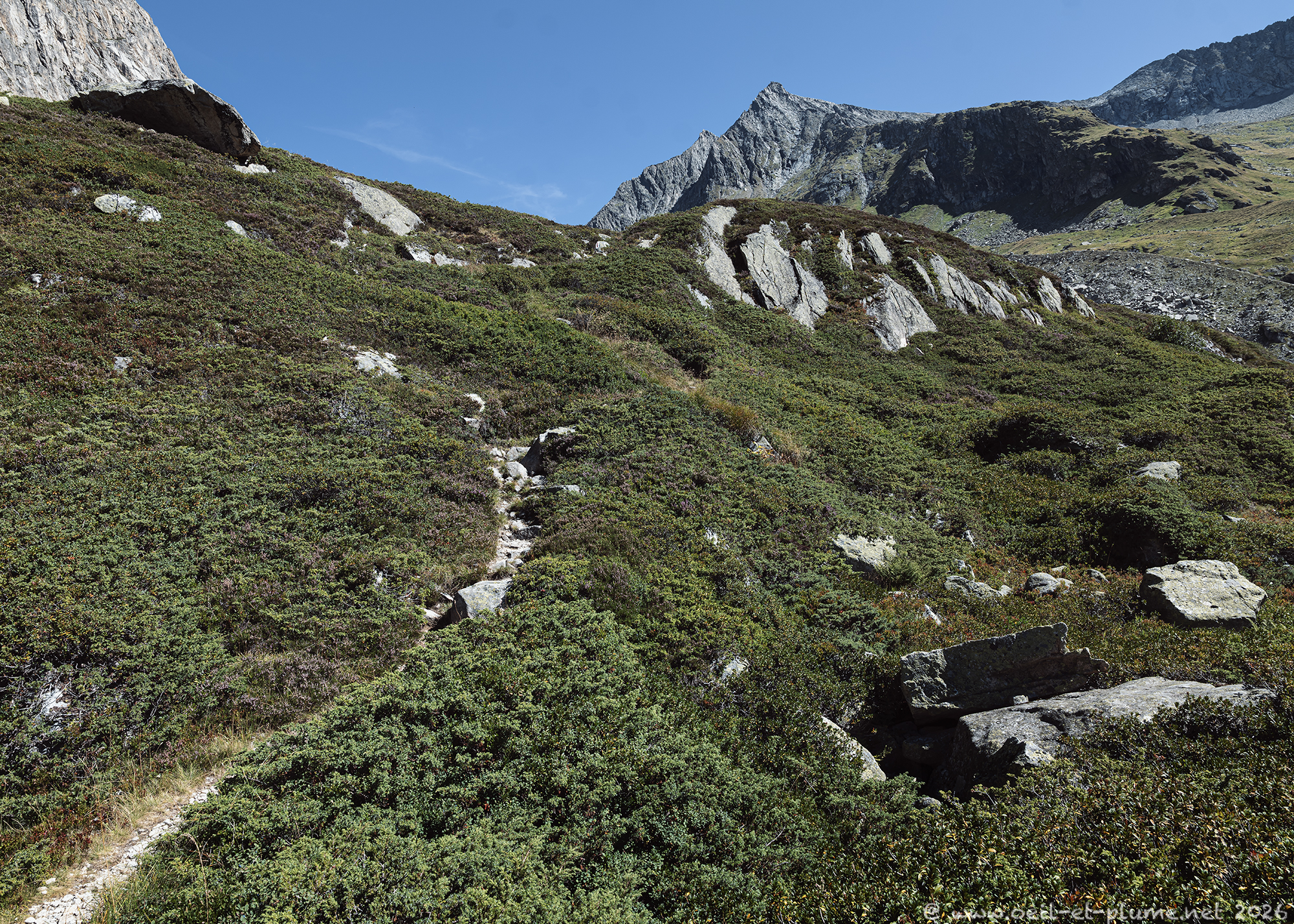
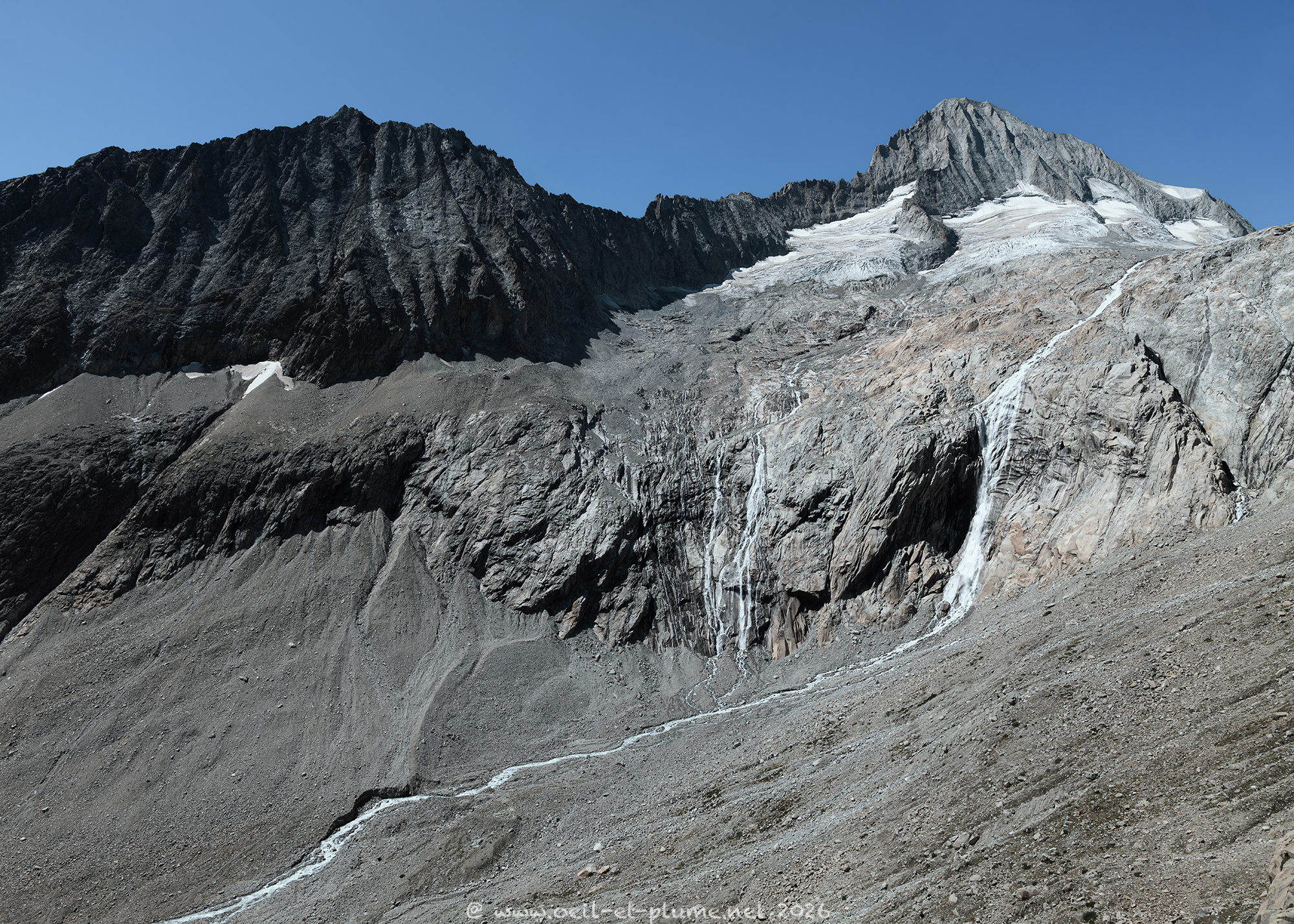
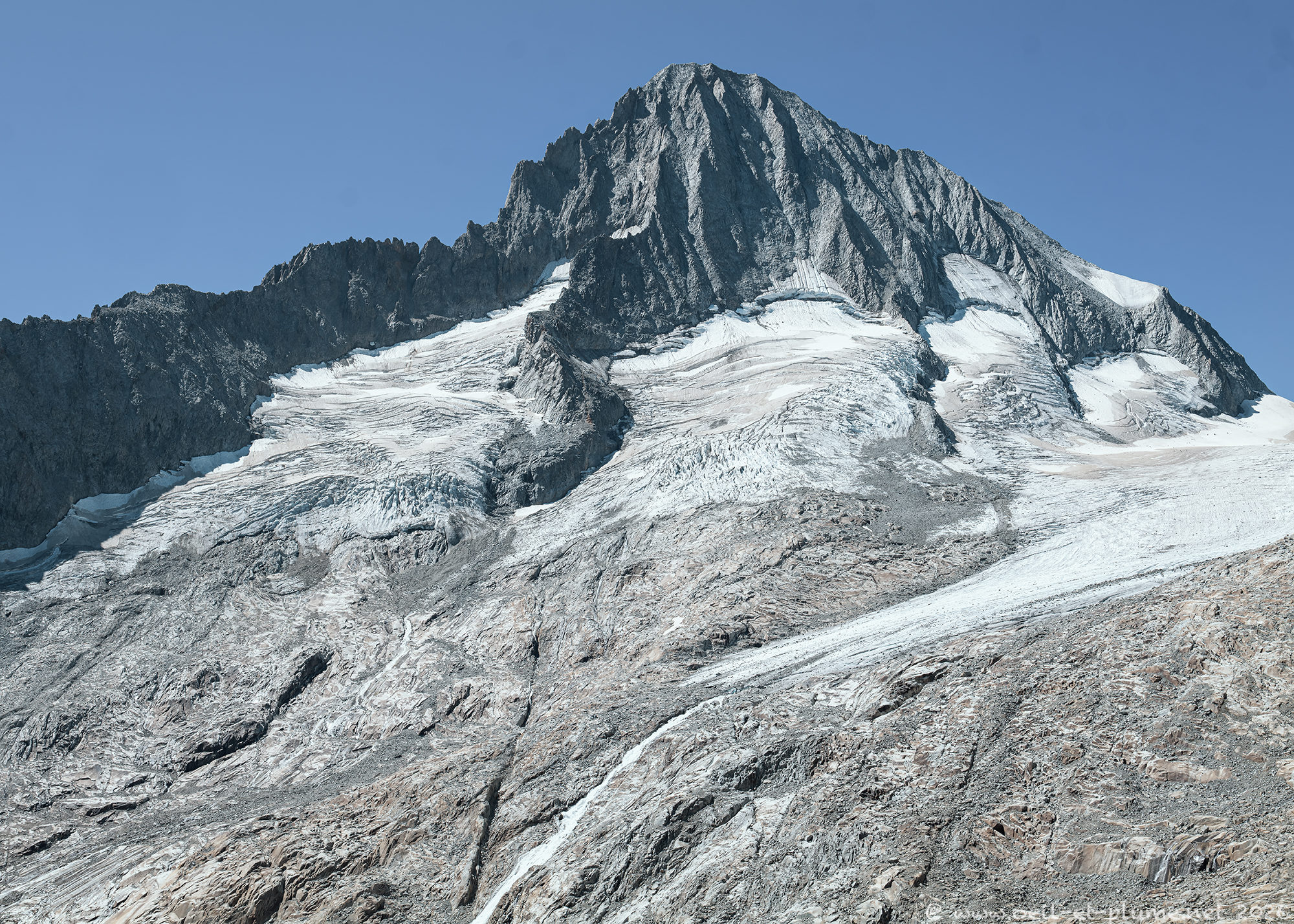
Consequently, the valley streams and rivers carry unusual volumes of water due to the massive melting of various glaciers. A century ago, in the upper Baltschieder valley (seen in the last picture above), the two main glaciers flanking the mountain capped the slopes down to the massive erratic rock, even during summer. Since then, the glaciers have progressively shrunk, uncovering the lower parts of the slopes. According to local residents, ice melting has accelerated dramatically over the last decade: the receding ice has revealed large expanses of polished rock, while ice thickness has diminished substantially due to very low levels of fresh snowfall in recent winters.
The hut and the chapel
On my way into the Baltschieder valley since early morning, I long to reach the mountain hut. I still have a major ascent ahead, as the mountain shelter sits high in the mountain rocky face shown in the aforementioned picture.
The trek to reach the Baltschiederklause hut from the Rhône Valley in the Haut-Valais is reportedly one of the longest of its kind in Switzerland. Never mind – I will make it there. As I was approaching the hut, a helicopter suddenly appeared in the scene, dropped a net full of supplies and took another bag loaded with items to be recycled. During the summer period, the hut is supplied by a weekly flight.
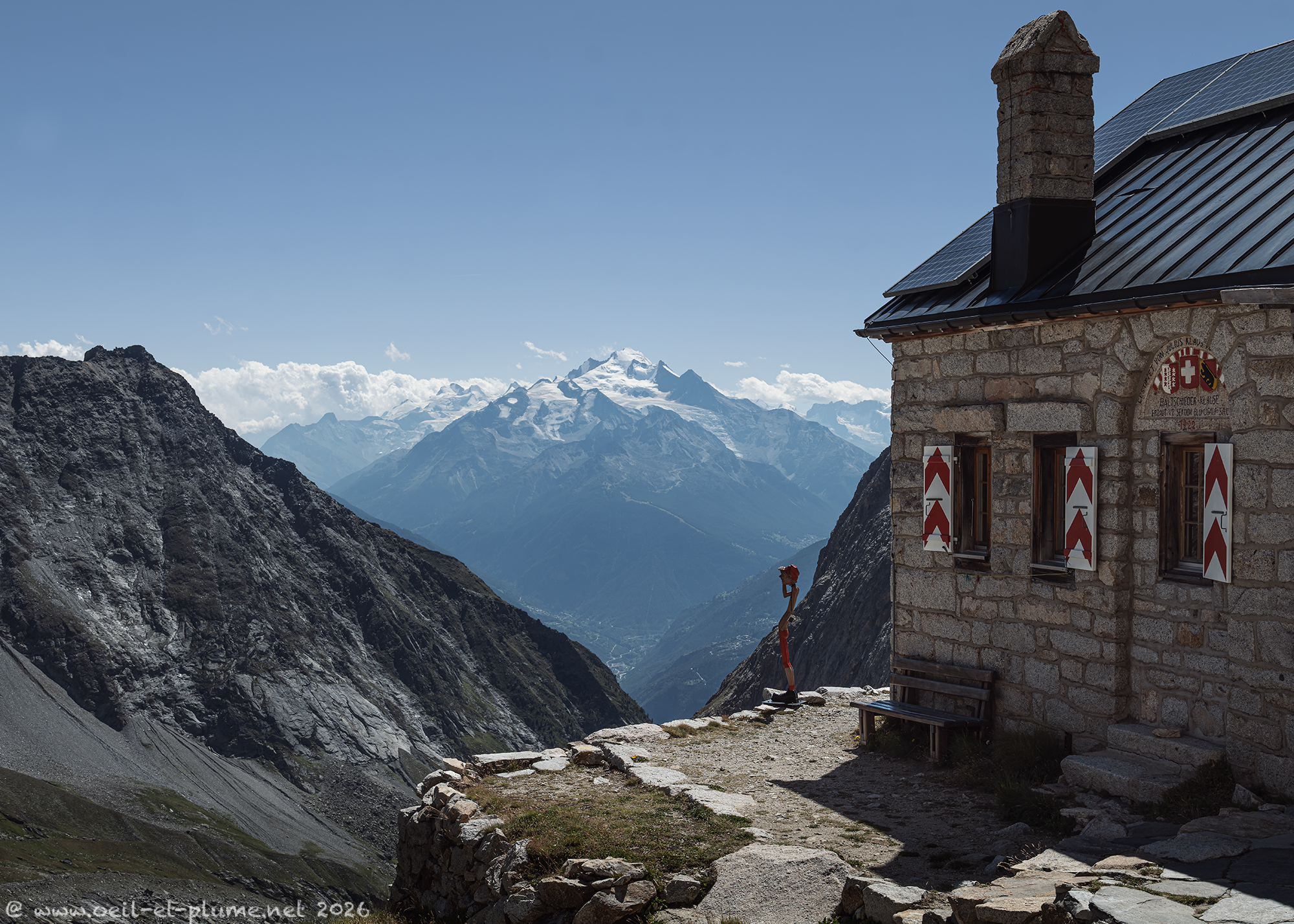
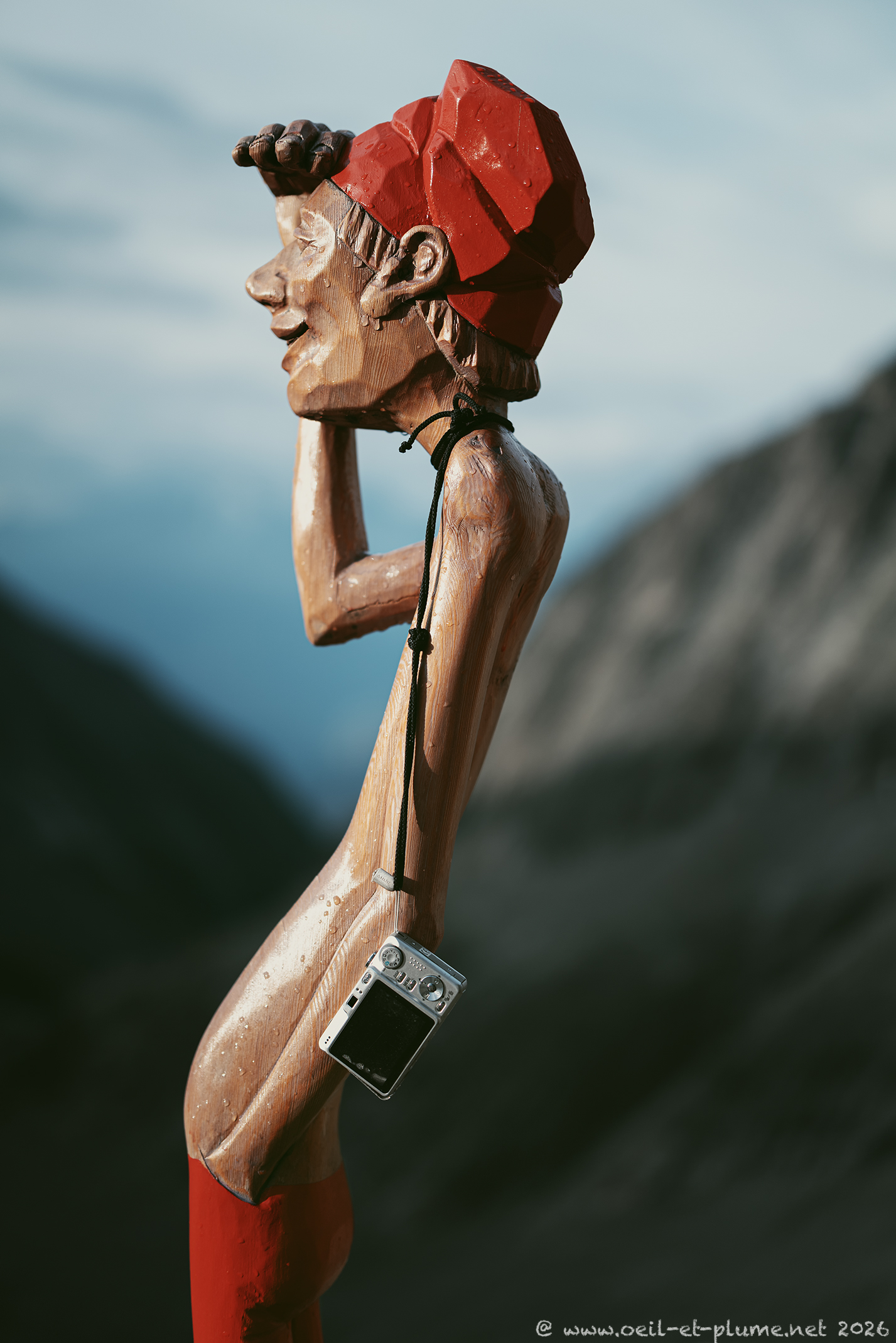
After one last effort, I reached the hut door: what a joy! I was welcomed by the hut caretaking team and Guggi – a slim, hilarious mountaineer standing still and staring at the horizon. Carved by Swiss sculptor Peter Bissig, the elegant wooden art-piece adds a nice, warm touch to the otherwise mineral landscape. The cosy atmosphere of the place was reinforced by the fact that I was the only visitor staying overnight on that day. I will remember the delicious dinner held with the hut staff.
Standing at a height of 2,783 metres above sea level, the hut was built during the summer of the year 1920 by the Thun section of the Swill Alpine Club. Building such a solid structure in such remote location represented quite an entrepreneurial challenge.
All supplies, except for the stones, were transported across the Baltschieder Valley by mule convoys. At that time, ice and snow were still capping the lower slopes of the upper valley, so the convoys had to carefully make their way up the glacier to reach the construction site. Although the hut was eventually improved and enlarged, most of the original structure remains nowadays.
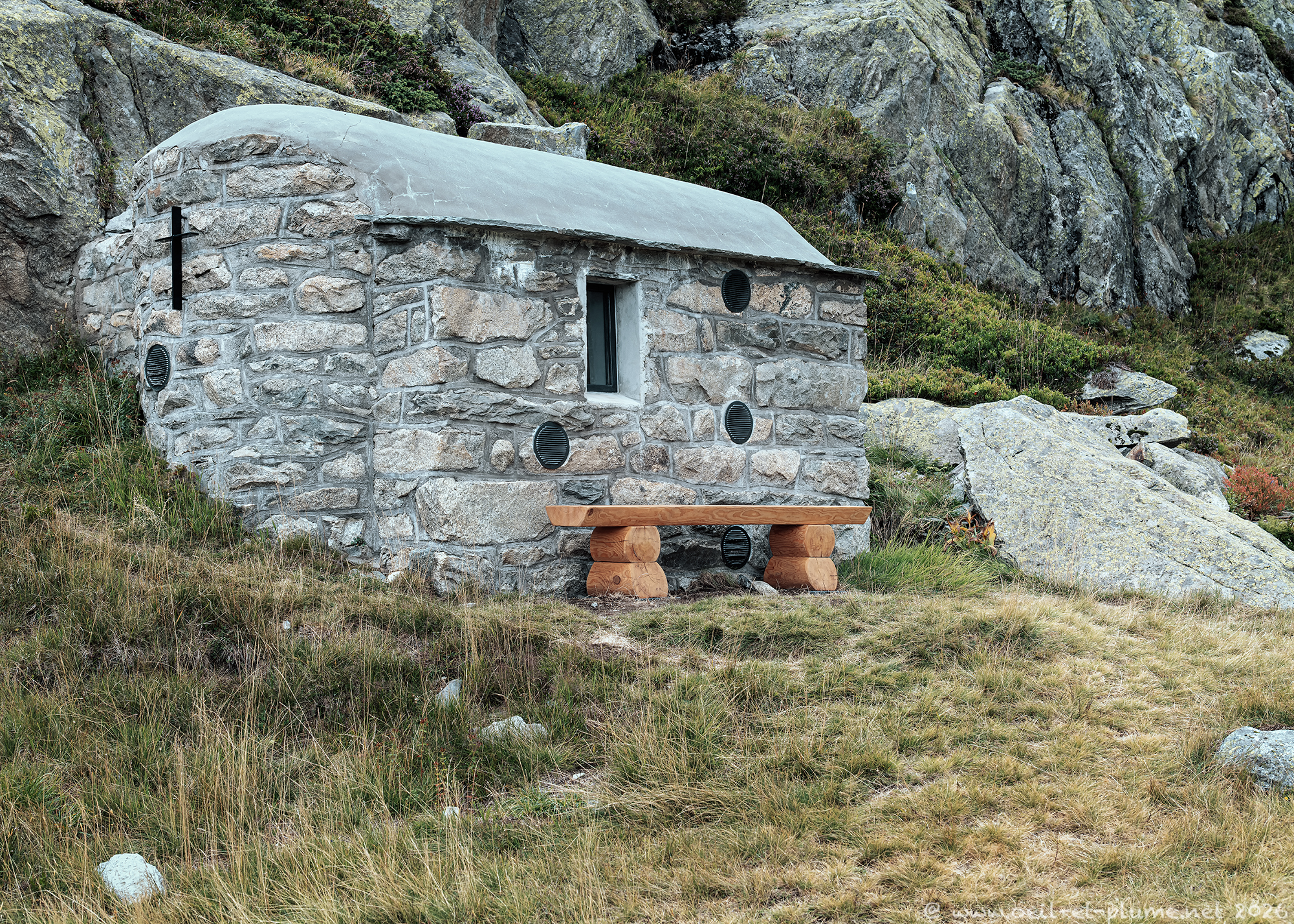
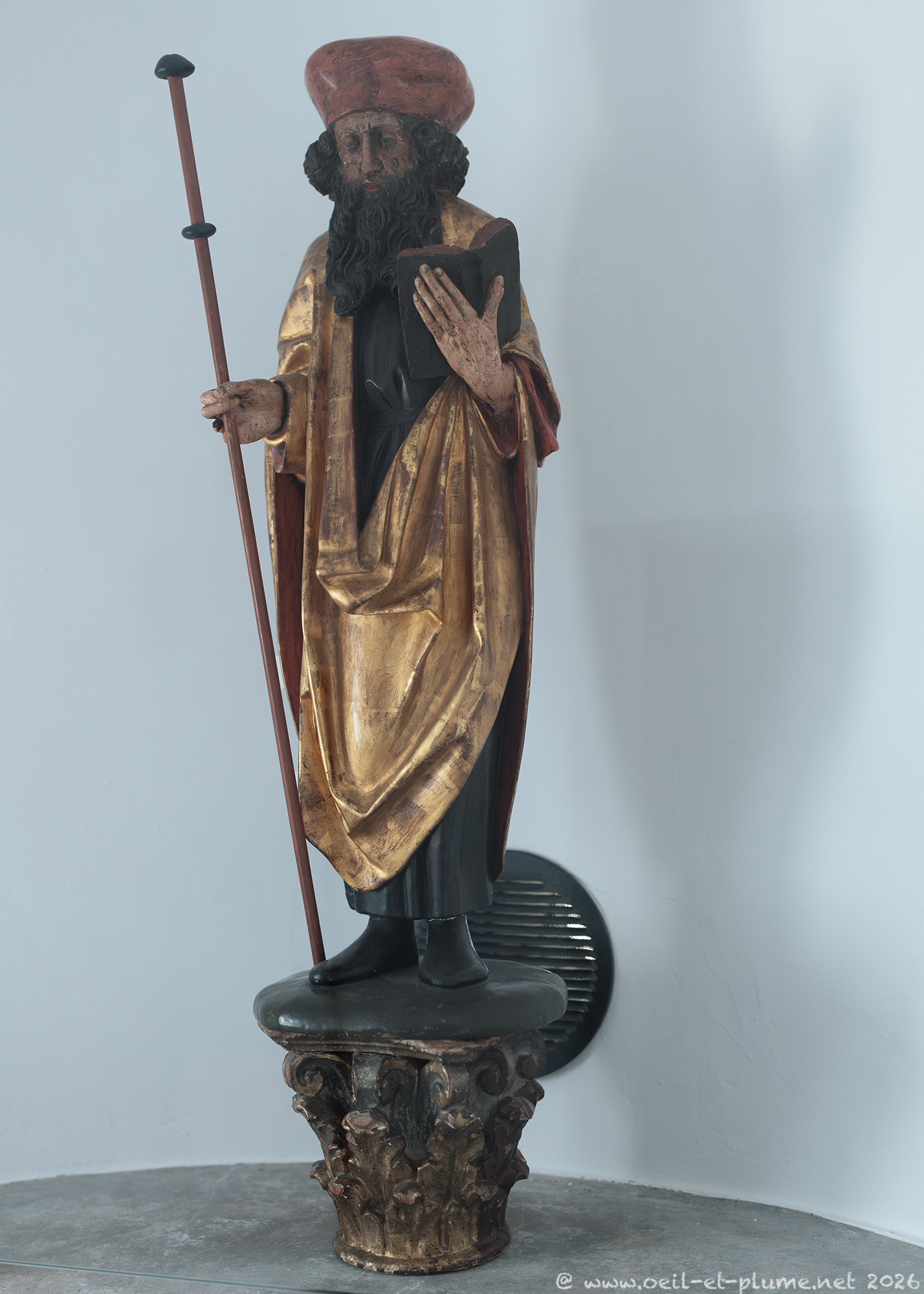
As a sign of gratitude to the Allmighty that the construction of the mountain hut had unfolded well, without major hiccups, the Baltschieder people built the Hobitzu Chapel in 1923. Located lower in the valley, the tiny religious structure initially hosted a beautiful late-Gothic wooden statue of a saint.
Long time ago, the statue was removed from the chapel and became part of the collections of the Swiss Alpine Museum. The religious artwork was restituted and returned to the Hobitzu Chapel in August 2026, a few days before my visit. The saint must be delighted to stay again in such a beautiful and serene location.
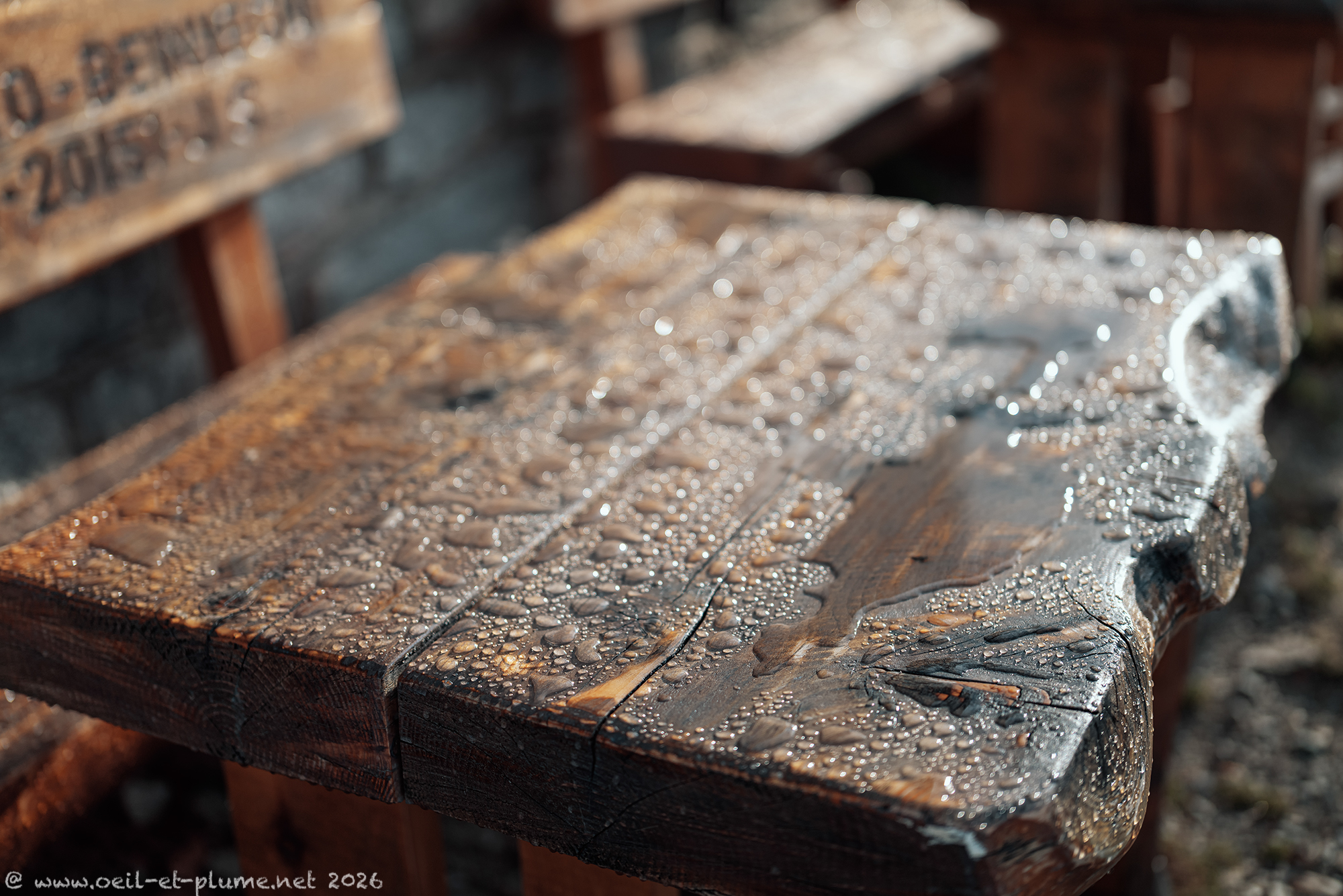
Back to Baltschieder hut: As sunset is a time propitious to introspection and, more broadly, to reflecting on life’s fundamentals, I feel blessed to spend a night in such a raw, pristine environment.
Yet my happiness is tinged with sadness considering the fast-paced melting of the surrounding glaciers. The Alps without snow or ice would simply not be the same: less capable to sustain the forms of vegetal, animal and human life, geologically more unstable and, consequently, more dangerous for animals and people, and, of course, less enchanting.
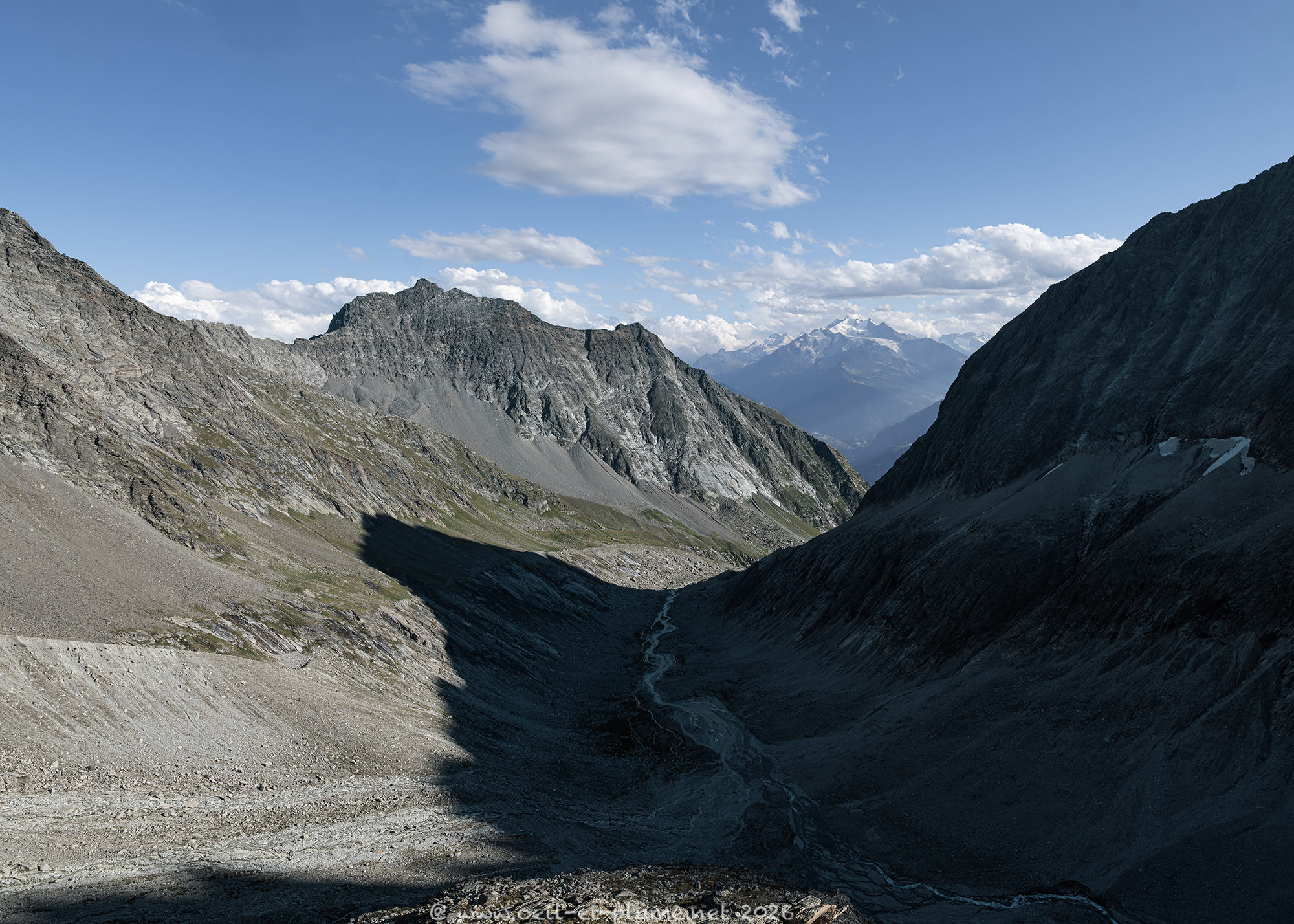
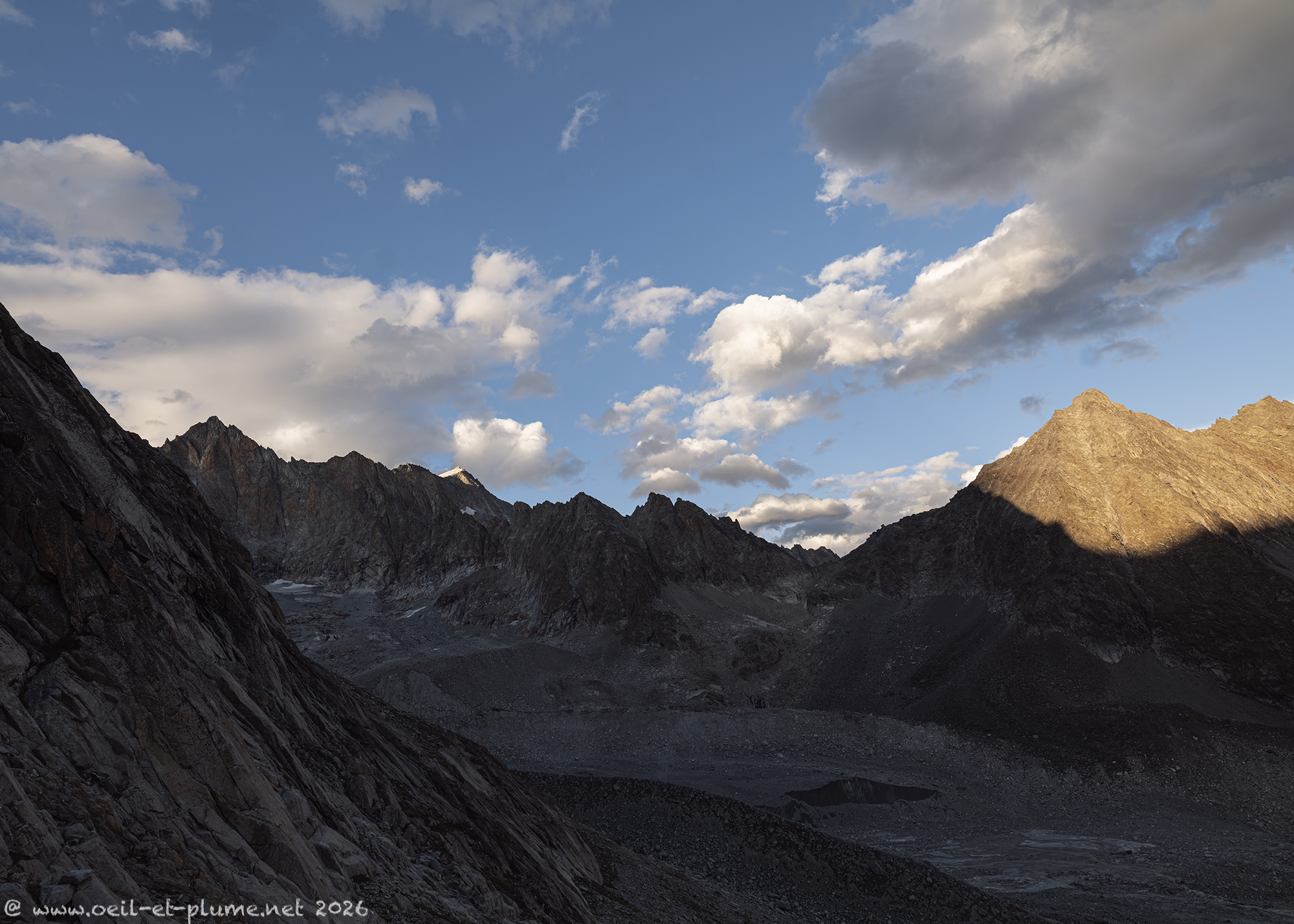
But enough for tonight. Tomorrow will bring another fascinating Alpine day. Good night!
Animal life
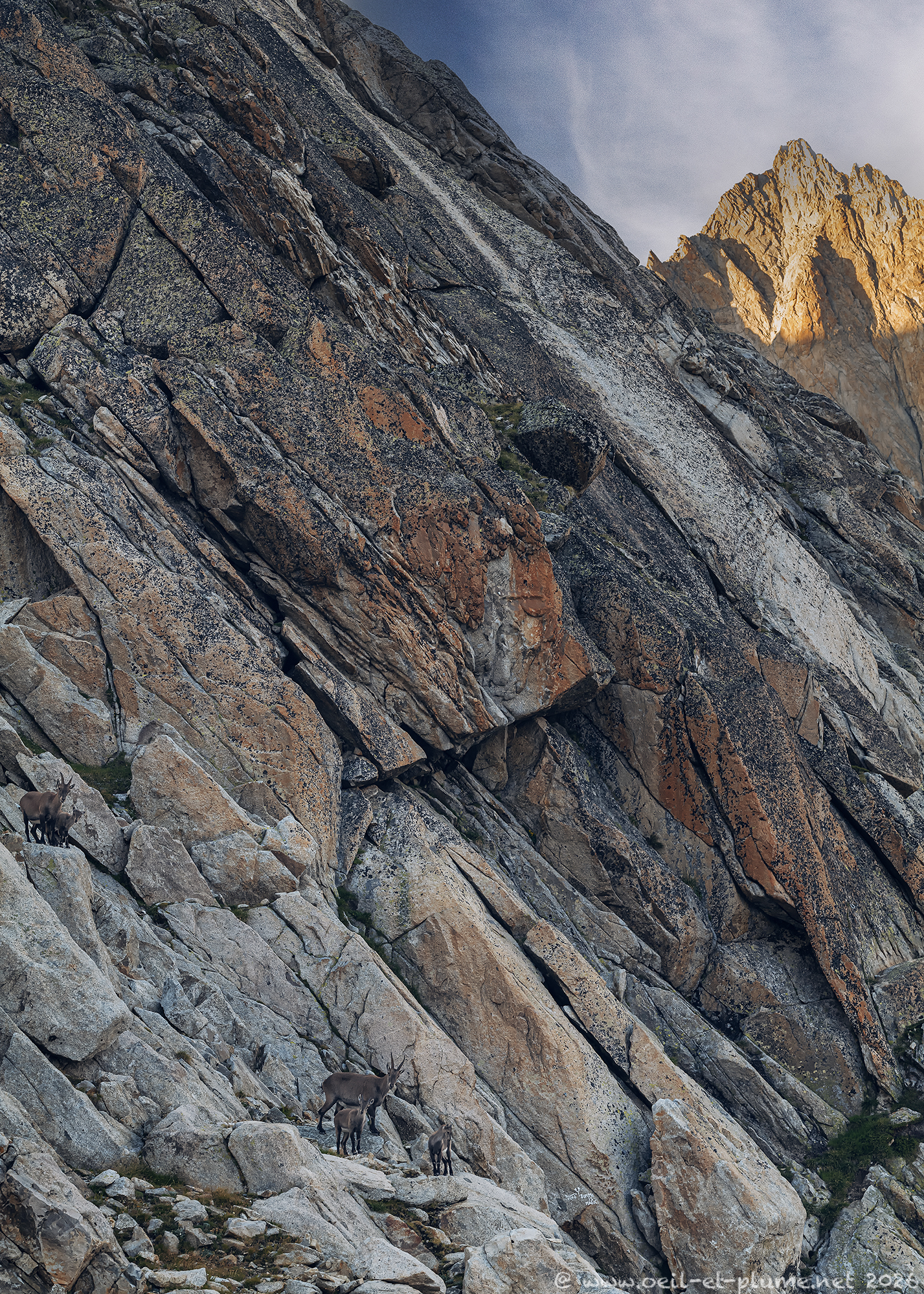
Unsurprisingly, the Baltschieder Valley is home to abundant wildlife. On my way up to the mountain hut, I was fortunate enough to observe and hear some inhabitants, including ibexes, marmots, and numerous birds. On the night of my arrival, a group of ibexes even ventured close to the hut, drawn by the salt found in specific rock formations nearby. A wonderful reminder that, in these mountains, we are merely guests in a world where wildlife has long been at home.
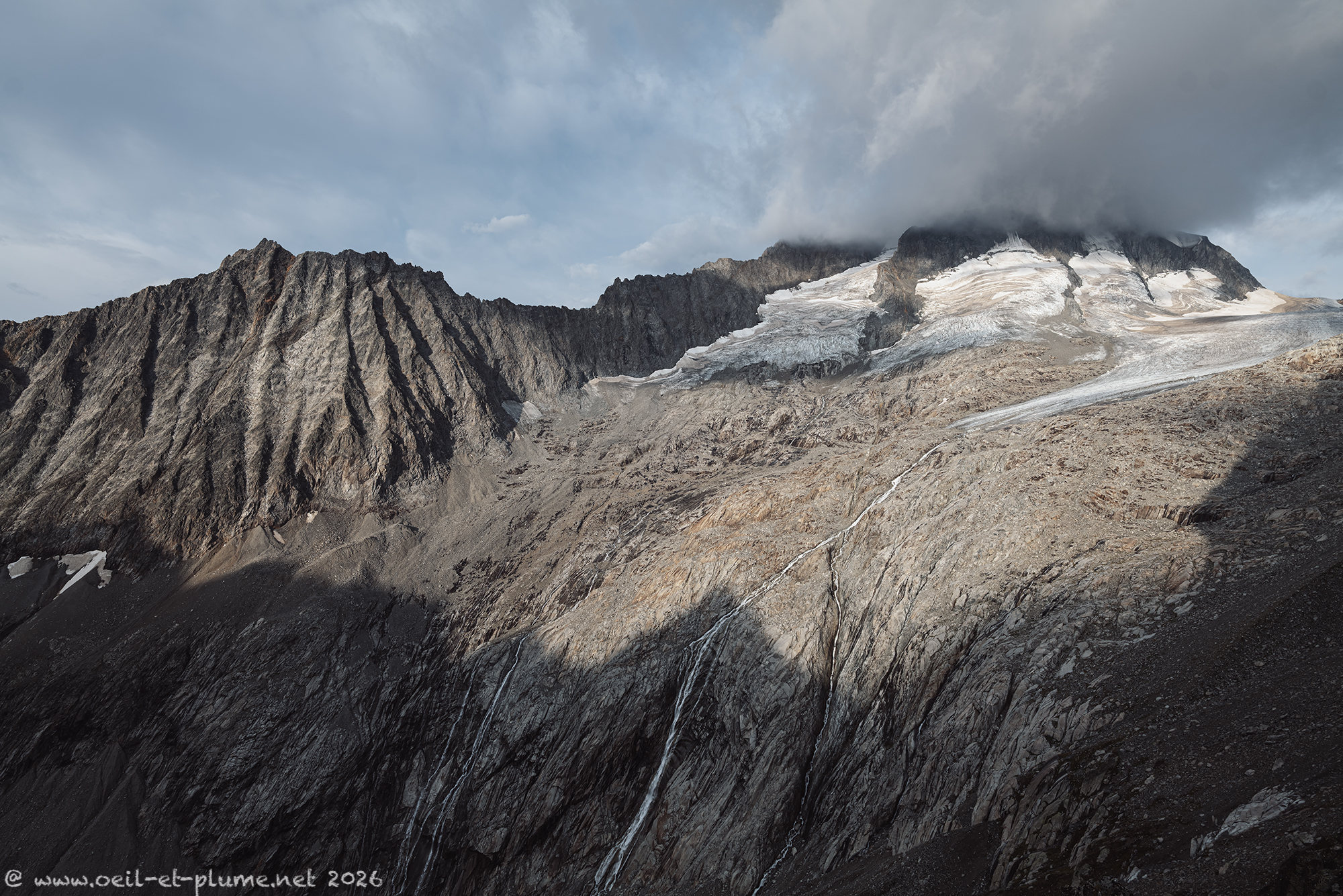
The following morning, I took one last look at the glacier below the Bietschhorn. The polished rock bed, exposed in recent years by the retreating ice, revealed tormented shapes and almost surreal colours, as if nature itself was flagging the strangeness of the current situation. “Hopefully, next winter will dress you once more in a thick blanket of snow!”, I whispered to the glacier and the surrounding mountains as a farewell.
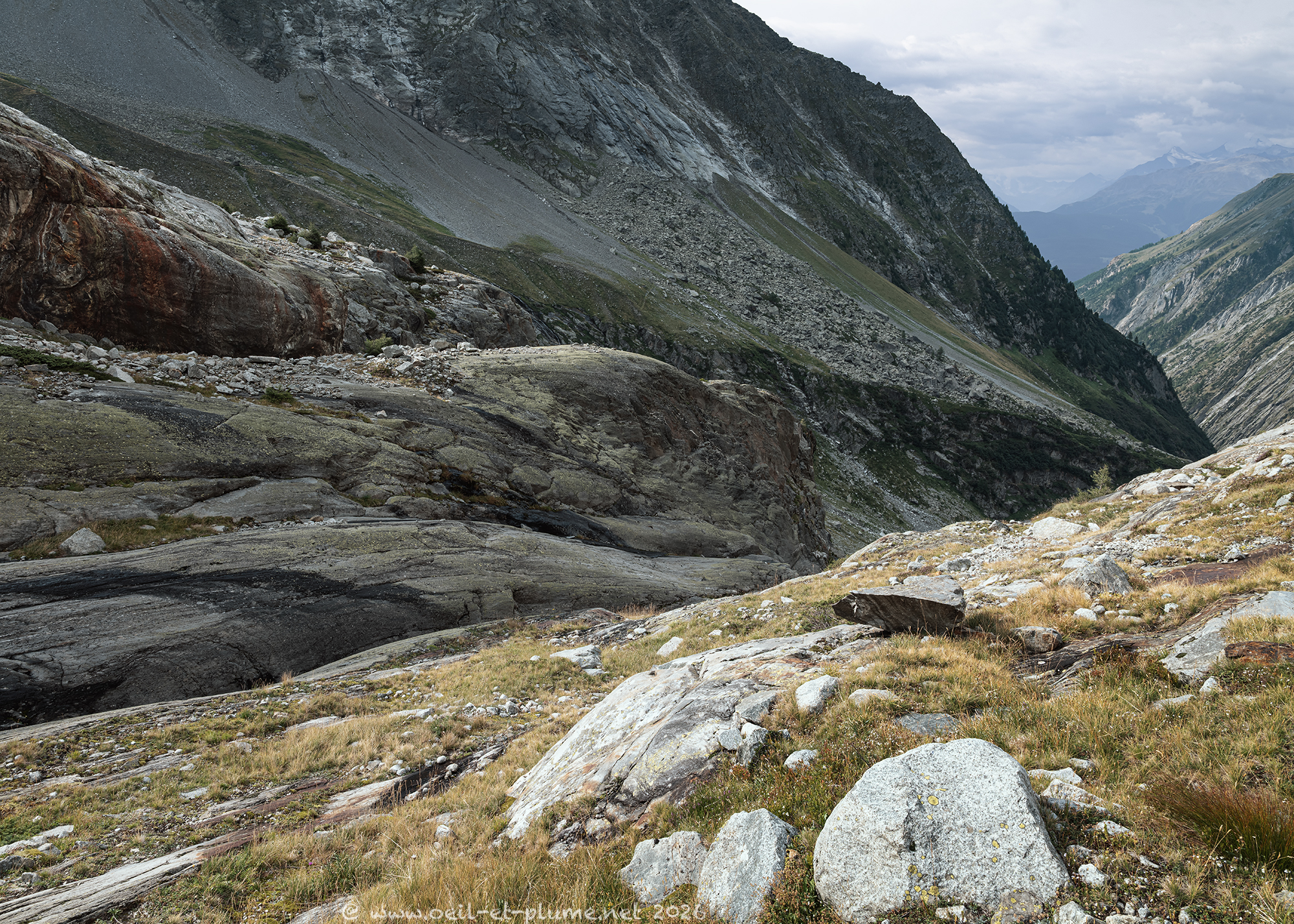
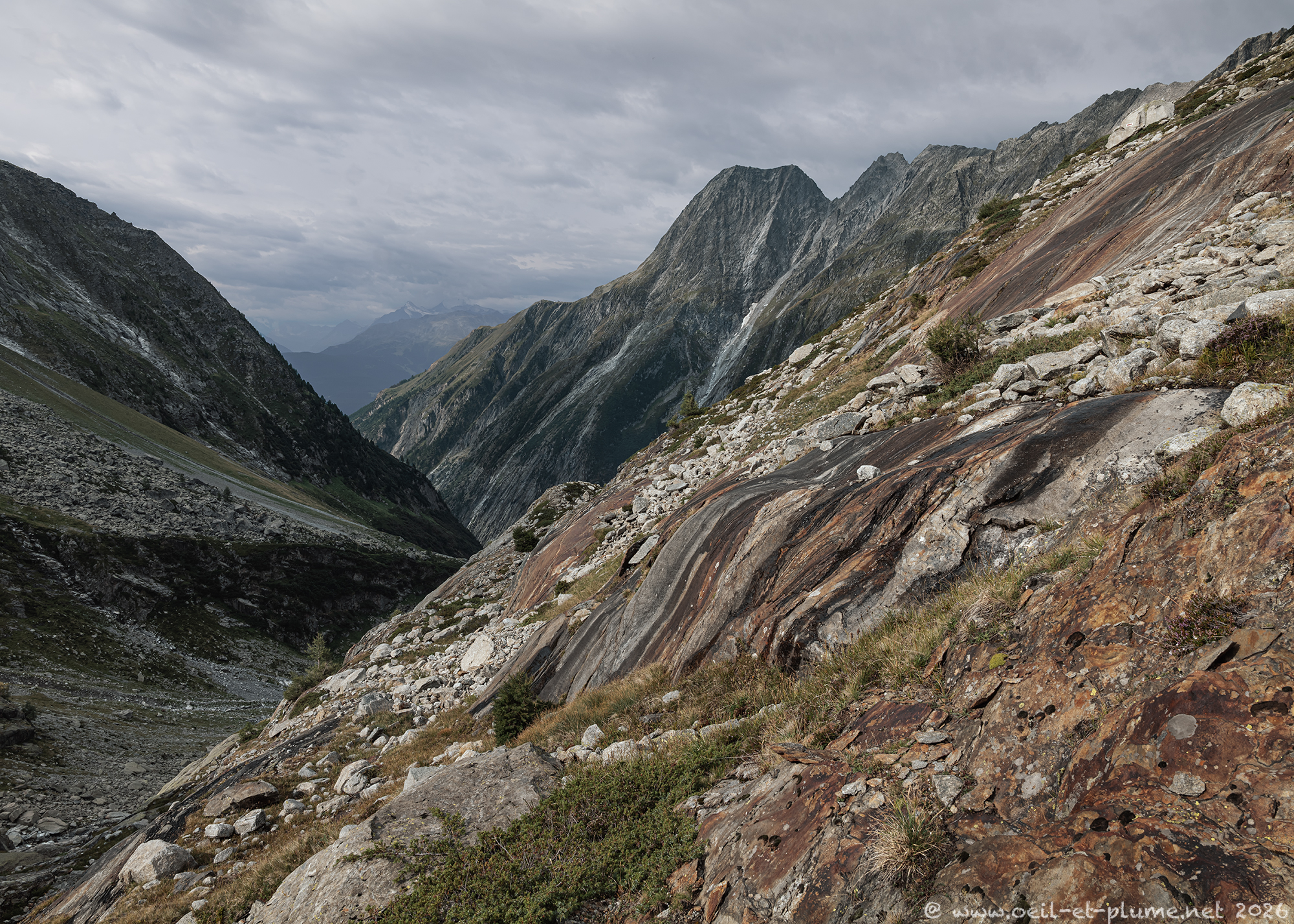
On my way down in the Baltschieder valley, I noticed how much the mineral and vegetal tones were tuned this summer. As usual, the impressive rock formations displayed all kind of reddish and yellowish colours due to their geological characteristics and history. In turn, plants were so thirsty this year that they exhibited not only summer green, but also and already autumnal warm tones.
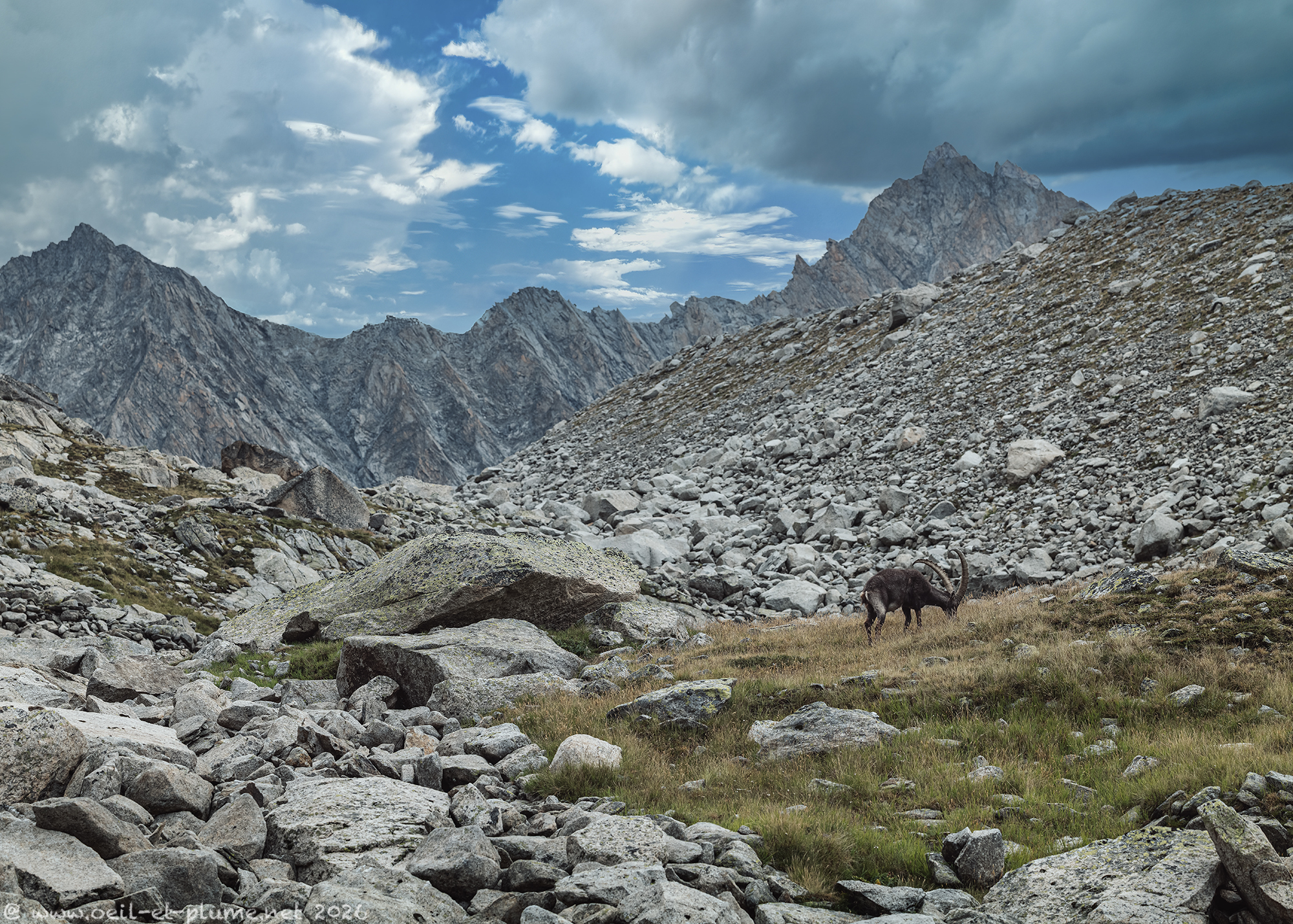
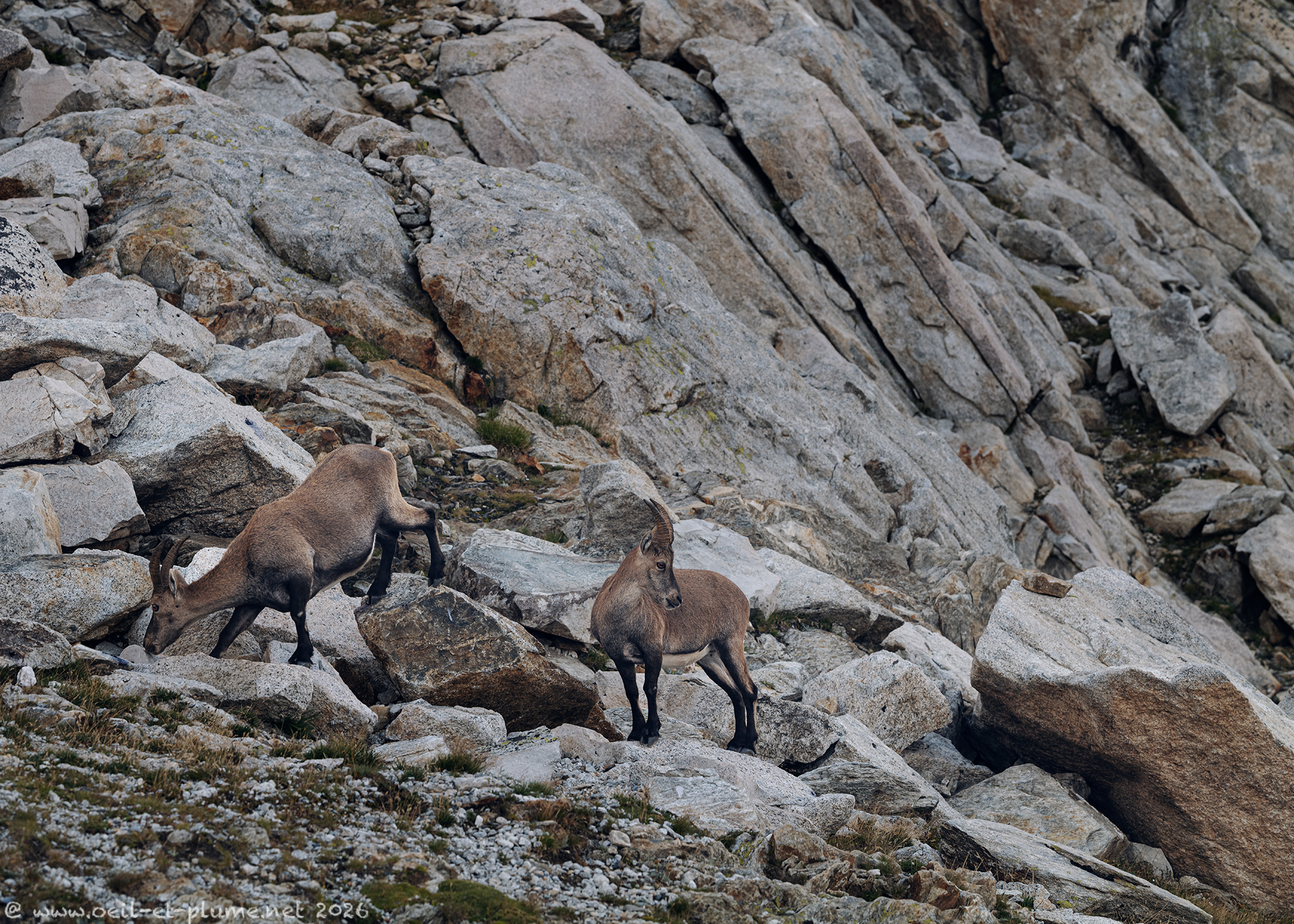
I was lucky enough to meet with an old male ibex during its breakfast. The splendid animal confirmed spontaneously my thoughts: “The plants are very dry this year, which make them less nutritive and tasty. But we ibexes have no choice – and no other place to go to.”
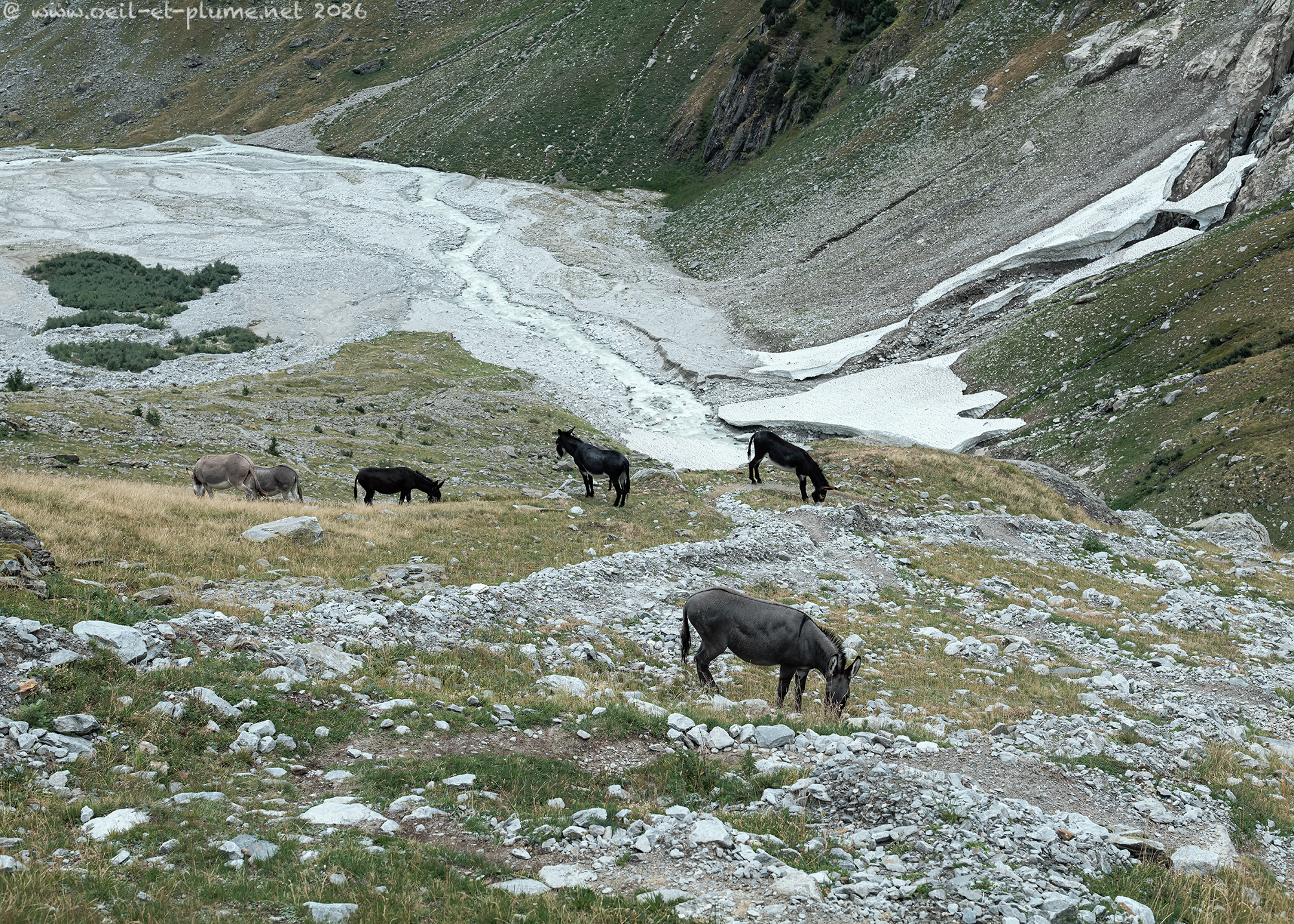
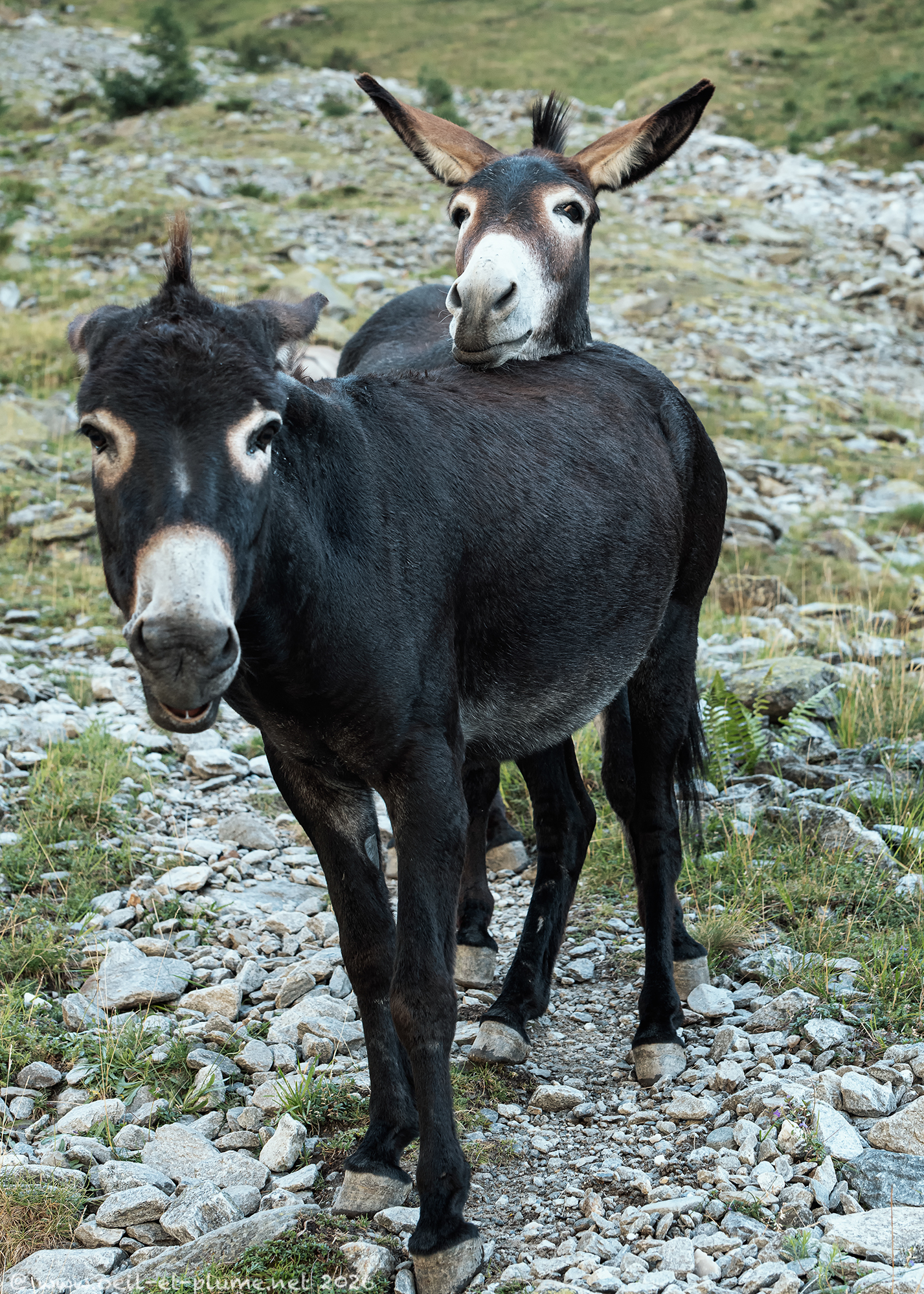
Further down, I made a surprising encounter with a handful of mules grazing across the trekking path with no caretaker in sight. Not shy for a penny, they barred me the way, examined my packing, and pressed me to share some food with them. It took me a while to convince them to go back to grazing and clear the path. A mule checkpoint is not something trekkers face every day in the Swiss Alps!
I met another type of extraordinary animal while trekking through the Gredetsch Valley. The blacknose sheep of Valais are not only hardy enough to withstand the changing and demanding Alpine weather conditions. They are also remarkably charming, calms, and friendly toward humans.
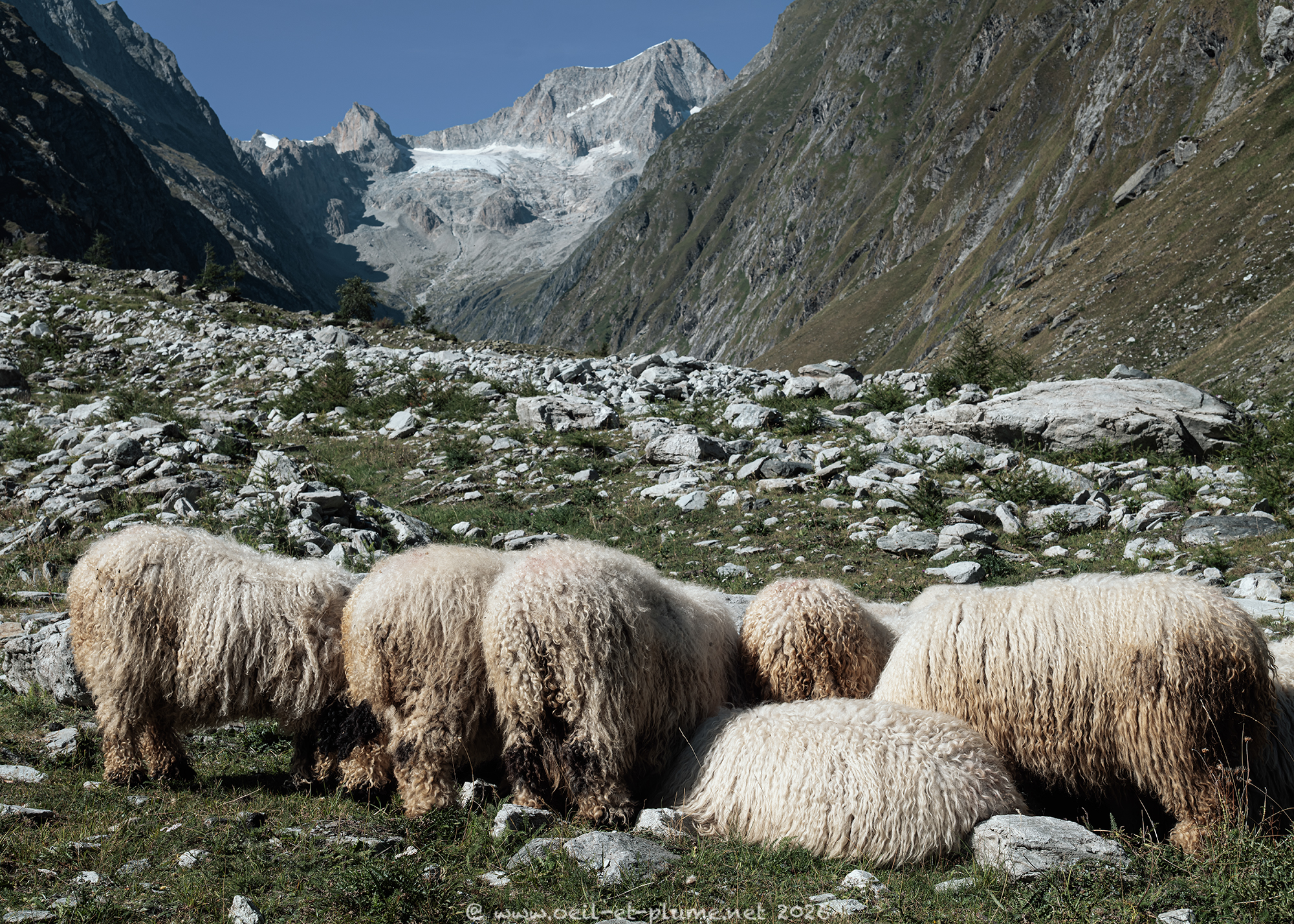
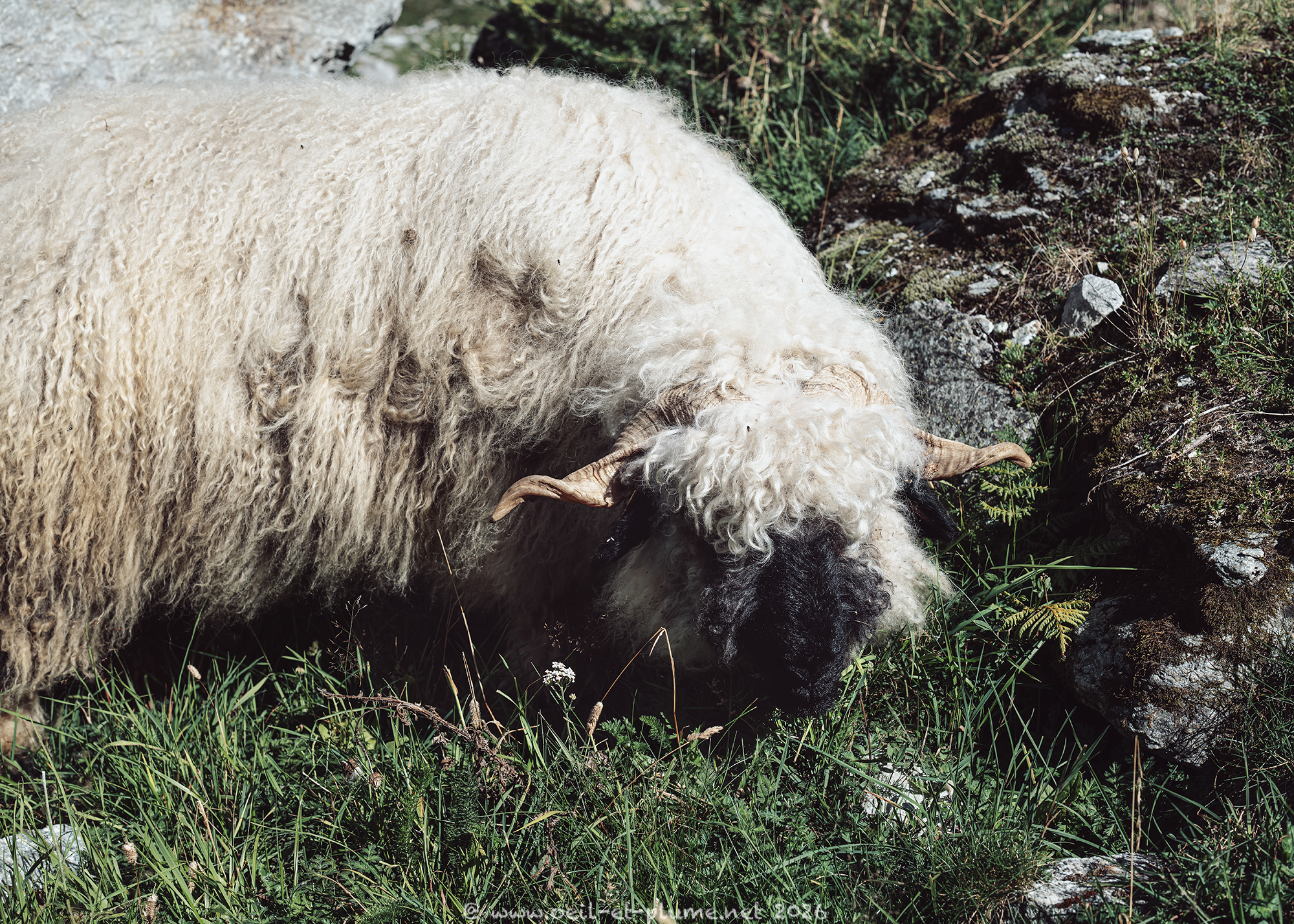
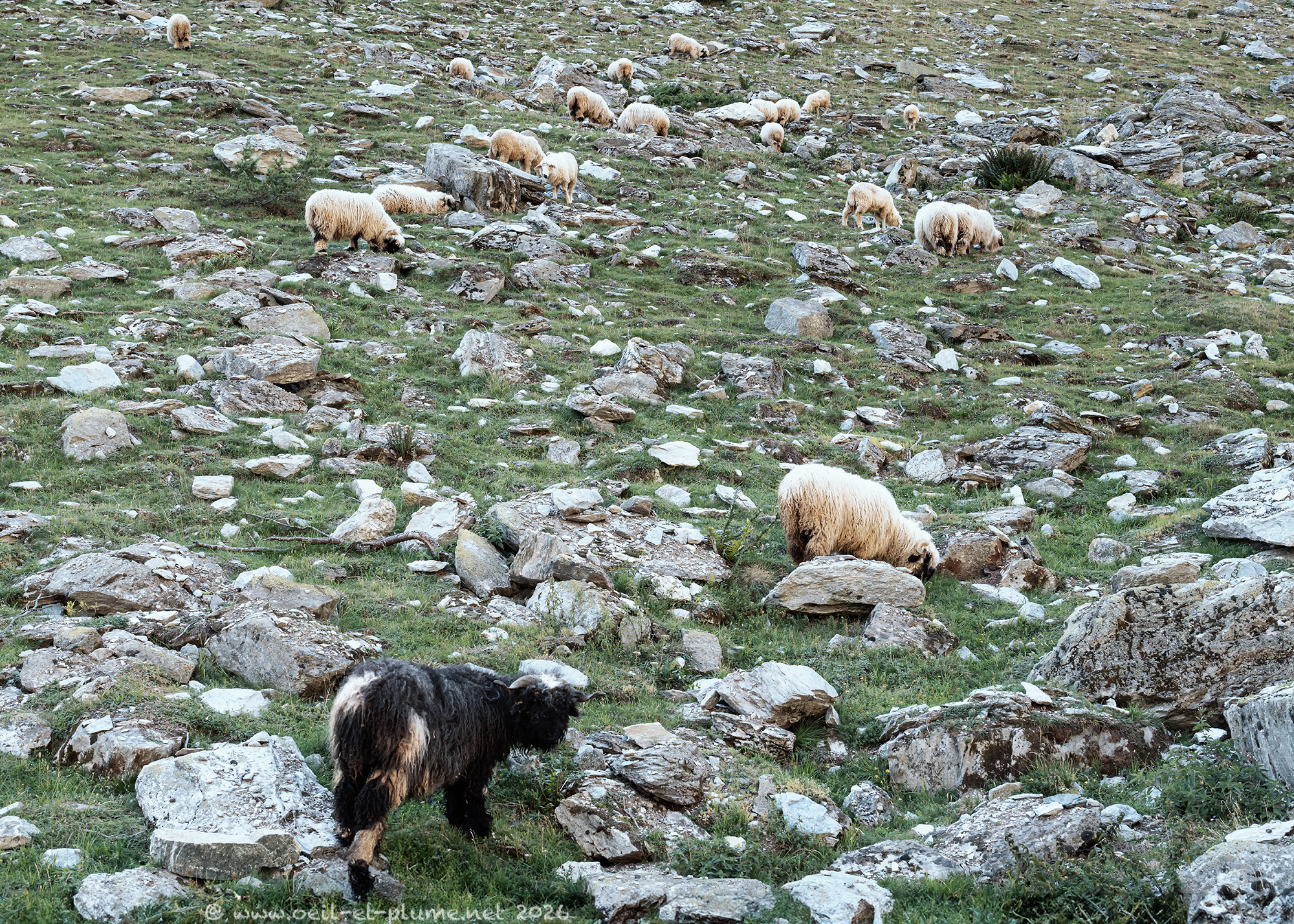
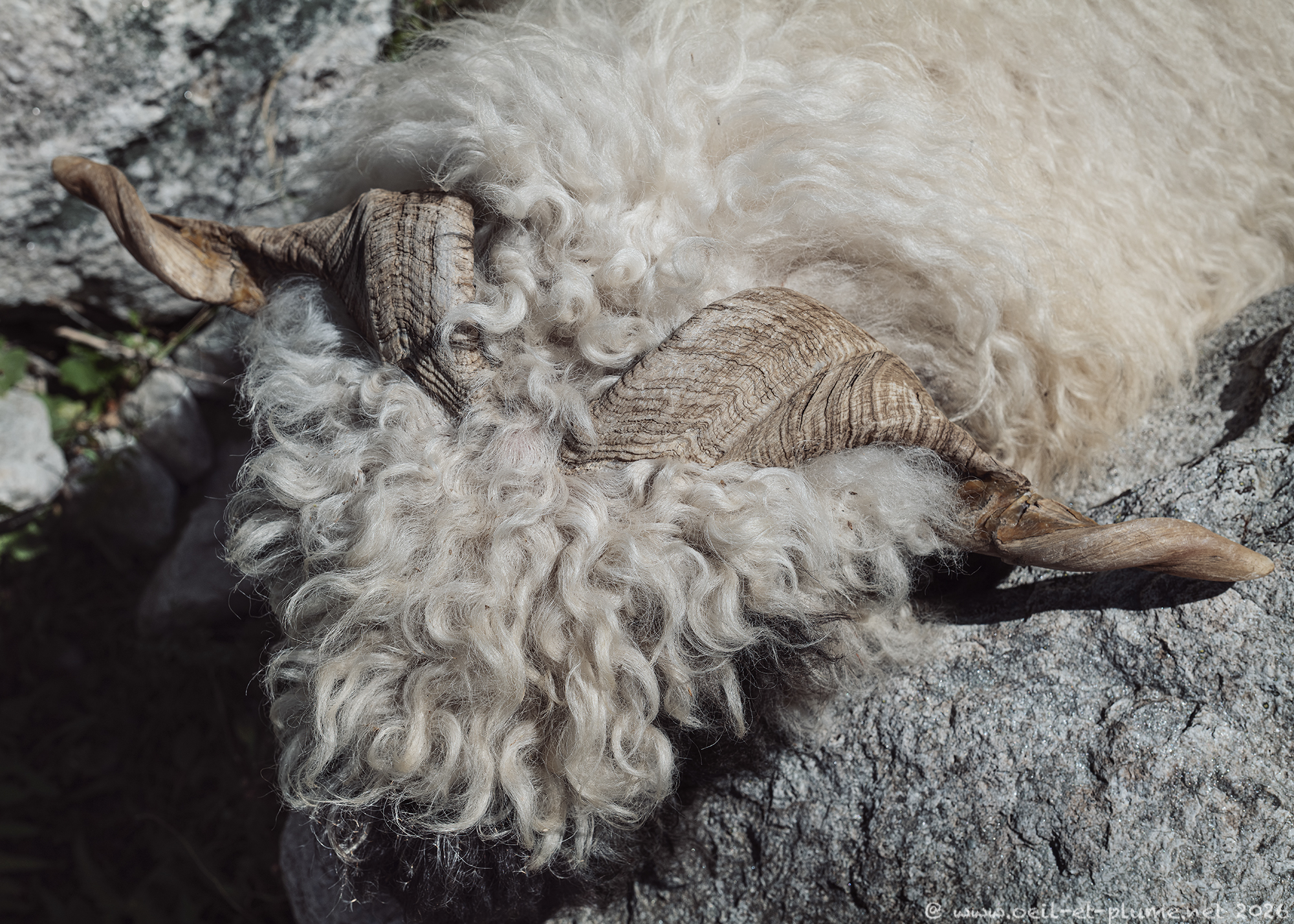
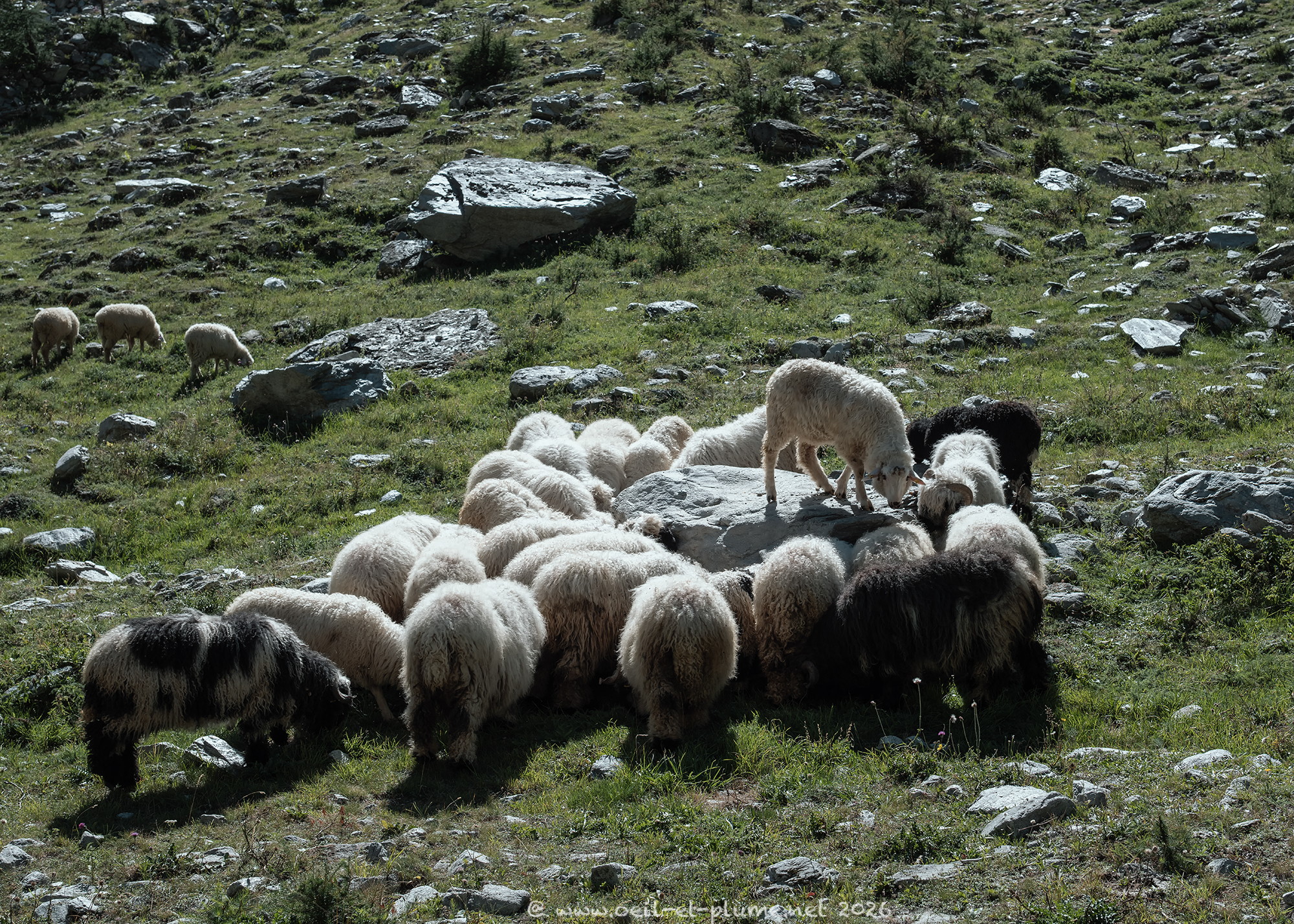
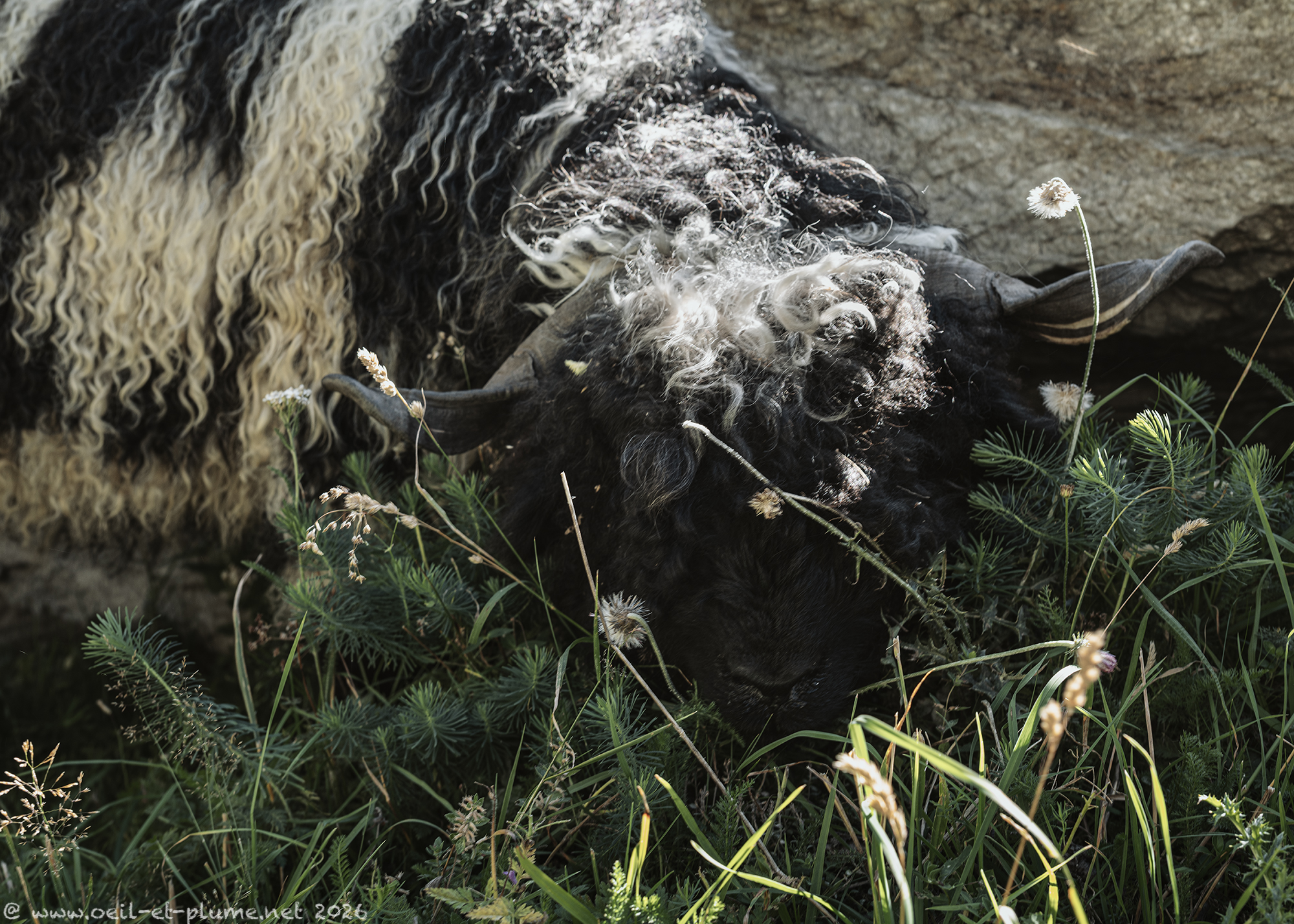
As I love the long, thick, and curly white fleece and the spiral-shaped horns of this sheep breed, I could barely resist the temptation to invite one of them to come and live at my home. Valais blacknose sheep are so cute and picturesque that they would perfectly fit in our living room!
So far, that I have barely evoked the human presence and activities in the lower parts of the Baltschieder and Gredetsch Valleys. The topic will be explored in my next post.
Cheers,