
As mentioned in my previous post, the human footprint in the Turtmanntal is barely more than a watermark on the landscape, since the valley’s inhabitants are essentially seasonal. Historically, people settled at the valley’s entrance, on both sides of the natural gate, venturing into the Turtmanntal only during the summer months for grazing and forestry. Access in winter was dangerous, if not impossible, owing to snow and other natural hazards.
Devils and malicious spirits
As is often the case in the Alps, local people considered the inhospitable stretches of the mountains to be haunted by devils and malicious spirits.
Local legend holds that one day, the village priest organised a large religious procession from the settlements at the valley’s gate, driving the evil forces from their hideout. They fled toward the Rhône Valley, not without scratching a few rocks in the gorge with their claws — a threatening reminder left behind to keep the people in fear. The incident allegedly took place near a famous pine forest called Taubenwald.
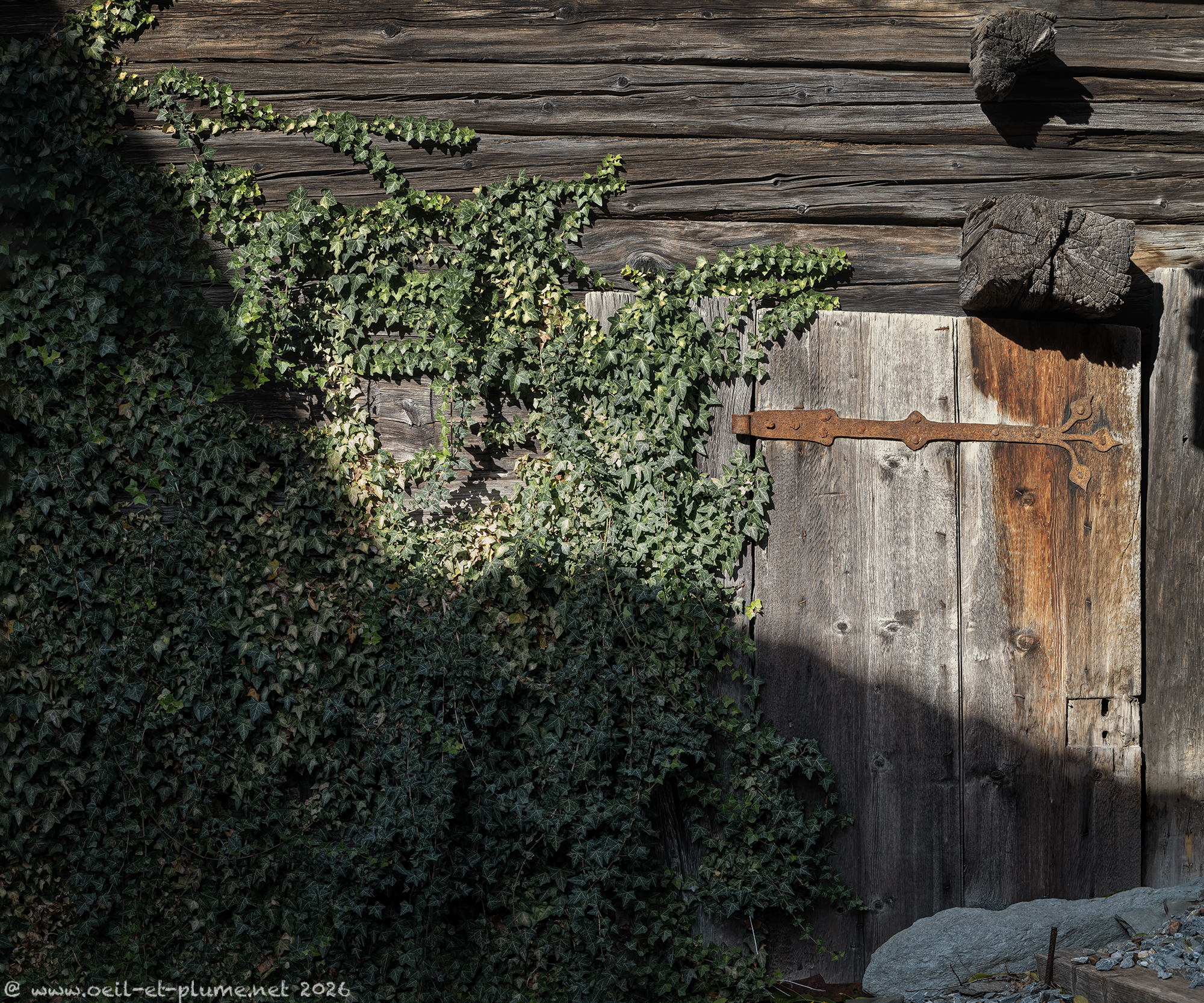
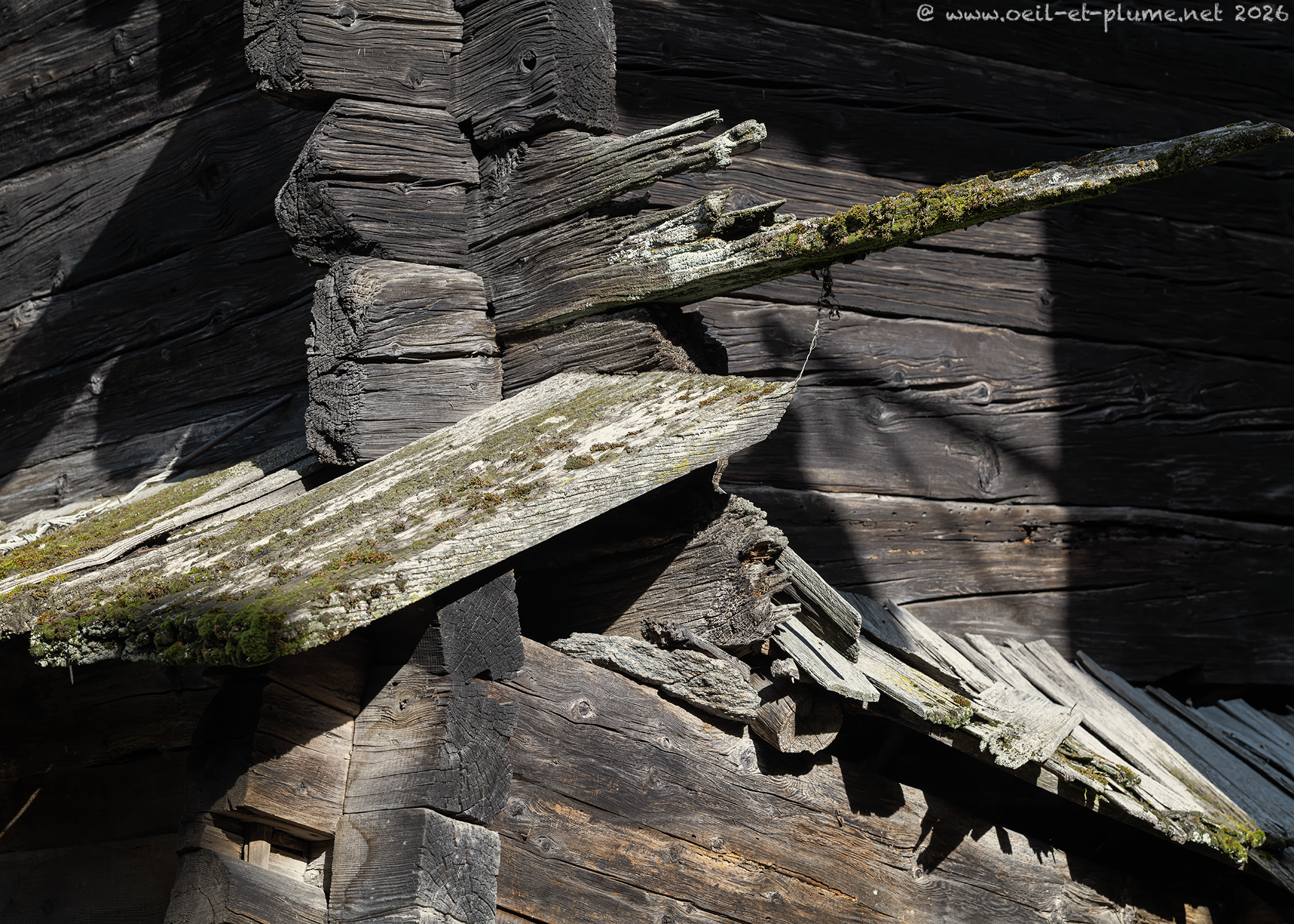
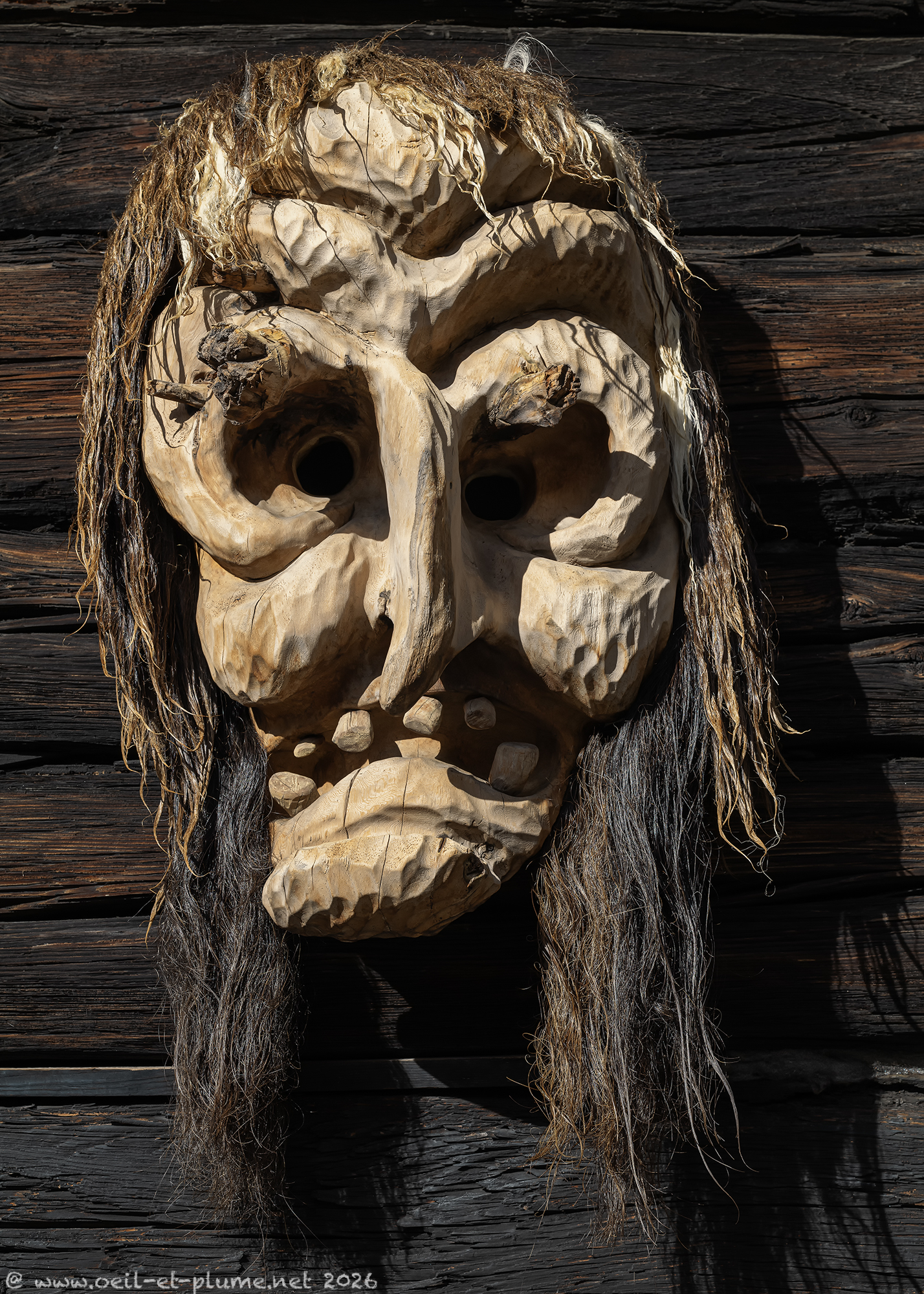
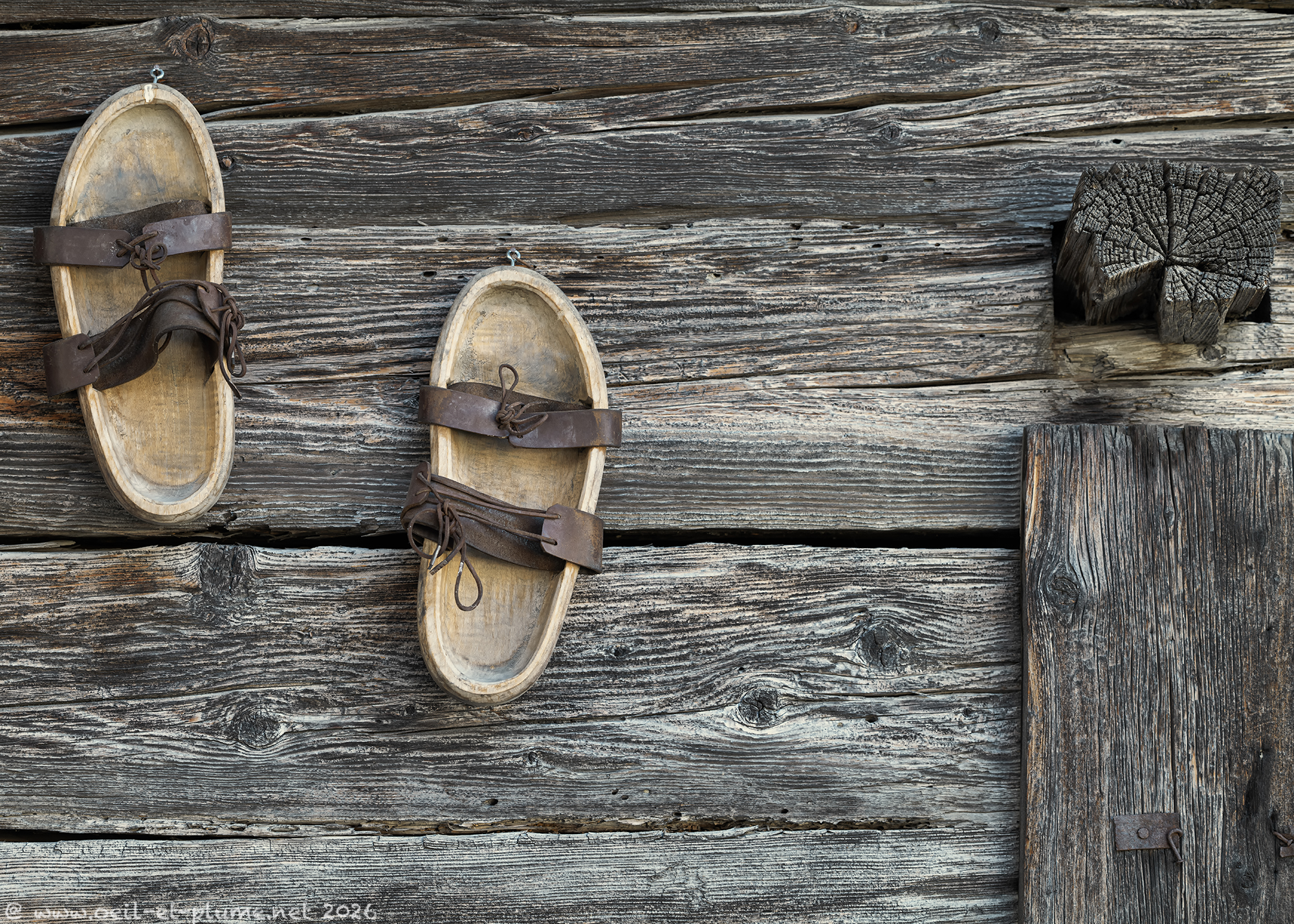
This was more than enough to pique my curiosity. I visited a couple of villages at the entrance of the Turtmanntal. On the façade of a traditional house, a large, hideous face carved in wood hung to evoke the malicious spirits haunting the remote valley. Beneath it, a pair of wooden sabots completed the picture.
Local mindset
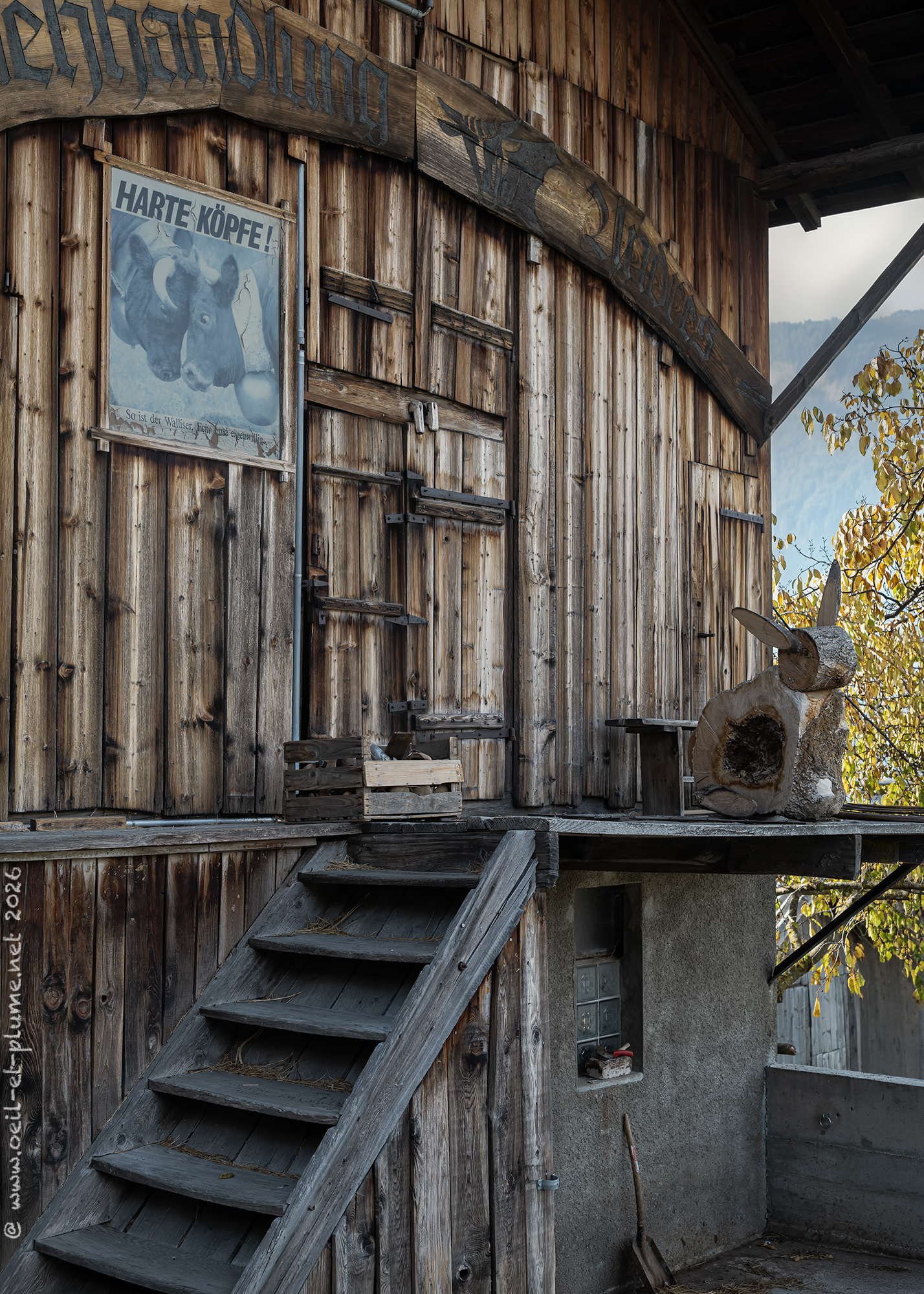
On a house façade, a bold written statement set the local mentality scene: “Stubborn heads. That’s the people of Valais. Authentic and peculiar.” In a positive perspective, the statement speaks volume about the courage, strength and resilience of local people. In a less flattering perspective, it hints at their difficulty to absorb new ideas. Never mind, I kept roaming around as I am also one of these hard-headed Valaisans.
Turtmanntal’s last bear
The municipality office of Oberems nailed me with the following: a paw and two teeth of a wild bear, displayed in a wooden case mounted on the façade. Beside the remains of the bear, a poem recounted the circumstances of its death.
According to local chronicles, a population of bears once lived in the Turtmanntal and periodically descended to the human settlements at the valley’s gate, looking for goats and sheep to eat. People feared these predators and hunted them; it was common practice to display parts of a slain animal publicly as a trophy.
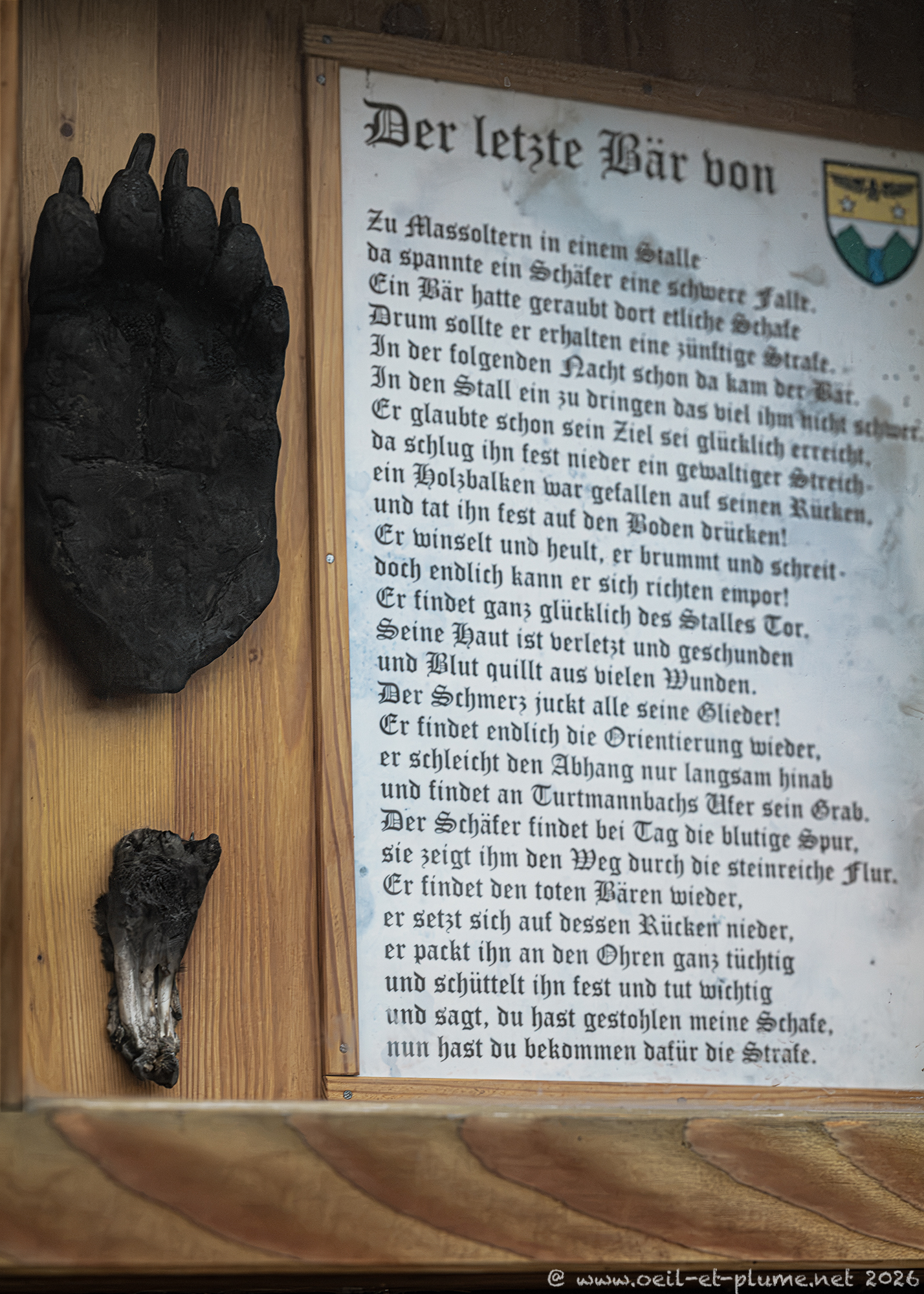
The bear paw and teeth displayed in Oberems commemorate the killing of the last known bear of the Turtmanntal, which took place in the early 18th century.
According to the chronicle, a local shepherd, tired of losing livestock, decided to set a trap for the Turtmanntal bear in a barn near Oberems. He tethered a goat inside as bait and suspended a heavy wooden beam above the entrance. The following night, the bear entered the barn. The beam crashed down onto the intruder. Dazed and wounded, the animal struggled its way to the Turtmänna River, near the Taubenwald, where it breathed its last.
Taubenwald
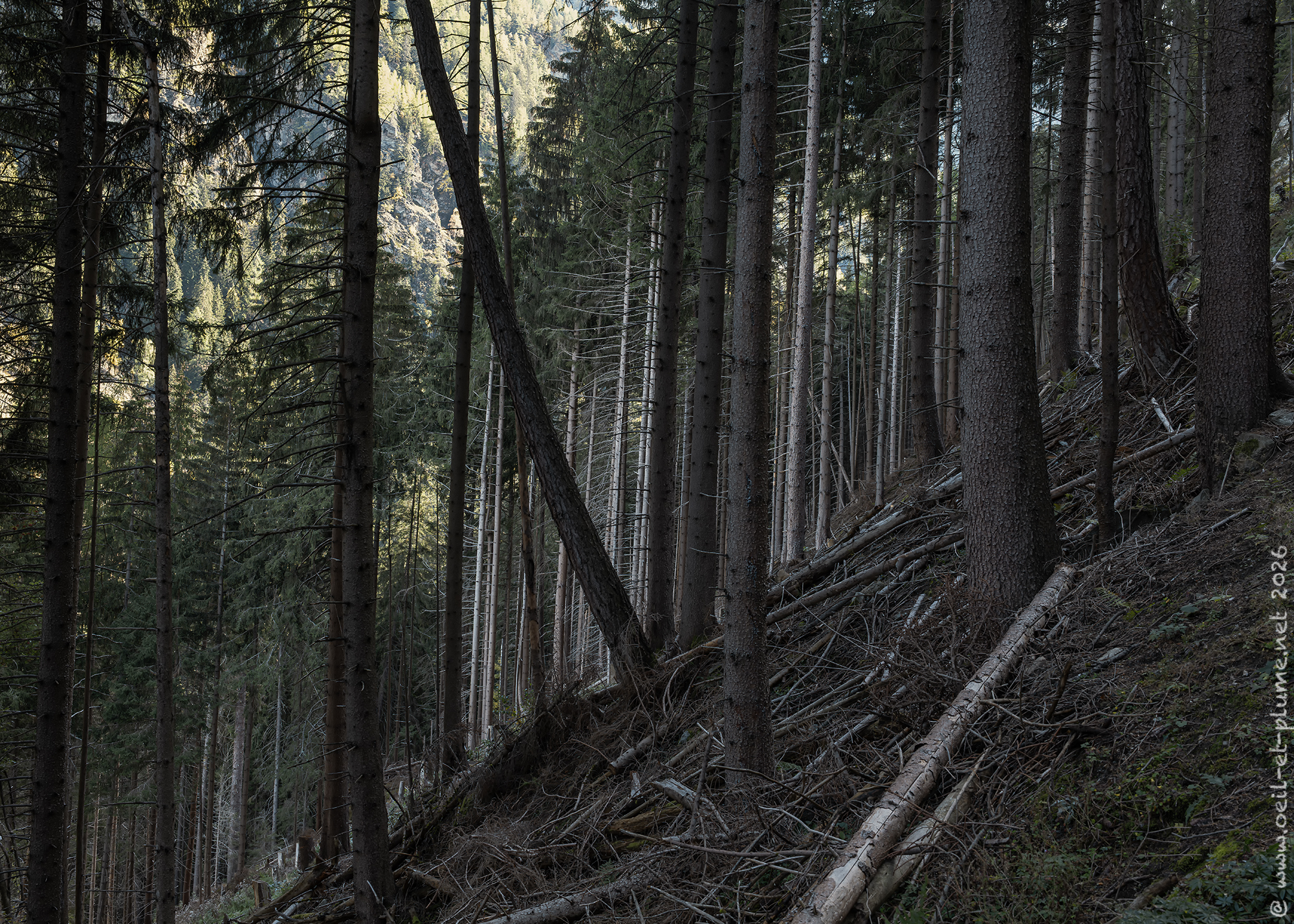
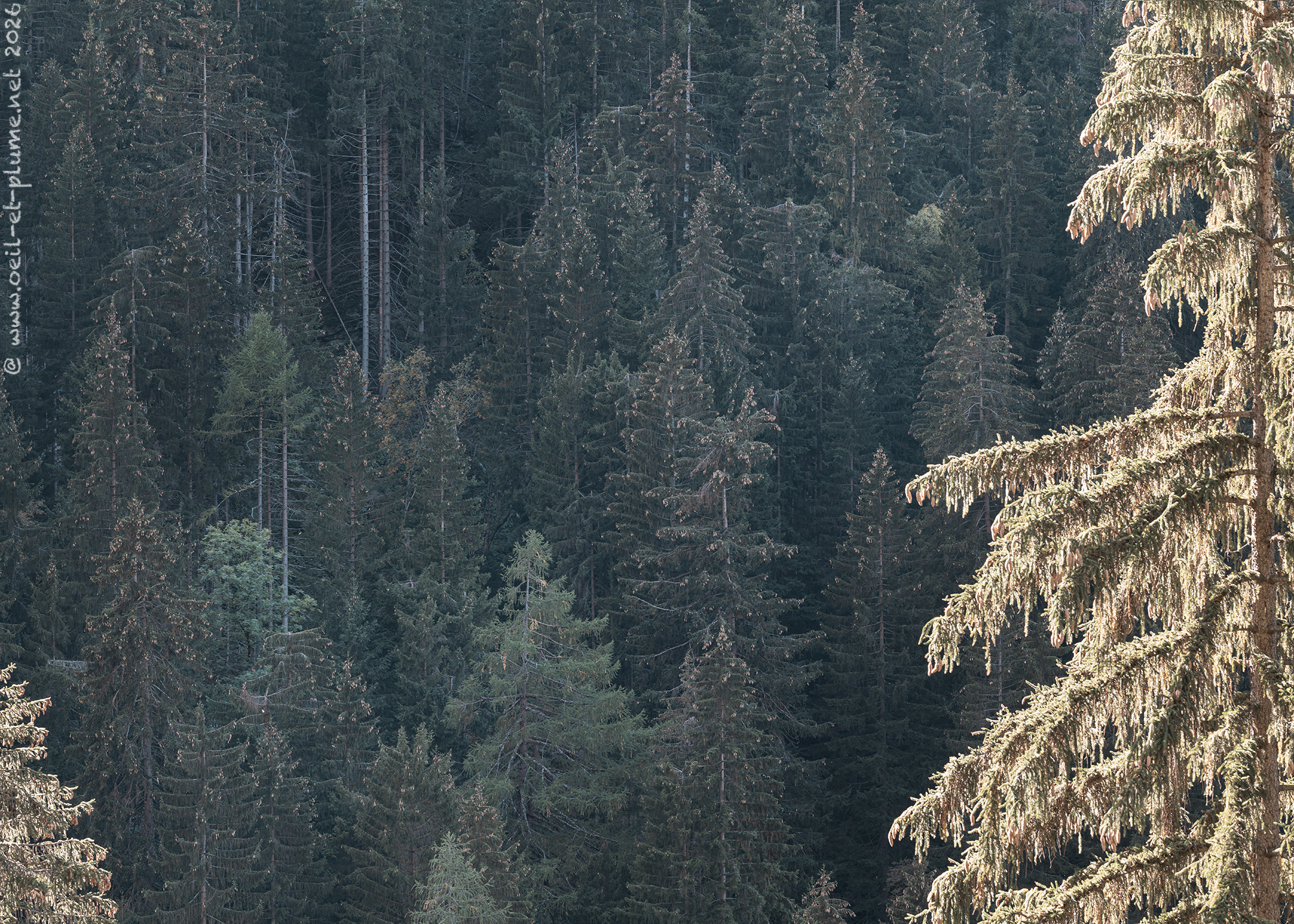
Leaving the settlements, I trekked down into the Turtmanntal gorge, to the area where the bear died. Growing on a steep slope of the gorge, the pines of the Taubenwald (Toibuwald in the local dialect) are among the tallest of their kind in the Valais. Beyond their outstanding height, the trees growing very close together, making the Taubenwald extraordinarily dense.
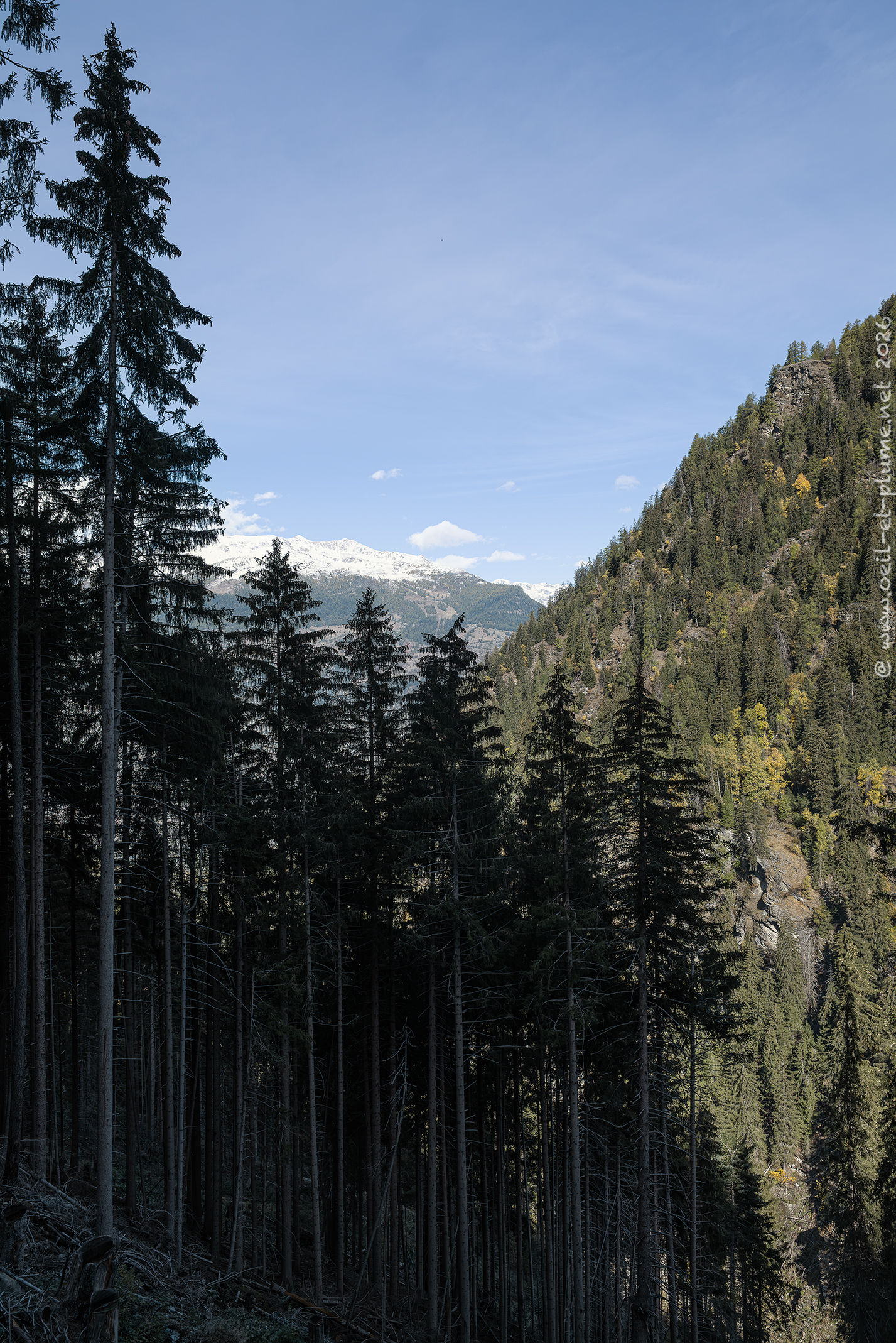
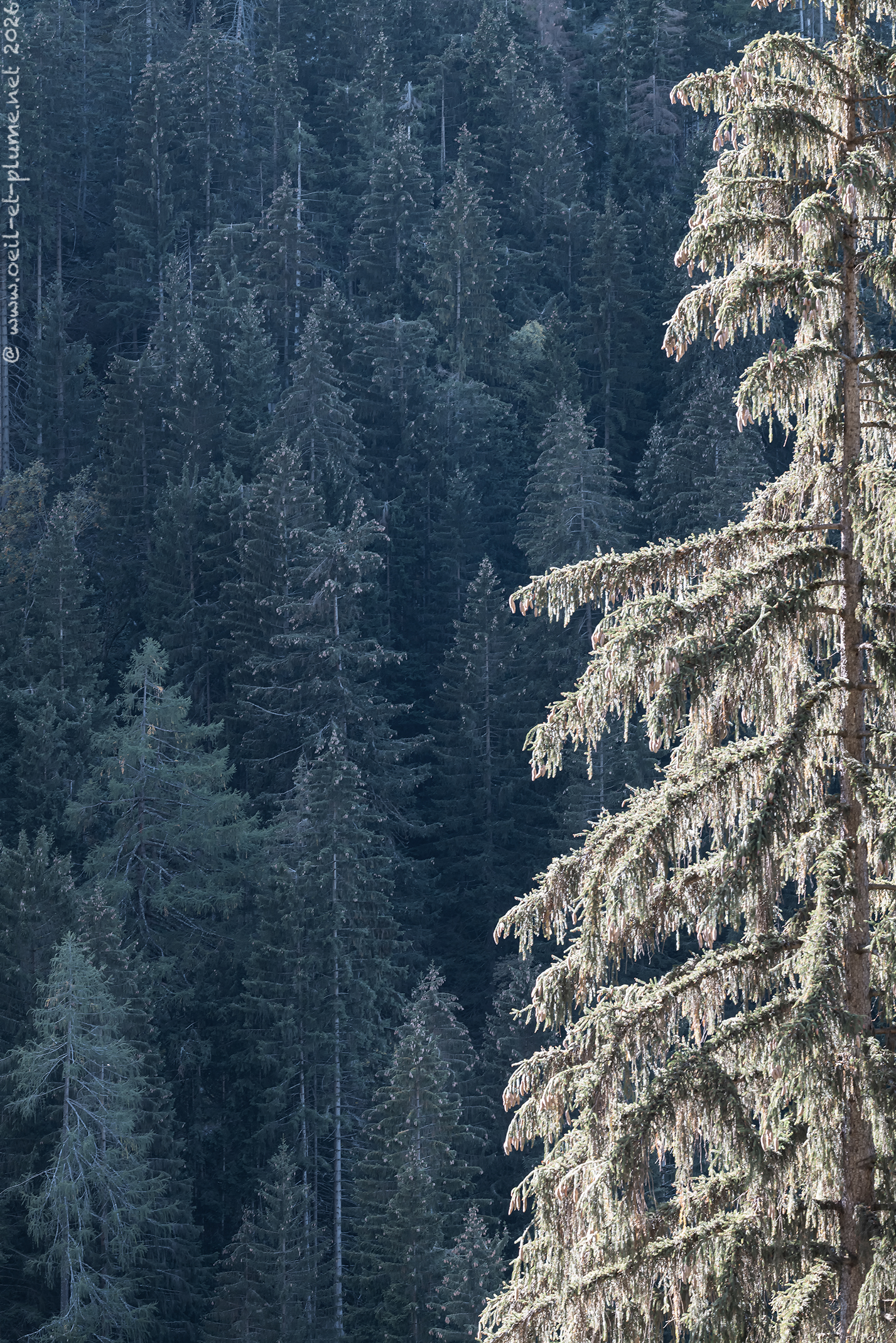
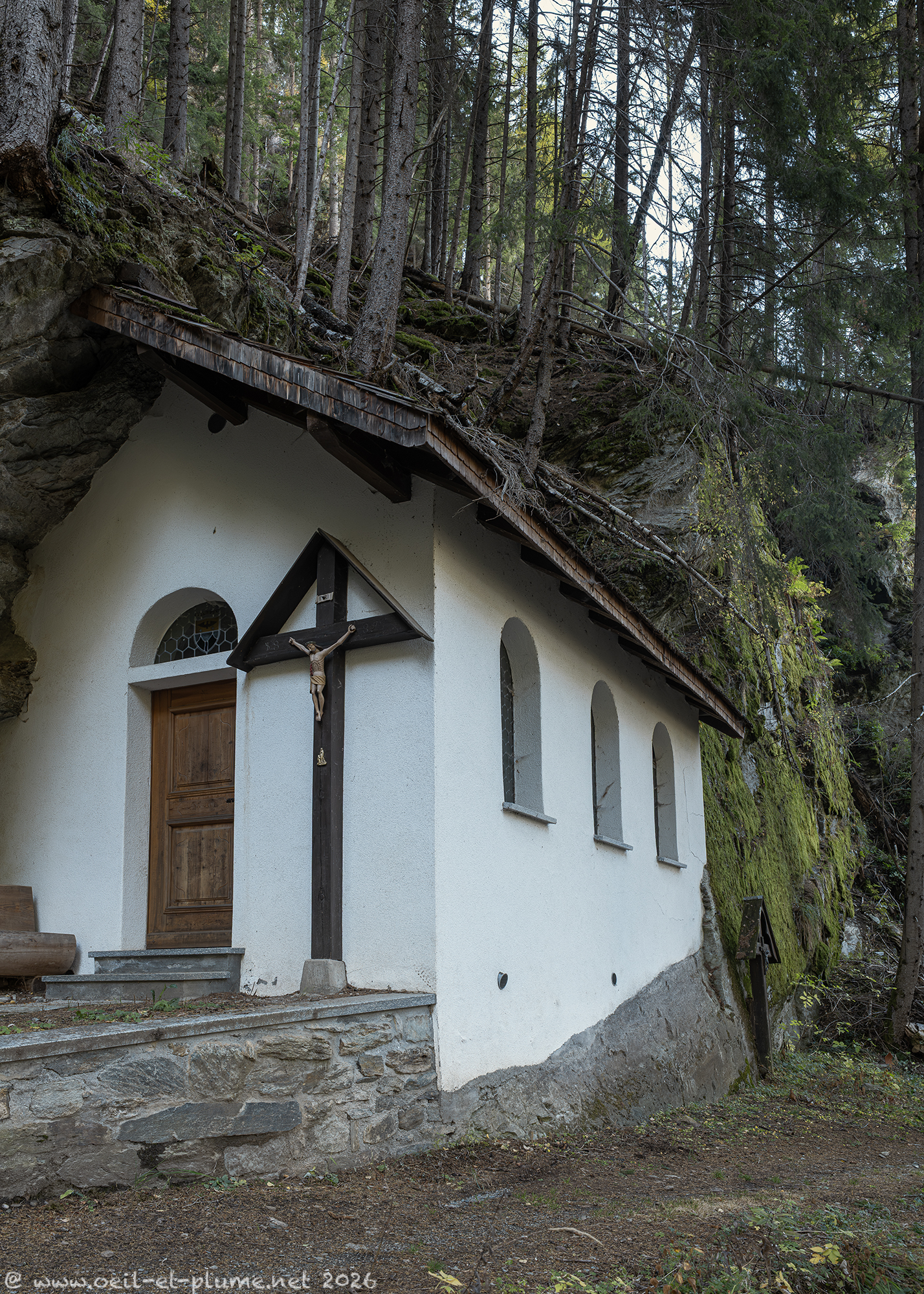
Otherwise, I found the area filled with a heavy atmosphere. In the middle of the Taubenwald, local people erected a small chapel. The modest building is partially embedded in the rock, as flat land is scarce. It probably also feels better protected against the demons transiting through the gorge.
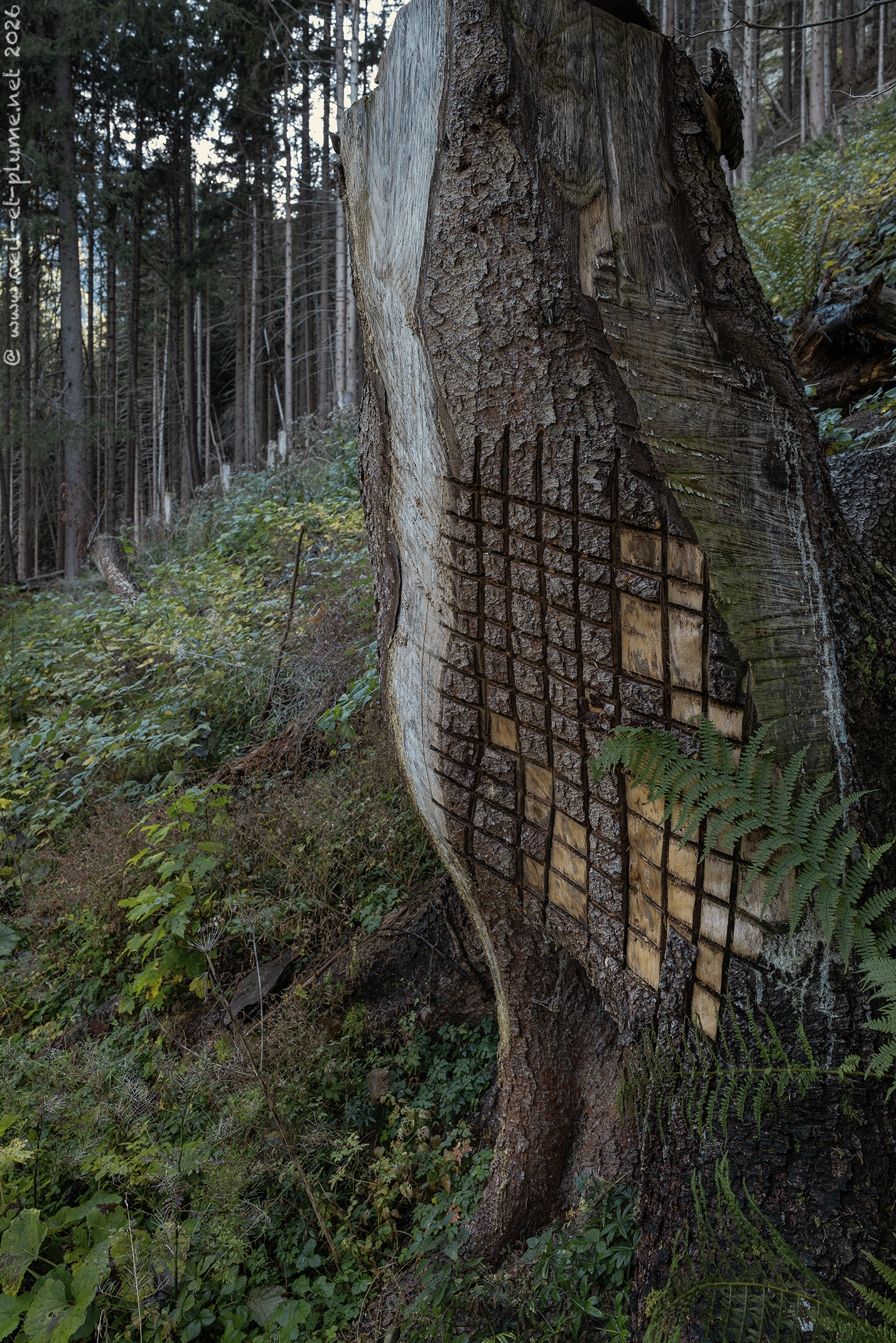
Nearby, by chance – if this is chance at all – I came across a large tree trunk marked with deep notches. Are they the warning sign of a Turtmanntal demon on his way out of the valley, or the last claw swipes of the dying bear? Difficult to conclude, as both hypotheses seem plausible.
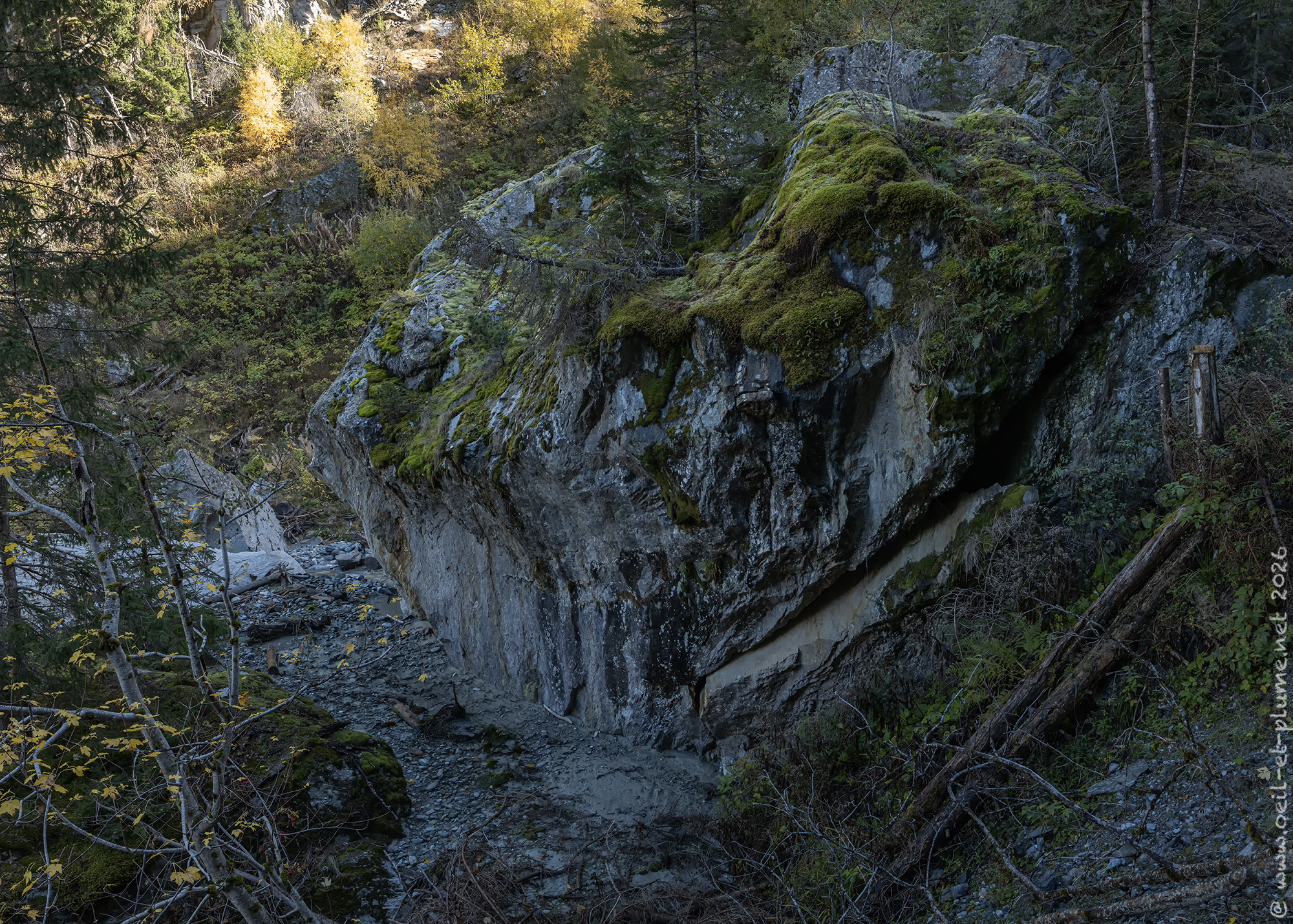
At the valley floor, I stopped near a massive boulder, feeling a powerful pull. This is where the bear reportedly died. Next to it, the turbulent water of the Turmänna River heightened the wildness and sadness of the place.
Moving upstream
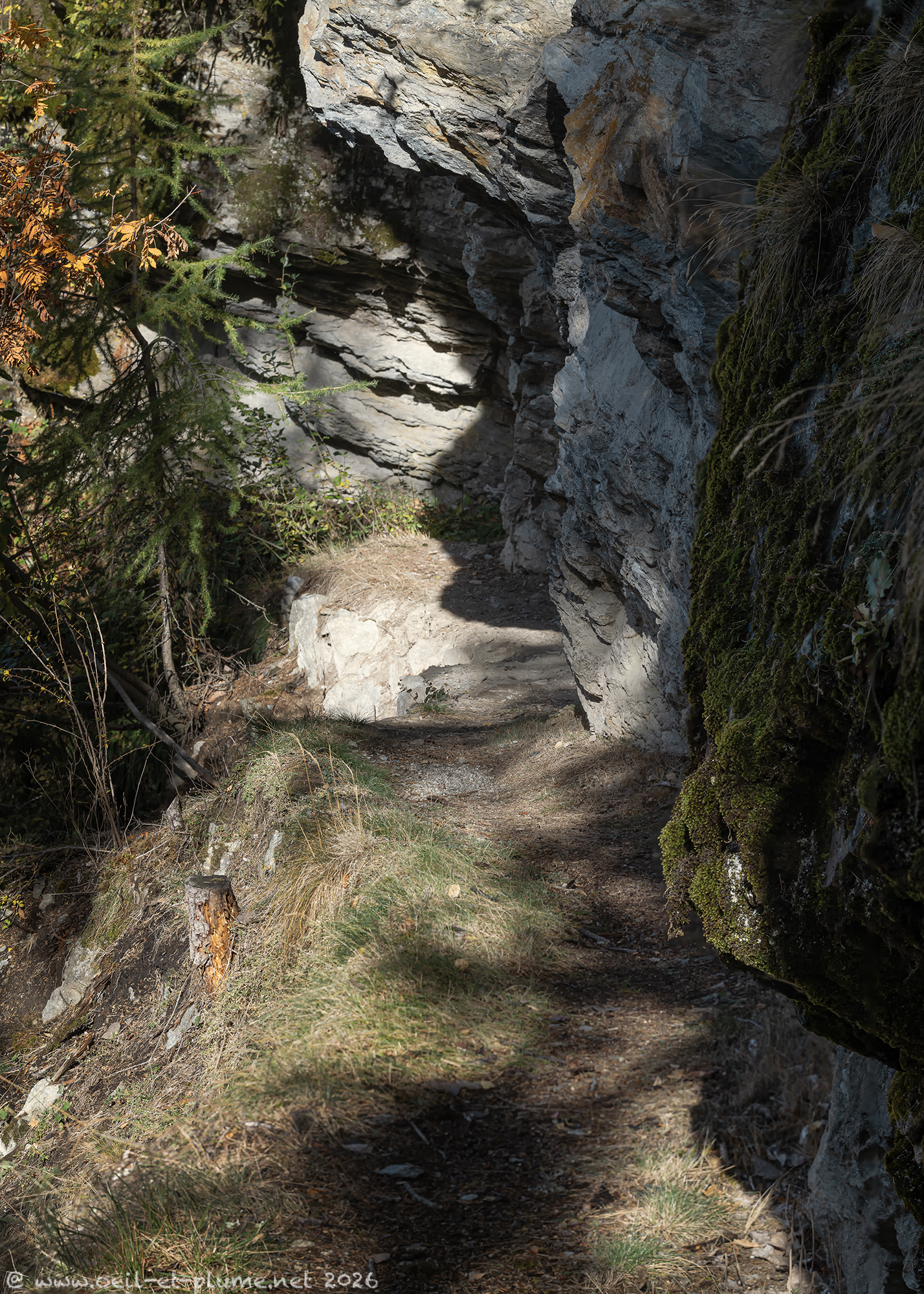
By then, I was longing for brighter sunlight, warmer air, a more welcoming and cosier environment. I decided to trek upstream through the Turtmanntal, toward the pasture lands.
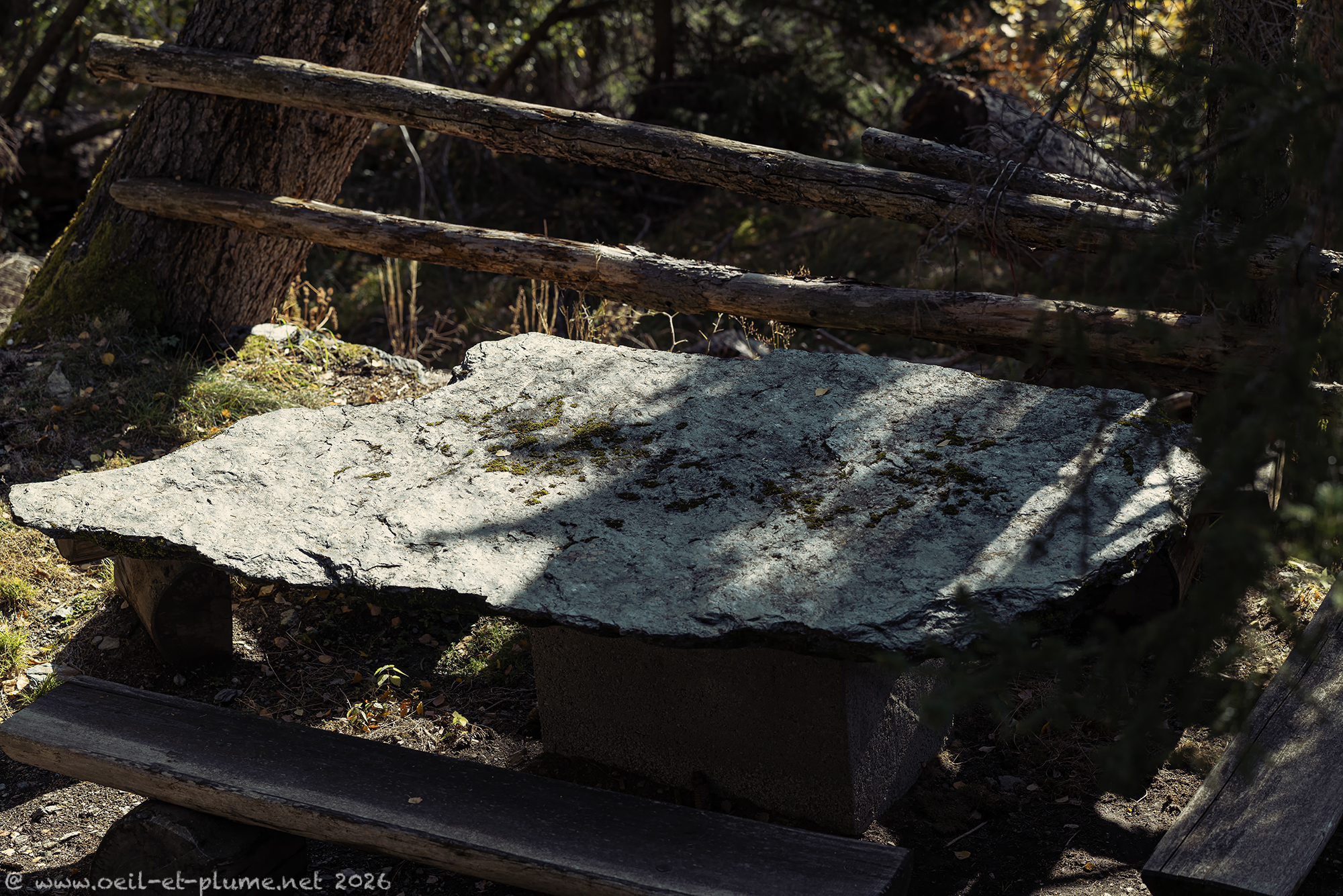
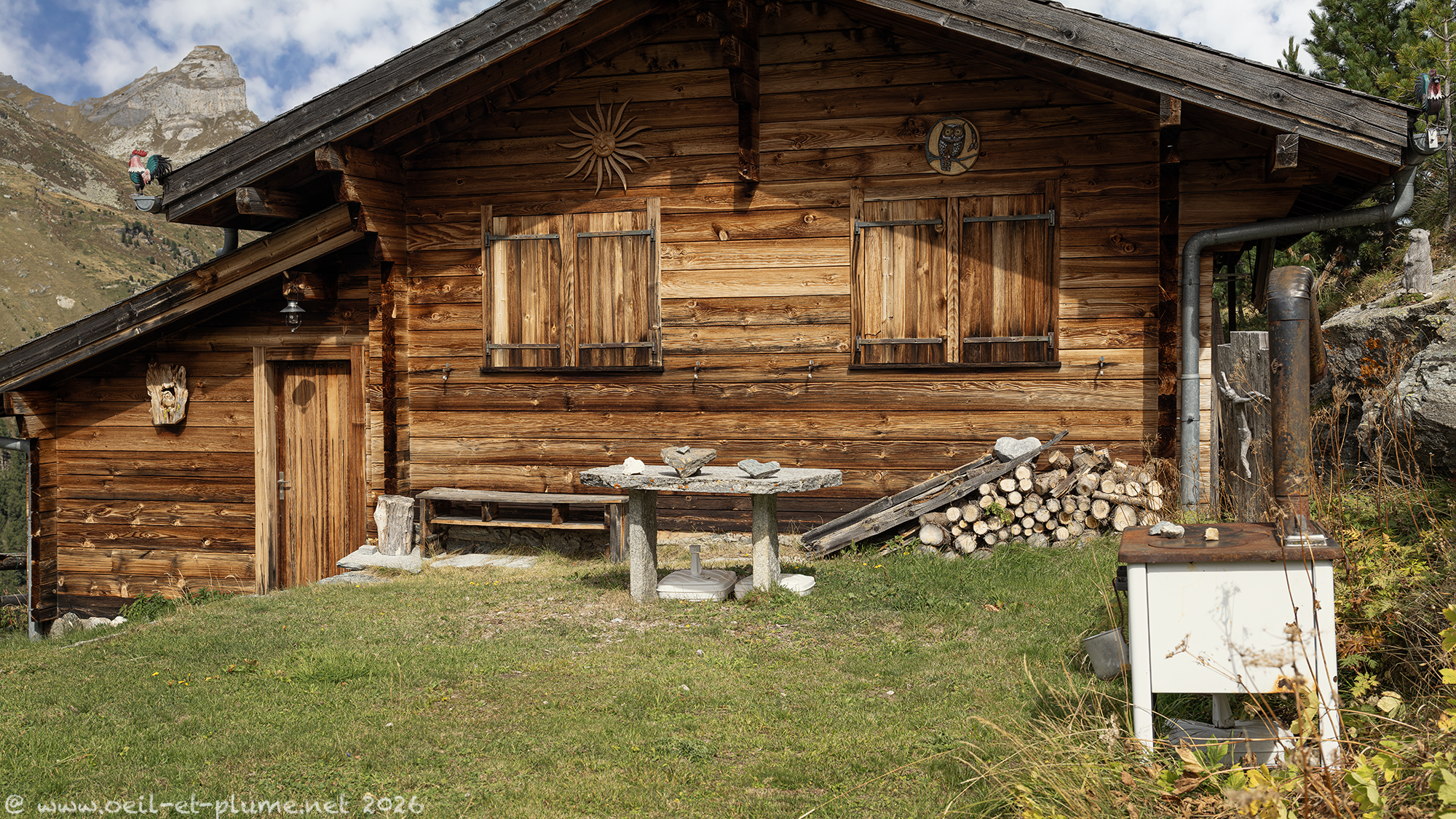
After a while, I found a pristine spot for lunch. Hut, table, seats – all beautifully made of natural materials. Rays of sunlight strays lit the scene softly the scene, making it all the more enjoyable. My modest lunch became a feast in memory.
Dwarves, again
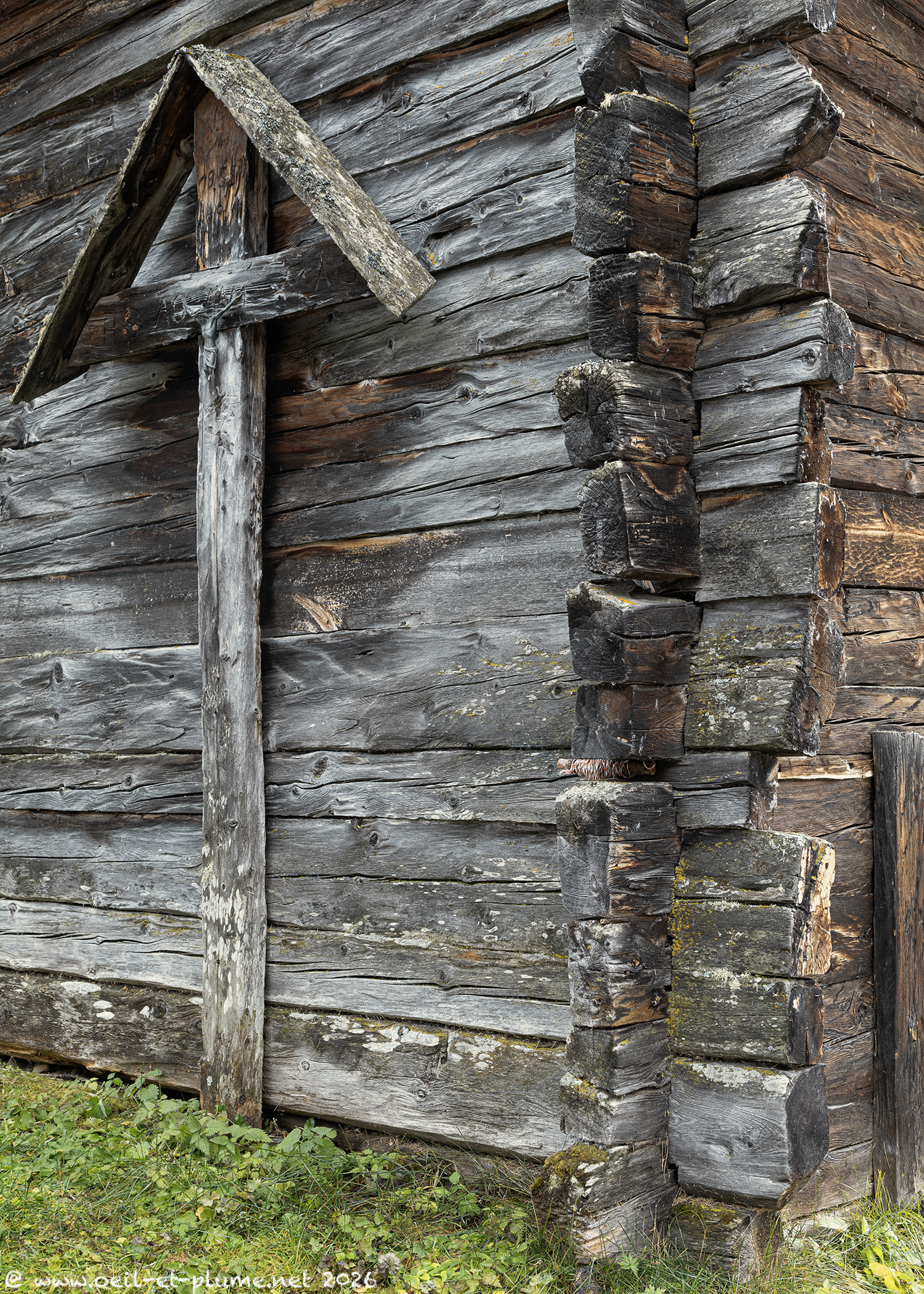
After several hours of steady walking, I reached a hamlet of traditional houses. Historically, those buildings hosted families during their summers in the Turtmanntal. While most have kept their rustic character, some have been renovated into cosy secondary homes. Unsurprisingly, Christian imagery is a prominent feature of the hamlet, meant to connect its inhabitants with God and thereby keep the demons at bay.
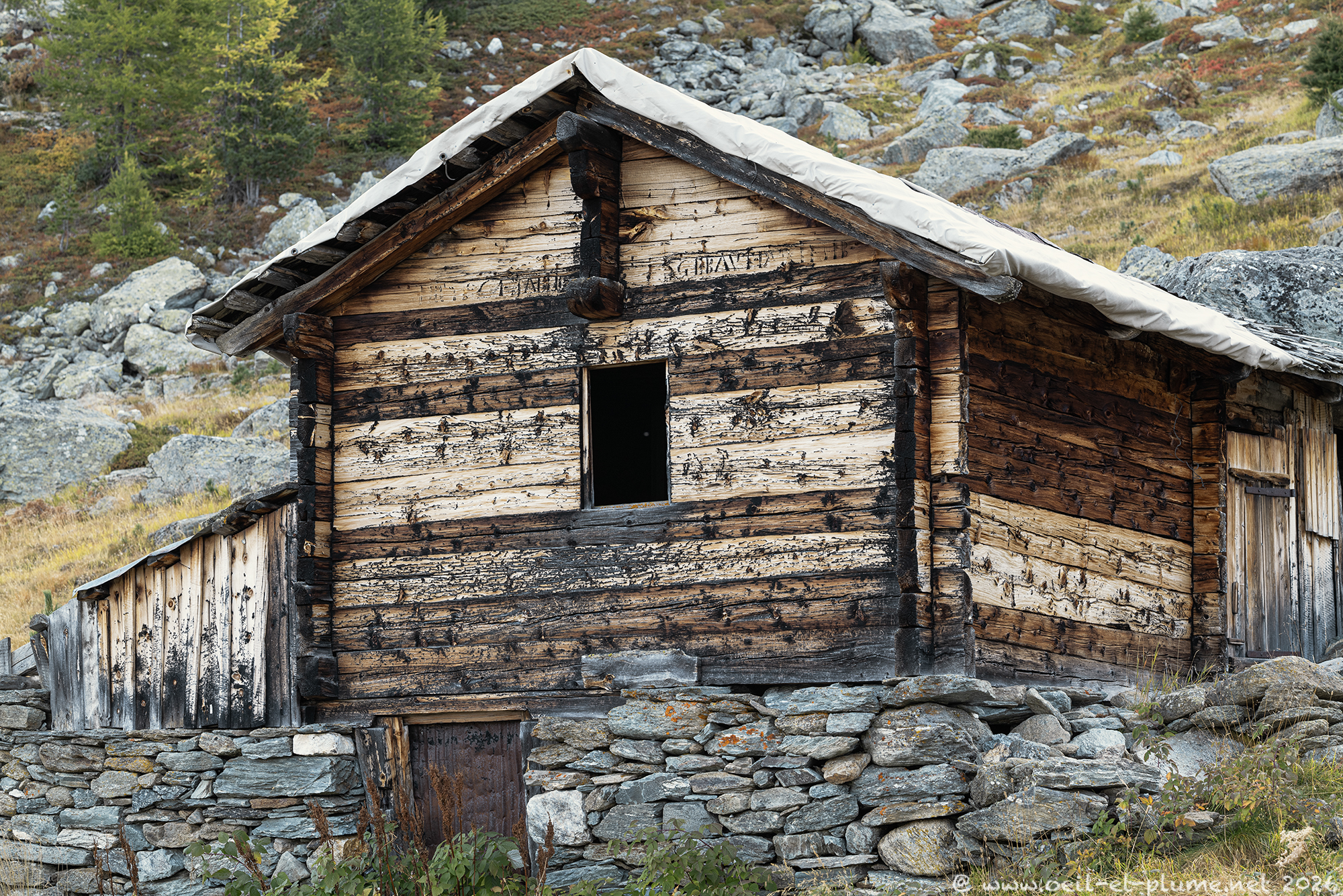
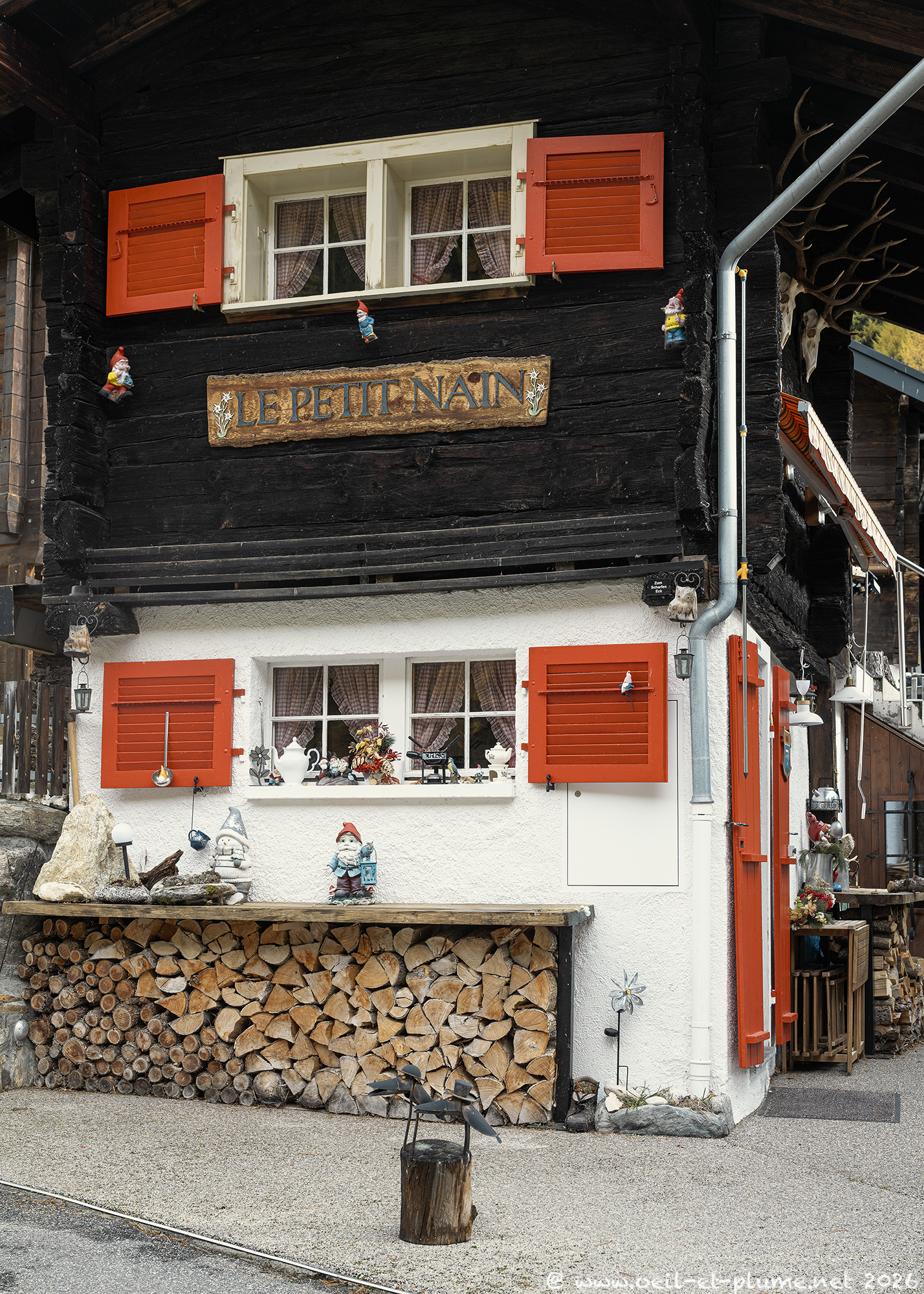
Further along, to my surprise, I came across a dwarf house. What an astonishment, after having spent days crisscrossing the Binntal trying to meet them, to find them here in plain sight. Unlike their fellows in the Binntal, the dwarves of the Turtmanntal were obviously not shy around humans. They confirmed to have left the Binntal long time ago to resettle here. “Other places, other times, other mindsets”, they told me with a half-smile.
Genesis
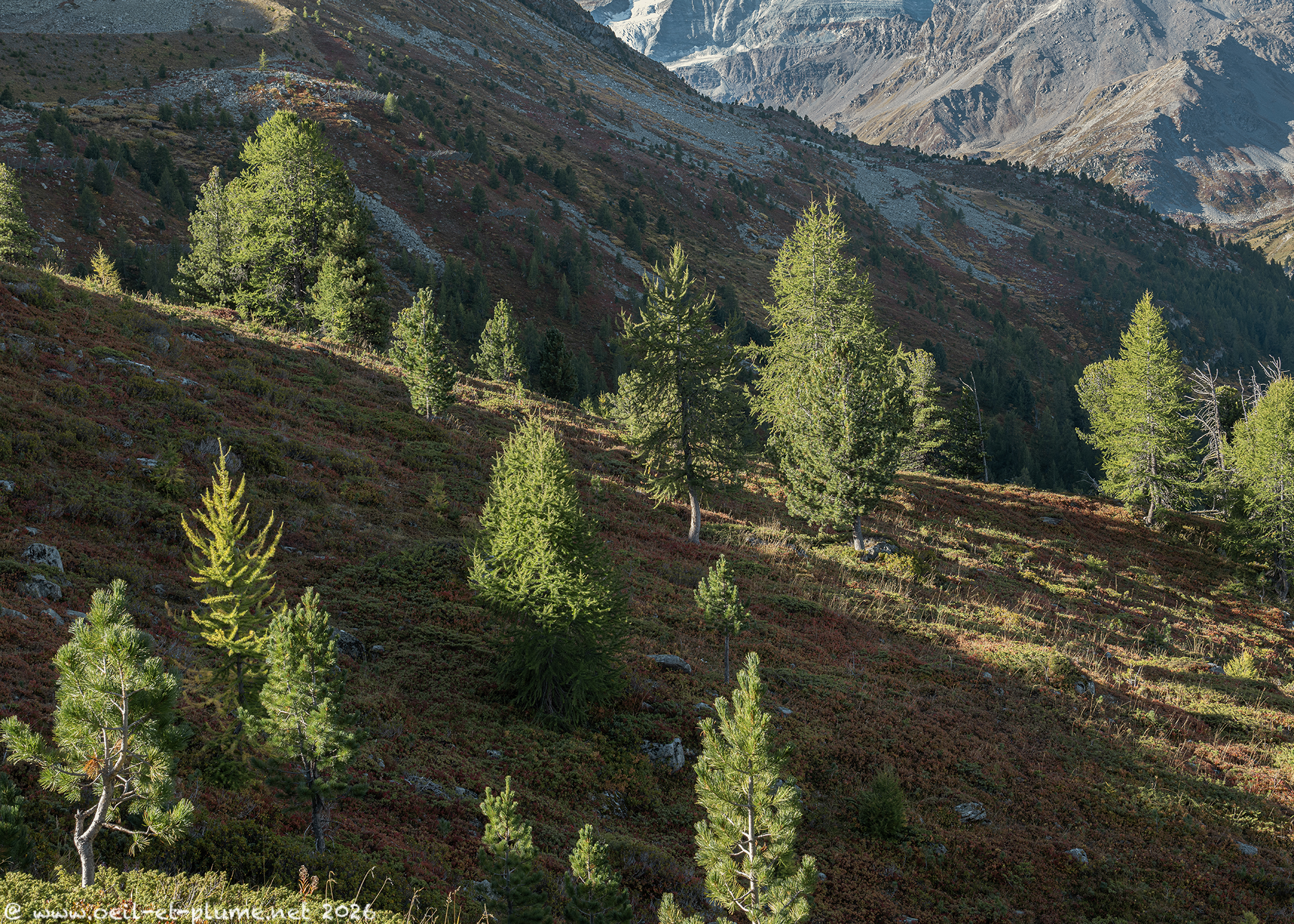
Guided my intuition, I pursued my progression in higher altitude, deep into the pine forests. There all of a sudden, I felt to have reached a foundational location – a genesis place.
A massive pine tree dominated a wide stretch of ground, its roots spreading in every direction. Its bark was extraordinary: very coarse as if it had endured centuries of harsh climate, and streaked with intensely red tones.
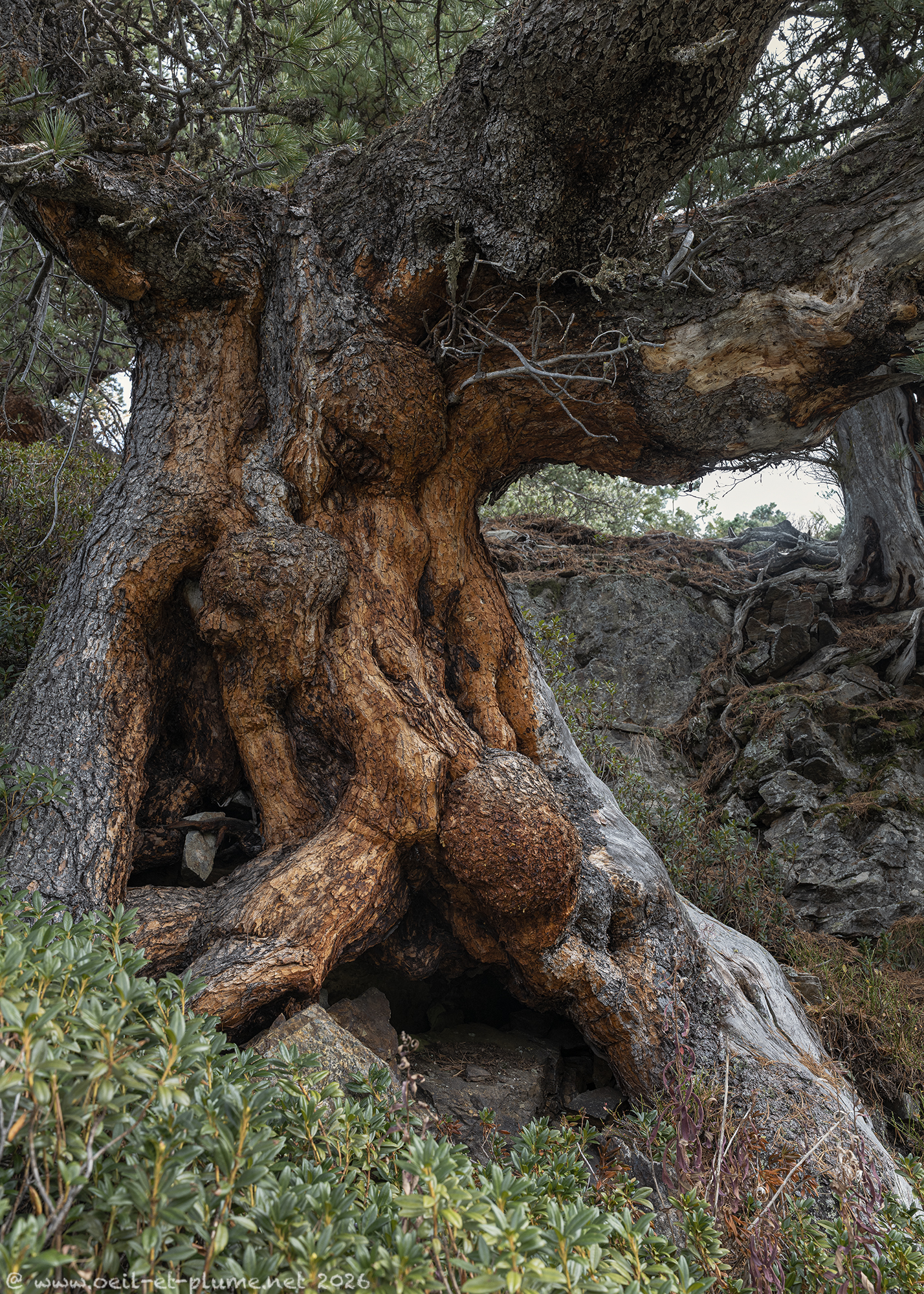
The most striking feature of the tree was its shape and the sense of movement within it: it looked as it were in labour. One could distinguish clearly a human form emerging from the wood trunk. Indeed, a person was coming to life, struggling in silence to join our world. Higher up the trunk, still embedded in the wood, another figure waited to do the same. Overwhelmed, I left the scene to gather myself.
In the wild and raw Turtmanntal, nature and human beings are one. This is how the world should work. Let us do our best to make it so.
Epilogue – Bear presence in the Valais
You may be interested in the larger picture of the bears presence in the Valais and, more widely, in Switzerland. Following the Turtmanntal’s last bear killing in the early 18th century, the last bear in the neighbouring Anniviers Valley, and the last native bear in Switzerland were killed in 1856 and 1904, respectively, according to official sources.
Starting in 2005, the species made a discreet comeback in Switzerland through natural migration — primarily from the population reintroduced in the Trentino region of Italy –, rather than through a human-led reintroduction project.
In the Valais, single bears were spotted on various occasions in recent years. Evidence of a single bear’s passage was found in the upper Binn Valley area, close to the Simplon Pass, in 2016, and in the Sanetsch Pass area near Derborence in 2018. In May 2019, a bear was spotted and filmed while moving through the snow near Riederalp in the Aletsch region. Two weeks later, a bear was filmed while moving at night along the main road in the Binntal. No further confirmed bear passage of a bear in the Valais was reported after 2020. More broadly, there has been no permanent bear presence in Switzerland in recent years, including that of a female able to give birth to cubs. Switzerland has served merely as a transit area for young, solitary males.
Contrasting with the systematic killing of bears in the past, the current official policy in Switzerland vis-à-vis bears considers primarily the animal’s behaviour to define the course of action. If the bear remains away from humans or human settlements, authorities keep monitoring its movements. Should the bear get closer to people, more proactive measures are taken to reduce the risk of a direct encounter. In the last resort, the killing of the animal is authorised. To date, no bear has been shot dead in the Valais since its discreet return in recent decades.
In case of an encounter with a bear in the wild, safety recommendations note that a bear runs faster than you and I. They advise maintaining calm behavior and speaking with a normal voice to mark one’s human presence, while retreating slowly from the animal. No running, no sudden or aggressive movement, no approaching, no feeding. Good to know, but I hope I would resist the urge to run fast…
Cheers,
